
Scalable Blockchains for DeFi: Overcoming Congestion and High Gas Fees


Welcome to Blockchain Trends, your compass in the rapidly evolving world of decentralized technologies. Beyond the buzzwords, we delve into the real-world impact and future possibilities of blockchain. Are you ready to explore how we can overcome the limitations of current DeFi ecosystems? Our latest article focuses on scalable DeFi blockchain solutions, tackling the critical challenges of congestion and high gas fees. Discover how innovative approaches are paving the way for a truly accessible and efficient decentralized financial future. Intrigued? Read on to uncover the groundbreaking solutions that are reshaping the landscape.
Scalable Blockchains for DeFi: Overcoming Congestion and High Gas Fees
- Introduction: The Scalability Challenge in Decentralized Finance (DeFi)
- Understanding the Bottlenecks: Factors Contributing to DeFi Congestion
- Exploring Scalable DeFi Blockchain Solutions: A Comparative Analysis
- Benefits of Scalable Blockchain Solutions for DeFi
- Case Studies: Real-World Examples of Scalable DeFi Implementations
- The Future of Scalable DeFi Blockchains: Trends and Predictions
- Conclusion: Embracing Scalable DeFi Blockchain Solutions for a Thriving Ecosystem
-
Frequently Asked Questions
- What are the main challenges hindering the widespread adoption of DeFi?
- How do scalable DeFi blockchain solutions address the problem of high gas fees?
- Beyond Ethereum, what other blockchains are emerging as potential platforms for DeFi?
- What role does regulation play in the future development of scalable DeFi blockchain solutions?
- What are some examples of enterprise applications leveraging scalable DeFi blockchain solutions?
- Final Reflection: Building a Future of Accessible Finance
- Conquer DeFi Challenges: Start Scaling Your Strategies!
Introduction: The Scalability Challenge in Decentralized Finance (DeFi)
DeFi's Growth and the Strain on Ethereum
Decentralized Finance (DeFi) has experienced explosive growth over the past few years, transforming traditional financial concepts like lending, borrowing, trading, and asset management into open, permissionless protocols built primarily on blockchain technology. The total value locked (TVL) in DeFi protocols surged from under $1 billion in early 2020 to a peak exceeding $180 billion by late 2021, showcasing rapid adoption and innovation. This burgeoning ecosystem, largely centered on the Ethereum network, attracted millions of users seeking higher yields, greater control over assets, and access to global financial services without intermediaries.
This unprecedented growth, while a testament to DeFi's potential, placed significant strain on the underlying infrastructure, particularly Ethereum. As more users interacted with complex smart contracts for activities like swapping tokens on decentralized exchanges (DEXs) or participating in yield farming, the network's capacity was pushed to its limits. The initial architecture of Ethereum, designed for broader decentralized applications rather than high-frequency financial transactions, struggled to keep pace with the demand, leading to significant performance issues that hampered user experience and adoption.
The Problem: Congestion and High Gas Fees on Ethereum
The primary consequence of DeFi's rapid expansion on the Ethereum network was severe network congestion. As the number of transactions requiring processing increased dramatically, the network's limited throughput (typically around 15-30 transactions per second) became a major bottleneck. This congestion manifested directly in the form of soaring transaction costs, known as "gas fees." Users had to bid significantly higher gas prices to prioritize their transactions for inclusion in the next block, often resulting in fees that far exceeded the value of the transaction itself.
During peak periods, such as during popular NFT drops or market volatility spikes, gas fees on Ethereum could reach hundreds or even thousands of dollars for a single complex interaction with a DeFi protocol. This made small transactions economically unfeasible and priced out many potential users, particularly those with limited capital or those in regions where such fees represent a substantial financial burden. The high cost and unpredictable nature of gas fees became a significant barrier to entry and a major point of frustration for the growing DeFi community.
Why Scalable DeFi Blockchain Solutions are Crucial for Mass Adoption
Overcoming the limitations of network congestion and exorbitant gas fees is paramount for the continued growth and mass adoption of decentralized finance. Without effective scalable DeFi blockchain solutions, the promise of a truly inclusive, open financial system remains constrained by infrastructure challenges. High costs deter new users and limit the types of applications that can be built and used effectively, such as micro-transactions or frequent rebalancing strategies.
Scalable DeFi blockchain solutions are essential to lower transaction costs, increase transaction speed, and handle a significantly higher volume of operations. This not only improves the user experience, making DeFi more accessible and convenient, but also opens the door for more complex and innovative financial applications that were previously impractical or too expensive to run on congested networks. Achieving scalability is a critical step towards realizing DeFi's full potential as a viable alternative to traditional finance for a global audience.
Understanding the Bottlenecks: Factors Contributing to DeFi Congestion
Transaction Throughput Limitations of Ethereum's Architecture
Ethereum's current architecture, based on a proof-of-work (PoW) consensus mechanism and a monolithic design, inherently limits the number of transactions it can process per second. Each transaction must be processed by every node in the network to ensure consensus and security. This design choice, while robust for decentralization and security in its early stages, creates a fundamental bottleneck for processing a high volume of operations simultaneously. The average block time on Ethereum is approximately 13-15 seconds, and each block has a limited capacity for computational work (gas limit).
The fixed block size and time, coupled with the requirement for global state synchronization across all nodes, mean that increasing the number of transactions beyond a certain threshold quickly leads to a queue. Miners prioritize transactions offering higher gas fees, leaving those with lower bids waiting, sometimes indefinitely, or failing entirely. This architectural constraint is a primary reason why early scalable DeFi blockchain solutions focused on moving computation or data off the main chain or modifying the core protocol itself.
The Impact of Smart Contract Complexity on Gas Costs
DeFi applications often involve complex interactions between multiple smart contracts. For instance, a simple token swap on a DEX might involve approving token spending, executing the swap logic, updating balances, and potentially interacting with liquidity pool contracts. Each operation within a smart contract consumes 'gas,' a unit of computational effort. More complex operations, or sequences of operations, require more gas.
When a user interacts with a complex DeFi protocol during peak network activity, the total gas required for their transaction can be very high. Since the gas price (the cost per unit of gas, denominated in Gwei) is determined by network demand, a high gas requirement combined with a high gas price results in extremely expensive transactions. This complexity significantly contributes to the overall congestion and high costs experienced by users of sophisticated DeFi protocols, highlighting the need for scalable DeFi blockchain solutions that can handle complex computations more efficiently or at a lower cost per gas unit.
Network Congestion During Peak DeFi Trading Activity
Network congestion on Ethereum is not uniform; it fluctuates significantly based on user activity. Peak congestion often occurs during periods of high market volatility, new token launches, popular NFT mints, or specific times of day when global trading activity converges. During these times, the demand for transaction space dramatically outstrips the network's supply.
This surge in demand leads to a bidding war for block space, driving gas prices sky-high. Users are forced to pay exorbitant fees to ensure their transactions are processed promptly, or risk them failing or being delayed indefinitely. This unpredictable and often prohibitive cost structure makes it difficult for users to reliably execute trades, manage positions, or participate in time-sensitive DeFi opportunities, underscoring the urgent need for scalable DeFi blockchain solutions that can absorb such demand spikes without collapsing under the pressure.
Exploring Scalable DeFi Blockchain Solutions: A Comparative Analysis
Layer-2 Scaling Solutions for DeFi: Enhanced Throughput and Reduced Costs
Layer-2 (L2) scaling solutions are built on top of existing blockchains, like Ethereum, to handle transactions off the main chain (Layer-1) while still leveraging the L1's security guarantees. They process transactions more quickly and cheaply off-chain and then batch or summarize these transactions into a single, verifiable submission to the L1. This significantly reduces the load on the main chain, offering scalable DeFi blockchain solutions without requiring fundamental changes to the underlying network.
L2 solutions have emerged as a leading approach to address Ethereum's scalability challenges in DeFi. By moving computation and state storage off-chain, they can achieve throughput orders of magnitude higher than the base layer, often processing thousands of transactions per second compared to Ethereum's tens. This drastically reduces transaction fees, making DeFi applications more accessible and economically viable for a wider range of users and use cases. Different L2 technologies offer varying trade-offs in terms of security, performance, and complexity.
Rollups: Optimistic Rollups (Arbitrum, Optimism) vs. Zero-Knowledge Rollups (ZK-Sync, StarkNet) for DeFi
Rollups are a prominent category of L2 scalable DeFi blockchain solutions that execute transactions outside Layer 1 but post transaction data or proofs back to L1. They "roll up" hundreds or thousands of off-chain transactions into a single transaction on Ethereum.
- Optimistic Rollups (Arbitrum, Optimism): These protocols assume transactions are valid by default and only run computation (via fraud proofs) if a transaction is challenged. This allows for high throughput, but withdrawals to L1 can have a delay (typically 7 days) to allow time for potential challenges. Major DeFi protocols like Uniswap, Aave, and Synthetix have deployed on Optimism and Arbitrum, attracting significant liquidity and user activity due to significantly lower fees (often cents per swap or deposit) compared to Ethereum L1 (potentially tens or hundreds of dollars). Arbitrum One, for example, often handles more daily transactions than Ethereum L1 itself.
- Zero-Knowledge Rollups (ZK-Sync, StarkNet): These solutions compute state transitions off-chain and generate cryptographic validity proofs (ZK-proofs) that are posted to L1. The L1 contract verifies the proof, cryptographically guaranteeing the correctness of the off-chain computation. This offers faster finality and withdrawal times compared to Optimistic Rollups because validity is proven upfront. While historically more complex to implement smart contracts on (especially for general-purpose computation), advancements in ZK-EVMs (ZK-Sync Era, Polygon zkEVM) are making these platforms more compatible with existing Ethereum DeFi code. Projects like Loopring and Immutable X utilize ZK-Rollups for specific use cases (like DEXs and NFTs), demonstrating their potential as scalable DeFi blockchain solutions for high-volume scenarios.
Sidechains: Polygon (Matic) and its Role in Scaling DeFi Applications
Sidechains are independent blockchains with their own consensus mechanisms that run parallel to the main chain (Ethereum). They are connected to Ethereum via a two-way bridge, allowing assets to be transferred between the chains. Polygon (formerly Matic Network) is one of the most successful sidechains providing scalable DeFi blockchain solutions. It uses a modified Proof-of-Stake consensus mechanism and is EVM-compatible, making it easy for Ethereum developers to deploy their existing smart contracts.
Polygon achieved significant adoption in DeFi by offering significantly lower transaction fees (fractions of a cent) and faster transaction speeds (typically 2-3 seconds block time) compared to Ethereum L1. Many major DeFi protocols, including Aave, Compound, Curve, and SushiSwap, launched versions of their applications on the Polygon network, attracting billions in TVL. While sidechains rely on their own security model (which may differ from the L1), Polygon's robust validator set and bridge designs have made it a popular choice for scaling DeFi applications, complementing the ecosystem alongside L2 rollups.
State Channels: Raiden Network and its Limited Adoption in DeFi
State channels are a class of scalable DeFi blockchain solutions that allow participants to conduct multiple transactions off-chain within a private channel, with only the initial setup and final settlement transactions broadcast to the main blockchain. For example, two parties could open a payment channel, make numerous transfers between themselves instantly and with zero cost, and only close the channel by submitting the net result to L1. Raiden Network is a prominent example for Ethereum, focusing on off-chain token transfers.
While state channels offer high throughput and instant finality for transactions within the channel, their utility is limited for typical open DeFi interactions. DeFi often involves interactions with shared liquidity pools, lending protocols, or other public smart contracts that require global state updates, which is not well-suited for the peer-to-peer nature of state channels. Consequently, despite their technical merit for specific use cases like payments, state channels have seen limited adoption as general-purpose scalable DeFi blockchain solutions for the broader DeFi ecosystem compared to rollups or sidechains.
Layer-1 Scaling Solutions: Improving the Base Blockchain for DeFi
Layer-1 (L1) scaling solutions aim to increase the throughput and efficiency of the base blockchain itself. This approach often involves fundamental changes to the network's consensus mechanism, data structure, or how validators process transactions. While more complex to implement and requiring network-wide upgrades, successful L1 scaling can provide a more integrated and potentially more decentralized scalable DeFi blockchain solution compared to some off-chain methods.
Upgrading the core protocol can potentially benefit all applications running on that chain simultaneously. However, achieving significant L1 scaling without compromising decentralization or security is a complex technical challenge. Different L1 scaling strategies include changing how the network processes transactions (sharding), altering the consensus mechanism, or optimizing block production and verification.
Sharding: Ethereum 2.0 (Serenity) and its Impact on DeFi Scalability
Sharding is a database partitioning technique applied to blockchain, where the network's state and transaction processing are split into smaller, more manageable segments called "shards." Instead of every node processing every transaction, nodes would only be responsible for processing transactions within their assigned shard. This parallel processing capability is expected to dramatically increase the network's overall throughput.
Ethereum's multi-year upgrade path to Ethereum 2.0 (now simply referred to as the consensus layer and execution layer merge and subsequent upgrades) includes sharding as a key component for future scalability. While the initial merge focused on transitioning from Proof-of-Work to Proof-of-Stake, future upgrades plan to introduce sharding, initially for data availability (proto-danksharding) to support rollups, and eventually for execution.
When fully implemented, sharding is expected to enable Ethereum to process thousands or potentially tens of thousands of transactions per second, providing a highly scalable DeFi blockchain solution directly on the base layer and further enhancing the capabilities of L2 rollups built on top.
Delegated Proof-of-Stake (DPoS) and its Implementation in EOS for DeFi (Limited Success)
Delegated Proof-of-Stake (DPoS) is a consensus mechanism where token holders vote for a limited number of "delegates" or "block producers" who are responsible for validating transactions and creating new blocks. This small set of validators can achieve much higher transaction speeds and throughput compared to PoW or traditional PoS, as fewer nodes need to reach consensus. EOS is a prominent blockchain that utilizes DPoS, claiming the ability to handle thousands of transactions per second.
While DPoS networks like EOS demonstrated high raw transaction throughput capacity, their adoption as scalable DeFi blockchain solutions has been limited compared to Ethereum-centric solutions. Criticisms often focus on the potential for centralization due to the small number of block producers and issues related to governance and resource allocation (like CPU/NET resources on EOS).
Despite the technical capacity for speed and low fees, the DeFi ecosystem on EOS did not achieve the breadth, depth, or TVL seen on Ethereum and its scaling layers, suggesting that raw speed alone is not the sole determinant of a successful scalable DeFi platform; developer community, network effects, and perceived decentralization also play crucial roles.
Optimizations in Consensus Mechanisms: Avalanche's Snow Consensus Protocol
Some Layer-1 blockchains achieve high throughput and low latency through novel consensus mechanisms. Avalanche is an example, employing the "Snow" consensus protocol, which is a family of Byzantine Fault Tolerance (BFT) protocols. Instead of requiring all validators to agree in a single round (like traditional BFT), Avalanche uses repeated sub-sampled voting. Validators query a small, random subset of other validators and update their own belief based on the responses, iteratively converging on a decision across the network.
This approach allows Avalanche to achieve very high transaction throughput (thousands of transactions per second) and rapid finality (typically under 2 seconds) while maintaining a large number of validators. Avalanche's C-Chain is EVM-compatible, making it easy for Ethereum developers and DeFi protocols to port their applications. Protocols like Aave and Curve have deployed on Avalanche, contributing to its growing DeFi ecosystem. The speed and low cost provided by its consensus mechanism make Avalanche a strong contender among alternative scalable DeFi blockchain solutions.
Alternative Blockchain Architectures for Scalable DeFi Applications
Beyond traditional monolithic or sharded blockchain designs, other architectural approaches are being explored to deliver scalable DeFi blockchain solutions. These often rethink how data is structured, processed, or how different components of a blockchain interact.
These alternative architectures often focus on decoupling different functions, such as execution, settlement, consensus, and data availability, allowing for greater specialization and scalability. While some are still under development or early in adoption, they represent potential future directions for building highly performant and scalable decentralized financial systems.
Directed Acyclic Graphs (DAGs): Hashgraph and its Potential in DeFi (Hedera Hashgraph)
Directed Acyclic Graphs (DAGs) offer an alternative data structure to traditional linear blockchains. Instead of organizing transactions into blocks linked in a chain, transactions are linked to multiple previous transactions, forming a graph. This structure can potentially allow for parallel processing of transactions, leading to higher throughput. Hashgraph, used by Hedera Hashgraph, is a specific type of DAG consensus mechanism that uses "gossip about gossip" and virtual voting to achieve fast, fair, and secure consensus.
Hedera Hashgraph claims to process thousands of transactions per second with very low, fixed fees (e.g., $0.0001 USD per transaction), offering high potential as a scalable DeFi blockchain solution. While Hedera has seen adoption in various enterprise and payment use cases, its DeFi ecosystem is still relatively nascent compared to EVM-compatible chains. However, the technical capabilities of DAG-based systems like Hashgraph present an interesting alternative architectural approach for building high-throughput decentralized applications, including financial ones, that require speed and low cost.
Modular Blockchains: Celestia and its Data Availability Layer for DeFi
Modular blockchain architectures break down the traditional monolithic blockchain into specialized layers that handle specific functions: execution, settlement, consensus, and data availability. This allows developers to pick and choose components or specialize in one layer, potentially leading to greater efficiency and scalability. Celestia is a project focused on providing a scalable data availability layer.
Celestia's approach provides a base layer specifically designed for ordering transactions and ensuring data is available for anyone to download and verify, but it does not execute transactions itself. Execution happens on separate chains (like rollups or sovereign chains) that use Celestia for data availability.
This allows execution layers to scale independently and significantly reduces their costs by offloading data storage. This modular design pattern is emerging as a powerful way to build highly scalable DeFi blockchain solutions, where specialized execution environments can leverage a shared, scalable data availability layer like Celestia to process transactions at scale and at a fraction of the cost of monolithic chains.
Benefits of Scalable Blockchain Solutions for DeFi
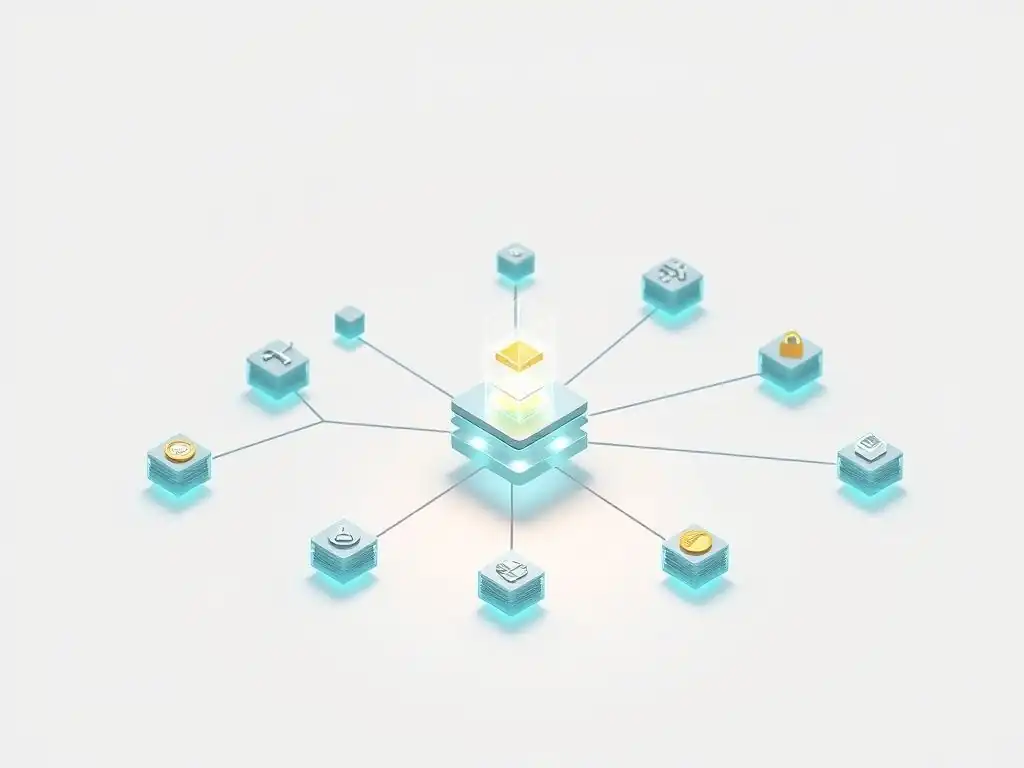
Scalable DeFi blockchain solutions offer numerous advantages that are critical for moving decentralized finance from a niche technology to a mainstream financial alternative. These benefits directly address the pain points experienced on congested networks and pave the way for broader adoption and innovation.
The successful implementation and adoption of these solutions fundamentally change the economic and practical feasibility of using DeFi. They make interacting with decentralized applications faster, cheaper, and more reliable, which is essential for competing with or replacing traditional financial services.
Reduced Transaction Fees: Making DeFi Accessible to All Users
One of the most significant benefits of scalable DeFi blockchain solutions is the dramatic reduction in transaction fees. On solutions like Layer-2 rollups (e.g., Arbitrum, Optimism) or sidechains (e.g., Polygon), the cost of executing a swap or interacting with a lending protocol can drop from tens or hundreds of dollars to just a few cents. For example, the average transaction cost on Arbitrum can be below $0.50, while on Polygon it's often fractions of a cent, in stark contrast to Ethereum L1 fees which can easily exceed $10-$50 during moderate activity.
This reduction in cost is transformative. It makes DeFi accessible to users with smaller capital amounts who were previously priced out by high gas fees. It also enables new use cases, such as micro-payments, frequent trading strategies, or participation in protocols that require multiple interactions, which were economically unviable on congested L1s. Lower fees democratize access to decentralized financial services globally.
Increased Transaction Speed: Enhancing the User Experience in DeFi Applications
Scalable DeFi blockchain solutions also offer significantly faster transaction confirmation times compared to congested Layer-1 networks. While Ethereum L1 has a block time of around 13-15 seconds, users often have to wait much longer for transactions to be included due to congestion, and finality can take minutes. On L2 rollups, transactions are processed off-chain almost instantly, with confirmation on the L2 layer happening within seconds, even though final settlement on L1 might take longer (minutes to hours for ZK-Rollups, days for Optimistic Rollups in some cases). Sidechains like Polygon offer block times of just a few seconds.
Faster transaction speeds greatly enhance the user experience in DeFi applications. Trading on DEXs becomes more responsive, allowing users to react quickly to market changes. Participating in lending and borrowing protocols feels more immediate. This improved responsiveness is crucial for attracting and retaining users accustomed to the speed of traditional online financial services and is a key feature of effective scalable DeFi blockchain solutions.
Improved Scalability: Supporting the Growth and Expansion of the DeFi Ecosystem
Ultimately, scalable DeFi blockchain solutions provide the necessary infrastructure to support the continued growth and expansion of the entire DeFi ecosystem. By increasing the network's capacity to handle a higher volume of transactions and users, these solutions remove the primary technical barrier to growth.
As DeFi applications become more sophisticated and attract more users, the underlying blockchain must be able to handle the increased load without performance degradation. Scalable solutions ensure that the network can accommodate millions of users and billions in TVL, enabling the development of more complex protocols, the onboarding of institutional players, and the integration of DeFi into broader financial systems. This improved scalability is fundamental to DeFi's long-term viability and potential to become a global financial infrastructure.
Enhanced Security: Balancing Decentralization While Scaling DeFi
A critical aspect of developing scalable DeFi blockchain solutions is ensuring that scalability is achieved without compromising the core tenets of blockchain: security and decentralization. Different scaling approaches offer varying trade-offs. Layer-2 rollups, for instance, inherit the security of the underlying Layer-1 (Ethereum), as transaction data or validity proofs are anchored on the main chain. This allows them to offer high throughput while maintaining a strong security posture, leveraging Ethereum's decentralized validator set and economic security.
Sidechains like Polygon rely on their own validator sets and consensus mechanisms, which introduces a different security model that may be less decentralized than Ethereum's L1, though often still robust. Layer-1 scaling methods like sharding aim to increase throughput while maintaining decentralization across shards. The ongoing effort in the blockchain space is to find the optimal balance – building scalable DeFi blockchain solutions that can handle mass adoption while remaining secure against attacks and resistant to censorship, preserving the trustless nature that makes DeFi unique.
Case Studies: Real-World Examples of Scalable DeFi Implementations
Examining specific examples of how DeFi protocols have successfully deployed on and leveraged scalable DeFi blockchain solutions provides concrete evidence of their impact. These case studies illustrate the benefits discussed earlier, showcasing how major protocols have expanded their reach and improved user experience by adopting scaling technologies.
These examples highlight the practical application of scalable DeFi blockchain solutions and demonstrate their effectiveness in addressing the limitations of Layer-1 congestion. They also offer insights into the specific scaling technologies that have gained traction within the DeFi community.
Analyzing Aave on Polygon: A Successful Layer-2 DeFi Protocol
Aave, one of the largest decentralized lending and borrowing protocols, successfully deployed a version of its protocol on the Polygon PoS sidechain. This implementation quickly gained traction, attracting billions of dollars in Total Value Locked (TVL) shortly after launch. The primary driver for this rapid adoption was the drastically lower transaction fees and faster speeds offered by Polygon compared to Ethereum L1.
Users could deposit, borrow, repay, and manage their positions on Aave on Polygon for fractions of a cent, a significant improvement over the tens or hundreds of dollars sometimes required for similar operations on Ethereum L1. This made Aave's services accessible to a wider range of users and use cases that were previously uneconomical. The Aave deployment on Polygon serves as a prime example of how a major DeFi protocol can leverage a scalable DeFi blockchain solution (in this case, a sidechain) to expand its user base and liquidity.
Examining Uniswap V3 on Optimism: Leveraging Optimistic Rollups
Uniswap, the leading decentralized exchange (DEX) by trading volume, deployed its V3 protocol on Optimism, an Optimistic Rollup Layer-2 solution for Ethereum. While Uniswap V3 was already available on Ethereum L1 and Polygon, the deployment on Optimism provided users with another avenue to trade with significantly reduced gas costs while benefiting from the security inheritance of Ethereum.
Trading pairs and liquidity pools on Uniswap V3 on Optimism offer transaction fees that are typically 10-100x lower than on Ethereum L1. Although TVL and trading volume on Optimism might not always match L1, the availability of a major DEX on a rollup demonstrates the viability of using Optimistic Rollups as scalable DeFi blockchain solutions for high-frequency applications like trading. It provides users with choices based on their priorities for cost, speed, and finality characteristics of different scaling layers.
Investigating a Synthetix on Optimism: A Complex DeFi Protocol Scaling with L2
Synthetix, a complex DeFi protocol for issuing and trading synthetic assets, is another early and significant adopter of Optimistic Rollups, having extensively utilized Optimism for its operations. Synthetix involves intricate interactions, including staking SNX tokens, issuing synthetic assets (synths), and trading them on its exchange (Kwenta). These operations can be gas-intensive on Ethereum L1.
By migrating a significant portion of its activity to Optimism, Synthetix enabled users to perform these complex actions with much lower transaction costs. This allowed for more frequent rebalancing of debt positions, cheaper trading of synths, and reduced overhead for stakers. The successful operation of a protocol as complex as Synthetix on Optimism highlights the capability of Optimistic Rollups to serve as robust and scalable DeFi blockchain solutions for advanced decentralized financial applications that require substantial computational resources.
The Future of Scalable DeFi Blockchains: Trends and Predictions
The landscape of scalable DeFi blockchain solutions is constantly evolving, driven by ongoing research, development, and real-world adoption. Several key trends are likely to shape the future of how DeFi protocols scale and interact.
These trends suggest a future where DeFi is not confined to a single chain or scaling solution but operates across multiple interconnected networks, becoming more efficient, accessible, and potentially subject to increasing regulatory scrutiny. The development of more advanced scalable DeFi blockchain solutions is a critical area of focus for the entire blockchain industry.
The Rise of Interoperable DeFi Solutions Across Multiple Blockchains (Cosmos, Polkadot)
While much of the initial focus on scalability has been within the Ethereum ecosystem (L2s, Eth2), the future of scalable DeFi blockchain solutions increasingly involves interoperability between different blockchains. Projects like Cosmos and Polkadot are building frameworks designed to allow independent blockchains ("zones" in Cosmos, "parachains" in Polkadot) to connect and communicate with each other.
This interoperability enables assets and data to flow seamlessly between different chains, each potentially optimized for different purposes or offering unique scaling properties. A user might hold assets on a low-cost, high-throughput chain and interact with a complex smart contract on another, all while maintaining a unified experience. This vision of interconnected, specialized blockchains represents a powerful form of scalable DeFi blockchain solutions, moving beyond single-chain limitations to create a vast, multi-chain decentralized financial network.
The Evolution of Scaling Technologies and Their Impact on DeFi
The underlying scaling technologies themselves are continually improving. For Layer-2 rollups, this includes advancements in ZK-proof technology, making ZK-Rollups more efficient, cheaper, and compatible with existing Ethereum code (ZK-EVMs). Optimistic Rollups are exploring faster withdrawal methods. Layer-1 solutions are refining sharding designs and optimizing consensus mechanisms.
New architectural patterns, like modular blockchains, are gaining prominence. This ongoing technological evolution means that the performance and cost-effectiveness of scalable DeFi blockchain solutions will likely continue to improve. Future DeFi protocols will be able to leverage more powerful and efficient scaling infrastructure, enabling even more innovative and previously unimaginable applications. The competition and innovation among different scaling approaches will drive the ecosystem towards increasingly performant and accessible decentralized finance.
Regulatory Considerations for Scalable DeFi Blockchain Solutions
As DeFi grows in scale and adoption, it inevitably attracts the attention of regulators worldwide. The increased transaction volume and user base enabled by scalable DeFi blockchain solutions mean that the potential impact of DeFi on traditional financial systems and consumer protection becomes more significant. Regulators are beginning to grapple with how to classify and oversee decentralized protocols.
Future developments in scalable DeFi blockchain solutions will likely need to consider potential regulatory requirements, such as identity verification (KYC/AML) for certain types of interactions or reporting obligations. While the decentralized nature of blockchain presents challenges for traditional regulation, the platforms and interfaces built on these scalable layers might become points of focus. Navigating the evolving regulatory landscape will be crucial for the sustained growth and mainstream acceptance of scalable DeFi, ensuring that innovation continues while addressing legitimate concerns about financial stability and illicit activity.
Conclusion: Embracing Scalable DeFi Blockchain Solutions for a Thriving Ecosystem
The Importance of Innovation in Blockchain Scalability for DeFi's Future
The rapid evolution of decentralized finance has unequivocally demonstrated the critical need for robust and effective scalable DeFi blockchain solutions. The limitations encountered on early networks, particularly high gas fees and congestion on Ethereum's Layer 1, highlighted that the underlying infrastructure must scale alongside the growth in user adoption and protocol complexity. Innovation in blockchain scalability is not merely an optimization; it is a prerequisite for DeFi to fulfill its potential as a global, accessible, and efficient financial system.
The ongoing research and development across Layer-1, Layer-2, and alternative architectures are fundamental to overcoming technical bottlenecks. Without these advancements, DeFi would remain a niche technology, limited by cost and performance. Embracing and developing new scalable DeFi blockchain solutions is paramount to unlocking the next phase of growth, enabling broader participation, and supporting the development of more sophisticated decentralized applications.
Choosing the Right Scalable DeFi Blockchain Solution for Your Needs
The diverse landscape of scalable DeFi blockchain solutions means that developers and users now have multiple options, each with its own set of trade-offs regarding security, cost, speed, finality, and compatibility. There is no single "best" solution; the optimal choice depends on the specific requirements of the DeFi application or the user's needs.
Protocols might choose a Layer-2 rollup for its strong security inheritance from Ethereum, a sidechain for its ease of migration and low cost, or explore entirely new Layer-1 architectures for specific performance characteristics. Users must also consider which scalable DeFi blockchain solution best suits their activity – whether it's frequent small trades (favoring low-cost, fast solutions) or large, infrequent transactions (where L1 security might be prioritized). Understanding these nuances is key to navigating the scaling landscape effectively.
The Potential of Scalable Blockchains to Revolutionize Decentralized Finance
The successful implementation and widespread adoption of scalable DeFi blockchain solutions hold the potential to truly revolutionize decentralized finance. By making DeFi protocols faster, cheaper, and more accessible, these technologies can onboard millions of new users globally, including those previously excluded by traditional financial systems or the high costs of early blockchain networks.
Scalable infrastructure enables the creation of new, innovative financial products and services that were previously impractical. It allows DeFi to compete more effectively with traditional finance on performance and cost, while retaining the core benefits of decentralization, transparency, and permissionless access. As scalable DeFi blockchain solutions continue to mature and interoperate, they are poised to form the backbone of a future global financial system that is more open, efficient, and equitable.
Frequently Asked Questions
What are the main challenges hindering the widespread adoption of DeFi?
The primary obstacles are congestion on existing blockchains, leading to high gas fees, and limitations in scalability, which restricts the number of transactions processed.
How do scalable DeFi blockchain solutions address the problem of high gas fees?
Scalable solutions often employ techniques like layer-2 scaling or sharding to distribute the transaction load, thereby reducing gas costs per transaction.
Beyond Ethereum, what other blockchains are emerging as potential platforms for DeFi?
Several blockchains, including Solana, Avalanche, and Polkadot, are gaining traction due to their higher transaction throughput and lower fees compared to Ethereum.
What role does regulation play in the future development of scalable DeFi blockchain solutions?
Regulation will heavily influence the adoption and development of DeFi. Clear frameworks can foster innovation and trust, but overly restrictive rules may hinder growth and adoption.
What are some examples of enterprise applications leveraging scalable DeFi blockchain solutions?
Supply chain management, trade finance, and digital identity verification are examples. These benefit from increased efficiency, transparency, and reduced operational costs offered by scalable blockchain technologies.
Final Reflection: Building a Future of Accessible Finance
The promise of Decentralized Finance (DeFi) lies in its potential to democratize access to financial services, but the current limitations of blockchain scalability threaten to undermine this very promise. Congestion and exorbitant gas fees are not mere technical hurdles; they are barriers that exclude many from participating in this revolutionary financial landscape.
The struggle to achieve truly scalable DeFi solutions is more than just a technological race; it's a reflection of our commitment to an inclusive future. The ability for anyone, regardless of their financial standing, to participate in DeFi is paramount, and the solutions we develop today will shape the financial realities of tomorrow. The future of finance is decentralized, but it must also be accessible.
This quote encapsulates the urgency and importance of finding scalable DeFi blockchain solutions.
As we stand at the cusp of a new era in finance, let us not forget the core principles that drive us. Reflect on the role you can play in building a more accessible and equitable financial future. Consider how your actions, whether as a developer, investor, or simply an engaged citizen, can contribute to overcoming the challenges of scalability and paving the way for a truly decentralized and inclusive financial ecosystem.
Conquer DeFi Challenges: Start Scaling Your Strategies!
Thank you for exploring the world of scalable blockchains and their potential to revolutionize decentralized finance. You now have a deeper understanding of the solutions addressing congestion and high gas fees. It's time to take that knowledge and help shape the future of DeFi!
Here's how you can contribute to the revolution:
- Explore Further: Research and experiment with Layer-2 scaling solutions like Optimistic Rollups or zk-Rollups to see how they help reduce network congestion and transaction costs.
- Share your insights: Discuss these solutions with fellow DeFi enthusiasts and spread awareness about the advantages of scalable blockchains on social media platforms.
- Challenge the Norm: Get involved in governance forums and propose innovative solutions to improve scalability and user experience.
Which Layer-2 solution are you most excited to try, and how do you believe it will influence the future of decentralized finance? Share your thoughts in the comments below!
Leave a Reply