
Hyperledger vs. Ethereum for Enterprise: A Deep Dive Comparison


Welcome to Blockchain Trends, your gateway to understanding the profound impact of blockchain technology beyond just cryptocurrencies. Dive into the world of DeFi, enterprise solutions, regulatory landscapes, and the exciting future of decentralized systems.
Curious about which blockchain platform is right for your enterprise? Our latest article, a comprehensive Hyperledger vs. Ethereum enterprise blockchain comparison, unravels the complexities and nuances of each, offering valuable insights to help you make informed decisions. Unlock the potential of blockchain for your business - start exploring now!
- Introduction: Enterprise Blockchain Landscape - Hyperledger and Ethereum
- Hyperledger: Tailored for Permissioned Enterprise Blockchains
-
Ethereum: The Leading Public Blockchain Platform for Enterprise Applications
- Ethereum's Ecosystem: Smart Contracts and Decentralized Applications (DApps)
- Enterprise Ethereum Alliance (EEA) and Private Ethereum Networks
- Ethereum Use Cases in Enterprise: Tokenization, Decentralized Finance (DeFi), Data Management
- Ethereum Advantages for Enterprise: Innovation, Interoperability, Community Support
-
Hyperledger vs. Ethereum: A Detailed Feature Comparison
- Consensus Mechanisms: Hyperledger's Pluggable Consensus vs. Ethereum's Proof-of-Stake (PoS)
- Smart Contract Languages: Chaincode (Go, Java, Node.js) vs. Solidity
- Permissioning and Access Control: Permissioned vs. Public Networks
- Transaction Throughput and Scalability: Performance Benchmarks and Considerations
- Security and Privacy: Data Protection and Compliance
- Governance and Community: Open Source Projects and Enterprise Support
- Hyperledger and Ethereum: Choosing the Right Platform for Your Enterprise
- Hyperledger Ethereum Enterprise Blockchain Comparison: Real-World Case Studies
- The Future of Enterprise Blockchain: Hyperledger and Ethereum Evolution
- Conclusion: Making an Informed Decision on Hyperledger vs. Ethereum for Your Enterprise Blockchain Needs
-
Frequently Asked Questions
- What are the key differences between Hyperledger and Ethereum when considering them for enterprise blockchain solutions?
- Which blockchain platform, Hyperledger or Ethereum, is better suited for supply chain management applications within an enterprise?
- How do the consensus mechanisms in Hyperledger and Ethereum impact transaction speeds and scalability for enterprise use cases?
- What are the regulatory considerations when choosing between Hyperledger and Ethereum for deploying enterprise blockchain applications?
- What skills and resources are typically required to develop and maintain enterprise blockchain solutions using Hyperledger compared to Ethereum?
- Final Reflection: Navigating the Enterprise Blockchain Landscape
- Unleash Your Enterprise Blockchain Potential
Introduction: Enterprise Blockchain Landscape - Hyperledger and Ethereum
The Rise of Enterprise Blockchain Solutions
The exploration of blockchain technology has transcended its initial association with cryptocurrencies, rapidly evolving into a transformative force for enterprises across diverse sectors. Businesses are increasingly recognizing the potential of blockchain to enhance operational efficiency, security, and transparency.
This surge in interest stems from the inherent characteristics of blockchain: its decentralized nature, immutability, and cryptographic security, which together offer a robust foundation for building trust and streamlining complex processes. From supply chain management and financial transactions to healthcare record keeping and digital identity verification, the applications of enterprise blockchain are vast and varied.
Early adopters are already witnessing significant improvements in areas such as reduced fraud, lower operational costs, and enhanced data integrity, fueling further exploration and investment in this nascent technology. Industry analysts predict substantial growth in the enterprise blockchain market, projecting multi-billion dollar valuations within the next few years as more organizations move from pilot projects to full-scale deployments.
The growing adoption of enterprise blockchain is further propelled by the increasing need for secure and transparent data sharing in a globalized and interconnected business environment. Traditional centralized systems often present vulnerabilities, single points of failure, and challenges in data reconciliation across different entities. Blockchain, with its distributed ledger technology, offers a solution by enabling secure, auditable, and shared records across a network of participants.
This capability is particularly crucial in industries dealing with sensitive data, intricate supply chains, or multi-party collaborations. Furthermore, the emergence of sophisticated blockchain platforms and frameworks tailored specifically for enterprise needs has lowered the barrier to entry.
These platforms provide the necessary tools and infrastructure for businesses to develop and deploy blockchain solutions that are scalable, secure, and compliant with regulatory requirements. This confluence of factors – increasing business needs, technological advancements, and growing industry maturity – solidifies enterprise blockchain as a pivotal technology for the future of business operations.
Understanding Hyperledger and Ethereum: Key Differences at a Glance
When considering enterprise blockchain solutions, Hyperledger and Ethereum stand out as two of the most prominent and influential platforms. While both are open-source blockchain technologies, they cater to different needs and architectures, particularly in the enterprise context. A fundamental distinction lies in their inherent design: Ethereum, in its original form, is a public, permissionless blockchain, meaning anyone can join the network, participate in transactions, and access data.
This public nature fosters transparency and broad accessibility but may not be ideal for enterprises concerned with data privacy and control. In contrast, Hyperledger is an umbrella project under the Linux Foundation, specifically designed for enterprise-grade, permissioned blockchains. This permissioned nature allows organizations to control network access, ensuring that only authorized participants can join and transact, addressing critical concerns around data confidentiality and regulatory compliance.
Another key difference resides in their core functionalities and ecosystems. Ethereum's strength lies in its vibrant ecosystem of smart contracts and decentralized applications (DApps), powered by its native cryptocurrency, Ether (ETH). This robust ecosystem has fostered innovation in areas like decentralized finance (DeFi) and tokenization. Hyperledger, on the other hand, is not a single blockchain but rather a suite of frameworks and tools designed to build customized blockchain solutions.
Frameworks like Hyperledger Fabric, Besu, and Sawtooth offer different architectures and functionalities, allowing enterprises to choose the best fit for their specific use case. Furthermore, Hyperledger projects generally do not have native cryptocurrencies, focusing instead on operational efficiency and data integrity within permissioned environments. This distinction in architecture, permissioning model, and ecosystem underscores the importance of understanding the nuances between Hyperledger and Ethereum when selecting a blockchain platform for enterprise adoption.
Hyperledger: Tailored for Permissioned Enterprise Blockchains
Hyperledger Architecture: A Modular Approach
Hyperledger distinguishes itself through its modular and flexible architecture, designed to cater specifically to the diverse needs of enterprise blockchain deployments. Unlike monolithic blockchain platforms, Hyperledger offers a collection of frameworks, tools, and libraries that can be assembled and customized to create tailored blockchain solutions. This modularity is a cornerstone of Hyperledger's design, allowing developers to select components that best align with their specific business requirements and technical infrastructure.
For instance, enterprises can choose from different consensus mechanisms, data storage options, and smart contract languages, enabling them to optimize performance, security, and scalability for their particular use case. This architectural flexibility is crucial for enterprise adoption, as it allows organizations to integrate blockchain technology into their existing systems without requiring a complete overhaul.
The modular architecture of Hyperledger facilitates interoperability and extensibility. Different Hyperledger frameworks, such as Fabric, Besu, and Sawtooth, can be designed to work together, enabling cross-chain communication and data exchange. This interoperability is becoming increasingly important as enterprises seek to build interconnected blockchain networks that span across different departments, organizations, or even industries.
Moreover, the open-source nature of Hyperledger encourages community contributions and continuous innovation. Developers can contribute new modules, enhance existing components, and adapt the platform to emerging enterprise needs. This collaborative development model ensures that Hyperledger remains at the forefront of enterprise blockchain technology, constantly evolving to meet the ever-changing demands of the business world.
Hyperledger Frameworks: Fabric, Besu, Indy, Iroha, Sawtooth
Hyperledger encompasses a variety of frameworks, each designed with specific enterprise use cases and architectural approaches in mind. Hyperledger Fabric is arguably the most widely adopted framework, known for its permissioned architecture, high scalability, and confidentiality features. Fabric excels in scenarios requiring strict access control and private data handling, making it suitable for supply chain management, trade finance, and asset tracking. Hyperledger Besu, originally developed by ConsenSys, is an enterprise-grade Ethereum client.
While part of the Hyperledger umbrella, Besu uniquely offers compatibility with both public and permissioned Ethereum networks. This dual nature makes it attractive for enterprises seeking to bridge the gap between private and public blockchain ecosystems. Besu supports enterprise features like privacy and permissioning while maintaining Ethereum Virtual Machine (EVM) compatibility, enabling the deployment of Solidity-based smart contracts.
Hyperledger Indy focuses on decentralized identity management. It provides tools and libraries for creating and managing self-sovereign identities, allowing individuals and organizations to control their digital identities without relying on centralized authorities. Indy is crucial for applications like verifiable credentials, digital IDs, and secure data sharing, particularly in government and healthcare sectors.
Hyperledger Iroha is designed for simplicity and ease of use, making it ideal for mobile and embedded systems. Its straightforward architecture and focus on asset management make it suitable for applications like IoT data tracking, mobile payments, and supply chain visibility in resource-constrained environments. Hyperledger Sawtooth emphasizes modularity and pluggability, supporting both permissioned and permissionless deployments.
Sawtooth's innovative consensus mechanism, Proof of Elapsed Time (PoET), leverages trusted execution environments to enhance scalability and security. This diverse range of frameworks within Hyperledger allows enterprises to select the most appropriate technology based on their specific requirements, technical expertise, and business objectives.
Hyperledger Use Cases in Enterprise: Supply Chain, Finance, Healthcare
Hyperledger's suite of frameworks has found practical applications across a multitude of enterprise sectors, demonstrating its versatility and adaptability. In supply chain management, Hyperledger Fabric is frequently employed to enhance traceability, transparency, and efficiency. For instance, Walmart's food traceability initiative uses Hyperledger Fabric to track produce from farm to shelf, significantly reducing foodborne illness response times.
They reported a reduction in tracing time for mangoes from days to mere seconds, showcasing the dramatic improvements in supply chain visibility. Similarly, pharmaceutical companies are using Hyperledger to track drugs throughout the supply chain, combating counterfeit medications and ensuring the integrity of pharmaceutical products, a market estimated to lose billions annually due to counterfeiting.
In the financial sector, Hyperledger is being utilized for trade finance, payments, and securities settlement. TradeLens, a platform developed by IBM and Maersk using Hyperledger Fabric, streamlines global trade by digitizing shipping documentation and facilitating collaboration among shippers, ports, and customs authorities. This platform has reportedly reduced shipping times by up to 40% and costs by up to 20% in some trade lanes.
In healthcare, Hyperledger Indy and Fabric are being explored for secure and interoperable patient data management and verifiable credentials for healthcare professionals. For example, organizations are piloting solutions for patients to control access to their medical records and share them securely with healthcare providers, addressing critical concerns around data privacy and interoperability in healthcare systems. These real-world examples underscore Hyperledger's tangible benefits in enhancing efficiency, security, and transparency across diverse enterprise applications.
Hyperledger Advantages for Enterprise: Control, Security, Scalability
Hyperledger offers several key advantages that make it a compelling choice for enterprises seeking to adopt blockchain technology. Control is paramount in enterprise settings, and Hyperledger's permissioned nature provides organizations with granular control over network access and participation. This ensures that sensitive business data is only accessible to authorized entities, addressing critical concerns around data privacy and regulatory compliance.
Enterprises can define roles and permissions, manage user identities, and enforce access control policies, creating a secure and controlled blockchain environment tailored to their specific needs. This level of control is often lacking in public, permissionless blockchains, making Hyperledger a more suitable option for organizations operating in regulated industries or handling confidential information.
Security is another core strength of Hyperledger. Its permissioned architecture inherently reduces the attack surface compared to public blockchains. By limiting network participants to known and trusted entities, Hyperledger minimizes the risk of malicious actors and unauthorized access.
Furthermore, Hyperledger frameworks incorporate robust security features, including cryptographic algorithms for data encryption and secure transaction processing. For example, Hyperledger Fabric supports pluggable security modules, allowing enterprises to integrate their preferred security protocols and cryptographic libraries. Scalability is a critical consideration for enterprise applications that often require high transaction throughput and low latency.
Hyperledger frameworks are designed for scalability, offering features like channel architecture in Fabric and parallel transaction processing in Sawtooth. These features enable Hyperledger networks to handle a large volume of transactions efficiently, meeting the performance demands of enterprise-grade applications. Benchmarks for Hyperledger Fabric have demonstrated transaction processing capabilities exceeding 10,000 transactions per second in certain configurations, showcasing its scalability potential for demanding enterprise workloads.
Ethereum: The Leading Public Blockchain Platform for Enterprise Applications
Ethereum's Ecosystem: Smart Contracts and Decentralized Applications (DApps)
Ethereum's ecosystem is a vibrant and expansive landscape centered around smart contracts and decentralized applications (DApps). Smart contracts, self-executing agreements written in code, are the foundational building blocks of Ethereum DApps. These contracts automate processes, enforce agreements, and eliminate the need for intermediaries, fostering efficiency and transparency.
Ethereum's robust smart contract functionality, powered by the Solidity programming language and the Ethereum Virtual Machine (EVM), has attracted a vast developer community, leading to a proliferation of DApps across various domains. The ecosystem is further enriched by a comprehensive suite of development tools, libraries, and infrastructure, making it relatively accessible for developers to build and deploy blockchain applications.
The sheer size and dynamism of the Ethereum ecosystem are significant advantages for enterprises considering blockchain adoption. The network effect of a large developer community translates to faster innovation, readily available talent, and a wealth of open-source resources. Ethereum's ecosystem has fostered groundbreaking developments in areas like decentralized finance (DeFi), non-fungible tokens (NFTs), and decentralized autonomous organizations (DAOs).
While originally conceived as a public, permissionless platform, Ethereum's ecosystem has evolved to accommodate enterprise needs through private Ethereum networks and enterprise-focused initiatives like the Enterprise Ethereum Alliance (EEA). This evolution allows enterprises to leverage the innovation and ecosystem benefits of Ethereum while addressing their specific requirements for privacy, permissioning, and regulatory compliance.
Enterprise Ethereum Alliance (EEA) and Private Ethereum Networks
Recognizing the potential of Ethereum for enterprise applications, the Enterprise Ethereum Alliance (EEA) was formed. The EEA is a member-driven organization that brings together enterprises, technology providers, and the Ethereum community to drive the adoption of Ethereum technology in business. With over hundreds of member organizations, including Fortune 500 companies, the EEA plays a crucial role in defining enterprise-grade Ethereum standards, promoting interoperability, and fostering collaboration within the ecosystem.
The EEA's work focuses on developing specifications, reference architectures, and best practices for deploying Ethereum in enterprise environments. This standardization effort is essential for ensuring compatibility and reducing fragmentation in the enterprise Ethereum landscape.
Beyond the EEA, the concept of private Ethereum networks has emerged as a key solution for enterprises seeking to leverage Ethereum's capabilities while maintaining control and privacy. Private Ethereum networks are permissioned versions of Ethereum, where network access is restricted to authorized participants. These networks offer the same smart contract functionality and EVM compatibility as public Ethereum but provide enhanced privacy and control over data and network governance.
Enterprises can choose from various private Ethereum implementations, such as Hyperledger Besu, Go Ethereum (Geth) in private mode, and Parity Ethereum (now OpenEthereum, though support ended), to build permissioned blockchain solutions tailored to their specific requirements. Private Ethereum networks allow enterprises to benefit from Ethereum's mature ecosystem and developer talent pool while addressing their need for data confidentiality and regulatory compliance within a controlled environment.
Ethereum Use Cases in Enterprise: Tokenization, Decentralized Finance (DeFi), Data Management
Ethereum's versatility and robust smart contract capabilities have paved the way for diverse enterprise use cases, particularly in areas like tokenization, decentralized finance (DeFi), and data management. Tokenization, the process of representing real-world assets as digital tokens on a blockchain, is gaining traction in enterprises for applications like supply chain finance, real estate, and intellectual property. Ethereum's ERC-20 and ERC-721 token standards provide a standardized framework for creating and managing digital assets, facilitating fractional ownership, improved liquidity, and streamlined asset transfer. For example, companies are exploring tokenizing invoices to improve supply chain financing efficiency and reduce payment delays.
Decentralized Finance (DeFi), while primarily originating in the public Ethereum ecosystem, is also finding enterprise applications, particularly in areas like cross-border payments and decentralized marketplaces. Enterprises are exploring DeFi protocols to access alternative financing options, reduce transaction costs, and enhance transparency in financial operations. For instance, stablecoins, cryptocurrencies pegged to fiat currencies, built on Ethereum are being used for faster and cheaper international payments compared to traditional banking systems.
In data management, Ethereum is being explored for applications like decentralized identity, verifiable credentials, and secure data sharing. The inherent immutability and transparency of Ethereum blockchain can enhance data integrity and auditability, crucial for industries dealing with sensitive data and regulatory compliance. For example, initiatives are underway to use Ethereum for creating self-sovereign identity solutions that empower individuals to control their digital identities and share data securely with verified parties.
Ethereum Advantages for Enterprise: Innovation, Interoperability, Community Support
Ethereum offers distinct advantages for enterprises, primarily centered around innovation, interoperability, and strong community support. Innovation is a hallmark of the Ethereum ecosystem. The platform's open-source nature and large developer community foster rapid experimentation and the development of cutting-edge blockchain solutions. Enterprises adopting Ethereum benefit from this constant stream of innovation, gaining access to new technologies and applications developed within the ecosystem. The pace of innovation in DeFi, NFTs, and other areas within Ethereum is significantly faster than in more traditional enterprise software development, providing a competitive edge for early adopters.
Interoperability is another key advantage, particularly in the context of public Ethereum. While enterprise deployments often utilize private Ethereum networks, the underlying technology is inherently interoperable with the vast public Ethereum ecosystem. This interoperability can be valuable for enterprises seeking to interact with public DeFi protocols, access broader liquidity pools, or participate in cross-chain initiatives in the future. Furthermore, the Ethereum ecosystem is increasingly focused on cross-chain interoperability solutions, bridging Ethereum with other blockchain platforms.
Community support is a significant strength of Ethereum. The platform boasts the largest and most active blockchain developer community globally. This translates to readily available developer talent, extensive documentation, open-source tools, and a wealth of community knowledge and support. Enterprises choosing Ethereum benefit from this robust community ecosystem, reducing development costs, accelerating time-to-market, and mitigating risks associated with adopting a nascent technology.
Hyperledger vs. Ethereum: A Detailed Feature Comparison
Consensus Mechanisms: Hyperledger's Pluggable Consensus vs. Ethereum's Proof-of-Stake (PoS)
Consensus mechanisms are fundamental to blockchain technology, ensuring agreement among network participants on the validity of transactions. Hyperledger frameworks offer a pluggable consensus architecture, allowing enterprises to choose the consensus algorithm that best suits their specific needs and performance requirements. Hyperledger Fabric, for instance, supports various consensus mechanisms, including Raft, Kafka, and PBFT (Practical Byzantine Fault Tolerance).
Raft is often preferred for its crash fault tolerance and performance in permissioned networks, while PBFT offers Byzantine fault tolerance, making it more resilient to malicious actors. This flexibility in consensus mechanisms is a significant advantage for enterprises, enabling them to optimize for speed, security, and fault tolerance based on their specific use case and trust model.
Ethereum, on the other hand, is transitioning to Proof-of-Stake (PoS) consensus with Ethereum 2.0. Previously, Ethereum used Proof-of-Work (PoW), which is computationally intensive and energy-consuming. PoS replaces miners with validators who stake ETH to participate in block validation, significantly reducing energy consumption and potentially improving scalability. Ethereum's shift to PoS aims to address scalability limitations and environmental concerns associated with PoW.
However, the transition to PoS is a complex and ongoing process. While PoS offers theoretical advantages in terms of energy efficiency and scalability, its performance and security characteristics in large-scale enterprise deployments are still being evaluated in real-world scenarios. Hyperledger's pluggable consensus architecture provides enterprises with more immediate and granular control over consensus mechanisms, allowing them to tailor their blockchain networks to specific performance and security needs.
Smart Contract Languages: Chaincode (Go, Java, Node.js) vs. Solidity
Smart contract languages are crucial for developing and deploying business logic on blockchain platforms. Hyperledger frameworks generally utilize chaincode, the term Hyperledger uses for smart contracts, which can be written in popular programming languages like Go, Java, and Node.js. This flexibility is a significant advantage for enterprises, as it allows them to leverage existing developer skills and codebases.
Using familiar languages like Go and Java lowers the barrier to entry for enterprise developers and reduces the learning curve associated with blockchain development. Furthermore, the availability of multiple language options provides greater flexibility in choosing the best language based on project requirements and developer expertise.
Ethereum's primary smart contract language is Solidity, a language specifically designed for developing smart contracts on the EVM. Solidity is a relatively new language compared to Go or Java, and while it has a growing developer community, the talent pool is still smaller than for more established languages. However, Solidity is specifically tailored for smart contract development on Ethereum, offering features and functionalities optimized for blockchain environments.
The EVM's dominance in the smart contract space has also led to the development of a rich ecosystem of tools and libraries specifically for Solidity development. While Hyperledger's multi-language support offers broader developer accessibility, Ethereum's Solidity benefits from being purpose-built for smart contracts and having a dedicated ecosystem around the EVM.
Permissioning and Access Control: Permissioned vs. Public Networks
Permissioning and access control are fundamental differences between Hyperledger and Ethereum in the enterprise context. Hyperledger is designed for permissioned networks, where network access and participation are controlled and restricted to authorized entities. This permissioned model is crucial for enterprises that require data privacy, regulatory compliance, and control over network governance. Hyperledger frameworks provide robust mechanisms for managing user identities, roles, and permissions, ensuring that only authorized participants can access data and execute transactions. This granular access control is essential for maintaining confidentiality and meeting regulatory requirements in industries like finance and healthcare.
Ethereum, in its original form, is a public, permissionless network, meaning anyone can join, participate, and access data. While public Ethereum offers transparency and decentralization, it may not be suitable for enterprises with strict data privacy and control requirements. However, the Ethereum ecosystem has evolved to accommodate enterprise needs through private Ethereum networks.
These networks are permissioned versions of Ethereum, offering the same smart contract functionality but with restricted access and enhanced privacy. Private Ethereum networks allow enterprises to leverage Ethereum's ecosystem and smart contract capabilities within a controlled and permissioned environment. The choice between Hyperledger's inherently permissioned architecture and Ethereum's public/private options depends on the enterprise's specific requirements for data privacy, control, and desired level of decentralization.
Transaction Throughput and Scalability: Performance Benchmarks and Considerations
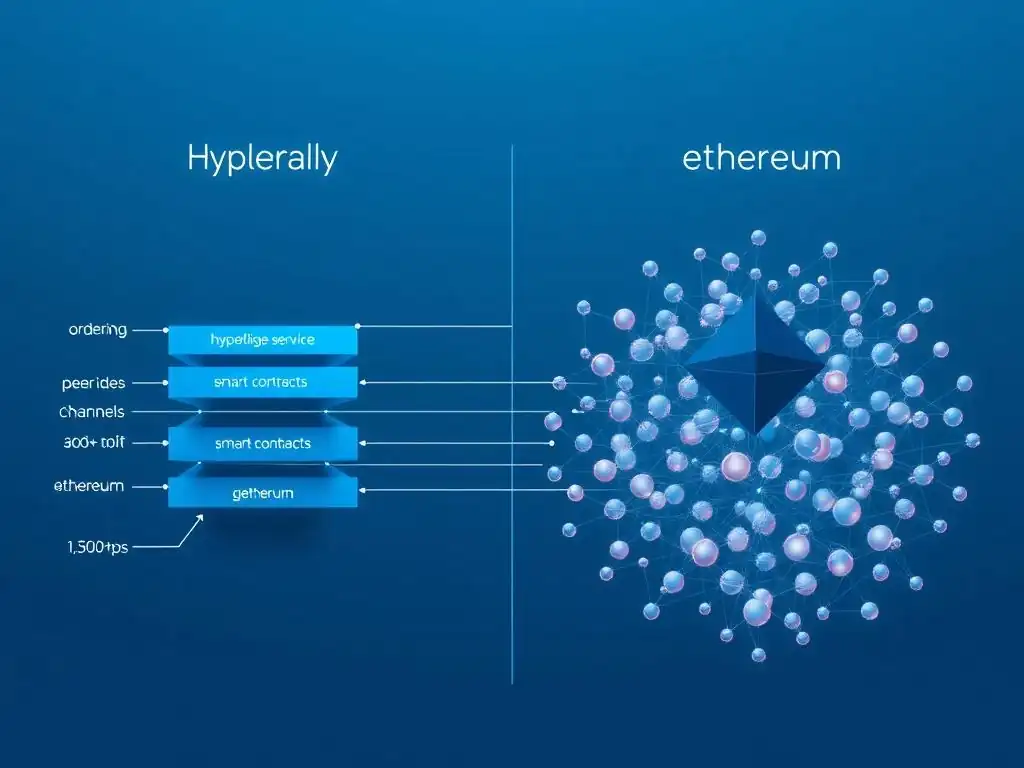
Transaction throughput and scalability are critical performance metrics for enterprise blockchain platforms. Hyperledger frameworks, particularly Hyperledger Fabric, are designed for high transaction throughput in permissioned environments. Fabric's architecture, with features like channel-based data partitioning and efficient consensus mechanisms, enables it to achieve significant transaction processing speeds. Performance benchmarks for Hyperledger Fabric have demonstrated throughput exceeding 10,000 transactions per second in certain configurations, although real-world performance can vary depending on network size, transaction complexity, and hardware infrastructure. Hyperledger's focus on permissioned networks and optimized consensus algorithms contributes to its scalability in enterprise use cases.
Ethereum, in its original Proof-of-Work (PoW) form, faced significant scalability limitations, processing around 15-20 transactions per second. This limited throughput has been a major bottleneck for wider enterprise adoption. Ethereum's ongoing transition to Proof-of-Stake (PoS) with Ethereum 2.0 aims to address these scalability challenges. Ethereum 2.0 introduces sharding, a technique that divides the blockchain into multiple shards, allowing for parallel transaction processing and significantly increasing throughput.
While Ethereum 2.0 promises substantial scalability improvements, the full implementation and real-world performance of sharding are still under development and evaluation. Currently, Hyperledger generally offers higher transaction throughput in permissioned settings compared to public Ethereum, while Ethereum 2.0 is striving to achieve similar scalability through architectural changes. Enterprises should consider their transaction volume requirements and scalability needs when choosing between Hyperledger and Ethereum, taking into account the evolving scalability landscape of both platforms.
Security and Privacy: Data Protection and Compliance
Security and privacy are paramount concerns for enterprises adopting blockchain technology, especially when dealing with sensitive data and regulatory compliance. Hyperledger's permissioned architecture inherently enhances security by limiting network participation to known and trusted entities. This reduces the attack surface and minimizes the risk of malicious actors. Hyperledger frameworks offer features like data encryption, access control lists (ACLs), and private data collections to protect sensitive information and ensure data confidentiality. For example, Hyperledger Fabric's private data collections allow organizations to restrict data visibility to specific subsets of network participants, enhancing privacy within a permissioned environment.
Ethereum, in its public, permissionless form, presents greater security challenges due to its open and decentralized nature. While the Ethereum blockchain itself is highly secure due to its cryptographic foundations, public networks are more susceptible to attacks and vulnerabilities compared to permissioned networks. However, private Ethereum networks offer enhanced security and privacy features for enterprise deployments.
Enterprises can implement access control mechanisms, data encryption, and privacy-enhancing technologies within private Ethereum networks to address security and compliance requirements. Furthermore, both Hyperledger and Ethereum ecosystems are actively developing and integrating privacy-preserving technologies, such as zero-knowledge proofs and secure multi-party computation, to further enhance data privacy in blockchain applications. The choice between Hyperledger and Ethereum from a security and privacy perspective depends on the specific sensitivity of the data being handled, the regulatory environment, and the enterprise's risk tolerance.
Governance and Community: Open Source Projects and Enterprise Support
Governance and community are crucial factors influencing the long-term viability and evolution of blockchain platforms. Both Hyperledger and Ethereum are open-source projects, fostering community-driven development and innovation. Hyperledger, hosted by the Linux Foundation, benefits from the foundation's established governance model and enterprise-focused approach. The Hyperledger community comprises a diverse range of organizations, including technology companies, financial institutions, and industry consortia, contributing to the platform's development and adoption. Hyperledger's governance structure emphasizes collaboration, transparency, and enterprise needs, ensuring that the platform evolves in a direction that aligns with business requirements.
Ethereum's governance is more decentralized and community-driven, reflecting its origins as a public, permissionless blockchain. While there is no single governing body, the Ethereum community is highly active and influential in shaping the platform's roadmap and development. The Ethereum Foundation plays a significant role in research and development, but the community as a whole drives protocol upgrades and ecosystem evolution through open discussions and consensus-building processes.
This decentralized governance model fosters innovation and responsiveness to community needs but can also lead to slower decision-making compared to more centralized governance structures. Both Hyperledger and Ethereum benefit from strong community support, but their governance models differ, reflecting their respective origins and target audiences. Enterprises should consider the governance structure and community dynamics of each platform when evaluating long-term sustainability and support for their blockchain initiatives.
Hyperledger and Ethereum: Choosing the Right Platform for Your Enterprise
Factors to Consider: Business Requirements, Technical Expertise, Budget
Selecting the optimal blockchain platform between Hyperledger and Ethereum for enterprise adoption requires a careful evaluation of several key factors, primarily centered around business requirements, technical expertise, and budget. Business requirements are paramount. Enterprises must clearly define their specific use case, desired level of decentralization, data privacy needs, regulatory compliance obligations, and performance expectations.
If data privacy and strict access control are critical, Hyperledger's permissioned architecture may be more suitable. If the use case benefits from a vibrant ecosystem of DApps and smart contracts and a degree of public network interaction, Ethereum might be a better fit. Understanding the specific business problem and desired outcomes is the first step in platform selection.
Technical expertise within the organization is another crucial consideration. Hyperledger, with its multi-language support and modular architecture, offers flexibility but may require specific expertise in chosen frameworks and programming languages. Ethereum, with Solidity and the EVM, has a large developer community, but expertise in Solidity and blockchain-specific development practices is essential. Enterprises should assess their existing technical capabilities and the availability of talent in their chosen platform. Budgetary constraints also play a significant role.
Both Hyperledger and Ethereum are open-source, eliminating licensing fees. However, implementation costs, infrastructure requirements, development resources, and ongoing maintenance need to be factored in. Ethereum's public network incurs transaction fees (gas costs), which can be a consideration for high-volume applications. Private Ethereum and Hyperledger deployments involve infrastructure costs for hosting and managing the network. A comprehensive cost-benefit analysis, considering these factors, is essential for informed platform selection.
Assessing Your Enterprise Blockchain Needs: Key Evaluation Criteria
To effectively assess enterprise blockchain needs and guide platform selection between Hyperledger and Ethereum, several key evaluation criteria should be considered. Permissioning requirements are fundamental. Does the application require a permissioned network with strict access control, or can it operate on a public or private permissionless network? Hyperledger excels in permissioned scenarios, while Ethereum offers both public and private options.
Data privacy and confidentiality needs are crucial. How sensitive is the data being handled, and what level of privacy protection is required? Hyperledger and private Ethereum networks offer features for data privacy, but the specific requirements will influence platform choice.
Scalability and performance expectations are critical. What transaction throughput and latency are required for the application? Hyperledger generally offers higher throughput in permissioned settings, while Ethereum 2.0 aims to address scalability limitations. Smart contract functionality and ecosystem are important. Does the application require complex smart contracts, and is access to a vibrant ecosystem of DApps and tools beneficial?
Ethereum's ecosystem is more mature and extensive in this regard. Interoperability requirements should be considered. Does the application need to interact with other blockchain networks or legacy systems? Both platforms are exploring interoperability solutions, but the specific requirements may favor one over the other.
Community support and long-term sustainability are vital. Which platform has a stronger community, more robust governance, and better long-term prospects? Both Hyperledger and Ethereum have strong communities, but their governance models and ecosystems differ. A thorough evaluation against these criteria will provide a structured framework for choosing the right platform.
Building a Proof of Concept (PoC): Hyperledger vs. Ethereum Experimentation
The most effective way for enterprises to determine the optimal blockchain platform between Hyperledger and Ethereum is to build a Proof of Concept (PoC). A PoC allows for practical experimentation and hands-on evaluation of each platform in the context of the enterprise's specific use case. The PoC should focus on replicating a core functionality of the intended blockchain application on both Hyperledger and Ethereum (or a private Ethereum network).
This hands-on approach provides valuable insights into each platform's strengths and weaknesses in a real-world setting. The PoC should be designed to test key performance indicators (KPIs) relevant to the enterprise's requirements, such as transaction throughput, latency, data privacy, and ease of development.
During the PoC process, enterprises should assess the development effort and learning curve associated with each platform. Evaluate the availability of developer tools, documentation, and community support for both Hyperledger and Ethereum. Measure the time and resources required to develop and deploy the PoC application on each platform. Performance testing is crucial.
Conduct benchmark tests to measure transaction throughput, latency, and scalability of both Hyperledger and Ethereum PoCs under realistic load conditions. Assess the resource utilization and infrastructure requirements for each platform. Security and privacy considerations should be addressed in the PoC. Evaluate the security features and privacy capabilities of each platform in the context of the enterprise's data sensitivity and compliance requirements.
The PoC should also explore integration capabilities with existing enterprise systems. Assess the ease of integrating Hyperledger and Ethereum PoCs with current IT infrastructure and data sources. The findings from the PoC experimentation will provide empirical data and practical insights to inform a well-reasoned decision on platform selection.
Hyperledger Ethereum Enterprise Blockchain Comparison: Real-World Case Studies
Case Study 1: Food Supply Chain Traceability with Hyperledger Fabric
A compelling real-world case study illustrating Hyperledger Fabric's effectiveness in enterprise blockchain applications is its use in food supply chain traceability. Consider the example of a global food retailer seeking to enhance the transparency and safety of its produce supply chain. This retailer partnered with technology providers to implement a blockchain solution using Hyperledger Fabric to track produce from farm to consumer. The solution involved onboarding various stakeholders onto the Hyperledger Fabric network, including farmers, distributors, processors, and retailers. Each participant maintained a node on the permissioned network, ensuring secure and controlled access to supply chain data.
The Hyperledger Fabric network enabled the recording of critical data points at each stage of the supply chain, such as farm origin, harvest date, processing details, and shipping information. QR codes were affixed to produce packaging, allowing consumers to scan and access detailed provenance information via a mobile application. This enhanced traceability provided consumers with greater confidence in food safety and origin.
Furthermore, the blockchain solution significantly improved supply chain efficiency and responsiveness. In the event of a food safety issue, the retailer could quickly trace the affected produce back to its source within seconds, compared to days or weeks with traditional paper-based systems. This rapid traceability minimized the scope of recalls and reduced food waste.
The implementation of Hyperledger Fabric in this food supply chain case study demonstrates its ability to enhance transparency, improve efficiency, and build trust in complex multi-party ecosystems. It highlights Fabric's strengths in permissioned environments requiring robust access control and data privacy.
Case Study 2: Decentralized Finance (DeFi) Application on Ethereum
A prominent example of Ethereum's application in enterprise-relevant scenarios, particularly in the realm of Decentralized Finance (DeFi), is the development of tokenized securities platforms. Consider a financial institution exploring ways to streamline securities issuance and trading, reduce intermediaries, and improve market efficiency. This institution could leverage Ethereum to build a platform for issuing and trading tokenized securities, representing traditional assets like stocks or bonds as digital tokens on the Ethereum blockchain. The platform would utilize Ethereum's smart contract capabilities to automate securities issuance, trading, settlement, and compliance processes.
The Ethereum-based platform would enable fractional ownership of securities, expanding access to investment opportunities for a wider range of investors. Smart contracts would automate dividend distribution, voting rights, and other corporate actions, reducing manual processes and improving efficiency. The decentralized nature of Ethereum could enhance market transparency and reduce reliance on centralized intermediaries, potentially lowering transaction costs and settlement times.
Furthermore, interoperability with the broader Ethereum DeFi ecosystem could open up new opportunities for tokenized securities, such as participation in decentralized lending and borrowing protocols. While regulatory considerations and security concerns are paramount in the tokenized securities space, this case study illustrates Ethereum's potential to disrupt traditional financial markets and create more efficient, transparent, and accessible financial systems. It showcases Ethereum's strengths in supporting complex smart contracts, fostering innovation in DeFi, and leveraging a vibrant developer ecosystem.
Analyzing the Successes and Challenges of Each Implementation
Analyzing the successes and challenges of both the Hyperledger Fabric food supply chain case study and the Ethereum DeFi application provides valuable comparative insights. The Hyperledger Fabric implementation in food traceability demonstrates success in enhancing transparency, efficiency, and trust within a permissioned ecosystem. The permissioned nature of Fabric was crucial for controlling access to sensitive supply chain data and ensuring compliance with industry regulations.
The modular architecture and scalability of Fabric allowed for the efficient tracking of a large volume of data across a complex supply chain network. However, challenges in Hyperledger Fabric implementations can include onboarding diverse stakeholders onto the network, establishing clear governance models, and ensuring interoperability with legacy systems.
The Ethereum DeFi application for tokenized securities showcases success in innovation, disintermediation, and expanding market access. Ethereum's robust smart contract capabilities and vibrant DeFi ecosystem enabled the development of a platform with automated processes and enhanced market efficiency. The public nature of Ethereum facilitated interoperability and potential access to broader liquidity pools.
However, challenges in Ethereum-based DeFi applications often involve scalability limitations of the public network, high transaction fees (gas costs), security vulnerabilities in smart contracts, and regulatory uncertainty. Choosing between Hyperledger and Ethereum for enterprise blockchain adoption involves carefully weighing these successes and challenges in the context of specific business requirements. Hyperledger excels in permissioned, control-centric environments prioritizing security and efficiency, while Ethereum thrives in innovation-driven applications seeking to leverage a vibrant ecosystem and explore decentralized models, acknowledging the associated scalability and security considerations, especially in public network deployments.
The Future of Enterprise Blockchain: Hyperledger and Ethereum Evolution
Hyperledger Roadmap: Focus on Interoperability and Enhanced Privacy
The future roadmap for Hyperledger is strongly oriented towards enhancing interoperability and privacy, addressing key enterprise requirements for broader adoption. Interoperability is a major focus, with ongoing efforts to enable seamless communication and data exchange between different Hyperledger frameworks and even with other blockchain platforms. Projects like Hyperledger Cactus are specifically designed to facilitate cross-chain transactions and data sharing, allowing enterprises to build interconnected blockchain networks that span across different technologies and organizations. This interoperability focus aims to overcome blockchain silos and unlock the full potential of distributed ledger technology for complex, multi-party business processes.
Enhanced privacy is another critical area of development for Hyperledger. Efforts are underway to integrate advanced privacy-preserving technologies into Hyperledger frameworks, such as zero-knowledge proofs, secure multi-party computation, and confidential computing. These technologies aim to enable secure data sharing and collaboration while maintaining data confidentiality and complying with stringent privacy regulations like GDPR.
For example, Hyperledger Fabric is continuously evolving to incorporate more sophisticated privacy features, such as enhanced private data collections and support for confidential transactions. The Hyperledger roadmap also emphasizes improving developer experience, simplifying deployment and management, and fostering wider industry adoption through education and standardization initiatives. These developments signal Hyperledger's commitment to becoming an even more robust and enterprise-ready blockchain platform in the future.
Ethereum Roadmap (Ethereum 2.0 and Beyond): Scalability Solutions and Improvements
Ethereum's future roadmap, largely defined by Ethereum 2.0 and subsequent upgrades, is heavily focused on addressing scalability limitations and enhancing sustainability. The transition to Proof-of-Stake (PoS) consensus is a cornerstone of Ethereum 2.0, aiming to significantly reduce energy consumption and improve network efficiency compared to Proof-of-Work (PoW). Sharding, another key component of Ethereum 2.0, is designed to dramatically increase transaction throughput by partitioning the blockchain into multiple shards that can process transactions in parallel. These scalability solutions are critical for Ethereum to handle the growing demand for decentralized applications and broader enterprise adoption.
Beyond scalability, the Ethereum roadmap includes ongoing improvements to the Ethereum Virtual Machine (EVM), exploring Layer-2 scaling solutions like rollups, and enhancing privacy features. Layer-2 solutions, such as optimistic rollups and zk-rollups, aim to offload transaction processing from the main Ethereum chain, further boosting scalability and reducing transaction fees. Research and development efforts are also underway to enhance privacy on Ethereum, exploring technologies like zero-knowledge proofs and confidential transactions to address privacy concerns in enterprise and DeFi applications.
The Ethereum roadmap is dynamic and evolving, driven by community consensus and technological advancements. The successful implementation of Ethereum 2.0 and subsequent upgrades is crucial for realizing Ethereum's vision of becoming a scalable, sustainable, and enterprise-grade blockchain platform for the future.
Interoperability between Hyperledger and Ethereum: Bridging the Gap
Interoperability between Hyperledger and Ethereum is increasingly recognized as a critical enabler for wider enterprise blockchain adoption and the realization of a truly interconnected blockchain ecosystem. While Hyperledger and Ethereum have distinct architectures and target different use cases, bridging the gap between these platforms can unlock significant value for enterprises.
Interoperability would allow for seamless data exchange and transaction flow between Hyperledger-based permissioned networks and Ethereum's public and private ecosystems. This could enable hybrid blockchain solutions that combine the strengths of both platforms, leveraging Hyperledger's control and privacy for sensitive enterprise data and Ethereum's innovation and ecosystem for broader application reach.
Various initiatives are underway to facilitate interoperability between Hyperledger and Ethereum. Projects like Hyperledger Cactus are designed to provide cross-chain transaction capabilities and enable communication between different blockchain platforms, including Hyperledger frameworks and Ethereum. Furthermore, the development of blockchain bridges and cross-chain protocols is gaining momentum, aiming to create standardized mechanisms for transferring assets and data between different blockchains.
Achieving seamless interoperability between Hyperledger and Ethereum would require overcoming technical challenges related to consensus mechanism compatibility, smart contract language differences, and governance models. However, the potential benefits of a more interconnected blockchain landscape, including enhanced efficiency, broader application scope, and greater enterprise adoption, are driving significant efforts towards bridging the gap between these two leading blockchain platforms.
Conclusion: Making an Informed Decision on Hyperledger vs. Ethereum for Your Enterprise Blockchain Needs
Key Takeaways: Hyperledger and Ethereum Strengths and Weaknesses
Choosing between Hyperledger and Ethereum for enterprise blockchain adoption necessitates a clear understanding of their respective strengths and weaknesses, aligned with specific business requirements. Hyperledger excels as a permissioned blockchain platform, offering robust control, security, and scalability in enterprise environments. Its modular architecture, diverse frameworks, and focus on privacy make it well-suited for use cases requiring strict access control, data confidentiality, and high transaction throughput in controlled settings, such as supply chain management, finance, and healthcare. However, Hyperledger's ecosystem, while growing, is less extensive than Ethereum's, and development may require specialized expertise in specific frameworks and programming languages.
Ethereum, particularly private Ethereum networks and evolving public Ethereum with Ethereum 2.0, offers a vibrant ecosystem, extensive smart contract capabilities, and a large developer community. Its strengths lie in innovation, interoperability, and the potential for decentralized applications, particularly in areas like tokenization, DeFi, and data management. Ethereum's public network, while facing scalability challenges, is undergoing significant upgrades to address these limitations.
However, public Ethereum's permissionless nature may not be suitable for all enterprise use cases requiring stringent data privacy and control. Private Ethereum networks offer a compromise, leveraging Ethereum's ecosystem within a permissioned environment, but may still require careful consideration of security, scalability, and transaction costs. The optimal choice hinges on a thorough evaluation of business needs, technical capabilities, and strategic priorities, potentially even exploring hybrid approaches that combine the strengths of both platforms.
The Evolving Enterprise Blockchain Landscape: Staying Ahead of the Curve
The enterprise blockchain landscape is dynamic and rapidly evolving, with both Hyperledger and Ethereum continually advancing and adapting to meet the ever-changing demands of businesses. Staying ahead of the curve requires continuous monitoring of technological advancements, industry trends, and regulatory developments in the blockchain space. Enterprises should actively engage with the blockchain community, participate in industry consortia like the EEA and Hyperledger Foundation, and invest in ongoing education and experimentation. Keeping abreast of the latest developments in scalability solutions, privacy-preserving technologies, interoperability protocols, and regulatory frameworks is crucial for making informed decisions and maximizing the benefits of blockchain adoption.
Furthermore, a strategic and agile approach to blockchain implementation is essential. Starting with well-defined use cases, building Proofs of Concept to validate technology choices, and adopting iterative development methodologies are key to mitigating risks and ensuring successful blockchain deployments. Enterprises should also foster internal blockchain expertise, either through training existing staff or hiring specialized talent, to build in-house capabilities and reduce reliance on external vendors in the long term.
The future of enterprise blockchain is likely to be characterized by hybrid solutions, interoperable networks, and increasing convergence between permissioned and public blockchain ecosystems. By embracing continuous learning, experimentation, and strategic planning, enterprises can navigate this evolving landscape and unlock the transformative potential of blockchain technology to drive innovation, efficiency, and competitive advantage.
Frequently Asked Questions
What are the key differences between Hyperledger and Ethereum when considering them for enterprise blockchain solutions?
Hyperledger is typically permissioned, meaning access is controlled, while Ethereum is inherently permissionless. This difference significantly impacts data privacy and regulatory compliance in enterprise settings.
Which blockchain platform, Hyperledger or Ethereum, is better suited for supply chain management applications within an enterprise?
Hyperledger Fabric is often favored for supply chain due to its modular architecture and fine-grained access control, allowing for secure and transparent tracking within a defined network. Ethereum, while capable, requires more configuration for similar privacy and security.
How do the consensus mechanisms in Hyperledger and Ethereum impact transaction speeds and scalability for enterprise use cases?
Hyperledger uses various consensus mechanisms, often Byzantine Fault Tolerance (BFT) derivatives, offering faster transaction speeds and scalability compared to Ethereum's reliance on Proof-of-Work (PoW) or Proof-of-Stake (PoS), though Ethereum is transitioning to more scalable solutions.
What are the regulatory considerations when choosing between Hyperledger and Ethereum for deploying enterprise blockchain applications?
Hyperledger's permissioned nature often aligns better with regulatory requirements concerning data privacy and access control. Ethereum requires careful consideration of regulatory compliance, especially with public blockchain aspects.
What skills and resources are typically required to develop and maintain enterprise blockchain solutions using Hyperledger compared to Ethereum?
Hyperledger often necessitates expertise in Go, Java, or Node.js, along with a strong understanding of blockchain architecture. Ethereum development commonly uses Solidity and requires expertise in smart contract development and Ethereum Virtual Machine (EVM) concepts.
The exploration of Hyperledger and Ethereum in the enterprise context reveals that no single blockchain solution reigns supreme. The nuances of each platform, their strengths and weaknesses, underscore the critical need for businesses to carefully assess their specific requirements before embarking on a blockchain implementation. The choice between permissioned and permissionless systems, scalability concerns, and the evolving regulatory landscape all contribute to the complexity of this decision-making process, making informed analysis more crucial than ever.
The ongoing debate surrounding Hyperledger and Ethereum's suitability for enterprise applications has profoundly shaped the blockchain industry's trajectory. This comparison isn't just about technical specifications; it's about understanding the philosophical differences between open, decentralized systems and controlled, permissioned networks. The future of enterprise blockchain hinges on our ability to bridge these gaps and leverage the unique advantages of each approach. The key is not to predict the future, but to prepare for it.
- Benjamin Graham. This quote perfectly encapsulates the need for businesses to understand both Hyperledger and Ethereum, not just to choose one, but to be ready for a future where they may coexist and even interoperate.
As you consider the potential of blockchain technology within your own organization, remember that the most effective solutions are born from a deep understanding of your specific needs and a willingness to adapt to the rapidly evolving landscape. Don't be swayed by hype or fleeting trends. Instead, embrace a thoughtful, strategic approach that prioritizes security, scalability, and long-term sustainability. Let this comparison serve as a starting point, a catalyst for further exploration, and a guide towards building a blockchain future that truly empowers your enterprise.
Unleash Your Enterprise Blockchain Potential
Thank you for exploring the Hyperledger versus Ethereum comparison with us. We hope this overview has clarified which blockchain platform is best suited to your enterprise needs and provided valuable insights into their unique features. Now, it’s time to take the next step.
Consider scheduling a consultation with our team to discuss your specific blockchain requirements and receive personalized recommendations. This is an excellent way to kick-start your project and move towards implementation.
Visit the official websites of leading blockchain alliances to access whitepapers, review case studies, and connect with industry professionals. Discover how organizations are successfully leveraging these technologies.
Feel free to share this article with colleagues who are also evaluating blockchain solutions for their businesses. Let’s foster a community of learning and innovation.
What enterprise use case excites you most about blockchain technology? How do you see Hyperledger or Ethereum contributing to your goals? Share your thoughts in the comments below!
Leave a Reply