
The Synergy Between DAOs and DApps: Building Truly Decentralized Ecosystems


Welcome to Blockchain Trends, your premier source for understanding the real-world impact of blockchain technology.
Ever wondered how blockchain can revolutionize more than just finance? Dive into our latest deep dive and discover the powerful synergy between DAOs and DApp integration. This isn't just about buzzwords; it's about building truly decentralized ecosystems poised to reshape industries. Explore how this crucial link is unlocking new possibilities and what it means for the future of decentralized systems. Ready to explore the possibilities?
The Synergy Between DAOs and DApps: Building Truly Decentralized Ecosystems
- Introduction: Unlocking Decentralization with DAOs and DApps
- The Core Benefits of DAOs and DApp Integration
- Use Cases: Real-World Examples of Integrated DAOs and DApps
- Technical Considerations for DAOs and DApp Development
- Challenges and Future Trends in DAO-DApp Synergy
- The Impact on Blockchain Trends: Moving Beyond Traditional Applications
- Conclusion: Embracing the Potential of DAO-DApp Integration
-
Frequently Asked Questions
- What are the key benefits of integrating DAOs and DApps?
- How does DAO governance affect DApp development and evolution?
- What challenges exist when integrating DAOs and DApps?
- Can you provide an example of a successful DAO and DApp integration?
- What is the future outlook for DAOs and DApp integration?
- Final Reflection: Embracing the Decentralized Future
- Empower Decentralization: Take the Next Step!
Introduction: Unlocking Decentralization with DAOs and DApps
Exploring the Convergence of DAOs and Decentralized Applications
The blockchain revolution promised decentralization, moving away from centralized entities towards distributed and transparent systems. Two key pillars in realizing this vision are Decentralized Autonomous Organizations (DAOs) and Decentralized Applications (DApps). DAOs offer a framework for community-led governance and decision-making, while DApps provide the functional applications that operate on decentralized networks. The true potential of blockchain is unlocked when these two concepts converge, creating ecosystems that are not only technologically decentralized but also democratically governed.
The integration of DAOs and DApps is more than just a technological advancement; it represents a paradigm shift in how organizations and applications are built and managed. By embedding governance directly into the applications themselves, we move towards a future where users have a direct say in the evolution and operation of the services they use. This synergy fosters trust, transparency, and community ownership, paving the way for truly decentralized ecosystems that are resilient, equitable, and innovative.
Defining DAOs: Decentralized Autonomous Organizations Explained
Decentralized Autonomous Organizations, or DAOs, are essentially internet-native organizations governed by rules encoded in smart contracts on a blockchain. Instead of hierarchical management structures, DAOs operate based on community-driven proposals and voting. Token holders, often users or stakeholders of the DAO, have the right to participate in governance decisions, proportionate to their holdings or voting power. This democratic structure contrasts sharply with traditional organizations where decision-making is concentrated in the hands of a few.
Consider the analogy of a traditional company versus a DAO. In a conventional company, shareholders have voting rights, but operational decisions are made by a board of directors and executive management. In a DAO, the "shareholders" (token holders) directly participate in a wider range of decisions, from resource allocation and protocol upgrades to community initiatives and even the very direction of the organization. This level of decentralized control is a defining characteristic of DAOs and a significant departure from established organizational models.
Defining DApps: Decentralized Applications and Their Functionality
Decentralized Applications, or DApps, are applications built on a decentralized network, typically a blockchain. Unlike traditional applications that rely on centralized servers, DApps leverage the distributed nature of blockchain to ensure resilience, transparency, and censorship resistance. Their backend code runs on a decentralized peer-to-peer network, and their functionalities are often facilitated by smart contracts, which automate processes and enforce rules in a transparent and verifiable manner.
DApps are characterized by several key features. Firstly, they are open-source, allowing anyone to inspect their code and understand their functionality, promoting transparency and trust. Secondly, they are decentralized, meaning they are not controlled by a single entity, making them resistant to censorship and single points of failure. Thirdly, DApps often utilize cryptocurrencies or tokens for internal operations, incentivizing user participation and aligning incentives within the ecosystem. Examples range from decentralized finance (DeFi) platforms for lending and borrowing to blockchain-based games and social media platforms.
The Core Benefits of DAOs and DApp Integration
Enhanced Transparency and Trust Through DAO-Governed DApps
When DAOs govern DApps, transparency and trust are significantly enhanced. All governance processes, from proposal submissions to voting outcomes, are recorded on the blockchain, making them publicly auditable and verifiable. This radical transparency eliminates the opacity often associated with traditional organizations and applications, fostering a higher degree of trust among users and stakeholders. Users can be confident that decisions are made according to pre-defined rules and by community consensus, not by opaque or potentially biased internal processes.
For instance, consider a DAO-governed DeFi platform. Any proposed changes to interest rates, collateral ratios, or even the addition of new features would be subject to a transparent voting process by token holders. This process is publicly viewable on the blockchain, allowing users to track the decision-making process and verify that it aligns with the stated governance framework. This level of transparency is simply not achievable in traditional financial applications, where changes are often implemented behind closed doors.
Increased User Participation and Community Ownership
The integration of DAOs into DApps fosters a sense of community ownership and significantly increases user participation. By giving users a direct voice in the governance of the applications they use, DAOs transform passive users into active stakeholders. This empowerment not only strengthens the community but also aligns the incentives of users and developers, creating a more robust and sustainable ecosystem. Users are more likely to be invested in the success of a DApp when they have a say in its direction.
This participatory model contrasts sharply with traditional applications where users are often treated as mere consumers. In DAO-governed DApps, users are not just using a service; they are contributing to its evolution and future. This sense of ownership and agency can lead to higher user engagement, increased loyalty, and a more vibrant and dynamic community around the DApp. For example, in a DAO-governed social media DApp, users could vote on content moderation policies or feature prioritization, directly shaping the platform's evolution to better suit community needs.
Automated Governance and Efficient Decision-Making Processes
DAOs leverage smart contracts to automate governance processes, leading to more efficient and streamlined decision-making compared to traditional organizations. Voting and execution of decisions are often handled automatically by smart contracts based on predefined rules, reducing the need for intermediaries and manual processes. This automation minimizes bureaucratic delays and ensures that decisions are implemented swiftly and transparently, enhancing the overall efficiency of the DApp ecosystem.
Consider the process of upgrading a traditional software application. It typically involves internal discussions, approvals, development cycles, and staged rollouts, often taking considerable time. In a DAO-governed DApp, an upgrade proposal can be submitted, voted on by token holders, and, if approved, automatically implemented via smart contracts. This automated governance process significantly reduces the time and resources required for decision-making and implementation, allowing DApps to adapt and evolve more quickly in response to changing needs and market conditions.
Use Cases: Real-World Examples of Integrated DAOs and DApps
DeFi (Decentralized Finance) Applications Governed by DAOs
DAO-Controlled Lending Platforms: Compound and Aave
Compound and Aave are prime examples of DeFi lending platforms governed by DAOs. Compound, for instance, utilizes its COMP token to empower community governance. COMP token holders can propose and vote on changes to interest rate models, supported collateral types, and risk parameters of the protocol. Similarly, Aave's governance is driven by AAVE token holders who participate in proposals and voting to shape the platform's development and risk management strategies.
These DAO-controlled lending platforms demonstrate the power of decentralized governance in managing complex financial protocols. By distributing control to token holders, Compound and Aave have fostered robust and adaptable systems. For example, during periods of market volatility, governance proposals have been crucial in adjusting risk parameters to maintain platform stability. This agile and community-driven approach to risk management is a significant advantage of DAO-governed DeFi platforms.
Decentralized Exchanges (DEXs) Managed by DAO Voting: Uniswap and SushiSwap
Uniswap and SushiSwap, leading Decentralized Exchanges (DEXs), also leverage DAO governance. Uniswap's UNI token gives holders the right to participate in governance decisions, including protocol upgrades, fee structure adjustments, and treasury management. SushiSwap, initially a fork of Uniswap, further emphasized community governance through its SUSHI token, allowing holders to influence the platform's roadmap and strategic direction.
The DAO governance of DEXs like Uniswap and SushiSwap has been instrumental in their evolution and adaptation to the rapidly changing DeFi landscape. For instance, community voting has been used to approve new token listings, allocate development resources, and even decide on major protocol upgrades like the launch of new Uniswap versions. This community-driven development ensures that DEXs remain responsive to user needs and competitive in the decentralized exchange market.
DAO-Powered NFT (Non-Fungible Token) Marketplaces
Community-Curated NFT Collections and DAO-Driven Royalties
DAO governance is increasingly being integrated into NFT marketplaces and projects, enabling community-curated collections and DAO-driven royalty management. DAOs can be used to govern NFT platforms, allowing token holders to vote on which artists and collections are featured, establish royalty structures, and manage community funds. This approach shifts control away from centralized marketplace operators and empowers artists and collectors within the NFT ecosystem.
For example, consider a hypothetical NFT marketplace DAO. Token holders could vote on proposals to onboard new artists, curate featured collections, and set the percentage of royalties that creators receive on secondary sales. This decentralized curation process can lead to a more diverse and representative marketplace, reflecting the community's tastes and values, rather than being dictated by a centralized platform's curatorial decisions. Furthermore, DAO-driven royalty management can ensure transparent and fair distribution of revenue to creators, fostering a more equitable NFT ecosystem.
Supply Chain Management DApps with DAO Oversight
Ensuring Transparency and Accountability in Supply Chains
Supply chain management DApps can significantly benefit from DAO oversight to enhance transparency and accountability. By integrating DAO governance, supply chain DApps can allow stakeholders, including producers, distributors, and consumers, to participate in verifying and managing the supply chain process. This decentralized oversight can increase trust and reduce fraud by providing a transparent and auditable record of goods' journey through the supply chain.
Imagine a supply chain DApp for ethically sourced coffee beans. A DAO could govern the data recorded on the blockchain, ensuring that information about sourcing, processing, and transportation is accurate and verifiable. Token holders, representing different stakeholders in the coffee supply chain, could vote on proposals related to data integrity, sustainability standards, and dispute resolution mechanisms. This DAO oversight would create a more transparent and accountable supply chain, benefiting both producers and consumers who value ethical and sustainable practices.
Technical Considerations for DAOs and DApp Development
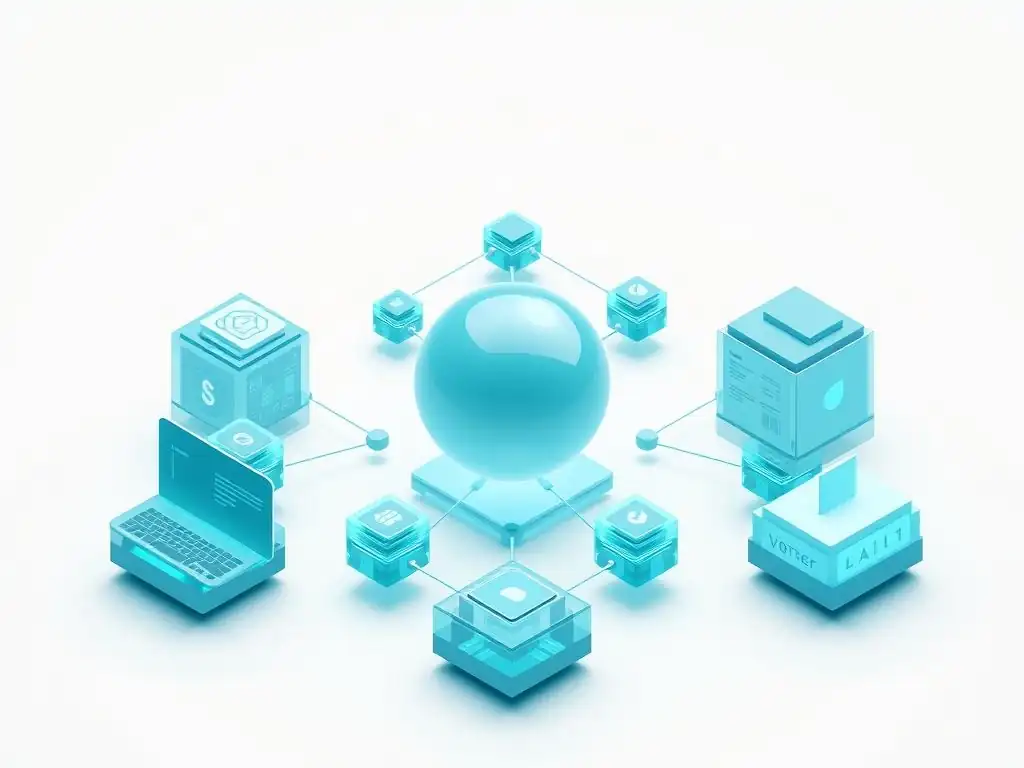
Smart Contract Design for DAO and DApp Interoperability
Designing smart contracts for seamless DAO and DApp interoperability is crucial for building effective decentralized ecosystems. Smart contracts must be carefully crafted to allow DApps to interact with DAO governance mechanisms, enabling automated execution of DAO decisions within the application. This requires robust and secure smart contract architectures that can handle complex interactions between governance protocols and application logic.
For instance, a DApp might need to query the DAO's smart contracts to determine the outcome of a vote before executing a specific function. The smart contract design must ensure that these interactions are secure, efficient, and tamper-proof. Developers need to consider factors like gas optimization, error handling, and secure communication protocols to ensure smooth and reliable interoperability between the DAO and the DApp. Furthermore, well-defined Application Programming Interfaces (APIs) can facilitate easier integration and reduce development complexity.
Governance Tokenomics and Voting Mechanisms
Governance tokenomics and voting mechanisms are fundamental to the functionality and effectiveness of DAOs. The design of the governance token, including its distribution, utility, and voting power, directly impacts the decentralization and fairness of the DAO. Different voting mechanisms, such as token-weighted voting, quadratic voting, and conviction voting, offer varying trade-offs in terms of participation, fairness, and resistance to manipulation.
For example, token-weighted voting, where voting power is proportional to token holdings, is simple to implement but can lead to whale dominance. Quadratic voting attempts to address this by making voting power increase less than linearly with token holdings, promoting broader participation. Conviction voting, on the other hand, emphasizes long-term commitment by giving more weight to votes held for longer periods. Choosing the right tokenomics and voting mechanism is crucial for ensuring that the DAO governance is both effective and truly decentralized.
Security Audits and Best Practices for DAO and DApp Integration
Security audits and adherence to best practices are paramount for ensuring the integrity and security of DAO and DApp integrations. Given the financial and operational risks associated with vulnerabilities in smart contracts, rigorous security audits by reputable firms are essential before deploying DAO-governed DApps. These audits help identify potential security flaws and vulnerabilities in both the DAO governance contracts and the DApp's application logic.
Beyond audits, developers must follow security best practices throughout the development lifecycle. This includes secure coding practices, thorough testing, and continuous monitoring of the deployed contracts for any anomalies or vulnerabilities. For DAO governance, robust security measures are needed to prevent governance attacks, such as Sybil attacks or malicious proposals. Implementing multi-signature wallets, time-lock mechanisms, and decentralized identity solutions can further enhance the security and resilience of DAO-DApp ecosystems.
Challenges and Future Trends in DAO-DApp Synergy
Addressing Scalability Issues in DAO-Governed DApps
Scalability remains a significant challenge for DAO-governed DApps. Blockchain networks, especially Ethereum mainnet, can face congestion and high transaction fees, particularly during periods of high activity. This can impact the responsiveness and efficiency of DAO governance processes and the overall usability of DApps. As DAO-DApp ecosystems grow, addressing scalability limitations becomes crucial for their widespread adoption.
Solutions to scalability challenges are being actively explored, including Layer-2 scaling solutions like rollups and sidechains, which can significantly increase transaction throughput and reduce costs. Furthermore, advancements in blockchain technology, such as sharding and improved consensus mechanisms, are expected to enhance the scalability of underlying blockchain networks. Overcoming scalability bottlenecks is essential to ensure that DAO-governed DApps can handle increasing user demand and complex governance processes efficiently.
Mitigating Governance Attacks and Ensuring Security
Mitigating governance attacks and ensuring the long-term security of DAO-governed DApps is a critical ongoing challenge. DAOs, by their decentralized nature, are potentially vulnerable to various types of attacks, including Sybil attacks, where attackers create multiple fake identities to gain undue voting power, and 51% attacks, where malicious actors gain control of a majority of voting power. Robust security measures and governance mechanisms are needed to protect DAOs from these threats.
Strategies to mitigate governance attacks include implementing decentralized identity solutions to prevent Sybil attacks, using sophisticated voting mechanisms like quadratic voting to reduce the impact of whale voters, and establishing clear dispute resolution processes to address malicious proposals or governance disputes. Continuous monitoring of governance participation and early detection of suspicious activity are also crucial for maintaining the security and integrity of DAO-governed DApps.
The Future of Decentralized Ecosystems: DAOs and DApps as Building Blocks
The future of decentralized ecosystems is increasingly being shaped by the synergy between DAOs and DApps. These two technologies are becoming fundamental building blocks for creating more transparent, democratic, and user-centric digital platforms and organizations. As blockchain technology matures and scalability solutions improve, we can expect to see wider adoption of DAO-governed DApps across various sectors, from finance and governance to social media and supply chain management.
The convergence of DAOs and DApps represents a significant step towards realizing the full potential of Web3, moving beyond simply decentralized technology infrastructure to encompass decentralized governance and community ownership. This shift promises to empower users, foster innovation, and create more equitable and resilient digital ecosystems. The ongoing development and refinement of DAO and DApp technologies will be key to shaping the future of decentralized systems and their impact on society.
The Impact on Blockchain Trends: Moving Beyond Traditional Applications
DAOs and DApps Driving Innovation in Decentralized Governance
DAOs and DApps are at the forefront of driving innovation in decentralized governance, moving beyond traditional, hierarchical organizational models. They offer a practical framework for implementing transparent, community-driven decision-making processes in a digital context. This innovation extends beyond blockchain-specific applications, potentially influencing governance models in various sectors, from online communities to even traditional organizations seeking more participatory structures.
The success of DAOs in governing complex DeFi protocols like Compound and Uniswap demonstrates the viability of decentralized governance for managing sophisticated systems. These examples are inspiring experimentation and adoption of DAO-like structures in other areas, indicating a broader trend towards more participatory and transparent governance models. The lessons learned from DAO implementations are informing the development of new governance tools and frameworks applicable beyond the blockchain space.
Shaping the Future of Blockchain Technology
The synergy between DAOs and DApps is actively shaping the future trajectory of blockchain technology itself. As developers and communities explore the possibilities of integrated governance and applications, they are pushing the boundaries of what blockchain technology can achieve. This includes driving innovation in smart contract design, governance mechanisms, scalability solutions, and user experience within decentralized ecosystems.
The focus on DAO-DApp integration emphasizes the importance of not just technological decentralization, but also decentralized control and community ownership. This is shifting the narrative around blockchain from solely focusing on cryptocurrencies and speculative investments to highlighting its potential for building more democratic and equitable digital systems. The development of robust DAO and DApp frameworks is laying the foundation for a more user-centric and community-driven blockchain future.
Advancing Decentralized Applications (DApps)
The integration of DAO governance is fundamentally advancing the evolution of Decentralized Applications (DApps). By embedding governance directly into DApps, developers are creating applications that are not only technologically decentralized but also democratically controlled. This represents a significant step forward from earlier generations of DApps, which often lacked robust governance mechanisms and remained largely controlled by their development teams.
DAO-governed DApps are more resilient, adaptable, and community-aligned than their predecessors. The ability for users to directly influence the direction and operation of DApps through DAO governance fosters a stronger sense of ownership and participation, leading to more vibrant and sustainable ecosystems. This advancement in DApp development is crucial for realizing the full potential of decentralized applications to disrupt traditional centralized services and create a more open and equitable digital landscape.
Conclusion: Embracing the Potential of DAO-DApp Integration
The Power of Decentralized Collaboration for a More Equitable Future
The synergy between DAOs and DApps embodies the power of decentralized collaboration to build a more equitable and user-centric digital future. By combining the technological decentralization of DApps with the democratic governance of DAOs, we can create systems that are more transparent, accountable, and responsive to the needs of their communities. This integration fosters a shift from centralized control to distributed ownership, empowering individuals and communities to shape the digital services they rely on.
This movement towards decentralized collaboration is not just about technology; it's about fundamentally changing the way we organize and interact in the digital age. DAO-DApp integration represents a step towards a more democratic and equitable internet, where users are not just consumers but active participants and owners of the digital ecosystems they inhabit. Embracing this potential is crucial for building a future where technology serves the interests of all, rather than a select few.
Key Takeaways: The Importance of DAOs and DApps in the Blockchain Ecosystem
The integration of DAOs and DApps is a critical development in the blockchain ecosystem. DAOs provide the governance framework necessary to ensure that DApps are truly decentralized and community-owned, while DApps offer the functional applications that benefit from DAO governance. This synergy enhances transparency, increases user participation, automates governance processes, and fosters trust within decentralized ecosystems.
As blockchain technology matures, the combination of DAOs and DApps will be instrumental in driving innovation and adoption across various sectors. Understanding the principles and potential of DAO-DApp integration is essential for anyone seeking to navigate and contribute to the evolving landscape of decentralized technologies and their transformative impact on the future of the internet and beyond.
Frequently Asked Questions
What are the key benefits of integrating DAOs and DApps?
Integrating DAOs and DApps creates truly decentralized ecosystems, enabling greater user control and enhanced transparency in application governance. This synergy can lead to more resilient and innovative platforms.
How does DAO governance affect DApp development and evolution?
DAO governance allows community-driven decision-making regarding DApp features, updates, and future direction. This can lead to more user-centric development and a more responsive platform.
What challenges exist when integrating DAOs and DApps?
Challenges include complex governance structures, security vulnerabilities in both DAOs and DApps, and the potential for low participation in DAO voting processes.
Can you provide an example of a successful DAO and DApp integration?
Many DeFi projects exemplify this, where a DAO governs a DApp like a decentralized exchange (DEX). The DAO decides on protocol parameters and fee structures, influencing the DApp's operation.
What is the future outlook for DAOs and DApp integration?
The future looks promising, with increasing adoption leading to more sophisticated decentralized platforms and novel use cases. Expect advancements in governance mechanisms and user experience.
Final Reflection: Embracing the Decentralized Future
The exploration of DAOs and DApp integration reveals not just a technological advancement, but a fundamental shift in how we organize and interact within digital spaces. The potential for truly decentralized ecosystems, where governance and application functionality are seamlessly intertwined, is no longer a distant dream but a rapidly approaching reality, poised to reshape industries and empower individuals in unprecedented ways.
This synergy has already begun to influence the cultural landscape, fostering a sense of ownership and participation that traditional centralized models often lack. The promise of DAOs and DApps working in harmony is a future where users are not just consumers but active stakeholders, shaping the very platforms they use. The future is already here – it's just not evenly distributed.
- William Gibson. This quote perfectly encapsulates the current state of decentralized technologies; the potential is immense, but widespread adoption requires continued innovation and education.
As we stand on the cusp of this decentralized revolution, let us embrace the opportunity to build more equitable and transparent systems. Consider how you can contribute to this movement, whether through active participation in DAOs, the development of innovative DApps, or simply by advocating for the principles of decentralization. The future of the internet, and indeed, the future of governance, is being written now. Let us ensure it is a future built on collaboration, transparency, and the empowerment of all.
Empower Decentralization: Take the Next Step!
Thank you for exploring the powerful connection between decentralized autonomous organizations and decentralized applications with us. Now that you understand how these technologies can create truly decentralized ecosystems, it's time to move from theory to action and contribute to the future of blockchain.
Ready to dive deeper? Here are a few ways you can get involved:
- Start brainstorming a decentralized application controlled by a DAO. Consider real-world problems you can solve or existing centralized systems you could decentralize. This is your opportunity to contribute to innovation.
- Explore existing DAOs and DApps discussed in the article and think about how you might contribute to their development or governance. Your active participation is what truly drives decentralization.
- Share this article on social media using the hashtag related to decentralized ecosystems. Help spread awareness about their potential and invite others to join the conversation!
What is one small step you can take this week to support the growth of DAOs and DApps in your community? Let us know in the comments below!
Leave a Reply