
Data Privacy Concerns in Blockchain Digital Identity Solutions: Balancing Transparency and Confidentiality


Welcome to Blockchain Trends, your go-to source for understanding the evolution of blockchain technology!
Are you ready to navigate the complex landscape of decentralized systems? This month, we delve deep into a critical issue: Blockchain data privacy concerns. As blockchain expands beyond cryptocurrencies and into areas like digital identity, ensuring user privacy becomes paramount. Explore our latest article, "Data Privacy Concerns in Blockchain Digital Identity Solutions: Balancing Transparency and Confidentiality," to uncover the challenges and innovative solutions shaping the future of blockchain governance. Discover how we can harness the power of blockchain while safeguarding individual rights. What does the future hold for blockchain data privacy? Let's find out together.
Data Privacy Concerns in Blockchain Digital Identity Solutions: Balancing Transparency and Confidentiality
- Introduction: Blockchain Digital Identity and the Privacy Paradox
- Exploring the Core Blockchain Data Privacy Concerns
- Addressing Blockchain Data Privacy Challenges: Solutions and Strategies
- Blockchain Data Privacy Regulations and Compliance
- Case Studies: Blockchain Identity Solutions and Data Privacy
- The Future of Blockchain Identity and Data Privacy
- Conclusion: Achieving a Balance Between Transparency and Data Privacy in Blockchain Digital Identity
-
Frequently Asked Questions
- How does blockchain technology, known for its transparency, address data privacy concerns in digital identity solutions?
- What are some of the key challenges in implementing blockchain-based digital identity solutions while ensuring compliance with data privacy regulations like GDPR?
- How can decentralized identity (DID) solutions built on blockchain improve data privacy compared to traditional centralized identity systems?
- What are some emerging technologies and techniques being developed to enhance data privacy in blockchain applications?
- What role do regulatory frameworks play in shaping the future of blockchain-based digital identity and addressing blockchain data privacy concerns?
- Final Reflection: Navigating the Blockchain Privacy Paradox
- Unlock Your Privacy Power: Take Control of Your Digital Identity!
Introduction: Blockchain Digital Identity and the Privacy Paradox
The Promise of Blockchain for Secure Digital Identities
Blockchain technology, initially popularized by cryptocurrencies, offers a compelling paradigm shift for digital identity management. Its decentralized and immutable nature promises to address many of the shortcomings of traditional identity systems, which are often centralized, vulnerable to single points of failure, and lack user control. The potential benefits are significant, ranging from enhanced security and reduced identity theft to streamlined user experiences and greater individual autonomy over personal data.
Imagine a world where individuals possess self-sovereign identities, verified and secured by a distributed ledger, eliminating the need to rely on numerous intermediaries and reducing the risk of data breaches that plague centralized databases. This vision fuels the exploration and adoption of blockchain for digital identity solutions across various sectors.
Furthermore, blockchain’s cryptographic foundation provides mechanisms for enhanced security and trust. Cryptographic hashing and digital signatures ensure data integrity and authenticity, making it extremely difficult to tamper with identity records stored on the blockchain. The distributed consensus mechanisms inherent in blockchain networks also enhance resilience against attacks and fraud.
By distributing identity data across multiple nodes, blockchain reduces the attack surface compared to centralized systems, making it a more robust and secure foundation for digital identities. The potential to create verifiable credentials and decentralized identifiers (DIDs) further empowers individuals to control their identity data and selectively share verified attributes, fostering a more privacy-respecting and secure digital ecosystem.
Understanding the Inherent Tension: Transparency vs. Confidentiality in Blockchain
While blockchain offers significant advantages for digital identity, it also presents a fundamental tension between transparency and confidentiality, especially concerning blockchain data privacy concerns. The very nature of many blockchains, particularly public and permissionless ones, is to be transparent and auditable. Every transaction and piece of data recorded on the blockchain is potentially visible to all participants in the network.
This inherent transparency, while beneficial for verifying data integrity and building trust, can clash directly with the principles of data privacy and confidentiality, particularly when dealing with sensitive personal identity information. This paradox forms the core challenge in deploying blockchain for digital identity solutions.
This inherent tension requires careful consideration and innovative solutions to reconcile the benefits of blockchain's transparency with the imperative to protect personal data. The challenge lies in leveraging blockchain's security and decentralization while mitigating the risks associated with its inherent visibility. Successfully navigating this balance is crucial for the widespread adoption of blockchain-based digital identity systems, ensuring they are not only secure and efficient but also privacy-preserving and compliant with data protection regulations. Ignoring this tension could lead to solutions that, while technically sound, fail to meet the ethical and legal requirements for handling sensitive personal data.
Why Data Privacy is Paramount in Blockchain Identity Management
Data privacy is not merely a desirable feature, but a paramount requirement in blockchain identity management. Identity data, by its very nature, is highly sensitive and personal. It encompasses a wide range of information, from basic personal details like name and date of birth to more sensitive data such as biometric information, financial records, and health data.
The unauthorized access, misuse, or exposure of such data can have severe consequences for individuals, ranging from identity theft and financial fraud to discrimination and reputational damage. Therefore, any digital identity system, especially one built on a technology as transparent as blockchain, must prioritize data privacy as a core design principle.
Furthermore, regulatory frameworks worldwide, such as the General Data Protection Regulation (GDPR) in Europe and the California Consumer Privacy Act (CCPA) in the United States, mandate stringent data privacy protections. These regulations grant individuals significant rights over their personal data, including the right to access, rectify, erase, and restrict the processing of their information. Blockchain-based identity solutions must be designed to comply with these regulations to ensure legal compliance and maintain user trust.
Failure to address blockchain data privacy concerns adequately can result in significant legal and reputational risks, hindering the adoption and effectiveness of these solutions. Therefore, privacy is not just an ethical consideration but also a legal and business imperative for blockchain digital identity systems.
Exploring the Core Blockchain Data Privacy Concerns
Immutability and the Risk of Permanent Data Exposure
One of blockchain's defining characteristics is immutability. Once data is recorded on a blockchain, it is designed to be virtually impossible to alter or delete. While this immutability is a strength in terms of data integrity and auditability, it presents a significant blockchain data privacy concern when dealing with personal identity information. If sensitive data is mistakenly or inappropriately recorded on a blockchain, it could potentially remain permanently exposed, creating a lasting privacy risk. This is in stark contrast to traditional databases where data can be modified or deleted to rectify errors or comply with data minimization principles.
Consider the scenario where an individual's identity record on a blockchain contains an error or outdated information. Correcting this information on a traditional database is a relatively straightforward process. However, on an immutable blockchain, directly altering the record is not feasible.
While mechanisms for updating or revoking identity attributes on blockchain exist, such as issuing new credentials or using smart contracts to manage data access, the original, potentially inaccurate or outdated data may still persist in the blockchain's history. This permanent record can pose a long-term privacy risk, especially if the exposed data is sensitive or could be misused in the future. Careful data minimization and robust access control mechanisms are therefore crucial to mitigate the risks associated with immutability in blockchain identity solutions.
Data Security Challenges on Public and Permissioned Blockchains
The security characteristics of public and permissioned blockchains, while generally robust, present different blockchain data privacy concerns in the context of digital identity. Public blockchains, like Bitcoin and Ethereum, are open and permissionless, meaning anyone can participate in the network and view the blockchain data. While this openness fosters transparency and decentralization, it also means that any identity data stored directly on a public blockchain is potentially visible to a vast audience. Storing sensitive personal information directly and unencrypted on a public blockchain is generally considered a significant privacy risk.
Permissioned blockchains, on the other hand, restrict network participation to a pre-selected group of entities. This controlled access can enhance data confidentiality compared to public blockchains. However, permissioned blockchains are not inherently private.
While access to the network and the ability to validate transactions may be restricted, the data stored on the blockchain is still typically replicated across multiple nodes within the permissioned network. If any of these nodes are compromised or if an authorized participant misuses their access, the data, including potentially sensitive identity information, could be exposed. Therefore, regardless of whether a blockchain is public or permissioned, robust data security measures and careful consideration of data storage practices are essential to address blockchain data privacy concerns.
Smart Contract Vulnerabilities and Data Breaches
Smart contracts, self-executing agreements written in code and deployed on blockchains, are a core component of many blockchain identity solutions. They automate processes like identity verification, credential issuance, and access control. However, smart contracts are also potential points of vulnerability that can lead to data breaches and exacerbate blockchain data privacy concerns. Like any software code, smart contracts can contain bugs or security flaws that can be exploited by malicious actors. If a smart contract handling identity data has vulnerabilities, attackers could potentially gain unauthorized access to sensitive information or manipulate identity processes.
The immutability of smart contracts further complicates the issue of vulnerabilities. Once a smart contract is deployed on a blockchain, it is often difficult or impossible to modify it to fix bugs. While techniques for upgrading smart contracts exist, they can be complex and may not always be feasible.
Therefore, rigorous security audits and thorough testing are crucial before deploying smart contracts that handle sensitive identity data. Furthermore, developers must adhere to secure coding practices and stay updated on known smart contract vulnerabilities to minimize the risk of data breaches and ensure the privacy of identity information managed by blockchain-based systems. The consequences of a smart contract breach in an identity system can be severe, potentially exposing vast amounts of personal data and undermining user trust.
Addressing Blockchain Data Privacy Challenges: Solutions and Strategies
Encryption Techniques for Protecting Sensitive Identity Data
Encryption is a fundamental technique for protecting sensitive data in any digital system, and it plays a crucial role in mitigating blockchain data privacy concerns. Applying encryption to identity data before it is recorded on a blockchain can significantly enhance privacy. Even though the encrypted data is visible on the transparent blockchain, it is unintelligible to anyone who does not possess the decryption key.
Various encryption techniques can be employed, ranging from basic symmetric and asymmetric encryption to more advanced methods tailored for blockchain environments. The choice of encryption method depends on the specific privacy requirements and the performance considerations of the identity solution.
Homomorphic Encryption for Data Processing
Homomorphic encryption is a particularly promising advanced encryption technique for addressing blockchain data privacy concerns in identity management. Unlike traditional encryption methods where data needs to be decrypted before processing, homomorphic encryption allows computations to be performed directly on encrypted data. The results of these computations, when decrypted, are the same as if the operations had been performed on the plaintext data. This capability is highly valuable for blockchain applications, as it enables data processing and analysis without revealing the underlying sensitive information.
In the context of digital identity, homomorphic encryption could be used for privacy-preserving identity verification or attribute-based access control. For example, a verifier could check if an individual meets certain age criteria without actually revealing their exact age.
This is achieved by performing computations on encrypted age data stored on the blockchain, ensuring that the individual's age remains confidential throughout the verification process. While homomorphic encryption is still computationally intensive and under active development for practical large-scale applications, its potential to enable privacy-preserving data processing on blockchain makes it a significant area of research and development for enhancing blockchain data privacy.
Zero-Knowledge Proofs (ZKPs) for Privacy-Preserving Verification
Zero-Knowledge Proofs (ZKPs) are another powerful cryptographic tool for enhancing blockchain data privacy in digital identity systems, particularly for privacy-preserving verification. ZKPs allow one party (the prover) to convince another party (the verifier) that a statement is true without revealing any information beyond the validity of the statement itself. In the context of identity, ZKPs can be used to prove specific attributes about an individual without disclosing the underlying identity data.
For example, an individual could use a ZKP to prove to a website that they are over 18 years old without revealing their actual date of birth. The verifier can confirm the validity of the proof without gaining access to the individual's date of birth or any other personal information. ZKPs are highly effective for minimizing data disclosure and enhancing user privacy during identity verification processes.
They are increasingly being explored and implemented in blockchain identity solutions to address blockchain data privacy concerns and enable privacy-respecting interactions in the digital world. Different types of ZKPs, such as zk-SNARKs and zk-STARKs, offer varying trade-offs between proof size, verification speed, and setup requirements, allowing developers to choose the most suitable option for their specific use case.
Secure Multi-Party Computation (SMPC) for Collaborative Data Handling
Secure Multi-Party Computation (SMPC) is a cryptographic technique that enables multiple parties to collaboratively compute a function on their private inputs without revealing those inputs to each other. This is particularly relevant for blockchain identity solutions that involve multiple stakeholders or require collaborative data processing while maintaining blockchain data privacy. SMPC can be used in scenarios where different organizations need to verify or validate identity attributes without sharing the raw data amongst themselves.
For instance, in a federated identity system involving multiple identity providers, SMPC could be used to verify credentials issued by different providers without revealing the underlying identity data to each provider or a central authority. Each provider contributes to the computation, but only the final result is revealed, ensuring that individual identity data remains confidential.
SMPC can also be applied to scenarios like risk scoring or fraud detection in identity systems, where multiple data sources need to be combined and analyzed without compromising the privacy of the individuals involved. While SMPC can be computationally intensive, advancements in cryptographic techniques and hardware are making it increasingly practical for real-world applications seeking to address blockchain data privacy concerns in collaborative settings.
Decentralized Identifiers (DIDs) and Verifiable Credentials (VCs) for User Control
Decentralized Identifiers (DIDs) and Verifiable Credentials (VCs) are foundational technologies for building privacy-preserving blockchain identity solutions that empower users with greater control over their identity data. DIDs are unique, globally resolvable identifiers that do not rely on centralized registries or authorities. They are controlled by the DID subject (the individual or entity identified by the DID), enabling self-sovereign identity. VCs are digital credentials that are cryptographically verifiable and issued by trusted issuers. They represent claims or attributes about a DID subject, such as age, qualifications, or memberships.
Together, DIDs and VCs enable a user-centric approach to identity management that addresses many blockchain data privacy concerns. Individuals can control their DIDs and selectively share VCs to prove specific attributes to verifiers without revealing unnecessary personal information. The use of blockchain for anchoring DIDs and VCs ensures data integrity, verifiability, and auditability, while the decentralized nature of DIDs and the selective disclosure capabilities of VCs enhance user privacy and control.
Empowering Users with Self-Sovereign Identity (SSI)
Self-Sovereign Identity (SSI) is a paradigm shift in digital identity that puts individuals at the center of their identity management. SSI principles are deeply intertwined with DIDs and VCs, leveraging blockchain technology to realize a vision of user-centric identity control and enhanced blockchain data privacy. In an SSI model, individuals own and control their identity data, deciding who has access to what information and for what purpose. They are not reliant on centralized identity providers or intermediaries.
Blockchain's decentralized and secure nature provides the infrastructure to support SSI principles. DIDs enable individuals to establish and control their own identifiers, while VCs allow them to selectively share verifiable attributes without revealing their entire identity profile. SSI empowers individuals to minimize data disclosure, reduce the risk of identity theft, and participate in the digital economy with greater privacy and autonomy. The growing adoption of SSI frameworks and technologies reflects a increasing recognition of the importance of user empowerment and blockchain data privacy in the evolution of digital identity.
Federated Identity Management on Blockchain
Federated identity management allows users to use the same set of credentials to access multiple services or applications, simplifying user experience and reducing password fatigue. When implemented on blockchain, federated identity management can be enhanced with improved security and blockchain data privacy features. Blockchain can act as a decentralized and secure infrastructure for managing identity federation, enabling interoperability and trust between different identity providers and service providers.
In a blockchain-based federated identity system, users could maintain their identity with a preferred identity provider, and this identity can be used to access services across different organizations that participate in the federation. Blockchain can facilitate secure and privacy-preserving exchange of identity assertions and credentials between providers and services. Techniques like attribute-based access control and selective disclosure can be integrated to further enhance blockchain data privacy within federated identity frameworks. By leveraging blockchain's capabilities, federated identity management can become more secure, decentralized, and privacy-respecting, offering a compelling alternative to traditional centralized federation models.
Blockchain Data Privacy Regulations and Compliance
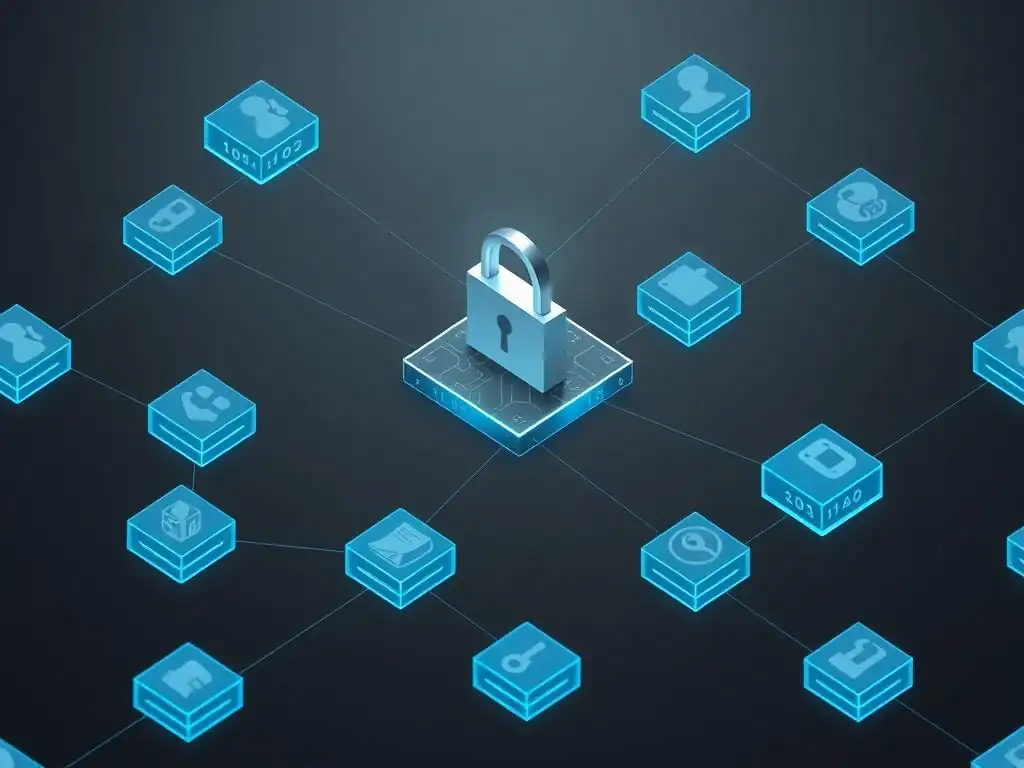
The General Data Protection Regulation (GDPR) is a landmark data privacy law in the European Union that sets stringent requirements for the processing of personal data. Blockchain identity systems operating within the EU or processing data of EU residents must comply with GDPR, and navigating GDPR compliance presents specific challenges and considerations related to blockchain data privacy concerns. Key GDPR principles, such as data minimization, purpose limitation, and the right to erasure, need to be carefully addressed in the design and implementation of blockchain identity solutions.
Immutability, a core characteristic of blockchain, presents a particular challenge for GDPR's "right to erasure" (right to be forgotten). While data on a blockchain is difficult to erase directly, techniques like data minimization, off-chain storage of sensitive data, and pseudonymization can help mitigate this challenge. Additionally, blockchain identity systems must ensure data security, transparency, and accountability, as mandated by GDPR.
Data controllers and processors using blockchain for identity management must implement appropriate technical and organizational measures to protect personal data and demonstrate compliance with GDPR requirements. Understanding and addressing the specific implications of GDPR for blockchain data privacy is crucial for the legal and ethical deployment of these systems in the European context.
Understanding CCPA and Other Global Data Privacy Laws
Beyond GDPR, a growing number of jurisdictions worldwide are enacting comprehensive data privacy laws, including the California Consumer Privacy Act (CCPA) in the United States, and similar regulations in other countries and regions. These laws, while varying in specific details, generally aim to grant individuals greater control over their personal data and impose obligations on organizations processing such data. Blockchain identity solutions must be designed to be globally compliant and adaptable to different regulatory landscapes to address blockchain data privacy concerns across diverse jurisdictions.
CCPA, for example, grants California residents rights similar to those under GDPR, including the right to access, delete, and opt-out of the sale of their personal information. Blockchain identity systems operating in California or processing data of California residents must comply with CCPA requirements. Other emerging data privacy laws around the world introduce similar or different sets of obligations.
Organizations developing and deploying blockchain identity solutions need to proactively monitor and adapt to the evolving global data privacy regulatory landscape to ensure compliance and maintain user trust. A global approach to blockchain data privacy compliance is essential for the widespread adoption and interoperability of these systems.
The Role of Data Governance in Blockchain Implementations
Data governance frameworks are essential for ensuring responsible and compliant use of blockchain technology in digital identity solutions, particularly in addressing blockchain data privacy concerns. Data governance encompasses policies, procedures, and organizational structures that define how data is managed, secured, and used. In the context of blockchain identity, data governance frameworks should address aspects such as data access control, data minimization, data retention, data quality, and compliance with relevant data privacy regulations.
Effective data governance is crucial for building trust and accountability in blockchain identity systems. It provides a framework for defining roles and responsibilities, establishing clear guidelines for data handling, and ensuring that data privacy principles are embedded throughout the lifecycle of the identity solution. Data governance frameworks should also incorporate mechanisms for auditing and monitoring data processing activities on the blockchain, ensuring transparency and accountability. Organizations implementing blockchain identity solutions need to prioritize data governance as a critical component of their overall strategy to mitigate blockchain data privacy concerns and build trustworthy and compliant systems.
Case Studies: Blockchain Identity Solutions and Data Privacy
Secure Vaccine Passport Verification Using Blockchain
The COVID-19 pandemic accelerated the development and deployment of digital vaccine passports for verifying vaccination status. Blockchain technology has been explored as a secure and privacy-preserving infrastructure for vaccine passport verification, addressing blockchain data privacy concerns associated with sensitive health information. Several initiatives have emerged that leverage blockchain to create verifiable vaccine credentials that individuals can control and selectively share.
For example, IBM's Digital Health Pass and the Vaccination Credential Initiative (VCI) are examples of blockchain-based solutions that aim to provide secure and interoperable vaccine passports. These solutions often utilize DIDs and VCs to enable individuals to hold verifiable credentials representing their vaccination status. Verifiers can then cryptographically verify the authenticity and validity of these credentials without accessing the underlying health records directly. By leveraging blockchain's security and verifiability features, these solutions aim to enhance the security and privacy of vaccine passport verification processes, mitigating blockchain data privacy concerns compared to traditional paper-based or centralized digital systems.
Decentralized Digital Identity for Financial Services with Enhanced Privacy
The financial services industry is increasingly exploring decentralized digital identity solutions based on blockchain to enhance security, efficiency, and user privacy in various applications, such as Know Your Customer (KYC) compliance, fraud prevention, and secure transactions. Blockchain-based identity solutions can address blockchain data privacy concerns prevalent in traditional centralized identity systems used in finance.
For instance, initiatives like Sovrin Network and Hyperledger Indy provide frameworks for building decentralized identity solutions tailored for financial services. These frameworks enable individuals to control their identity data and selectively share verifiable credentials with financial institutions for KYC or other verification purposes. By reducing reliance on centralized identity databases and empowering users with self-sovereign identity, these solutions aim to enhance privacy and security in financial transactions. Furthermore, blockchain's transparency and auditability can improve regulatory compliance and reduce the risk of fraud in financial systems, while addressing blockchain data privacy concerns through privacy-enhancing technologies.
Supply Chain Tracking with Blockchain and Data Minimization
Blockchain technology is also being used to enhance transparency and traceability in supply chains. While supply chain tracking often involves sharing data across multiple parties, blockchain can be implemented in a privacy-preserving manner to address blockchain data privacy concerns. By applying data minimization principles and selective disclosure techniques, blockchain can enable supply chain visibility without exposing unnecessary sensitive information.
For example, Provenance and VeChain are platforms that use blockchain for supply chain tracking. These platforms can track the provenance of goods, verify product authenticity, and improve supply chain efficiency. By using permissioned blockchains and implementing access control mechanisms, these solutions can limit data visibility to authorized parties.
Furthermore, techniques like zero-knowledge proofs and differential privacy can be employed to enable data sharing and analysis in supply chains while preserving the privacy of sensitive business information and personal data related to supply chain actors. This approach demonstrates how blockchain can be used for supply chain transparency while mitigating blockchain data privacy concerns through careful design and privacy-enhancing technologies.
The Future of Blockchain Identity and Data Privacy
Emerging Technologies for Enhanced Data Privacy in Blockchain
The field of blockchain data privacy is rapidly evolving, with ongoing research and development of emerging technologies aimed at further enhancing privacy in blockchain-based systems. These technologies address various aspects of blockchain data privacy concerns, ranging from data encryption and secure computation to identity management and regulatory compliance. Continued innovation in these areas is crucial for realizing the full potential of blockchain for privacy-preserving digital identity solutions.
Emerging technologies like confidential computing, secure enclaves, and differential privacy are being explored for their potential to enhance blockchain data privacy. Confidential computing techniques, such as secure enclaves, create isolated and protected environments for processing sensitive data within blockchain networks. Differential privacy adds statistical noise to data to protect individual privacy while enabling aggregate data analysis. These and other emerging technologies hold promise for further strengthening data privacy in blockchain identity systems and addressing the evolving landscape of blockchain data privacy concerns.
The Importance of Ongoing Research and Development
Ongoing research and development are essential for addressing the complex challenges of blockchain data privacy concerns and for advancing the field of privacy-preserving blockchain technologies. Academic institutions, research labs, and industry organizations are actively engaged in exploring new cryptographic techniques, architectural designs, and governance models to enhance data privacy in blockchain applications. Continued investment in research and development is crucial for overcoming existing limitations and for unlocking the full potential of blockchain for secure and privacy-respecting digital identity solutions.
Research efforts are focused on areas such as improving the efficiency and scalability of privacy-enhancing technologies like homomorphic encryption and zero-knowledge proofs, developing new privacy-preserving consensus mechanisms, and designing privacy-aware smart contract platforms. Furthermore, research into the legal and ethical implications of blockchain identity and data privacy is crucial for guiding the responsible development and deployment of these technologies. Collaborative research initiatives and open-source development are vital for accelerating innovation and fostering a broader understanding of blockchain data privacy concerns and potential solutions.
The Role of Standards and Interoperability in Privacy-Preserving Blockchain Identity
Standards and interoperability are crucial for the widespread adoption and effectiveness of privacy-preserving blockchain identity solutions. Standardized protocols, data formats, and APIs are needed to ensure that different blockchain identity systems can seamlessly interoperate and that verifiable credentials can be recognized and verified across various platforms and applications. Standardization efforts also play a vital role in promoting blockchain data privacy by establishing common frameworks and best practices for privacy-preserving identity management.
Organizations like the Decentralized Identity Foundation (DIF) and the World Wide Web Consortium (W3C) are actively working on developing standards for decentralized identity and verifiable credentials. These standards aim to promote interoperability, security, and privacy in blockchain identity ecosystems. Adherence to these standards is essential for building a global and interoperable ecosystem of privacy-preserving blockchain identity solutions. Furthermore, standardization efforts should also address blockchain data privacy concerns by incorporating privacy-enhancing technologies and principles into the core specifications and guidelines for decentralized identity and verifiable credentials.
Conclusion: Achieving a Balance Between Transparency and Data Privacy in Blockchain Digital Identity
Key Takeaways: Mitigating Blockchain Data Privacy Concerns
Successfully deploying blockchain for digital identity requires a careful balancing act between the inherent transparency of blockchain and the imperative to protect sensitive personal data. Addressing blockchain data privacy concerns is not an optional add-on, but a fundamental requirement for building trustworthy and compliant identity solutions. Key takeaways for mitigating these concerns include:
- Data Minimization: Collect and store only the necessary identity data on the blockchain.
- Encryption: Employ robust encryption techniques to protect sensitive data at rest and in transit.
- Privacy-Enhancing Technologies: Leverage technologies like homomorphic encryption, zero-knowledge proofs, and secure multi-party computation for privacy-preserving data processing and verification.
- Decentralized Identifiers and Verifiable Credentials: Utilize DIDs and VCs to empower users with control over their identity data and enable selective disclosure.
- Data Governance: Implement robust data governance frameworks to ensure responsible data management and regulatory compliance.
- Ongoing Research and Development: Stay informed about and contribute to ongoing research and development in blockchain data privacy technologies.
By implementing these strategies and prioritizing privacy-by-design principles, organizations can leverage the benefits of blockchain for digital identity while effectively mitigating blockchain data privacy concerns.
The Path Forward: Building Trustworthy and Privacy-Respecting Blockchain Identity Solutions
The path forward for blockchain digital identity lies in building trustworthy and privacy-respecting solutions that prioritize user empowerment and data protection. This requires a multi-faceted approach that encompasses technological innovation, regulatory compliance, and ethical considerations. By embracing privacy-enhancing technologies, adhering to data privacy regulations, and fostering a culture of data stewardship, the blockchain community can realize the transformative potential of blockchain for digital identity while effectively addressing blockchain data privacy concerns.
The future of digital identity is likely to be decentralized, user-centric, and privacy-preserving. Blockchain technology, when implemented thoughtfully and responsibly, can play a pivotal role in shaping this future. By continuing to innovate, collaborate, and prioritize blockchain data privacy, we can build a digital identity ecosystem that is not only secure and efficient but also empowers individuals and respects their fundamental right to privacy. The journey towards achieving this balance is ongoing, but the potential rewards – a more secure, private, and user-centric digital world – are significant and worth pursuing.
Frequently Asked Questions
How does blockchain technology, known for its transparency, address data privacy concerns in digital identity solutions?
Blockchain's transparency can be balanced with privacy through techniques like zero-knowledge proofs and selective disclosure. These allow verification without revealing sensitive underlying personal information.
What are some of the key challenges in implementing blockchain-based digital identity solutions while ensuring compliance with data privacy regulations like GDPR?
A major challenge is the immutability of blockchain data, making it difficult to comply with the "right to be forgotten" provision of GDPR. Another is demonstrating lawful basis for processing personal data.
How can decentralized identity (DID) solutions built on blockchain improve data privacy compared to traditional centralized identity systems?
DIDs empower users with greater control over their personal data, reducing reliance on centralized databases vulnerable to breaches. Users can selectively share only the necessary attributes for each interaction.
What are some emerging technologies and techniques being developed to enhance data privacy in blockchain applications?
Homomorphic encryption allows computations on encrypted data without decryption, while differential privacy adds noise to datasets to protect individual identities. These advancements are crucial for maintaining data confidentiality.
What role do regulatory frameworks play in shaping the future of blockchain-based digital identity and addressing blockchain data privacy concerns?
Clear regulatory frameworks are essential to establish standards and accountability for blockchain implementations. These frameworks should balance innovation with the need for data protection and user rights.
The exploration of data privacy concerns within blockchain-based digital identity solutions reveals a critical tension: the inherent transparency of blockchain technology versus the fundamental right to individual confidentiality. This delicate balance is not merely a technical challenge, but a societal imperative, as the future of digital identity hinges on our ability to reconcile these seemingly opposing forces. The stakes are high, impacting everything from personal autonomy to the very fabric of trust in the digital age.
The ongoing debate surrounding blockchain data privacy continues to shape the development and adoption of these technologies. My own understanding of this issue has deepened, recognizing that true innovation lies not just in technological advancement, but in ethical implementation. The potential for misuse is undeniable, yet the promise of a more secure and user-centric digital identity system remains tantalizingly close. As Alan Westin wisely stated: Privacy is not an absolute value; it is a value that must be balanced against other values.
This quote underscores the need for nuanced solutions that prioritize both transparency and confidentiality.
Now, as you consider the implications of blockchain data privacy concerns, I urge you to reflect on your own digital footprint and the control you have over your personal information. How can you advocate for solutions that prioritize both transparency and confidentiality? What steps can you take to become a more informed and empowered digital citizen? Let us all strive to build a future where technology empowers individuals, rather than eroding their fundamental rights to privacy and autonomy.
Unlock Your Privacy Power: Take Control of Your Digital Identity!
Thank you for exploring the complexities of data privacy in blockchain digital identity. We hope you now have a clearer understanding of the balance between transparency and confidentiality. Ready to take control? Here's how you can make a difference:
- Advocate for Privacy-Enhancing Technologies: Support and research digital identity solutions that prioritize user privacy and minimize data exposure.
- Join the Conversation: Share your insights and concerns on our forum. Let's collaborate on shaping a future where digital identity respects individual privacy.
- Explore Alternative Solutions: Investigate emerging decentralized identity frameworks that offer enhanced privacy features compared to traditional blockchain approaches.
What innovative privacy feature do you think is most crucial for the future of blockchain-based digital identity? Share your thoughts in the comments below!
Leave a Reply