
CCPA and Blockchain Identity: California's Impact on Decentralized Privacy and User Rights


Welcome to Blockchain Trends, your compass in the evolving world of decentralized technologies. Beyond the buzzwords and market fluctuations, we delve into the real-world applications of blockchain. Ever wondered how California's groundbreaking CCPA legislation impacts the future of digital identity on the blockchain? Discover the CCPA blockchain identity compliance challenges and what they mean for decentralized privacy and user rights. Prepare to unravel the complexities and explore the innovative solutions shaping the future of blockchain identity within a regulatory landscape.
- CCPA Blockchain Identity Compliance Challenges: Navigating the Complexities
-
Frequently Asked Questions
- What are the main CCPA blockchain identity compliance challenges in a decentralized system?
- How does the CCPA define "personal information" in the context of blockchain-based identities?
- What are the potential legal liabilities for companies using blockchain for identity management under the CCPA?
- How can organizations implement privacy-enhancing technologies (PETs) to address CCPA compliance with blockchain identity?
- What strategies can be used to balance blockchain's transparency with CCPA's privacy requirements for identity data?
- Final Reflection: Navigating the Crossroads of Privacy and Decentralization
- Embark on Your Blockchain Privacy Journey!
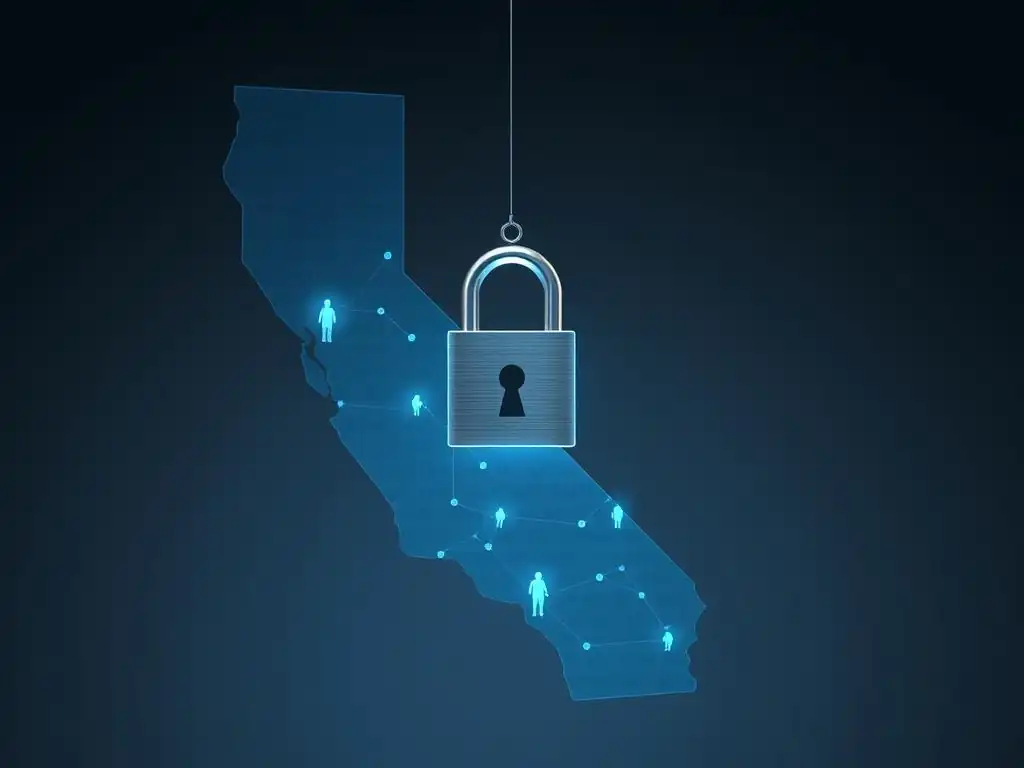
Data Erasure and the Immutable Nature of Blockchain: The Right to be Forgotten Dilemma
One of the most significant CCPA blockchain identity compliance challenges arises from the fundamental design principle of many blockchain networks: immutability. Blockchain technology, particularly public, permissionless chains like Bitcoin or Ethereum, is designed to create an append-only ledger where data, once recorded in a block and confirmed, is exceptionally difficult, if not impossible, to alter or delete.
This immutability is a strength for ensuring data integrity and preventing tampering, as it provides a verifiable history of transactions or data entries. However, it directly conflicts with the CCPA's "Right to Deletion," which grants California consumers the right to request that businesses delete personal information collected about them.
Businesses operating blockchain-based identity systems must grapple with this technical hurdle. If personal information, such as identifying attributes or links to off-chain data, is stored directly on an immutable blockchain, fulfilling a deletion request becomes technically infeasible. While some solutions involve 'burning' the tokens associated with the data or updating pointers to off-chain data, the original data entry often remains on the chain, visible to anyone with access to the ledger.
This inherent conflict between regulatory requirements for data erasure and the technological constraints of blockchain presents a core difficulty in achieving CCPA blockchain identity compliance. Estimates for global data privacy compliance costs across industries are projected to reach tens of billions of dollars annually, highlighting the scale of the effort required to navigate regulations like CCPA, especially when integrating novel technologies like blockchain.
Data Portability and Blockchain: Enabling User Control Over Data
The CCPA also grants consumers the "Right to Data Portability," allowing them to request access to their personal information in a readily usable format that enables them to transmit that information to another entity without hindrance. For blockchain identity systems, particularly those built on the Self-Sovereign Identity (SSI) model, the goal is often to empower users with control over their data.
However, translating this control into true portability that satisfies CCPA requirements poses significant CCPA blockchain identity compliance challenges. Data stored or referenced on a blockchain might be in a specific format (e.g., cryptographic hashes, verifiable credentials) that is not inherently "readily usable" or interoperable with traditional data systems or other blockchain platforms.
Ensuring data portability in a blockchain context requires careful consideration of data structure, metadata, and the mechanisms for exporting and interpreting the data off-chain. While standards bodies like the W3C and the Decentralized Identity Foundation (DIF) are developing specifications for verifiable credentials and decentralized identifiers (DIDs) aimed at promoting interoperability, the practical implementation across diverse blockchain platforms and traditional systems remains complex.
A user holding verifiable credentials issued on one blockchain network might face technical barriers in transferring or sharing that data with a service provider that operates on a different network or uses a traditional database, unless specific bridges or standardized APIs are implemented. This necessitates significant development effort to ensure that the data, while potentially controlled by the user via a blockchain wallet, can actually be extracted and used elsewhere in a compliant format, adding to the CCPA blockchain identity compliance challenges.
Consent Management on the Blockchain: Addressing CCPA Requirements
Managing user consent is a cornerstone of the CCPA, requiring businesses to obtain explicit consent for certain data processing activities, particularly for the sale of personal information, and providing consumers the right to opt-out. In a blockchain identity system, where data access and sharing might be governed by smart contracts or cryptographic permissions, integrating robust and compliant consent management mechanisms presents unique CCPA blockchain identity compliance challenges.
While smart contracts can automate processes based on predefined conditions, managing dynamic consent – where a user might grant consent for one purpose but withdraw it later, or grant granular permissions for specific data attributes – is not straightforward to implement purely on-chain, especially on immutable ledgers.
Implementing effective consent management requires a system that can record, update, and verify consent status in real-time, reflecting user preferences accurately. This often necessitates a hybrid approach, combining on-chain records (e.g., a hash representing a consent agreement or a pointer to a consent record) with off-chain systems that manage the detailed consent preferences and link them to the user's decentralized identity.
Ensuring that smart contracts or data access protocols respect the current consent status, which might be stored off-chain and subject to change, adds layers of complexity to the system design. Furthermore, providing users with a clear and accessible interface to manage their consent preferences, as required by the CCPA, must be seamlessly integrated with their blockchain identity wallet or management tool, adding to the CCPA blockchain identity compliance challenges businesses face.
Geographic Boundaries: Applying California Law to Global Blockchain Networks
The CCPA applies to businesses that collect, sell, or disclose the personal information of California residents, regardless of where the business is located, provided they meet certain thresholds related to revenue, data volume, or data sales. This extraterritorial reach of California law presents significant CCPA blockchain identity compliance challenges for decentralized networks, which are inherently global and often lack a single point of control or a clear geographic locus.
A blockchain network might have nodes distributed across multiple states and countries, data replicated globally, and participants interacting from anywhere in the world. Determining which specific transactions or data processing activities involving a California resident's personal information fall under the purview of the CCPA becomes complex in such a distributed environment.
Consider a decentralized application (dApp) built on a public blockchain that allows users worldwide, including California residents (approximately 39 million people), to manage their digital identities and share verifiable credentials. Even if the dApp developer is not based in California, they may still be subject to the CCPA if the dApp collects personal information from California residents and meets the CCPA's applicability thresholds. The distributed nature of the blockchain makes it difficult to enforce traditional legal frameworks designed for centralized entities operating within defined borders.
Identifying the 'business' responsible for compliance within a decentralized autonomous organization (DAO) or a widely distributed network further complicates matters. This lack of clear jurisdictional boundaries and responsible parties within global blockchain networks represents a substantial hurdle in addressing CCPA blockchain identity compliance challenges effectively.
Frequently Asked Questions
What are the main CCPA blockchain identity compliance challenges in a decentralized system?
The primary challenges involve reconciling decentralized data control with CCPA's requirements for user access, deletion, and correction of their personal information. This is difficult due to the immutable nature of blockchain and the distributed storage of data.
How does the CCPA define "personal information" in the context of blockchain-based identities?
The CCPA defines "personal information" broadly, potentially including any data that can identify, relate to, describe, or be associated with a particular consumer. This can encompass blockchain addresses, transaction history, and other data linked to a user's identity.
What are the potential legal liabilities for companies using blockchain for identity management under the CCPA?
Companies could face lawsuits and penalties for failing to comply with CCPA's requirements, such as failing to provide access to personal information, failing to delete data upon request, or failing to secure personal information properly.
How can organizations implement privacy-enhancing technologies (PETs) to address CCPA compliance with blockchain identity?
PETs like zero-knowledge proofs, differential privacy, and homomorphic encryption can help organizations demonstrate compliance by protecting user data while still enabling necessary blockchain functions. These technologies minimize data exposure.
What strategies can be used to balance blockchain's transparency with CCPA's privacy requirements for identity data?
Strategies include using pseudonymous identifiers instead of real names, implementing permissioned blockchains to restrict data access, and employing layered identity solutions that separate sensitive data from public blockchain records.
The exploration of CCPA's intersection with blockchain identity reveals a critical juncture in data privacy. The tension between California's stringent data protection laws and the inherent decentralization of blockchain technology presents both significant compliance challenges and unprecedented opportunities for user empowerment. This delicate balance demands a nuanced understanding and proactive approach from businesses and individuals alike.
The ongoing evolution of digital identity, shaped by both regulatory frameworks and technological advancements, profoundly impacts our cultural and social landscape. The ability to control our own data, to truly own our digital selves, is not just a technical problem, but a fundamental human right. Privacy is not an option, and it shouldn't be the price we accept for just getting on the internet.
- Gary Kovacs. This quote underscores the urgency of finding solutions that prioritize user autonomy within the digital realm, and blockchain, when implemented thoughtfully, offers a potential pathway.
As we stand at the forefront of this technological and legal evolution, I invite you to reflect on your own digital footprint. Consider the data you generate, the platforms you entrust with your information, and the power you wield to shape the future of privacy. Embrace the challenge of understanding these complex issues, and actively participate in building a digital world where privacy and innovation can coexist, empowering individuals to control their identities and navigate the digital landscape with confidence.
Okay, I'm ready to craft a CTA for your article on CCPA and Blockchain Identity for Blockchain Trends. Here's a draft:
Embark on Your Blockchain Privacy Journey!
Thank you for exploring the intersection of CCPA and blockchain identity with Blockchain Trends. You've gained valuable insights into how California's privacy regulations are shaping the future of decentralized privacy and user rights. Now, let's put that knowledge into action!
- Take the first step: Begin evaluating your current projects for CCPA compliance using blockchain-based identity solutions.: This is your primary action!
- Delve deeper: Research emerging decentralized identity (DID) frameworks and their potential integration with CCPA.
- Share your insights: Contribute to the conversation by discussing your thoughts on CCPA and blockchain identity in relevant forums or on social media using #BlockchainPrivacy.
What specific challenges are you anticipating when implementing CCPA compliance within a decentralized identity system? Let us know in the comments below!
Leave a Reply