
DeFi Lending Aggregators: Simplifying Access to the Best Yield Opportunities


Welcome to Blockchain Trends, your guide to navigating the revolutionary world of blockchain technology!
Intrigued by the potential of Decentralized Finance (DeFi)? You're in the right place. Today, we delve into the exciting realm of DeFi lending yield aggregators, tools that are simplifying access to the best yield opportunities in the decentralized space. Discover how these platforms work, their benefits, and the potential risks involved. Are you ready to unlock the power of aggregated DeFi yields? Let's explore!
DeFi Lending Aggregators: Simplifying Access to the Best Yield Opportunities
- Introduction to DeFi Lending Yield Aggregators
- How DeFi Lending Aggregators Work: A Deep Dive
- Benefits of Using DeFi Lending Yield Aggregators
- Key Features to Look for in a DeFi Lending Aggregator
- Comparing Top DeFi Lending Yield Aggregators
- Risks Associated with DeFi Lending Aggregation
- The Future of DeFi Lending Yield Aggregation
- Conclusion: Embracing Efficiency in DeFi Lending with Aggregators
-
Frequently Asked Questions
- What are DeFi Lending Yield Aggregators and how do they work?
- What are the main benefits of using a DeFi Lending Yield Aggregator?
- What are the risks associated with using DeFi Lending Yield Aggregators?
- How do DeFi Lending Yield Aggregators handle gas fees and transaction costs?
- How do DeFi Lending Yield Aggregators differ from traditional lending platforms?
- Final Reflection: Embracing the Future of Decentralized Finance
- Unlock Higher Yields: Start Your DeFi Lending Journey Now!
Introduction to DeFi Lending Yield Aggregators
What are DeFi Lending Platforms? A Quick Overview
Decentralized Finance (DeFi) lending platforms represent a cornerstone of the burgeoning DeFi ecosystem, enabling users to lend their crypto assets to borrowers and earn interest, or borrow assets by providing collateral. These platforms operate on blockchain networks, primarily Ethereum, using smart contracts to automate the lending and borrowing process without relying on traditional financial intermediaries like banks. Popular examples include Aave, Compound, and MakerDAO, each offering distinct features, supported assets, and interest rate models.
The core mechanism involves users depositing assets into liquidity pools, which are then made available for borrowing. Interest rates are typically determined algorithmically based on the supply and demand within these pools. Lenders earn a portion of the interest paid by borrowers, creating a passive income stream. This decentralized approach offers transparency, accessibility, and potentially higher yields compared to traditional savings accounts, but it also introduces new complexities and risks related to smart contracts and market volatility.
The Problem: Fragmented DeFi Lending Opportunities and Complexity
The rapid growth of DeFi has led to a proliferation of lending platforms, each with its own set of supported assets, interest rates, user interfaces, and risk profiles. For a user seeking the highest possible yield on their deposited assets, navigating this fragmented landscape can be incredibly time-consuming and challenging. Manually comparing interest rates across multiple platforms, monitoring fluctuations, and actively moving funds to chase the best yield requires significant effort, technical knowledge, and constant attention.
Furthermore, interacting with different protocols incurs transaction fees (gas fees), which can be substantial on networks like Ethereum, especially during periods of high network congestion. The process of depositing, withdrawing, and redepositing funds across various platforms to optimize yield can quickly erode potential profits due to accumulated transaction costs. This complexity and cost barrier make it difficult for many users, particularly those new to DeFi, to effectively participate in and benefit from the diverse lending opportunities available.
Enter DeFi Lending Yield Aggregators: Simplifying the Search for Optimal Yields
DeFi lending yield aggregators emerged as a solution to the fragmentation and complexity inherent in the decentralized lending market. These platforms are designed to automatically scan various DeFi lending protocols, identify the platform currently offering the highest interest rate for a specific asset, and route user funds to that protocol. Their primary goal is to simplify the process of yield farming and maximize potential returns for users by automating the search for and allocation of funds to the most profitable lending opportunities.
By providing a single interface to access multiple lending protocols, DeFi lending yield aggregators eliminate the need for users to interact directly with each platform individually. They handle the complexities of monitoring rates, executing transactions, and optimizing fund allocation behind the scenes. This not only saves users significant time and effort but also aims to reduce the impact of transaction fees by potentially batching transactions or strategically moving funds only when yield differences justify the cost, making DeFi lending more accessible and efficient.
How DeFi Lending Aggregators Work: A Deep Dive
Aggregating Lending Pools Across Multiple DeFi Protocols
DeFi lending yield aggregators function by integrating with the smart contracts of numerous underlying decentralized lending protocols such as Aave, Compound, and others. They typically utilize APIs or directly interact with the protocol's smart contracts to gather real-time data on interest rates, liquidity levels, and other relevant parameters for supported assets. This data forms the basis of their aggregation strategy, allowing them to present users with an overview of available opportunities across the connected ecosystem.
When a user deposits funds into an aggregator's smart contract, the aggregator's logic determines the optimal destination protocol based on its programmed strategy, often prioritizing the highest current APY. The aggregator's smart contract then interacts with the chosen underlying protocol to deposit the user's funds into the appropriate lending pool. The user receives a token representing their share in the aggregator's vault or strategy, which accrues yield earned from the underlying protocol.
Automated Yield Optimization Strategies
The core intelligence of a DeFi lending yield aggregator lies in its automated yield optimization strategies. These strategies are sets of rules or algorithms embedded in the aggregator's smart contracts that dictate how user funds are managed to maximize returns. A common strategy involves continuously monitoring the interest rates offered by integrated lending protocols and automatically rebalancing or moving funds to the protocol offering the highest yield for a given asset at any point in time.
More advanced strategies might consider factors beyond just the current APY, such as potential future rate changes, transaction costs associated with moving funds, and the specific risks associated with different protocols. Some aggregators employ complex algorithms that predict optimal times to switch protocols to minimize gas costs while maximizing yield gains. These automated processes remove the burden of manual monitoring and execution from the user, ensuring their funds are theoretically always working to earn the best possible yield within the aggregator's capabilities.
Smart Contract Integration for Seamless Lending and Borrowing
The seamless operation of DeFi lending yield aggregators relies heavily on sophisticated smart contract integration. Aggregators deploy their own smart contracts that act as intermediaries between the user and the underlying lending protocols. When a user deposits assets, they interact with the aggregator's smart contract. This contract then handles the complexities of interacting with the specific smart contracts of protocols like Aave or Compound on the user's behalf.
This smart contract architecture enables automated actions such as depositing assets into lending pools, claiming earned interest, withdrawing funds, and strategically reallocating assets between different protocols based on the aggregator's optimization strategy. The use of smart contracts ensures that these operations are executed automatically and transparently on the blockchain, reducing the need for manual intervention and minimizing potential human error in managing complex yield farming strategies across multiple platforms.
Risk Management and Security Considerations for DeFi Lending Aggregation
While DeFi lending yield aggregators offer significant advantages, they also introduce additional layers of risk that users must consider. The primary risk lies within the smart contracts that power the aggregators themselves. A vulnerability or bug in an aggregator's smart contract could potentially lead to the loss of user funds. This is compounded by the fact that the aggregator interacts with multiple underlying protocols, each of which also carries its own smart contract risks.
Aggregators often implement risk management features, such as setting limits on the amount of funds deposited into a single, potentially higher-risk strategy or protocol. However, the fundamental security relies on rigorous smart contract audits by reputable third parties. Users should research the audit history of an aggregator before depositing funds. Furthermore, users remain exposed to the risks inherent in the underlying lending protocols, such as potential exploits, liquidation risks (if borrowing), or changes in protocol rules. Diversification across different aggregators or strategies can help mitigate some of these risks, but thorough due diligence is always recommended.
Benefits of Using DeFi Lending Yield Aggregators
Maximizing Yield Potential: Finding the Best APY Across Platforms
One of the most significant benefits of using DeFi lending yield aggregators is their ability to automatically seek out and capitalize on the highest available Annual Percentage Yield (APY) across a range of integrated lending platforms. Instead of a user manually checking platforms like Aave, Compound, and others daily or hourly, the aggregator performs this task continuously. This automation ensures that user funds are theoretically always positioned in the protocol offering the most favorable rate for a given asset at that moment.
For example, if Compound is offering 6% APY on USDC and Aave is offering 7%, a manual user might miss the difference or delay moving funds. A DeFi lending yield aggregator, however, can detect this difference and automatically migrate funds to Aave (assuming the strategy and gas costs justify the move). Over time, consistently earning the highest available rate, even if the difference is only a percentage point or two, can significantly increase the total yield earned compared to sticking with a single platform or infrequently optimizing positions.
Saving Time and Effort: Automating the Lending Process
Managing assets across multiple DeFi lending platforms is a time-consuming and labor-intensive process. It involves monitoring interest rates, executing transactions (deposits, withdrawals, approvals), and keeping track of positions on different interfaces. DeFi lending yield aggregators drastically reduce this burden by automating these tasks. Users simply deposit their assets into the aggregator's vault or strategy, and the aggregator handles the rest – from finding the best yield to moving funds and compounding earnings.
This automation frees up users' time, allowing them to focus on other activities rather than constantly managing their DeFi positions. It simplifies the entire yield farming experience, making it accessible to individuals who may not have the time, technical expertise, or desire to actively manage multiple wallets and protocol interactions. The convenience offered by DeFi lending yield aggregators is a major driver of their adoption among both experienced DeFi users and newcomers.
Reduced Gas Fees: Optimizing Transaction Costs
While interacting with an aggregator still requires paying transaction fees (gas fees), DeFi lending yield aggregators can potentially help users reduce their overall gas expenditure compared to manually managing funds across multiple protocols. Aggregators often employ strategies to optimize when and how transactions are executed. For instance, they might batch transactions for multiple users or only trigger a fund reallocation when the potential yield increase significantly outweighs the cost of the transaction.
Furthermore, by providing a single point of entry and exit, aggregators can reduce the number of individual transactions a user needs to perform across various platforms. Instead of paying deposit and withdrawal fees on multiple protocols, the user pays a single deposit fee (if applicable) and potentially withdrawal fees to the aggregator. While the aggregator might incur gas costs internally when rebalancing funds, these costs are often spread across all users in a vault, potentially making the cost per user lower than if each user performed the actions independently, especially for smaller capital amounts.
Simplified User Interface: Accessible DeFi for Beginners
DeFi lending platforms, while powerful, can sometimes present complex interfaces with numerous parameters and options that might be intimidating for beginners. DeFi lending yield aggregators typically offer a much more streamlined and user-friendly interface. They abstract away the complexity of interacting with multiple underlying protocols, presenting users with a simple dashboard to deposit assets, view their aggregated earnings, and withdraw funds.
This simplified user experience lowers the barrier to entry for individuals who are new to decentralized finance but want to earn yield on their crypto assets. They don't need to understand the intricacies of each specific lending protocol's UI or smart contracts. By providing a single, intuitive point of interaction, DeFi lending yield aggregators make participating in decentralized lending more accessible and less daunting for a broader audience, contributing to the overall growth and adoption of the DeFi ecosystem.
Key Features to Look for in a DeFi Lending Aggregator
Supported Lending Protocols and Assets: Breadth of Integration
A crucial feature of any DeFi lending yield aggregator is the range of underlying lending protocols it integrates with and the variety of assets it supports. An aggregator that connects to a larger number of reputable protocols (like Aave, Compound, Yearn, etc.) is generally better positioned to find higher yield opportunities across the market. Similarly, the availability of strategies for a wide array of assets (stablecoins like USDC, USDT, DAI; major cryptocurrencies like ETH, WBTC; and potentially other altcoins) allows users more flexibility in deploying their capital.
Users should evaluate if the aggregator supports the specific assets they hold and if it integrates with the leading protocols known for liquidity and security. A wider breadth of integration means the aggregator has more potential avenues to explore for optimal yield. It's also important to understand if the aggregator automatically includes new, promising protocols or if its integrations are static, as the DeFi landscape is constantly evolving with new opportunities.
Yield Optimization Strategies: Transparency and Customization
The effectiveness of a DeFi lending yield aggregator hinges on its yield optimization strategies. Users should look for transparency regarding how these strategies work. Does the aggregator simply chase the highest current APY, or does it employ more complex logic considering factors like gas costs, future rate predictions, or protocol risk? Understanding the strategy helps users assess its potential performance and suitability for their risk tolerance.
Some advanced aggregators might offer different "vaults" or strategies with varying risk profiles or optimization approaches. While full customization might be limited for simplicity, some platforms provide options like choosing between a stablecoin strategy or an ETH strategy. Transparency regarding rebalancing frequency, criteria for switching protocols, and how gas costs are managed within the strategy is vital for users to trust the aggregator's operation and evaluate its potential profitability net of fees.
Security Audits and Smart Contract Vulnerability Assessments
Given that DeFi lending yield aggregators interact directly with user funds via smart contracts, security is paramount. A key feature to look for is evidence of rigorous security audits conducted by well-regarded blockchain security firms. Audits help identify potential vulnerabilities in the aggregator's smart contract code before it is deployed and used by the public. Users should be able to easily find information about completed audits on the aggregator's website or documentation.
Beyond initial audits, it's beneficial if the aggregator has ongoing security measures, such as bug bounty programs that incentivize white-hat hackers to find and report vulnerabilities. While no audit can guarantee complete security, a history of multiple, successful audits and a commitment to security best practices, including cautious deployment of new strategies and continuous monitoring, are strong indicators of a platform that prioritizes user safety and minimizes smart contract risks.
User Interface and User Experience (UI/UX): Ease of Use
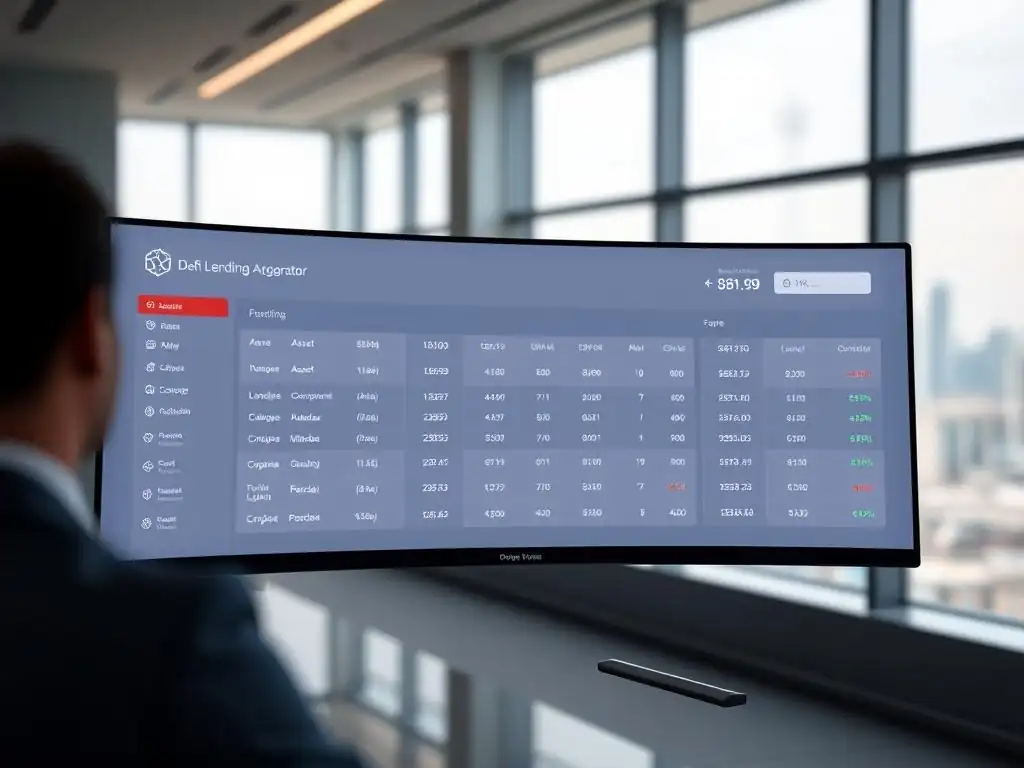
Although focused on underlying complexity, a good DeFi lending yield aggregator should provide a simple and intuitive user interface. The UI/UX should make it easy for users to deposit assets, view their current investments and earned yield, understand the strategy being employed, and initiate withdrawals. Cluttered or confusing interfaces can lead to user errors and frustration, undermining the goal of simplification.
Look for clear dashboards showing deposited amounts, current APY estimates, historical performance data (though past performance isn't indicative of future results), and transparent fee structures. The process for depositing and withdrawing funds should be straightforward and require minimal steps. A positive user experience makes the aggregator more accessible, especially for those less familiar with the intricacies of DeFi, and contributes to overall user satisfaction and confidence in the platform.
Fee Structure: Understanding the Costs
DeFi lending yield aggregators typically charge fees for their services, which are necessary to cover operational costs, development, and potentially reward liquidity providers or governance token holders. Understanding the fee structure is essential for evaluating the net yield a user can expect to earn. Common fees include deposit fees (a small percentage taken upon depositing), withdrawal fees (a small percentage taken upon withdrawing), and performance fees (a percentage of the yield earned).
Users should carefully review the aggregator's documentation to understand all applicable fees. For example, an aggregator might charge a 0.1% deposit fee, a 0.5% withdrawal fee, and a 10% performance fee on the profit generated. These fees impact the final APY received by the user. While some fees are necessary, excessively high fees can significantly reduce the benefit of using an aggregator compared to lending directly on a protocol. Transparency about fees allows users to make informed decisions about whether the potential yield optimization justifies the cost.
Comparing Top DeFi Lending Yield Aggregators
Yearn Finance: Features, Strengths, and Weaknesses
Yearn Finance (YFI) is one of the pioneering DeFi lending yield aggregators, known for its "Vaults" product. Yearn's vaults automatically shift deposited assets between various lending protocols (like Aave, Compound, MakerDAO) and other yield-generating strategies (like providing liquidity on Curve) to optimize returns. Its strength lies in its established reputation, robust community, and sophisticated strategies often developed by experienced DeFi participants. Yearn supports a wide range of assets and strategies, including complex ones like leveraged yield farming, offering potentially high APYs.
However, Yearn's complexity can also be a weakness; some strategies are highly technical, and understanding the underlying mechanics requires effort. Performance fees (historically around 20%) on yield earned can also reduce net returns, although fees vary by vault. The sophistication of strategies can also introduce higher risks compared to simpler lending. Yearn's governance is decentralized, which is a strength for some but can make protocol changes slower.
Beefy Finance (BIFI) is another popular multi-chain yield farming optimizer, often categorized as a DeFi lending yield aggregator though it encompasses broader yield strategies beyond just lending (like liquidity pool farming). Beefy automatically compounds yield from various sources across numerous blockchain networks (Ethereum, Binance Smart Chain, Polygon, Fantom, Avalanche, etc.). Its strength is its extensive support for multiple chains and a vast number of vaults (strategies) covering a wide range of assets and protocols, offering diverse yield opportunities.
Beefy's cross-chain focus provides flexibility but also means users need to manage assets across different networks, each with its own bridge and gas considerations. While Beefy automates compounding, the underlying strategies are often more focused on liquidity mining rewards which can be subject to impermanent loss risks, depending on the vault. Beefy typically charges a performance fee on yield earned, which varies by vault. The sheer number of vaults can be overwhelming for new users trying to choose a strategy.
APWine Finance takes a slightly different approach by focusing on yield tokenization. While not a pure DeFi lending yield aggregator in the sense of automatically moving funds between protocols to chase the highest current APY, APWine allows users to deposit assets into yield-generating protocols (including lending platforms) and tokenize the future yield. This allows users to sell their future yield upfront for immediate liquidity or buy future yield at a discount, essentially speculating on or hedging against yield rate changes.
APWine's strength lies in providing unique financial primitives for the yield market, enabling strategies like fixing interest rates or gaining leveraged exposure to yield fluctuations. It supports integration with various yield protocols. Its weakness is that it's more complex than traditional aggregators and requires a deeper understanding of yield tokenization concepts. It's not designed for simple "deposit and earn the best rate" functionality but rather for users who want to manage or trade their expected yield. It caters to a more niche segment of the DeFi market focused on yield derivatives.
Side-by-Side Comparison Table: Key Metrics and Features
| Feature / Aggregator | Yearn Finance | Beefy Finance | APWine Finance |
|---|---|---|---|
| Primary Focus | Yield Optimization (Lending, LP, etc.) | Multi-Chain Yield Optimization & Compounding | Yield Tokenization & Trading Future Yield |
| Key Product | Vaults | Vaults (Strategies) | Future Yield Tokens (FYTs) |
| Supported Chains | Primarily Ethereum (some L2/sidechain) | Multiple (ETH, BSC, Polygon, Fantom, AVAX, etc.) | Primarily Ethereum (integrates various protocols) |
| Strategy Complexity | High (Sophisticated algorithms) | Moderate to High (Varies by vault) | High (Yield tokenization concepts) |
| Automation | Auto-Optimization & Compounding | Auto-Compounding (Optimization varies) | Manages yield tokenization/claiming |
| Typical Fees | Performance Fees (e.g., 10-20%), Management Fee | Performance Fees (Varies by vault) | Protocol Fees on trading/claiming |
| Beginner Friendliness | Moderate | Moderate | Low |
| Risk Exposure | Smart Contract, Protocol, Strategy Specific | Smart Contract, Protocol, Strategy, Impermanent Loss (in LP vaults) | Smart Contract, Protocol, Market Risk (Yield trading) |
Note: Data on fees, TVL, and specific vault APYs fluctuate constantly and are approximations based on general platform models rather than real-time figures.
Risks Associated with DeFi Lending Aggregation
Smart Contract Risks and Potential Exploits
The most significant risk when using DeFi lending yield aggregators, or any DeFi protocol, is the potential for smart contract vulnerabilities. Aggregators rely on complex code to manage user funds, interact with multiple underlying protocols, and execute optimization strategies. A flaw or bug in the aggregator's smart contracts could be exploited by malicious actors, potentially leading to the partial or total loss of deposited assets.
While aggregators undergo security audits, audits do not guarantee complete immunity from exploits. New attack vectors can emerge, and even well-audited code can sometimes contain unforeseen vulnerabilities. Furthermore, the aggregator's smart contracts interact with the smart contracts of underlying lending protocols, meaning a vulnerability in an integrated protocol could also indirectly impact funds managed by the aggregator, creating a cascading risk effect.
Impermanent Loss in Liquidity Pools (If Applicable)
Some DeFi lending yield aggregators, particularly those that extend beyond pure lending into broader yield farming strategies, may deploy user funds into liquidity pools on decentralized exchanges (DEXs). When providing liquidity in these pools, users are exposed to impermanent loss. Impermanent loss occurs when the price ratio of the tokens in the pool changes compared to when the user deposited them. This can result in the value of the user's share in the pool being less than if they had simply held the tokens outside the pool.
While aggregators might try to mitigate impermanent loss through strategy design or by focusing on stablecoin pairs, the risk remains for vaults that utilize liquidity provisioning strategies. Users should be aware if an aggregator's strategy involves liquidity pools and understand the potential for impermanent loss to offset or reduce the yield earned from trading fees or liquidity mining rewards. Not all DeFi lending yield aggregators expose users to impermanent loss; it depends entirely on the specific strategy employed by the vault.
Protocol-Specific Risks: Understanding Underlying Lending Platforms
Using a DeFi lending yield aggregator does not absolve users from the risks associated with the underlying lending protocols where their funds are ultimately deposited. Each protocol (like Aave, Compound, etc.) has its own set of risks, including smart contract risk, governance risk (changes to protocol parameters), and potential economic risks (e.g., oracle failures leading to incorrect liquidations).
If an underlying protocol experiences an exploit or issue, the funds deposited in that protocol via the aggregator could be affected. Users should ideally have a basic understanding of the protocols the aggregator uses and feel comfortable with their security history and risk profile. While the aggregator automates the process of choosing which protocol to use, the user is still exposed to the collective risks of the protocols included in the aggregator's strategy universe.
Regulatory Uncertainty in the DeFi Space
The decentralized finance space, including DeFi lending yield aggregators, operates in a rapidly evolving and largely unregulated environment. Governments and financial regulators worldwide are still determining how to classify and oversee DeFi activities. This regulatory uncertainty poses a risk, as new regulations could potentially impact the operation, accessibility, or legality of using DeFi protocols and aggregators.
Potential regulatory actions could range from requiring user identification (KYC) to imposing restrictions on certain types of DeFi activities or even shutting down access to certain protocols. While DeFi's decentralized nature makes it resilient in some ways, centralized points of access (like websites or interfaces) could be targeted. Users should be aware that the regulatory landscape for DeFi lending yield aggregators is unpredictable and could change, potentially affecting the future availability or structure of these services.
The Future of DeFi Lending Yield Aggregation
Increased Adoption and Mainstream Integration
The future of DeFi lending yield aggregators appears promising, with expectations of increased adoption from both crypto-native users and potentially a broader, more mainstream audience. As DeFi continues to mature and user interfaces become even more intuitive, aggregators are well-positioned to serve as a gateway for individuals seeking passive yield on their digital assets without needing deep technical knowledge of every single protocol.
Financial advisors and institutions exploring digital asset strategies may also look towards DeFi lending yield aggregators as a simplified way to access decentralized yield opportunities for their clients or portfolios. This increased adoption could lead to higher Total Value Locked (TVL) in aggregators, potentially enhancing strategy efficiency and attracting more development, further solidifying their role as essential infrastructure in the DeFi ecosystem.
Integration with CeFi (Centralized Finance) Platforms
A potential future trend for DeFi lending yield aggregators is increased integration with Centralized Finance (CeFi) platforms. While seemingly contradictory to DeFi's core principles, CeFi platforms (like centralized exchanges or crypto lending companies) could potentially offer users access to DeFi aggregator strategies through their regulated and familiar interfaces. This could involve CeFi platforms using aggregators on the backend to provide yield products to their users, bridging the gap between the two worlds.
Such integration could significantly expand the reach of DeFi yield opportunities to users who prefer the custodial and regulatory assurances of CeFi platforms. It would require careful consideration of regulatory compliance and technical challenges, but it represents a potential path for DeFi lending yield aggregators to tap into a much larger user base, further blurring the lines between traditional and decentralized finance.
Advancements in Yield Optimization Algorithms
The sophistication of the yield optimization algorithms used by DeFi lending yield aggregators is expected to continue advancing. Future algorithms may incorporate machine learning to predict interest rate movements, dynamically adjust risk exposure based on market volatility, and even explore new yield-generating strategies beyond traditional lending and liquidity provisioning.
These advancements could lead to more efficient capital allocation, potentially higher risk-adjusted returns for users, and the ability to navigate increasingly complex DeFi landscapes. Competition among aggregators will likely drive innovation in strategy design, benefiting users by providing access to more intelligent and adaptive yield-farming tools. The focus will likely shift towards not just chasing the highest APY, but optimizing for factors like transaction cost minimization, risk mitigation, and capital efficiency.
The Role of Lending Aggregators in the Broader DeFi Ecosystem
DeFi lending yield aggregators are poised to play an increasingly vital role in the broader DeFi ecosystem. They serve as a critical piece of infrastructure, connecting users to the diverse landscape of yield opportunities and contributing to the overall liquidity and efficiency of the decentralized money markets. As DeFi protocols proliferate across multiple blockchains and layers, aggregators become even more valuable as tools for navigating this complexity.
They can act as benchmarks for yield rates, influence capital flows between protocols, and potentially contribute to the stability of the ecosystem by efficiently directing liquidity where it's needed most. Furthermore, aggregators can facilitate the creation of new financial products built on top of aggregated yield streams. Their role is evolving from simple yield chasers to sophisticated financial tools that contribute to the maturity and accessibility of decentralized finance.
Conclusion: Embracing Efficiency in DeFi Lending with Aggregators
DeFi Lending Yield Aggregators: A Powerful Tool for Yield Optimization
DeFi lending yield aggregators represent a significant innovation in the decentralized finance space. They address the inherent fragmentation and complexity of the DeFi lending market by providing automated tools to discover and capitalize on the best yield opportunities across multiple protocols. For users seeking to maximize passive income on their crypto assets without the constant burden of manual management, these aggregators offer a powerful and efficient solution.
By automating the process of finding the highest APY, saving time and effort, potentially reducing gas costs, and simplifying the user interface, DeFi lending yield aggregators make participating in decentralized lending more accessible and potentially more profitable. They aggregate diverse opportunities into a single, manageable point of interaction, empowering users to engage with the DeFi ecosystem more effectively.
The decentralized finance landscape can be daunting, filled with numerous protocols, fluctuating rates, and technical complexities. DeFi lending yield aggregators provide a layer of abstraction that allows users to navigate this environment with greater confidence and simplicity. They act as a smart guide, directing funds to where they can theoretically earn the most, based on the aggregator's strategy and market conditions.
While the underlying mechanics involve sophisticated smart contract interactions and yield optimization algorithms, the user experience is designed to be straightforward. This simplification is crucial for attracting new users to DeFi and enabling existing users to manage their assets more efficiently, fostering broader participation in the decentralized economy.
The Importance of Due Diligence and Risk Management
While DeFi lending yield aggregators offer compelling benefits, it is crucial to remember that they are not risk-free. Users must conduct thorough due diligence before depositing funds into any aggregator. This includes researching the aggregator's security audit history, understanding the strategies employed, reviewing the fee structure, and being aware of the risks associated with both the aggregator's smart contracts and the underlying protocols it utilizes.
Understanding the potential for smart contract exploits, protocol-specific risks, and the uncertainties of the regulatory environment is paramount. Approaching DeFi lending yield aggregators with a professional, informed perspective, combined with appropriate risk management strategies (such as diversifying across different platforms or assets), is essential for safely participating in this evolving sector of decentralized finance.
Frequently Asked Questions
What are DeFi Lending Yield Aggregators and how do they work?
DeFi Lending Yield Aggregators are platforms that automatically allocate funds across various DeFi lending protocols to maximize returns. They simplify access to optimal yield opportunities by constantly monitoring and rebalancing assets.
What are the main benefits of using a DeFi Lending Yield Aggregator?
The primary benefits include simplified yield farming, automated portfolio management, and potentially higher returns compared to manually managing positions across multiple DeFi platforms.
What are the risks associated with using DeFi Lending Yield Aggregators?
Risks include smart contract vulnerabilities, impermanent loss (although less common than in AMMs), and the potential for algorithmic failures within the aggregator itself.
How do DeFi Lending Yield Aggregators handle gas fees and transaction costs?
Aggregators often employ strategies to minimize gas fees through batch transactions or optimized algorithms. However, users should still be aware of network congestion which can impact overall profitability.
How do DeFi Lending Yield Aggregators differ from traditional lending platforms?
DeFi Aggregators operate on decentralized networks offering greater transparency and accessibility. Unlike traditional platforms, they rely on smart contracts and algorithms for lending and borrowing rather than intermediaries.
Final Reflection: Embracing the Future of Decentralized Finance
The exploration of DeFi lending yield aggregators underscores a critical shift in the financial landscape, highlighting the democratization of access to optimal yield opportunities. No longer confined to the complexities of navigating multiple protocols, individuals can now leverage these aggregators to simplify their DeFi journey and maximize their returns. This represents a significant step towards a more inclusive and efficient financial ecosystem.
The impact of these aggregators extends beyond mere convenience; they are reshaping the very fabric of decentralized finance. Witnessing this evolution firsthand has been profoundly inspiring, reinforcing the belief that DeFi has the potential to empower individuals and foster financial freedom. The future of finance is decentralized, and DeFi lending yield aggregators are paving the way for a more accessible and equitable financial system for all.
This sentiment captures the transformative power of these tools and their potential to unlock unprecedented opportunities for users worldwide.
As we stand at the cusp of this financial revolution, I invite you to reflect on the possibilities that DeFi lending yield aggregators unlock. Consider how you can leverage these tools to take control of your financial future, explore new avenues for wealth creation, and contribute to the growth of a more decentralized and equitable financial system. The future of finance is in your hands – embrace it, explore it, and shape it for the better.
Unlock Higher Yields: Start Your DeFi Lending Journey Now!
Thank you for exploring how DeFi lending platforms can simplify your access to the best yield opportunities. Now that you understand the potential, it's time to put your knowledge into action and maximize your earning potential.
Here are a few ways to get started:
- Explore a DeFi lending platform: Begin exploring platforms that can help you maximize your yields across different protocols. This is your primary action!
- Compare APYs across multiple platforms: Evaluate several DeFi lending services to discover the best returns, and consider different strategies such as staking cryptocurrencies or lending stablecoins.
- Share your top lending strategy: Share this article with friends and engage in discussions about your favorite platforms and why you prefer them.
What is one small step you can take today to start exploring DeFi lending and increase your crypto earnings?
Leave a Reply