
Building a Secure and Transparent Healthcare Ecosystem with Blockchain Technology


Welcome to Blockchain Trends, your compass navigating the evolving landscape of blockchain technology!
Are you ready to unlock the secrets of how blockchain is revolutionizing industries beyond cryptocurrency? In this article, we delve into a critical application with the potential to save lives and protect sensitive information: Blockchain healthcare data security. Discover how this innovative technology can build a more secure, transparent, and efficient healthcare ecosystem. Intrigued? Keep reading to explore the challenges, opportunities, and the future of decentralized healthcare.
Building a Secure and Transparent Healthcare Ecosystem with Blockchain Technology
- Introduction: Revolutionizing Healthcare with Blockchain
- Blockchain Healthcare Data Security: Addressing Key Challenges
- Key Benefits of Blockchain for Healthcare
-
Implementing Blockchain for Healthcare Data Security: A Step-by-Step Approach
- Step 1: Identifying Use Cases for Blockchain in Healthcare
- Step 2: Selecting the Appropriate Blockchain Platform [Example: Hyperledger Fabric vs. Ethereum]
- Step 3: Designing a Secure and Compliant Blockchain Healthcare System
- Step 4: Integrating Blockchain with Existing Healthcare Infrastructure
- Step 5: Ensuring Data Privacy and Regulatory Compliance [HIPAA, GDPR]
- Blockchain Use Cases in Healthcare Data Management
- Addressing the Challenges of Blockchain Implementation in Healthcare
- The Future of Blockchain in Healthcare: Trends and Predictions
- Conclusion: Transforming Healthcare Through Secure and Transparent Blockchain Solutions
-
Frequently Asked Questions
- What are the main benefits of using blockchain for healthcare data security?
- How can blockchain improve data interoperability in healthcare?
- What role does blockchain play in ensuring regulatory compliance within the healthcare industry?
- Beyond data security, how can blockchain benefit patients in healthcare?
- What are some of the key challenges in implementing blockchain solutions for healthcare data security?
- Final Reflection: Embracing Trust in Healthcare's Future
- Embrace the Future: Revolutionize Healthcare with Blockchain Today!
Introduction: Revolutionizing Healthcare with Blockchain
The Need for Secure and Transparent Healthcare Data Management
The healthcare industry grapples with complex challenges related to managing sensitive patient data. Traditional centralized databases are often vulnerable to cyberattacks, leading to costly data breaches and compromising patient privacy. Reports consistently show healthcare as a prime target for cybercriminals; for instance, a single large data breach can expose millions of patient records, costing organizations an average of over \$10 million according to recent industry analyses focused on breach costs. This highlights a critical need for robust security measures that can protect confidential health information from unauthorized access, modification, or deletion.
Beyond security, transparency and interoperability are also significant hurdles. Healthcare data is frequently siloed within different providers, hospitals, and systems, making it difficult to share information effectively between authorized parties, such as primary care physicians and specialists. This lack of seamless data flow can lead to diagnostic errors, redundant tests, and delays in treatment, ultimately impacting patient care quality and increasing costs. A more transparent and accessible system, while maintaining stringent privacy controls, is essential for improving efficiency, coordination, and patient outcomes in the modern healthcare landscape.
Exploring the Potential of Blockchain in Healthcare
Blockchain technology, often associated with cryptocurrencies, offers a decentralized and immutable ledger system with profound implications for various industries, including healthcare. Its core principles of distributed consensus, cryptographic security, and transparency make it a compelling solution for addressing some of the most pressing issues in healthcare data management. By creating a shared, tamper-proof record of transactions or data entries, blockchain can enhance trust and security across the healthcare ecosystem.
The potential applications range from securing electronic health records (EHRs) and managing the pharmaceutical supply chain to streamlining insurance claims processing and facilitating clinical trials. Early pilot programs and research initiatives are demonstrating how blockchain can create a more resilient infrastructure for handling sensitive health information. For example, initial explorations into using blockchain for patient consent management have shown promise in providing patients with greater control over who accesses their data and for what purpose, fundamentally shifting the paradigm towards a more patient-centric data model.
Blockchain Healthcare Data Security: Addressing Key Challenges
Current Vulnerabilities in Healthcare Data Systems
Healthcare data systems face a multitude of vulnerabilities that compromise the security of patient information. Centralized databases represent single points of failure, making them attractive targets for ransomware attacks and sophisticated cyber intrusions. In recent years, the healthcare sector has experienced some of the largest data breaches globally; for instance, one notable incident in 2015 exposed records of nearly 80 million individuals, underscoring the scale of the threat. Insider threats, whether malicious or accidental, also pose a significant risk, with studies suggesting that a considerable percentage of data breaches originate from within an organization.
Furthermore, the complex web of legacy systems, disparate software applications, and manual processes within healthcare organizations creates numerous weak points. Data is often transferred between systems using insecure methods, and access controls can be inconsistent or poorly enforced. This fragmentation and reliance on outdated technology make it challenging to maintain a unified, secure defense against evolving cyber threats, putting sensitive patient health information at constant risk. Addressing these foundational vulnerabilities is paramount for improving blockchain healthcare data security.
How Blockchain Enhances Data Security and Privacy
Blockchain technology fundamentally enhances data security and privacy through several inherent characteristics. Data recorded on a blockchain is cryptographically hashed and linked to the previous block, creating an immutable chain. Once data is added, it is extremely difficult, if not impossible, to alter or delete it without invalidating the entire chain, which would be immediately evident to all participants. This immutability provides a powerful defense against tampering and ensures the integrity of patient records, a critical aspect of blockchain healthcare data security.
Privacy is enhanced through the use of cryptographic techniques. While the transaction record might be public on some blockchain types, the data itself can be encrypted and stored off-chain, with only the encrypted hash or a reference stored on the ledger. Access to the actual data requires specific keys or permissions, which can be managed securely via the blockchain. This allows for a verifiable log of all data access attempts and modifications, providing an unprecedented level of auditability and accountability while protecting the sensitive content of the health information.
Key Benefits of Blockchain for Healthcare
Enhanced Data Security and Integrity with Blockchain
One of the most significant benefits of implementing blockchain in healthcare is the dramatic enhancement of data security and integrity. By leveraging the decentralized nature of the ledger and cryptographic hashing, healthcare organizations can create a tamper-proof record of patient data. Every transaction or data update is time-stamped and linked to the previous one, forming an immutable chain that makes any unauthorized modification immediately detectable. This is crucial for protecting sensitive health information from cyberattacks and ensuring the reliability of medical records over time.
The distributed nature of blockchain means that data is not stored in a single, vulnerable location. Instead, copies of the ledger are distributed across multiple nodes in the network. Even if one node is compromised, the integrity of the overall system remains intact because consensus among a majority of nodes is required to validate any new entry. This resilience significantly reduces the risk of widespread data loss or corruption, providing a robust foundation for blockchain healthcare data security.
Improved Interoperability and Data Sharing in Healthcare
Blockchain technology offers a promising solution to the long-standing challenge of interoperability in healthcare. By providing a shared, secure platform, different healthcare providers, laboratories, pharmacies, and patients can potentially access and share relevant data seamlessly, provided they have the necessary permissions. Instead of relying on complex and often incompatible data exchange protocols between siloed systems, blockchain can act as a common layer for verifying and logging data access and transactions, improving the fluidity of information flow.
Consider a scenario where a patient visits multiple specialists. With a blockchain-based system, each specialist could potentially access a patient's relevant medical history stored or referenced on the blockchain, with the patient's consent. This eliminates the need for manual record transfers, faxes, or incompatible electronic interfaces. Initial pilot projects exploring blockchain for health information exchange have shown reductions in the time taken to access patient records and improvements in the completeness of shared data sets, facilitating better-coordinated care.
Increased Transparency and Patient Empowerment
Blockchain inherently promotes transparency by providing a verifiable and auditable log of all transactions. In healthcare, this means that every access to a patient's record, every prescription filled, or every step in a clinical trial can be recorded on the ledger, visible to authorized parties. This transparency builds trust among stakeholders and provides an undeniable audit trail for compliance and accountability purposes. Patients, in particular, can benefit from this increased visibility into how their data is being used and by whom.
Patient empowerment is a key outcome of implementing blockchain for healthcare data security and management. By potentially giving patients control over their data through private keys and consent management mechanisms recorded on the blockchain, individuals can decide who has access to their sensitive information and for what duration. This shifts the power dynamic, allowing patients to become active participants in managing their health records rather than passive subjects whose data is controlled solely by institutions. This control is vital for maintaining privacy and building patient trust in the system.
Streamlining Healthcare Supply Chain Management with Blockchain
Beyond patient data, blockchain also holds significant potential for improving the healthcare supply chain, from pharmaceuticals to medical devices. Counterfeit drugs are a major global problem, estimated by some organizations to account for a significant percentage of pharmaceuticals in circulation in certain regions, posing serious health risks. Blockchain's ability to create an immutable, transparent ledger can track the journey of a product from manufacturer to patient, verifying its authenticity at each step.
Implementing blockchain for supply chain management allows stakeholders—manufacturers, distributors, pharmacies, and regulators—to record and verify product movements on a shared ledger. This provides an indisputable history of ownership and location, making it extremely difficult to introduce counterfeit products into the supply chain without detection. Pilot programs tracking pharmaceuticals using blockchain have demonstrated increased visibility, reduced disputes over shipment provenance, and enhanced confidence in the integrity of the supply chain, indirectly supporting blockchain healthcare data security by ensuring the authenticity of treatments.
Implementing Blockchain for Healthcare Data Security: A Step-by-Step Approach
Step 1: Identifying Use Cases for Blockchain in Healthcare
The first crucial step in implementing blockchain for healthcare data security is to clearly identify specific use cases where the technology can provide tangible benefits. Given the complexity of the healthcare ecosystem, attempting a broad, system-wide overhaul can be overwhelming and inefficient. Instead, organizations should focus on targeted problems that align well with blockchain's strengths, such as ensuring the immutability of electronic health records, tracking the provenance of pharmaceuticals, or managing patient consent for data sharing.
This involves conducting a thorough analysis of existing processes, identifying pain points related to data security, transparency, interoperability, and efficiency. Stakeholder workshops involving IT professionals, clinicians, administrators, and potentially patients can help prioritize use cases based on potential impact, feasibility, and alignment with strategic goals. For instance, a hospital might prioritize a pilot project focused on securing radiology images and reports to ensure their integrity and provide auditable access logs, directly addressing a blockchain healthcare data security need.
Step 2: Selecting the Appropriate Blockchain Platform [Example: Hyperledger Fabric vs. Ethereum]
Selecting the right blockchain platform is a critical technical decision that depends heavily on the identified use case and requirements. Healthcare data is highly sensitive, often requiring privacy and controlled access, which typically points towards permissioned or private blockchain platforms rather than public, permissionless ones like Bitcoin. Permissioned blockchains allow organizations to control who can participate in the network and validate transactions, offering better privacy and scalability for enterprise applications.
Two prominent examples illustrate this choice: Hyperledger Fabric and Ethereum (specifically, enterprise versions or private implementations). Hyperledger Fabric is a permissioned blockchain framework designed for enterprise use, offering modular architecture, pluggable consensus mechanisms, and channels for increased privacy between specific participants. It's often favored for supply chain tracking or consortium-based data sharing due to its focus on privacy and performance in a known network.
Ethereum, while known for its public network, also has enterprise variants (like Hyperledger Besu or private Ethereum instances) that can be configured for permissioned access and leverage smart contracts for complex logic like consent management. The choice depends on factors such as required transaction speed, data privacy needs, need for complex smart contracts, and the existing technical expertise within the organization.
Step 3: Designing a Secure and Compliant Blockchain Healthcare System
Designing the blockchain healthcare system requires careful architectural planning to ensure both security and compliance with regulations. This involves determining what data will be stored on-chain (likely hashes or references) versus off-chain (the actual sensitive data, encrypted), how access control will be managed using cryptographic keys and smart contracts, and how the system will interact with existing legacy infrastructure. Security by design is paramount; this includes secure coding practices for smart contracts and robust key management protocols.
Compliance is equally crucial. The system must be designed to meet stringent healthcare regulations like HIPAA in the United States or GDPR in Europe.
This means ensuring data privacy, implementing appropriate access controls, maintaining auditable logs, and having mechanisms for data rectification or deletion where required by regulations (though actual data is likely off-chain). For instance, a design might use the blockchain ledger to record consent for data access and log who accessed which encrypted data file stored securely elsewhere, rather than storing patient records directly on the immutable ledger, thus balancing immutability with the "right to be forgotten" principles found in some regulations.
Step 4: Integrating Blockchain with Existing Healthcare Infrastructure
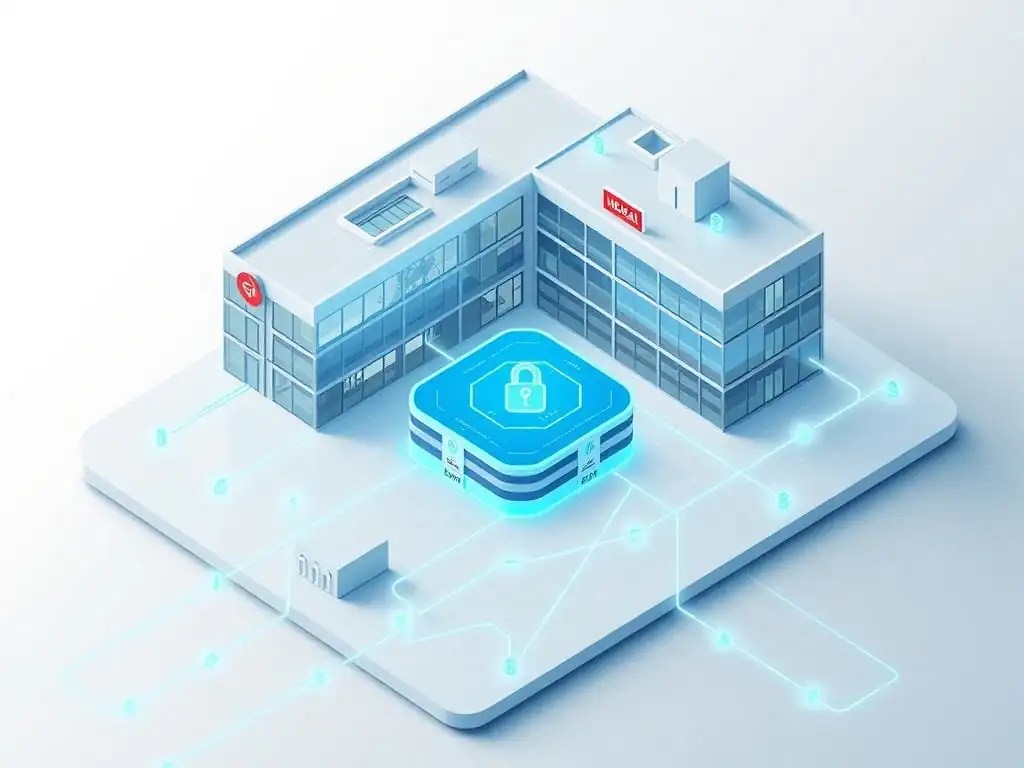
Integrating a new blockchain layer with existing, often disparate, healthcare infrastructure is a significant technical challenge. Hospitals and clinics typically rely on a mix of electronic health record (EHR) systems, laboratory information systems (LIS), radiology information systems (RIS), and billing systems, many of which are proprietary and lack modern APIs. The blockchain system needs to be able to securely receive data from these sources and provide authorized systems or users with access to information referenced on the ledger.
This integration often requires developing middleware or using integration engines that can translate data between legacy formats and the blockchain system's requirements. APIs need to be designed to allow secure interaction with the blockchain for tasks like recording new data entries (hashes), requesting access permissions, or querying transaction history.
A phased approach, starting with integrating one or two key systems for a specific use case (e.g., integrating the EHR system to record visit summaries or lab results hashes on the blockchain), can help manage complexity and minimize disruption to critical clinical workflows while enhancing blockchain healthcare data security for that specific data flow.
Step 5: Ensuring Data Privacy and Regulatory Compliance [HIPAA, GDPR]
Ensuring strict data privacy and continuous regulatory compliance is non-negotiable when implementing blockchain for healthcare data security. Regulations like the Health Insurance Portability and Accountability Act (HIPAA) in the U.S. and the General Data Protection Regulation (GDPR) in the E.U. impose strict requirements on how Protected Health Information (PHI) and personal data are collected, stored, processed, and shared. Blockchain systems must be designed and operated in a manner that fully respects these laws.
For HIPAA, this means implementing technical safeguards like access controls, audit trails, and encryption, all of which can be supported by blockchain's features. The immutability of the ledger provides an excellent audit trail of data access attempts and permissions granted. However, HIPAA's requirement for data availability and potential corrections must be addressed, typically by storing the actual PHI off-chain in a compliant database, with the blockchain managing access permissions and logging transactions.
For GDPR, which includes the 'right to erasure', storing sensitive data directly on an immutable public blockchain is problematic. Therefore, designs must ensure that personal data resides off-chain and can be modified or deleted in compliance with the regulation, while the blockchain records metadata or hashes related to that data, maintaining an auditable, yet flexible, system for blockchain healthcare data security.
Blockchain Use Cases in Healthcare Data Management
Secure Electronic Health Records (EHR) Management on the Blockchain
Managing Electronic Health Records (EHRs) securely is a primary application of blockchain in healthcare. Traditional EHR systems often suffer from security vulnerabilities and poor interoperability. By using blockchain, a patient's health record can be represented as a series of entries (or hashes of entries) on a distributed ledger. The actual, sensitive patient data can be encrypted and stored off-chain in secure databases or decentralized storage systems, with cryptographic keys and access permissions managed on the blockchain.
This approach ensures the integrity and immutability of the record's history; any attempt to alter a past entry would break the cryptographic chain. Furthermore, patients could potentially control access to their records using private keys, granting temporary access to providers as needed. This enhances patient ownership and privacy, while providing a transparent and auditable log of who accessed the record and when, significantly strengthening blockchain healthcare data security for critical patient information.
Decentralized Identity Management for Patients and Providers
Decentralized identity management (DID) using blockchain can revolutionize how patients and healthcare providers verify their identities and manage credentials within the healthcare ecosystem. Traditional identity systems are often centralized and prone to breaches. A blockchain-based DID system would allow individuals and organizations to create self-sovereign digital identities that are verifiable and controlled by the owner, not a central authority.
For patients, this could mean a universal, secure digital identity used across different providers without needing to re-register or share excessive personal information repeatedly. For providers, it could streamline credential verification and licensing checks, ensuring that only authorized and qualified personnel access sensitive systems and data. This layer of verifiable identity is foundational for building trust and ensuring secure interactions within a blockchain-enabled healthcare network, directly contributing to robust blockchain healthcare data security.
Pharmaceutical Supply Chain Tracking and Verification
Tracking pharmaceuticals through the supply chain is a critical use case for blockchain to combat counterfeiting and improve safety. From manufacturing to distribution and dispensing, each step can be recorded on a blockchain ledger. Each batch or even individual package of medication can be assigned a unique identifier, and its movement is logged as transactions on the chain.
This creates a transparent and immutable history of the product's journey. Pharmacies, hospitals, and even patients could potentially scan a product code and verify its authenticity and provenance by checking the blockchain record. This level of traceability makes it incredibly difficult for counterfeit drugs to enter the legitimate supply chain undetected, enhancing patient safety and providing regulators with a powerful tool for monitoring and verification, thereby securing a vital component of the healthcare system.
Clinical Trial Data Management and Integrity
Ensuring the integrity and transparency of clinical trial data is paramount for drug development and regulatory approval. Traditional methods of collecting, managing, and auditing trial data can be complex and susceptible to errors or manipulation. Blockchain can provide a secure, immutable, and auditable platform for recording clinical trial protocols, patient consent, and trial results.
Each data point collected during a trial, from patient demographics to treatment responses, can be hashed and timestamped on a blockchain. This creates an indisputable record of the trial's execution and results. Smart contracts can be used to automate data sharing based on pre-defined conditions, ensuring that data is shared securely and transparently with researchers, sponsors, and regulatory bodies like the FDA or EMA, while preserving patient privacy through encryption and off-chain storage of sensitive details. This enhances the credibility of trial outcomes and accelerates the drug approval process.
Addressing the Challenges of Blockchain Implementation in Healthcare
Scalability and Performance Considerations for Blockchain Healthcare Solutions
Scalability is a major challenge for many blockchain networks, particularly when dealing with the potentially massive volume of transactions generated by a large-scale healthcare system. Processing millions of patient records, appointments, prescriptions, and supply chain events requires a network that can handle high throughput and maintain low latency. Public blockchains often face limitations in transaction speed; for example, the Bitcoin network processes only about 7 transactions per second, far too slow for healthcare needs.
Permissioned blockchains like Hyperledger Fabric are designed with higher performance in mind, often achieving hundreds or even thousands of transactions per second in controlled environments. However, implementing enterprise-level blockchain healthcare solutions still requires careful consideration of network architecture, consensus mechanisms, and data partitioning strategies to ensure the system can scale effectively as usage grows. Techniques like off-chain processing for high-volume, low-value transactions or using layer-2 scaling solutions are being explored to address these performance bottlenecks and ensure the viability of blockchain healthcare data security systems at scale.
Interoperability Challenges with Existing Healthcare Systems
Integrating blockchain technology with the diverse and often outdated legacy systems prevalent in healthcare poses significant interoperability challenges. Many existing EHRs, LIS, and other clinical systems use proprietary data formats, lack modern APIs, and were not designed with decentralized data sharing in mind. Connecting these disparate systems to a blockchain network requires substantial effort in developing integration layers, data mapping tools, and middleware.
Achieving seamless data flow between legacy systems and the blockchain ledger, while maintaining data integrity and security, is complex. This often involves creating standardized interfaces or using established healthcare data exchange standards (like HL7 or FHIR) as an intermediary layer. Building robust connectors that can extract, transform, and load data securely between existing databases and the blockchain reference points is crucial for ensuring that the blockchain healthcare data security layer can effectively interact with the data sources it aims to protect and manage.
Regulatory Uncertainty and Compliance Hurdles
Navigating the complex and sometimes uncertain regulatory landscape is a significant hurdle for blockchain adoption in healthcare. While blockchain offers features that can aid compliance (like auditability and security), the technology itself is relatively new, and specific guidance on its use under existing healthcare data regulations (like HIPAA, GDPR, and others) is still evolving. Questions remain regarding data ownership, the right to erasure in immutable ledgers, and the legal status of smart contracts in healthcare contexts.
Ensuring continuous compliance requires close collaboration with legal and regulatory experts. Organizations must demonstrate that their blockchain implementation meets all requirements for data privacy, security, access control, and auditability outlined by relevant laws. This may involve designing hybrid architectures where sensitive data is stored off-chain in compliant databases, with the blockchain managing access rights and maintaining immutable logs of interactions. Staying abreast of developing regulations and engaging with policymakers will be essential for widespread adoption of blockchain healthcare data security solutions.
Data Privacy and Security Concerns in Blockchain Healthcare
Despite blockchain's inherent security features, implementing it in healthcare introduces new data privacy and security considerations that must be carefully managed. While the ledger itself is immutable, the data stored or referenced on it is still vulnerable if not handled correctly. Storing sensitive, unencrypted patient data directly on any blockchain, especially a public one, would be a major privacy violation. Even on permissioned networks, access control mechanisms must be robust to prevent unauthorized parties from viewing or inferring sensitive information.
The security of private keys used to access or control data is paramount. If a patient's or provider's private key is compromised, it could lead to unauthorized access to their data, even if the data itself is encrypted off-chain. Implementing strong key management practices, including secure storage, multi-factor authentication, and recovery mechanisms, is critical. Furthermore, smart contracts, while powerful, can contain vulnerabilities if not rigorously audited, potentially leading to security exploits. Addressing these specific data privacy and security concerns is vital for building trust in blockchain healthcare data security solutions.
The Future of Blockchain in Healthcare: Trends and Predictions
The Rise of Decentralized Healthcare Applications (dApps)
The future of blockchain in healthcare is likely to see the rise of decentralized applications (dApps) that operate on blockchain networks, offering new models for patient interaction, data management, and healthcare service delivery. These dApps could range from patient portals that allow individuals to manage their health records and share data securely, to platforms facilitating peer-to-peer health data sharing for research purposes with granular consent controls.
These dApps leverage smart contracts to automate processes based on predefined conditions, such as releasing specific health data points to a researcher once consent is verified on the blockchain. This shifts control away from centralized institutions towards a more distributed model where patients have greater agency. As blockchain technology matures and becomes more accessible, we can expect to see a proliferation of innovative dApps focused on improving patient engagement, streamlining administrative tasks, and enhancing overall blockchain healthcare data security.
Integration of Blockchain with AI and IoT in Healthcare
The integration of blockchain with other emerging technologies like Artificial Intelligence (AI) and the Internet of Medical Things (IoMT) holds transformative potential for healthcare. IoMT devices, such as wearable health monitors and remote patient monitoring equipment, generate vast amounts of real-time data. Blockchain can provide a secure and immutable ledger for recording this data, ensuring its integrity from the point of collection.
AI algorithms require large datasets to train effectively. Blockchain can facilitate the secure and privacy-preserving sharing of aggregated or anonymized health data for AI training, potentially across different institutions, while maintaining an auditable trail of data usage. For example, IoMT data secured on a blockchain could feed into an AI diagnostic tool, with the AI's analysis results also recorded on the chain for verification. This synergy can lead to more accurate diagnostics, personalized treatments, and efficient healthcare operations, underpinned by the enhanced data security provided by blockchain.
The Role of Blockchain in Personalized Medicine and Precision Healthcare
Personalized medicine relies heavily on accessing and analyzing large, diverse datasets, including genomic data, lifestyle information, and environmental factors, alongside traditional clinical records. Blockchain can play a crucial role in enabling this by providing a secure, transparent, and patient-controlled platform for managing and sharing these complex datasets.
Patients could potentially grant specific researchers or institutions access to their de-identified or consented data for studies on personalized treatments, with every access logged on the blockchain. This facilitates collaborative research on a global scale while ensuring patient privacy and data integrity. By securely linking various data sources and enabling granular consent management, blockchain can accelerate discoveries in personalized medicine and precision healthcare, ultimately leading to more effective and tailored treatments based on comprehensive, securely managed patient data, reinforcing the importance of blockchain healthcare data security in this domain.
Conclusion: Transforming Healthcare Through Secure and Transparent Blockchain Solutions
The Potential of Blockchain to Revolutionize Healthcare Data Management
Blockchain technology presents a compelling opportunity to fundamentally revolutionize healthcare data management. By offering a decentralized, immutable, and transparent ledger, it addresses critical shortcomings in existing systems, particularly concerning data security, privacy, and interoperability. The ability to create tamper-proof records of patient information, manage access permissions securely, and provide an indisputable audit trail offers a robust defense against cyber threats and insider risks that plague traditional healthcare IT infrastructure.
Beyond security, blockchain's potential to facilitate seamless and authorized data sharing between disparate systems can break down long-standing silos, improving care coordination and reducing inefficiencies. While implementation requires careful planning and execution to navigate technical and regulatory challenges, the inherent features of blockchain provide a powerful foundation for building more resilient and trustworthy healthcare data systems.
Embracing Blockchain for a More Secure, Transparent, and Patient-Centric Healthcare Ecosystem
Embracing blockchain technology is a strategic step towards building a healthcare ecosystem that is not only more secure and transparent but also fundamentally more patient-centric. By empowering patients with greater control over their health data and providing a verifiable record of its usage, blockchain fosters trust and encourages active participation in healthcare decisions. The enhanced blockchain healthcare data security ensures that this empowerment does not come at the expense of privacy.
From securing electronic health records and verifying pharmaceuticals in the supply chain to enabling innovative research through secure data sharing, the applications of blockchain in healthcare are vast and impactful. As the technology matures and regulatory frameworks adapt, blockchain is poised to play a pivotal role in creating a future healthcare system that is more efficient, equitable, and focused on delivering high-quality, secure care to every individual. Investing in and exploring blockchain solutions is essential for healthcare organizations looking to navigate the challenges of the digital age and build a more secure tomorrow.
Frequently Asked Questions
What are the main benefits of using blockchain for healthcare data security?
Blockchain provides enhanced data security through immutable records and decentralized storage, making it harder for unauthorized access and tampering. This leads to improved patient privacy and data integrity.
How can blockchain improve data interoperability in healthcare?
Blockchain facilitates secure data sharing among different healthcare providers by creating a shared, transparent ledger. This eliminates data silos and enables a more holistic view of patient information.
What role does blockchain play in ensuring regulatory compliance within the healthcare industry?
Blockchain’s audit trails and data immutability can assist healthcare organizations in meeting regulatory requirements like HIPAA. It provides a clear record of data access and modifications.
Beyond data security, how can blockchain benefit patients in healthcare?
Blockchain empowers patients with greater control over their medical records, allowing them to securely share their data with providers of their choice. This promotes patient-centric care and data ownership.
What are some of the key challenges in implementing blockchain solutions for healthcare data security?
Scalability, interoperability with legacy systems, and regulatory uncertainty are major hurdles. Overcoming these requires careful planning and collaboration across the healthcare ecosystem.
Final Reflection: Embracing Trust in Healthcare's Future
The exploration of blockchain technology's potential to revolutionize healthcare data security culminates in a crucial understanding: trust is the cornerstone of a thriving healthcare ecosystem. The vulnerabilities inherent in current systems demand innovative solutions, and blockchain offers a compelling path towards enhanced security, transparency, and patient empowerment. This isn't just about technological advancement; it's about safeguarding the very foundation of patient care.
The impact of blockchain on healthcare extends far beyond mere data protection. It promises a future where patients have greater control over their medical records, fostering a more collaborative and informed relationship with healthcare providers. This shift towards patient-centricity is profoundly important, as it empowers individuals to actively participate in their own well-being and contribute to the collective health data pool. The future of healthcare is participatory, predictive, and personalized, and blockchain has the potential to be a key enabler of this transformation.
As we stand at the precipice of this technological revolution, let us not only embrace the potential of blockchain but also reflect on our individual roles in shaping a more secure and transparent healthcare future. Consider how you can advocate for the adoption of these technologies, champion patient data rights, and contribute to a world where healthcare information is protected, accessible, and used for the betterment of all. The power to build a more trustworthy healthcare system lies within each of us.
Embrace the Future: Revolutionize Healthcare with Blockchain Today!
Thank you for exploring the potential of blockchain in transforming healthcare. We hope you've gained valuable insights into how this technology can enhance security, transparency, and efficiency. Now, it's time to turn that knowledge into action.
Here are some concrete steps you can take:
- Dive deeper: Research specific blockchain applications relevant to healthcare, such as supply chain management for pharmaceuticals or secure storage of patient data.
- Join the conversation: Share this article with your network and encourage discussion on how blockchain can address current challenges in healthcare.
- Explore opportunities: Look into workshops, webinars, or online courses focused on implementing blockchain in healthcare. Many platforms like Udemy and Coursera offer excellent options.
What healthcare challenge do you believe blockchain is best suited to solve, and what initial steps are most important for its successful adoption?
Leave a Reply