
Interoperability Explained: Bridging the Gaps Between Blockchains


Welcome to Blockchain Trends, your guide to understanding the real-world impact of this revolutionary technology. Beyond the hype of cryptocurrencies, blockchain is transforming industries. Ever wondered how different blockchains can seamlessly communicate, unlocking a wave of new possibilities for businesses? Dive into our article, "Interoperability Explained: Bridging the Gaps Between Blockchains," and discover the blockchain interoperability benefits businesses, exploring how this crucial development is shaping the future of decentralized systems and enterprise applications. Prepare to uncover the potential!
- Blockchain Interoperability Benefits Businesses: A Deep Dive
-
Frequently Asked Questions
- How does blockchain interoperability benefit businesses?
- What are some key challenges hindering the widespread adoption of blockchain interoperability?
- What role does DeFi (Decentralized Finance) play in the context of blockchain interoperability?
- What are some examples of real-world applications where blockchain interoperability is already making an impact?
- How is regulation impacting the development and implementation of blockchain interoperability solutions?
- Final Reflection: Unlocking Blockchain's True Potential
- Unlock the Future: Embrace Blockchain Interoperability!
Blockchain Interoperability Benefits Businesses: A Deep Dive
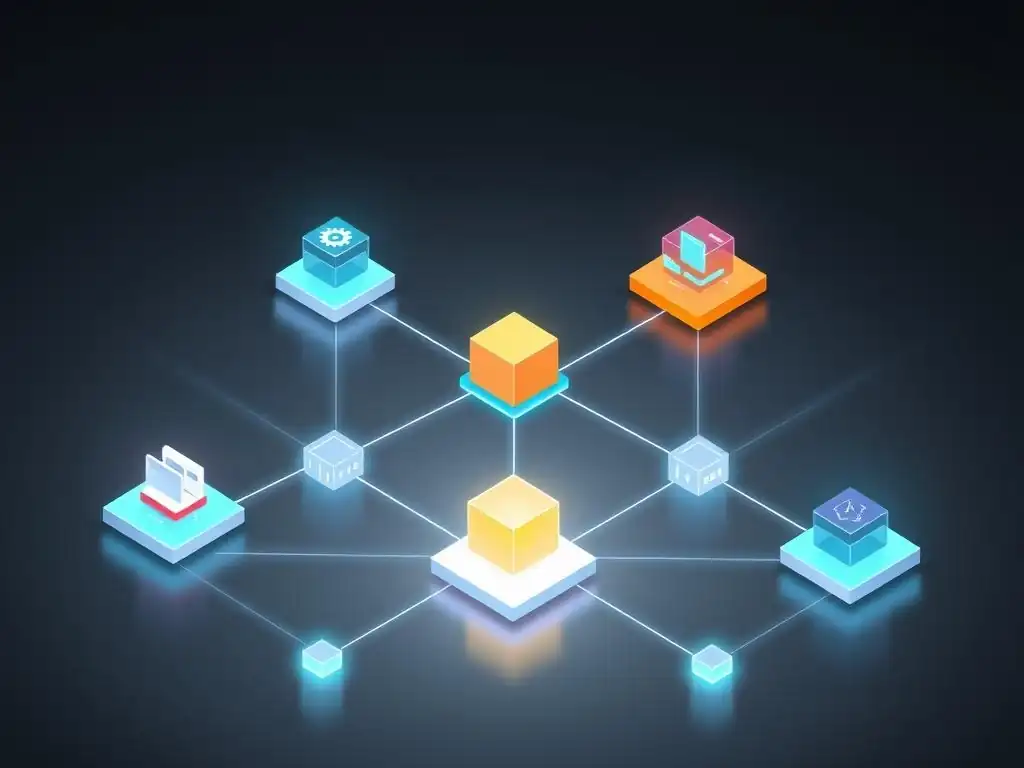
Enhanced Efficiency and Reduced Costs through Interoperable Systems
The isolated nature of early blockchain networks often meant that moving assets or data between them required complex, costly, and time-consuming processes, frequently involving centralized exchanges or manual reconciliation. Blockchain interoperability benefits businesses by dismantling these barriers, leading to significant operational efficiencies and cost reductions.
By enabling seamless interaction between different chains, businesses can automate cross-chain workflows, eliminate the need for intermediaries in many scenarios, and streamline data flow. For instance, a supply chain involving multiple parties using different blockchain platforms (one for raw materials tracking, another for logistics, and a third for payments) can leverage interoperability to automate updates and transactions across all systems simultaneously, drastically reducing manual effort and potential errors.
Furthermore, the reduction in transaction friction directly translates to lower operational costs. Consider cross-border payments or asset transfers; traditionally, these involve multiple banks and clearing houses, incurring significant fees and delays.
Interoperable blockchain solutions, such as atomic swaps or cross-chain bridges, allow direct peer-to-peer value exchange between different blockchain networks without relying on costly intermediaries. While specific cost savings vary greatly depending on the industry and use case, estimates for streamlining trade finance processes through blockchain, which heavily relies on data sharing between disparate parties potentially using different systems, often point to potential cost reductions of 10-20% or more by increasing transparency and reducing manual checks and reconciliation.
Unlocking New Revenue Streams with Cross-Chain Functionality
The ability for different blockchain networks to communicate and interact opens up entirely new possibilities for product and service development, thereby unlocking novel revenue streams for businesses. When assets, data, or smart contract logic can flow freely between chains, businesses are no longer confined to the user base or capabilities of a single network.
This cross-chain functionality allows companies to aggregate liquidity from multiple sources, offer services that combine unique features from different protocols, and reach a broader audience across the entire decentralized ecosystem. For example, a Decentralized Finance (DeFi) protocol initially built on Ethereum can expand its market by accepting collateral or enabling lending/borrowing of assets originating from other chains like Polygon, Solana, or Binance Smart Chain via interoperability solutions.
This expansion into cross-chain markets directly contributes to business growth and revenue generation. Cross-chain Decentralized Exchanges (DEXs) can attract more users and trading volume by offering a wider range of token pairs from different networks. Gaming platforms can allow users to utilize Non-Fungible Tokens (NFTs) minted on one blockchain within a game running on another, increasing the utility and value of digital assets and driving engagement.
The Total Value Locked (TVL) in cross-chain bridges, while subject to security risks, has demonstrated the significant demand for cross-chain movement, reaching tens of billions of dollars at peak times, indicating the substantial economic activity facilitated by interoperability. Blockchain interoperability benefits businesses by allowing them to tap into these diverse pools of assets, users, and functionalities.
Improved Data Sharing and Collaboration Across Different Blockchains
Secure and efficient data sharing is paramount for complex business processes, especially those involving multiple stakeholders operating on different technological platforms. Blockchain's inherent immutability and transparency are valuable for data integrity, but its siloed nature historically limited its potential for widespread inter-organizational collaboration if participants chose different networks.
Blockchain interoperability benefits businesses by enabling trusted data exchange and collaborative workflows across these disparate blockchain networks, breaking down informational silos. This is crucial in sectors like supply chain management, where tracking a product from origin to destination involves numerous entities (suppliers, manufacturers, logistics providers, retailers) who might each use different distributed ledger technologies tailored to their specific needs.
With interoperability, a manufacturer using a private Hyperledger Fabric network can securely share production data with a logistics provider using a public Ethereum-based tracking system, which can then share delivery updates with a retailer using another platform. This creates an end-to-end view of the supply chain, enhancing transparency, traceability, and trust among participants without requiring everyone to migrate to a single, monolithic platform.
Similarly, in healthcare, interoperability could allow different hospitals or clinics using distinct blockchain systems for patient records to share specific, authorized data points securely for coordinated care or research, while maintaining patient privacy and data sovereignty. This capability for seamless, yet controlled, data flow across diverse blockchain implementations fosters unprecedented levels of collaboration and unlocks the full potential of decentralized data management for complex business ecosystems.
Frequently Asked Questions
How does blockchain interoperability benefit businesses?
Blockchain interoperability allows businesses to seamlessly connect different blockchain networks, improving data sharing and collaboration. This leads to increased efficiency and new business opportunities.
What are some key challenges hindering the widespread adoption of blockchain interoperability?
Security concerns are a major hurdle, as bridging blockchains introduces potential vulnerabilities. Standardization is also lacking, making it difficult to create universally compatible solutions.
What role does DeFi (Decentralized Finance) play in the context of blockchain interoperability?
DeFi protocols often require interoperability to access diverse assets and liquidity across different blockchains. This enables more complex financial instruments and greater user accessibility.
What are some examples of real-world applications where blockchain interoperability is already making an impact?
Supply chain management benefits from improved data traceability across disparate blockchain systems. Healthcare can utilize it for secure and interoperable patient records.
How is regulation impacting the development and implementation of blockchain interoperability solutions?
Regulatory uncertainty can slow down innovation and investment in interoperability projects. Clear guidelines are needed to foster responsible development and adoption.
Final Reflection: Unlocking Blockchain's True Potential
The exploration of blockchain interoperability benefits for businesses reveals a crucial truth: the future of blockchain lies in its interconnectedness. No longer can individual blockchains exist in isolated silos; the true power of distributed ledger technology is unleashed when these networks can seamlessly communicate and share value. This realization is not just theoretical; it's rapidly becoming a business imperative as companies seek to leverage the unique strengths of different blockchains for diverse applications.
The promise of interoperability extends far beyond mere technical integration. It fosters a more inclusive and collaborative ecosystem, enabling innovation and unlocking new economic opportunities. Witnessing the evolution from fragmented blockchains to a more unified landscape is inspiring, particularly as it mirrors the broader human desire for connection and understanding. The strength of the team is each individual member. The strength of each member is the team.
- Phil Jackson. This quote perfectly encapsulates the spirit of blockchain interoperability, where the collective strength of interconnected networks far surpasses the limitations of isolated systems.
Now, consider the implications of this interconnected future for your own endeavors. How can you leverage the power of blockchain interoperability to streamline your operations, unlock new revenue streams, or foster greater collaboration within your industry? The possibilities are vast and the potential rewards are significant. Embrace the challenge, explore the opportunities, and become a part of shaping the future of a truly interconnected blockchain world.
Unlock the Future: Embrace Blockchain Interoperability!
Thank you for exploring the world of blockchain interoperability with us! We hope you now have a clearer understanding of how these innovative technologies can work together. Now, let's put that knowledge into action!
Here are some immediate steps you can take to deepen your understanding and increase your involvement:
- Explore Further: Read detailed whitepapers or technical documents on specific interoperability solutions such as Polkadot, Cosmos, or LayerZero. Gain insights into their unique approaches and potential impacts.
- Engage with the Community: Join online forums, Discord servers, or Telegram groups dedicated to blockchain interoperability. Share your thoughts and learn from others.
- Brainstorm: Consider how blockchain interoperability could transform industries you care about. Share your ideas and insights with us in the comments below!
Leave a Reply