
Smart Contracts and the Rule of Law: Reimagining Legal Systems in the Digital Age with Blockchain


Welcome to Blockchain Trends, your compass in the rapidly evolving world of decentralized technologies!
Dive into the transformative power of blockchain beyond the hype. We're exploring its impact on everything from decentralized finance to enterprise solutions. Are you ready to uncover how blockchain is poised to reshape the very fabric of our legal frameworks? Our latest article, " Smart Contracts and the Rule of Law: Reimagining Legal Systems in the Digital Age with Blockchain," delves into the intriguing possibilities of a blockchain legal systems future.
Discover how this revolutionary technology could rewrite the rules – literally. Intrigued? Keep reading to explore the potential, the challenges, and the future of law in the digital age.
- Case Studies: Blockchain Applications in Legal Systems
-
Frequently Asked Questions
- What are smart contracts, and how do they relate to traditional legal contracts?
- How can blockchain technology contribute to the future of legal systems?
- What are the potential benefits of using smart contracts to automate legal processes?
- What legal and regulatory challenges need to be addressed before widespread adoption of blockchain-based legal systems?
- How does the concept of decentralization impact the future of blockchain legal systems and the rule of law?
- Final Reflection: Embracing the Blockchain Legal Systems Future
- Pioneer the Future: Transform Legal Systems with Smart Contracts!
Case Studies: Blockchain Applications in Legal Systems
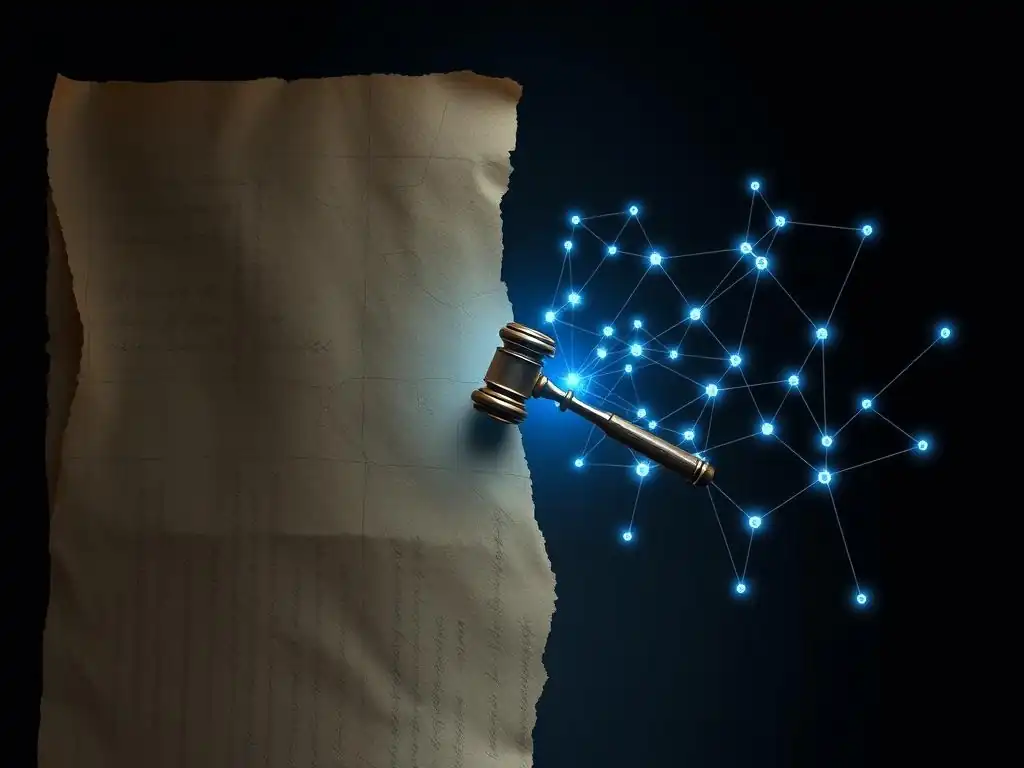
Real-world applications are already demonstrating the potential of blockchain technology to reshape specific facets of legal and governance systems. While a complete overhaul of the Blockchain legal systems future is still unfolding, these examples provide tangible insights into how immutability, transparency, and automation can address long-standing inefficiencies and trust issues. Examining these cases helps illuminate the practical implications and potential pathways for integrating decentralized technologies into existing legal frameworks.
These case studies cover diverse sectors, from global trade logistics to property ownership and organizational structures. They highlight how smart contracts and distributed ledgers are moving beyond theoretical discussions to create functional, albeit often nascent, blockchain legal systems solutions. Understanding these implementations is crucial for appreciating the scope and challenges of the broader transformation being discussed for the future of legal systems with blockchain.
Smart Contracts in Supply Chain Management: Ensuring Transparency and Accountability
Smart contracts are proving particularly valuable in complex supply chains, where multiple parties, often across different jurisdictions, need to verify transactions and conditions. By embedding contractual terms directly into code executed on a blockchain, events like shipment arrival, quality checks, or payment triggers can automatically initiate actions. For instance, a smart contract could release payment to a supplier only when a specific quantity of goods is verified as received at a destination warehouse, eliminating manual checks and reducing disputes based on differing records. This significantly enhances accountability, as the execution logic is transparent and verifiable on the ledger.
Companies like Maersk and IBM have explored blockchain solutions for global shipping, demonstrating how shared, immutable records can track containers from origin to destination. Pilot programs have shown potential to reduce the time taken to process shipping documentation by up to 80% and lower costs associated with manual data entry and reconciliation.
This not only improves efficiency but also creates a clear, auditable trail for regulatory compliance and dispute resolution, laying groundwork for more robust blockchain legal systems within international trade. The transparency provided by the shared ledger makes it harder for parties to misrepresent information or delay processes, fostering greater trust among participants in the supply chain.
Blockchain-Based Land Registries: Securing Property Rights
Securing property rights is a foundational element of any legal system, and traditional paper-based or centralized digital land registries often suffer from inefficiencies, susceptibility to fraud, and difficulty in verification, especially in developing nations. Blockchain technology offers a compelling alternative by providing an immutable, transparent, and decentralized record of land ownership and transactions. Each transfer of title can be recorded as a transaction on the blockchain, creating a verifiable history accessible to authorized parties. This reduces the risk of forged documents or multiple claims on the same property.
Several countries and regions have piloted blockchain-based land registries. For example, initiatives in Georgia, Ghana, and Honduras have explored using blockchain to digitize and secure land records. While full nationwide adoption is complex due to existing infrastructure and legal challenges, early projects have demonstrated improved efficiency and reduced opportunities for corruption compared to manual systems. The shift towards a more secure, transparent, and accessible land registry system using blockchain could significantly strengthen property rights, encourage investment, and form a critical component of evolving blockchain legal systems focused on foundational assets.
Decentralized Autonomous Organizations (DAOs) and Corporate Governance: A New Legal Paradigm?
Decentralized Autonomous Organizations (DAOs) represent a radical shift in how entities can be structured and governed, leveraging smart contracts to automate rules and decision-making processes, often based on tokenized voting. Instead of traditional hierarchical structures with boards of directors and legal incorporation documents, DAOs operate through code on a blockchain, with proposals and voting managed transparently on the ledger. This structure challenges conventional legal definitions of corporations and organizations, raising complex questions about liability, legal standing, and regulatory compliance.
While still experimental, DAOs have been used to manage investment funds, open-source projects, and decentralized protocols. For instance, the Uniswap protocol is governed by a DAO where token holders vote on proposals affecting the protocol's future. The "The DAO" incident in 2016 highlighted significant legal and technical risks, including vulnerability to exploits and uncertainty regarding participant liability.
Establishing legal recognition and frameworks for DAOs is a critical area for the Blockchain legal systems future, requiring innovation in how legal personality, contract law, and governance are applied to code-based entities. Regulatory bodies globally are grappling with how to classify and oversee these new forms of organization.
Frequently Asked Questions
What are smart contracts, and how do they relate to traditional legal contracts?
Smart contracts are self-executing agreements written in code and stored on a blockchain. Unlike traditional contracts, they automatically enforce the terms when conditions are met, reducing the need for intermediaries.
How can blockchain technology contribute to the future of legal systems?
Blockchain offers increased transparency and immutability for legal records. This can lead to more efficient dispute resolution and greater trust in the legal process, paving the way for new legal frameworks.
What are the potential benefits of using smart contracts to automate legal processes?
Automation via smart contracts can significantly reduce costs and delays associated with traditional legal processes. They also minimize the risk of human error and bias in contract execution.
What legal and regulatory challenges need to be addressed before widespread adoption of blockchain-based legal systems?
Key challenges include defining the legal status of smart contracts, establishing jurisdictional boundaries, and ensuring compliance with existing regulations. The future of blockchain legal systems depends on addressing these concerns.
How does the concept of decentralization impact the future of blockchain legal systems and the rule of law?
Decentralization can promote greater accessibility and fairness in the legal system by distributing power and reducing reliance on centralized authorities. However, it also raises questions about accountability and enforcement within a decentralized framework, impacting the rule of law.
Final Reflection: Embracing the Blockchain Legal Systems Future
The exploration of smart contracts and their potential to reshape legal systems, as detailed throughout this article, isn't just a theoretical exercise; it's a crucial conversation for today. The convergence of blockchain technology and the rule of law represents a paradigm shift in how we understand and enforce agreements, offering unprecedented transparency and efficiency in an increasingly digital world. The implications for governance, dispute resolution, and access to justice are profound and demand our immediate attention.
This journey into the realm of blockchain legal systems has profoundly influenced my perspective on the future of law. Witnessing the potential for decentralized, immutable contracts to empower individuals and streamline complex processes has solidified my belief in the transformative power of technology. The ability to create self-executing agreements that operate independently of traditional intermediaries offers a compelling vision of a more equitable and accessible legal landscape. The future of law is not about replacing lawyers, but about empowering them with tools that enhance their ability to serve justice.
This quote encapsulates the spirit of innovation that should guide our exploration of blockchain's legal applications.
As we stand on the cusp of this technological revolution, I invite you to reflect on the role you can play in shaping the blockchain legal systems future. Consider how these innovations can be leveraged to build more just, transparent, and efficient societies. Embrace the challenge of understanding and adapting to this new paradigm, and let us collectively strive to create a future where technology serves as a powerful force for good, upholding the principles of the rule of law in the digital age.
Okay, here's a CTA designed for the end of a web article titled "Smart Contracts and the Rule of Law: Reimagining Legal Systems in the Digital Age with Blockchain," for the website "Blockchain Trends" with the domain "blockchaintrends.org":
Pioneer the Future: Transform Legal Systems with Smart Contracts!
Thank you for exploring the potential of smart contracts and their impact on the rule of law. We hope this article has inspired you to envision a more transparent and efficient legal landscape. Now, let's put that vision into action.
- Dive Deep: Begin building your own basic smart contract!: Even a simple project can unlock a profound understanding of its potential and limitations.
- Share this article with your network of legal professionals, developers, and blockchain enthusiasts to spark a conversation about the future of law.
- Explore open-source smart contract templates on platforms like GitHub and experiment with modifying them to fit hypothetical legal scenarios.
What legal challenge would you most like to see addressed by a smart contract solution? Share your ideas in the comments below!
Leave a Reply