
The Case for Blockchain in Supply Chain: RealWorld Examples of Successful Implementations

Welcome to Blockchain Trends, your definitive source for understanding the real impact of blockchain technology beyond the hype. Curious about how this revolutionary technology is changing industries?
Dive in to discover the compelling case for blockchain supply chain management benefits and explore real-world examples of successful implementations. Uncover how businesses are leveraging blockchain to enhance transparency, efficiency, and security in their supply chains. What are the tangible advantages and potential pitfalls? Keep reading to find out!
The Case for Blockchain in Supply Chain: Real-World Examples of Successful Implementations
- Introduction: Unlocking Blockchain Supply Chain Management Benefits
- Understanding Blockchain's Potential in Supply Chain: A Deep Dive
- Real-World Blockchain Supply Chain Examples: Successful Implementations
- Benefits of Blockchain Technology in Supply Chain: A Summary
- Overcoming Challenges in Blockchain Supply Chain Implementation
- The Future of Blockchain in Supply Chain: Trends and Predictions
- Conclusion: Embracing Blockchain for a More Resilient and Efficient Supply Chain
-
Frequently Asked Questions
- How can blockchain technology improve supply chain transparency?
- What are the key blockchain supply chain management benefits for businesses?
- What are some real-world examples of blockchain being used in supply chain management?
- How does blockchain help in ensuring the authenticity and preventing counterfeiting of products within a supply chain?
- What challenges do companies face when implementing blockchain solutions for supply chain management?
- Final Reflection: Embracing Transparency and Trust in Supply Chains
- Unlock the Future: Revolutionize Your Supply Chain Today!
Introduction: Unlocking Blockchain Supply Chain Management Benefits
The Rising Need for Transparency and Efficiency in Modern Supply Chains
Modern supply chains are incredibly complex, spanning multiple continents, intermediaries, and regulatory environments. This complexity creates significant challenges, including a lack of visibility, vulnerability to fraud, inefficiencies from manual processes, and difficulty in quickly identifying the source of issues like product contamination or ethical sourcing concerns. Consumers, regulators, and businesses themselves are increasingly demanding greater transparency regarding product origins, handling, and journey from source to destination.
The pressure to improve efficiency is equally immense. Rising logistics costs, unpredictable global events, and the need for faster delivery times necessitate streamlined operations. Traditional paper-based systems and disparate databases often lead to delays, errors, and disputes, hindering effective collaboration among supply chain partners. Addressing these challenges is crucial for businesses seeking to remain competitive and build trust with stakeholders, highlighting the potential blockchain supply chain management benefits.
How Blockchain Technology Addresses Key Supply Chain Challenges
Blockchain technology offers a fundamental shift in how data is managed and shared within a supply chain network. Its distributed, immutable ledger provides a single, shared source of truth that all authorized participants can access and verify. This inherent transparency combats the opacity found in traditional systems, making it easier to track goods and information flow.
Beyond transparency, blockchain enhances security by making it extremely difficult to alter records once they are added to the chain. This significantly reduces the risk of fraud and errors. Furthermore, the ability to encode business logic directly into smart contracts allows for the automation of processes like payments upon delivery or verification of conditions, driving efficiency and reducing administrative overhead. These core characteristics lay the groundwork for realizing significant blockchain supply chain management benefits, including improved trust and operational performance.
Understanding Blockchain's Potential in Supply Chain: A Deep Dive
What is Blockchain and How Does it Work for Supply Chain Applications?
At its core, a blockchain is a distributed, digital ledger that records transactions across many computers. These transactions are grouped into 'blocks', which are then linked together chronologically using cryptographic hashes, forming a chain. Once a block is added to the chain, it is extremely difficult to alter retroactively, as doing so would require changing all subsequent blocks and would be visible to all network participants.
For supply chain applications, this means creating a shared, tamper-evident record of every step a product takes, from raw material sourcing to final delivery. When an event occurs – like a product moving from a farm to a processing plant, or a change in ownership – this transaction can be recorded on the blockchain. Participants with permission can view this shared history, providing unprecedented visibility into the product's journey and status. This shared, immutable record is a cornerstone of the blockchain supply chain management benefits.
Key Features of Blockchain that Revolutionize Supply Chain Operations
Several intrinsic features of blockchain technology make it particularly well-suited for transforming supply chain operations. These features collectively contribute to the significant blockchain supply chain management benefits observed in early implementations. They address fundamental pain points like data silos, lack of trust, and manual processing, paving the way for more robust and efficient global trade networks.
The combination of these features enables a level of trust and automation previously unattainable in complex, multi-party supply chain environments. By moving away from fragmented, untrusted systems towards a unified, verifiable ledger, businesses can unlock substantial improvements in traceability, efficiency, and risk management, realizing the full potential of blockchain supply chain management benefits.
Immutability and Traceability for Enhanced Product Provenance
The immutable nature of blockchain ensures that once data is recorded, it cannot be changed or deleted without the consensus of the network. This provides a high degree of data integrity. Coupled with this is the inherent traceability: every transaction is linked to the previous one, creating a clear, auditable trail.
This means stakeholders can trace a product's journey backward through the supply chain with certainty, verifying its origin, handling, and authenticity at every step. For industries dealing with high-value goods, sensitive products like food or pharmaceuticals, or ethical sourcing requirements, this level of provenance tracking is invaluable for building trust and ensuring compliance.
Decentralization and Security for Reduced Risk of Fraud
Blockchain networks can be decentralized, meaning no single entity has complete control over the ledger. The data is replicated across multiple nodes, making it highly resilient to single points of failure or malicious attacks aimed at corrupting records. Security is further enhanced through cryptography, which secures transactions and ensures only authorized parties can access specific information.
This distributed and secure architecture significantly reduces the risk of fraud, counterfeiting, and data manipulation that plague traditional supply chains. By creating a secure, shared source of truth, blockchain helps prevent discrepancies and disputes, fostering greater trust among trading partners and protecting the integrity of the supply chain data.
Smart Contracts and Automation for Streamlined Processes
Smart contracts are self-executing contracts with the terms of the agreement directly written into code. Stored on the blockchain, they automatically execute actions (like releasing payment or updating inventory status) when predefined conditions are met, without the need for intermediaries.
Implementing smart contracts in a supply chain can automate various manual processes, such as triggering payments upon successful delivery confirmation, verifying compliance certificates, or managing escrow for trade finance. This automation speeds up transactions, reduces administrative costs, minimizes human error, and improves the overall efficiency of supply chain operations, contributing significantly to blockchain supply chain management benefits.
Real-World Blockchain Supply Chain Examples: Successful Implementations
Case Study 1: Walmart - Tracking Produce with Blockchain for Enhanced Safety
Walmart, one of the world's largest retailers, faced a significant challenge in quickly tracing the origin of food products during contamination outbreaks. Traditional methods, relying on paper records and disparate databases, could take days or even weeks to trace a single item back to its source, posing serious public health risks and causing significant financial losses.
Recognizing the need for faster, more reliable traceability, Walmart piloted a blockchain-based system. They initially focused on tracing mangoes and later expanded to leafy greens, products often associated with foodborne illness outbreaks. The goal was to create a digital, immutable trail for these items from the farm to the store shelf.
The Problem: Slow Traceability of Contaminated Produce
In traditional supply chains, tracing a food item like a head of lettuce or a mango back to its farm of origin could involve contacting numerous intermediaries – distributors, processors, packagers, and farmers – each with their own record-keeping systems. This manual process was cumbersome, time-consuming, and prone to errors, making rapid response to food safety incidents incredibly difficult.
For example, tracing a bag of contaminated spinach back to its source farm could take days or even a week, during which time more contaminated product might be consumed, and the source of the outbreak remains unknown, hindering containment efforts. This lack of rapid traceability was a critical vulnerability for Walmart's supply chain and public safety.
The Solution: Implementing a Blockchain-Based Tracking System for Mangoes
Walmart partnered with IBM Food Trust, a blockchain-based solution built on the Hyperledger Fabric platform, to create a shared, permissioned ledger for food traceability. Suppliers were required to upload data about their produce, including farm location, processing dates, and shipping information, onto the blockchain at each step of the supply chain.
This created a digital, end-to-end record for each batch of produce. When a product arrived at a distribution center or store, scanning a QR code or entering batch information allowed authorized users to access the entire history of that item on the blockchain, providing immediate visibility into its origin and journey.
The Results: Reduced Traceability Time from Days to Seconds
The implementation of the blockchain system delivered dramatic improvements in traceability speed. In pilot tests, Walmart demonstrated that they could trace a product back to its farm of origin in as little as 2.2 seconds, a stark contrast to the 7 days or more it previously took.
This rapid traceability significantly enhances food safety by allowing for quicker identification and isolation of contaminated products, reducing the scope of potential outbreaks and minimizing recalls. The success led Walmart to mandate that all suppliers of leafy green vegetables implement the system by September 2019, showcasing a clear example of the tangible blockchain supply chain management benefits in action.
Case Study 2: De Beers - Tracking Diamonds with Blockchain for Increased Transparency
The diamond industry has long faced challenges related to provenance, particularly concerning 'conflict diamonds' or 'blood diamonds' – those mined in war zones and sold to finance conflicts. Ensuring the ethical sourcing and authenticity of diamonds is crucial for maintaining consumer trust and adhering to international regulations like the Kimberley Process.
De Beers, one of the world's leading diamond companies, sought a robust solution to provide immutable proof of a diamond's journey from mine to retailer. They aimed to create a verifiable record that would assure consumers and stakeholders that their diamonds were ethically sourced and authentic, thereby enhancing transparency across their value chain.
The Problem: Conflict Diamonds and Lack of Provenance
Traditionally, tracking diamonds involved a combination of paper certificates and disparate databases managed by various intermediaries like miners, cutters, polishers, and jewelers. This fragmented system made it difficult to definitively prove a diamond's origin and track its path, leaving the door open for illicit stones to enter the legitimate supply chain.
Consumers and retailers increasingly demanded assurance that the diamonds they purchased were not associated with conflict or human rights abuses. The lack of a single, trusted, and verifiable record-keeping system made providing this assurance challenging and sometimes impossible, impacting the industry's reputation and consumer confidence.
The Solution: Using Blockchain to Track Diamonds from Mine to Retail
De Beers developed Tracr, a blockchain platform designed to track high-value diamonds throughout their lifecycle. Each rough diamond registered on the platform is assigned a unique ID. Data about the diamond, such as its weight, color, clarity, and information about its mining, cutting, polishing, and setting, is recorded on the immutable ledger.
As the diamond moves through the value chain, each participant updates the digital record on the blockchain. This creates a secure, verifiable history accessible to authorized parties, providing a clear and tamper-proof account of the diamond's journey from the moment it is unearthed.
The Results: Enhanced Consumer Trust and Ethical Sourcing
By providing an immutable digital trail, Tracr offers unprecedented transparency into diamond provenance. It allows retailers and consumers to verify the authenticity and ethical source of a diamond with confidence, directly addressing concerns about conflict diamonds.
The platform has successfully tracked millions of diamonds since its launch in 2018, demonstrating the feasibility of using blockchain for high-value asset tracking in complex supply chains. This initiative enhances the reputation of De Beers and its partners, builds greater trust with consumers, and sets a new standard for transparency and ethical sourcing in the diamond industry, illustrating key blockchain supply chain management benefits.
Case Study 3: Maersk - Optimizing Logistics and Reducing Costs with Blockchain
The global shipping industry is notoriously complex and inefficient, relying heavily on paper-based documentation, manual processes, and communication between numerous parties including carriers, ports, customs authorities, and freight forwarders. A single shipment can involve hundreds of documents and interactions, leading to significant delays, errors, and high administrative costs.
Maersk, the world's largest container shipping company, recognized the need for a digital transformation to streamline these processes, improve visibility, and reduce the friction in global trade. They aimed to create a more efficient and less costly system for managing shipping logistics and documentation.
The Problem: Inefficient Paper-Based Processes in Shipping
Managing international freight involves mountains of paperwork, such as bills of lading, customs forms, health certificates, and letters of credit. These documents are often exchanged physically or via email, leading to delays, lost papers, and manual data entry errors across different systems.
The lack of real-time visibility into document status and shipment location across all stakeholders resulted in demurrage fees, delays in customs clearance, and inefficient planning. It was estimated that the cost of processing shipping documentation could be as high as one-fifth of the total transport cost, highlighting a major area for potential efficiency gains.
The Solution: Leveraging Blockchain for Streamlined Documentation and Tracking
Maersk partnered with IBM to develop TradeLens, a blockchain-based platform designed to digitize and streamline global trade documentation and logistics. The platform creates a shared, immutable ledger for tracking cargo movements and managing the associated documents among supply chain partners.
Instead of sending physical papers or relying on fragmented digital systems, participants on TradeLens upload and share documents and data securely on the blockchain. This allows all authorized parties – including carriers, ports, customs, and shippers – to access the same real-time information about a shipment and its documentation status.
The Results: Reduced Costs and Improved Efficiency in Global Trade
TradeLens has demonstrated significant improvements in efficiency and cost reduction. By digitizing and automating the flow of information, it reduces the time spent on administrative tasks and minimizes delays caused by missing or incorrect documentation. Participants have reported reductions in transit times and administrative costs.
For example, pilots showed a significant reduction in the time required to process documentation for a shipment. The platform facilitates better collaboration and provides enhanced visibility across the entire shipping process, helping to predict arrival times more accurately and optimize port operations. While specific overall cost savings vary, the platform's ability to streamline paper-heavy processes and improve data flow represents a substantial step towards more efficient and less costly global trade, showcasing significant blockchain supply chain management benefits.
Benefits of Blockchain Technology in Supply Chain: A Summary
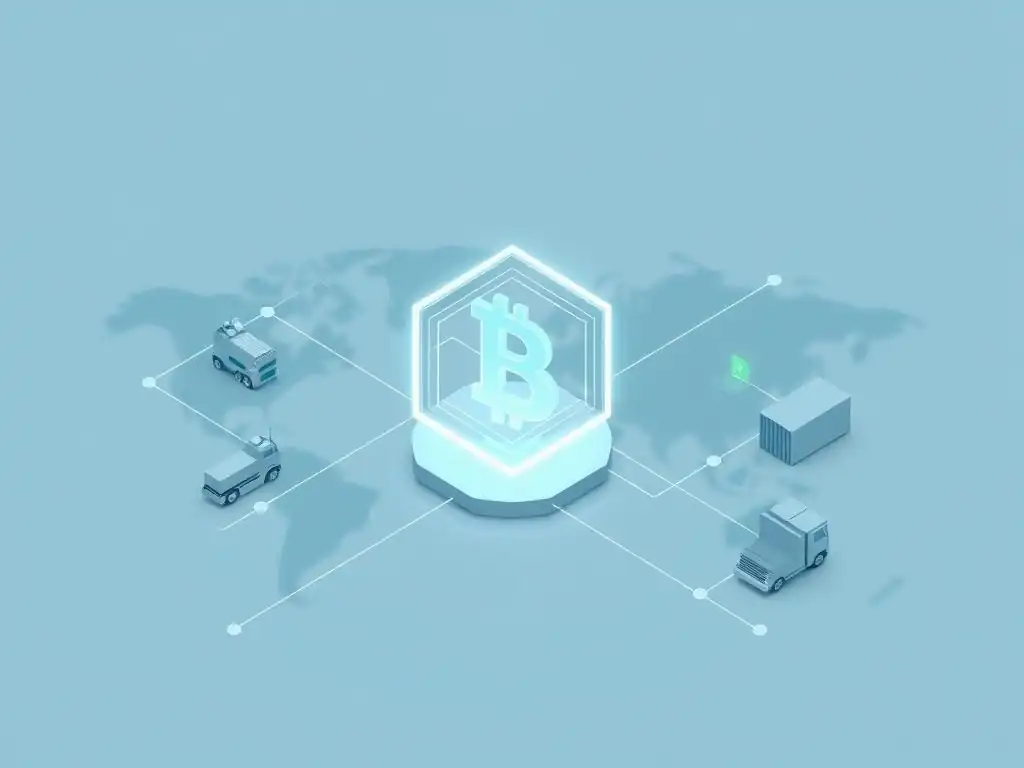
The implementation of blockchain across various industries highlights a range of compelling blockchain supply chain management benefits that address long-standing inefficiencies and trust issues. These advantages stem directly from the core features of the technology – its distributed nature, immutability, and cryptographic security.
- Enhanced Transparency and Traceability: Provides a shared, immutable record of a product's journey, allowing for quick and reliable tracking from origin to destination.
- Improved Efficiency and Reduced Costs: Automates processes via smart contracts, minimizes manual data entry, and streamlines documentation, leading to faster operations and lower administrative overhead.
- Increased Security and Reduced Risk: The decentralized and cryptographic nature of blockchain makes it highly secure against fraud, counterfeiting, and data tampering.
- Better Collaboration and Trust: Creates a single source of truth accessible to all authorized participants, fostering greater trust and seamless collaboration among diverse supply chain partners.
These benefits collectively enable businesses to build more resilient, efficient, and trustworthy supply chains, ultimately leading to improved customer satisfaction and competitive advantage.
Overcoming Challenges in Blockchain Supply Chain Implementation
Despite the significant blockchain supply chain management benefits, implementing this technology is not without its hurdles. Organizations considering adoption must carefully plan how to address technical, organizational, and regulatory challenges to ensure a successful rollout and maximize the potential benefits.
One major challenge is integrating blockchain solutions with existing legacy systems. Supply chains often rely on a mix of outdated software and hardware, making seamless data flow into a new blockchain platform complex and costly. Furthermore, achieving network effects requires onboarding multiple participants across the supply chain, which can be difficult due to varying levels of technical readiness and willingness to share data.
Addressing Scalability Issues in Blockchain Networks
Scalability remains a key technical challenge for many blockchain platforms, particularly public ones. As the number of transactions and participants grows, the network's ability to process and validate these transactions quickly can become constrained, leading to slower performance and higher costs. This is a critical consideration for large-scale supply chains handling millions of transactions daily.
While enterprise-focused blockchain platforms like Hyperledger Fabric or private/consortium chains offer better scalability than public blockchains like early versions of Ethereum or Bitcoin, solutions are still needed to handle the immense data volume generated by global supply chains. Layer 2 solutions, sharding, and other consensus mechanism improvements are being explored and developed to enhance transaction throughput and reduce latency, aiming to make blockchain viable for high-volume logistics.
Ensuring Interoperability Between Different Blockchain Systems
As blockchain adoption grows, different companies or consortia may implement different blockchain platforms (e.g., one uses Hyperledger Fabric, another uses R3 Corda). This creates silos, hindering seamless data exchange between these different blockchain networks. True end-to-end supply chain visibility requires the ability to connect these disparate systems.
Developing standards and protocols for interoperability between different blockchain platforms is crucial. Initiatives are underway to build bridges and gateways that allow data to flow securely and reliably between different chains. Achieving this interoperability is essential for creating a truly connected and efficient global supply chain ecosystem powered by blockchain technology, unlocking the full potential of blockchain supply chain management benefits across value chains.
The regulatory landscape for blockchain technology is still evolving across different jurisdictions. Businesses implementing blockchain in their supply chains must navigate complex rules regarding data privacy (e.g., GDPR), data residency, digital signatures, and legal recognition of smart contracts.
Ensuring compliance requires careful design of the blockchain solution, particularly regarding data storage and access permissions on the distributed ledger. Working closely with legal and compliance experts is essential to build systems that meet current regulations and are adaptable to future changes. Uncertainty in the regulatory environment can slow down adoption and requires careful risk assessment during the planning phase.
The Future of Blockchain in Supply Chain: Trends and Predictions
The trajectory for blockchain in supply chain management points towards deeper integration and broader application beyond simple tracking. As the technology matures and challenges are addressed, we can expect to see blockchain becoming a foundational layer for various supply chain activities, driving further innovation and efficiency.
Future trends include the expansion of blockchain into financial aspects of trade, the convergence with other cutting-edge technologies, and a growing emphasis on leveraging blockchain to support ethical and sustainable practices. These developments promise to unlock even greater blockchain supply chain management benefits.
The Growing Adoption of Blockchain for Supply Chain Finance
Supply chain finance, which involves providing working capital to businesses within a supply chain, is ripe for blockchain disruption. Traditional supply chain finance processes often suffer from manual verification, lack of trust between parties, and limited access to finance for smaller suppliers.
Blockchain, combined with smart contracts, can digitize and automate processes like invoice verification and financing. By providing an immutable record of transactions and confirmed deliveries, blockchain reduces the risk for financiers and accelerates payment cycles. Platforms are emerging that allow invoices to be tokenized and financed more easily, potentially unlocking billions in liquidity for businesses, particularly SMEs, and improving cash flow across the supply chain.
The Integration of Blockchain with IoT and AI for Smarter Supply Chains
The combination of blockchain with Internet of Things (IoT) devices and Artificial Intelligence (AI) is set to create truly 'smart' supply chains. IoT sensors can collect real-time data on product location, temperature, humidity, or shock during transit. This data can be automatically recorded onto a blockchain ledger, providing verifiable, real-time condition monitoring.
AI can then analyze this blockchain-verified IoT data to gain insights, predict potential issues (like spoilage or delays), and automate responses via smart contracts (e.g., triggering insurance claims based on temperature deviations). This integration creates a highly automated, transparent, and responsive supply chain, moving beyond simple tracking to proactive management and optimization, magnifying the potential blockchain supply chain management benefits.
The Role of Blockchain in Creating More Sustainable and Ethical Supply Chains
There is increasing demand for supply chains to be more sustainable and ethical. Consumers and regulators want to know that products are sourced responsibly, produced under fair labor conditions, and transported with minimal environmental impact. Blockchain's transparency and traceability features are powerful tools to achieve these goals.
By tracking raw materials, components, and finished goods on an immutable ledger, companies can verify sustainability certifications, track carbon footprints associated with transport, and ensure compliance with ethical sourcing standards. This provides auditable proof of sustainability and ethical practices, enabling companies to build trust with socially conscious consumers and meet regulatory requirements, further expanding the scope of blockchain supply chain management benefits.
Conclusion: Embracing Blockchain for a More Resilient and Efficient Supply Chain
The Transformative Power of Blockchain in Supply Chain Management
The case studies of Walmart, De Beers, and Maersk, among others, clearly demonstrate the transformative power of blockchain technology in addressing fundamental challenges within supply chain management. From dramatically improving food traceability to ensuring the ethical sourcing of high-value goods and streamlining complex global logistics, blockchain offers tangible solutions to long-standing problems. The core blockchain supply chain management benefits – enhanced transparency, improved efficiency, increased security, and better collaboration – are not theoretical possibilities but proven realities in various applications.
By providing a shared, immutable, and secure ledger, blockchain builds trust among disparate parties, automates processes, and creates unprecedented visibility. This leads to more resilient supply chains that can better withstand disruptions, more efficient operations that reduce costs, and greater accountability that meets growing demands for sustainability and ethical conduct. Embracing blockchain is becoming less of an option and more of a necessity for businesses aiming to thrive in the increasingly complex global marketplace.
Next Steps for Businesses Considering Blockchain Implementation in their Supply Chain.
For businesses considering leveraging blockchain supply chain management benefits, the initial step involves a thorough assessment of their current supply chain pain points and identifying specific areas where blockchain's features can provide the most value. This includes pinpointing critical needs like enhanced traceability, reducing fraud, or improving documentation flow.
Following the assessment, businesses should explore pilot projects focused on a specific use case or a limited part of their supply chain, rather than attempting a complete overhaul at once. Engaging with technology providers experienced in enterprise blockchain solutions and collaborating closely with key supply chain partners are crucial for successful implementation. Education and change management within the organization and among partners are also vital to ensure smooth adoption and unlock the full spectrum of blockchain supply chain management benefits.
Frequently Asked Questions
How can blockchain technology improve supply chain transparency?
Blockchain creates a shared, immutable ledger providing end-to-end visibility of product origin and movement. This enhances trust and accountability across the entire supply chain.
What are the key blockchain supply chain management benefits for businesses?
Benefits include increased efficiency, reduced costs through automation, and improved product authenticity by combating counterfeiting and fraud.
What are some real-world examples of blockchain being used in supply chain management?
Examples include tracking food provenance to ensure safety, verifying the authenticity of luxury goods, and managing the complex logistics of pharmaceutical distribution using distributed ledger technology.
How does blockchain help in ensuring the authenticity and preventing counterfeiting of products within a supply chain?
Blockchain's immutable records make it difficult to introduce counterfeit products into the system. Each transaction is timestamped and verified, creating a tamper-proof audit trail.
What challenges do companies face when implementing blockchain solutions for supply chain management?
Challenges can include integration with existing systems, lack of industry standards, and the need for collaboration among multiple stakeholders to ensure data accuracy and interoperability.
Final Reflection: Embracing Transparency and Trust in Supply Chains
The exploration of blockchain's transformative power within supply chain management reveals that its potential is no longer theoretical but demonstrably real. The documented benefits, from enhanced traceability to reduced fraud, underscore its critical role in building more resilient and trustworthy global networks. These real-world examples serve as a compelling testament to blockchain's capacity to revolutionize how goods are sourced, manufactured, and delivered, ultimately impacting businesses and consumers alike.
The adoption of blockchain in supply chains is not merely a technological upgrade; it represents a fundamental shift towards greater transparency and accountability, influencing the very fabric of global commerce. This movement towards verifiable truth in supply chains resonates deeply, reminding us of the inherent human desire for trust and ethical practices. The supply chain is the only thing that connects all businesses to all consumers. If you can make that more efficient, more transparent, and more secure, you can improve the lives of billions of people.
- Paul Brody, Global Blockchain Leader, EY.
As we conclude this examination of blockchain's impact on supply chains, let us consider how we can each contribute to fostering a more transparent and ethical world. Reflect on the power of informed choices, the importance of supporting businesses committed to traceability, and the potential for technology to empower positive change. Embrace the opportunity to be a part of this revolution, demanding greater visibility and accountability in the products you consume and the systems that deliver them.
Unlock the Future: Revolutionize Your Supply Chain Today!
Thank you for exploring how blockchain can transform supply chains. We hope this has given you a clearer understanding of its tangible benefits and real-world applications. Are you ready to start applying this knowledge?
Here are some steps to begin your own blockchain journey:
- Plan Your First Move: Identify a specific challenge within your supply chain that could benefit from blockchain technology. Focus on an area where implementation could deliver immediate improvements.
- Explore Further: Research case studies and examples of companies in your industry that are already experimenting with blockchain solutions to gain insights and inspiration.
- Share & Discuss: Start a conversation with colleagues or industry peers about blockchain opportunities. Sharing ideas can lead to innovative pilot projects.
What is the first step you will take to explore blockchain’s potential in your supply chain? Let us know in the comments!
Leave a Reply