
The Future of Property Management: Decentralized Solutions Through Tokenization


Welcome to Blockchain Trends, where we delve into the revolutionary world of blockchain technology and its profound impact beyond just cryptocurrencies. Today, we invite you to explore the intriguing benefits of blockchain property management tokenization. What if managing real estate could be as seamless as a simple click? This article uncovers how decentralized solutions are reshaping property management, offering efficiency, transparency, and innovation like never before. Get ready to discover the future of real estate in a decentralized world—your journey into the transformative power of blockchain begins now!
The Future of Property Management: Decentralized Solutions Through Tokenization
- Introduction: Revolutionizing Property Management with Blockchain Tokenization
- Benefits of Blockchain Property Management Tokenization
- Decentralized Property Management Platforms: Examples and Use Cases
- Overcoming Challenges in Tokenized Real Estate
- The Long-Term Impact of Blockchain on Property Management
- Conclusion: Blockchain Property Management Tokenization – A Transformative Force
-
Frequently Asked Questions
- What are the primary benefits of using blockchain tokenization for property management?
- How does blockchain enhance transparency in property management transactions?
- What role does DeFi (Decentralized Finance) play in tokenized property management?
- What are the potential regulatory challenges facing the adoption of blockchain in property management?
- How can blockchain technology help to improve the efficiency of property maintenance operations?
- Final Reflection: Embracing Decentralized Real Estate
- Revolutionize Your Property Strategy: Embrace Tokenization!
Introduction: Revolutionizing Property Management with Blockchain Tokenization
Current Challenges in Property Management
Traditional property management is often characterized by inefficiency, opacity, and high costs. The process of buying, selling, or even managing aspects like rent collection and maintenance can be bogged down by extensive paperwork, reliance on multiple intermediaries, and lengthy transaction times.
For instance, a typical real estate transaction can take anywhere from 30 to 60 days or even longer to close, involving brokers, lawyers, title companies, and escrow services, each adding layers of complexity and expense. Furthermore, managing fractional ownership or facilitating investments in smaller property units is practically impossible within the existing centralized frameworks, limiting accessibility for smaller investors.
Another significant challenge lies in the lack of transparency and the potential for disputes regarding ownership records, transaction history, and financial flows. Centralized databases are susceptible to errors, manipulation, or data breaches. Tracking rent payments, maintenance expenditures, and property performance across multiple units or owners manually or through disparate systems is cumbersome and prone to inaccuracies.
This opacity can erode trust among stakeholders, including owners, tenants, and investors, making dispute resolution difficult and time-consuming. The inherent illiquidity of real estate assets also presents a hurdle, making it difficult for owners to quickly access capital tied up in their properties or for investors to exit their positions easily.
Blockchain's Potential in Real Estate
Blockchain technology offers a compelling solution to many of the deep-seated issues plaguing the real estate sector, including property management. By providing a decentralized, immutable, and transparent ledger, blockchain can fundamentally alter how property rights are recorded, transferred, and managed. Imagine a system where ownership titles are digital tokens on a blockchain, instantly verifiable and transferable without the need for lengthy checks or intermediaries. This distributed ledger technology promises enhanced security through cryptographic principles, making records tamper-proof and resistant to fraud.
Beyond simple record-keeping, blockchain enables the creation of smart contracts – self-executing contracts with the terms of the agreement directly written into code. These smart contracts can automate various property management tasks, such as rent collection, distribution of rental income to co-owners, managing maintenance payments, and even enforcing lease terms. This automation reduces the need for manual intervention, minimizes errors, and operates 24/7. The integration of blockchain can pave the way for truly decentralized property management, where processes are governed by code and consensus rather than centralized authorities, unlocking new levels of efficiency and trust.
Understanding Tokenization of Property Assets
Property tokenization involves converting real estate assets into digital tokens on a blockchain. Each token represents a fractional ownership share in a specific property or portfolio of properties. For example, a property valued at $1 million could be represented by 1 million tokens, each worth $1. These tokens are essentially digital securities, subject to relevant regulations, that carry the rights and obligations associated with property ownership, such as receiving rental income or participating in governance decisions.
This process utilizes various blockchain standards, commonly employing security token standards like ERC-20 or ERC-721 on networks like Ethereum, although other blockchains are also used. The tokenization process typically involves legal structuring to ensure the tokens legally represent ownership or economic rights, technical implementation on a chosen blockchain, and often the establishment of a special purpose vehicle (SPV) to hold the physical asset. Once tokenized, these digital shares can be bought, sold, or traded on compliant secondary markets, dramatically increasing the potential liquidity of real estate assets and making investment accessible to a global audience with potentially much lower minimums than traditional real estate investments require.
Benefits of Blockchain Property Management Tokenization
Exploring the advantages offered by decentralized solutions, the blockchain property management tokenization benefits are numerous and transformative for the real estate sector. These benefits address core inefficiencies and limitations of traditional systems, offering a glimpse into a more accessible, transparent, and efficient future for property ownership and management. From enhancing security to reducing operational costs, the impact is far-reaching for investors, property managers, and even tenants.
Enhanced Transparency and Security
One of the paramount blockchain property tokenization benefits is the significant enhancement in transparency and security. Every transaction, ownership transfer, and relevant property data point recorded on a blockchain is timestamped, cryptographically secured, and distributed across a network of computers. This distributed nature makes the ledger virtually immutable and resistant to tampering or fraud. Unlike centralized databases that can be altered or compromised, a blockchain provides a single, auditable, and transparent source of truth for all property-related activities. Investors can verify ownership history, transaction details, and income distribution directly on the blockchain explorer, reducing information asymmetry.
Furthermore, the security provided by cryptographic principles ensures that only authorized parties can access and interact with their tokenized assets. Private keys control access to the tokens, placing ownership directly in the hands of the token holder. While this requires responsible key management, it eliminates reliance on third-party custodians for basic ownership verification and transfer.
The inherent security architecture of blockchain significantly mitigates risks associated with fraudulent titles or double-spending, offering a level of security that is difficult and costly to replicate in traditional paper-based or centralized digital systems. This robust security foundation builds trust among participants and is a key advantage of blockchain integration.
Increased Liquidity and Accessibility
The illiquidity of real estate has long been a barrier for many investors and property owners. Tokenization breaks down large, indivisible assets into smaller, manageable digital units, dramatically increasing liquidity and accessibility. Fractional ownership, enabled by tokenization, allows individuals to invest in a portion of a high-value property with a much lower capital outlay than required for traditional whole-property purchases. Minimum investment amounts on tokenization platforms can be as low as $50 or $100, opening up real estate investment to a broader demographic and potentially a global pool of investors, regardless of their geographic location.
This fractionalization also benefits property owners by providing a new avenue for raising capital. Instead of selling an entire property, an owner could tokenize a percentage of its value, releasing equity without relinquishing full control.
For investors, the tokens, representing their fractional ownership, can theoretically be traded on secondary security token exchanges, offering an exit strategy that is significantly faster and more flexible than selling a physical property or even a share in a traditional real estate investment trust (REIT). While the secondary market for security tokens is still developing, the potential for near-instantaneous settlement of trades, bypassing lengthy escrow and closing processes, represents a massive leap in liquidity for this historically illiquid asset class.
Streamlined Property Management Processes
Decentralized solutions powered by blockchain and smart contracts promise to significantly streamline various property management processes. Smart contracts can be programmed to automatically execute actions based on predefined conditions, eliminating the need for manual intervention in routine tasks. For example, a smart contract can be coded to automatically distribute rental income to all token holders (fractional owners) on a specific date each month, directly from a designated wallet once rent payment is received and verified on-chain or via integrated oracles.
This automation extends to other areas as well. Maintenance funds collected from owners could be held in a multi-signature wallet controlled by a smart contract, only releasable when specific conditions related to completed work are met and verified.
Voting on property-related decisions (like significant repairs or management changes) can be facilitated through token-based voting mechanisms embedded in smart contracts, making the process transparent, verifiable, and efficient. This level of automation reduces administrative overhead, minimizes the potential for human error, and allows property managers to focus on more value-adding activities rather than tedious administrative tasks, contributing significantly to the overall blockchain property management tokenization benefits.
Reduced Costs and Intermediaries
Traditional real estate transactions and ongoing property management involve a multitude of intermediaries, each charging fees for their services. Lawyers, brokers, title companies, escrow agents, and payment processors all add to the overall cost of owning and managing property. Tokenization and blockchain-based systems have the potential to significantly reduce or even eliminate some of these intermediaries. By recording ownership directly on the blockchain, the need for costly title insurance and escrow services can be reduced or streamlined. Peer-to-peer transfers of tokenized property shares cut out brokers' commissions in secondary market transactions.
Automated processes via smart contracts also decrease management overhead. For instance, automated rent distribution saves administrative time and associated costs. While platforms facilitating tokenization and secondary trading will still have fees, the overall transaction costs for fractional shares are typically much lower than those associated with traditional property sales. Estimates suggest that blockchain property management tokenization benefits could include a potential reduction in transaction costs by several percentage points compared to traditional methods, potentially saving investors and owners thousands or even tens of thousands of dollars on larger property values over time.
Improved Investor Relations and Governance
Tokenization can foster a more direct and transparent relationship between property managers/operators and investors. Token holders, as fractional owners, can receive real-time updates on property performance, income generation, and expenses directly through the blockchain or integrated platforms. The transparent nature of on-chain transactions builds trust by allowing investors to verify financial flows related to their investment.
Furthermore, tokenization platforms often incorporate governance mechanisms that allow token holders to participate in decisions related to the property. This could involve voting on major maintenance projects, approving budgets, or even electing property management representatives. These voting rights can be weighted based on the number of tokens held, providing a clear and verifiable method for collective decision-making. Smart contracts can automate the voting process and the execution of approved proposals, ensuring that investor input directly impacts property management outcomes. This level of engagement and transparency enhances investor confidence and aligns the interests of managers and owners more closely.
Decentralized Property Management Platforms: Examples and Use Cases
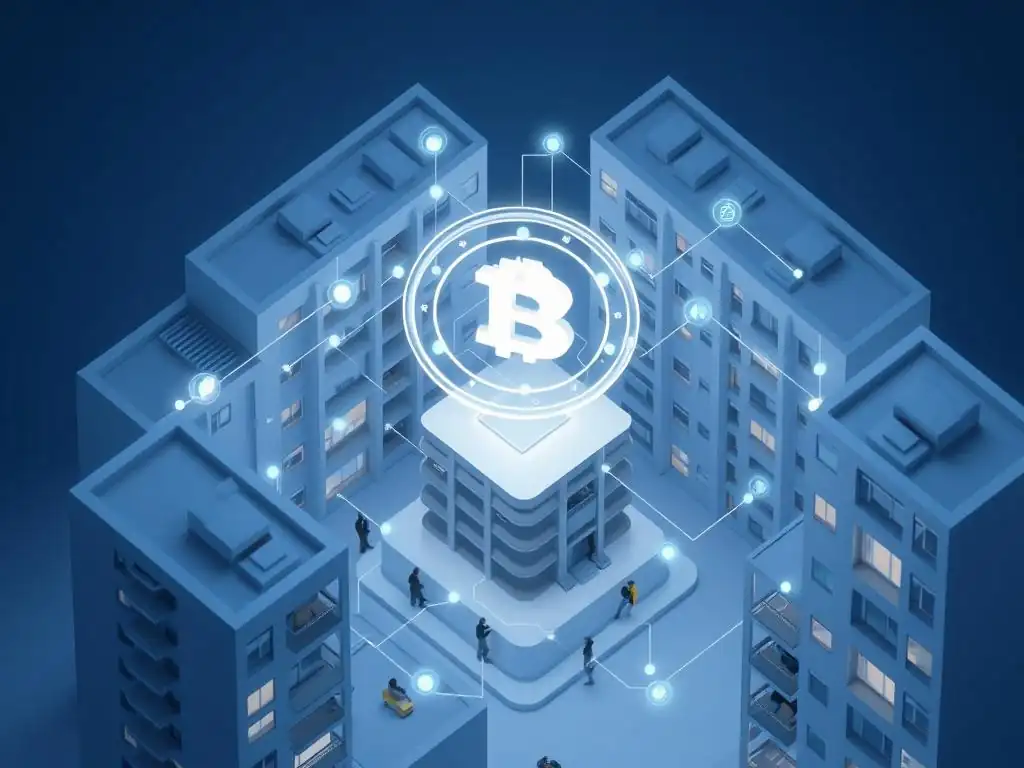
The theoretical benefits of blockchain in property management tokenization are increasingly being realized through operational platforms and real-world use cases. These platforms demonstrate how converting tangible real estate assets into digital tokens can create new investment opportunities, streamline operations, and enhance accessibility for a global audience. Examining specific examples provides concrete insight into the practical application and impact of this technology.
Case Study 1: RealT
RealT is a pioneering platform in the real estate tokenization space, focusing primarily on offering fractional, tokenized ownership of single-family and multi-family residential properties, predominantly located in the United States (many in Detroit, Michigan, and Cleveland, Ohio). The platform converts properties into Limited Liability Companies (LLCs), and investors purchase security tokens representing shares in these LLCs. These tokens are typically issued on the Ethereum blockchain (originally ERC-20, with some migration or support for other chains like Gnosis Chain/xDai for lower transaction fees), making the ownership stake easily transferable and manageable digitally.
As of late 2023, RealT had tokenized over 300 properties, representing tens of millions of dollars in real estate value. This scale demonstrates the viability of tokenizing a significant portfolio of properties and managing the fractional ownership structure for a large number of investors. The platform handles rent collection, property management, and distribution of rental income, aiming to provide a passive income stream for token holders. The minimum investment per property is often designed to be very low, sometimes around $50-$100, making previously inaccessible real estate markets available to a global pool of investors.
Key Features and Functionalities
RealT's platform provides investors with several key features. It lists available tokenized properties with detailed information, including property value, expected rental yield, location details, and legal documentation related to the LLC structure. Investors can purchase tokens directly on the platform using cryptocurrencies (like ETH, DAI) or fiat currency. Once purchased, tokens are held in the investor's self-custodial wallet, meaning the investor has direct control over their asset, a core principle of decentralized ownership.
A crucial functionality is the automated distribution of rental income. RealT collects rent from tenants, and after deducting property management expenses, the net rental income is distributed proportionally to token holders, often on a weekly basis, directly to their connected wallets, typically in stablecoins like DAI. The platform also facilitates communication regarding property performance and any necessary updates or decisions, though formal governance mechanisms are evolving.
Tokenomics and Governance Model
The core "tokenomics" for investors on RealT revolves around receiving rental yield and potential property value appreciation, reflected in the token's value. Each property is typically represented by a fixed number of tokens (e.g., 1,000 tokens per property), and purchasing a token grants ownership of 1/1000th of that property's LLC. The tokens themselves are designed as security tokens, meaning they represent a legal ownership stake and are subject to securities regulations (like Reg D, Reg S, or Reg A in the US, depending on the offering).
RealT has also introduced the RealT Management Token (RMM), which aims to provide token holders with a voice in the overall management and direction of the RealT ecosystem, not just individual properties. This moves towards a more decentralized governance model where the community of token holders can propose and vote on changes, fee structures, or strategic decisions, enhancing the democratic aspect of the platform and aligning with the principles of decentralized autonomous organizations (DAOs) in the blockchain space.
Performance and Impact
RealT has demonstrated the feasibility of tokenizing and managing a large portfolio of residential properties, attracting thousands of investors globally. The platform has successfully distributed millions of dollars in rental income to token holders since its inception. While the value of the underlying real estate is subject to market fluctuations, the tokenized model has proven effective in providing fractional ownership and automated income distribution.
The impact of RealT lies in proving the market demand for tokenized real estate and establishing a working model for compliant security token offerings tied to physical assets. It has lowered the barrier to entry for real estate investment, allowing diversification into specific properties or markets with relatively small amounts of capital. The challenges faced, such as navigating regulatory landscapes and ensuring smooth secondary market trading, highlight areas for continued development in the broader tokenized real estate ecosystem.
Case Study 2: Vesta Equity
Vesta Equity is another platform leveraging blockchain tokenization, but with a different focus: enabling homeowners to access their home equity without taking out a loan or selling their property. The platform allows homeowners to tokenize a percentage of their home's equity, selling these equity tokens to investors. This provides homeowners with liquidity while allowing them to remain in their homes and retain majority ownership.
For investors, Vesta Equity offers the opportunity to invest directly in the equity of individual residential properties, receiving a return based on the future appreciation of the home's value. The platform aims to create a new asset class – tokenized home equity – that is more accessible and potentially more liquid than traditional methods of investing in residential real estate appreciation. The platform operates within the US market, focusing on residential properties.
Key Features and Functionalities
Vesta Equity's core functionality allows homeowners to list their property and propose the percentage of equity they wish to tokenize and sell. The platform facilitates the valuation process and the creation of the legal framework (often involving a shared equity agreement) and the digital security tokens representing the sold equity stake. Investors can browse listed properties, review details about the home, its location, valuation, and the terms of the equity agreement, and purchase tokens representing a share of the future appreciation rights.
The platform manages the relationship and agreement between the homeowner and the equity token holders. The return on investment for token holders is realized when the home is eventually sold, or the homeowner buys back the equity, with the profit (or loss) shared based on the percentage of equity tokenized and the change in the home's value. This model provides homeowners with flexibility and investors with a unique way to gain exposure to residential real estate appreciation.
Tokenomics and Governance Model
The tokenomics of Vesta Equity are tied directly to the appreciation of the underlying residential property's value. Investors purchase tokens representing a specific percentage of future equity gain in a particular home. If the home's value increases, the token holders share proportionally in that increase when the equity is realized. If the value decreases, they may incur a loss. The tokens are designed as security tokens, representing a right to a portion of the future proceeds from the property's sale or equity buyback.
Governance within Vesta Equity is primarily centered around the terms of the shared equity agreement established for each property. While not as decentralized as some DAO-like structures, the platform ensures transparency regarding the property's valuation and the mechanics of the equity realization process. Future iterations could potentially incorporate token-based voting on certain aspects related to the equity agreement if needed, though the current model is more contractually driven.
Performance and Impact
Vesta Equity represents an innovative application of tokenization to solve a specific problem: homeowner liquidity. By creating a market for tokenized home equity, it provides an alternative to traditional mortgages or reverse mortgages. For investors, it offers direct exposure to the residential housing market beyond pooled funds. While still in an earlier stage compared to platforms focused on rental income properties, Vesta Equity's model highlights the versatility of tokenization in creating new financial products based on real estate assets.
The platform's impact lies in demonstrating how tokenization can unlock value in existing homeowner equity, providing liquidity without the need for traditional debt instruments. It also expands the range of real estate investment opportunities available through tokenization, moving beyond just rental properties to include direct equity participation. The success of such platforms hinges on accurate property valuation, clear legal frameworks for shared equity, and the development of a functional secondary market for these unique equity tokens.
Smart Contracts in Automated Property Management
Smart contracts are the operational backbone of many decentralized property management solutions, automating tasks that are traditionally manual, time-consuming, and prone to error. These self-executing agreements coded onto the blockchain trigger actions automatically when predefined conditions are met, ensuring reliability and transparency in the management process. For instance, consider the distribution of rental income: a smart contract can be programmed to check if rent payment has arrived in a designated wallet by a specific date; upon confirmation, it automatically calculates the proportional share for each token holder and disburses the funds directly to their respective digital wallets.
// Simplified example illustrating a rent distribution function
contract PropertyToken {
    address[] public tokenHolders;
    mapping(address => uint256) public balances;
    uint256 public totalTokens;

    // Function to distribute rent based on token balance
    function distributeRent(uint256 totalRentAmount) public {
        require(totalTokens > 0, "No tokens issued");
        uint256 amountPerToken = totalRentAmount / totalTokens;

        for (uint i = 0; i < tokenHolders.length; i++) {
            address holder = tokenHolders[i];
            uint256 payout = balances[holder] * amountPerToken;
            // Code to send 'payout' amount to 'holder' address
            // This would involve interaction with a stablecoin contract or similar
            // sendFunds(holder, payout);
        }
    }

    // Other functions like transfer, balance check, etc.
}
This is a simplified illustrative example of a smart contract function; actual implementation would be significantly more complex.
Beyond rent distribution, smart contracts can automate many other aspects crucial for blockchain property management tokenization benefits. They can manage maintenance funds, automatically releasing payments to verified service providers upon completion of work (potentially verified via oracles or multi-signature approvals). Lease agreements could potentially be embedded or linked to smart contracts, automating clauses like late fee penalties or security deposit releases based on predefined conditions and verified data inputs.
Furthermore, voting mechanisms for property-related decisions can be executed via smart contracts, where tokens represent voting power, and the outcome of a vote automatically triggers a subsequent action, such as approving a budget or electing a manager. The automation potential of smart contracts significantly reduces administrative overhead, increases efficiency, and ensures that management processes are executed transparently and reliably according to the agreed-upon rules embedded in the code.
Overcoming Challenges in Tokenized Real Estate
Despite the significant blockchain property management tokenization benefits, the path to widespread adoption is not without its hurdles. Navigating complex regulatory landscapes, ensuring robust security, and addressing scalability and interoperability are critical challenges that the industry is actively working to overcome. Successfully addressing these issues is essential for the mainstream integration of tokenized real estate solutions.
Regulatory Considerations and Compliance
Perhaps the most significant challenge facing tokenized real estate is navigating the complex and often uncertain regulatory environment across different jurisdictions. Security tokens, representing ownership or economic rights in an asset like real estate, are typically considered securities by regulatory bodies such as the Securities and Exchange Commission (SEC) in the United States.
This means they are subject to stringent regulations regarding issuance, trading, and investor protection, similar to stocks or bonds. Ensuring compliance with these regulations – including know-your-customer (KYC) and anti-money laundering (AML) checks for investors, registration requirements for offerings, and rules for secondary trading platforms – is crucial but often complex and costly.
Different countries and even different regions within a country may have varying legal frameworks regarding property ownership, digital assets, and securities. Creating a tokenization platform that can operate globally or even nationally requires careful legal structuring and adherence to diverse sets of rules.
This includes determining how tokenized ownership is legally recognized, how liens and mortgages are handled in a tokenized system, and how disputes are resolved within existing legal systems. While some jurisdictions are beginning to introduce specific regulations for digital assets and tokenized securities, a globally harmonized approach is still a distant prospect, creating legal uncertainty for platforms and investors alike.
Security Risks and Mitigation Strategies
While blockchain technology is inherently secure due to its cryptographic and distributed nature, tokenized real estate solutions are still susceptible to various security risks, particularly at the application layer and user interface. Smart contract vulnerabilities are a major concern; coding errors or flaws in the smart contract logic could be exploited by malicious actors, potentially leading to loss of funds or unauthorized access to assets. The DAO hack in 2016, which resulted in the loss of millions of dollars due to a smart contract vulnerability, serves as a stark reminder of these risks.
Mitigating smart contract risks requires rigorous auditing by independent security experts before deployment. Continuous monitoring and the implementation of bug bounty programs are also essential. Another critical security risk is the management of private keys.
If an investor loses their private key or if it is stolen through phishing or malware, they can lose access to their tokenized property shares permanently, as there is no central authority to recover it. Educating users about secure key management practices, promoting the use of hardware wallets, and potentially implementing multi-signature wallet solutions for added security layers are vital mitigation strategies. Furthermore, the platforms themselves must employ robust cybersecurity measures to protect user data and platform infrastructure from external threats.
Scalability and Interoperability
The scalability of the underlying blockchain network can pose a challenge for widespread real estate tokenization. Public blockchains like Ethereum, especially before recent upgrades, have faced limitations in processing a high volume of transactions quickly and cheaply, leading to network congestion and high gas fees. While layer 2 scaling solutions and alternative, faster blockchains are emerging, the infrastructure needs to support potentially millions of transactions related to property token sales, rent distributions, and secondary trading efficiently and cost-effectively to facilitate mass adoption.
Interoperability is another technical hurdle. The real estate ecosystem involves various stakeholders and systems, including land registries, financial institutions, property management software, and legal databases. For tokenized real estate to function seamlessly, there needs to be robust interoperability between the blockchain layer and these traditional systems. This requires developing standards for data exchange, integrating with legacy databases (perhaps through oracles), and ensuring that the legal and technical representations of ownership remain synchronized. Achieving true interoperability is crucial for integrating tokenized assets into the broader financial and real estate markets and unlocking the full blockchain property management tokenization benefits.
The Blockchain-Enabled Real Estate Ecosystem
Overcoming the challenges of regulation, security, and scalability is paving the way for a comprehensive blockchain-enabled real estate ecosystem. This ecosystem envisions a future where the entire lifecycle of a property, from initial titling and financing to fractional ownership, management, and eventual sale, is facilitated by blockchain technology. It involves not just tokenization platforms but also decentralized finance (DeFi) protocols offering lending and borrowing against tokenized property, decentralized exchanges for secondary trading, oracles providing verified real-world data (like property valuations or rental income proof) to smart contracts, and decentralized autonomous organizations (DAOs) governing shared properties or investment funds.
This ecosystem requires collaboration among diverse players: blockchain developers building the underlying infrastructure, legal experts structuring compliant token offerings, real estate professionals understanding and adapting to the new models, regulatory bodies providing clarity and oversight, and technology providers building integrated solutions (e.g., connecting IoT devices in smart buildings to the blockchain for automated management tasks). The development of standardized protocols for tokenizing different types of real estate assets and interoperability standards between blockchains and traditional systems will be crucial for the maturation and widespread adoption of this decentralized real estate ecosystem.
The Long-Term Impact of Blockchain on Property Management
The long-term implications of integrating blockchain and tokenization into property management are profound, extending beyond mere process improvements to fundamentally reshaping market structures and investment accessibility. The blockchain property management tokenization benefits are poised to democratize investment, create a more efficient global market, and converge with other frontier technologies like IoT and AI to build truly intelligent and autonomous property systems.
Democratizing Real Estate Investment
Historically, real estate investment has been largely inaccessible to individuals with limited capital due to high property prices, significant transaction costs, and geographical barriers. Tokenization fundamentally changes this by enabling fractional ownership. By dividing properties into thousands or even millions of tokens, platforms allow individuals to invest with small amounts, potentially starting from $50 or $100. This lowers the entry barrier dramatically, allowing a much broader segment of the population, both domestically and internationally, to participate in real estate investment.
This democratization enables investors to build diversified portfolios across different property types, locations, and risk profiles with relatively modest capital. An investor in Europe could easily acquire tokens representing a fraction of a property in the US, and vice versa, without the complexities of cross-border physical property transactions. This global accessibility and fractionalization unlock real estate as an asset class for millions of potential investors who were previously excluded, channeling new capital into the market and potentially increasing overall market liquidity and efficiency.
Creating a More Efficient and Transparent Market
The inherent transparency and automation capabilities of blockchain are set to create a significantly more efficient and transparent real estate market in the long term. With ownership records, transaction history, and income distribution data immutably stored on a public or permissioned blockchain, information asymmetry is drastically reduced. Investors, regulators, and other stakeholders can verify key data points independently, fostering trust and reducing opportunities for fraudulent activities or hidden fees.
Automated processes powered by smart contracts will lead to faster and cheaper transactions. The time required to buy or sell a fractional property share could potentially be reduced from weeks or months to just minutes or hours, depending on the blockchain network and platform processes. Reduced reliance on manual processes and intermediaries translates into lower transaction costs. This increased efficiency and transparency benefit all market participants, leading to potentially fairer pricing, faster capital deployment, and a more dynamic real estate investment environment, amplifying the core blockchain property management tokenization benefits.
Convergence of Blockchain, IoT, and AI in Property Management
The future of property management will likely see a powerful convergence of blockchain with other advanced technologies like the Internet of Things (IoT) and Artificial Intelligence (AI). IoT devices installed in properties (sensors, smart meters, smart locks) can collect real-time data on property condition, energy consumption, occupancy, and security. This data can be recorded on a blockchain to ensure its integrity and immutability.
Smart contracts can then utilize this verified IoT data to automate management tasks. For example, a smart contract could automatically release payment to a maintenance provider based on sensor data confirming a repair is complete, or adjust smart lock access based on verified rental payments recorded on the blockchain.
AI can analyze the vast amounts of data collected by IoT devices and stored on-chain to optimize property performance, predict maintenance needs, set optimal rental prices, or personalize tenant experiences. This convergence creates the potential for highly automated, data-driven, and intelligent property management systems that are more efficient, responsive, and secure than anything possible with current technologies.
Preparing for Tokenized Real Estate
The transition to a tokenized real estate future requires preparation from all stakeholders. Property owners and developers need to understand the process of tokenization, its legal implications, and how it can be used to access capital or create new investment products. Investors need to educate themselves on digital wallets, private key security, security token regulations, and the risks associated with investing in tokenized assets.
For property managers, this means adapting existing workflows, learning to interact with blockchain platforms and smart contracts, and potentially developing new skills in managing digital assets and engaging with token-holding communities. Regulatory bodies must continue to develop clear and effective frameworks that protect investors while fostering innovation. Technology providers need to build user-friendly, secure, and interoperable platforms that bridge the gap between traditional real estate and the blockchain world. Preparing involves:
-
- [ ] Understanding the technology fundamentals (blockchain, tokenization, smart contracts).
-
- [ ] Researching existing platforms and use cases (like RealT, Vesta Equity).
-
- [ ] Consulting legal and financial experts familiar with digital assets and securities.
-
- [ ] Evaluating potential pilot programs or small-scale investments.
-
- [ ] Developing internal expertise or partnering with specialized firms.
Conclusion: Blockchain Property Management Tokenization – A Transformative Force
The Potential of Decentralized Real Estate Solutions
The exploration of blockchain property management tokenization benefits reveals a technology poised to revolutionize the real estate industry. By offering decentralized solutions, tokenization tackles fundamental challenges like illiquidity, lack of transparency, high transaction costs, and limited accessibility that have long plagued traditional property markets. The ability to convert physical assets into fractional, digital tokens opens up real estate investment to a global audience with lower capital requirements, fostering greater inclusion and potentially driving new capital into the market.
Platforms like RealT and Vesta Equity demonstrate that the concept is moving rapidly from theory to practice, successfully tokenizing properties, distributing income, and exploring new models for accessing equity. While significant hurdles remain, particularly concerning regulatory clarity, security best practices, and technical scalability, the ongoing development within the blockchain space and increasing regulatory engagement suggest that these challenges are being actively addressed. The inherent advantages of blockchain – immutability, transparency, and automation via smart contracts – provide a robust foundation for building more efficient, secure, and trustworthy property management systems for the future.
Shaping the Future of Property Management
Blockchain property management tokenization is not just an incremental improvement; it represents a fundamental shift in how property is owned, managed, and traded. It is shaping a future where real estate investment is more liquid, accessible, and transparent than ever before. The convergence with IoT and AI promises intelligent, automated properties that are managed with unprecedented efficiency. As the technology matures and regulatory environments adapt, tokenized real estate is likely to become a mainstream asset class, transforming the roles of investors, property managers, and intermediaries alike.
The benefits of blockchain property management tokenization extend beyond financial returns; they include greater investor control through transparent governance mechanisms and a reduction in the administrative burden associated with traditional property ownership. While the journey is still unfolding, the trajectory points towards a decentralized future for property management, one that leverages the power of blockchain to unlock value, enhance trust, and create opportunities that were previously unimaginable in the world of bricks and mortar.
Preparing for this shift and understanding its potential is crucial for anyone involved in the real estate sector, positioning them to capitalize on the transformative force of tokenization.
Frequently Asked Questions
What are the primary benefits of using blockchain tokenization for property management?
Tokenization allows for fractional ownership, increasing accessibility and liquidity in the real estate market. It also streamlines processes, reducing administrative overhead and improving transparency. This can also lead to improved data security.
How does blockchain enhance transparency in property management transactions?
Blockchain provides a immutable and auditable ledger of all transactions. This means that all ownership records, rent payments, and maintenance requests are permanently recorded, increasing trust and accountability.
What role does DeFi (Decentralized Finance) play in tokenized property management?
DeFi platforms can offer lending and borrowing services against tokenized property assets. This unlocks new financial opportunities for both property owners and investors, providing greater liquidity.
What are the potential regulatory challenges facing the adoption of blockchain in property management?
Regulatory frameworks for digital assets are still evolving globally. Compliance with existing securities laws and anti-money laundering regulations is crucial for the successful implementation of blockchain in property management.
How can blockchain technology help to improve the efficiency of property maintenance operations?
Smart contracts can automate maintenance requests and payments based on pre-defined conditions. This reduces delays and ensures prompt service delivery, enhancing tenant satisfaction and minimizing downtime.
Final Reflection: Embracing Decentralized Real Estate
The exploration of blockchain property management tokenization benefits reveals more than just technological advancements; it unveils a fundamental shift in how we perceive and interact with real estate. The potential for increased transparency, efficiency, and accessibility within the property market is no longer a distant dream, but a tangible possibility driven by the innovative application of decentralized solutions.
The impact of this shift extends far beyond mere operational improvements. It touches upon the very core of ownership and investment, democratizing access to a traditionally exclusive asset class. Witnessing the potential for individuals to participate in fractional ownership and benefit from streamlined management processes is truly transformative. The future of real estate is not just about building structures, but about building systems that empower individuals and communities.
This sentiment underscores the profound social and economic implications of embracing blockchain technology in property management.
As we stand on the cusp of this decentralized revolution, let us not simply observe, but actively engage in shaping its trajectory. Consider how you can contribute to a more equitable and efficient real estate landscape, whether through exploring tokenized investment opportunities, advocating for regulatory clarity, or simply educating yourself and others about the transformative power of blockchain. The future of property management is being written now, and your voice matters.
Revolutionize Your Property Strategy: Embrace Tokenization!
Thank you for exploring the future of property management with us. You've gained valuable insights into how tokenization is set to transform the industry. Now it's time to take the next step and become a pioneer in this exciting new era.
Ready to get started? Here's how:
- Explore the potential of tokenizing your first property! Begin researching the legal and technical requirements in your jurisdiction.
- Join our community forum at BlockchainTrends.org to share your thoughts, ask questions, and connect with other forward-thinking property professionals.
- For a deeper dive, contact us at [your email address].
What are your initial thoughts on leveraging blockchain to streamline your property portfolio? Share your plans below!
Leave a Reply