
The Power of UserOwned Data: Blockchain Identity and Data Monetization

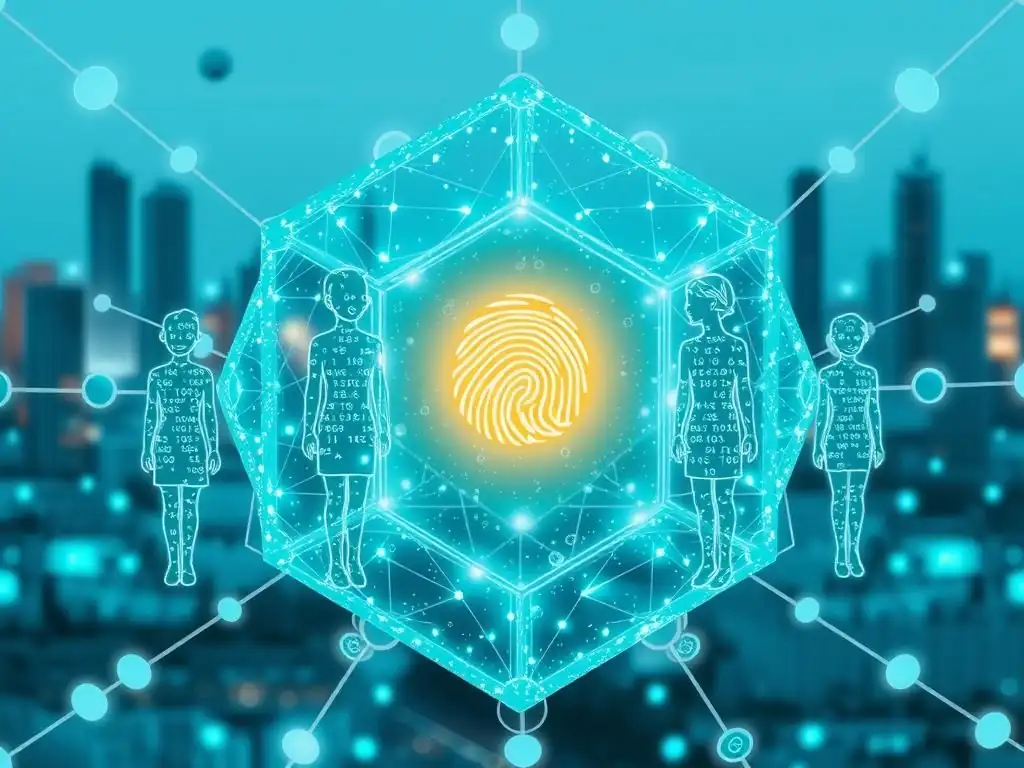
Welcome to Blockchain Trends, your hub for understanding the revolutionary impact of blockchain technology. Beyond the buzzwords, we delve into the real-world applications shaping our future. Today, we're diving deep into the fascinating world of userowned data blockchain identity. Imagine a world where you control your digital footprint and monetize your information. Curious how this is becoming a reality? Let's explore the power and potential that's waiting to be unlocked.
The Power of User-Owned Data: Blockchain Identity and Data Monetization
- Introduction: The Paradigm Shift to User-Centric Data Control
- Blockchain Identity: A Foundation for Data Sovereignty
- Monetizing User-Owned Data: New Economic Opportunities
- Use Cases of User-Owned Data and Blockchain Identity
- Overcoming the Challenges of User-Owned Data on the Blockchain
- The Future of User-Owned Data: A Decentralized and Empowered World
- Conclusion: Embracing the User-Owned Data Revolution
-
Frequently Asked Questions
- What is user-owned data in the context of blockchain identity?
- How does blockchain technology facilitate user-owned data identity?
- What are the potential benefits of a user-owned data blockchain identity system?
- What are some of the challenges in implementing user-owned data blockchain identity solutions?
- How can individuals potentially monetize their data using a user-owned data blockchain identity system?
- Final Reflection: Embracing the User-Owned Data Revolution
- Unlock Your Data Potential Now!
Introduction: The Paradigm Shift to User-Centric Data Control
Understanding the Growing Importance of Data Ownership in the Digital Age
In the contemporary digital landscape, personal data has become an invaluable commodity, often referred to as "the new oil." Individuals generate vast quantities of data daily through online interactions, device usage, and transactions. Estimates suggest that by 2025, the global datasphere could reach 175 zettabytes, a significant portion of which is personal information. This data fuels the business models of numerous corporations, enabling targeted advertising, product development, and predictive analytics.
However, users often have limited visibility into how their data is collected, stored, shared, or monetized. This asymmetry in control and value distribution has led to increasing concerns about privacy, security, and the fundamental right of individuals to own and manage their digital footprint. The current model, where large platforms act as central custodians and beneficiaries of user data, contrasts sharply with the growing demand for greater individual autonomy and control over personal information.
The ethical and economic implications of this data imbalance are driving a global conversation. Regulations like GDPR in Europe and CCPA in California represent legislative efforts to grant users more rights over their data, including the right to access, rectify, and erase it. Yet, these regulations still operate within a system where data is primarily held and controlled by third parties.
The push towards user-owned data represents a more fundamental shift, proposing a model where individuals are the primary controllers and potential beneficiaries of their own information. This paradigm change is not just about compliance; it's about redefining the relationship between individuals and the digital services they use, building a foundation for a more equitable digital economy where the power of user-owned data is fully realized.
How Blockchain Technology Empowers User-Owned Data and Identity
Blockchain technology offers a transformative approach to establishing user-owned data and identity by leveraging its core properties: decentralization, immutability, transparency (where appropriate, or verifiable privacy), and cryptographic security. Unlike traditional centralized databases where a single entity holds and controls data, blockchain systems distribute data across a network of participants. This inherent decentralization eliminates single points of failure and reduces the power of intermediaries.
For user-owned data, this means that control is shifted away from corporations and back to the individual. The cryptographic nature of blockchain ensures that data, once recorded, is tamper-evident, providing a high degree of integrity and trust in the information associated with a digital identity.
Furthermore, blockchain enables innovative models for managing digital identity and data sharing. Concepts like Self-Sovereign Identity (SSI), built on blockchain principles, allow individuals to create, own, and manage their digital identity without relying on a central authority like a government or corporation. This user-owned data blockchain identity allows individuals to selectively share verified attributes about themselves (e.g., proof of age, educational qualifications, professional licenses) without revealing underlying sensitive information.
This granular control over data sharing is a significant departure from current practices where sharing one piece of information often requires granting access to a much larger dataset. By providing a secure, verifiable, and user-controlled layer for identity and data, blockchain technology lays the groundwork for a future where individuals are sovereign over their digital selves and can unlock the potential of user-owned data.
Blockchain Identity: A Foundation for Data Sovereignty
What is Blockchain Identity and Why is it Important?
Blockchain identity, often synonymous with Self-Sovereign Identity (SSI), is a digital identity framework where an individual or organization has complete control over their identity information. Instead of relying on centralized identity providers like social media giants, governments, or banks to store and manage their digital credentials, users create and manage their own identifiers and data on a decentralized network, typically a blockchain. This model is crucial because it fundamentally shifts power from institutions to individuals, granting true data sovereignty.
Users decide what information to share, with whom, and for how long, without needing permission from an intermediary. This contrasts sharply with traditional systems where identity data is fragmented across numerous databases, none of which are truly owned or controlled by the individual.
The importance of blockchain identity stems from the inherent vulnerabilities and inefficiencies of centralized identity systems. Central databases are prime targets for cyberattacks, leading to massive data breaches that compromise millions of user records, including names, addresses, social security numbers, and financial details. The cost of data breaches is significant, estimated to be around $4.24 million per incident globally in 2021.
Furthermore, centralized identity management creates silos of information and hinders seamless, privacy-preserving interactions across different services. A user-owned data blockchain identity mitigates these risks by distributing control and leveraging cryptography to ensure data integrity and user privacy. It provides a unified, yet decentralized, approach to managing digital presence, making interactions online more secure, efficient, and respectful of individual privacy rights.
Decentralized Identifiers (DIDs): Key to Self-Sovereign Identity
Decentralized Identifiers (DIDs) are a core technical component enabling Self-Sovereign Identity and the concept of user-owned data blockchain identity. DIDs are new type of identifier that is globally unique, persistent, and cryptographically verifiable. Unlike traditional identifiers (like email addresses or usernames) that are tied to specific organizations or platforms, DIDs are designed to be independent of any centralized registry, identity provider, or certificate authority. They are typically anchored on a decentralized ledger or blockchain, ensuring their immutability and availability. A DID is essentially a URI (Uniform Resource Identifier) that resolves to a DID Document.
The DID Document contains cryptographic material (like public keys), service endpoints (for interaction), and other metadata associated with the DID subject. This document is stored in a decentralized manner, often on a blockchain or distributed file system like IPFS, making it resistant to censorship or control by a single entity. DIDs are used in conjunction with Verifiable Credentials (VCs).
A VC is a tamper-evident digital credential (like a driver's license, degree, or professional certification) issued by a trusted authority (the "Issuer") to a subject (the "Holder"). The Holder stores the VC, typically in a digital wallet, and can then present it to a "Verifier" (e.g., a website, service, or person) to prove an attribute without revealing unnecessary personal information. This framework, built around DIDs and VCs, empowers users to manage their verified data and selectively share proof of attributes, making user-owned data blockchain identity a practical reality.
Benefits of Blockchain-Based Digital Identity for Users
Enhanced Privacy and Security of Personal Information
A primary benefit of blockchain-based digital identity is the significant enhancement of personal data privacy and security. In traditional systems, users must repeatedly share sensitive information with various service providers, creating multiple copies of their data stored in different, often vulnerable, databases. With a user-owned data blockchain identity, individuals control a single, secure digital identity wallet containing verifiable credentials. When interacting with a service, instead of sharing raw data, the user can present a cryptographically verifiable proof derived from their credentials. For example, to prove they are over 18, they might present a proof derived from a government-issued age credential without revealing their exact birth date or address. This selective disclosure minimizes the exposure of sensitive data, drastically reducing the risk of identity theft and unauthorized data use. The cryptographic security inherent in blockchain and associated technologies like zero-knowledge proofs ensures that shared information is both verifiable and minimally revealing.
Greater Control Over Identity and Data Sharing
Blockchain identity grants users unprecedented control over their digital identity and associated data. Under the Self-Sovereign Identity model, the individual is the central point of control, not an institution. Users decide which verifiable credentials to accept, store, and share. They can grant or revoke access to specific pieces of verified data on a granular basis.
For instance, a user applying for a loan could share a verified income statement credential with a bank for a specific transaction, and then revoke the bank's access afterward. This level of granular control is practically impossible in current systems where granting access typically means sharing entire documents or profiles. This empowerment to manage and permission access to their user-owned data transforms individuals from passive data sources into active participants in how their information is used, fostering trust and transparency in digital interactions.
Reduced Reliance on Centralized Authorities
Blockchain identity significantly reduces reliance on centralized authorities. In the current model, governments, banks, social media platforms, or other large corporations act as central identity providers or verifiers. This creates dependencies and potential points of censorship or failure. If a centralized provider is compromised or decides to suspend an account, an individual could lose access to their digital identity and associated services.
A user-owned data blockchain identity, anchored on a decentralized ledger, removes this single point of control. While issuers (like universities or government agencies) still verify and issue credentials, the individual holds and manages these credentials independently of the issuer or any single platform. This decentralization enhances resilience, censorship resistance, and empowers individuals to participate in the digital world without needing permission from intermediaries, embodying the core principle of autonomy in managing user-owned data.
Monetizing User-Owned Data: New Economic Opportunities
The Current Data Landscape: Data as a Commodity Controlled by Corporations
The current digital economy is largely built on the premise that user data is a resource to be collected, analyzed, and monetized by corporations. Tech giants and data brokers aggregate vast amounts of personal information from various sources – browsing history, purchase records, location data, social interactions – often without explicit or informed consent for subsequent resale or use. The global data brokerage market alone was valued at approximately $250 billion in 2020 and is projected to grow significantly.
This data is used for highly targeted advertising, market research, product development, and even sold to third parties. Users, the creators of this valuable data, receive little to no direct compensation or control over how their information is traded and used. They are the product, not the customer, in this data-driven economy.
This model creates a significant power imbalance. Corporations amass wealth and influence based on data they do not own, while individuals are exposed to privacy risks and gain no direct economic benefit from the value their data generates.
The lack of transparency surrounding data collection and usage practices further exacerbates this issue, leaving users unaware of the extent to which their personal information is being exploited. The push for user-owned data aims to fundamentally alter this landscape, proposing a model where individuals can reclaim control and potentially participate in the economic value chain their data creates, moving towards a system where user-owned data monetization is a tangible reality rather than a theoretical concept.
Blockchain-Enabled Data Marketplaces: Putting Users in Control
Blockchain technology is paving the way for decentralized data marketplaces that allow individuals to control and potentially monetize their user-owned data. These platforms leverage the transparency, security, and smart contract capabilities of blockchain to create a direct link between data owners (users) and data consumers (researchers, businesses, developers). Instead of data being hoarded by intermediaries, users can list specific datasets or data attributes they are willing to share under predefined conditions. These conditions, including price, usage rights, and duration of access, are enforced by smart contracts, ensuring that terms are met automatically and transparently.
In these marketplaces, users retain ownership of their data. They don't upload their raw data to the platform; instead, they grant access or sell specific insights derived from their data. This could involve sharing anonymized location data for urban planning research, health data for medical studies (with privacy safeguards), or behavioral data for market trend analysis.
The blockchain infrastructure ensures that transactions are recorded securely and that payment is automatically transferred to the user upon successful data access or usage, as defined by the smart contract. This model not only empowers users by giving them agency over their information but also creates new economic opportunities, allowing individuals to earn passive income from their data, thereby realizing the potential of user-owned data monetization.
Mechanisms for Data Monetization on the Blockchain
Direct Data Sales with Smart Contracts
One straightforward mechanism for user-owned data monetization on the blockchain involves direct sales facilitated by smart contracts. Users can package specific sets of their data – perhaps anonymized browsing history for market research, or aggregated, privacy-enhanced health data for scientific study – and list it on a decentralized data marketplace. Potential buyers browse available data offerings based on criteria like data type, volume, or specific attributes.
Once a buyer agrees to the terms (price, usage rights), a smart contract is triggered. The smart contract defines the conditions for the data transfer and payment.
Upon verification that the buyer has fulfilled their end of the agreement (e.g., deposited the agreed-upon cryptocurrency into the contract), the smart contract automatically grants the buyer access to the data or triggers the data transfer process, and simultaneously releases the payment to the user's wallet. This process is automated, transparent, and requires no intermediary, ensuring that users directly benefit from the sale of their user-owned data.
Privacy-Preserving Data Sharing and Analytics
Monetizing user-owned data doesn't always require selling raw data. Advanced cryptographic techniques, often combined with blockchain, enable privacy-preserving data sharing and analytics. Technologies like homomorphic encryption allow computation on encrypted data, meaning a data consumer can perform analysis without ever decrypting the user's sensitive information.
Zero-knowledge proofs (ZKPs) enable users to prove they possess certain data or that their data meets specific criteria without revealing the data itself. For instance, a user could prove their income is above a certain threshold for a loan application without disclosing their exact salary.
Data marketplaces leveraging these technologies can allow businesses to run queries or perform analysis on aggregated, encrypted user data, paying users micro-payments for contributing their data to the computation pool. This allows users to monetize the insights derived from their data or the right to analyze their data under strict privacy guarantees, significantly enhancing the value proposition of user-owned data blockchain identity.
Micro-Payments for Data Access
Another mechanism involves implementing micro-payment models for accessing user-owned data. Instead of large, one-time sales, users can earn small amounts of cryptocurrency every time a service or application accesses a specific piece of their data or uses a verified credential.
For example, a decentralized social media platform could pay users a fraction of a token whenever their profile data is accessed by an advertiser (with user permission) or when their content receives engagement. Similarly, a research platform could issue micro-payments to users who consent to share specific, anonymized health data points for a study.
These micro-payments, facilitated efficiently by blockchain technology and cryptocurrencies, can aggregate over time to create a meaningful revenue stream for users. This model aligns the incentives of platforms and users, creating a more equitable data economy where the value generated by user interactions and data is shared directly with the individuals who own it, reinforcing the power of user-owned data.
Use Cases of User-Owned Data and Blockchain Identity

Healthcare: Secure and Controlled Access to Medical Records
The healthcare sector is a prime candidate for adopting user-owned data blockchain identity solutions due to the highly sensitive nature of medical records and the current fragmentation of health data across various providers. Patients often struggle to access and share their own medical history seamlessly between different doctors, clinics, and hospitals. Centralized health record systems are also frequent targets for cyberattacks, compromising patient privacy.
Implementing a blockchain-based digital identity allows patients to have a single, immutable record of their medical history anchored to their decentralized identifier (DID). This record doesn't necessarily store all the raw data on the blockchain itself but rather pointers or verifiable credentials issued by healthcare providers regarding diagnoses, treatments, allergies, and medications.
With user-owned data blockchain identity, patients gain full control over who can access their medical information. They can grant temporary, granular access to specific healthcare providers for consultations or emergencies via smart contracts. For instance, a patient visiting a new specialist can grant them permission to view specific past test results or treatment summaries for a limited time.
This not only enhances patient privacy and security but also improves the efficiency of care coordination. Projects like MedRec, a prototype blockchain-based electronic health record system, have demonstrated the feasibility of using blockchain to manage patient data access permissions securely. This model transforms patients from passive subjects of data collection into active managers of their health information, highlighting the critical role of user-owned data in healthcare.
Finance: Streamlining KYC/AML Processes with Self-Attested Identity
Know Your Customer (KYC) and Anti-Money Laundering (AML) regulations are essential for preventing financial crime but are often cumbersome and repetitive for users. Every time an individual opens a new bank account, signs up for a crypto exchange, or uses certain financial services, they must submit identity documents (passports, utility bills) and undergo verification. This process is inefficient, costly for institutions (billions spent annually on KYC/AML), and increases the risk of identity document theft or loss. User-owned data blockchain identity, particularly using Verifiable Credentials, can significantly streamline these processes.
Instead of submitting documents repeatedly, a user can undergo a KYC verification process with a trusted identity verification service once. This service issues a verifiable credential attesting to the user's identity (e.g., "Identity Verified," "Age over 18," "Residency Confirmed"). The user stores this VC in their digital wallet.
When interacting with a new financial service requiring KYC, the user can simply present this VC. The financial service provider (the Verifier) cryptographically verifies the credential's authenticity with the original issuer and confirms it hasn't been revoked, all without needing to see or store copies of the user's underlying identity documents. This self-attested model, based on user-owned data blockchain identity, reduces friction, enhances privacy for the user, and lowers operational costs for financial institutions, while still meeting regulatory requirements.
Supply Chain: Verifying Product Provenance and Authenticity
User-owned data blockchain identity extends beyond personal identification to verifying the identity and history of goods in a supply chain. Ensuring product provenance and authenticity is crucial for industries ranging from luxury goods and pharmaceuticals to food and electronics. Counterfeiting and lack of transparency cost industries billions annually and pose risks to consumer safety. By assigning a unique, blockchain-based identity (like a Non-Fungible Token or a specific type of DID) to individual products or batches, companies can create an immutable record of a product's journey from origin to consumer.
Consumers, using a blockchain identity wallet, can scan a QR code or NFC tag on a product to access its verifiable credentials stored on the blockchain. These credentials could include the date and location of manufacture, details about raw materials, shipping history, and certifications (e.g., organic, fair trade). This allows consumers to verify the product's authenticity and trace its history, empowering them with information about the goods they purchase.
This application of user-owned data – in this case, data owned by the product itself and accessible to the consumer – builds trust and transparency in supply chains. For example, tracing conflict minerals or verifying the ethical sourcing of coffee beans becomes significantly more reliable when provenance data is tied to a verifiable, blockchain identity for the product.
Social media platforms currently operate on a model where users generate content and data, but the platform owns and controls both. User profiles, connections (social graph), posts, and interactions are stored in centralized databases, and the platform dictates how this data is used, often for targeted advertising, generating billions in revenue. Users have limited control over their digital identity and content once it's posted, and leaving a platform often means losing access to their social graph and content history. User-owned data blockchain identity and decentralized social media platforms aim to change this.
In a decentralized social media model, user profiles and content can be anchored to a blockchain identity. Users own their DID and the verifiable credentials associated with their online presence. Content can be stored on decentralized storage networks (like IPFS) and linked to the user's blockchain identity.
This means users retain ownership and control over their posts, photos, and social graph. They can decide whether to monetize their content directly, share specific data points with advertisers (and receive compensation), or migrate their entire digital identity and content history to a different decentralized platform if they choose. This model fundamentally shifts the relationship, turning users into owners and beneficiaries of their online presence and data, rather than just free labor providing content and data for centralized entities.
Overcoming the Challenges of User-Owned Data on the Blockchain
Scalability and Performance Issues
One of the significant technical hurdles for widespread adoption of user-owned data blockchain identity and data monetization is the scalability and performance of current blockchain networks. Public blockchains, while decentralized and secure, can suffer from limited transaction throughput (transactions per second) and high transaction costs (gas fees), especially during periods of high network congestion.
Storing large volumes of data, even just identity credentials or pointers to data, can become expensive and slow if done directly on the main chain. For identity systems that require frequent updates or verifications, or data marketplaces handling potentially millions of micro-transactions, these limitations can be prohibitive.
Addressing these issues requires advancements in blockchain technology. Layer 2 scaling solutions (like rollups, sidechains, and payment channels) can handle a higher volume of transactions off the main chain, settling them periodically on the base layer, thereby reducing costs and increasing speed.
Specialized identity blockchains or decentralized identity networks designed specifically for managing DIDs and VCs can also offer better performance than general-purpose blockchains. Furthermore, architectural choices that store only cryptographic proofs or minimal data on-chain, while keeping larger datasets off-chain (on decentralized storage or even encrypted on traditional systems with access controlled by blockchain identity), are crucial for making user-owned data solutions practical and efficient for mass adoption.
Regulatory Uncertainty and Legal Frameworks
The emergence of user-owned data blockchain identity and decentralized data monetization models presents significant challenges for existing regulatory and legal frameworks. Current laws regarding data privacy (like GDPR, CCPA) are primarily designed for a world of centralized data controllers and processors. They often struggle to apply to decentralized networks where data is distributed, and there is no single legal entity responsible for managing the entire system. Questions arise regarding jurisdiction, data deletion rights (the "right to be forgotten" is complex on immutable ledgers), and liability in decentralized identity systems or data marketplaces.
The lack of clear legal guidelines creates uncertainty for both users and developers. Businesses are hesitant to build solutions reliant on user-owned data blockchain identity if the regulatory landscape is unclear, particularly concerning compliance with existing data protection laws. Users may also be unsure of their rights and recourse in a decentralized environment.
Governments and international bodies are still in the early stages of understanding and developing appropriate regulations for decentralized technologies. Progress is needed in creating legal frameworks that recognize the principles of self-sovereign identity and user-owned data while ensuring consumer protection, preventing illicit activities, and providing legal clarity for decentralized applications. This requires collaboration between technologists, lawyers, policymakers, and the community to foster innovation while mitigating risks.
User Adoption and Education
A significant challenge for user-owned data blockchain identity and data monetization is achieving mass user adoption. Blockchain technology and decentralized concepts can be complex for the average user. Managing private keys, understanding digital wallets, verifying credentials, and navigating decentralized applications require a level of technical literacy that is not yet widespread. The user experience (UX) of many decentralized applications is still less intuitive and user-friendly compared to their centralized counterparts. Persuading users to switch from familiar, convenient centralized services to potentially more complex decentralized alternatives requires a compelling value proposition and a much smoother user journey.
Education is paramount in overcoming this hurdle. Users need to understand the benefits of user-owned data, such as enhanced privacy, security, and potential economic opportunities, in simple, accessible terms. They need to be educated on how blockchain identity works, the importance of securing their private keys, and how to safely interact with decentralized applications and data marketplaces.
Simultaneously, developers must focus on building intuitive interfaces and abstracting away the underlying blockchain complexity. Wallets and identity management tools need to become as easy to use as logging into a social media account. Only through concerted efforts in education and user-centric design can user-owned data blockchain identity move from a niche concept to a mainstream reality.
Interoperability Between Different Blockchain Networks
The blockchain ecosystem is composed of numerous distinct networks (e.g., Ethereum, Polygon, Solana, and various identity-specific chains), each with its own protocols and standards. This fragmentation presents a major challenge for user-owned data blockchain identity. An identity created on one blockchain network might not be easily recognized or usable on another. Similarly, a verifiable credential issued and anchored on one chain might not be verifiable by a service operating on a different chain. This lack of interoperability creates silos and limits the utility of a user-owned data blockchain identity across the broader digital landscape.
For user-owned data to be truly portable and usable everywhere, identity solutions need to be interoperable across different blockchains and even traditional systems. Standards like Decentralized Identifiers (DIDs) and Verifiable Credentials (VCs), developed by organizations like the W3C (World Wide Web Consortium), provide a crucial layer of standardization that is independent of the underlying ledger technology.
However, ensuring that DID methods and VC implementations are compatible and can seamlessly interact across various networks requires ongoing development and collaboration within the blockchain community. Solutions like cross-chain bridges, atomic swaps, and standardized identity protocols are essential to create a cohesive ecosystem where a user's blockchain identity and user-owned data can function universally, enabling seamless interactions regardless of the underlying technology stack.
The Future of User-Owned Data: A Decentralized and Empowered World
Predictions for the Growth of Blockchain Identity Solutions
The trajectory for blockchain identity solutions points towards significant growth in the coming years. As concerns about data privacy and security escalate and the limitations of centralized identity systems become more apparent, the demand for user-centric alternatives is increasing.
While precise figures are hard to pin down for the "user-owned data blockchain identity" market specifically, the broader decentralized identity market, which includes SSI solutions, is projected to grow substantially. Some market reports estimate the global digital identity market will reach hundreds of billions of dollars by the late 2020s, and blockchain-based solutions are poised to capture a growing share of this, potentially reaching tens of billions in value within the next five to ten years.
This growth will be driven by increasing enterprise adoption for use cases like supply chain verification and streamlined KYC, as well as consumer demand for greater control over personal data in areas like social media and healthcare.
Key trends supporting this growth include ongoing technological maturation, with more scalable and user-friendly blockchain platforms emerging. Regulatory clarity, although challenging, is slowly improving in some regions, providing a more stable environment for development. Furthermore, integration with emerging technologies like Web3 applications and the metaverse will necessitate robust, user-controlled identity layers, further fueling adoption. As more real-world use cases prove the value proposition of enhanced privacy, security, and efficiency, the momentum for user-owned data blockchain identity is expected to accelerate, moving from early adopters to a broader market.
The Role of User-Owned Data in the Web3 Ecosystem
User-owned data is not just a feature of the Web3 ecosystem; it is a foundational principle. Web3 envisions a decentralized internet where users, not large corporations, own their data, identity, and digital assets. In this future, a user's digital identity, powered by blockchain, acts as their passport across various decentralized applications (dApps). Instead of creating separate accounts and profiles for every service, users authenticate and interact using their single, portable blockchain identity. This identity carries their verifiable credentials and permissions, allowing for seamless, privacy-preserving access to services.
Furthermore, user-owned data is central to the economic model of Web3. As discussed earlier, users can potentially monetize their data directly through marketplaces or by earning tokens for contributing data or engaging with decentralized platforms. This contrasts with Web2, where platforms capture most of the value generated by user data and activity.
In Web3, the value flows back to the users who own their data and contribute to the network. Decentralized autonomous organizations (DAOs) can also leverage user-owned data (with consent and privacy safeguards) for governance or service provision. The vision of Web3 is intrinsically linked to empowering individuals through ownership, and user-owned data blockchain identity is the key mechanism enabling this fundamental shift towards a more equitable, decentralized internet.
Advancements in Zero-Knowledge Proofs and Homomorphic Encryption for Enhanced Data Privacy
Future advancements in cryptographic techniques like Zero-Knowledge Proofs (ZKPs) and Homomorphic Encryption (HE) will significantly enhance the privacy capabilities of user-owned data on the blockchain. ZKPs allow one party (the prover) to prove to another party (the verifier) that a statement is true, without revealing any information beyond the validity of the statement itself.
For user-owned data, this means a user could prove they meet the criteria for a service (e.g., "I am over 21," "My credit score is above X," "I have a valid medical license") without revealing their date of birth, exact credit score, or license number. This minimizes the amount of sensitive data shared during verification processes, offering a powerful tool for privacy-preserving interactions built on blockchain identity.
Homomorphic Encryption takes privacy even further by allowing computations to be performed directly on encrypted data. This means a data consumer can analyze or process user-owned data without ever needing to decrypt it, thereby protecting the user's privacy throughout the entire data lifecycle. A decentralized data marketplace could use HE to allow researchers to run statistical analysis on aggregated, encrypted user health data, paying users for the use of their data in the computation without ever exposing individual records.
While computationally intensive today, ongoing research and development in HE are making it more practical. The integration of these advanced cryptographic methods with user-owned data blockchain identity solutions will create a robust framework for verifiable, yet intensely private, digital interactions and data monetization, solidifying the foundation for a truly user-empowered digital future.
Conclusion: Embracing the User-Owned Data Revolution
The Transformative Potential of Blockchain Identity and Data Monetization
The convergence of blockchain identity and user-owned data represents a profound shift with transformative potential across numerous sectors. By enabling Self-Sovereign Identity through technologies like Decentralized Identifiers and Verifiable Credentials, individuals can reclaim control over their digital presence, moving away from reliance on centralized authorities.
This fundamental shift to user-owned data blockchain identity not only enhances personal privacy and security but also lays the groundwork for innovative economic models. The ability for individuals to potentially monetize their data through decentralized marketplaces, direct sales via smart contracts, or privacy-preserving analytics creates new revenue streams and realigns the value exchange in the digital economy.
From streamlining sensitive processes in healthcare and finance to empowering consumers in supply chains and giving users agency on social media, the use cases for user-owned data blockchain identity are vast and impactful. While challenges related to scalability, regulation, user adoption, and interoperability remain, significant progress is being made through ongoing technological advancements and standardization efforts. The future points towards a digital world where individuals are not just data points but active participants and beneficiaries of the data they generate.
Empowering Users Through Education and Accessible Blockchain Tools
Realizing the full potential of the user-owned data revolution hinges on empowering individuals. This requires a concerted effort in both education and the development of user-friendly tools. Users need to understand the benefits of blockchain identity and data ownership and be equipped with the knowledge to navigate this new landscape securely. Educational initiatives, clear documentation, and accessible resources are crucial to demystify blockchain technology and its applications for identity and data control.
Equally important is the development of intuitive and robust blockchain wallets and identity management applications. These tools must abstract away technical complexities, making it easy for users to create and manage their decentralized identities, store and share verifiable credentials, and participate in data marketplaces. As the technology matures and the user experience improves, coupled with increasing awareness of data privacy issues, the adoption of user-owned data blockchain identity solutions is poised for significant growth. Embracing this revolution means building a digital future that is more secure, equitable, and truly centered around the individual.
Frequently Asked Questions
What is user-owned data in the context of blockchain identity?
It refers to a system where individuals have complete control over their personal data, deciding who can access it and for what purposes. This contrasts with traditional systems where data is often held and managed by centralized entities.
How does blockchain technology facilitate user-owned data identity?
Blockchain provides a decentralized and immutable ledger for storing and verifying identity information. This ensures that users, rather than corporations, have ultimate authority over their digital identities and associated data.
What are the potential benefits of a user-owned data blockchain identity system?
Benefits include increased data privacy and security, reduced reliance on centralized identity providers, and the potential for new data monetization models where users are compensated for sharing their information.
What are some of the challenges in implementing user-owned data blockchain identity solutions?
Challenges include scalability issues associated with blockchain technology, the need for user-friendly interfaces to manage blockchain-based identities, and the evolving regulatory landscape surrounding data privacy.
How can individuals potentially monetize their data using a user-owned data blockchain identity system?
Through platforms that allow individuals to directly license their data to businesses or researchers in exchange for tokens or other forms of compensation. This empowers users to profit from their own information.
Final Reflection: Embracing the User-Owned Data Revolution
The exploration of user-owned data and blockchain identity culminates in a powerful realization: the future of data ownership is no longer a distant dream, but a tangible possibility within our grasp. The convergence of blockchain technology and the desire for greater control over personal information is reshaping the digital landscape, offering individuals unprecedented agency and potential for data monetization.
This shift towards user-owned data is profoundly impacting the cultural and social landscape, fostering a sense of empowerment and demanding a re-evaluation of existing power structures. The ability to control and potentially profit from our own data represents a fundamental change in how we interact with the digital world, moving us away from passive consumers to active participants in the data economy. Data is the new oil, but it should be owned by the people, not just the corporations.
This sentiment underscores the ethical imperative to ensure that individuals benefit from the value they create with their personal information.
As we stand on the cusp of this user-owned data revolution, I invite you to reflect on your own digital footprint. Consider the data you generate daily and the potential value it holds. Embrace the opportunity to become an active participant in shaping a future where data ownership is not a privilege, but a right. Explore the possibilities of blockchain identity and data monetization, and empower yourself to take control of your digital destiny.
Unlock Your Data Potential Now!
Thank you for exploring the concepts of user-owned data and blockchain identity. We hope you've gained insights into how you can take control of your personal information and explore ways to benefit from it. Now, it's time to put that knowledge into action:
- Begin by exploring decentralized identity solutions and secure data wallets to start owning your digital identity.
- Look into blockchain projects focused on data monetization, and consider how you might contribute or earn by sharing your data securely.
- Share this information with friends and colleagues who are interested in data privacy and blockchain technology. Let's encourage an important conversation!
Are you ready to explore the opportunities of a user-owned data future? What is one small step you can take this week to reclaim control over your digital identity?
Leave a Reply