
Enhancing Data Security with BlockchainBased Verifiable Credentials


Welcome to Blockchain Trends, your go-to source for understanding the revolutionary impact of blockchain technology.
Ever wondered how blockchain verifiable credentials can fundamentally reshape data security? Discover how this innovative approach transcends traditional methods, offering unprecedented levels of trust and control. Dive into our exploration of blockchain's role in digital identity and unlock the potential for a more secure and decentralized future.
Enhancing Data Security with Blockchain-Based Verifiable Credentials
- Introduction to Verifiable Credentials and Blockchain Security
- Traditional Data Security Challenges and Their Limitations
- Blockchain-Based Verifiable Credentials: A Secure Solution
- Implementing Blockchain Verifiable Credentials for Enhanced Security
- Use Cases: Blockchain Verifiable Credentials in Action
- The Future of Data Security: Blockchain and Verifiable Credentials
- Overcoming Challenges in Adopting Blockchain Verifiable Credentials
- Comparing Blockchain Verifiable Credentials with Traditional Methods
- Conclusion: The Path to Secure Data Management with Blockchain
-
Frequently Asked Questions
- How do blockchain-based verifiable credentials enhance data security?
- What are the key benefits of using verifiable credentials over traditional methods?
- How does blockchain technology ensure the authenticity of verifiable credentials?
- What role does decentralization play in the security of verifiable credentials?
- How can organizations implement blockchain verifiable credentials to comply with data privacy regulations?
- Final Reflection: Securing the Future with Trustless Data
- Embrace Blockchain: Secure Your Data's Future!
Introduction to Verifiable Credentials and Blockchain Security
Understanding Verifiable Credentials: A New Paradigm for Digital Identity
Verifiable Credentials (VCs) represent a significant shift in how digital identity is managed and verified. Instead of relying on centralized authorities or platforms to store and manage personal data, VCs empower individuals to hold and control their own authenticated information. A verifiable credential is essentially a tamper-evident digital representation of a physical credential, such as a driver's license, university degree, or professional certification.
It links an issuer (like a university) to a subject (the student) regarding a specific claim (the degree earned), which can then be presented to a verifier (an employer) for cryptographically secure confirmation. This model fundamentally changes the power dynamic, moving away from data silos towards user-centric control.
This new paradigm addresses many inherent privacy and security risks associated with traditional identity systems. With VCs, users don't need to share excessive personal data to prove a specific attribute; they only share the necessary credential, which can be cryptographically verified. For instance, instead of sharing a full driver's license to prove age, a user could share a VC specifically asserting they are over 21.
This granular control significantly reduces the attack surface for malicious actors seeking to harvest large amounts of personal data, thereby enhancing data security for individuals. The underlying technical specifications, like those developed by the W3C (World Wide Web Consortium), provide a standardized framework for creating, presenting, and verifying these digital credentials securely.
The Role of Blockchain in Securing Verifiable Credentials Data
Blockchain technology provides a robust, decentralized infrastructure that significantly enhances the security and trustworthiness of verifiable credentials. While VCs themselves are cryptographic proofs, linking them to a blockchain offers key advantages, particularly concerning revocation status and proof of issuance. The blockchain acts as a public or permissioned ledger where cryptographic hashes or identifiers related to the credentials can be anchored. This anchoring creates an immutable, transparent, and decentralized record that confirms the existence and status of a credential without storing the sensitive personal data on the ledger itself.
Specifically, blockchain's distributed nature eliminates single points of failure that plague traditional databases. When a credential's status (e.g., active, revoked) is recorded or referenced on a blockchain, any attempt to tamper with this record would require altering a majority of the network's nodes, a computationally infeasible task. This immutability is crucial for maintaining the integrity of the verification process.
Furthermore, the decentralized consensus mechanism ensures that the network agrees on the state of the ledger, providing a high degree of assurance regarding the validity and status of the blockchain verifiable credentials security data. This integration fundamentally strengthens the trust layer required for widespread VC adoption.
Why Blockchain Verifiable Credentials Enhance Data Security: Key Benefits
The integration of blockchain with verifiable credentials delivers several compelling benefits that collectively enhance data security. Firstly, it enables decentralized identity management. Users control their private keys and thus their credentials, reducing reliance on central authorities that are prime targets for cyberattacks.
This model shifts the responsibility and control of sensitive data back to the individual. Secondly, the immutability offered by blockchain ensures that once a credential's hash or status is recorded, it cannot be altered or deleted without detection. This provides strong guarantees about the integrity and authenticity of the credential over time, crucial for verifiable credentials security data.
Thirdly, blockchain facilitates transparent and auditable verification processes. While the content of the credential remains private to the user, the fact that a credential was issued or its current status can be cryptographically proven against the public or permissioned blockchain record. This auditability helps detect fraudulent activities or unauthorized issuance/revocation attempts.
Lastly, by distributing the data (or rather, the proof of data existence/status) across a network of nodes instead of storing it in one location, blockchain significantly mitigates the risk of a catastrophic data breach affecting millions of users simultaneously. This decentralized storage and verification mechanism is a cornerstone of enhanced blockchain verifiable credentials security data management.
Traditional Data Security Challenges and Their Limitations
Centralized Data Storage: A Single Point of Failure
Traditional data management systems often rely on centralized databases where vast amounts of sensitive information are stored in one location or under the control of a single entity. This architecture inherently creates a significant security vulnerability: a single point of failure. If a malicious actor successfully penetrates the defenses of this central database, they gain access to potentially millions or billions of records.
High-profile data breaches at major corporations like credit bureaus, social media platforms, or healthcare providers serve as stark reminders of this risk. For example, the 2017 Equifax data breach exposed the personal information of approximately 147 million people, including Social Security numbers, birth dates, and addresses, all due to a vulnerability in their centralized system.
The concentration of data makes these central repositories attractive targets for cybercriminals seeking to steal identities, commit financial fraud, or engage in corporate espionage. Defending such a large, valuable target requires immense resources and constant vigilance, yet even the most sophisticated security measures can sometimes be bypassed. Furthermore, the single point of control means that access, usage, and security policies are dictated by one entity, leaving individuals with little control over how their data is stored, protected, or shared. This fundamental design flaw in centralized data storage is a major limitation in achieving robust and user-centric data security.
Vulnerabilities of Traditional Identity Management Systems
Traditional identity management systems, which are often built upon these centralized data structures, suffer from numerous vulnerabilities. Systems relying on usernames and passwords are prone to phishing attacks, brute-force attempts, and credential stuffing, where compromised login details from one breach are used to access accounts on other services. Multi-factor authentication (MFA) helps but doesn't eliminate the risk entirely, especially with sophisticated social engineering attacks or SIM swapping. Furthermore, identity verification processes often involve sharing sensitive documents (like scans of passports or driver's licenses) with multiple online services, increasing the chances of these documents being intercepted or stored insecurely.
Another significant vulnerability lies in the process of identity proofing and verification. Manual or semi-automated processes are susceptible to human error, document forgery, and fraud. Even digital verification methods often rely on third-party databases that may be outdated, incomplete, or themselves compromised. The lack of a universally trusted, tamper-proof method for issuing and verifying digital identities means that users often have weak, fragmented digital footprints that are difficult to manage and protect. These inherent weaknesses in traditional identity systems highlight the urgent need for more secure, resilient, and user-controlled alternatives for managing verifiable credentials security data.
The Need for Enhanced Security in Data Sharing and Verification
The increasing volume and sensitivity of data being shared and verified online necessitate a radical enhancement in security protocols. Whether it's sharing medical history with a new doctor, proving educational qualifications to an employer, or verifying identity for financial services, the current methods often involve transmitting or exposing more data than is strictly necessary. This oversharing increases privacy risks and expands the potential attack surface. For example, providing a full transcript to prove a single course completion, or a full passport scan to prove age, exposes a wealth of irrelevant but sensitive information.
Moreover, verifying the authenticity and integrity of shared data in traditional systems can be challenging. Paper documents can be forged, and digital documents can be altered or misrepresented. Relying solely on the reputation of the issuer or the verifier introduces trust dependencies that can be exploited.
There is a critical need for mechanisms that allow for selective disclosure of data, cryptographic proof of data integrity, and decentralized verification that doesn't require relying on a single trusted third party. Enhanced security in data sharing and verification is essential not only for protecting individual privacy but also for fostering trust and enabling secure digital interactions in an increasingly connected world, paving the way for blockchain verifiable credentials security data applications.
Blockchain-Based Verifiable Credentials: A Secure Solution
How Blockchain Technology Fortifies Verifiable Credentials
Blockchain technology provides a fundamental layer of security and trust that significantly fortifies verifiable credentials. While the credential itself, containing the actual claims about the subject, is typically stored off-chain (often by the user), a cryptographic representation or hash of the credential, along with its status (e.g., valid, revoked), can be anchored on a blockchain. This anchoring process leverages the blockchain's core properties: decentralization, immutability, and transparency (depending on the chain type). When an issuer issues a credential, they can record a cryptographically secure reference to it on the blockchain. This creates an unalterable timestamped record of issuance.
When a verifier receives a credential from a holder, they can use the information provided by the issuer and the holder to check the credential's status against the blockchain record. Because the blockchain is distributed across many nodes, there is no single point of attack to prevent this verification or tamper with the status information.
Any attempt to alter the record on the blockchain would be immediately detectable by the network's consensus mechanisms. This process ensures that the verifiable credentials security data linked to the blockchain is highly resistant to tampering and fraud, providing a level of assurance previously unattainable with centralized systems.
Decentralized Identity and Data Ownership with Blockchain
One of the most transformative aspects of blockchain verifiable credentials is the shift towards decentralized identity and true data ownership for individuals. In the traditional model, identity data is fragmented across numerous service providers – banks, social media sites, government agencies, etc. Each entity acts as a silo, controlling the user's identity information within its domain.
With a blockchain-based decentralized identity model, often referred to as Self-Sovereign Identity (SSI), the individual holds their own identity data and verifiable credentials. The blockchain serves as a public utility layer that facilitates trust anchors and status checks, but the sensitive personal data remains under the user's control, typically stored securely on their device or in a personal data store.
This model fundamentally changes the power dynamic. The user decides which credentials to obtain, where to store them, and with whom to share them. They use cryptographic keys associated with their decentralized identifier (DID) – an identifier managed by the user, not a central authority – to manage and present their credentials.
For example, instead of relying on a university to send transcripts directly to an employer, the student receives a digital transcript VC from the university, stores it securely, and presents it directly to the employer, who can then verify its authenticity against the blockchain. This empowers individuals, giving them unprecedented control over their digital lives and significantly enhancing the security and privacy of their verifiable credentials security data.
Immutable Records: Ensuring Data Integrity and Trust
The immutability feature of blockchain is paramount in ensuring the integrity and trustworthiness of verifiable credentials. Once data is recorded on a blockchain, it is extremely difficult, if not impossible, to change or delete it. This is achieved through cryptographic linking of blocks and the distributed consensus mechanism.
For verifiable credentials, this means that the record of issuance, the hash of the credential, or its revocation status, once anchored on the chain, provides an enduring and reliable source of truth. If a verifier checks the status of a credential against the blockchain, they can be highly confident that the information they receive is accurate and hasn't been tampered with since it was recorded.
This immutability builds a foundation of trust among issuers, holders, and verifiers. An issuer can be confident that the record of the credential they issued will persist accurately. A holder can trust that the credential they possess can be reliably verified against the immutable public record.
A verifier can trust the verification outcome, knowing that the underlying status information on the blockchain is resistant to fraud. This property is critical for high-stakes applications like academic degrees, professional licenses, or medical certifications, where the integrity of the verifiable credentials security data is non-negotiable. The blockchain acts as a permanent, shared ledger that everyone can rely on for verifying the foundational elements of a credential's validity.
Implementing Blockchain Verifiable Credentials for Enhanced Security
Choosing the Right Blockchain Platform for Verifiable Credentials
Selecting the appropriate blockchain platform is a critical decision when implementing blockchain verifiable credentials for enhanced security. Different platforms offer varying features, consensus mechanisms, scalability, and privacy controls, which impact their suitability for VC applications.
Public blockchains like Ethereum or Bitcoin (via layers like ION) offer high decentralization and immutability but can face challenges with transaction costs (gas fees) and throughput, especially for large-scale issuance and verification. Permissioned blockchains like Hyperledger Fabric or R3 Corda provide more control over network participants and potentially higher transaction speeds and lower costs, which can be advantageous for enterprise or government-led VC initiatives, though at the expense of some decentralization.
Key factors to consider include:
- Scalability: Can the platform handle the expected volume of transactions (issuance, revocation status updates, verification checks)?
- Cost: What are the transaction fees? Are they predictable?
- Privacy: While VC content is off-chain, is the anchoring process sufficiently private? Some platforms offer privacy features like zero-knowledge proofs.
- Interoperability: Does the platform support standards like W3C DIDs and VCs? Can it interact with other identity systems?
- Security: What is the underlying cryptographic security and consensus mechanism's resilience?
- Ecosystem Maturity: Is there developer support, tools, and existing identity frameworks built on the platform?
For example, some projects leverage Ethereum for its large developer community and established infrastructure, using layer 2 solutions or specific protocols (like the Sidetree protocol used by ION on Bitcoin) to address scalability and cost. Others opt for enterprise-focused blockchains for better performance and controlled access. The choice significantly influences the overall security architecture and operational efficiency of the verifiable credentials security data solution.
Developing Secure Applications Using Blockchain and Verifiable Credentials
Developing secure applications that leverage blockchain and verifiable credentials requires careful attention to several security best practices beyond the blockchain layer itself. The applications (wallets for holders, issuance platforms for issuers, verification services for verifiers) are the primary interface for users and thus represent potential attack vectors if not built securely. Secure coding practices are paramount, following standard guidelines to prevent common web and mobile vulnerabilities like injection attacks, cross-site scripting (XSS), and insecure deserialization.
Furthermore, managing private keys is a critical security consideration. Holders' wallet applications must securely store their private keys, which control their DIDs and allow them to sign and present credentials. This often involves using secure hardware modules (like smartphone secure enclaves or hardware security modules - HSMs) or robust cryptographic libraries.
Issuers and verifiers also need secure infrastructure for key management and signing. Applications must implement strong authentication and authorization mechanisms, ensuring only authorized parties can perform actions like issuing, revoking, or verifying credentials. Regular security audits and penetration testing are essential to identify and remediate vulnerabilities in the application layer, complementing the security provided by the underlying blockchain verifiable credentials security data infrastructure.
Best Practices for Data Protection in Blockchain-Based Systems
While blockchain enhances security for the verifiable credentials security data anchored on the chain (hashes, status), the sensitive personal data within the credentials themselves is stored off-chain. Therefore, robust data protection practices for this off-chain data are crucial. Holders storing credentials on their devices must ensure their devices are secure, using strong passwords/biometrics and encryption. Wallet applications should encrypt stored credentials at rest. For issuers and verifiers who handle larger volumes of credential data (e.g., before issuing, or after verification for audit purposes), standard data protection regulations and best practices apply.
This includes:
- Minimizing Data Collection: Only collect data necessary for issuing or verifying the credential.
- Data Encryption: Encrypt data both at rest (on storage) and in transit (when transmitting).
- Access Control: Implement strict access controls based on the principle of least privilege.
- Regular Audits: Conduct regular security audits of storage systems and access logs.
- Compliance: Adhere to relevant data protection regulations like GDPR or CCPA, which govern the handling of personal data, even in a blockchain context.
Even though the blockchain provides immutability for status information, it does not automatically make the off-chain personal data secure. A comprehensive security strategy must encompass both the blockchain layer and the applications/storage systems handling the sensitive verifiable credentials security data content.
Use Cases: Blockchain Verifiable Credentials in Action
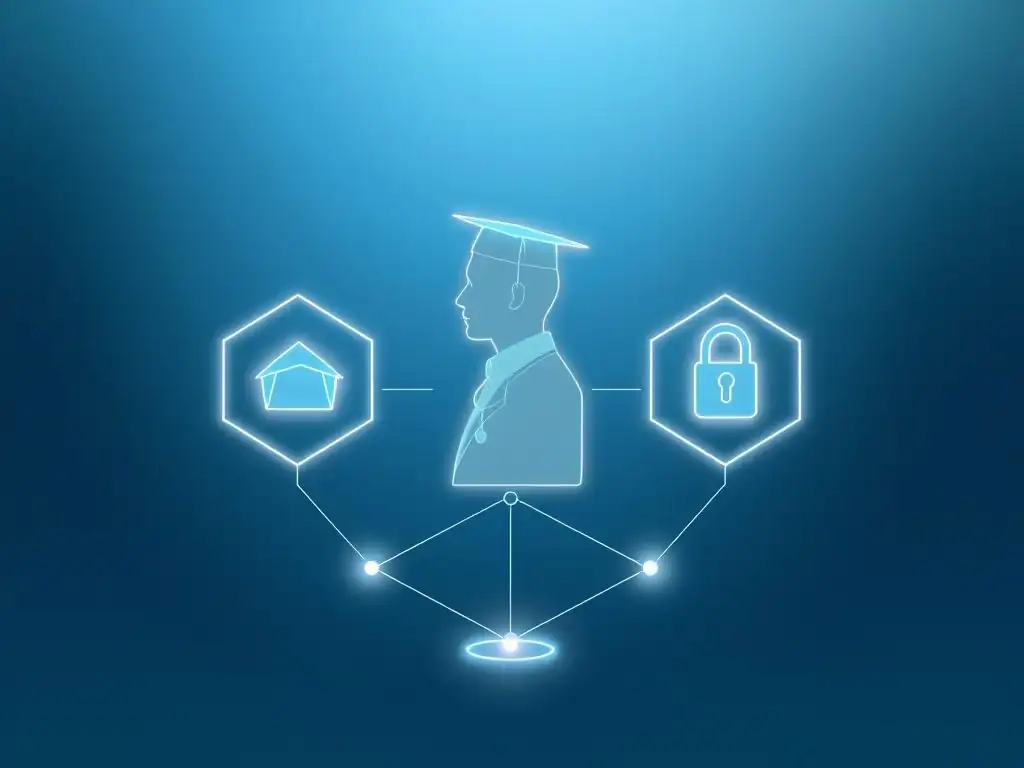
Securing Academic Credentials with Blockchain
Academic credentials, such as diplomas, degrees, and transcripts, are prime candidates for blockchain verifiable credentials. Traditional paper-based systems are prone to forgery, difficult to verify quickly, and require institutions to maintain costly archives. Digital certificates often still rely on centralized databases or proprietary systems. By issuing academic credentials as VCs anchored on a blockchain, institutions can provide students with tamper-proof digital records of their achievements. The student receives the VC and can share it with potential employers or other educational institutions.
The verifier (e.g., an employer) receives the VC from the student and uses a verification application to check its authenticity and integrity against the blockchain record and the issuer's public key. This process can happen almost instantly, providing a high degree of confidence in the credential's validity.
For instance, institutions like MIT and Malta have piloted blockchain-based academic credentialing systems, issuing digital diplomas that students can hold and share. This approach significantly reduces administrative overhead for institutions, eliminates the possibility of diploma fraud, and empowers students with ownership of their educational verifiable credentials security data, making the verification process more efficient and trustworthy.
Enhancing Healthcare Data Security and Patient Privacy
Healthcare data is among the most sensitive personal information, making its security and privacy paramount. Blockchain verifiable credentials offer a powerful way to enhance both in healthcare settings. VCs can be used for various purposes, such as patient identity verification, professional certifications for healthcare providers, and even representing specific health records (like vaccination status or test results) in a privacy-preserving manner.
For example, a patient could receive a VC for their COVID-19 vaccination status from a healthcare provider. This VC, held securely by the patient, could be presented to a verifier (like an airline or venue) to prove vaccination without revealing any other medical history.
Using VCs and decentralized identifiers (DIDs), patients can control access to their health information. Instead of healthcare providers maintaining separate, potentially vulnerable databases of patient records, patients could hold VCs representing specific health claims issued by their providers. They could then grant temporary, granular access to specific VCs when needed, e.g., sharing a list of allergies with a new doctor.
This model significantly reduces the risk of large-scale breaches of centralized patient databases and gives patients unprecedented control over their verifiable credentials security data related to health, aligning with privacy regulations like HIPAA in the US or GDPR in Europe. Projects are exploring how VCs can be used for secure sharing of electronic health records snippets or managing consent for data access.
Streamlining Supply Chain Management with Verifiable Credentials
Supply chains involve numerous participants – manufacturers, suppliers, logistics providers, customs, regulators, and consumers – exchanging information about products, origins, certifications, and compliance. Traditional supply chain data is often siloed, prone to errors, and lacks transparency, making it difficult to verify product authenticity, track provenance, or ensure ethical sourcing. Blockchain verifiable credentials can streamline these processes and enhance data security and trust.
VCs can be issued for various supply chain elements:
- Product Authenticity: A manufacturer issues a VC for a specific product batch, verifiable by distributors or consumers.
- Certifications: Suppliers issue VCs for organic, fair trade, or quality certifications, verifiable by buyers.
- Provenance: Each handler in the chain issues a VC confirming custody or processing step, creating a verifiable trail.
- Compliance: Regulators issue VCs confirming compliance with standards or inspections.
Anchoring these VCs on a blockchain creates an immutable, shared record of the product's journey and attributes. For instance, a food producer could issue VCs for batches of produce, including details like farm origin, harvest date, and safety certifications. As the produce moves through the supply chain, each participant adds verifiable claims. This allows any party, including the end consumer, to verify the product's history and certifications by checking the associated VCs against the blockchain. This improves transparency, reduces fraud, and enhances the overall verifiable credentials security data flow within complex supply networks.
The Future of Data Security: Blockchain and Verifiable Credentials
Interoperability and Standardization of Blockchain Verifiable Credentials
A key factor for the widespread adoption and success of blockchain verifiable credentials in enhancing data security is achieving high levels of interoperability and standardization. For VCs to be truly useful, a credential issued by one entity on one platform must be verifiable by another entity using a different application or potentially a different blockchain. The W3C Verifiable Credentials Data Model and Decentralized Identifiers (DIDs) specifications provide a foundational layer for this by defining standard formats and methods for creating, presenting, and verifying credentials and managing decentralized identities, respectively.
However, true interoperability requires more than just data format standards. It necessitates agreement on discovery mechanisms for DIDs and public keys, methods for checking credential status across different blockchain networks or decentralized ledgers, and common security profiles.
Initiatives like the Decentralized Identity Foundation (DIF) and the Trust Over IP Foundation (ToIP) are working on developing these higher-level protocols and governance frameworks. Achieving seamless interoperability will unlock the full potential of blockchain verifiable credentials security data across diverse sectors, allowing individuals and organizations to use and verify credentials effortlessly regardless of the underlying technology stack used by the issuer or verifier.
Addressing Scalability and Performance Challenges
While blockchain provides robust security and immutability, scalability and performance remain significant challenges for some platforms, potentially impacting the efficiency of large-scale verifiable credentials systems. Public blockchains like Ethereum have faced limitations in transaction throughput and high gas costs, which can make frequent credential issuance or status updates expensive and slow. For applications requiring millions of transactions daily, these limitations need to be addressed.
Solutions being explored and implemented include:
- Layer 2 Scaling Solutions: Technologies like rollups (Optimistic and zk-Rollups) and sidechains can process transactions off the main chain (Layer 1) and periodically anchor proofs or aggregated data onto the Layer 1 chain, dramatically increasing throughput and reducing costs.
- Permissioned Blockchains: For enterprise or government use cases where participants are known and trusted to some extent, permissioned blockchains or distributed ledgers can offer higher performance and lower costs compared to public, permissionless chains.
- Optimized Data Structures: Designing VC systems to minimize the data written directly to the blockchain, perhaps only anchoring cryptographic hashes or status pointers, helps reduce on-chain data load.
- Alternative Consensus Mechanisms: Newer blockchain platforms using Proof-of-Stake (PoS) or other consensus mechanisms often boast higher transaction speeds and lower energy consumption than older Proof-of-Work (PoW) chains.
Addressing these scalability and performance challenges is crucial for enabling widespread adoption of blockchain verifiable credentials security data solutions in real-world applications that require processing high volumes of credentials efficiently.
The Impact of Blockchain Verifiable Credentials on Data Privacy Regulations
Blockchain verifiable credentials have a complex relationship with data privacy regulations like the GDPR (General Data Protection Regulation) in Europe, CCPA (California Consumer Privacy Act) in the US, and similar laws globally. These regulations grant individuals specific rights regarding their personal data, including the right to access, rectify, and erase data. The immutable nature of blockchain poses a challenge to the "right to erasure" (or "right to be forgotten"), as data recorded on a blockchain is designed to be permanent.
However, well-designed VC systems are privacy-preserving by design. Crucially, sensitive personal data is not stored directly on the blockchain. What is typically stored is a cryptographic hash or a pointer, which is meaningless without the off-chain credential data held by the user. If a user wants to exercise their right to erasure, they delete the off-chain credential data they hold.
The hash on the blockchain persists but is no longer linked to any accessible personal information. Furthermore, the user-centric nature of VCs, where individuals control their data and choose when and with whom to share it, aligns strongly with the principles of data minimization and user consent central to privacy regulations. Legal interpretations and technical standards are evolving to ensure that blockchain verifiable credentials security data management aligns with global privacy requirements, focusing on the distinction between on-chain immutable records (hashes/status) and off-chain mutable personal data.
Overcoming Challenges in Adopting Blockchain Verifiable Credentials
Addressing Concerns About Data Privacy and Control
Despite the privacy-enhancing potential of blockchain verifiable credentials, concerns about data privacy and control persist, primarily stemming from the public perception of blockchain as being fully transparent and immutable. Users may worry that anchoring credential information on a blockchain, even just hashes or status, could somehow expose their personal data or create a permanent, unerasable record they cannot control.
Addressing these concerns requires clear communication and robust technical design. It is essential to educate users and stakeholders that sensitive personal data resides off-chain, under the user's control, and is not stored on the blockchain itself. The blockchain stores only cryptographic proofs or identifiers that, while immutable, are unlinkable to the individual without their consent and the off-chain credential data.
Developers must implement privacy-preserving techniques, such as using zero-knowledge proofs for verification (proving an attribute is true without revealing the attribute itself) or employing privacy-focused blockchain architectures. Providing users with intuitive wallet applications that make it clear what data is being shared and when, and giving them easy ways to manage and delete their off-chain credentials, is vital for building trust and addressing privacy concerns related to verifiable credentials security data.
Navigating the complex and evolving landscape of regulatory compliance is a significant challenge for adopting blockchain verifiable credentials, particularly in regulated industries like finance, healthcare, and identity management. Regulations vary significantly across jurisdictions and can impact various aspects of a VC system, including data storage location, identity verification standards (KYC/AML), electronic signature laws, and the aforementioned data privacy rules. The decentralized and cross-border nature of blockchain technology can make it difficult to determine which regulations apply and how to comply.
For instance, financial institutions using VCs for identity verification must ensure compliance with KYC/AML regulations, which may require storing certain identity data for a specified period, potentially conflicting with a purely decentralized model. Healthcare applications must adhere to patient data privacy laws. Compliance requires careful legal analysis and system design.
It may involve using permissioned blockchain networks where participants are regulated entities, implementing robust audit trails, ensuring data storage practices for off-chain data meet regulatory requirements, and collaborating with regulators to develop clear guidelines for blockchain verifiable credentials security data applications. Proactive engagement with regulatory bodies is crucial for fostering an environment where VC technology can be adopted compliantly.
Educating Users on the Benefits of Blockchain Verifiable Credentials
A major barrier to widespread adoption is the lack of public understanding regarding blockchain technology and verifiable credentials. Many people associate blockchain primarily with volatile cryptocurrencies and may be wary of using it for sensitive identity data. Users need to understand what VCs are, how they work (especially the off-chain data storage), and why they offer superior security, privacy, and control compared to traditional methods.
Effective education is required for all stakeholders:
- Holders (Individuals): Need to understand how VCs give them control over their data, how to use wallet applications securely, and the benefits of selective disclosure.
- Issuers (Organizations): Need to understand the process of issuing VCs, the technical requirements, and the benefits in terms of reduced administrative burden and increased trust.
- Verifiers (Organizations): Need to understand how to receive and verify VCs, the security guarantees provided by the blockchain anchor, and the efficiency gains.
Educational efforts should focus on the practical benefits – reduced fraud, increased privacy, convenience, and user control – rather than getting bogged down in complex blockchain technicalities. Clear, accessible resources, tutorials, and user-friendly application interfaces are essential. Overcoming this knowledge gap is fundamental to building confidence and driving the adoption of blockchain verifiable credentials security data solutions.
Comparing Blockchain Verifiable Credentials with Traditional Methods
Security Comparison: Blockchain Verifiable Credentials vs. Traditional Certificates
When comparing the security of blockchain verifiable credentials to traditional paper or centralized digital certificates, the advantages of the blockchain approach become clear. Traditional paper certificates are highly susceptible to physical forgery; anyone with sufficient skill can create convincing fakes. Verification is often manual and time-consuming, relying on contacting the issuing authority, which can be slow and inefficient. Centralized digital certificates stored in databases mitigate physical forgery but introduce the risk of large-scale data breaches and single points of failure, as discussed earlier. The security of these systems depends entirely on the defenses of the central authority.
Blockchain verifiable credentials offer a fundamentally different security model. The credential itself contains cryptographic proofs signed by the issuer. A hash or identifier linked to this credential is then anchored on an immutable, decentralized blockchain. Any attempt to alter the credential or its recorded status on the blockchain would be cryptographically detectable and rejected by the network.
This makes VCs significantly more resistant to forgery and tampering than traditional methods. Verification involves checking the cryptographic signature and the status against the blockchain, providing a trust level rooted in cryptography and distributed consensus, not reliance on a single entity's security infrastructure. This makes blockchain verifiable credentials security data inherently more robust.
Privacy Comparison: Blockchain Verifiable Credentials vs. Traditional Data Sharing
The privacy implications of blockchain verifiable credentials stand in stark contrast to traditional data sharing practices. Conventionally, proving an attribute often requires sharing a full document containing much more information than necessary. For example, showing a driver's license (name, address, date of birth, license number, photo) just to prove age exposes excessive personal data. Similarly, applications for services often require submitting copies of multiple identity documents, which are then stored (and potentially mishandled) by various organizations. This leads to data over-collection and reduces individual privacy.
Blockchain verifiable credentials enable privacy-preserving selective disclosure. A user receives a VC asserting a specific claim (e.g., "is over 21," "has a valid driver's license," "completed required training"). When a verifier needs proof of this claim, the user presents only the relevant VC. Using zero-knowledge proofs (ZKPs), the user can even prove that an attribute is true without revealing the attribute itself (e.g., prove they are over 21 without revealing their exact birth date).
The sensitive data remains under the user's control, off-chain. The blockchain interaction typically only involves verifying a hash or status, revealing no personal information. This granular control and minimized data sharing significantly enhance privacy compared to the broad data exposure common in traditional systems dealing with verifiable credentials security data.
Cost Comparison: Blockchain Verifiable Credentials vs. Traditional Infrastructure
Comparing the costs of implementing blockchain verifiable credentials versus traditional infrastructure involves considering both upfront investment and ongoing operational expenses. Traditional systems require significant investment in centralized database infrastructure, security systems, physical storage (for paper records), and manual processes for issuance and verification. Maintaining these systems involves recurring costs for software licenses, hardware maintenance, security updates, and personnel dedicated to processing requests and handling verification.
Implementing blockchain verifiable credentials requires investment in developing or acquiring compatible wallet applications, issuer platforms, and verifier services. There are costs associated with interacting with the chosen blockchain network (transaction fees or membership fees for permissioned chains). However, in the long term, VCs can lead to significant cost savings. Automating the verification process reduces manual labor.
Eliminating the need for physical document handling and storage reduces administrative overhead. Reducing fraud through enhanced security can save organizations substantial amounts of money. Furthermore, by shifting control and storage of credentials to the user, organizations can potentially reduce their liability and costs associated with managing large, centralized databases of personal verifiable credentials security data. While initial setup costs may vary, the operational efficiencies and security benefits often lead to a compelling cost case for adopting blockchain-based solutions.
Conclusion: The Path to Secure Data Management with Blockchain
Embracing the Potential of Blockchain Verifiable Credentials
The journey towards truly secure and user-centric data management is significantly advanced by embracing the potential of blockchain verifiable credentials. These digital credentials, cryptographically signed by issuers and often linked to a decentralized ledger, represent a paradigm shift away from vulnerable, centralized data silos. They empower individuals by giving them control over their digital identities and the associated data, deciding what information to share, when, and with whom.
This fundamental change not only aligns with growing demands for data privacy and control but also builds a more resilient and trustworthy digital ecosystem. The inherent properties of blockchain – decentralization, immutability, and transparency – provide a robust foundation for the security and integrity of the verifiable credentials security data, proving their authenticity and status in a way traditional methods struggle to match.
Key Takeaways: Enhancing Data Security with Decentralized Identity
Several key takeaways highlight how blockchain verifiable credentials enhance data security through decentralized identity. Firstly, they eliminate single points of failure by removing the reliance on centralized databases for storing sensitive credential content; this data is held by the user. Secondly, the use of cryptography and blockchain anchoring ensures the integrity and authenticity of the credential's issuance and status, making forgery and tampering exceedingly difficult.
Thirdly, the model promotes privacy by enabling selective disclosure, allowing users to share only the minimum necessary information to prove a claim. Finally, decentralized identity frameworks built on blockchain provide users with greater control over their personal data, fundamentally changing the relationship between individuals and the entities that issue and consume their credentials. These elements collectively contribute to a significantly enhanced posture for verifiable credentials security data.
The Future of Secure Data Exchange with Blockchain Technology
The future of secure data exchange is increasingly pointing towards models leveraging decentralized technologies like blockchain and verifiable credentials. As digital interactions become more frequent and complex, the need for trusted, efficient, and privacy-preserving ways to share and verify data becomes paramount. Blockchain-based VCs offer a scalable and secure solution for managing everything from academic records and professional licenses to healthcare data and supply chain provenance.
While challenges related to interoperability, scalability, and regulatory alignment still exist, ongoing standardization efforts, technological advancements (like Layer 2 scaling), and increasing industry adoption are paving the way for wider implementation. By putting individuals back in control of their verifiable credentials security data, this technology promises a future where digital identity is more secure, private, and empowering for everyone involved in data exchange.
Frequently Asked Questions
How do blockchain-based verifiable credentials enhance data security?
Blockchain-based verifiable credentials enhance security by allowing data ownership and control to remain with the individual. This reduces the risk of centralized data breaches and ensures data integrity through cryptographic proofs.
What are the key benefits of using verifiable credentials over traditional methods?
Verifiable credentials offer benefits such as increased privacy (selective disclosure), improved data portability, and enhanced security due to the decentralized nature of the blockchain. Traditional methods often lack these features.
How does blockchain technology ensure the authenticity of verifiable credentials?
Blockchain ensures authenticity through cryptographic signatures and the immutable ledger. Every transaction and credential issuance is recorded, making it extremely difficult to forge or tamper with the underlying data.
What role does decentralization play in the security of verifiable credentials?
Decentralization removes the single point of failure associated with centralized databases. This makes the system more resilient to attacks and reduces the risk of large-scale data breaches, enhancing overall security.
How can organizations implement blockchain verifiable credentials to comply with data privacy regulations?
Organizations can implement verifiable credentials to provide individuals with greater control over their data, enabling compliance with regulations like GDPR. This allows for selective data sharing and consent management, ensuring data is only accessed with permission.
Final Reflection: Securing the Future with Trustless Data
The journey through blockchain-based verifiable credentials reveals a profound shift in how we approach data security, and its relevance is undeniable. The convergence of blockchain's immutability with verifiable credentials offers a compelling solution to the escalating challenges of data breaches and identity theft. This isn't just a technological advancement; it's a fundamental reimagining of trust in the digital age, empowering individuals and organizations alike to control and protect their sensitive information.
The impact of this technology is already being felt across various sectors, from healthcare to education, and its potential to reshape the digital landscape is immense. Witnessing the evolution of data security from centralized databases to decentralized, self-sovereign systems is both inspiring and crucial. The promise of verifiable credentials lies not only in enhanced security but also in fostering greater transparency and accountability. The future of identity is self-sovereign. Individuals should own and control their own digital identities, and verifiable credentials are the key to unlocking that future.
- Drummond Reed
As we stand at the cusp of this technological revolution, I invite you to consider the role you can play in shaping a more secure and trustworthy digital world. Embrace the potential of blockchain-based verifiable credentials, explore their applications in your own life and work, and become an advocate for a future where data security is not a privilege, but a fundamental right. Let us collectively build a future where trust is not assumed, but verified, ensuring a safer and more equitable digital landscape for all.
Embrace Blockchain: Secure Your Data's Future!
Thank you for exploring the potential of blockchain-based verifiable credentials to enhance data security. We hope this article has provided valuable insights into how this technology can help build a more trustworthy and secure digital environment. Now, it's time to take action!
Consider starting by testing verifiable credentials within a small, controlled setting in your organization to gain practical experience and assess their impact on your data security. Additionally, explore open-source blockchain credentialing projects on platforms like GitHub to learn more about development practices and contribute to ongoing efforts. Sharing this article with colleagues and industry peers can also help foster conversations about the transformative role of blockchain in safeguarding data.
What is the first step you'll take to explore the potential of blockchain-based verifiable credentials in protecting your data? Share your thoughts below!
Leave a Reply