
Predictive and Proactive: How AI Makes Smart Contracts Truly Intelligent

Welcome to Blockchain Trends, your compass in the rapidly evolving world of decentralized technologies. Delve into the transformative power of blockchain beyond the buzz, from groundbreaking DeFi applications to enterprise solutions. Ready to see how the future is being built?
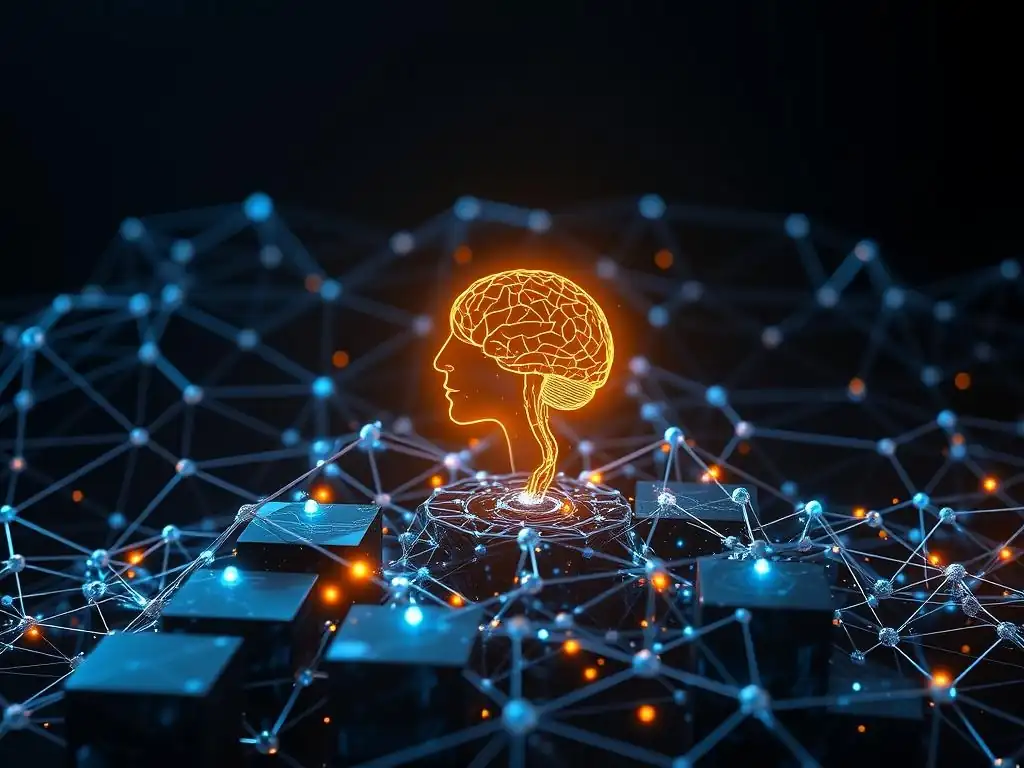
Today, we're exploring a fascinating intersection: the synergy of blockchain and artificial intelligence. Discover how AI-powered smart contract intelligence is revolutionizing the way we interact with blockchain, making contracts not just automated, but predictive and proactive. Intrigued? Let's unlock the potential together.
- Understanding the Convergence of AI and Smart Contracts: A New Era of Automation
-
Frequently Asked Questions
- What is AI-powered smart contract intelligence, and how does it differ from traditional smart contracts?
- How can AI improve the security of smart contracts and prevent exploits?
- What are some real-world applications of AI-powered smart contract intelligence beyond DeFi?
- What are the main challenges and considerations when implementing AI into smart contracts?
- How will regulatory frameworks need to adapt to accommodate the rise of AI-powered smart contracts?
- Final Reflection: Embracing the Dawn of AI-Powered Agreements
- Unleash the Power of Intelligent Contracts!
Understanding the Convergence of AI and Smart Contracts: A New Era of Automation
The Limitations of Traditional Smart Contracts: Reactive Execution
Traditional smart contracts, while revolutionary in their ability to automate agreements, operate on a purely reactive basis. They execute predefined instructions only when specific conditions are met, as coded into their logic. Imagine a simple escrow smart contract for a real estate transaction.
It releases funds to the seller only after the buyer confirms receipt of the property deed. This process, while efficient, is entirely dependent on the pre-programmed conditions and lacks the capacity to adapt to unforeseen circumstances or optimize processes dynamically. They are essentially deterministic machines, excellent at executing pre-defined rules, but unable to learn, predict, or proactively adjust their behavior based on real-time data or evolving situations.
This reactive nature can lead to inefficiencies and limitations in complex scenarios. For instance, in supply chain management, a traditional smart contract might trigger a payment upon delivery confirmation. However, it cannot anticipate potential delays due to weather disruptions or geopolitical events and proactively adjust logistics or payment terms.
Similarly, in decentralized finance (DeFi), a lending smart contract might liquidate a collateralized loan when the price of the collateral falls below a threshold. It cannot, however, predict market volatility and proactively manage risk by adjusting margin requirements or offering alternative strategies to borrowers. This inherent lack of foresight limits the potential of smart contracts to truly optimize complex, real-world processes.
Introducing AI-Powered Smart Contracts: Predictive and Adaptive Logic
AI-powered smart contracts represent a paradigm shift from reactive execution to predictive and adaptive logic. By integrating artificial intelligence, specifically machine learning, these contracts gain the ability to analyze vast datasets, identify patterns, and make informed predictions. Unlike their traditional counterparts, AI-enhanced smart contracts can proactively adjust their behavior based on real-time data and anticipated future events. This transformative capability allows for a new level of automation, moving beyond simple rule-based execution to dynamic, intelligent decision-making within contractual agreements.
Consider an AI-powered insurance smart contract. Instead of simply processing claims based on predefined criteria after an event occurs, it could leverage AI to analyze real-time weather data, traffic patterns, and even social media sentiment to predict potential risks, such as car accidents or property damage. Based on these predictions, the smart contract could proactively adjust insurance premiums, issue alerts to policyholders about impending risks, or even automatically trigger preventative measures. This shift from reactive claim processing to proactive risk management demonstrates the profound impact of AI in transforming smart contracts into truly intelligent and adaptive instruments.
The Synergy Unveiled: How AI Enhances Smart Contract Functionality
The synergy between AI and smart contracts is not merely about adding intelligence as an afterthought; it's about fundamentally enhancing the core functionalities of smart contracts. AI empowers smart contracts with capabilities that were previously unattainable, bridging the gap between rigid code and dynamic real-world complexities. This integration allows smart contracts to move beyond simple automated execution to become proactive agents capable of intelligent decision-making, learning, and adaptation.
One key enhancement is the ability to process and interpret unstructured data. Traditional smart contracts are limited to structured, on-chain data. AI, however, can analyze vast amounts of off-chain data, including text, images, and sensor readings, and extract meaningful insights that can inform smart contract execution.
For example, an AI-powered supply chain smart contract could analyze news reports about port congestion or weather forecasts to predict delivery delays and proactively reroute shipments. Furthermore, AI algorithms can continuously learn from new data and refine their predictive models, making smart contracts increasingly accurate and efficient over time. This dynamic learning capability enables smart contracts to evolve and adapt to changing environments, maximizing their effectiveness and utility in complex and unpredictable real-world scenarios, paving the way for truly AI-powered smart contract intelligence.
Frequently Asked Questions
What is AI-powered smart contract intelligence, and how does it differ from traditional smart contracts?
AI-powered smart contract intelligence utilizes artificial intelligence and machine learning to enhance smart contracts. Unlike traditional smart contracts that execute predefined rules, AI-enhanced versions can adapt to changing conditions and make predictive decisions.
How can AI improve the security of smart contracts and prevent exploits?
AI can significantly improve security by analyzing code for vulnerabilities, detecting anomalous behavior in real-time, and predicting potential attack vectors before they are exploited. This proactive approach helps mitigate risks.
What are some real-world applications of AI-powered smart contract intelligence beyond DeFi?
Beyond DeFi, AI-powered smart contracts can be used in supply chain management for automated tracking and verification, in healthcare for secure data sharing and automated insurance claims, and in governance for more transparent and efficient voting systems.
What are the main challenges and considerations when implementing AI into smart contracts?
Challenges include ensuring data privacy and security, mitigating bias in AI algorithms, and addressing the complexities of integrating AI models with blockchain technology. Trust and transparency are also key considerations.
How will regulatory frameworks need to adapt to accommodate the rise of AI-powered smart contracts?
Regulatory frameworks will need to address issues like liability for AI-driven decisions, data governance in decentralized systems, and the auditing and verification of AI models used in smart contracts to ensure fairness and compliance.
Final Reflection: Embracing the Dawn of AI-Powered Agreements
The journey from static code to dynamic, AI-powered smart contract intelligence is no longer a futuristic fantasy, but a rapidly unfolding reality. The potential for these intelligent contracts to revolutionize industries, streamline processes, and foster unprecedented levels of trust and efficiency is immense, and its impact is already being felt in nascent forms across various sectors.
The evolution of smart contracts, fueled by AI, is profoundly reshaping the landscape of trust and automation. This transformation resonates deeply, as it promises to democratize access to secure and efficient agreements, empowering individuals and organizations alike. The future is already here – it's just not evenly distributed.
- William Gibson. This quote perfectly encapsulates the current state of AI-powered smart contracts; the technology exists, but its widespread adoption and equitable distribution are the challenges we must address.
As we stand on the cusp of this new era, let us not merely be passive observers. Instead, let us actively explore, experiment, and contribute to the development and responsible implementation of AI-powered smart contract intelligence. Consider how this technology can be applied to solve existing problems in your own field, and how you can contribute to building a future where agreements are not just smart, but truly intelligent, fair, and accessible to all.
Unleash the Power of Intelligent Contracts!
Thank you for exploring the world of AI-powered smart contracts. We hope this article has highlighted the exciting possibilities of proactive and predictive features within blockchain technology. Now, it's time to turn these insights into action.
Here are some steps to get started:
- Consider how artificial intelligence could enhance your current smart contracts by identifying inefficiencies or areas for improvement.
- Investigate available AI-enabled blockchain tools and platforms that match your project's needs, and begin experimenting with them.
- Share this article with your network to foster a discussion about the future of intelligent contracts. Let's create a community of innovators!
What is the most significant challenge you believe AI can solve in the smart contract space, and how would you approach it? Share your thoughts below!
Leave a Reply