
The Technology Behind NFT Gaming: Understanding Smart Contracts and Blockchain Infrastructure

Welcome to Blockchain Trends, your definitive guide to understanding the revolutionary impact of blockchain technology. Ever wondered how your favorite NFT game really works? Dive into our latest article and unlock the secrets behind NFT gaming smart contract tech. Discover the intricate blockchain infrastructure powering these digital worlds and how smart contracts are redefining the gaming landscape. Ready to level up your knowledge?
The Technology Behind NFT Gaming: Understanding Smart Contracts and Blockchain Infrastructure
- Introduction to NFT Gaming Technology
- Understanding Smart Contracts in NFT Games
- Blockchain Infrastructure for NFT Gaming: A Deep Dive
- The Technical Architecture of NFT Gaming Platforms
- Smart Contract Security Considerations for NFT Games
- The Future of NFT Gaming Technology
- Conclusion: The Transformative Potential of NFT Gaming Smart Contract Tech
-
Frequently Asked Questions
- How do smart contracts facilitate NFT gaming?
- What role does blockchain infrastructure play in NFT gaming?
- What are the key components of NFT gaming smart contract tech?
- How can NFT gaming smart contract tech enhance user experience?
- What are the current regulatory challenges surrounding NFT gaming smart contract tech?
- Final Reflection: Embracing the Decentralized Future of Play
- Dive Deeper: Unlock Your NFT Gaming Potential!
Introduction to NFT Gaming Technology
What is NFT Gaming and Why is it Gaining Popularity?
NFT gaming represents a paradigm shift in the video game industry, merging the entertainment of gaming with the principles of blockchain technology, specifically Non-Fungible Tokens (NFTs). At its core, NFT gaming involves video games that incorporate NFTs to represent in-game assets. These assets can range from cosmetic items like skins and avatars to crucial gameplay elements such as weapons, characters, virtual land, and even in-game currency.
Unlike traditional games where in-game items are solely owned by the game developers, NFT gaming empowers players with true ownership of their digital assets. This ownership is recorded on a blockchain, making it verifiable and secure.
The surge in popularity of NFT gaming can be attributed to several factors. Firstly, it offers players the potential for play-to-earn mechanics, where they can earn cryptocurrency or NFTs through gameplay, which can then be traded or sold for real-world value. This fundamentally alters the player-game relationship, turning gaming from a purely leisure activity into a potential source of income.
Secondly, NFT gaming fosters a stronger sense of community and player engagement. The ability to own and trade unique in-game assets creates a more dynamic and player-driven economy within the game.
Finally, for game developers, NFT gaming presents new monetization models and the opportunity to tap into the burgeoning crypto and NFT markets, attracting a new wave of players and investors. The success of early NFT games like Axie Infinity, which at its peak boasted millions of daily active users and a thriving NFT marketplace, demonstrated the immense potential and profitability of this innovative gaming model, further fueling its rapid growth and adoption.
The Role of Blockchain Technology in NFT Games
Blockchain technology is the foundational pillar upon which NFT gaming is built. It provides the essential infrastructure for creating, managing, and securing NFTs, thereby enabling true digital ownership and decentralized in-game economies. The blockchain acts as a transparent and immutable ledger that records all transactions and ownership of NFTs.
This immutability ensures that once an NFT is created and ownership is assigned, it cannot be altered or duplicated, guaranteeing the scarcity and uniqueness of each digital asset. Furthermore, blockchain's decentralized nature means that no single entity controls the game's assets or economy, distributing power away from centralized game developers and towards the players and the network itself.
In NFT games, blockchain technology plays several critical roles. It facilitates the minting of NFTs, which is the process of creating new unique digital assets and recording them on the blockchain. It also enables the secure and transparent trading of these NFTs on marketplaces, both within and outside the game ecosystem.
Blockchain ensures the provenance of each NFT, allowing players to trace its history and verify its authenticity. Moreover, the inherent security of blockchain networks, through cryptographic hashing and consensus mechanisms, protects against fraud and unauthorized modification of in-game assets. By leveraging blockchain, NFT games offer a level of transparency, security, and player empowerment that is unattainable in traditional gaming models, establishing a new era of digital asset ownership and decentralized gaming experiences.
Understanding Smart Contracts in NFT Games
What are Smart Contracts and How Do They Work?
Smart contracts are self-executing contracts with the terms of the agreement directly written into code. These contracts are deployed and stored on a blockchain network, ensuring transparency and immutability. Once deployed, smart contracts automatically execute predefined actions when specific conditions are met, without the need for intermediaries. Imagine a vending machine: you insert coins (meet the condition), and the machine automatically dispenses your chosen snack (executes the action). Smart contracts operate on a similar principle but in a digital and decentralized environment.
The functionality of smart contracts hinges on their code, which defines the rules and conditions of the agreement. This code is written in programming languages like Solidity (for Ethereum) and is compiled into bytecode that can be understood and executed by the blockchain's virtual machine. When a transaction interacts with a smart contract, the blockchain network verifies if the conditions stipulated in the contract's code are satisfied.
If they are, the contract automatically executes the corresponding actions, such as transferring digital assets, updating records, or triggering other functions. Because smart contracts are stored on a blockchain, their execution and the associated data are transparently recorded and auditable by anyone on the network. This inherent transparency and automation provided by smart contracts are fundamental to the operation of NFT games, enabling trustless interactions and decentralized game mechanics.
The Functionality of Smart Contracts in NFT Gaming
Smart contracts are the engine driving the core functionalities within NFT games, enabling verifiable ownership, decentralized marketplaces, and automated game mechanics. They are crucial for managing in-game assets as NFTs and facilitating player interactions within the game's ecosystem.
Minting and Trading NFTs in Games using Smart Contracts
Smart contracts are the cornerstone of NFT creation and trading within games. The minting process, where new NFTs are generated, is governed by smart contracts. When a player earns a reward, purchases an item, or achieves a milestone in an NFT game, a smart contract is triggered to mint a new NFT representing that in-game asset.
This smart contract defines the properties of the NFT, such as its rarity, attributes, and visual representation, and then records it on the blockchain, assigning ownership to the player's wallet address. Popular NFT standards like ERC-721 (for unique NFTs) and ERC-1155 (for semi-fungible tokens, useful for in-game items with multiple copies) are implemented through smart contracts, ensuring compatibility and interoperability across different platforms and marketplaces.
For trading NFTs, smart contracts facilitate secure and transparent transactions. NFT marketplaces, whether integrated within the game or external platforms like OpenSea or Magic Eden, interact directly with the game's smart contracts. When a player lists an NFT for sale, the smart contract manages the escrow and transfer of ownership upon a successful sale.
The smart contract ensures that the NFT is transferred to the buyer's wallet and the agreed-upon payment is securely transferred to the seller's wallet, all without the need for intermediaries. This automated and transparent process, governed by smart contracts, creates a robust and decentralized marketplace for in-game NFTs, empowering players to freely trade and monetize their digital assets.
Smart Contracts for In-Game Asset Ownership
One of the most transformative aspects of NFT gaming is the concept of true in-game asset ownership, made possible by smart contracts. In traditional games, players may purchase in-game items, but these items are ultimately owned and controlled by the game developers. If the game shuts down, or a player's account is banned, these assets are lost.
NFT gaming, powered by smart contracts, flips this model. When an in-game asset is represented as an NFT and managed by a smart contract, ownership is transferred to the player's blockchain address. This means players have verifiable and demonstrable ownership of their digital assets, independent of the game developers.
Smart contracts not only establish ownership but also manage the rules and rights associated with these assets. They define how an NFT can be used within the game, its properties, and any limitations on its transferability or usage. Because the smart contract is immutable and transparent, players can trust that their ownership rights are protected and that the rules governing their assets are consistently applied.
This shift towards player ownership fosters a more engaging and rewarding gaming experience, as players are invested in assets they truly control and can potentially benefit from outside of the game itself. The security and transparency provided by smart contracts are essential for building this trust and establishing the foundation of player-centric economies in NFT gaming.
Implementing Game Logic with Smart Contracts
While complex game logic is often handled off-chain for performance reasons, smart contracts can be used to implement crucial aspects of game mechanics, particularly those related to asset management, rules enforcement, and decentralized governance. For instance, smart contracts can define the rules for using specific in-game items, such as limitations on their usage frequency, compatibility with other items, or their effectiveness in certain game scenarios. They can also automate the distribution of rewards based on in-game achievements or participation in events, ensuring fairness and transparency in reward systems.
Furthermore, smart contracts can be employed to implement decentralized governance mechanisms within NFT games. For example, voting rights associated with certain NFTs could be managed by smart contracts, allowing players to participate in decisions about game development, rule changes, or the allocation of community resources. While the computational limitations of current blockchain technology may restrict the implementation of highly complex game logic directly within smart contracts, a hybrid approach is often adopted.
Core game mechanics requiring high performance and responsiveness are typically handled off-chain, while critical functionalities related to asset ownership, marketplaces, and governance are managed by smart contracts on-chain. This combination allows for a balance between rich gameplay experiences and the benefits of decentralization and transparency offered by blockchain technology in NFT gaming.
Key Benefits of Using Smart Contracts for NFT Games
The integration of smart contracts into NFT games brings a multitude of benefits, revolutionizing the gaming landscape and offering significant advantages for both players and developers. One of the primary benefits is enhanced transparency and trust. Smart contracts operate based on publicly auditable code, meaning players can verify the rules governing in-game assets, transactions, and game mechanics.
This transparency builds trust and reduces the potential for manipulation or hidden agendas, creating a fairer and more reliable gaming environment. Furthermore, smart contracts automate key game processes, such as NFT minting, trading, and reward distribution, reducing the need for manual intervention and minimizing the risk of errors or delays.
Smart contracts also empower players with true digital ownership of their in-game assets. Unlike traditional games where players are merely licensees of digital items, NFT games utilizing smart contracts grant players verifiable and transferable ownership, recorded immutably on the blockchain. This ownership fosters a more engaged and invested player base, as players have a tangible stake in the game's ecosystem.
Moreover, smart contracts facilitate new economic models within gaming, such as play-to-earn mechanics. By enabling the trading and monetization of in-game assets as NFTs, smart contracts create opportunities for players to earn real-world value from their gameplay, fostering a more sustainable and player-centric gaming economy. In essence, smart contracts are the technological foundation that unlocks the transformative potential of NFT gaming, driving innovation and reshaping the future of interactive entertainment.
Blockchain Infrastructure for NFT Gaming: A Deep Dive
Choosing the Right Blockchain for Your NFT Game
Selecting the appropriate blockchain infrastructure is a critical decision for any NFT game project, as it directly impacts the game's performance, scalability, cost-effectiveness, and overall user experience. The "right" blockchain depends on various factors, including the game's complexity, target audience, desired transaction throughput, and budget constraints. Developers need to carefully consider the trade-offs between different blockchains, evaluating their strengths and weaknesses in relation to the specific needs of their NFT game. Factors such as transaction fees (gas costs), transaction speed, scalability, security, community support, and available developer tooling must be thoroughly analyzed before making a blockchain selection.
For instance, a game with a high volume of in-game transactions and a large player base will require a blockchain with high scalability and low transaction fees to ensure smooth and affordable gameplay. Conversely, a game focused on high-value NFTs and security might prioritize a more established and secure blockchain, even if it comes with higher transaction costs. The choice of blockchain also influences the accessibility and compatibility of the game.
Blockchains with larger and more established NFT ecosystems, like Ethereum, may offer greater network effects and interoperability with existing marketplaces and wallets. Ultimately, the selection of a blockchain for an NFT game is a strategic decision that requires careful consideration of both technical and economic factors to ensure the game's long-term success and sustainability.
Ethereum for NFT Games: Advantages and Limitations
Ethereum, the pioneering blockchain platform for smart contracts and NFTs, has been a popular choice for many early NFT games. Its primary advantage lies in its robust and mature ecosystem. Ethereum boasts the largest and most active NFT community, a vast array of developer tools and resources, and a well-established infrastructure of wallets, marketplaces, and services.
The widespread adoption of the ERC-721 and ERC-1155 NFT standards on Ethereum ensures compatibility and interoperability within a vast network of NFT projects and platforms. Furthermore, Ethereum's strong security and decentralized nature provide a solid foundation for building trust and reliability in NFT gaming applications.
However, Ethereum also presents limitations, primarily concerning scalability and transaction costs. The Ethereum mainnet has historically suffered from network congestion, leading to high gas fees and slow transaction processing times, particularly during periods of high demand. These high gas fees can be prohibitive for frequent in-game transactions, impacting the affordability and user experience of NFT games.
While Ethereum is undergoing upgrades to improve scalability (through Layer-2 solutions and the transition to Proof-of-Stake), these limitations have prompted many NFT game developers to explore alternative blockchain solutions that offer lower fees and higher throughput. Despite these challenges, Ethereum remains a significant player in the NFT gaming space due to its established ecosystem and ongoing efforts to address its scalability issues.
Layer-2 Solutions for Scalable NFT Gaming
To overcome the scalability limitations of Layer-1 blockchains like Ethereum, Layer-2 solutions have emerged as a crucial component of the NFT gaming infrastructure. Layer-2 solutions are built on top of a Layer-1 blockchain (like Ethereum) and provide increased transaction throughput and reduced gas fees by processing transactions off-chain and then periodically settling them on the main chain. This approach significantly improves scalability without compromising the security and decentralization of the underlying Layer-1 blockchain. Popular Layer-2 solutions applicable to NFT gaming include Polygon, Arbitrum, and Optimism.
Polygon, for example, is a widely adopted Layer-2 scaling solution for Ethereum that offers significantly lower transaction fees and faster transaction speeds. It is compatible with the Ethereum Virtual Machine (EVM), making it relatively easy for developers to migrate Ethereum-based NFT games to Polygon. Arbitrum and Optimism are optimistic rollup solutions that also offer substantial scalability improvements for Ethereum.
By leveraging Layer-2 solutions, NFT game developers can create games with a high volume of in-game transactions, such as frequent NFT minting, trading, and gameplay interactions, without incurring prohibitively high gas costs. These solutions are essential for enabling mass adoption of NFT gaming and creating more accessible and user-friendly gaming experiences. As Layer-2 technology continues to mature and evolve, it will play an increasingly vital role in the scalability and performance of NFT gaming platforms.
Alternative Blockchains for NFT Games: Polygon, Solana, Flow
Beyond Ethereum and its Layer-2 solutions, several alternative blockchains have gained traction as viable platforms for NFT gaming, each offering unique features and advantages. Polygon, as previously mentioned, provides an EVM-compatible, low-fee environment, making it a popular choice for developers seeking scalability while maintaining compatibility with the Ethereum ecosystem. Solana is another prominent alternative, known for its high throughput and low transaction fees.
Solana's architecture is designed for speed and scalability, enabling it to handle a large volume of transactions, making it suitable for games with fast-paced gameplay and frequent in-game interactions. However, Solana's ecosystem is relatively newer compared to Ethereum, and its developer tooling and community are still evolving.
Flow, developed by Dapper Labs (the creators of CryptoKitties and NBA Top Shot), is a blockchain specifically designed for NFTs and gaming. Flow prioritizes user experience and ease of development, offering features like developer-friendly smart contract language (Cadence) and account abstraction. Flow is designed to be scalable and energy-efficient, making it a compelling option for NFT games aiming for mainstream adoption.
Each of these alternative blockchains – Polygon, Solana, and Flow – presents distinct strengths and trade-offs. The optimal choice depends on the specific requirements of the NFT game, considering factors such as scalability needs, transaction cost sensitivity, desired ecosystem compatibility, and developer familiarity with the blockchain platform.
Decentralized Storage Solutions for NFT Game Assets
While blockchain technology secures the ownership and transaction history of NFTs, the actual digital assets associated with these NFTs, such as game art, 3D models, and metadata, often require decentralized storage solutions. Storing these assets directly on the blockchain can be prohibitively expensive and inefficient due to the limited storage capacity and high costs associated with on-chain data storage. Therefore, decentralized storage networks like IPFS (InterPlanetary File System), Arweave, and Filecoin are commonly used in conjunction with blockchain to host NFT game assets.
IPFS is a decentralized peer-to-peer network for storing and sharing data. It uses content-addressing, meaning files are identified by their content rather than their location. This ensures content integrity and prevents censorship. Arweave is another decentralized storage network that focuses on permanent data storage. It offers a "pay-once, store-forever" model, making it suitable for ensuring the long-term availability of NFT assets.
Filecoin is a decentralized storage marketplace that incentivizes storage providers to contribute storage space to the network. It offers a more economically driven approach to decentralized storage. By utilizing these decentralized storage solutions, NFT games can ensure the permanence, censorship resistance, and availability of their game assets and metadata. This is crucial for preserving the value and long-term viability of NFTs within the gaming ecosystem, as it prevents reliance on centralized servers that could be subject to outages or censorship.
Ensuring Security and Transparency in NFT Gaming with Blockchain
Blockchain technology inherently provides a foundation of security and transparency that is crucial for building trust and reliability in NFT gaming platforms. The immutable nature of blockchain ensures that once transactions and NFT ownership records are written to the blockchain, they cannot be altered or tampered with.
This immutability provides a verifiable and auditable history of all in-game asset transactions and ownership changes, enhancing transparency and reducing the potential for fraud or disputes. Furthermore, blockchain's decentralized architecture distributes data across a network of nodes, making it significantly more resistant to single points of failure and attacks compared to centralized systems.
Smart contracts, which govern the logic and rules of NFT games, are also inherently transparent. Their code is publicly auditable on the blockchain, allowing players and developers to verify the contract's functionality and ensure it operates as intended. This transparency fosters trust and accountability, as the rules of the game and the mechanisms for asset management are openly accessible and verifiable.
Moreover, the cryptographic security mechanisms employed by blockchain, such as hashing and digital signatures, protect against unauthorized access and modification of data. By leveraging these inherent security and transparency features of blockchain, NFT games can establish a more trustworthy and equitable gaming environment, empowering players with greater control and confidence in the digital assets they own and trade within the game.
The Technical Architecture of NFT Gaming Platforms
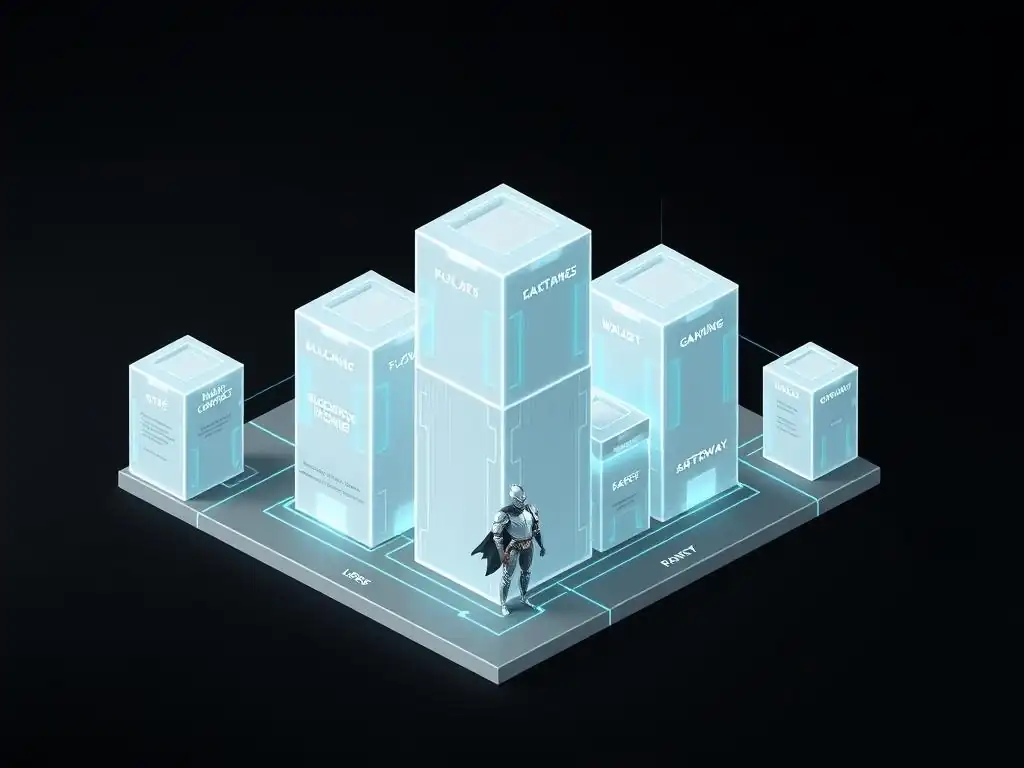
The Frontend Interface: Connecting to the Blockchain
The frontend interface of an NFT gaming platform serves as the bridge between the player and the underlying blockchain technology. It's the part of the game that players directly interact with, encompassing elements like the game client, website, or mobile application. A crucial function of the frontend is connecting to the blockchain network and enabling players to interact with smart contracts. This connection is typically facilitated through Web3 integration, utilizing libraries like Web3.js or Ethers.js. These libraries provide tools for interacting with blockchain nodes and smart contracts from within web browsers or game applications.
Players usually need a Web3 wallet, such as MetaMask or Trust Wallet, to interact with NFT games. These wallets manage the player's blockchain address and private keys, allowing them to sign transactions and authorize interactions with smart contracts. The frontend interface allows players to perform actions like viewing their NFT assets, initiating transactions to mint or trade NFTs, and interacting with in-game functionalities governed by smart contracts.
For example, when a player clicks a button to purchase an in-game NFT, the frontend interface uses Web3 libraries to send a transaction to the game's smart contract, initiating the purchase process on the blockchain. The frontend must be designed to provide a user-friendly experience, abstracting away the complexities of blockchain technology while still enabling seamless interaction with the decentralized backend.
Backend Infrastructure: Managing Game Data and Logic
While smart contracts and blockchain handle asset ownership and certain game mechanics, the backend infrastructure of an NFT gaming platform is responsible for managing the majority of game data, complex game logic, and off-chain functionalities. This backend typically consists of traditional server infrastructure, databases, and APIs, working in conjunction with the blockchain components.
The backend manages aspects such as player accounts, game state, non-NFT in-game items, game progression, and complex game logic that is not suitable for on-chain execution. It also handles communication with external services and APIs, and often acts as an intermediary between the frontend client and the blockchain.
The backend infrastructure is crucial for providing a smooth and performant gaming experience. It handles real-time game updates, manages player interactions in multiplayer games, and stores large amounts of game data that are not directly related to NFTs. For instance, player statistics, game world state, and AI behavior are typically managed off-chain in the backend.
The backend also plays a role in integrating with the blockchain, often monitoring smart contract events and updating the game state accordingly. A well-designed backend infrastructure is essential for ensuring the scalability, responsiveness, and overall functionality of an NFT gaming platform, complementing the decentralized aspects handled by blockchain and smart contracts.
Integrating Smart Contracts with the Game Engine
Seamless integration between smart contracts and the game engine is vital for creating engaging and interactive NFT gaming experiences. Game engines like Unity and Unreal Engine, popular choices for game development, need to be able to communicate effectively with blockchain networks and smart contracts. This integration is often achieved through Software Development Kits (SDKs), APIs, and middleware that bridge the gap between traditional game development environments and blockchain technology. These tools provide developers with libraries and functionalities to interact with smart contracts from within the game engine, allowing them to incorporate blockchain-based features into the gameplay.
For example, a game engine might use an SDK to call functions on a smart contract to verify NFT ownership, initiate NFT minting when a player earns a reward, or retrieve NFT metadata to display in-game assets. The integration needs to be efficient and performant to avoid impacting the game's responsiveness and frame rate.
Developers often employ middleware solutions to handle the complexities of blockchain interaction, abstracting away low-level details and providing a more streamlined development experience. This integration allows game developers to leverage the benefits of blockchain and smart contracts – such as NFT ownership, decentralized marketplaces, and play-to-earn mechanics – while still utilizing the powerful features and tools offered by established game engines to create immersive and engaging NFT gaming experiences.
Smart Contract Security Considerations for NFT Games
Common Smart Contract Vulnerabilities in NFT Gaming
Security is paramount in NFT gaming, as smart contracts manage valuable digital assets and financial transactions. Vulnerabilities in smart contracts can lead to significant financial losses for both players and game developers. Several common smart contract vulnerabilities are particularly relevant to NFT gaming, requiring careful attention during development and deployment.
Reentrancy Attacks
Reentrancy attacks are a well-known vulnerability in smart contracts, especially relevant in scenarios involving external calls. In NFT gaming, this could occur if a smart contract interacts with an external contract, such as during NFT trading or reward distribution. A reentrancy attack exploits the fact that a contract can be recursively called before the initial call completes.
For example, if a smart contract sends ETH or tokens to an external address and doesn't properly update its state before completing the send operation, a malicious contract at the external address could recursively call the vulnerable function again before the state is updated, potentially draining funds or manipulating game assets. Preventing reentrancy attacks requires implementing checks and state updates before making external calls, using techniques like checks-effects-interactions pattern or reentrancy guards.
Overflow/Underflow Issues
Integer overflow and underflow vulnerabilities arise from the limitations of integer data types in programming. In Solidity versions prior to 0.8.0, integer overflow and underflow were not automatically checked. This means that if a calculation resulted in a value exceeding the maximum or falling below the minimum value for an integer type, it would "wrap around" to the opposite end of the range, potentially leading to unexpected and exploitable behavior.
In NFT gaming smart contracts, overflow/underflow vulnerabilities could be exploited in scenarios involving token transfers, reward calculations, or in-game resource management. For instance, an attacker might manipulate token balances or game resources by triggering an overflow or underflow condition. Solidity version 0.8.0 and later versions include built-in overflow and underflow protection, but developers must be aware of this vulnerability when working with older contracts or using unchecked arithmetic operations.
Front Running
Front running is a vulnerability that exploits the transparent nature of blockchain transaction mempools. In NFT gaming, front running can be a concern, particularly in scenarios involving NFT minting, auctions, or time-sensitive game events. When a user submits a transaction to the blockchain, it first enters a public mempool, where it is visible to network participants before being included in a block.
A malicious actor can observe pending transactions in the mempool and, if they identify a profitable opportunity, submit a transaction with a higher gas fee to have their transaction included in a block before the original transaction. In NFT minting, for example, an attacker could front-run a user's minting transaction to acquire a rare NFT just before the user's transaction is processed. Mitigating front running requires implementing strategies like commit-reveal schemes, using off-chain order books, or employing Layer-2 solutions that offer faster transaction confirmation times.
Best Practices for Securing NFT Gaming Smart Contracts
Securing NFT gaming smart contracts is a multi-faceted process that involves adopting best practices throughout the development lifecycle, from design and coding to testing and deployment. Implementing robust security measures is crucial for protecting player assets, maintaining game integrity, and building trust in the NFT gaming platform.
Auditing Smart Contracts
Auditing smart contracts by independent security experts is a critical step in ensuring the security of NFT gaming platforms. A security audit involves a thorough review of the smart contract code by experienced auditors who specialize in identifying vulnerabilities and security flaws. Auditors analyze the contract's logic, code implementation, and potential attack vectors, providing recommendations for remediation.
Choosing reputable and experienced auditors is essential for a comprehensive and effective audit. Audits should be conducted before deploying smart contracts to a production environment and ideally repeated whenever significant code changes are made. Addressing vulnerabilities identified during audits significantly reduces the risk of exploits and enhances the overall security posture of the NFT gaming platform.
Formal Verification
Formal verification is a more rigorous and mathematically based approach to smart contract security. It involves using formal methods and mathematical proofs to verify the correctness and security properties of smart contract code. Formal verification aims to prove that a smart contract behaves as intended and is free from certain types of vulnerabilities, such as reentrancy, overflow, or access control issues.
While formal verification can provide a higher level of assurance compared to traditional auditing, it is a more complex and resource-intensive process. It requires specialized expertise and tools and may not be feasible for all projects. However, for high-value NFT gaming platforms or critical smart contracts, formal verification can be a valuable investment to enhance security and reduce the risk of costly exploits.
Using Security Libraries
Leveraging well-established and reputable security libraries can significantly improve the security of NFT gaming smart contracts. Libraries like OpenZeppelin Contracts provide pre-written, audited, and tested smart contract components for common functionalities, such as token standards (ERC-721, ERC-1155), access control, and security patterns. Using these libraries reduces the need to write custom code for common functionalities, minimizing the risk of introducing vulnerabilities.
OpenZeppelin Contracts and other security libraries are developed and maintained by security experts and are widely used in the blockchain industry. By incorporating these libraries into NFT gaming smart contracts, developers can benefit from proven security patterns and reduce the attack surface of their code, enhancing the overall security and reliability of the platform.
The Future of NFT Gaming Technology
Emerging Trends in NFT Gaming Smart Contract Tech
The technology underpinning NFT gaming is rapidly evolving, with several emerging trends shaping the future landscape of this exciting intersection of gaming and blockchain. These trends point towards more decentralized, player-centric, and interoperable gaming experiences.
Decentralized Autonomous Organizations (DAOs) in NFT Gaming
Decentralized Autonomous Organizations (DAOs) are poised to play an increasingly significant role in NFT gaming. DAOs are community-governed organizations that operate based on rules encoded in smart contracts. In the context of NFT gaming, DAOs can be used to decentralize game governance, community ownership, and decision-making. Instead of centralized game developers solely controlling the game's direction, a DAO can empower players to participate in decisions regarding game updates, rule changes, resource allocation, and even the game's future development roadmap.
NFT holders can often receive voting rights within a DAO, giving them a direct say in the game's evolution. DAOs can foster a stronger sense of community ownership and align the incentives of players and developers, creating more sustainable and player-driven NFT gaming ecosystems. Examples of DAOs in gaming are emerging, exploring various models of decentralized governance and community participation.
Play-to-Earn (P2E) Evolution
The Play-to-Earn (P2E) model is undergoing significant evolution as the NFT gaming space matures. Early P2E models often focused on simple earning mechanisms, sometimes leading to unsustainable economies and gameplay that prioritized earning over genuine fun. The future of P2E is moving towards more sustainable and engaging models that integrate earning opportunities more seamlessly into the core gameplay loop.
This evolution includes a focus on skill-based rewards, where players earn based on their in-game skills and achievements, rather than just time spent playing. Games are also exploring more diverse and engaging earning mechanics, such as participation in tournaments, content creation, and contributing to the game's ecosystem. The evolution of P2E aims to create gaming experiences that are both enjoyable and rewarding, fostering long-term player engagement and sustainable in-game economies.
Cross-Chain NFT Interoperability
Cross-chain NFT interoperability is an emerging trend that promises to unlock greater utility and liquidity for NFT game assets. Currently, NFTs are often confined to the blockchain they were originally minted on, limiting their transferability and usage across different games and platforms. Cross-chain interoperability aims to enable NFTs to move seamlessly between different blockchains, expanding their reach and utility. This can be achieved through technologies like NFT bridges and cross-chain protocols.
Imagine owning an NFT weapon in one game and being able to use it in another game on a different blockchain. Cross-chain interoperability can significantly enhance the value proposition of NFTs, creating a more interconnected and open metaverse where digital assets are not siloed within individual platforms. As this technology matures, it has the potential to revolutionize NFT gaming and the broader NFT ecosystem.
Challenges and Opportunities in NFT Gaming Development
NFT gaming development, while brimming with potential, faces both significant challenges and exciting opportunities as it navigates this nascent and rapidly evolving landscape. Addressing the challenges and capitalizing on the opportunities will be crucial for the long-term success of NFT gaming.
Challenges in NFT gaming development include scalability, particularly for games with high transaction volumes. Ensuring smooth and affordable gameplay for a large player base remains a technical hurdle. Security is another paramount challenge, as vulnerabilities in smart contracts can lead to significant financial risks. Robust security measures and ongoing vigilance are essential.
Regulation in the crypto and NFT space is still evolving and uncertain, creating potential legal and compliance challenges for NFT game developers. User adoption is another hurdle, as mainstream gamers may be hesitant to embrace blockchain technology and NFTs. Educating and onboarding traditional gamers to the benefits of NFT gaming is crucial for wider adoption.
Despite these challenges, NFT gaming presents immense opportunities. It offers the potential for new game mechanics and player experiences that are not possible in traditional gaming, such as true digital ownership, player-driven economies, and decentralized governance. NFT gaming empowers players, giving them greater control over their in-game assets and the potential to earn real-world value from their gameplay.
The integration of NFTs and blockchain opens up new monetization models for game developers, potentially creating more sustainable and player-aligned revenue streams. Furthermore, NFT gaming is positioned to play a key role in the development of the metaverse, creating interconnected virtual worlds where digital assets and identities can seamlessly move between experiences. By addressing the challenges and embracing the opportunities, NFT gaming has the potential to transform the gaming industry and usher in a new era of decentralized and player-centric entertainment.
Conclusion: The Transformative Potential of NFT Gaming Smart Contract Tech
Key Takeaways on Blockchain and Smart Contracts in NFT Games
NFT gaming, powered by blockchain and smart contract technology, represents a significant evolution in the video game industry. Smart contracts are the foundational technology enabling key aspects of NFT gaming, including the minting, trading, and management of in-game assets as NFTs. They facilitate true digital ownership for players, verifiable and secure on the blockchain, a departure from traditional gaming models. Blockchain technology underpins the transparency, security, and decentralization of NFT gaming ecosystems, fostering trust and creating new economic models.
The choice of blockchain infrastructure is crucial, with options ranging from established platforms like Ethereum to Layer-2 solutions and alternative blockchains, each offering different trade-offs in terms of scalability, fees, and ecosystem. Security considerations for smart contracts are paramount, requiring rigorous auditing, formal verification, and adherence to best practices to mitigate vulnerabilities. Despite the challenges, the integration of blockchain and smart contracts in gaming unlocks transformative potential, creating more engaging, player-centric, and economically rewarding gaming experiences.
The Future Landscape of NFT Gaming
The future landscape of NFT gaming is dynamic and promising. Emerging trends like DAOs for decentralized governance, the evolution of Play-to-Earn models towards sustainability and skill-based rewards, and cross-chain NFT interoperability are shaping the next generation of NFT games. While challenges remain in areas like scalability, security, and user adoption, the opportunities are vast.
NFT gaming has the potential to revolutionize the industry, creating more open, player-owned, and economically vibrant gaming ecosystems. As the technology matures and adoption grows, NFT gaming is poised to become a significant force in the broader entertainment and digital asset landscape, driving innovation and redefining the relationship between players and games.
Frequently Asked Questions
How do smart contracts facilitate NFT gaming?
Smart contracts are self-executing agreements stored on the blockchain. In NFT gaming, they automate game mechanics, manage ownership of in-game assets (NFTs), and ensure fair gameplay rules.
What role does blockchain infrastructure play in NFT gaming?
Blockchain infrastructure provides the underlying security and transparency for NFT gaming. It enables immutable record-keeping of transactions and asset ownership, preventing fraud and ensuring trust.
What are the key components of NFT gaming smart contract tech?
Key components include smart contract languages (like Solidity), blockchain networks (like Ethereum or Solana), and NFT standards (like ERC-721 or ERC-1155) which define the properties and behavior of the NFTs.
How can NFT gaming smart contract tech enhance user experience?
Smart contract tech can enhance user experience by enabling true ownership of in-game assets, creating decentralized marketplaces for trading NFTs, and fostering a more engaging and rewarding gaming ecosystem.
What are the current regulatory challenges surrounding NFT gaming smart contract tech?
Regulatory challenges include defining the legal status of NFTs, addressing concerns about money laundering, and establishing consumer protection measures within the decentralized gaming space.
Final Reflection: Embracing the Decentralized Future of Play
The intricate dance between NFT gaming and smart contract technology is no longer a futuristic fantasy; it's a rapidly evolving reality reshaping the gaming landscape. The understanding of blockchain infrastructure and smart contracts, once relegated to the realm of developers, is now crucial for anyone seeking to truly grasp the potential and navigate the complexities of this burgeoning ecosystem.
The rise of NFT gaming is more than just a technological advancement; it's a cultural shift, empowering players with true ownership and fundamentally altering the relationship between developers and their communities. This shift towards decentralized ownership resonates deeply, promising a future where digital assets hold tangible value and players are active participants in the economies they inhabit. The blockchain is not just technology. It is a revolution in trust.
- Don Tapscott
As we stand at the cusp of this new era, let us not simply be passive observers. Let us embrace the opportunity to learn, to experiment, and to contribute to the responsible development of NFT gaming. Explore the possibilities, understand the underlying technology, and actively shape a future where gaming is not just entertainment, but a powerful force for economic empowerment and creative expression. The future of play is decentralized, and it's waiting for you to join the game.
Dive Deeper: Unlock Your NFT Gaming Potential!
Thank you for exploring the exciting world of NFT gaming technology with us. We hope this article has highlighted the importance of smart contracts and blockchain infrastructure. Now, it's time to apply what you've learned and start creating.
Here are some ways to continue your journey:
- Brainstorm a unique NFT-integrated in-game asset idea, even a simple one, and outline how it could function using smart contracts.
- Explore existing NFT games and review their smart contract code on public blockchain explorers to gain insight into real-world applications.
- Share this article with a fellow gamer or blockchain enthusiast to inspire a discussion about the future of gaming.
Are you ready to go beyond observation and become an innovator? What exciting NFT gaming project are you most eager to develop?
Leave a Reply