
Manufacturing Efficiency: Smart Contracts for Streamlined Production Processes


Welcome to Blockchain Trends, your source for understanding the real-world impact of blockchain technology. Beyond the hype, blockchain is revolutionizing industries. Intrigued by how it's happening? Our latest article delves into how blockchain smart contracts streamline production, unlocking unprecedented efficiency and transparency in manufacturing. Discover the future of production and how smart contracts are leading the charge. What are the tangible benefits, and what challenges lie ahead? Read on to find out!
- Manufacturing Efficiency: How Blockchain Smart Contracts Streamline Production Processes
- The Problem: Inefficiencies and Challenges in Traditional Manufacturing
- Solution: Leveraging Blockchain Smart Contracts for Manufacturing Efficiency
- Implementing Smart Contracts in Production: A Step-by-Step Approach
- Benefits of Blockchain Smart Contracts for Streamlined Production
- Case Studies: Successful Implementation of Smart Contracts in Manufacturing
- Challenges and Considerations for Blockchain Adoption in Manufacturing
- The Future of Manufacturing: Blockchain and the Industrial Revolution 4.0
- Conclusion: Blockchain Smart Contracts: A Catalyst for Manufacturing Transformation
-
Frequently Asked Questions
- What are blockchain smart contracts, and how can they be applied to manufacturing?
- How can smart contracts streamline production processes in a manufacturing setting?
- What are the potential benefits of using smart contracts to track materials and components in the supply chain?
- What are the regulatory considerations when implementing blockchain smart contracts in manufacturing?
- What is the future outlook for blockchain smart contracts in the manufacturing industry?
- Final Reflection: Embracing Blockchain's Transformative Power
- Ignite Your Manufacturing Revolution!
Manufacturing Efficiency: How Blockchain Smart Contracts Streamline Production Processes
The Promise of Blockchain in Manufacturing: Beyond Traditional Systems
The manufacturing sector, a cornerstone of the global economy, is constantly seeking ways to enhance efficiency, reduce costs, and improve transparency. Traditional manufacturing processes often grapple with complex supply chains, manual data handling, and a lack of real-time visibility, leading to significant inefficiencies and potential risks. Blockchain technology, initially popularized by cryptocurrencies, offers a transformative potential for this industry far beyond financial transactions.
Its core characteristics – decentralization, immutability, and transparency – provide a foundation for building more robust, efficient, and trustworthy manufacturing ecosystems. By moving beyond outdated, siloed systems, manufacturers can leverage blockchain to create a single source of truth across their operations and value chains.
This shift towards blockchain-enabled manufacturing promises to address long-standing challenges such as product provenance tracking, automated quality control, and streamlined logistics. For instance, estimates suggest that inefficiencies in global supply chains, which are critical to manufacturing, can cost businesses billions annually. Implementing blockchain solutions can help mitigate these losses by creating verifiable records of every step, from raw material sourcing to finished product delivery. This level of granular detail and trust is difficult, if not impossible, to achieve with traditional databases and manual processes, setting the stage for a new era of operational excellence powered by distributed ledger technology.
Understanding Smart Contracts: The Foundation of Automated Production
Central to the application of blockchain in manufacturing are smart contracts. These are self-executing contracts with the terms of the agreement directly written into lines of code. They reside on a blockchain network, meaning they are immutable and distributed, ensuring tamper-proof execution once triggered by predefined conditions.
Unlike traditional contracts that rely on intermediaries for enforcement, smart contracts automate the execution process, reducing delays, errors, and the need for trust between parties who may not know each other. In a manufacturing context, this means automating actions based on real-world events captured by sensors, IoT devices, or data inputs verified on the blockchain.
Consider a simple scenario: a smart contract programmed to release payment to a supplier only when a shipment of raw materials is verified as received and meeting specific quality parameters recorded on the blockchain. This eliminates manual invoice processing, reduces payment disputes, and accelerates the entire procurement cycle. The logic is transparent to all authorized participants on the network, fostering greater trust and predictability. This capability to automate complex, multi-party processes based on verifiable data is why blockchain smart contracts streamline production and hold immense potential for revolutionizing manufacturing workflows from end to end.
The Problem: Inefficiencies and Challenges in Traditional Manufacturing
Supply Chain Bottlenecks: A Major Source of Production Delays
Traditional manufacturing supply chains are notoriously complex and often lack end-to-end visibility. Materials and components pass through numerous hands – suppliers, transporters, distributors, and assembly plants – each using separate, often incompatible, systems. This fragmentation creates data silos, making it difficult to track goods in real-time, verify their origin, or predict potential delays. Bottlenecks frequently occur at transfer points, during quality inspections, or due to documentation errors, leading to significant production schedule disruptions. Studies indicate that poor supply chain visibility can contribute to up to 15-20% of lost sales for manufacturers annually due to stockouts or delayed production.
Furthermore, resolving disputes arising from damaged goods, late deliveries, or incorrect quantities can be a lengthy and costly process, often involving extensive manual investigation and legal fees. The lack of a shared, trusted ledger means parties rely on potentially conflicting records. For example, a manufacturer might claim a component arrived late, while the logistics provider's system shows it was delivered on time, leading to protracted negotiations. This inherent inefficiency in traditional supply chain management directly impacts production throughput and overall manufacturing efficiency, highlighting the urgent need for a more integrated and transparent solution.
Lack of Transparency and Traceability: Increased Risks and Costs
Opacity within the manufacturing process and supply chain poses significant risks, including counterfeit components entering the production line, unethical sourcing practices, and difficulty in executing targeted product recalls. Tracing a specific product back to its origin or identifying the source of a defect can be a time-consuming, manual process involving sifting through paper records and disparate databases.
This lack of traceability not only increases the risk of using substandard materials but also inflates the costs associated with quality control, audits, and managing product returns or recalls. For instance, a large-scale automotive recall can cost a manufacturer hundreds of millions or even billions of dollars, a cost exacerbated by the difficulty in precisely identifying affected vehicles due to poor traceability of components.
Moreover, consumers and regulators are increasingly demanding transparency regarding product origins, sustainability, and ethical production. Traditional systems struggle to provide verifiable proof of these claims efficiently. A food manufacturer, for example, might find it challenging and expensive to provide immutable proof that every ingredient in a batch of products was sourced from approved, sustainable farms, hindering their ability to meet market demands and regulatory requirements. The inability to quickly and confidently verify product history and attributes adds layers of complexity, cost, and risk to traditional manufacturing operations.
Inefficient Communication and Coordination: Hindering Productivity
Effective communication and coordination among various stakeholders – internal departments (procurement, production, logistics, sales), suppliers, and customers – are crucial for smooth manufacturing operations. However, traditional methods often rely on emails, phone calls, faxes, and disparate enterprise resource planning (ERP) systems that don't seamlessly communicate. This leads to delays in information sharing, misunderstandings, and manual data entry errors that can propagate throughout the production cycle. For example, a last-minute change in customer order volume might not be communicated quickly and accurately to the procurement or production planning departments, resulting in either overproduction or material shortages.
The lack of real-time, shared information also makes dynamic scheduling and agile responses to market changes challenging. Production planners often work with outdated inventory data or rely on estimates from suppliers, leading to suboptimal scheduling and resource allocation. A study by the Aberdeen Group once indicated that best-in-class manufacturers had significantly better on-time delivery rates, partly due to superior coordination, highlighting the productivity drag caused by inefficient communication in less advanced setups. Automating communication and coordination via a shared, trusted platform is essential to unlock higher levels of manufacturing efficiency.
Solution: Leveraging Blockchain Smart Contracts for Manufacturing Efficiency
Smart Contracts for Supply Chain Management: Enhanced Traceability and Transparency
Blockchain smart contracts streamline production by revolutionizing supply chain management. By recording every transaction and transfer of goods on an immutable ledger, they create a verifiable and transparent history for every component and product. A smart contract can be programmed to update its status or trigger actions based on events like shipment arrival, quality inspection completion, or transfer of ownership, all recorded on the blockchain, potentially linked to IoT sensor data. This provides all authorized participants with real-time, accurate visibility into the movement and status of goods.
For example, a pharmaceutical manufacturer can use smart contracts to track a shipment of sensitive ingredients. The contract can verify the temperature data from IoT sensors throughout transit, trigger alerts if conditions deviate, and record the handover at each node in the supply chain. This ensures product integrity and provides an auditable trail for regulatory compliance. Implementing blockchain smart contracts for supply chain management can reduce disputes by providing indisputable proof of events and conditions, potentially cutting dispute resolution times by a significant margin and improving overall supply chain reliability and transparency.
Automated Payments and Settlements: Reducing Transaction Costs and Delays
One of the most compelling applications of blockchain smart contracts in manufacturing is the automation of payments and settlements. Instead of relying on manual invoicing, purchase orders, and lengthy approval processes, smart contracts can execute payments automatically when predefined conditions are met and verified on the blockchain. These conditions could be the successful delivery of goods, verification of quality specifications, or completion of a specific production milestone. This eliminates manual intervention, reduces administrative overhead, and significantly accelerates cash flow for suppliers and manufacturers alike.
Consider a contract between a manufacturer and a component supplier. A smart contract can be set up to automatically release payment within minutes or hours of the components being scanned upon arrival at the factory and verified against the purchase order details recorded on the blockchain. This contrasts sharply with traditional payment cycles that can take weeks or even months, tying up working capital and increasing administrative costs. By using blockchain smart contracts streamline production processes related to finance, businesses can potentially reduce transaction costs by up to 30% and improve overall financial efficiency.
Real-Time Monitoring and Quality Control: Ensuring Product Integrity
Integrating smart contracts with IoT devices enables real-time monitoring and automated quality control within manufacturing. Sensors on machinery, production lines, or within products themselves can collect data on parameters like temperature, pressure, vibration, or production count. This data can be fed into a blockchain network and used to trigger smart contract actions. For instance, a smart contract could automatically log quality checks, flag deviations from required specifications, or even halt a production line if critical parameters fall outside acceptable ranges.
Furthermore, smart contracts can automate quality verification throughout the supply chain. A smart contract could require a digital signature from a quality inspector confirming that a batch of goods meets standards before the shipment is allowed to proceed or payment is released. This creates an immutable record of quality checks at every stage. For manufacturers of high-value or sensitive goods, such as aerospace components or medical devices, using blockchain smart contracts streamline production quality assurance, providing an unprecedented level of verifiable integrity and compliance, potentially reducing the incidence of defective products reaching the market by a notable percentage.
Implementing Smart Contracts in Production: A Step-by-Step Approach
Step 1: Identifying Key Processes for Smart Contract Automation
The first critical step in leveraging blockchain smart contracts to streamline production is to identify which specific processes within the manufacturing value chain are most ripe for automation and would benefit most from blockchain's properties (transparency, immutability, automation). This involves a thorough analysis of existing workflows to pinpoint bottlenecks, areas with high administrative costs, processes requiring significant trust between parties, or those prone to disputes and errors. Potential candidates often include procurement, inventory management, quality assurance checks, logistics tracking, and payment settlements.
A manufacturer might start by focusing on a single, high-impact process, such as automating the verification and payment process for incoming raw materials from a key supplier. This allows for a focused pilot program. It's essential to involve stakeholders from different departments – including operations, finance, IT, and legal – to gain a comprehensive understanding of current challenges and identify processes where a lack of trust or inefficient manual steps cause significant friction. Prioritizing based on potential ROI and complexity is key to a successful initial implementation.
Step 2: Designing and Developing Smart Contracts for Manufacturing
Once target processes are identified, the next step involves designing the logic and conditions for the smart contracts. This requires translating the terms of traditional agreements or standard operating procedures into executable code. The design phase must clearly define the inputs the smart contract will rely on (e.g., data from IoT sensors, verified delivery confirmations, quality inspection reports), the conditions that must be met, and the actions the contract will execute (e.g., release payment, update inventory status, trigger an alert). Security is paramount during this phase, as flaws in the contract code can lead to vulnerabilities.
Developing the smart contracts requires expertise in blockchain programming languages (like Solidity for Ethereum-based networks or Chaincode for Hyperledger Fabric) and a deep understanding of the specific manufacturing process being automated. It's crucial to involve process experts alongside developers to ensure the smart contract accurately reflects the desired workflow and business rules. Thorough documentation of the smart contract's logic, inputs, and outputs is also vital for future maintenance and audits.
Step 3: Integrating Smart Contracts with Existing Manufacturing Systems
Blockchain networks and smart contracts rarely operate in isolation. To unlock their full potential in manufacturing, they must be integrated with existing enterprise systems, such as ERP, Manufacturing Execution Systems (MES), Supply Chain Management (SCM) software, and IoT platforms. This integration allows data from existing systems and physical devices to trigger smart contract execution and enables the outputs of smart contracts (like payment confirmations or status updates) to flow back into these systems. Middleware or API layers are often used to facilitate this communication between the blockchain and legacy systems.
This step can be technically challenging, particularly when dealing with older legacy systems that may not have modern API capabilities. It requires careful planning to ensure data is transferred securely, accurately, and in near real-time where necessary. Establishing clear data formats and protocols for communication between systems is essential. Successful integration ensures that the smart contract automation complements, rather than disrupts, existing operations and provides a unified view of processes across different platforms.
Step 4: Testing and Deployment of Blockchain-Based Solutions
Before full-scale deployment, rigorous testing of the smart contracts and their integration points is crucial. This involves testing the smart contract logic under various scenarios, including edge cases and potential errors in input data. Testing should simulate real-world conditions as closely as possible. Furthermore, the integration points with existing systems need to be tested to ensure data flows correctly and triggers the expected actions. Performance testing is also important to ensure the solution can handle the required volume of transactions.
Deployment typically begins with a pilot program in a controlled environment or with a limited set of partners (e.g., one supplier, one product line). This allows the manufacturer to evaluate the solution's effectiveness, identify any unforeseen issues, and gather feedback from users in a low-risk setting. Based on the pilot's success and lessons learned, the solution can then be scaled up to cover more processes, partners, or production sites. Ongoing monitoring and maintenance of the smart contracts and the underlying blockchain infrastructure are necessary post-deployment.
Benefits of Blockchain Smart Contracts for Streamlined Production
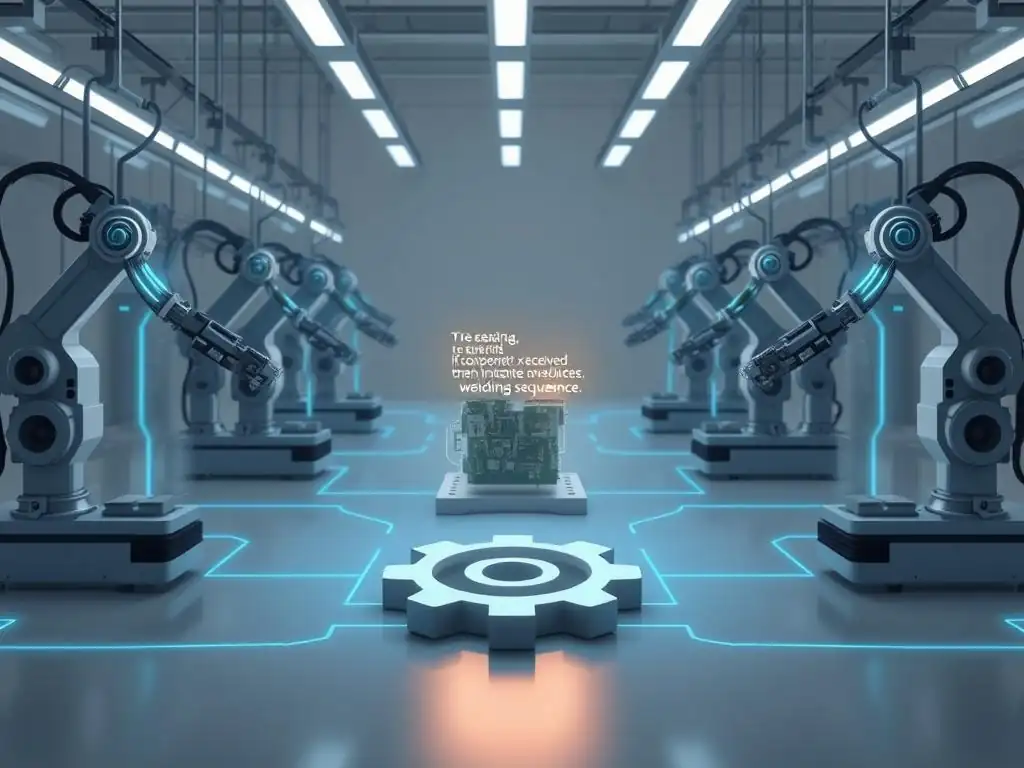
Increased Efficiency and Productivity in Manufacturing Operations
By automating repetitive, rule-based tasks and eliminating the need for manual verification and data entry, blockchain smart contracts significantly enhance operational efficiency. Processes that previously took hours or days, such as invoice processing or quality check verification, can be executed in minutes or seconds. This acceleration reduces cycle times across the board, from procurement to production and logistics. For example, automating the release of components from inventory upon receiving a verified production order via a smart contract can speed up the start of manufacturing batches.
The reduction in manual touchpoints also minimizes the risk of human error, leading to smoother workflows and fewer exceptions that require costly manual intervention. With real-time data flowing through the blockchain, decision-making becomes faster and more informed. Manufacturers can react more quickly to changes in supply or demand, optimize production schedules dynamically, and improve overall throughput. Experts estimate that automating supply chain processes with blockchain and smart contracts can lead to a 10-15% improvement in operational efficiency metrics like order-to-cash cycle time.
Reduced Costs and Waste Through Automation
Automation driven by blockchain smart contracts directly translates into cost reductions. Eliminating manual administrative tasks lowers labor costs associated with data entry, verification, and dispute resolution. Automated payments reduce transaction fees and the costs associated with managing accounts payable and receivable. Furthermore, improved supply chain visibility and traceability help reduce losses due to counterfeit goods, spoilage (especially for perishable goods), and inefficient inventory management.
Smart contracts can also help reduce waste by enabling more precise production planning and quality control. By ensuring that only verified, quality-checked materials enter the production process, manufacturers can minimize scrap and rework. For instance, automatically triggering payments based on verified quality metrics incentivizes suppliers to maintain high standards, reducing the incidence of defective inputs. The overall effect is a leaner, more cost-effective manufacturing operation, potentially leading to a reduction in operating expenses by 5-10% in areas impacted by smart contract automation.
Improved Transparency and Trust Across the Supply Chain
The immutable and shared nature of a blockchain ledger, combined with the automated, transparent execution of smart contracts, fosters unprecedented levels of trust and transparency among supply chain partners. Every transaction, data point, and contract execution is recorded and verifiable by authorized participants. This eliminates the need for parties to rely solely on each other's assertions or private databases. Suppliers, manufacturers, distributors, and even end-customers can have access to a single, trusted source of information regarding product origin, handling, and authenticity.
This enhanced transparency is particularly valuable in industries where provenance and ethical sourcing are critical, such as food, pharmaceuticals, and luxury goods. A consumer could potentially scan a QR code on a product and trace its journey from raw material to finished good, verified by blockchain records and smart contract executions. This level of trust and transparency builds stronger relationships with partners and consumers and can also simplify audits and regulatory compliance, reducing the associated burden and cost.
Enhanced Data Security and Integrity with Blockchain
Blockchain technology inherently provides high levels of data security and integrity through cryptographic hashing and distributed consensus mechanisms. Once data is recorded on the blockchain, it is extremely difficult and computationally expensive to alter or delete it without detection. This makes the data used by smart contracts, whether it's shipment details, quality reports, or payment triggers, highly reliable and tamper-proof. In a manufacturing context, this means greater confidence in the accuracy of information used for critical operational and financial decisions.
Compared to traditional centralized databases, which can be single points of failure and are more susceptible to cyberattacks or internal manipulation, a distributed blockchain network is far more resilient. Even if one node is compromised, the data is replicated across many others, maintaining the integrity of the overall ledger. This enhanced security protects sensitive manufacturing data and ensures that the smart contracts execute based on verifiable, unaltered information, significantly reducing the risk of fraud or data breaches impacting production workflows.
Case Studies: Successful Implementation of Smart Contracts in Manufacturing
Provenance Tracking in the Food and Beverage Industry using Blockchain
One of the most widely cited examples of blockchain smart contracts streamlining production and supply chains is in provenance tracking within the food and beverage industry. Companies are using blockchain platforms to create digital trails for food products from farm to table. For instance, a consortium of food retailers and suppliers implemented a blockchain solution where data points – such as farm origin, processing dates, shipping routes, and temperature logs – are recorded on the ledger. Smart contracts are used to automate verification steps at different points, ensuring data accuracy and compliance with food safety standards.
This approach drastically reduces the time needed to trace the origin of contaminated food during a recall. What previously took days or weeks using paper records and disparate databases can now be done in seconds or minutes. This faster traceability minimizes the impact of outbreaks, saves lives, and reduces the financial loss associated with widespread recalls. While specific company names aren't always publicly disclosed for all implementations, the general adoption across major food industry players highlights the proven value of blockchain and smart contracts in enhancing transparency and safety.
Automated Machine Maintenance Scheduling and Execution via Smart Contracts
In advanced manufacturing, integrating IoT sensors with smart contracts is enabling automated predictive maintenance. Machines equipped with sensors can monitor performance metrics like vibration, temperature, and output rate. When these metrics indicate a potential failure or that a scheduled maintenance interval is approaching, this data is fed into a blockchain. A smart contract, pre-programmed with maintenance protocols and service agreements, can then be triggered.
For example, a smart contract could automatically generate a maintenance work order, notify a service technician, and even initiate payment to the technician upon digital confirmation of the maintenance completion and verification that the machine's performance metrics have returned to optimal levels. This automation removes manual scheduling delays and ensures that maintenance is performed proactively when needed, reducing unexpected downtime. Early implementations have shown the potential to reduce machine downtime by 20-30% through automated, condition-based maintenance triggered by smart contracts.
Streamlining International Trade Finance for Manufacturers using Blockchain
International trade involves complex financial instruments like letters of credit and guarantees, which are often manual, paper-based, and time-consuming, leading to delays in securing financing and executing shipments for manufacturers. Blockchain and smart contracts are being used to digitize and automate these processes. Platforms built on blockchain allow banks, manufacturers, and trading partners to share documents and transaction data on a secure, shared ledger.
Smart contracts can automate the execution of trade finance agreements based on verifiable data points, such as the loading of goods onto a vessel (confirmed by shipping data on the blockchain) or the presentation of required documentation. Once conditions are met, the smart contract can automatically trigger payment or release funds held in escrow.
This significantly reduces the time and cost associated with trade finance, accelerates cash flow for manufacturers engaged in international trade, and reduces the potential for fraud or errors inherent in manual document handling. Pilot programs have demonstrated the ability to reduce trade finance transaction times from weeks to days.
Challenges and Considerations for Blockchain Adoption in Manufacturing
Scalability and Performance of Blockchain Networks
While blockchain offers significant advantages, the scalability and performance of some networks can be a challenge for high-volume manufacturing operations. Public blockchains like Ethereum, in their current state, can have limitations on the number of transactions they can process per second, and transaction costs (gas fees) can fluctuate. Manufacturing processes often generate a large volume of data points and require rapid transaction processing, particularly in areas like real-time monitoring or high-frequency supply chain movements.
Enterprise blockchain solutions (like Hyperledger Fabric or R3 Corda) or Layer 2 scaling solutions offer higher throughput and lower costs, making them more suitable for industrial applications. However, selecting the right platform and designing the solution to handle the required transaction volume without compromising speed or cost is a critical consideration. Manufacturers must carefully evaluate the performance requirements of their specific use case against the capabilities of available blockchain technologies.
Regulatory and Legal Frameworks for Smart Contracts
The legal status and enforceability of smart contracts are still evolving in many jurisdictions. While code can automate execution, questions remain about how disputes are resolved when a smart contract does not perform as expected or when the underlying data input is flawed. The concept of a "code is law" execution needs to be reconciled with existing legal frameworks for contracts. Clarity is needed on aspects like jurisdiction, liability, and dispute resolution mechanisms when smart contracts are involved in complex manufacturing agreements.
Manufacturers adopting smart contracts need to consider how these digital agreements integrate with their existing legal contracts and compliance obligations. It may be necessary to include clauses in traditional legal contracts that reference the smart contract and outline how disagreements related to its execution will be handled. Engaging legal counsel familiar with blockchain technology is essential to navigate this evolving landscape and ensure that the use of blockchain smart contracts streamline production processes without creating new legal risks.
Data Privacy and Security Concerns in Manufacturing
While blockchain provides inherent data security through immutability and cryptography, privacy is a key concern, especially in a permissionless public network setting. Manufacturing data, including production volumes, supplier lists, pricing, and proprietary processes, is highly sensitive. Sharing all this information on a fully transparent public ledger is often not feasible or desirable for competitive reasons.
Permissioned blockchains or private networks are typically preferred in enterprise manufacturing contexts, where participation is restricted to known and authorized parties. Even on permissioned networks, careful consideration must be given to what data is stored on the chain versus off-chain, and how access controls are managed. Techniques like zero-knowledge proofs can allow verification of data without revealing the data itself. Implementing robust identity management and access control mechanisms is crucial to ensure that only authorized parties can view sensitive information recorded on the blockchain.
Integration with Legacy Systems: A Technical Hurdle
As highlighted in the implementation steps, integrating new blockchain solutions with existing legacy manufacturing systems (ERP, MES, etc.) is a significant technical challenge. Many older systems were not designed with easy external integration in mind and may lack modern APIs. Creating reliable, secure, and scalable connections between these disparate systems and the blockchain network requires specialized expertise and can be time-consuming and costly.
Furthermore, ensuring data consistency and synchronization between legacy systems and the blockchain is vital. Manufacturers need to carefully plan the data flow, identify potential points of failure in the integration layer, and implement robust error handling mechanisms. The success of using blockchain smart contracts to streamline production often hinges on the ability to seamlessly connect the blockchain layer with the operational reality of the factory floor and existing IT infrastructure.
The Future of Manufacturing: Blockchain and the Industrial Revolution 4.0
The Convergence of Blockchain, IoT, and AI in Manufacturing
The true transformative potential for manufacturing lies in the convergence of blockchain with other Industry 4.0 technologies like the Internet of Things (IoT) and Artificial Intelligence (AI). IoT devices collect vast amounts of real-time data from the physical world – machine performance, environmental conditions, product location. Blockchain provides a secure, immutable ledger to record and verify this data, ensuring its trustworthiness. Smart contracts can then automate actions based on this verified IoT data.
AI can analyze the data collected and secured on the blockchain to identify patterns, predict outcomes (like machine failure or demand fluctuations), and optimize processes. Smart contracts can then execute the actions recommended by the AI, such as automatically reordering materials when AI predicts a shortage, adjusting production parameters based on AI-driven quality analysis, or triggering predictive maintenance. This powerful synergy creates highly autonomous, data-driven, and efficient manufacturing systems where blockchain smart contracts streamline production based on real-time, intelligent insights.
Decentralized Manufacturing and the Rise of Micro-Factories
Blockchain technology has the potential to enable more decentralized manufacturing models. Instead of relying on large, centralized factories, we could see a network of smaller, localized micro-factories. Blockchain can manage the coordination, supply chain, and quality control across this distributed network. Smart contracts can automate the routing of orders to the most suitable micro-factory based on capacity, location, and material availability, and manage the flow of components and finished goods between them.
This decentralized model offers greater resilience to disruptions (like natural disasters or geopolitical events) and allows for more agile and customized production closer to the end consumer. Blockchain provides the necessary trust layer for coordinating operations across independent entities. While still largely conceptual, the rise of decentralized autonomous organizations (DAOs) within manufacturing, potentially governed by smart contracts, could fundamentally change how goods are produced and distributed in the future.
The Impact of Blockchain on Manufacturing Jobs and Skills
The increased automation and efficiency brought about by blockchain smart contracts in manufacturing will undoubtedly impact the workforce. Routine, manual tasks related to data entry, verification, and process coordination will likely be reduced or eliminated. This shift necessitates a focus on upskilling and reskilling the manufacturing workforce.
Future manufacturing jobs will require skills related to managing and monitoring blockchain systems, developing and auditing smart contracts, integrating IT systems with blockchain, and analyzing the data generated by these new systems. There will be a greater demand for roles that involve system design, maintenance, cybersecurity, and data analytics within the manufacturing context. While some jobs may be displaced, the technology is also expected to create new, higher-skilled opportunities, requiring a proactive approach to workforce development and education within the industry.
Conclusion: Blockchain Smart Contracts: A Catalyst for Manufacturing Transformation
Embracing Blockchain for a More Efficient and Transparent Future of Manufacturing
The journey towards a truly digital and efficient manufacturing sector hinges significantly on the adoption of transformative technologies like blockchain and smart contracts. By addressing fundamental issues of transparency, traceability, and process automation, blockchain smart contracts streamline production processes and unlock new levels of operational excellence. From optimizing supply chains and automating payments to enhancing quality control and enabling predictive maintenance, the potential applications are vast and impactful.
While challenges related to scalability, regulation, privacy, and integration exist, ongoing developments in blockchain technology and increasing industry collaboration are steadily overcoming these hurdles. Manufacturers who strategically explore and implement blockchain solutions are positioning themselves to gain significant competitive advantages in terms of cost reduction, increased productivity, enhanced trust with partners and customers, and greater resilience in their operations. Embracing this technology is not just about adopting a new tool; it's about fundamentally rethinking how goods are made, tracked, and traded in an increasingly interconnected world.
Further Research and Development: Unlocking the Full Potential of Smart Contracts
The current applications of blockchain smart contracts in manufacturing represent just the beginning. Continued research and development are needed to explore more complex use cases, improve the performance and interoperability of blockchain networks for industrial scale, and develop better tools for designing, testing, and managing smart contracts. Areas like standardized data models for manufacturing data on the blockchain, advanced security protocols for industrial IoT integration, and clearer legal frameworks for smart contract enforceability require further attention.
Collaboration between technology providers, manufacturers, standards bodies, and regulators will be crucial to unlock the full potential of blockchain smart contracts for streamlined production. As the technology matures and best practices emerge, we can expect to see even more innovative applications that will reshape the manufacturing landscape, leading to smarter, more efficient, and more sustainable production processes globally. The path forward involves continuous learning, experimentation, and a commitment to building the decentralized, transparent, and automated factories of the future.
Frequently Asked Questions
What are blockchain smart contracts, and how can they be applied to manufacturing?
Smart contracts are self-executing agreements written in code, stored on a blockchain. In manufacturing, they can automate processes, ensuring traceability and compliance throughout the supply chain.
How can smart contracts streamline production processes in a manufacturing setting?
Smart contracts can automate tasks like payment release upon delivery, quality control checks, and inventory management, reducing delays and improving efficiency.
What are the potential benefits of using smart contracts to track materials and components in the supply chain?
Using smart contracts for supply chain tracking allows for real-time visibility, reduced counterfeiting, and improved accountability, leading to a more transparent and efficient process.
What are the regulatory considerations when implementing blockchain smart contracts in manufacturing?
Regulatory considerations include data privacy, contract enforceability, and compliance with industry-specific standards. It's crucial to consult legal experts to ensure compliance.
What is the future outlook for blockchain smart contracts in the manufacturing industry?
The future looks promising, with increased adoption expected as manufacturers seek to improve efficiency, transparency, and security in their operations through decentralized solutions.
Final Reflection: Embracing Blockchain's Transformative Power
The preceding exploration of smart contracts in manufacturing reveals a potent truth: blockchain technology is no longer a futuristic concept, but a tangible tool for optimizing production processes. The potential for increased transparency, reduced costs, and enhanced efficiency is undeniable, positioning smart contracts as a key driver of innovation in the modern manufacturing landscape. This isn't just about automation; it's about fundamentally reshaping how goods are conceived, produced, and delivered.
The impact of this shift extends far beyond the factory floor. The ability to track materials, automate payments, and enforce contracts with unprecedented accuracy promises to build trust and foster collaboration across the entire supply chain. This is particularly crucial in an era where consumers demand greater transparency and ethical sourcing. The future of manufacturing is not just about making things faster, but about making them smarter, more sustainable, and more accountable.
This quote encapsulates the profound shift we're witnessing, a shift powered by technologies like blockchain.
As we stand on the cusp of this technological revolution, I invite you to consider the implications of these advancements for your own work and life. How can you leverage the principles of transparency, efficiency, and collaboration, whether through blockchain technology or other innovative solutions, to create a more streamlined and impactful future? The power to shape the future of manufacturing, and indeed, the future of how we interact with the world around us, lies within our collective ability to embrace change and explore the transformative potential of new technologies.
Ignite Your Manufacturing Revolution!
Thank you for exploring how smart contracts can transform your manufacturing processes. You've gained valuable insights into streamlining operations and boosting efficiency. Now, let's put that knowledge into action!
Here are some immediate steps you can take:
- Implement a pilot smart contract for a non-critical area of your production line to evaluate its effectiveness. This approach allows you to learn by doing with minimal risk.
- Explore blockchain-based supply chain solutions and share relevant articles with your team to encourage further discussion and innovation within your organization.
- Join the online forum dedicated to manufacturing and engage with other professionals to discuss challenges and best practices in implementing blockchain technology.
What part of your manufacturing process offers the greatest opportunity to leverage smart contracts for improved efficiency? Share your thoughts below!
Leave a Reply