
Enterprise Blockchain Showdown: Hyperledger vs. Corda Choosing the Right Platform


Welcome to Blockchain Trends, your go-to source for navigating the rapidly evolving world of decentralized technology! Beyond the hype of cryptocurrencies, we delve into the real-world applications and transformative potential of blockchain. Are you facing a crucial decision regarding enterprise blockchain platforms? Our in-depth analysis begins with a crucial question: what are the key considerations in Hyperledger Corda platform selection? Uncover the answers and more as we explore this critical comparison and help you determine the best fit for your organization. Let's dive in!
Enterprise Blockchain Showdown: Hyperledger Fabric vs. Corda – Choosing the Right Platform
- Understanding Enterprise Blockchain Platforms: A Critical Comparison
-
Hyperledger Fabric: Deep Dive into the Modular Blockchain Framework
- Hyperledger Fabric Architecture: Components and Functionality
- Key Features of Hyperledger Fabric: Scalability, Security, and Customization
- Use Cases for Hyperledger Fabric: Supply Chain, Finance, and Healthcare
- Advantages of Hyperledger Fabric for Enterprise Applications
- Hyperledger Fabric Limitations: Complexity and Setup
-
Corda: The Platform for Distributed Ledger Technology (DLT)
- Corda's Design Principles: Focus on Legal Agreements and Privacy
- Corda Architecture: Smart Contracts and Network Participants
- Key Features of Corda: Interoperability, Data Privacy, and Regulatory Compliance
- Use Cases for Corda: Financial Services, Trade Finance, and Insurance
- Advantages of Corda for Regulated Industries
- Corda Limitations: Permissioned Network Focus
-
Hyperledger Fabric vs. Corda: A Detailed Feature Comparison
- Consensus Mechanisms: Hyperledger Fabric vs. Corda
- Smart Contract Languages: Go vs. Java/Kotlin
- Data Privacy and Confidentiality: Protecting Sensitive Information
- Scalability and Performance: Handling High Transaction Volumes
- Interoperability: Connecting with Other Blockchain Networks
- Development Tools and Ecosystem: Richness and Maturity
-
Choosing the Right Enterprise Blockchain: Hyperledger Fabric vs. Corda Platform Selection
- Factors to Consider for Platform Selection: Business Requirements and Technical Capabilities
- Use Case Alignment: Which Platform Best Fits Your Industry?
- Regulatory Considerations: Compliance and Data Governance
- Cost Analysis: Development, Deployment, and Maintenance
- Community Support and Ecosystem Maturity
- Hyperledger Fabric vs. Corda Implementation Strategies: Best Practices
- Future Trends in Enterprise Blockchain: Hyperledger and Corda Evolving
- Conclusion: Making an Informed Decision on Hyperledger Fabric vs. Corda Platform Selection
-
Frequently Asked Questions
- How does Hyperledger differ from Corda in its underlying architecture?
- Which platform, Hyperledger or Corda, is better suited for highly regulated industries?
- What are the key differences in consensus mechanisms between Hyperledger and Corda?
- How does the cost of implementing and maintaining a solution differ between Hyperledger and Corda?
- Which platform offers better support for interoperability with existing enterprise systems?
- Final Reflection: Navigating the Decentralized Future
- Unveil Your Enterprise Blockchain Strategy!
Understanding Enterprise Blockchain Platforms: A Critical Comparison
Defining Enterprise Blockchain and its Key Applications
Enterprise blockchain platforms represent a paradigm shift in how businesses manage data and conduct transactions. Unlike public, permissionless blockchains like Bitcoin or Ethereum, enterprise blockchains are typically permissioned, meaning access is restricted to authorized participants. This controlled environment is crucial for businesses that require privacy, regulatory compliance, and predictable performance. Enterprise blockchains are designed to address specific business needs, focusing on efficiency, security, and transparency within a defined ecosystem of organizations. These platforms are not about replacing traditional databases but rather augmenting them with capabilities for secure data sharing, automated workflows, and enhanced trust among partners.
Key applications of enterprise blockchain span across various industries. In supply chain management, blockchain enables end-to-end traceability of goods, reducing counterfeiting and improving logistics. For the financial sector, enterprise blockchains streamline processes like trade finance, payments, and securities settlement, leading to faster transactions and reduced operational costs. Healthcare is leveraging blockchain for secure patient data management, clinical trial management, and supply chain integrity for pharmaceuticals. Beyond these, applications extend to identity management, digital rights management, and various forms of asset tokenization, demonstrating the broad applicability of enterprise blockchain technology in addressing complex business challenges.
The Growing Importance of Blockchain in Enterprise Solutions
The increasing adoption of blockchain in enterprise solutions is driven by a confluence of factors, primarily the need for enhanced trust and efficiency in complex business networks. Traditional centralized systems often create data silos, lack transparency, and are vulnerable to single points of failure. Enterprise blockchain offers a distributed, immutable ledger that addresses these shortcomings.
By enabling secure and transparent data sharing across organizations, blockchain fosters greater trust among business partners, reduces disputes, and streamlines collaborative processes. A recent report by Gartner projected that the business value derived from blockchain will exceed $3 trillion by 2030, indicating the significant impact this technology is expected to have on the global economy.
Furthermore, the pressure to optimize operational efficiency and reduce costs is a major driver for blockchain adoption. By automating processes through smart contracts and eliminating intermediaries, enterprise blockchains can significantly reduce transaction times and operational overhead. For example, in trade finance, blockchain-based platforms have demonstrated the potential to cut down transaction processing times from weeks to hours, releasing capital faster and reducing administrative burdens.
The inherent security features of blockchain, such as cryptographic hashing and consensus mechanisms, also contribute to reduced risk and fraud, making it an attractive technology for businesses operating in highly regulated and security-conscious industries. As businesses increasingly seek digital transformation and more efficient ways to collaborate and transact, enterprise blockchain is emerging as a critical enabling technology.
Hyperledger Fabric: Deep Dive into the Modular Blockchain Framework
Hyperledger Fabric Architecture: Components and Functionality
Hyperledger Fabric, hosted by the Linux Foundation, is a powerful open-source enterprise-grade permissioned distributed ledger framework. Its architecture is highly modular and designed for building high-performance, scalable, and secure blockchain solutions.
At its core, Fabric operates on a principle of separation of concerns, dividing the blockchain network into distinct components that work in concert. These key components include: Peers, which maintain the ledger and execute chaincode (smart contracts); Orderers, which form the ordering service responsible for packaging transactions into blocks and ensuring transaction ordering; Channels, which provide private communication and data segregation between subsets of network members; and Membership Service Providers (MSPs), which manage identity and permissions within the network.
The functionality of Hyperledger Fabric revolves around the interaction of these components. When a transaction is initiated, it is proposed by a client application to endorsing peers. These peers simulate the transaction and endorse it if valid according to the chaincode logic. Endorsed transactions are then submitted to the ordering service, which orders them into blocks.
These blocks are distributed to all peers in the relevant channels, where they are validated and committed to the ledger. The ledger itself consists of two parts: the World State, a current state database that provides quick access to the latest values of assets, and the Blockchain, an immutable, ordered record of all transactions. This architecture allows for granular control over data access and transaction processing, making Hyperledger Fabric highly adaptable to diverse enterprise use cases.
Key Features of Hyperledger Fabric: Scalability, Security, and Customization
Hyperledger Fabric boasts several key features that make it a compelling choice for enterprise blockchain deployments. Scalability is achieved through its modular architecture and the use of channels. Channels allow for the creation of separate, private ledgers within the same network, reducing network congestion and improving transaction throughput. Furthermore, Fabric supports pluggable consensus mechanisms, allowing organizations to choose consensus protocols that best suit their performance and security requirements. Benchmarking studies have shown Hyperledger Fabric capable of processing thousands of transactions per second, demonstrating its ability to handle enterprise-scale workloads.
Security is paramount in Hyperledger Fabric's design. As a permissioned blockchain, access to the network and data is strictly controlled through MSPs and access control lists. Fabric supports robust identity management and authentication, ensuring that only authorized participants can transact and access specific data. Furthermore, the endorsement policies within chaincode provide fine-grained control over transaction validation, ensuring that transactions are only considered valid if endorsed by a predefined set of organizations. Fabric also incorporates features for data privacy, such as private data collections, which allow for confidential data to be stored off-chain and accessed only by authorized parties.
Customization is another significant advantage of Hyperledger Fabric. Its modular architecture allows organizations to tailor the blockchain network to their specific needs. From choosing the consensus mechanism to defining membership rules and developing custom chaincode, Fabric offers a high degree of flexibility. Organizations can select from various database options for the World State, such as CouchDB or LevelDB, and integrate with existing enterprise systems through APIs and SDKs. This level of customization ensures that Hyperledger Fabric can be adapted to a wide range of enterprise use cases and integrated seamlessly into existing IT infrastructure.
Use Cases for Hyperledger Fabric: Supply Chain, Finance, and Healthcare
Hyperledger Fabric's versatility makes it suitable for a wide array of use cases across different industries. In supply chain management, Fabric is being utilized to create transparent and efficient tracking systems. Consider the food and beverage industry, where companies are using Fabric to track products from farm to table, ensuring food safety and provenance. For example, Walmart has implemented a Hyperledger Fabric-based system to track leafy greens, significantly reducing the time it takes to trace contaminated produce in the event of a recall, from weeks to seconds. This improved traceability enhances consumer trust and reduces business risk.
In the financial sector, Hyperledger Fabric is being explored for various applications, including trade finance and payments. TradeLens, a platform built on Hyperledger Fabric and developed by IBM and Maersk, is revolutionizing global trade by providing a secure and transparent platform for sharing shipping information among various stakeholders, including shippers, carriers, and customs authorities. This platform reduces paperwork, streamlines processes, and accelerates trade flows. In payments, Fabric can enable faster and more cost-effective cross-border transactions, particularly within consortiums of financial institutions, reducing reliance on traditional correspondent banking networks.
The healthcare industry is also exploring Hyperledger Fabric for secure data management and interoperability. Patient data management, clinical trial management, and pharmaceutical supply chain integrity are key areas where Fabric is being applied. For instance, Fabric can facilitate secure sharing of patient records among healthcare providers, improving care coordination and patient outcomes while maintaining data privacy and compliance with regulations like HIPAA.
In pharmaceutical supply chains, Fabric can help combat counterfeit drugs by providing an auditable and transparent record of drug provenance, ensuring patient safety and protecting pharmaceutical brands. These examples illustrate the diverse and impactful applications of Hyperledger Fabric across critical industries.
Advantages of Hyperledger Fabric for Enterprise Applications
Hyperledger Fabric offers several compelling advantages for enterprises seeking to leverage blockchain technology. Its modular architecture is a key benefit, allowing organizations to customize and optimize the platform to their specific needs. This modularity extends to consensus mechanisms, membership services, and data storage, providing unparalleled flexibility. The permissioned nature of Fabric is crucial for enterprises that require privacy and control over data access, ensuring that sensitive information is only shared with authorized participants.
Strong security features are another major advantage. Fabric's robust identity management, access control lists, and endorsement policies provide a high level of security and trust in transactions. The platform's ability to support private data collections further enhances data privacy, allowing for confidential information to be managed securely within the network. Furthermore, scalability is a core design principle of Hyperledger Fabric.
Channels and pluggable consensus mechanisms enable the platform to handle high transaction volumes and scale to meet the demands of large enterprise networks. Finally, as an open-source project under the Linux Foundation, Hyperledger Fabric benefits from a large and active community, ensuring ongoing development, support, and innovation. This robust ecosystem and continuous improvement make it a future-proof choice for enterprise blockchain solutions.
Hyperledger Fabric Limitations: Complexity and Setup
Despite its numerous advantages, Hyperledger Fabric also presents certain limitations that enterprises should consider. One of the primary challenges is its complexity. The modular architecture, while offering flexibility, also contributes to a steeper learning curve. Understanding the various components, their interactions, and the configuration options requires significant technical expertise. Developing and deploying applications on Hyperledger Fabric can be more complex compared to some other blockchain platforms, demanding specialized skills in areas like chaincode development, network configuration, and operational management.
The setup and initial configuration of a Hyperledger Fabric network can also be challenging. Setting up the necessary infrastructure, configuring MSPs, defining channels, and deploying chaincode requires careful planning and execution. While Hyperledger provides extensive documentation and tools, the process can still be intricate, particularly for organizations new to blockchain technology.
Furthermore, the performance of Hyperledger Fabric, while generally high, can be influenced by various factors, including the chosen consensus mechanism, network configuration, and chaincode efficiency. Optimizing performance may require careful tuning and monitoring, adding to the operational complexity. Enterprises considering Hyperledger Fabric should be prepared for a potentially more complex implementation process and ensure they have access to the necessary technical expertise to manage and maintain the platform effectively.
Corda: The Platform for Distributed Ledger Technology (DLT)
Corda's Design Principles: Focus on Legal Agreements and Privacy
Corda, developed by R3, is a unique Distributed Ledger Technology (DLT) platform specifically designed for businesses, particularly those operating in highly regulated industries. Its core design principles revolve around legal agreements and data privacy. Corda was conceived with the understanding that in many business scenarios, especially in finance, transactions are underpinned by legal contracts and agreements. Therefore, Corda's architecture is built to directly represent and execute these agreements in a digital, verifiable, and legally sound manner. This focus on legal agreements differentiates Corda from blockchain platforms that primarily focus on cryptocurrency or general-purpose decentralized applications.
Data privacy is another paramount design principle of Corda. Unlike some blockchain platforms where transaction data is broadly broadcast to all network participants, Corda operates on a "need-to-know" basis. Transaction data is only shared with the parties directly involved in the transaction and those who have a legitimate need to know.
This targeted data dissemination is crucial for businesses that handle sensitive information and operate under strict data privacy regulations. Corda's architecture minimizes data proliferation and ensures that confidential information remains confidential, addressing a key concern for enterprises in regulated sectors like finance and healthcare. This focus on legal agreements and granular data privacy makes Corda a platform tailored for complex, regulated business networks.
Corda Architecture: Smart Contracts and Network Participants
Corda's architecture is designed to reflect real-world business networks and interactions. Key components of Corda include Nodes, which are operated by each network participant and maintain their own version of the ledger; Notaries, which provide transaction finality by ensuring uniqueness and preventing double-spending; CorDapps (Corda Distributed Applications), which are smart contracts written in Java or Kotlin that define the shared logic and business rules of the network; and the Vault, which is a node's local database storing only the relevant transaction data for that participant.
The interaction between these components drives Corda's functionality. When two or more parties want to transact, they initiate a flow defined within a CorDapp. This flow outlines the steps of the transaction, including data exchange, validation, and agreement on the terms. Once the parties agree on the transaction, it is submitted to a Notary for validation.
The Notary checks for double-spending and, if valid, signs the transaction, providing finality. Crucially, the transaction data is only shared between the transacting parties and the Notary, maintaining data privacy. Each node then updates its Vault with the relevant parts of the transaction, ensuring data consistency within the "need-to-know" principle. This architecture emphasizes direct, private interactions between network participants, underpinned by legally enforceable smart contracts.
Key Features of Corda: Interoperability, Data Privacy, and Regulatory Compliance
Corda offers several key features that are particularly attractive to enterprises, especially those in regulated industries. Interoperability is a central tenet of Corda's design. Recognizing that businesses operate in interconnected ecosystems, Corda is built to interoperate with other systems and networks, including both blockchain and traditional systems. Corda's design facilitates integration through standard APIs and protocols, enabling seamless data exchange and interaction with external platforms. This interoperability focus is crucial for enterprises that need to connect their blockchain solutions with existing infrastructure and partner networks.
Data privacy is another defining feature of Corda, as previously discussed. The "need-to-know" principle and targeted data dissemination ensure that sensitive information is protected and only shared with authorized parties. This granular control over data visibility is essential for compliance with data privacy regulations like GDPR and CCPA.
Furthermore, Corda is designed with regulatory compliance in mind. Its focus on legal agreements, auditable transactions, and data privacy features makes it well-suited for industries with stringent regulatory requirements, such as financial services. Corda's architecture and features are aligned with the needs of regulated businesses, providing a platform that supports both innovation and compliance.
Use Cases for Corda: Financial Services, Trade Finance, and Insurance
Corda's design and features make it particularly well-suited for use cases in regulated industries, especially financial services. Trade finance is a prominent area where Corda is making significant inroads. Platforms built on Corda are streamlining trade finance processes by digitizing letters of credit, guarantees, and other trade documents, reducing paperwork, accelerating transaction times, and mitigating risks. For example, Marco Polo, a trade finance network built on Corda, connects banks and corporates to facilitate faster and more transparent trade transactions. This reduces friction in global trade and improves efficiency for all participants.
Insurance is another sector benefiting from Corda's capabilities. Corda can be used to streamline insurance claims processing, improve policy management, and reduce fraud. By creating shared, immutable records of policies and claims, Corda enhances transparency and trust between insurers and policyholders.
Furthermore, Corda can facilitate the development of new insurance products and services, such as parametric insurance, which automatically triggers payouts based on predefined events, enhancing efficiency and reducing disputes. In general financial services, Corda is being explored for various applications including payments, securities settlement, and syndicated loans. The platform's focus on privacy, legal agreements, and regulatory compliance makes it a strong contender for transforming financial processes and infrastructure.
Advantages of Corda for Regulated Industries
Corda offers distinct advantages, particularly for enterprises operating within regulated industries. Its primary strength lies in its strong data privacy features. The "need-to-know" principle ensures that sensitive transaction data is only shared with relevant parties, minimizing data exposure and enhancing confidentiality. This is crucial for complying with data privacy regulations and maintaining competitive advantage by protecting sensitive business information. Corda's focus on legal agreements is another significant advantage. Its architecture is designed to represent and execute legally binding contracts in a digital format, making it suitable for industries where legal enforceability is paramount, such as finance and insurance.
Regulatory compliance readiness is a key differentiator for Corda. The platform's features, including data privacy, auditability, and focus on legal agreements, are designed to meet the stringent requirements of regulatory bodies in various industries. This reduces the compliance burden for enterprises and accelerates the adoption of blockchain solutions in regulated sectors.
Furthermore, Corda's emphasis on interoperability allows regulated industries to connect their blockchain solutions with existing systems and partner networks, facilitating seamless integration and wider adoption. These advantages make Corda a compelling platform for regulated enterprises seeking to leverage DLT for innovation and efficiency while maintaining compliance and data privacy.
Corda Limitations: Permissioned Network Focus
While Corda offers numerous advantages, it also has certain limitations that are important to consider. One key limitation is its primary focus on permissioned networks. Corda is designed for consortia and private networks where participants are known and authorized. While this is beneficial for regulated industries, it may not be suitable for use cases requiring open, permissionless access or broad public participation. Corda's architecture is optimized for scenarios where privacy and control within a defined group of organizations are paramount, rather than for creating open, decentralized ecosystems.
Another consideration is consensus mechanism flexibility. While Corda's Notary service is pluggable and different Notary implementations can be used, the overall consensus model is less flexible compared to platforms like Hyperledger Fabric, which offer a wider range of pluggable consensus protocols. Corda's consensus is primarily focused on transaction uniqueness and finality within a permissioned setting, rather than offering diverse options for different performance and fault tolerance trade-offs.
Furthermore, the ecosystem and community, while growing, may be smaller compared to the broader Hyperledger ecosystem. This could potentially impact the availability of readily available tools, libraries, and third-party integrations. Enterprises should carefully evaluate these limitations in the context of their specific use case requirements and consider whether Corda's strengths align with their priorities.
Hyperledger Fabric vs. Corda: A Detailed Feature Comparison
Consensus Mechanisms: Hyperledger Fabric vs. Corda
When comparing Hyperledger Fabric and Corda, their approaches to consensus mechanisms represent a fundamental difference. Hyperledger Fabric employs a pluggable consensus architecture, allowing network operators to choose from a variety of consensus protocols based on their specific needs and trust assumptions. Fabric supports options like Raft (for crash fault tolerance), Kafka (for high throughput), and BFT-based algorithms (for Byzantine fault tolerance).
This flexibility allows enterprises to tailor the consensus mechanism to their specific requirements, balancing performance, scalability, and security. For instance, a supply chain network might prioritize high throughput using Kafka, while a financial network might opt for a BFT-based mechanism for enhanced security and fault tolerance.
Corda, on the other hand, utilizes a Notary service for consensus. The Notary's primary role is to prevent double-spending by ensuring the uniqueness of transaction inputs. While the Notary itself can be implemented using different consensus algorithms (e.g., BFT), Corda's consensus mechanism is fundamentally focused on transaction validity and finality within the context of a permissioned network.
Corda's approach prioritizes efficiency and privacy by involving the Notary only when necessary for transaction validation, rather than requiring all network participants to participate in every consensus round. The choice between Fabric's pluggable consensus and Corda's Notary-based consensus depends on the specific requirements of the use case, with Fabric offering greater flexibility in consensus algorithm selection and Corda prioritizing efficiency and targeted consensus for privacy-preserving transactions.
Smart Contract Languages: Go vs. Java/Kotlin
The choice of smart contract languages also differentiates Hyperledger Fabric and Corda. Hyperledger Fabric primarily uses Go (Golang) for writing chaincode (smart contracts). Go is known for its performance, concurrency features, and suitability for system-level programming, making it a robust choice for developing high-performance blockchain applications. However, Go might be less familiar to developers with backgrounds in enterprise application development, where Java and other object-oriented languages are more prevalent. The use of Go in Fabric reflects its emphasis on performance and scalability, catering to use cases demanding high transaction throughput.
Corda leverages Java and Kotlin for developing CorDapps (smart contracts). Java and Kotlin are widely adopted languages in enterprise environments, known for their maturity, extensive libraries, and large developer communities. This choice makes Corda more accessible to enterprise developers already proficient in Java or Kotlin, potentially lowering the barrier to entry for building Corda applications.
Furthermore, the JVM (Java Virtual Machine) ecosystem provides a rich set of tools and frameworks for enterprise application development. The use of Java/Kotlin in Corda aligns with its focus on enterprise adoption and integration, leveraging familiar and widely used languages in the business world. The selection of smart contract language influences developer accessibility and the overall development ecosystem around each platform.
Data Privacy and Confidentiality: Protecting Sensitive Information
Data privacy and confidentiality are critical considerations for enterprise blockchain deployments, and Hyperledger Fabric and Corda address these concerns with different approaches. Hyperledger Fabric offers several mechanisms for data privacy. Channels provide network partitioning, allowing subsets of network members to transact privately and maintain data segregation.
Private Data Collections enable confidential data to be stored off-chain and accessed only by authorized organizations within a channel. Furthermore, chaincode can be designed to implement granular access control policies, restricting data access based on roles and permissions. Fabric's privacy mechanisms are focused on isolating data and controlling access within the broader network, providing a layered approach to data confidentiality.
Corda, as previously discussed, is built on the principle of "need-to-know" data sharing. Transaction data is only shared between the parties involved in the transaction and the Notary. This inherent design minimizes data proliferation and ensures that confidential information remains private.
Corda's architecture naturally supports data privacy by limiting data visibility to only those who need it, aligning with data minimization principles and regulatory requirements. While Fabric provides mechanisms for achieving data privacy, Corda's architecture is fundamentally designed around minimizing data sharing from the outset. The choice between these approaches depends on the specific privacy requirements of the use case and the desired level of data control.
Scalability and Performance: Handling High Transaction Volumes
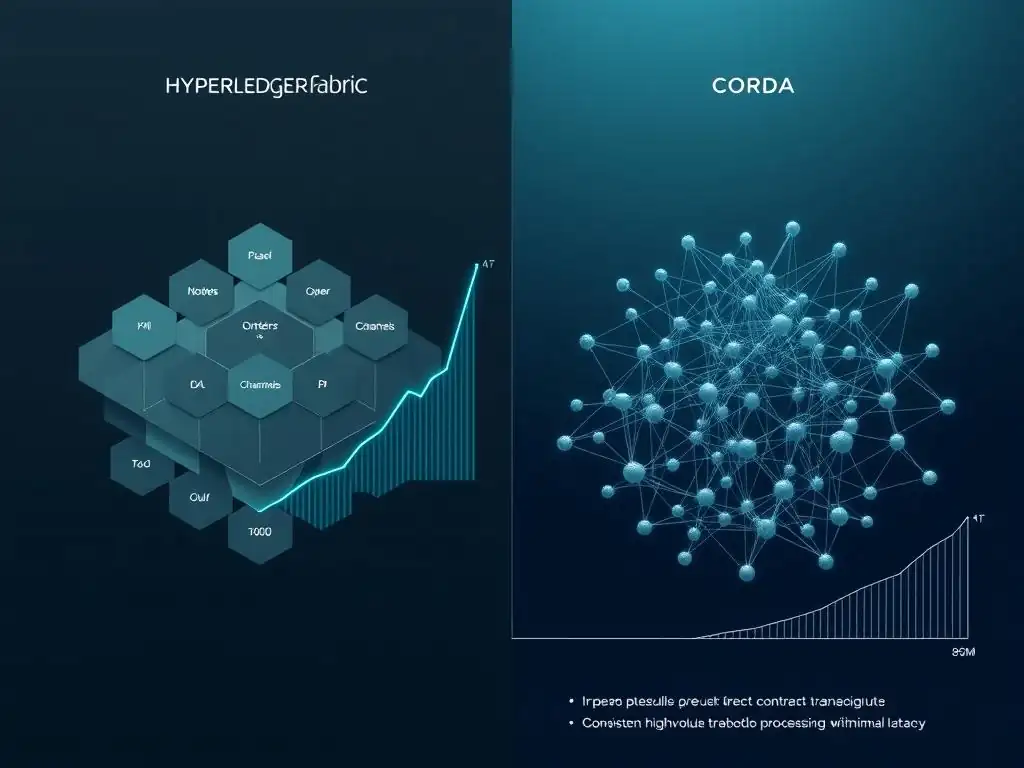
Scalability and performance are crucial for enterprise blockchain platforms to handle real-world transaction volumes. Hyperledger Fabric is designed for scalability through its modular architecture and channels. Channels partition the network, reducing congestion and allowing for parallel transaction processing within different channels. Furthermore, Fabric's pluggable consensus mechanisms enable optimization for different performance characteristics. By choosing appropriate consensus protocols and network configurations, Fabric can achieve high transaction throughput and scalability. Performance benchmarks have demonstrated Fabric's ability to process thousands of transactions per second, making it suitable for demanding enterprise applications.
Corda's scalability approach focuses on efficiency and targeted transaction processing. By involving only the necessary parties and the Notary in each transaction, Corda minimizes network overhead and maximizes efficiency. Corda's architecture is optimized for scenarios where transactions involve specific parties and data privacy is paramount, rather than broad broadcasting of transaction data. While specific performance benchmarks may vary depending on network configuration and use case, Corda is designed to handle significant transaction volumes within its permissioned, privacy-focused architecture. Both platforms are designed for enterprise-grade scalability, but their architectural approaches and optimization strategies differ based on their core design principles.
Interoperability: Connecting with Other Blockchain Networks
Interoperability is increasingly important as blockchain adoption expands and enterprises need to connect with different blockchain networks and legacy systems. Hyperledger Fabric is actively working on interoperability solutions. Hyperledger Labs projects like Weaver are exploring cross-chain communication and interoperability protocols for Fabric, aiming to enable seamless interaction with other blockchain platforms, including public and permissioned networks. Fabric's modular architecture and APIs facilitate integration with external systems and services, enhancing its interoperability capabilities.
Corda is also designed with interoperability in mind. Its architecture facilitates integration with existing systems through standard APIs and protocols. Corda's focus on standards and open interfaces promotes interoperability with both blockchain and traditional systems. Furthermore, R3 is actively involved in interoperability initiatives and collaborations within the blockchain industry. Both Hyperledger Fabric and Corda recognize the importance of interoperability and are actively developing and promoting solutions to enable seamless connectivity between different blockchain networks and the broader IT landscape. The specific interoperability solutions and strategies may evolve as the technology matures and industry standards emerge.
Development Tools and Ecosystem: Richness and Maturity
The richness and maturity of development tools and the ecosystem surrounding a blockchain platform are crucial factors for developer adoption and ease of application development. Hyperledger Fabric benefits from a large and active open-source community under the Linux Foundation. The Hyperledger project provides extensive documentation, SDKs (Software Development Kits) in various languages (Go, Java, Node.js, Python), and command-line tools for developing, deploying, and managing Fabric networks and applications. The Fabric ecosystem includes numerous tools, libraries, and frameworks contributed by the community, fostering a vibrant and growing development environment.
Corda also has a strong and growing ecosystem, supported by R3 and a community of developers and partners. Corda provides comprehensive documentation, SDKs (Java, Kotlin), and development tools, including IntelliJ IDEA plugins and command-line interfaces. R3 offers training programs and support services to help developers build Corda applications.
The Corda ecosystem is particularly strong in the financial services sector, with a focus on building enterprise-grade CorDapps for financial use cases. Both platforms offer mature development tools and ecosystems, but Hyperledger Fabric benefits from a larger, broader open-source community, while Corda has a strong focus on enterprise and financial applications with robust commercial support from R3.
Choosing the Right Enterprise Blockchain: Hyperledger Fabric vs. Corda Platform Selection
Factors to Consider for Platform Selection: Business Requirements and Technical Capabilities
Choosing between Hyperledger Fabric and Corda for an enterprise blockchain solution requires careful consideration of various factors, aligning platform capabilities with specific business requirements and technical constraints. Business requirements are paramount. Define the specific use case, the level of privacy needed, the required transaction throughput, the regulatory environment, and the desired level of decentralization. For instance, if data privacy and regulatory compliance are critical, Corda's "need-to-know" architecture and focus on legal agreements might be advantageous. If high throughput and flexible consensus are priorities, Hyperledger Fabric's modularity and scalability features could be more suitable.
Technical capabilities also play a crucial role. Assess the in-house technical expertise. If the team has strong Java/Kotlin skills and experience in financial systems, Corda might be a more natural fit. If the team has Go expertise and experience with distributed systems, Hyperledger Fabric could be a better choice.
Consider the complexity of setting up and managing each platform. Fabric can be more complex to configure initially, while Corda might require a different set of skills focused on CorDapp development and network management. Furthermore, evaluate the long-term cost implications, including development costs, deployment costs, maintenance costs, and potential licensing fees (for Corda Enterprise). A thorough assessment of both business and technical factors is essential for making an informed platform selection.
Use Case Alignment: Which Platform Best Fits Your Industry?
The specific industry and use case often dictate the most suitable blockchain platform. For supply chain management and industries requiring broad network participation and high throughput, Hyperledger Fabric's scalability and flexible consensus mechanisms make it a strong contender. Fabric's channels can be used to manage private data sharing within supply chain networks, and its modularity allows for customization to specific supply chain requirements. Examples like food traceability and logistics tracking are well-suited for Fabric.
For the financial services industry, particularly use cases involving complex financial instruments, regulatory compliance, and strong data privacy requirements, Corda often emerges as a preferred platform. Corda's focus on legal agreements, "need-to-know" data sharing, and regulatory readiness aligns well with the needs of financial institutions. Use cases like trade finance, syndicated loans, and securities settlement are frequently implemented on Corda. However, it's not a strict industry segregation.
Fabric can also be used in finance, and Corda can be applied outside of finance. The key is to analyze the specific requirements of the use case within the industry. For instance, a permissioned payment network might be well-suited for Corda, while a supply chain finance application within a broader manufacturing ecosystem might be better addressed by Fabric.
Regulatory Considerations: Compliance and Data Governance
Regulatory considerations are paramount, especially for enterprises operating in regulated industries like finance, healthcare, and pharmaceuticals. Corda, with its design principles focused on legal agreements and data privacy, is often perceived as being more inherently aligned with regulatory compliance requirements. Its "need-to-know" data sharing architecture and auditable transactions address key concerns related to data privacy regulations like GDPR and CCPA, and financial regulations like MiFID II. Corda's focus on legal enforceability of smart contracts also aligns with the legal framework in many regulated industries.
Hyperledger Fabric, while not specifically designed for regulatory compliance as its primary focus, can also be configured to meet regulatory requirements. Fabric's privacy features, such as channels and private data collections, can be used to control data access and comply with data privacy regulations. Furthermore, Fabric's auditability and permissioned nature can support regulatory reporting and compliance requirements.
However, achieving regulatory compliance with Fabric might require more careful design and configuration to explicitly address specific regulatory requirements. When regulatory compliance is a critical factor, Corda's inherent design and features often provide a more straightforward path to meeting those requirements, particularly in highly regulated sectors.
Cost Analysis: Development, Deployment, and Maintenance
Cost analysis is a crucial aspect of platform selection, encompassing development, deployment, and ongoing maintenance costs. Hyperledger Fabric, being an open-source project under the Linux Foundation, has no licensing fees associated with the platform itself. This can be a significant cost advantage, particularly for large-scale deployments.
However, development costs for Fabric can be substantial, especially if specialized Go developers are needed, and if the complexity of the use case requires extensive customization and configuration. Deployment costs for Fabric networks can also vary depending on the infrastructure requirements and the chosen deployment model (on-premise, cloud). Maintenance costs for Fabric include ongoing support, updates, and operational management of the network.
Corda, while also open-source at its core (Corda Open Source), has a commercial enterprise edition (Corda Enterprise) with licensing fees. Corda Enterprise offers additional features and support suitable for enterprise deployments. Licensing costs for Corda Enterprise can be a significant factor in the overall cost analysis.
Development costs for Corda applications might be lower if the team has existing Java/Kotlin expertise, and if the use case aligns well with Corda's strengths in financial applications. Deployment costs for Corda networks can also vary, and maintenance costs include ongoing support and potential licensing fees for Corda Enterprise. A comprehensive cost analysis should consider all aspects, including platform licensing (if applicable), development resources, infrastructure, deployment, and long-term maintenance, to determine the most cost-effective solution.
Community Support and Ecosystem Maturity
Community support and ecosystem maturity are important factors in the long-term viability and success of a blockchain platform. Hyperledger Fabric, as a flagship project of the Linux Foundation, benefits from a vast and active open-source community. This large community contributes to ongoing development, provides support through forums and online resources, and fosters a rich ecosystem of tools, libraries, and extensions.
The maturity of the Hyperledger ecosystem is evidenced by its widespread adoption, extensive documentation, and a wealth of community-contributed resources. This strong community support and ecosystem maturity provide assurance of ongoing development, innovation, and readily available resources for developers and organizations using Hyperledger Fabric.
Corda also has a strong and growing community, supported by R3 and a network of partners. While potentially smaller than the broader Hyperledger community, the Corda community is highly focused and active, particularly in the financial services sector. R3 provides commercial support, training, and a robust partner ecosystem, contributing to the maturity and growth of the Corda platform.
Corda's ecosystem is particularly strong in enterprise-grade financial applications, with a focus on providing solutions for regulated industries. Both platforms benefit from active communities and maturing ecosystems, but Hyperledger Fabric boasts a larger, broader open-source community, while Corda has a more focused, enterprise-centric community with strong commercial backing from R3.
Hyperledger Fabric vs. Corda Implementation Strategies: Best Practices
Designing Your Blockchain Network Architecture
Designing an effective blockchain network architecture for Hyperledger Fabric or Corda requires careful planning and consideration of several best practices. For Hyperledger Fabric, network architecture design involves defining organizations (MSPs), channels, peers, and orderers. Best practices include minimizing channel complexity by creating channels only for necessary data segregation, strategically placing endorsing peers for performance and fault tolerance, and choosing an appropriate ordering service configuration (e.g., Raft for production, Solo for development).
Security best practices include robust identity management using MSPs, implementing fine-grained access control policies in chaincode, and securing communication channels using TLS. Scalability should be addressed by designing channels to partition the network and optimizing chaincode performance.
For Corda, network architecture design involves defining network participants (nodes), Notaries, and CorDapps. Best practices include carefully selecting Notary types based on trust assumptions and performance requirements (e.g., validating vs. non-validating Notaries), designing CorDapps with clear and concise flows representing business processes, and ensuring data privacy by minimizing data sharing within CorDapps. Security best practices include securing node infrastructure, implementing robust access control within CorDapps, and utilizing Corda's built-in security features.
Scalability should be considered by optimizing CorDapp flows and potentially using clustered Notaries for high transaction volumes. For both platforms, a well-defined network architecture is crucial for performance, security, and manageability.
Developing Smart Contracts and Business Logic
Developing secure and efficient smart contracts (chaincode in Fabric, CorDapps in Corda) is paramount for successful blockchain implementations. For Hyperledger Fabric, best practices for chaincode development include writing modular and well-documented chaincode in Go, implementing robust error handling and input validation, and adhering to secure coding practices to prevent vulnerabilities. Chaincode should be thoroughly tested using unit tests and integration tests to ensure correctness and security. Performance optimization of chaincode is crucial, especially for high-throughput applications. Utilizing Fabric's APIs effectively and minimizing on-chain computations can improve performance.
For Corda, best practices for CorDapp development include designing clear and legally sound contract states and flows in Java or Kotlin, implementing robust data validation and input sanitization, and adhering to secure coding practices. CorDapps should be thoroughly tested using Corda's testing framework to ensure functional correctness and security. Consideration should be given to CorDapp evolution and upgradeability to accommodate future business changes.
For both platforms, security audits of smart contracts are highly recommended to identify and mitigate potential vulnerabilities before deployment to production. Well-designed and rigorously tested smart contracts are essential for the security and reliability of enterprise blockchain solutions.
Integrating with Existing Enterprise Systems
Integrating blockchain solutions with existing enterprise systems is crucial for seamless adoption and realizing the full potential of blockchain technology. For both Hyperledger Fabric and Corda, integration typically involves using APIs and SDKs to connect blockchain networks with existing databases, applications, and workflows. Best practices for integration include designing robust and secure APIs for data exchange between blockchain and legacy systems, implementing proper authentication and authorization mechanisms for API access, and handling data transformations and mappings between different system formats.
For Hyperledger Fabric, the SDKs in various languages (Java, Node.js, Python, Go) provide tools for interacting with Fabric networks and invoking chaincode functions. Integration strategies might involve building middleware components to bridge Fabric networks with existing enterprise applications. For Corda, the Java and Kotlin SDKs provide tools for interacting with Corda networks and initiating flows within CorDapps. Integration strategies might involve building CorDapp flows that interact with external systems through APIs or message queues. For both platforms, careful planning and design of integration points are essential to ensure seamless data flow, system interoperability, and maintainability of the integrated solution.
Security Considerations and Best Practices
Security is paramount in enterprise blockchain implementations, and robust security practices must be implemented at all levels. For both Hyperledger Fabric and Corda, security considerations include securing the underlying infrastructure (servers, networks, databases), implementing robust identity management and access control, securing smart contracts against vulnerabilities, and protecting cryptographic keys. Best practices for infrastructure security include hardening servers, implementing network segmentation and firewalls, and regularly patching systems. Identity management should be based on strong authentication and authorization mechanisms, using MSPs in Fabric and Corda's identity framework.
Smart contract security requires secure coding practices, thorough testing, and security audits to identify and mitigate vulnerabilities such as reentrancy attacks, denial-of-service vulnerabilities, and data breaches. Cryptographic key management is crucial, involving secure generation, storage, and rotation of keys used for signing transactions and encrypting data. For both platforms, implementing a comprehensive security strategy that addresses infrastructure, identity management, smart contracts, and cryptography is essential for building secure and trustworthy enterprise blockchain solutions. Regular security assessments and penetration testing are recommended to continuously validate and improve security posture.
Future Trends in Enterprise Blockchain: Hyperledger and Corda Evolving
The Future of Hyperledger Fabric: Modularization and Interoperability
The future of Hyperledger Fabric is focused on further enhancing its modularity and interoperability, solidifying its position as a leading enterprise blockchain framework. Modularization will continue to be a key development direction, with ongoing efforts to make Fabric components even more pluggable and interchangeable. This includes further modularizing consensus mechanisms, membership services, and data storage options, providing even greater flexibility for organizations to tailor Fabric to their specific needs. Enhanced modularity will also facilitate easier upgrades and maintenance of Fabric networks, reducing operational complexity.
Interoperability is another major focus area for Hyperledger Fabric's future. Ongoing projects like Hyperledger Weaver are actively exploring cross-chain communication protocols and standards, aiming to enable seamless interaction between Fabric networks and other blockchain platforms, including both permissioned and public blockchains. This will unlock new use cases involving cross-chain asset transfers, data sharing, and collaborative applications spanning multiple blockchain ecosystems. Future Fabric releases are expected to incorporate improved interoperability features, making it easier for enterprises to connect their Fabric networks with the broader blockchain landscape and leverage the benefits of cross-chain interactions.
The Future of Corda: Enhanced Privacy and Scalability
The future of Corda is geared towards enhancing its privacy capabilities and improving scalability, further strengthening its appeal for regulated industries and large-scale enterprise deployments. Enhanced privacy features are continuously being developed and integrated into Corda. This includes advancements in zero-knowledge proofs, secure multi-party computation, and other privacy-enhancing technologies, aiming to provide even more granular control over data privacy and confidentiality within Corda networks. These privacy enhancements will further solidify Corda's position as a platform of choice for use cases demanding the highest levels of data protection and regulatory compliance.
Scalability improvements are also a key focus for Corda's future evolution. Ongoing development efforts are aimed at optimizing Corda's architecture and consensus mechanisms to handle even higher transaction volumes and support larger, more complex networks. This includes exploring sharding techniques, consensus algorithm optimizations, and infrastructure enhancements to improve Corda's scalability and performance for demanding enterprise applications. Future Corda releases are expected to incorporate these scalability improvements, making it even more suitable for large-scale deployments and use cases requiring high transaction throughput in regulated industries.
Interoperability and Cross-Chain Solutions
Interoperability and cross-chain solutions are emerging as a critical trend in the broader enterprise blockchain landscape, impacting both Hyperledger Fabric and Corda. The realization that no single blockchain platform will dominate all use cases is driving the need for seamless communication and data exchange between different blockchain networks. Cross-chain interoperability will enable enterprises to leverage the strengths of different blockchain platforms and create interconnected ecosystems that span multiple blockchain networks. This will unlock new possibilities for cross-organizational collaboration, asset transfers across chains, and composite applications that combine functionalities from different blockchain platforms.
Both Hyperledger Fabric and Corda are actively participating in the development of interoperability standards and solutions. Hyperledger Weaver and Corda's interoperability initiatives are examples of efforts to bridge the gap between different blockchain platforms. Future advancements in cross-chain technologies will likely lead to more seamless and standardized ways for Fabric and Corda networks to interact with each other and with other blockchain ecosystems. This trend towards interoperability will be crucial for realizing the full potential of blockchain technology and creating a more interconnected and collaborative enterprise blockchain landscape.
Blockchain as a Service (BaaS) and Cloud-Based Deployments
Blockchain as a Service (BaaS) and cloud-based deployments are significantly influencing the adoption and accessibility of enterprise blockchain platforms like Hyperledger Fabric and Corda. BaaS offerings from major cloud providers (e.g., AWS, Azure, IBM Cloud) are making it easier for enterprises to deploy and manage blockchain networks without the complexity of setting up and maintaining the underlying infrastructure. BaaS platforms provide pre-configured blockchain environments, simplified deployment tools, and managed services, lowering the barrier to entry for organizations adopting blockchain technology.
Cloud-based deployments are becoming increasingly popular for enterprise blockchain solutions, offering scalability, flexibility, and cost efficiency. Both Hyperledger Fabric and Corda are well-suited for cloud deployments, and BaaS offerings are making it easier for enterprises to leverage cloud infrastructure for their blockchain networks. The trend towards BaaS and cloud-based deployments is expected to accelerate the adoption of enterprise blockchain by making it more accessible, affordable, and easier to manage. This will enable a wider range of organizations to explore and implement blockchain solutions, driving further innovation and growth in the enterprise blockchain space.
Conclusion: Making an Informed Decision on Hyperledger Fabric vs. Corda Platform Selection
Choosing between Hyperledger Fabric and Corda for your enterprise blockchain initiative is a strategic decision with long-term implications. There is no one-size-fits-all answer, and the optimal platform depends heavily on your specific business requirements, technical capabilities, and industry context. Hyperledger Fabric excels in scenarios requiring high throughput, flexible consensus mechanisms, and broad network participation, making it well-suited for supply chain management, asset tracking, and applications where customization and modularity are paramount. Its open-source nature and large community provide a robust and evolving platform.
Corda, on the other hand, shines in use cases demanding strong data privacy, regulatory compliance, and a focus on legal agreements, making it a compelling choice for financial services, insurance, and other regulated industries. Its "need-to-know" architecture and emphasis on legal enforceability align well with the requirements of these sectors. Corda's focus on interoperability also positions it well for interconnected business ecosystems.
Ultimately, the best approach is to thoroughly evaluate your specific needs, carefully compare the strengths and limitations of each platform, and conduct proof-of-concept projects to validate your platform selection. An informed decision, based on a clear understanding of your requirements and the capabilities of Hyperledger Fabric and Corda, will pave the way for a successful enterprise blockchain implementation.
Frequently Asked Questions
How does Hyperledger differ from Corda in its underlying architecture?
Hyperledger projects generally use a more modular approach with different components, allowing for greater flexibility. Corda, on the other hand, is designed specifically for business transactions and uses a UTXO-based model.
Which platform, Hyperledger or Corda, is better suited for highly regulated industries?
Corda is often preferred in highly regulated industries due to its focus on privacy and its ability to restrict data access to only relevant parties. However, certain Hyperledger projects are also adaptable for regulatory compliance.
What are the key differences in consensus mechanisms between Hyperledger and Corda?
Hyperledger projects employ a variety of consensus mechanisms based on the specific project, including Byzantine Fault Tolerance (BFT). Corda uses a validity consensus model where only involved parties validate transactions.
How does the cost of implementing and maintaining a solution differ between Hyperledger and Corda?
Hyperledger projects are generally open-source, reducing initial licensing costs, but implementation can be complex. Corda's commercial license can be expensive, but it offers enterprise support and a more streamlined development experience.
Which platform offers better support for interoperability with existing enterprise systems?
Both platforms offer solutions for interoperability, but the best choice depends on the specific systems. Corda offers built-in interoperability features, while Hyperledger's modularity allows for integrating various interoperability solutions.
The exploration of Hyperledger and Corda reveals more than just a technical comparison; it highlights the fundamental shift towards decentralized trust that is reshaping industries. The nuances of platform selection, from permissioned versus permissionless models to data privacy considerations, are not merely academic exercises but critical decisions that will determine the success of future enterprise blockchain implementations.
The ongoing influence of blockchain technology, and specifically platforms like Hyperledger and Corda, is undeniable. It's a force that's democratizing access to information and redefining the very nature of collaboration. The choice between these platforms, or others emerging in the space, requires a deep understanding of the specific needs and goals of each organization. The key is not to predict the future, but to prepare for it.
- Benjamin Graham. This quote underscores the importance of informed decision-making in this rapidly evolving landscape.
As you consider the potential of blockchain for your own endeavors, remember that the technology itself is only a tool. The real power lies in how you choose to wield it. Reflect on the principles of transparency, security, and collaboration that underpin these platforms, and consider how you can apply them to build a more trustworthy and efficient future for your organization and the world around you.
Unveil Your Enterprise Blockchain Strategy!
Thanks for exploring the world of enterprise blockchains with us! We hope you've gained valuable insights into the strengths and nuances of Hyperledger and Corda. Now, let's put that knowledge into action.
Here are a few steps you can take to move forward:
- Define Your Needs: Identify the specific requirements of your enterprise and choose the blockchain platform that aligns best with your goals. This is the cornerstone of successful blockchain integration.
- Explore Open-Source Projects: Delve into existing Hyperledger or Corda projects on platforms like GitHub to understand practical applications and potential modifications.
- Share Your Insights: Discuss your blockchain journey with colleagues and peers in relevant online forums or communities. You never know whose experiences might offer the perfect solution!
Which use case within your enterprise do you believe would benefit the most from a blockchain solution, and why?
Leave a Reply