
DEX Aggregators: Finding the Best Prices Across Multiple DEXs

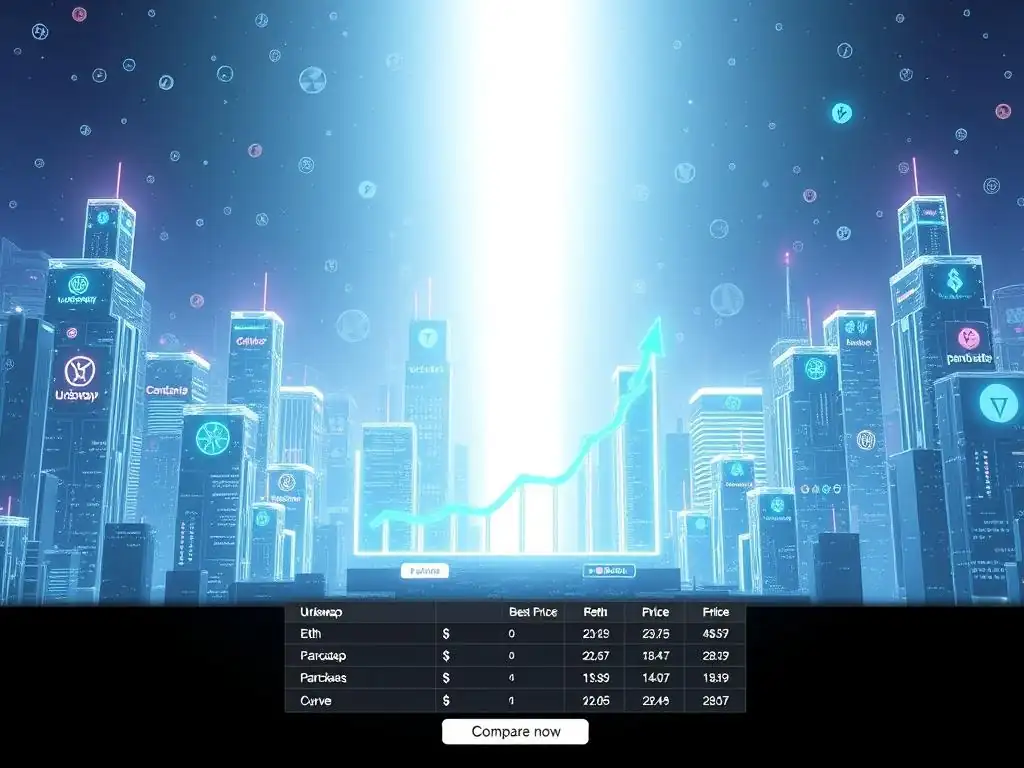
Welcome to Blockchain Trends, your guide to understanding the revolutionary impact of blockchain beyond the hype. Curious about navigating the complex world of Decentralized Finance? Dive into our latest article where we uncover the secrets to achieving the Best DEX price comparison. Unlocking optimal value in the DeFi space starts here – discover how DEX aggregators are changing the game and what it means for your trading strategy. Read on to find out how to get the most out of your decentralized trades!
DEX Aggregators: Optimizing Crypto Trades Across Decentralized Exchanges
- Introduction to DEX Aggregators and Efficient Trade Execution
- How DEX Aggregators Function: In-Depth Analysis
- Advantages of Utilizing a DEX Aggregator for Cryptocurrency Trading
- Prominent DEX Aggregators: Features and Comparative Analysis
- Risks and Mitigation Strategies for DEX Aggregator Usage
- Effective Practices for Leveraging DEX Aggregators
- The Evolution of DEX Aggregation: Emerging Trends and Innovations
- Conclusion: Enhancing DeFi Trading with Aggregators and Price Optimization
- Frequently Asked Questions
- Final Reflection: Empowering Informed Decentralized Finance
- Unlock the Power of Optimal Trading!
Introduction to DEX Aggregators and Efficient Trade Execution
Decentralized Exchanges (DEXs): A Concise Overview
Decentralized Exchanges, or DEXs, represent a fundamental shift in how cryptocurrencies are traded, moving away from centralized intermediaries. Instead of relying on a single entity to hold funds and match buy/sell orders, DEXs operate directly on blockchain networks, utilizing smart contracts to facilitate peer-to-peer transactions. This architecture enhances security and transparency, as users retain control of their private keys and transactions are immutably recorded on the public ledger. The landscape of DEXs has grown exponentially, with platforms like Uniswap, SushiSwap, Curve, and PancakeSwap processing billions of dollars in daily volume across various blockchains.
The rise of Automated Market Makers (AMMs) has been pivotal for many DEXs. AMMs use liquidity pools, funded by users who earn fees, to enable trading. Instead of traditional order books, prices are determined algorithmically based on the ratio of assets within a pool. This model significantly lowers the barrier to creating trading pairs but also leads to liquidity fragmentation. Different DEXs, even on the same blockchain, may have varying amounts of liquidity for the same asset pair, directly impacting the available price and execution quality for traders looking for the best DEX price comparison.
The Challenge: Price Discrepancies Across DEXs
The proliferation of DEXs, while offering diverse trading options, has created a significant challenge: liquidity fragmentation. A single cryptocurrency pair, like ETH/USDT, might be available for trading on dozens of different DEXs simultaneously. Each of these platforms holds varying amounts of liquidity for that pair, influenced by the total value locked (TVL) in their respective pools and recent trading activity. This fragmentation means that the exchange rate offered for a specific trade size can differ substantially from one DEX to another at any given moment.
Furthermore, executing a large trade on a single DEX's liquidity pool can lead to significant price impact, also known as slippage. The larger the trade relative to the pool size, the more the price moves against the trader. This occurs because AMM algorithms adjust the price based on the withdrawal and deposit of assets during a trade.
For traders seeking the best DEX price comparison and optimal execution, manually checking multiple DEXs for the lowest price and sufficient liquidity is not only time-consuming but also impractical, especially in volatile markets where prices change rapidly. Identifying the true optimal price requires a sophisticated approach that considers all available liquidity sources.
DEX Aggregators: Addressing Price Discovery and Execution
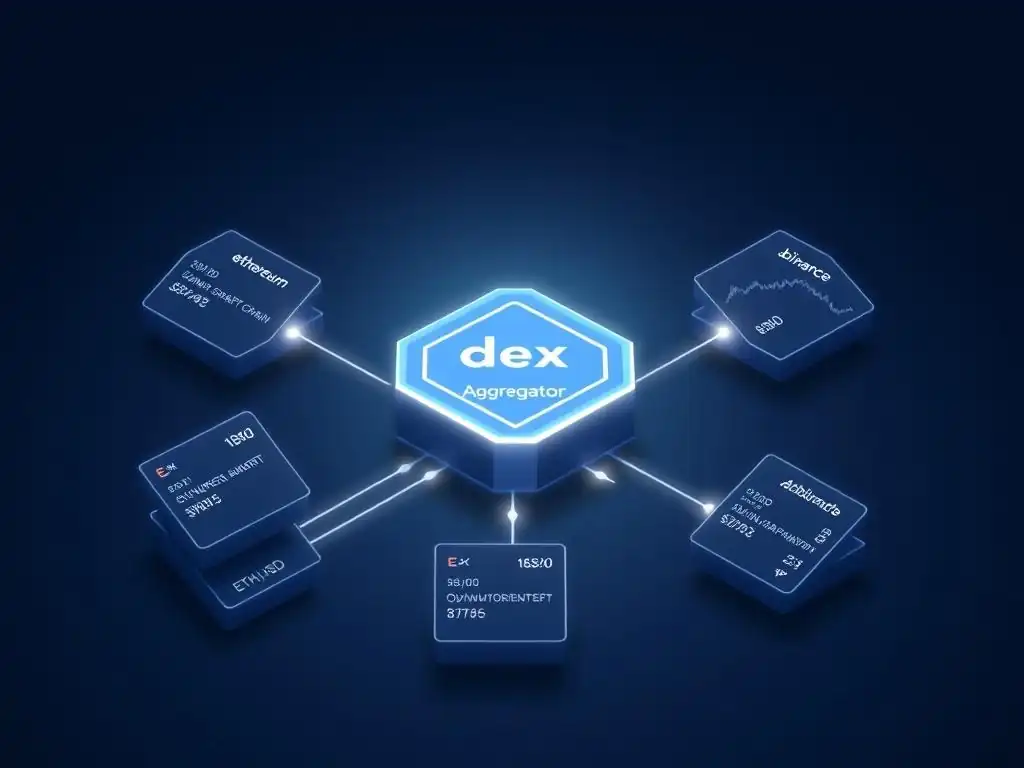
DEX aggregators emerged precisely to solve the problems of liquidity fragmentation and inefficient price discovery. These platforms act as a single interface that scans multiple decentralized exchanges simultaneously to find the optimal price for a requested trade. By querying numerous liquidity sources across the DeFi ecosystem – potentially over 100 different DEXs on major chains like Ethereum and Binance Smart Chain – aggregators provide users with a comprehensive best DEX price comparison engine.
Beyond simply identifying the lowest price on a single DEX, aggregators employ sophisticated algorithms to split large orders across multiple exchanges and liquidity pools. This "smart order routing" minimizes price impact and slippage, often resulting in better overall execution than trading on just one platform. For instance, a large trade might be split into smaller chunks, executed on Uniswap, SushiSwap, and Curve simultaneously, ensuring the trader gets the most favorable average price. This functionality is crucial for achieving efficient trading and maximizing capital efficiency in the fragmented DEX landscape.
How DEX Aggregators Function: In-Depth Analysis
Aggregating Liquidity from Diverse DEX Sources
The core function of a DEX aggregator is to consolidate liquidity information from a wide array of decentralized exchanges. This process involves connecting to the smart contracts or APIs of numerous DEX protocols operating on one or more blockchain networks. On Ethereum, for example, an aggregator might pull data from Uniswap V2, Uniswap V3, SushiSwap, Curve, Balancer, KyberSwap, and many others. As of late 2023, major aggregators often connect to 50-100+ different liquidity sources on a single chain to ensure comprehensive coverage for best DEX price comparison.
This aggregation process is dynamic and real-time. As liquidity levels and prices fluctuate across the connected DEXs, the aggregator continuously updates its view of the market. When a user requests a trade for a specific asset pair and amount, the aggregator's engine instantly analyzes the available liquidity on all integrated platforms. This comprehensive scan allows it to identify potential trade routes and price points that a user manually checking individual DEXs would likely miss, providing a superior foundation for finding the optimal price.
Smart Order Routing: Identifying the Optimal Trade Pathway
Once the aggregator has gathered liquidity data from various sources, its smart order routing algorithm takes over. This is the engine that determines the most efficient way to execute the user's trade to achieve the optimal price with minimal slippage. The algorithm considers factors such as the current price on each DEX, the depth of liquidity pools, estimated gas costs for interacting with different protocols, and the size of the user's trade.
For larger trades, the routing algorithm is particularly valuable. It can determine that splitting a single large trade into smaller portions and executing each portion on a different DEX or even through a sequence of swaps (e.g., Token A to Token B on DEX X, then Token B to Token C on DEX Y) will result in a better overall execution price than performing the entire trade on a single platform.
This complex calculation is performed within milliseconds, presenting the user with the most favorable trade path found across the aggregated liquidity, effectively acting as a sophisticated best DEX price comparison and execution tool.
Gas Optimization Strategies Implemented by DEX Aggregators
While finding the optimal price is paramount, the cost of executing a trade on a blockchain, particularly gas fees on networks like Ethereum, can significantly impact the final profitability. DEX aggregators often incorporate gas optimization strategies into their routing algorithms. Different DEX protocols have varying gas costs associated with their swap functions, and the complexity of the chosen trade path (e.g., splitting an order across multiple DEXs or using multi-hop swaps) can also affect the total gas required.
Aggregators analyze these factors when calculating the optimal price and trade route. Some may prioritize routes that offer slight price concessions if they result in significantly lower gas fees, ultimately providing a better net outcome for the user. Others might bundle multiple swaps within a single transaction where possible, reducing the base transaction cost. While gas costs remain a factor inherent to blockchain usage, aggregators strive to minimize their impact on the final execution price, contributing to a more efficient trading experience.
Slippage Management and Price Impact Mitigation
Slippage is the difference between the expected price of a trade and the price at which it is actually executed. It occurs when the price of an asset changes between the time an order is submitted and the time it is confirmed on the blockchain. On DEXs, significant slippage can occur due to low liquidity or large trade sizes relative to the pool depth, leading to substantial price impact. DEX aggregators are designed to actively mitigate this.
By splitting large orders and routing them through various liquidity pools, aggregators dilute the price impact that a single large order would have on a single pool. If a user wants to swap $1 million worth of ETH for DAI, executing this on a single DEX with limited DAI liquidity might push the DAI price up significantly.
An aggregator would split this $1 million trade across potentially five or more different DEXs, accessing deeper overall liquidity and reducing the price movement caused by the trade on any single platform. This smart distribution is a key factor in achieving superior trade execution and ensures users get closer to the optimal price identified by the best DEX price comparison.
Advantages of Utilizing a DEX Aggregator for Cryptocurrency Trading
Competitive Pricing: Minimizing Transaction Expenses
One of the most significant advantages of using a DEX aggregator is the assurance of accessing the most competitive pricing available across decentralized markets. By scanning numerous DEXs simultaneously, aggregators identify the liquidity pools offering the absolute optimal price for a given trade at that moment. This eliminates the need for manual comparison and the risk of missing a better rate available elsewhere.
For example, a token swap might be priced 1% better on a less-known DEX with sufficient liquidity than on a popular one. An aggregator will find this better price and route the trade accordingly. Over multiple trades, especially for active traders or larger transaction sizes, these small percentage differences accumulate into substantial savings, directly contributing to lower transaction expenses and demonstrating the value of a comprehensive best DEX price comparison.
Enhanced Efficiency: Simplifying the Trading Workflow
DEX aggregators dramatically simplify the trading workflow within the decentralized finance ecosystem. Instead of navigating to individual DEX websites, connecting wallets repeatedly, and manually comparing rates, a user interacts with a single interface. This streamlined process saves considerable time and effort, making DeFi trading more accessible and less cumbersome.
The entire process, from entering the desired trade parameters to receiving the optimal price quote and executing the swap, occurs within one platform. This efficiency is particularly beneficial in fast-moving markets where quick execution is crucial to lock in favorable prices. Aggregators abstract away the complexity of interacting with multiple protocols, presenting a unified and efficient trading experience.
Expanded Access: Tapping into Extensive Liquidity Pools
By aggregating liquidity from numerous sources, aggregators provide users with access to significantly deeper liquidity than any single DEX can offer. This is particularly important for trading less common altcoins or executing large-volume trades of more popular assets. Accessing broader liquidity minimizes the risk of insufficient funds in a single pool halting a trade and ensures that even substantial orders can be potentially filled.
Access to extensive liquidity pools also contributes to better price discovery. With a wider view of the market, the aggregator can identify the optimal price points and trade routes that leverage the combined depth of liquidity across the ecosystem. This expanded access is crucial for achieving efficient trading outcomes, especially when seeking the best DEX price comparison for larger trades.
Reduced Slippage: Achieving Superior Price Execution
As discussed earlier, one of the core benefits of smart order routing is the reduction of slippage. By splitting large trades across multiple liquidity pools, aggregators minimize the price impact on any single pool, leading to a better average execution price for the user. This is particularly vital for large-volume traders who would otherwise face significant losses due to slippage when using a single DEX.
For instance, a trade of $50,000 might incur 1% slippage on a single DEX pool with $500,000 TVL. An aggregator, by splitting this trade across pools totaling $5 million TVL, might reduce the effective slippage to 0.2%, resulting in hundreds of dollars in savings on just one trade. This ability to achieve superior price execution by mitigating slippage is a key differentiator and a primary reason traders use aggregators for the best DEX price comparison.
Prominent DEX Aggregators: Features and Comparative Analysis
1inch: A Top-Tier Aggregator in DeFi Space
1inch is one of the most well-known and widely used DEX aggregators in the DeFi ecosystem. Launched in 2019, it quickly gained traction for its sophisticated Pathfinder algorithm, which finds the most efficient swapping routes across numerous DEXs on multiple blockchain networks, including Ethereum, Binance Smart Chain, Polygon, and others. 1inch aggregates liquidity from a vast number of sources, often citing connectivity to over 100 different DEXs on major chains, providing extensive coverage for best DEX price comparison.
Key features of 1inch include its Limit Order protocol, allowing users to place orders at specific prices without gas fees until the order is filled, and the Chi Gastoken, designed to offset gas costs (though its effectiveness has varied with network conditions). 1inch has processed significant transaction volume since its inception, reportedly exceeding hundreds of billions of dollars in cumulative volume, solidifying its position as a major player for efficient trading and optimal price discovery.
ParaSwap: Advanced Routing for Liquidity Aggregation
ParaSwap is another prominent DEX aggregator focused on providing optimal swap rates and efficient trading. It operates across several chains, including Ethereum, Polygon, Binance Smart Chain, Avalanche, and Fantom. ParaSwap's routing algorithm, known as the ParaSwapPool, is designed to find complex multi-hop routes and split orders effectively across integrated DEXs like Uniswap, Aave, Compound, and numerous others, aiming for the optimal price.
ParaSwap emphasizes gas efficiency and aims to reduce transaction costs for users. It provides a user-friendly interface and also offers developer APIs for integration into other DeFi applications. While specific cumulative volume figures are less frequently publicized than some competitors, ParaSwap is recognized for its robust routing capabilities and commitment to accessing diverse liquidity sources for effective best DEX price comparison.
Matcha: User-Centric Aggregator Powered by 0x
Matcha is a DEX aggregator developed by 0x Labs, leveraging the 0x protocol's infrastructure. It distinguishes itself with a user-centric interface designed for ease of use, often resembling traditional centralized exchange platforms. Matcha aggregates liquidity not only from AMM-based DEXs but also from 0x-powered order books, offering a different dimension to liquidity aggregation and best DEX price comparison.
Operating on multiple chains like Ethereum, Polygon, and others, Matcha focuses on providing a simple yet powerful trading experience. Its integration with the 0x network allows it to tap into liquidity pools and professional market makers utilizing the 0x protocol, potentially offering unique trading opportunities and contributing to finding the optimal price. While it might aggregate from a slightly different mix of sources compared to other aggregators, its focus on user experience and 0x integration makes it a notable player.
Jupiter: A Solana-Based DEX Aggregator
Jupiter stands out as a leading DEX aggregator specifically built for the Solana blockchain. Given Solana's unique architecture and different set of DEXs (like Serum, Raydium, Orca, Saber), aggregators designed for EVM chains cannot operate there directly. Jupiter aggregates liquidity from major Solana-based DEXs to provide users with the best DEX price comparison and optimal price execution within that ecosystem.
Jupiter's routing engine is optimized for Solana's high throughput and low transaction costs. It facilitates efficient trading of tokens on Solana by splitting orders and finding the best paths across the chain's fragmented liquidity landscape. As the Solana DeFi ecosystem grows, Jupiter plays a crucial role in providing users with efficient trading and access to deep liquidity, demonstrating the need for specialized aggregators on different blockchain networks.
Risks and Mitigation Strategies for DEX Aggregator Usage
Smart Contract Vulnerabilities and Security Assessments
While DEX aggregators provide significant benefits, using them involves interacting with smart contracts, which are inherently susceptible to vulnerabilities. The aggregator's own smart contracts, responsible for executing the complex multi-DEX swaps, could potentially contain bugs or exploits. Furthermore, the user's transaction interacts with the smart contracts of the underlying DEXs chosen by the aggregator's routing algorithm, introducing exposure to vulnerabilities in those protocols as well.
Mitigation involves several layers. Users should primarily use well-established aggregators that have undergone rigorous security audits by reputable firms. Checking for audit reports and the aggregator's track record is crucial. Additionally, using hardware wallets adds a layer of security by requiring physical confirmation for transactions. While the risk isn't zero, opting for audited and widely used platforms significantly reduces exposure to smart contract risks when seeking the best DEX price comparison.
Gas Fee Variability and Transaction Cost Management
Gas fees on certain blockchains, most notably Ethereum, can be highly volatile and unpredictable. While aggregators attempt gas optimization, the final gas cost for a complex trade involving multiple DEXs can sometimes be higher than a simple swap on a single DEX. High network congestion can drive gas prices up dramatically, potentially making a trade economically unviable or leading to failed transactions if insufficient gas is provided.
Users can mitigate this by monitoring network conditions before executing trades. Using tools that provide real-time gas price estimates is advisable. Some aggregators offer options to adjust gas limits, allowing users to set a maximum they are willing to pay, though setting it too low can lead to failed transactions. Understanding that the quoted price from an aggregator is the exchange rate, and the gas fee is a separate, variable cost is essential for effective transaction cost management.
Front-Running Vulnerabilities and MEV Mitigation
Front-running is a form of Miner Extractable Value (MEV) where malicious actors or bots detect pending transactions (like a large swap from an aggregator) in the transaction pool (mempool) and execute their own transaction just before it to profit from the resulting price movement. For example, a bot might see a large buy order for Token X, quickly buy Token X itself, and then sell it back after the large order pushes the price up. This can lead to worse execution prices for the original trader, impacting the optimal price they were aiming for.
Some DEX aggregators have implemented MEV protection strategies. This can include sending transactions directly to miners via private relays, bypassing the public mempool where front-running bots operate. Users should look for aggregators that offer MEV protection features. Additionally, breaking very large trades into smaller ones executed at different times can also help reduce the attractiveness of a transaction to front-running bots, contributing to more efficient trading.
Understanding Temporary Loss in Liquidity Providing
While not a direct risk of using an aggregator to swap, it's relevant for users who might also provide liquidity to the underlying DEXs. Providing liquidity exposes users to temporary loss (often called impermanent loss), which is the difference in value between holding tokens in a liquidity pool versus simply holding them in a wallet. When the price ratio of tokens in a pool changes significantly, liquidity providers may end up with a lower dollar value than if they had just held the initial assets.
This risk is not mitigated by using an aggregator for trading; it's a risk inherent to providing liquidity on AMM DEXs. Users considering providing liquidity should understand how temporary loss works and evaluate the potential returns from trading fees against this risk. While aggregators help traders get the best DEX price comparison, they don't remove the risks associated with providing the liquidity that makes those swaps possible.
Effective Practices for Leveraging DEX Aggregators
Setting Optimal Slippage Parameters
Slippage tolerance is a setting in most DEX interfaces, including aggregators, that determines the maximum percentage difference a user is willing to accept between the quoted price and the executed price. Setting this parameter too low can cause transactions to fail if the price moves even slightly. Setting it too high exposes the user to significant negative price swings. Finding the right balance is key for efficient trading.
For stablecoin swaps or highly liquid pairs, a low slippage tolerance (e.g., 0.1% or 0.5%) might be appropriate. For less liquid pairs or during volatile periods, a higher tolerance (e.g., 1% or 3%) might be necessary to ensure the transaction goes through. Aggregators often suggest a default slippage based on market conditions and the trade route, but users should understand how to adjust it based on their risk tolerance and the specific asset pair they are trading to achieve the best DEX price comparison possible under prevailing conditions.
Monitoring Network Congestion and Gas Costs
As highlighted under risks, fluctuating gas costs can significantly impact the final cost of a trade, even when using an aggregator to find the optimal price. Before initiating a trade, particularly on networks like Ethereum during peak hours, it is wise to check the current gas prices. Tools like Etherscan's gas tracker or integrated features within aggregator interfaces can provide this information.
Executing trades during periods of lower network activity (e.g., off-peak hours for global markets) can often result in substantially lower gas fees. While an aggregator helps find the best DEX price comparison for the asset swap itself, managing the transaction cost requires awareness of the underlying network's state. Factor in potential gas costs when evaluating the overall efficiency of a trade found by the aggregator.
Researching Underlying DEX Protocols
While aggregators abstract away the need to interact directly with multiple DEXs, it is still beneficial for users to have a basic understanding of the underlying protocols being used for their trades. Different DEXs have different fee structures, AMM models (e.g., constant product, stable swap), and risk profiles. Knowing which DEXs an aggregator is routing through can provide insight into potential fee implications or specific protocol risks.
Aggregators typically display the trade route, showing which DEXs and pools are being utilized. Taking a moment to recognize these protocols can enhance a user's understanding of their transaction. This knowledge is part of being a more informed participant in the DeFi ecosystem, even when relying on tools that provide the best DEX price comparison and automated routing.
Utilizing Limit Orders for Precise Execution
Some advanced DEX aggregators offer limit order functionality. Unlike market orders, which execute immediately at the optimal price found at that moment, limit orders allow users to set a specific price at which they want their trade to be executed. The order remains open until the market price reaches the specified limit or the order expires.
Utilizing limit orders via an aggregator can be an effective practice for traders who are not in a hurry and want to ensure they only trade at a highly specific, favorable price. This feature enhances the ability to achieve the best DEX price comparison by waiting for the market to meet the desired price point, rather than accepting the immediate best available price, although there is no guarantee the order will fill.
The Evolution of DEX Aggregation: Emerging Trends and Innovations
Cross-Chain Aggregation: Unifying Liquidity Across Blockchains
The current landscape sees DEXs and their aggregators largely siloed within specific blockchain networks. A trader on Ethereum cannot easily swap tokens with liquidity residing on Binance Smart Chain or Solana without using a bridge, which adds steps, cost, and risk. Cross-chain aggregation is an emerging trend aiming to unify liquidity across disparate blockchains.
This innovation involves complex technologies like cross-chain bridges and potentially atomic swaps, allowing an aggregator to find the optimal price by considering liquidity available on multiple chains simultaneously. While still in relatively early stages, successful cross-chain aggregation would dramatically expand the total addressable liquidity, providing traders with an even broader best DEX price comparison and potentially unlocking new levels of capital efficiency across the entire crypto ecosystem.
Integration with Layer-2 Solutions for Scalability
Scalability remains a significant challenge for many blockchains, particularly Ethereum Layer 1, leading to high gas fees and slow transaction times during peak congestion. Layer-2 scaling solutions (like Optimistic Rollups, zk-Rollups, and Validiums) offer faster, cheaper transactions by processing them off-chain before submitting compressed data back to Layer 1. As more trading activity moves to Layer-2, DEX aggregators are evolving to integrate with these solutions.
Aggregating liquidity within Layer-2 networks (e.g., aggregating DEXs on Arbitrum or Optimism) is already happening. The next step involves aggregators seamlessly routing trades between Layer-1 and various Layer-2 solutions, or even between different Layer-2s, to find the absolute optimal price and execution path, minimizing both slippage and gas costs by leveraging the efficiency of Layer-2s. This integration is crucial for the future of efficient trading in a multi-layered blockchain world.
Sophisticated Order Types and Trading Algorithms
As the DeFi market matures, there is increasing demand for more sophisticated trading tools beyond simple market and limit orders. Future DEX aggregators are likely to incorporate more advanced order types commonly found on centralized exchanges, such as stop-loss orders, take-profit orders, and potentially even algorithmic trading strategies.
These features would provide traders with greater control over their positions and risk management within the decentralized environment. Implementing such complex order types via smart contracts on a decentralized network, while aggregating liquidity for the best DEX price comparison, presents technical challenges but represents a significant step towards making decentralized trading platforms as functional and powerful as their centralized counterparts.
Predictive Analytics for Optimal Trade Routing
Current aggregators primarily rely on real-time data to determine the optimal price and trade route. Emerging innovations could see aggregators incorporating predictive analytics. By analyzing historical data, current market trends, and mempool activity, aggregators might attempt to predict short-term price movements or gas cost fluctuations to optimize trade execution proactively rather than just reactively.
While challenging to implement accurately in volatile markets, predictive analytics could potentially enable aggregators to route trades in anticipation of better prices becoming available on certain pools or to time transactions to avoid temporary spikes in gas fees. This would add another layer of intelligence to the best DEX price comparison process, aiming for even more efficient trading outcomes based on forward-looking insights.
Conclusion: Enhancing DeFi Trading with Aggregators and Price Optimization
The Impact of Aggregation on Decentralized Finance
DEX aggregators have had a profound impact on the decentralized finance landscape. They have transformed the user experience from navigating a fragmented collection of individual exchanges to interacting with a single, intelligent platform capable of sourcing liquidity from across the ecosystem. This has made DeFi trading more accessible, efficient, and cost-effective for a wider range of users.
By solving the critical problem of liquidity fragmentation and enabling best DEX price comparison across numerous sources, aggregators ensure traders consistently get closer to the optimal price for their swaps. This not only benefits individual users through reduced costs and improved execution but also contributes to the overall health and efficiency of the DeFi market by connecting disparate liquidity pools and facilitating smoother capital flow.
Selecting the Appropriate Aggregator for Specific Needs
With multiple DEX aggregators available, selecting the appropriate one depends on individual needs and preferences. Factors to consider include the blockchain networks supported by the aggregator (e.g., Ethereum, Solana, Polygon), the number and type of DEXs it aggregates liquidity from (AMMs, order books), the sophistication of its routing algorithm, the user interface design, and the availability of features like limit orders or MEV protection.
Traders should compare the execution prices offered by different aggregators for typical trade sizes and asset pairs they plan to use. Checking their reputation, security audits, and community feedback is also advisable. While many provide best DEX price comparison, their specific strengths and integrated liquidity sources can vary, making a personalized assessment valuable for efficient trading.
Capitalizing on the Future of DeFi Trading with Advanced Price Discovery
The evolution of DEX aggregation, with trends like cross-chain capabilities, Layer-2 integration, and sophisticated order types, points towards a future of even more seamless and powerful decentralized trading. These advancements will continue to enhance price discovery and execution, further closing the gap between decentralized and centralized trading platforms in terms of functionality and efficiency.
Users who leverage DEX aggregators are positioning themselves to capitalize on the ongoing advancements in DeFi trading. By utilizing these tools for best DEX price comparison and optimal price execution, traders can navigate the complexities of the decentralized market with greater confidence, efficiency, and potentially better returns, staying ahead in the dynamic world of decentralized finance.
Frequently Asked Questions
What is a DEX Aggregator and why is it important?
A DEX Aggregator is a platform that collects price data from multiple Decentralized Exchanges (DEXs) to find the best possible price for a token swap. This is important because it saves users time and money by avoiding the need to manually check each DEX.
How does a DEX Aggregator help me find the best DEX price comparison?
DEX Aggregators use algorithms to compare prices across various DEXs, factoring in slippage and gas fees, to present the optimal trade route. This ensures users get the most tokens for their money, offering a comprehensive price comparison.
What factors should I consider when choosing a DEX Aggregator?
Consider factors like the number of supported DEXs, the user interface, the fees charged (if any), and the aggregator's security reputation. These elements significantly impact the overall trading experience.
Are DEX Aggregators safe to use?
While DEX Aggregators can offer better prices, it's crucial to research their security measures. Look for aggregators with audited smart contracts and a proven track record to minimize risks.
How do DEX Aggregators contribute to the broader adoption of DeFi?
By streamlining the trading process and finding the best DEX price comparison, DEX Aggregators make DeFi more accessible and user-friendly. This encourages greater participation and contributes to the growth of the decentralized finance ecosystem.
Final Reflection: Empowering Informed Decentralized Finance
The exploration of DEX aggregators and their ability to provide best DEX price comparison is not merely a technical analysis; it's a crucial step towards democratizing access to decentralized finance. In a landscape often characterized by fragmentation and complexity, these tools empower users to navigate the intricacies of multiple DEXs, ensuring they secure the most favorable rates and maximize their investment potential. This accessibility is paramount in fostering wider adoption and building a more equitable financial ecosystem.
The impact of DEX aggregators extends far beyond simple price discovery. They represent a shift towards a more user-centric approach in DeFi, prioritizing efficiency and transparency. Personally, I believe this evolution is essential for the long-term sustainability of the decentralized movement, as it lowers the barrier to entry for newcomers and empowers experienced traders alike. The beauty of DeFi is that it's open to everyone, but that also means it's up to us to build tools that make it accessible and understandable.
This sentiment underscores the vital role DEX aggregators play in shaping a more inclusive and user-friendly DeFi experience.
As we move forward, let us not only appreciate the technological advancements of DEX aggregators but also embrace the underlying principle of informed decision-making. Consider how you can leverage these tools to navigate the decentralized landscape with greater confidence and efficiency. Explore the options, compare the prices, and empower yourself to make the best choices for your financial future. The power to optimize your DeFi experience is now in your hands – use it wisely and contribute to a more transparent and equitable financial world.
Okay, I'm ready to write a Call to Action for an article titled "DEX Aggregators: Finding the Best Prices Across Multiple DEXs" for the website Blockchain Trends (blockchaintrends.org). Here's the CTA:
Unlock the Power of Optimal Trading!
Thank you for exploring the world of DEX aggregators and discovering how they can optimize your crypto trading experience. You now have the knowledge to navigate the decentralized exchange landscape and secure the best possible prices. Ready to put that knowledge to work?
Here's how you can take action now:
- Start using a DEX aggregator! Compare a recent trade you made on a single DEX through an aggregator and see how much you could have saved.
- Delve deeper! Research the gas optimization techniques employed by different aggregators to further refine your trading strategy.
- Share your insights! Spread the word about DEX aggregators and their benefits by discussing this article with fellow crypto enthusiasts on social media.
What unexpected savings have you discovered using a DEX aggregator, and how has it changed your approach to DeFi trading?
Leave a Reply