
The Sweet Spot of DeFi: Maximizing Returns with Yield Farming Strategies


Welcome to Blockchain Trends, your compass in the ever-evolving world of decentralized technologies. Are you ready to unlock the full potential of DeFi? Dive in and discover the lucrative, yet complex, landscape of yield farming. This week, we're exploring the sweet spot of DeFi: uncovering effective yield farming strategies that can help you maximize your returns. Curious how to navigate the risks and rewards? Keep reading to find out!
- The Sweet Spot of DeFi: Maximizing Returns with Yield Farming Strategies
- Identifying High-Yield Opportunities: Navigating the DeFi Landscape
- Advanced Yield Farming Strategies for Maximizing DeFi Returns
- Risk Management in DeFi Yield Farming: Protecting Your Investments
- Comparing Different Yield Farming Platforms: A Detailed Analysis
- Tools and Resources for Effective DeFi Yield Farming
- Tax Implications of DeFi Yield Farming: Navigating the Regulatory Landscape
- The Future of Yield Farming: Trends and Innovations to Watch
- Conclusion: Mastering Yield Farming Strategies for DeFi Success
-
Frequently Asked Questions
- What are the foundational principles of yield farming in DeFi?
- How does yield farming differ from traditional staking methods?
- What are some common yield farming strategies in DeFi?
- What are the primary risks associated with yield farming?
- How can I effectively manage risk while yield farming in DeFi?
- Final Reflection: Cultivating a Future of Financial Empowerment
- Unlock Your DeFi Potential: Start Yield Farming Today!
The Sweet Spot of DeFi: Maximizing Returns with Yield Farming Strategies
What is DeFi Yield Farming and How Does it Work?
DeFi yield farming is a process where cryptocurrency holders deposit their assets into decentralized finance (DeFi) protocols to earn rewards. Essentially, participants lock up their crypto in liquidity pools or lending protocols, contributing to the platform's functionality and receiving incentives, typically in the form of additional tokens. This mechanism allows users to generate passive income on their holdings, often resulting in significantly higher annual percentage yields (APYs) or annual percentage rates (APRs) compared to traditional finance options.
The core mechanic involves users providing liquidity to decentralized exchanges (DEXs) or lending protocols. By depositing token pairs into a liquidity pool on a platform like Uniswap or PancakeSwap, users facilitate trading for others and earn a portion of the transaction fees. Additionally, many protocols distribute their native governance tokens as a further incentive to liquidity providers, effectively bootstrapping their ecosystems and distributing ownership. These yield farming strategies DeFi can be complex, requiring active management to optimize returns.
Key Concepts in Yield Farming: Liquidity Pools, AMMs, and Token Staking
Liquidity pools are fundamental to most yield farming strategies DeFi. They are collections of two or more tokens locked in a smart contract, used to facilitate trading on decentralized exchanges. For example, a common pool might contain ETH and USDC. Users deposit equal value of each token into the pool, becoming liquidity providers (LPs). These pools are managed by Automated Market Makers (AMMs), algorithmic systems that determine asset prices within the pool based on the ratio of tokens, removing the need for traditional order books. Prominent AMM protocols include Uniswap, SushiSwap, and Curve Finance, each employing slightly different algorithms.
Token staking is another critical concept within yield farming strategies DeFi, though it can sometimes be distinct from providing liquidity to an AMM pool. Staking typically involves locking a single asset, often the protocol's native token or a proof-of-stake (PoS) blockchain's native asset, to support network operations, secure the blockchain, or participate in governance. Rewards are distributed from transaction fees, inflation, or dedicated reward pools. While technically different from providing liquidity in an AMM pool, staking is frequently integrated into broader yield farming ecosystems, allowing users to stake LP tokens earned from providing liquidity to earn further rewards.
Risks Associated with DeFi Yield Farming: Impermanent Loss and Smart Contract Vulnerabilities
One of the most significant risks in yield farming strategies DeFi, particularly when providing liquidity to AMM pools, is impermanent loss. This occurs when the price ratio of the tokens in a liquidity pool changes after you deposit them. The larger the price divergence between the deposited assets, the greater the impermanent loss.
While you still hold your share of the pool, the total value of your assets upon withdrawal might be less than if you had simply held the original tokens outside the pool. For instance, if ETH price doubles relative to USDC after you deposit into an ETH/USDC pool, you will end up with more USDC and less ETH than you started with, and the total dollar value might be less than if you had just held the initial amount of ETH and USDC.
Beyond impermanent loss, smart contract vulnerabilities pose a substantial risk to yield farming strategies DeFi. DeFi protocols are built on smart contracts, which are code executed on a blockchain. If these contracts contain bugs or security flaws, they can be exploited by malicious actors, leading to the loss of deposited funds. The DeFi space has seen numerous exploits, with billions of dollars lost across various protocols in recent years due to unaudited or poorly coded smart contracts. While many reputable protocols undergo extensive audits, the risk of a zero-day exploit or unforeseen vulnerability remains.
Evaluating DeFi Protocols for Yield Farming Potential
Identifying promising yield farming strategies DeFi requires careful evaluation of various protocols. Not all DeFi platforms offer sustainable or genuinely high yields. A key factor is the protocol's underlying mechanism for generating returns – is it from trading fees, lending interest, token inflation, or a combination? Protocols with established user bases and significant trading volume (for DEXs) or borrowing demand (for lending platforms) tend to offer more sustainable fee-based or interest-based yields. Newer protocols might offer extremely high token-based rewards initially to attract liquidity, but these yields can plummet rapidly as more farmers join or the token price drops.
Furthermore, examining the protocol's history, team, and community is crucial. Has the protocol been audited multiple times by reputable firms? Is the team public and experienced? Does the community seem active and engaged? These factors can indicate the reliability and long-term potential of the platform. While high APY figures plastered on a website are enticing, they should be viewed critically. Understanding the source of the yield and the potential risks is far more important than chasing the highest advertised number when implementing yield farming strategies DeFi.
Analyzing Tokenomics and Reward Mechanisms for Optimal Returns
Analyzing the tokenomics of the reward token is paramount when considering yield farming strategies DeFi. What is the total supply of the token? How quickly is it being emitted to farmers? What is the token's utility beyond farming rewards (e.g., governance, fee discounts, staking for other rewards)? Protocols that simply print tokens to reward farmers without a clear plan for token utility or demand can experience significant token price depreciation, potentially negating the value of the high APY.
Optimal yield farming strategies DeFi often involve protocols where the reward token has strong utility or a clear value accrual mechanism. For example, a token that grants voting rights on significant protocol changes and earns a share of protocol revenue might be more sustainable than a token solely used for farming incentives. Understanding the emission schedule – how many tokens are distributed over time – is also vital. High initial emissions might lead to dilution and price pressure, while a well-planned, decreasing emission schedule can help manage inflation and support the token's value over the long term.
Understanding Total Value Locked (TVL) as an Indicator of Platform Health
Total Value Locked (TVL) is a widely used metric in DeFi, representing the aggregate value of all crypto assets deposited within a specific protocol. While not a perfect indicator, TVL serves as a proxy for user adoption, liquidity, and the overall health of a DeFi platform. Higher TVL generally suggests greater trust and participation in the protocol, indicating that more users are comfortable locking their assets within its smart contracts. This can be particularly relevant for platforms relying on large liquidity pools or significant lending/borrowing activity.
However, TVL should not be the sole criterion for evaluating yield farming strategies DeFi. A high TVL can sometimes be inflated by leveraged positions or simply reflect the rising price of underlying assets rather than true capital inflow. Conversely, a protocol with lower TVL but innovative features, strong security, and a clear path to growth might offer better long-term potential. It's essential to consider TVL in conjunction with other factors like trading volume, borrowing demand, tokenomics, and security audits when assessing a platform's suitability for yield farming.
Advanced Yield Farming Strategies for Maximizing DeFi Returns
Staking Strategies: Single Asset Staking vs. LP Token Staking
Staking forms a core part of many yield farming strategies DeFi. Single-asset staking is arguably the simplest form, where users lock a single type of token (e.g., ETH in Lido for liquid staking, or a protocol's native token) directly into a smart contract to earn rewards. This method avoids impermanent loss associated with providing liquidity in pairs, making it potentially less risky from that specific perspective. Rewards can come from network validation, protocol revenue sharing, or inflationary token emissions.
LP token staking, on the other hand, involves staking the tokens received for providing liquidity to an AMM pool. When you deposit ETH and USDC into a Uniswap pool, you receive Uniswap LP tokens representing your share of that pool. These LP tokens can then be staked in another contract (often on the same or a related platform) to earn additional rewards, frequently in the form of the platform's governance token.
This leverages your initial liquidity provision to earn a second layer of yield, but it carries the combined risks of impermanent loss on the underlying assets and smart contract risk on both the LP pool and the staking contract. This dual-earning potential makes LP token staking a popular choice in advanced yield farming strategies DeFi.
Leverage Strategies: Utilizing Borrowing and Lending Platforms in DeFi
Leverage can significantly amplify returns in yield farming strategies DeFi, but it also drastically increases risk. This involves borrowing assets from a lending protocol (like Aave or Compound) using existing crypto as collateral, and then using the borrowed assets to engage in further yield farming activities. For example, a user might deposit ETH as collateral, borrow stablecoins, and then use the stablecoins to farm a high-APY stablecoin pool on another platform. The goal is for the farming yield to exceed the borrowing cost (interest rate).
While potentially lucrative, leveraged yield farming strategies DeFi expose users to liquidation risk. If the value of the collateral asset drops significantly, or the value of the borrowed asset rises sharply, the user's collateral might be automatically sold by the protocol to repay the debt, often at a penalty. For instance, if ETH price plummets after borrowing stablecoins against it, the deposited ETH could be liquidated. Managing collateralization ratios and understanding the liquidation thresholds are critical when employing leverage in yield farming.
Cross-Chain Yield Farming: Exploring Opportunities Across Different Blockchains
The expansion of DeFi beyond Ethereum has opened up opportunities for cross-chain yield farming strategies DeFi. Different blockchains like Binance Smart Chain (BSC), Polygon, Solana, Fantom, and Avalanche host their own DeFi ecosystems with unique protocols and yield opportunities. Farmers can move assets across these chains using bridges (cross-chain transfer protocols) to access pools and strategies not available on their native chain. This allows for diversification and the potential to capitalize on temporary high yields on emerging or less congested networks.
However, cross-chain yield farming introduces additional complexities and risks. Bridging assets can incur fees and take time. More importantly, cross-chain bridges themselves are complex smart contracts and have been targets of major hacks, resulting in significant losses (e.g., the Ronin Network bridge hack resulted in over $600 million lost). Engaging in yield farming strategies DeFi across multiple chains requires understanding the specific risks of each chain and the bridges used to transfer assets, adding layers of technical and security considerations.
Risk Management in DeFi Yield Farming: Protecting Your Investments
Implementing Diversification Strategies to Minimize Portfolio Risk
Diversification is a cornerstone of risk management in any investment, including yield farming strategies DeFi. Instead of concentrating all capital in a single protocol or yield farm, distributing investments across multiple platforms, different types of assets (e.g., stablecoins, blue-chip crypto pairs, native protocol tokens), and different blockchains can help mitigate risk. If one protocol suffers an exploit, or a specific token pair experiences severe impermanent loss, the impact on the overall portfolio is limited.
Effective diversification in yield farming strategies DeFi might involve allocating capital to stablecoin farms on one protocol, ETH/BTC pairs on another, and single-asset staking on a third. It could also mean farming on Ethereum, Polygon, and Avalanche simultaneously. This approach helps average out risks and potential returns, preventing a single negative event from wiping out a significant portion of your capital. It requires more active management but is crucial for long-term sustainability.
Utilizing Insurance Protocols to Mitigate Smart Contract Risk
Given the inherent smart contract risk in DeFi, decentralized insurance protocols have emerged as a way to mitigate potential losses from exploits or bugs. Protocols like Nexus Mutual or InsurAce allow users to purchase coverage against specific smart contract risks on various DeFi platforms. If a covered smart contract is exploited and results in a loss of deposited funds, the policyholder can file a claim to be reimbursed by the protocol's insurance pool.
While not a foolproof solution (coverage might be limited, claims assessment can take time, and the insurance protocol itself carries risks), using these services can add a layer of protection to yield farming strategies DeFi. The cost of coverage varies depending on the protocol being insured and the amount of coverage. For investors deploying significant capital into a specific farm, the cost of insurance might be a worthwhile expense to protect against the potentially catastrophic outcome of a smart contract hack.
Monitoring Platform Security and Audits for Potential Vulnerabilities
Before committing funds to any yield farming strategies DeFi, it is essential to research the protocol's security posture. This includes checking if the protocol has undergone security audits by reputable third-party firms (like ConsenSys Diligence, CertiK, or PeckShield). Audit reports identify potential vulnerabilities in the smart contracts. While an audit does not guarantee security, it significantly reduces the likelihood of easily exploitable bugs.
Ongoing monitoring is also important. Stay updated on protocol developments, community discussions, and any reported security incidents. Be wary of new, unaudited protocols offering extremely high APYs, as these often carry the highest risk. Protocols that are transparent about their code, undergo regular audits, and have bug bounty programs demonstrate a stronger commitment to security, which is a critical factor when selecting platforms for yield farming strategies DeFi.
Comparing Different Yield Farming Platforms: A Detailed Analysis
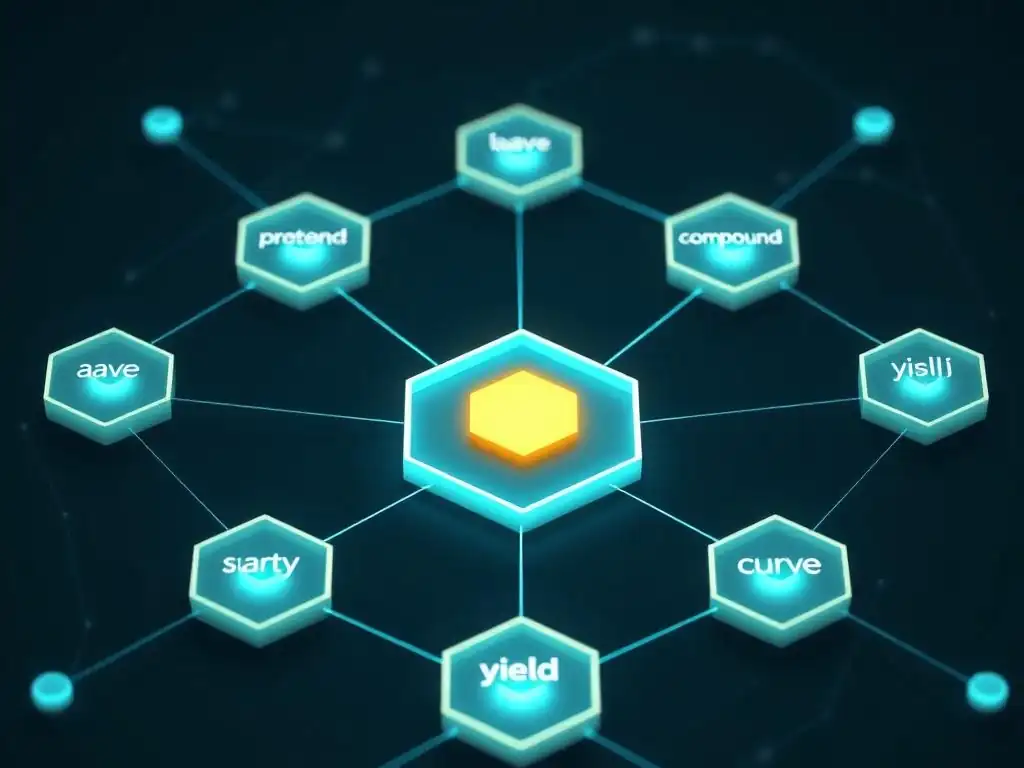
Aave: Yield Farming Opportunities, APY, and Associated Risks
Aave is a leading decentralized lending and borrowing protocol, offering a different flavor of yield farming strategies DeFi. Users can deposit various cryptocurrencies (like ETH, stablecoins, BTC, etc.) to earn interest from borrowers. The interest rates fluctuate based on the supply and demand for each asset on the platform. While typically lower than liquidity mining rewards on DEXs, these yields are often considered more sustainable as they are derived directly from economic activity (lending/borrowing) rather than just token emissions.
Aave also offers opportunities to earn additional rewards, often in the form of its native AAVE token, for supplying or borrowing certain assets (liquidity mining incentives). APYs on deposits can range from low single digits for highly supplied assets to potentially higher figures for less common or newly incentivized assets, plus any AAVE distribution. Risks include smart contract risk of the Aave protocol itself, oracle risk (if price feeds are manipulated), and liquidation risk if borrowing. Impermanent loss is generally not a direct risk for single-asset deposits, making it a relatively safer option for certain yield farming strategies DeFi.
Compound is another foundational decentralized lending protocol, similar to Aave, providing opportunities for yield farming strategies DeFi through interest-bearing deposits. Users supply assets like ETH, USDC, DAI, etc., and earn variable interest rates based on market dynamics. Like Aave, Compound also pioneered the distribution of its governance token, COMP, to users based on their supply and borrow activity, effectively layering a liquidity mining incentive on top of the base lending interest.
The APY on Compound comprises the base lending interest rate plus the COMP distribution rate, which varies per asset pool and can change over time. While base interest rates might be modest (e.g., 1-5% APY on stablecoins depending on utilization), the COMP rewards can significantly boost the overall yield, sometimes pushing total APY into double or even triple digits during periods of high incentives or token price. Risks are comparable to Aave: smart contract risk, oracle risk, and liquidation risk for borrowers. It's a key platform for lending-based yield farming strategies DeFi.
Uniswap is the largest decentralized exchange by trading volume, and Uniswap V3 introduced concentrated liquidity, significantly changing yield farming strategies DeFi on the platform. Instead of providing liquidity across the entire price range of a token pair (as in V2), LPs in V3 can concentrate their capital within specific price ranges. This allows LPs to earn significantly higher trading fees with the same amount of capital if the price stays within their chosen range. Protocols can also offer specific liquidity mining incentives (token rewards) for LPs who provide liquidity in designated ranges on certain pairs.
Yield on Uniswap V3 comes primarily from trading fees, which can be substantial in volatile markets or for highly traded pairs, especially if liquidity is concentrated effectively. Additional token rewards are often provided by third-party protocols bootstrapping liquidity for their tokens via Uniswap V3 pools. The main risk is greatly magnified impermanent loss if the price moves outside the LP's chosen range, effectively rendering their capital inactive in the pool until the price returns.
This requires active management or careful selection of ranges, making V3 yield farming strategies DeFi more complex than V2. Smart contract risk of the Uniswap protocol itself also applies.
Tools and Resources for Effective DeFi Yield Farming
DeFi Portfolio Trackers: Monitoring Your Yield Farming Investments
Managing multiple yield farming strategies DeFi across various protocols and chains can quickly become complex. DeFi portfolio trackers are essential tools that aggregate information about your deposited assets, earned rewards, and overall portfolio value in one dashboard. They connect to your wallet address (without requiring private keys) and scan the blockchain to identify your positions in various recognized DeFi protocols.
Popular trackers like Zapper, Zerion, and Ape Board allow users to see their total TVL across different platforms, track accumulated yield farming rewards, monitor impermanent loss estimates, and visualize their overall DeFi exposure. This provides a clear overview of performance and helps in decision-making regarding rebalancing or adjusting yield farming strategies DeFi. Relying solely on checking individual protocol interfaces is inefficient when dealing with numerous positions.
Yield Farming Calculators: Estimating Potential Returns and Profits
Yield farming calculators are valuable resources for estimating potential returns from specific yield farming strategies DeFi. These tools typically allow users to input the amount of capital they plan to invest, the specific farm (token pair and protocol), the advertised APY or APR, and sometimes factors like deposit fees or compounding frequency. The calculator then provides an estimate of potential daily, weekly, or annual earnings in terms of the reward token or a dollar value.
While these calculators provide useful estimates, it's crucial to remember that the actual returns in yield farming strategies DeFi are often variable. APYs can change rapidly due to fluctuations in token prices, changes in reward emission rates, or shifts in the amount of liquidity in the pool. Impermanent loss is also rarely factored into simple APY calculations but significantly impacts the final profit. Use calculators as a guide for potential scenarios, not as a guarantee of future earnings.
On-Chain Analytics Tools: Identifying Profitable Farming Opportunities
Advanced yield farming strategies DeFi often benefit from the use of on-chain analytics tools. Platforms like Nansen, Dune Analytics, or DeFiLlama provide deep insights into the DeFi ecosystem. They track metrics like TVL across protocols, trading volumes on DEXs, lending/borrowing rates, and even token flows. This data can help identify which protocols are gaining traction, which pools offer the highest real yields (factoring in fees and token price), and where large amounts of capital are moving.
Analyzing on-chain data can reveal profitable farming opportunities before they become widely known or help assess the sustainability of high-APY farms. For instance, tracking the TVL growth and trading volume of a specific pool on a DEX can indicate whether the trading fees alone are generating significant yield, supplementing token rewards. These tools are powerful for sophisticated users looking to gain an edge in identifying and executing yield farming strategies DeFi.
Understanding Taxable Events in DeFi Yield Farming
Engaging in yield farming strategies DeFi creates several taxable events, which vary depending on jurisdiction. Generally, earning yield farming rewards (often received as new tokens) is considered taxable income at the fair market value of the tokens at the time they are received. This is similar to earning interest or dividends. Swapping one cryptocurrency for another (e.g., swapping earned reward tokens for ETH or a stablecoin) is typically considered a taxable event, potentially triggering capital gains or losses depending on the cost basis of the tokens being swapped.
Selling earned or farmed tokens for fiat currency is also a clear taxable event, subject to capital gains tax. While the regulatory landscape for DeFi is still evolving globally, tax authorities in many countries, including the US, UK, and others, have issued guidance indicating that activities like receiving yield farming rewards and swapping/selling crypto are subject to taxation. Keeping meticulous records is paramount when pursuing yield farming strategies DeFi.
Record Keeping Best Practices for DeFi Income and Expenses
Accurate record-keeping is crucial for meeting tax obligations related to yield farming strategies DeFi. For each transaction, record the date, the type of transaction (e.g., deposit for farming, reward received, token swap), the specific assets involved, the quantity of assets, and the fair market value of the assets in your local currency at the time of the transaction. Note the protocol used and the wallet address involved.
Tracking earned yield farming rewards is particularly important; record the date and market value each time rewards are claimed or automatically compounded. This establishes the cost basis for these tokens. When tokens earned from farming are later sold or swapped, this cost basis is needed to calculate capital gains or losses. Utilizing dedicated crypto tax software can significantly streamline this process, connecting to wallets and exchanges to help categorize transactions and calculate tax liabilities arising from yield farming strategies DeFi.
Seeking Professional Tax Advice for DeFi Investments
Given the complexity and evolving nature of tax regulations surrounding cryptocurrencies and decentralized finance, seeking advice from a tax professional experienced in crypto is highly recommended for anyone involved in yield farming strategies DeFi. Tax laws can vary significantly by country and even within regions, and misinterpreting regulations can lead to significant penalties.
A qualified professional can help you understand your specific tax obligations based on your location and the nature of your yield farming activities. They can advise on how to correctly report income from earned rewards, calculate capital gains/losses from swaps and sales, and ensure compliance with local tax laws. Navigating the tax implications is a critical, albeit often overlooked, part of successful and compliant yield farming strategies DeFi.
The Future of Yield Farming: Trends and Innovations to Watch
Evolution of DeFi Yield Farming Strategies
The landscape of yield farming strategies DeFi is constantly evolving. Early strategies were relatively simple: deposit assets, get tokens. More recent developments include concentrated liquidity (Uniswap V3), yield aggregators that automatically move assets to the highest-yielding farms (like Yearn Finance), and protocols offering leveraged yield farming directly. We are also seeing the rise of yield-bearing stablecoins and tokens that automatically earn yield simply by being held.
Future trends are likely to involve increased automation and sophistication. Protocols might integrate more complex options strategies or use dynamic fees and reward structures to optimize yields. The focus may shift towards more sustainable yield sources, moving away from purely inflationary token emissions towards revenue-sharing models or yield generated from real-world assets tokenized on-chain. The search for innovative yield farming strategies DeFi will continue to drive protocol development.
The Role of Institutional Investors in DeFi Yield Farming
While DeFi yield farming has historically been dominated by retail participants, institutional interest is growing. Institutions are exploring how to access DeFi yields while managing regulatory and operational complexities. This could involve participating through regulated entities, using institutional-grade platforms, or developing sophisticated risk management frameworks. The entry of institutions could bring significant capital into DeFi, potentially increasing TVL and stabilizing markets, but also potentially altering the dynamics and accessibility of certain yield farming strategies DeFi.
Institutional participation might also accelerate the demand for higher security standards, clearer regulatory guidance, and more robust infrastructure within DeFi. As institutions seek predictable and scalable yield opportunities, it could drive innovation in areas like fixed-rate lending, undercollateralized loans for vetted entities, and structured products built on top of basic yield farming primitives. Their involvement is a key factor shaping the future of yield farming strategies DeFi.
The Impact of Regulatory Developments on DeFi Yield Farming
Regulatory developments pose a significant factor influencing the future of yield farming strategies DeFi. Governments worldwide are grappling with how to classify and regulate decentralized finance activities. Potential regulations could impact everything from how yield farming income is taxed, to Know Your Customer (KYC) and Anti-Money Laundering (AML) requirements for accessing protocols, to restrictions on certain types of yield-generating activities deemed high-risk.
Clearer regulations could provide certainty and potentially encourage broader adoption by institutions and risk-averse users. However, overly restrictive regulations could stifle innovation or push activity to less regulated corners of the market. The ongoing dialogue between regulators and the DeFi community will shape the environment in which yield farming strategies DeFi can be pursued in the coming years. Staying informed about regulatory changes is crucial for participants.
Conclusion: Mastering Yield Farming Strategies for DeFi Success
Navigating the world of DeFi yield farming offers compelling opportunities to earn passive income and maximize returns on cryptocurrency holdings. From understanding the basics of liquidity pools and AMMs to employing advanced techniques like leveraged or cross-chain farming, mastering yield farming strategies DeFi requires a blend of technical understanding, market analysis, and robust risk management.
While the potential rewards can be high, so are the risks, including impermanent loss, smart contract vulnerabilities, and regulatory uncertainty. Successful yield farming involves careful research, diversification, utilizing available tools for tracking and analysis, and maintaining diligent records for tax purposes. As the DeFi space matures and evolves, staying informed about new protocols, strategies, and risks will be key to achieving sustainable success in yield farming strategies DeFi.
Frequently Asked Questions
What are the foundational principles of yield farming in DeFi?
Yield farming involves locking up cryptocurrencies in DeFi protocols to earn rewards. These rewards come from transaction fees, lending interest, or governance tokens, effectively creating passive income streams.
How does yield farming differ from traditional staking methods?
While both involve locking assets, yield farming is more dynamic. It often involves moving assets between different DeFi protocols to maximize returns, which requires greater risk assessment and management compared to simple staking.
What are some common yield farming strategies in DeFi?
Strategies include providing liquidity to decentralized exchanges (DEXs), lending assets on DeFi lending platforms, and participating in governance token staking for additional rewards. Each strategy carries different risk profiles.
What are the primary risks associated with yield farming?
Risks include impermanent loss on DEXs, smart contract vulnerabilities, and the volatility of DeFi tokens. Understanding these risks is crucial before committing capital.
How can I effectively manage risk while yield farming in DeFi?
Diversification across multiple protocols, thorough research of projects, and utilizing stop-loss orders can help mitigate risks. Due diligence is paramount in this volatile space.
Final Reflection: Cultivating a Future of Financial Empowerment
The exploration of yield farming strategies in DeFi, as we've seen, isn't just about chasing high APYs; it's about understanding the fundamental shift in financial power that decentralized finance represents. The strategies discussed, from liquidity provision to leveraged farming, are tools that, when wielded responsibly, can unlock unprecedented opportunities for individuals to participate in and benefit from the global financial system.
The impact of DeFi and yield farming extends far beyond the digital realm, influencing how we perceive ownership, investment, and the very nature of money. Witnessing the democratization of finance firsthand, and the potential for individuals to control their financial destinies, is profoundly inspiring. The future of finance is decentralized, and yield farming is one of the most exciting ways to participate in that future.
- Unknown DeFi Enthusiast. This quote encapsulates the spirit of innovation and empowerment that drives the DeFi movement.
As you navigate the evolving landscape of DeFi, remember that knowledge is your greatest asset. Embrace continuous learning, practice diligent risk management, and contribute to the growth of a more inclusive and equitable financial ecosystem. The sweet spot of DeFi isn't just about maximizing returns; it's about cultivating a future where financial freedom is accessible to all.
Unlock Your DeFi Potential: Start Yield Farming Today!
Thank you for exploring the world of decentralized finance and discovering how to maximize returns through yield farming. Now that you have valuable insights, it's time to take action and begin growing your crypto portfolio.
Here are a few steps you can take right now:
- Begin by allocating a small portion of your investments to a well-researched yield farming opportunity. Start modestly and learn as you go! This is your chance to experience the benefits of DeFi firsthand.
- Explore other articles on blockchain trends related to DeFi protocols and risk management strategies. Broadening your knowledge will help you make smarter investment decisions.
- Share this article with fellow crypto enthusiasts and start a discussion about the most effective yield farming strategies you've come across. Learning from each other is key!
What DeFi protocol are you considering exploring first, and what is your risk tolerance? Share your plans in the comments below!
Leave a Reply