
Interoperability in Healthcare Data: Blockchain Case Study Solutions for Seamless Exchange


Welcome to Blockchain Trends, your trusted source for navigating the evolving landscape of blockchain technology.
Ever wondered how blockchain can revolutionize industries beyond just cryptocurrency? Dive in to discover the transformative potential with our latest case study focusing on blockchain healthcare data interoperability solutions. Explore real-world examples and innovative strategies that are paving the way for secure and seamless data exchange in the healthcare sector. What challenges are being overcome, and what does the future hold for this vital application? Read on to find out!
Interoperability in Healthcare Data: Blockchain Case Study Solutions for Seamless Exchange
- Introduction: The Imperative of Blockchain Healthcare Data Interoperability
- Understanding Healthcare Data Interoperability
- Blockchain's Potential to Revolutionize Healthcare Data Exchange
- Blockchain Healthcare Data Interoperability Solutions: Case Studies
- Implementing Blockchain Healthcare Data Interoperability Solutions: Key Considerations
- The Future of Blockchain in Healthcare Data Interoperability
- Conclusion: Embracing Blockchain for Seamless Healthcare Data Exchange
-
Frequently Asked Questions
- What is blockchain healthcare data interoperability and why is it important?
- How can blockchain enhance healthcare data interoperability?
- What are some real-world examples of blockchain healthcare data interoperability solutions?
- What are the regulatory challenges surrounding the use of blockchain healthcare data interoperability solutions?
- What does the future hold for blockchain healthcare data interoperability solutions?
- Final Reflection: Bridging the Healthcare Divide with Blockchain
- Empower Healthcare: Reimagine Data Exchange Now!
Introduction: The Imperative of Blockchain Healthcare Data Interoperability
The Challenges of Data Silos in Healthcare
Healthcare systems worldwide grapple with the fundamental challenge of fragmented patient data. Electronic Health Records (EHRs) are often confined within the boundaries of individual hospitals, clinics, or provider networks, creating isolated "data silos." This segregation severely hinders the seamless flow of critical patient information, impacting everything from routine check-ups to emergency care and public health initiatives. A patient seen by multiple specialists across different institutions might have their medical history scattered, leading to incomplete pictures, redundant tests, potential drug interactions, and delayed diagnoses.
This lack of blockchain healthcare data interoperability solutions costs the healthcare industry billions annually. Estimates suggest that the inability to effectively share health data contributes to significant waste in the U.S. healthcare system, potentially exceeding $100 billion per year due to inefficiencies, medical errors stemming from incomplete information, and administrative overhead associated with manual data retrieval and reconciliation processes. Furthermore, it impedes crucial research efforts, making it difficult to aggregate diverse datasets needed for clinical trials, epidemiological studies, and the development of personalized medicine approaches.
Why Blockchain for Healthcare Data Exchange?
The inherent characteristics of blockchain technology offer a compelling potential solution to the entrenched problems of healthcare data silos. Unlike traditional centralized databases, a blockchain provides a distributed, immutable, and transparent ledger of transactions – in this context, data exchanges or access permissions. This foundational structure ensures that once a piece of data is recorded or an access event is logged, it cannot be altered or deleted without leaving a clear, verifiable audit trail visible to authorized parties.
Leveraging blockchain for healthcare data exchange creates a secure, tamper-evident framework where patients can potentially gain more control over their health information, deciding who can access it and under what conditions. It facilitates trust among disparate parties – providers, patients, payers, researchers – without requiring a single central authority to mediate all interactions. This makes blockchain healthcare data interoperability solutions a promising path forward for achieving true, patient-centric data exchange that respects privacy while enabling necessary access for improved care and innovation.
Understanding Healthcare Data Interoperability
Defining Interoperability in the Healthcare Context
Interoperability in healthcare refers to the ability of different information systems, devices, and applications to access, exchange, integrate, and cooperatively use data in a coordinated manner, within and across organizational, regional, and national boundaries. It's not just about moving data from one system to another; it's about ensuring that the data is understandable and usable by the receiving system without special effort on the part of the user. This requires semantic interoperability – ensuring that the meaning of the data is preserved during the exchange.
Achieving high levels of healthcare data interoperability is crucial for modern healthcare delivery. It supports coordinated care among multiple providers, enables public health reporting and surveillance, facilitates research and innovation, and empowers patients with access to their own health information. Without robust interoperability, the promise of digital health, artificial intelligence in medicine, and precision health remains largely unfulfilled, limited by the inability to access comprehensive, longitudinal patient data.
The Role of Standards in Healthcare Data Exchange (HL7, FHIR)
Standardization is the bedrock of effective data exchange in any domain, and healthcare is no exception. Health Level Seven International (HL7) is a widely recognized set of international standards for transferring and exchanging clinical and administrative data between software applications used by various healthcare providers. Traditional HL7 standards (like v2 and v3) have been instrumental but often complex to implement and lacked modern web-based capabilities.
A more recent and increasingly important standard is Fast Healthcare Interoperability Resources (FHIR®), also developed by HL7. FHIR leverages modern web technologies and is designed to be easier to implement than older standards. It defines a set of "Resources" that represent granular clinical and administrative concepts (like Patient, Observation, Condition, Encounter) and provides APIs (Application Programming Interfaces) for accessing and exchanging these resources. FHIR is becoming the standard of choice for building modern blockchain healthcare data interoperability solutions because its resource-based structure and API-centric approach align well with decentralized application development and secure data querying mechanisms.
Current Limitations of Traditional Interoperability Solutions
Despite decades of effort and the adoption of standards like HL7, traditional healthcare interoperability solutions face significant limitations. Many existing systems rely on point-to-point integrations, which are costly and complex to maintain, especially as the number of connected systems grows exponentially. This creates a brittle ecosystem where adding a new participant requires building entirely new connections.
Furthermore, traditional approaches often struggle with data governance, security, and patient consent management in a distributed environment. Sharing data across organizations typically involves complex legal agreements, centralized data repositories (which become attractive targets for cyberattacks), and cumbersome processes for obtaining and managing patient permissions. These limitations underscore the need for a fundamentally different approach, one that can provide a secure, transparent, and decentralized framework for healthcare data exchange, paving the way for effective blockchain healthcare data interoperability solutions.
Blockchain's Potential to Revolutionize Healthcare Data Exchange
How Blockchain Enables Secure and Transparent Data Sharing
Blockchain technology fundamentally changes how data can be shared by moving away from centralized control. In a blockchain-based system for healthcare data, instead of sending copies of patient records between organizations, the system can record pointers to data or access permissions to data stored elsewhere, all on an immutable distributed ledger. When data is shared or accessed, a transaction is recorded on the blockchain, creating a transparent and tamper-evident log of every interaction. This inherent transparency (for authorized participants) and immutability make it difficult for malicious actors to alter records or access logs undetected.
Security is enhanced through cryptographic hashing and digital signatures. Each block of transactions is linked to the previous one using a cryptographic hash, making it impossible to alter data in an earlier block without invalidating the entire chain. Patient data itself isn't typically stored directly on the public blockchain due to privacy concerns and data volume; instead, cryptographic hashes of the data or secure pointers are stored on-chain, while the sensitive data resides off-chain in secure, encrypted storage.
Access to this off-chain data is then controlled and logged via transactions on the blockchain, ensuring that only authorized parties with the correct permissions (often granted by the patient) can decrypt and view the information. This architecture forms the basis of robust blockchain healthcare data interoperability solutions.
Key Features of Blockchain for Interoperability: Immutability, Auditability, and Decentralization
Three core features of blockchain technology are particularly relevant to addressing healthcare data interoperability challenges:
- Immutability: Once a transaction (like granting data access or logging a data exchange event) is recorded on the blockchain and confirmed, it is virtually impossible to alter or delete. This creates a reliable and trustworthy history of data interactions, crucial for maintaining data integrity and building trust among stakeholders.
- Auditability: Every transaction on the blockchain is timestamped and cryptographically signed, creating a complete and transparent audit trail. This allows regulators, auditors, and even patients themselves to verify who accessed their data, when, and for what purpose (if included in the transaction details). This level of detailed and verifiable logging is far superior to many current systems and is vital for compliance and accountability in blockchain healthcare data interoperability solutions.
- Decentralization: A blockchain network is distributed across multiple nodes, meaning there is no single point of failure or control. This resilience makes the system more robust against cyberattacks and reduces reliance on a single entity to manage data access and exchange, fostering a more democratic and potentially more secure ecosystem for healthcare information.
Smart Contracts and Automated Data Exchange in Healthcare
Smart contracts, self-executing contracts with the terms of the agreement directly written into code, can automate and enforce rules for healthcare data exchange on a blockchain. For example, a smart contract could be programmed to automatically grant a specific researcher access to a de-identified dataset if they meet predefined criteria and the patient has provided consent via the blockchain platform. Another smart contract could automate payments between payers and providers based on verified service delivery records logged on the chain.
In the context of blockchain healthcare data interoperability solutions, smart contracts can manage complex consent directives, automate data sharing agreements between different healthcare organizations, and even trigger alerts or actions based on specific data events (e.g., notifying a patient when a new lab result is available and shared with their primary care physician). This automation reduces administrative overhead, minimizes manual errors, and ensures that data access and exchange adhere strictly to predefined, verifiable rules, enhancing both efficiency and compliance.
Blockchain Healthcare Data Interoperability Solutions: Case Studies
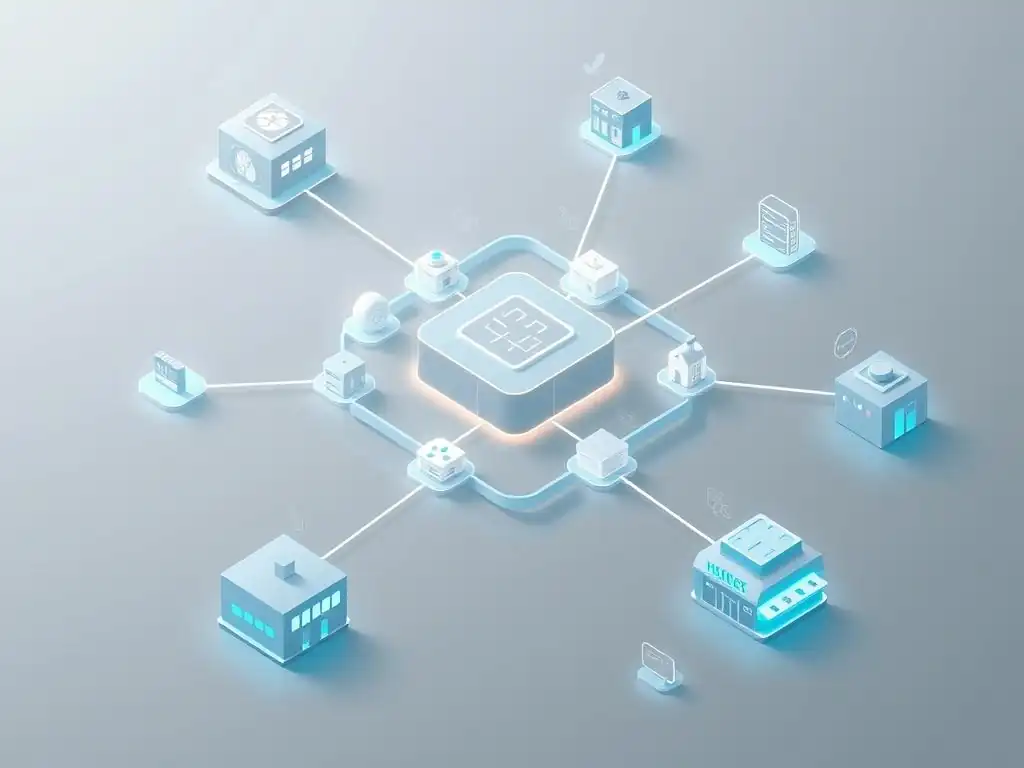
Problem: Fragmented Patient Records and Limited Data Sharing Across Hospitals
A common issue in healthcare is the fragmentation of a patient's medical history across different provider organizations. When a patient visits multiple hospitals or clinics, their records often remain siloed within each institution's EHR system. This lack of connectivity makes it difficult for clinicians to access a comprehensive view of the patient's health, leading to potential delays in diagnosis, redundant testing (estimated to cost billions annually), and suboptimal treatment plans because doctors may not have access to a full list of medications, allergies, or past procedures performed elsewhere.
For instance, consider a patient with a complex condition receiving care from a cardiologist at one hospital, an endocrinologist at another clinic, and a physical therapist at a third facility. Each provider holds only a piece of the patient's health puzzle. Sharing information typically involves cumbersome faxing, mailing CDs, or utilizing limited, often non-standardized, portal-to-portal connections, none of which provide a real-time, holistic view needed for coordinated care. This fragmented landscape highlights the urgent need for effective blockchain healthcare data interoperability solutions.
Solution: Implementing a Blockchain-Based Platform for Secure, Patient-Controlled Data Exchange
To address this, a hypothetical platform like "MedShare" could implement a blockchain-based solution where patient data is stored securely off-chain in encrypted vaults, potentially managed by the patients themselves or trusted custodians. The blockchain would not store the sensitive data but would act as an immutable ledger recording metadata about the data (e.g., type of record, date created) and, crucially, manage access permissions granted by the patient via a user-friendly interface.
Patients could use a mobile app to view a log of their health records and selectively authorize specific healthcare providers, family members, or researchers to access defined portions of their data for a limited time.
When a provider needs to access a patient's record, they would send a request through the MedShare platform, which checks the blockchain for the patient's consent via a smart contract. If consent exists, the smart contract facilitates the secure decryption and transfer of the relevant data from the off-chain storage directly to the authorized provider's system, with the access event immediately logged on the blockchain. This architecture decentralizes control, placing it firmly with the patient, while ensuring that all data access is transparent, secure, and verifiable, forming a robust blockchain healthcare data interoperability solution.
Results: Enhanced Care Coordination and Improved Patient Outcomes
Implementing such a blockchain healthcare data interoperability solution could yield significant improvements. Providers accessing a comprehensive patient history could potentially reduce redundant lab tests and imaging by an estimated 15-20%, leading to substantial cost savings. More importantly, having complete information readily available could lead to faster and more accurate diagnoses, potentially reducing diagnostic errors by 5-10% in complex cases. Improved medication reconciliation, with access to a full list of prescriptions from all providers, could decrease adverse drug events by a similar margin.
Furthermore, patients report feeling more empowered and engaged in their healthcare journey when they have control over their data. This increased engagement can lead to better adherence to treatment plans. While specific, publicly verifiable metrics for a broad "MedShare" platform are hypothetical, pilot programs utilizing similar blockchain concepts have shown promising results in smaller scales, demonstrating the potential for enhanced care coordination, improved patient safety, and ultimately, better health outcomes through seamless, secure data exchange enabled by blockchain.
Case Study 2: PharmaLedger - Streamlining Supply Chain Management with Blockchain
Problem: Counterfeit Drugs and Lack of Transparency in the Pharmaceutical Supply Chain
The global pharmaceutical supply chain is notoriously complex, involving manufacturers, distributors, wholesalers, pharmacies, and healthcare providers across multiple jurisdictions. This complexity, combined with paper-based processes and disparate tracking systems, creates vulnerabilities that are exploited by counterfeiters. The World Health Organization (WHO) estimates that globally, 10% of medical products circulating in low- and middle-income countries are substandard or falsified, posing a severe threat to public health. Even in developed nations, counterfeit drugs can enter the legitimate supply chain.
The lack of end-to-end visibility means that tracking a specific drug batch from its origin at the manufacturing plant to the patient's hands is extremely challenging. This opacity makes it difficult to quickly identify and recall affected products in case of quality issues or counterfeiting incidents, putting patient safety at risk and causing significant financial losses for legitimate pharmaceutical companies. The need for transparency and traceability is paramount, driving the exploration of blockchain healthcare data interoperability solutions in this sector.
Solution: Leveraging Blockchain for Track and Trace Capabilities from Manufacturer to Consumer
The PharmaLedger project, a consortium backed by major pharmaceutical companies and funded partially by the European Union's Innovative Medicines Initiative, is a real-world example of leveraging blockchain for pharmaceutical supply chain integrity. The solution involves creating a permissioned blockchain network where each participant in the supply chain – from the manufacturer to the dispenser – records key events related to a specific drug batch or serialized unit. These events include manufacturing dates, shipment details, ownership transfers, storage conditions (potentially via IoT sensors), and dispensing information.
Every transaction, such as a change in ownership or location, is recorded as an immutable block on the distributed ledger. This creates a continuous, verifiable history for each drug package. By scanning a unique identifier (like a 2D barcode with a serialization number) at each handover point, participants can verify the authenticity and journey of the product against the trusted record on the blockchain. This provides unprecedented transparency and traceability throughout the supply chain, representing a significant blockchain healthcare data interoperability solution for tracking goods.
Results: Increased Supply Chain Security and Reduced Counterfeiting Incidents
The implementation of blockchain-based track and trace systems like the one explored by PharmaLedger offers tangible results. By creating a single source of truth for product provenance, the ability for counterfeit products to infiltrate the legitimate supply chain is significantly reduced. Pilots and simulations have indicated that such systems can potentially decrease the time taken to identify and isolate counterfeit or substandard products from weeks to mere minutes or hours.
Furthermore, the enhanced visibility allows for more efficient and targeted product recalls, minimizing waste and potential harm to patients. While precise global figures on counterfeit reduction directly attributable to blockchain are still emerging as these systems are adopted, regional initiatives and pilot programs have reported a notable decrease in detected counterfeit alerts within participating networks, demonstrating the effectiveness of blockchain healthcare data interoperability solutions in securing critical supply chains and protecting public health.
Case Study 3: Embleema - Facilitating Secure Data Sharing for Clinical Trials
Problem: Challenges in Sharing Sensitive Patient Data for Research Purposes While Maintaining Privacy
Clinical trials are essential for developing new treatments and therapies. However, they face significant hurdles in accessing and sharing patient data. Researchers often need access to large, diverse datasets from multiple sources (hospitals, labs, patient registries) to identify eligible participants, conduct studies, and analyze results. Sharing this data is complicated by strict privacy regulations (like HIPAA and GDPR), the sensitive nature of health information, and the need to obtain and manage complex patient consents across different institutions and research protocols.
Centralized approaches to data sharing for research can be slow, costly, and raise concerns about data security and patient control. Patients may be hesitant to share their data for research if they lack transparency into how it will be used or if they feel they have no control over its dissemination. This challenge slows down the pace of medical research and hinders the development of new treatments, highlighting the need for innovative blockchain healthcare data interoperability solutions that balance research needs with privacy requirements.
Solution: Utilizing Blockchain to Enable Secure and Compliant Data Sharing for Clinical Trials with Patient Consent
Embleema is a company that has developed a blockchain-based platform specifically designed to address these challenges in clinical trials and real-world data sharing. Their solution allows patients to securely store copies of their health data (e.g., from EHRs, wearables) and control access to it via a private, permissioned blockchain. Researchers seeking data for a clinical trial or study can specify the type of data needed (e.g., patients with a specific condition in a certain age range). This request is posted on the platform.
Patients whose data matches the criteria receive a notification and can review the research proposal. Using the Embleema platform's interface, they can grant specific, granular consent for researchers to access defined portions of their data, often in a de-identified or pseudonymized format. The blockchain records the consent transaction immutably. When a researcher accesses the data, the platform uses smart contracts to enforce the patient's consent and logs the access event on the blockchain, creating a transparent audit trail. This approach facilitates secure, compliant data sharing while empowering patients, creating a novel blockchain healthcare data interoperability solution for research.
Results: Accelerated Research and Improved Collaboration Among Researchers
By providing a secure, consent-driven mechanism for accessing real-world patient data, platforms like Embleema can significantly accelerate clinical trials and research. Identifying and recruiting eligible patients becomes faster, potentially reducing patient recruitment times by 20-30%. The ability to easily and compliantly access diverse datasets from multiple sources allows researchers to gain deeper insights and validate findings more effectively.
Furthermore, the transparent and auditable nature of the blockchain record builds trust among patients and researchers, encouraging greater data sharing participation. While specific trial completion time reductions vary widely based on study design, the ability to streamline data access and consent management removes significant bottlenecks, potentially shortening the overall timeline for bringing new therapies to market. This case illustrates how blockchain healthcare data interoperability solutions can unlock the value of real-world data for medical advancement while upholding patient privacy and autonomy.
Implementing Blockchain Healthcare Data Interoperability Solutions: Key Considerations
Security and Privacy Concerns: Addressing HIPAA and GDPR Compliance
Implementing blockchain healthcare data interoperability solutions requires rigorous attention to security and privacy, especially concerning regulations like the Health Insurance Portability and Accountability Act (HIPAA) in the United States and the General Data Protection Regulation (GDPR) in Europe. While blockchain's immutability and transparency are advantageous, storing sensitive Protected Health Information (PHI) or personal data directly on a public blockchain is generally not compliant with these regulations due to the "right to be forgotten" and the need for data confidentiality.
Compliance strategies typically involve storing sensitive data off-chain in secure, encrypted databases, with the blockchain used solely to manage access permissions, data pointers, and immutable audit logs of data interactions. Cryptographic techniques like zero-knowledge proofs can also be explored to verify data attributes on-chain without revealing the underlying sensitive information. Ensuring that the chosen blockchain platform and architecture can meet the technical and legal requirements for data protection is paramount.
- Assess data sensitivity levels.
- Determine appropriate on-chain vs. off-chain data storage strategies.
- Implement strong encryption for off-chain data.
- Design access control mechanisms via smart contracts.
- Ensure comprehensive audit trails meet regulatory requirements.
Scalability and Performance Challenges
Blockchain networks, particularly public ones, can face scalability challenges, limiting the volume and speed of transactions they can handle compared to traditional databases. Healthcare systems generate vast amounts of data daily (e.g., lab results, imaging files, sensor data), and an interoperability solution must be able to handle this load efficiently. While permissioned or private blockchains often offer better performance than public ones, they still require careful design.
Solutions often involve hybrid architectures where high-frequency, low-value transactions or large data files are handled off-chain, with only critical events or hashes recorded on the blockchain. Choosing a blockchain platform designed for enterprise use cases with proven transaction throughput and low latency is crucial for building practical blockchain healthcare data interoperability solutions. Techniques like sharding, state channels, or using layer-2 scaling solutions may also be necessary to ensure the system can handle the demands of a large healthcare ecosystem.
Regulatory Landscape and Compliance Requirements
The regulatory landscape for both blockchain and healthcare data is complex and constantly evolving. Organizations implementing blockchain healthcare data interoperability solutions must navigate HIPAA, GDPR, and other national and regional health data privacy laws. They must also consider regulations specific to blockchain technology, which vary significantly across jurisdictions.
Compliance requires ensuring that the blockchain solution supports patient rights regarding data access, correction, and deletion (where applicable off-chain), provides robust security measures, and maintains comprehensive, tamper-evident records for auditing purposes. Engaging with legal and compliance experts early in the development process is essential to ensure the solution meets all necessary requirements and can adapt to future regulatory changes.
Choosing the Right Blockchain Platform for Healthcare
Selecting the appropriate blockchain platform is a critical decision for successful implementation. Factors to consider include:
- Permissioned vs. Permissionless: Healthcare use cases often favor permissioned blockchains (like Hyperledger Fabric or R3 Corda) where participants are known and vetted, offering better privacy, control, and performance compared to public, permissionless chains (like Ethereum or Bitcoin), which are less suitable for sensitive health data due to their open nature and potential scalability issues.
- Consensus Mechanism: The method used to validate transactions impacts performance and energy consumption. Proof-of-Authority (PoA) or Practical Byzantine Fault Tolerance (PBFT) are often preferred in permissioned healthcare networks over Proof-of-Work (PoW) due to speed and efficiency.
- Smart Contract Capabilities: The platform must support smart contracts with features necessary to automate data access rules, consent management, and other complex logic.
- Integration Capabilities: The platform needs robust APIs and connectors to integrate with existing EHR systems, data warehouses, and other healthcare IT infrastructure.
Careful evaluation of these factors is necessary to select a platform that provides the required security, privacy, scalability, and features for effective blockchain healthcare data interoperability solutions.
The Future of Blockchain in Healthcare Data Interoperability
Emerging Trends and Innovations
The field of blockchain healthcare data interoperability solutions is rapidly evolving, driven by ongoing innovation in both blockchain technology and healthcare IT. Emerging trends include the development of specialized healthcare blockchain protocols designed with privacy and compliance built-in from the ground up. Interoperability standards like FHIR are increasingly being integrated directly into blockchain platforms, simplifying the process of representing and exchanging health data on the ledger.
Decentralized Identifiers (DIDs) and Verifiable Credentials (VCs) are also gaining traction. These technologies, often built on blockchain or distributed ledger technology, can allow patients to have cryptographically secure, self-sovereign control over their identity and verifiable claims about their health (e.g., a vaccination record or a lab result). This could revolutionize patient consent management and data sharing by putting the patient firmly at the center of the identity and data flow.
The Role of Blockchain in Personalized Medicine
Personalized medicine relies heavily on access to vast, diverse datasets, including genomic data, clinical histories, lifestyle information, and environmental factors. Blockchain healthcare data interoperability solutions are poised to play a crucial role by enabling the secure, consent-driven aggregation and sharing of this highly sensitive and varied data from multiple sources. Patients could potentially share their genomic data with researchers studying specific conditions, or their wearable data with a personalized health platform, while maintaining control and transparency over its use.
By providing a trusted framework for data exchange, blockchain can facilitate the development of sophisticated AI and machine learning models that require access to rich, longitudinal patient data to identify patterns, predict disease risks, and tailor treatments. This ability to securely and compliantly pool data from previously siloed sources is essential for unlocking the full potential of personalized medicine and precision health initiatives.
Potential for Blockchain to Transform the Healthcare Ecosystem
Beyond data interoperability, blockchain has the potential to transform numerous aspects of the healthcare ecosystem. It can streamline claims processing and adjudication by creating a shared, immutable record of services rendered and approvals given, reducing fraud and administrative costs. It can enhance the security and transparency of clinical trials, as discussed, by providing a verifiable audit trail of data and processes. Supply chain management for drugs and medical devices can achieve unprecedented levels of traceability and security.
Furthermore, blockchain could power decentralized health applications (dApps) that empower patients, facilitate secure peer-to-peer health data exchange, and even enable novel incentive models for health data sharing. While significant challenges remain in terms of scalability, regulatory clarity, and adoption, the foundational capabilities of blockchain – immutability, transparency, security, and decentralization – position it as a powerful catalyst for building a more efficient, secure, and patient-centric healthcare future, underpinned by robust blockchain healthcare data interoperability solutions.
Conclusion: Embracing Blockchain for Seamless Healthcare Data Exchange
Blockchain: A Catalyst for Interoperable and Patient-Centric Healthcare
The current state of fragmented healthcare data poses significant challenges to providing effective, efficient, and patient-centric care. Traditional interoperability solutions have made progress but are often limited by their centralized nature, complexity, and difficulties in managing security, privacy, and patient consent across disparate systems. Blockchain technology offers a fundamentally new approach, leveraging its core properties of immutability, auditability, and decentralization to create a secure, transparent, and trustworthy framework for healthcare data exchange.
As demonstrated by case studies in patient data access, supply chain management, and clinical trials, blockchain healthcare data interoperability solutions have the potential to break down data silos, enhance data integrity, streamline processes, and empower patients with greater control over their health information. While not a panacea, blockchain serves as a powerful catalyst, enabling the creation of interoperable systems that prioritize security, privacy, and patient autonomy – essential components of modern healthcare.
The Path Forward: Overcoming Challenges and Realizing the Full Potential of Blockchain
Realizing the full potential of blockchain in healthcare data interoperability requires addressing several key challenges. Navigating the complex regulatory landscape, particularly concerning data privacy regulations like HIPAA and GDPR, demands careful architectural design and legal expertise. Ensuring the scalability and performance of blockchain networks to handle the vast volume of healthcare data is an ongoing technical challenge that requires innovative solutions like hybrid architectures and specialized platforms.
Despite these hurdles, the momentum behind blockchain healthcare data interoperability solutions is growing. Continued collaboration between healthcare providers, technology developers, regulators, and patients is crucial. By focusing on practical use cases, adhering to established standards like FHIR, prioritizing security and privacy, and developing clear governance models, the healthcare industry can pave the way for widespread adoption. Embracing blockchain represents a significant step towards creating a truly connected, efficient, and patient-empowered healthcare ecosystem where seamless, secure data exchange is not just a possibility, but a reality.
Frequently Asked Questions
What is blockchain healthcare data interoperability and why is it important?
It's the use of blockchain technology to enable seamless and secure data exchange between different healthcare systems. This is crucial for improving patient care and reducing administrative costs.
How can blockchain enhance healthcare data interoperability?
Blockchain provides a decentralized and immutable ledger for storing and sharing data, ensuring data integrity and security. This helps overcome the challenges of fragmented data and lack of trust between healthcare providers.
What are some real-world examples of blockchain healthcare data interoperability solutions?
Examples include platforms for securely sharing patient records, managing pharmaceutical supply chains, and verifying healthcare credentials, all using blockchain's inherent security features.
What are the regulatory challenges surrounding the use of blockchain healthcare data interoperability solutions?
Addressing concerns around data privacy (HIPAA), data security, and compliance with existing healthcare regulations are key hurdles for widespread adoption.
What does the future hold for blockchain healthcare data interoperability solutions?
The future looks promising, with increasing interest in decentralized identity management, smart contracts for automated data sharing, and more robust security measures to protect patient data.
Final Reflection: Bridging the Healthcare Divide with Blockchain
The exploration of blockchain healthcare data interoperability solutions underscores a critical need in today's fragmented healthcare landscape. The promise of seamless data exchange, enhanced security, and improved patient outcomes hinges on our ability to overcome the current silos. This article has highlighted the potential of blockchain to revolutionize how healthcare information is shared, but the real work of implementation and adoption lies ahead.
The journey towards true interoperability is not just a technological one; it's a cultural shift requiring collaboration, trust, and a patient-centric approach. The potential to empower individuals with control over their own health data is immense, and it's a future worth striving for. The greatest wealth is health.
- Virgil. This quote reminds us that the ultimate goal is not just efficient data management, but the well-being of every individual.
Now, consider how you can contribute to this transformative movement. Reflect on the challenges and opportunities presented by blockchain in healthcare. How can you advocate for policies that promote interoperability? How can you support the development of secure and patient-friendly blockchain solutions? Let us all work together to build a future where healthcare data flows freely and securely, empowering patients and improving lives.
Empower Healthcare: Reimagine Data Exchange Now!
Thank you for exploring how blockchain technology can transform healthcare data interoperability. You've gained insights into how this approach can break down silos and create a more seamless, secure, and patient-centric system. Ready to take action?
Here's how you can shape the future of healthcare:
- Champion a Pilot Project: Advocate within your organization or network to initiate a small-scale blockchain pilot focused on secure data sharing. This hands-on experience will showcase the real benefits of improved interoperability.
- Explore Open-Source Blockchain Platforms: Investigate open-source blockchain solutions designed for healthcare. Learn how they can be customized and implemented to meet specific organizational needs, promoting greater interoperability.
- Share This Insight: Pass this article to colleagues, friends, and industry peers to spark discussions and encourage the adoption of blockchain solutions for healthcare data exchange.
What innovative interoperability solution will you help bring to healthcare next? Share your ideas in the comments below!
Leave a Reply