
DApp Interoperability: Connecting Decentralized Applications Across Blockchains


Welcome to Blockchain Trends, your gateway to understanding the revolutionary impact of blockchain technology beyond the hype. Dive deep into the world of decentralized finance, enterprise applications, and the regulatory landscape shaping this transformative space.
Ever wondered how to seamlessly connect decentralized applications (DApps) across different blockchains? Today, we unravel the intricacies of Blockchain DApp Interoperability Solutions, exploring how these solutions are unlocking new levels of innovation and efficiency. Discover the future of interconnected decentralized systems and how they're reshaping industries. Let's explore!
DApp Interoperability: Connecting Decentralized Applications Across Blockchains
- Understanding DApp Interoperability: The Need for Cross-Chain Communication
- Challenges to Achieving Seamless DApp Interoperability
- Blockchain DApp Interoperability Solutions: A Comparative Analysis
-
Use Cases of Cross-Chain DApps and Interoperability
- Decentralized Finance (DeFi) Interoperability: [Cross-Chain Lending with Aave and Avalanche]
- Cross-Chain Gaming and NFTs: [Transferring NFTs Between Ethereum and Polygon]
- Supply Chain Management with Interoperable DApps: [Tracking Products Across Hyperledger Fabric and Ethereum]
- Decentralized Identity Management Across Blockchains
- The Future of Blockchain DApp Interoperability Solutions
- Implementing Blockchain DApp Interoperability: Best Practices
- Conclusion: Unleashing the Potential of Interconnected Decentralized Applications
-
Frequently Asked Questions
- What are the main challenges hindering Blockchain DApp Interoperability?
- Why is DApp Interoperability important beyond just transferring tokens?
- What are some examples of existing Blockchain DApp Interoperability Solutions?
- How does regulation impact the development of Blockchain DApp Interoperability Solutions?
- What is the future outlook for Blockchain DApp Interoperability and its impact on decentralized systems?
- Final Reflection: Bridging the Decentralized Future
- Ignite Cross-Chain Innovation!
Understanding DApp Interoperability: The Need for Cross-Chain Communication
What is DApp Interoperability and Why is it Important?
DApp interoperability refers to the ability of decentralized applications (DApps) operating on different blockchains to communicate, interact, and share data or assets seamlessly. Imagine a world where applications built on Ethereum, Solana, and Polkadot can work together as if they were part of a single, unified network. This is the essence of DApp interoperability. It's not just about connecting blockchains; it's about enabling DApps to leverage the unique strengths of various blockchain platforms, creating a more versatile and powerful ecosystem for users and developers alike.
The importance of interoperability stems from the fragmented nature of the current blockchain landscape. Each blockchain, while offering distinct advantages in terms of speed, security, or functionality, often operates in isolation. This creates silos, limiting the potential of DApps and hindering the overall growth of the decentralized web. Interoperability breaks down these barriers, unlocking new possibilities for innovation, collaboration, and user experience by allowing for the flow of information and value across different blockchain networks.
The Current State of Isolated DApps and Blockchain Silos
Currently, the vast majority of DApps are confined to the blockchain on which they are built. For instance, a DeFi protocol on Ethereum cannot directly interact with a gaming DApp on Polygon, or a supply chain management DApp on Hyperledger Fabric without complex and often centralized intermediaries. This isolation leads to several inefficiencies and limitations.
Users are often forced to bridge assets manually across chains, a process that can be cumbersome, costly, and sometimes risky. Developers are limited to the features and capabilities of a single blockchain, potentially missing out on opportunities to create more comprehensive and innovative applications by combining functionalities from different platforms.
This "blockchain silo" effect also fragments liquidity and user bases. Instead of a unified market where users can seamlessly access various decentralized services, we have isolated ecosystems. This fragmentation can stifle innovation and slow down the adoption of blockchain technology as a whole. The lack of seamless communication between DApps prevents the creation of truly interconnected decentralized systems, hindering the realization of the full potential of blockchain technology. Overcoming these silos is crucial for the evolution of a mature and user-friendly decentralized web.
Benefits of Interoperable DApps: Enhanced Functionality and User Experience
Interoperable DApps promise a significantly enhanced user experience and expanded functionality. Imagine a DeFi user being able to seamlessly access lending protocols on one chain while using collateral locked on another, all within a single interface. This eliminates the need for users to navigate multiple platforms and manage assets across different wallets, streamlining the user journey and reducing friction.
Enhanced functionality arises from the ability to combine the unique strengths of different blockchains. A DApp could leverage the high throughput of Solana for transaction processing and the robust security of Ethereum for asset custody, creating a more efficient and secure application.
Furthermore, interoperability fosters innovation and collaboration within the blockchain space. Developers can build more complex and versatile DApps by leveraging functionalities and data from multiple chains. This opens up new possibilities for cross-chain DeFi protocols, interoperable gaming ecosystems, and decentralized identity solutions that span across different blockchain networks. Ultimately, interoperable DApps lead to a more connected, efficient, and user-friendly decentralized web, unlocking the true potential of blockchain technology and driving wider adoption.
Challenges to Achieving Seamless DApp Interoperability
Technical Hurdles in Cross-Chain DApp Development
Developing interoperable DApps presents significant technical challenges. Blockchains, by design, are independent and operate under different consensus mechanisms, data structures, and virtual machines. Bridging these technical discrepancies requires sophisticated solutions. For example, achieving atomic transactions across different chains—ensuring that either all parts of a transaction across multiple blockchains succeed or all fail—is technically complex. Different blockchains may have varying transaction finality times, making it difficult to coordinate actions across them in a truly atomic manner.
Furthermore, handling different smart contract languages and execution environments adds another layer of complexity. A DApp designed for Ethereum's Solidity might need significant modifications or wrappers to interact with a DApp built on Polkadot using Ink! or Rust. Data format inconsistencies and encoding differences also need to be addressed. Developers need to navigate these technical hurdles to create robust and seamless cross-chain DApps, requiring specialized expertise in cross-chain communication protocols and blockchain architectures.
Security Concerns and Vulnerabilities in Interoperable Systems
Security is paramount in blockchain, and interoperability introduces new attack vectors and vulnerabilities. Cross-chain communication often relies on bridges or intermediary protocols, which can become targets for malicious actors. If a bridge is compromised, it could lead to significant asset losses across multiple connected blockchains. For example, the Wormhole bridge hack in 2022, which resulted in the loss of approximately $325 million in cryptocurrency, highlighted the risks associated with bridge security.
The complexity of interoperable systems also increases the potential for vulnerabilities in smart contracts and communication protocols. Ensuring the security of cross-chain transactions and data transfer requires rigorous auditing and testing of all components involved, including bridges, relayers, and smart contracts on each participating blockchain. Furthermore, managing consensus and security assumptions across different chains is challenging. A vulnerability in one blockchain or interoperability protocol could potentially cascade and affect the security of the entire interconnected system.
Scalability Limitations in Cross-Blockchain Transactions
Scalability is a critical challenge for blockchain technology in general, and it is further amplified in interoperable systems. Cross-blockchain transactions often involve multiple steps and confirmations across different chains, which can significantly increase latency and reduce throughput. For instance, a cross-chain swap might require transactions to be processed and confirmed on both the source and destination blockchains, potentially taking longer and costing more than a single-chain transaction.
The scalability of interoperable DApps is often limited by the least scalable blockchain in the interconnected system. If one blockchain in the network experiences congestion, it can bottleneck cross-chain transactions and affect the performance of interoperable DApps. Furthermore, some interoperability solutions, like certain types of bridges, might introduce their own scalability limitations. Addressing these scalability challenges is crucial for ensuring that interoperable DApps can handle a growing number of users and transactions without compromising performance or user experience.
Standardization Issues in DApp Interoperability Protocols
The lack of universal standards in DApp interoperability protocols poses a significant challenge to widespread adoption and seamless integration. Currently, various interoperability solutions exist, each with its own architecture, communication protocols, and security models. This fragmented landscape makes it difficult for DApps to easily integrate with different blockchains and interoperability solutions. Developers often face the challenge of choosing from a multitude of options, each with its own trade-offs and compatibility issues.
The absence of standardized protocols hinders the development of reusable components and libraries for cross-chain DApp development. This forces developers to reinvent the wheel for each interoperability solution they want to integrate, increasing development time and costs. Furthermore, lack of standardization can lead to vendor lock-in, where DApps become tightly coupled to specific interoperability providers. Establishing industry-wide standards for cross-chain communication and data exchange is crucial for fostering a more open, interoperable, and developer-friendly blockchain ecosystem, driving the growth of blockchain DApp interoperability solutions.
Blockchain DApp Interoperability Solutions: A Comparative Analysis
Atomic Swaps: Enabling Direct Token Exchanges Between Blockchains
Atomic swaps are a peer-to-peer method for directly exchanging cryptocurrencies between different blockchains without relying on intermediaries like centralized exchanges. They utilize Hash Time-Locked Contracts (HTLCs), a cryptographic technique that ensures either both parties complete their side of the swap or neither does, thus guaranteeing atomicity – the swap either happens entirely or not at all. Imagine Alice wants to exchange Bitcoin for Litecoin with Bob.
Using an atomic swap, they can set up an HTLC on both the Bitcoin and Litecoin blockchains. Alice locks her Bitcoin in the HTLC, and Bob can claim it if he locks his Litecoin in the corresponding HTLC within a specific timeframe. If Bob fails to do so, Alice can reclaim her Bitcoin.
Atomic swaps offer a trustless way to exchange assets across chains, enhancing security and reducing reliance on centralized entities. However, they are primarily limited to simple token swaps and do not facilitate complex cross-chain DApp interactions or data transfer. While they are a fundamental building block for blockchain interoperability, their application in enabling broader DApp interoperability is limited compared to other solutions. Atomic swaps are best suited for direct, decentralized token exchange scenarios.
Blockchain Bridges: Connecting Different Chains for Data and Asset Transfer
Blockchain bridges are technologies that enable the transfer of assets and data between different blockchains. They act as intermediaries, facilitating communication and interoperability between otherwise isolated networks. Bridges are crucial for enabling cross-chain DApp functionality by allowing DApps on one chain to access data, assets, and functionalities of DApps on another chain. They are a more versatile solution than atomic swaps, capable of supporting a wider range of cross-chain interactions beyond simple token exchanges.
Bridges are vital for moving beyond blockchain silos and creating a more interconnected ecosystem. They allow for the creation of cross-chain DeFi protocols, NFT marketplaces, and other applications that can leverage the unique strengths of multiple blockchains. However, the security and efficiency of bridges are critical considerations, as vulnerabilities in bridge infrastructure can lead to significant risks, as demonstrated by past bridge exploits.
Types of Blockchain Bridges: [Lock-and-Mint vs. Burn-and-Mint Bridges]
Blockchain bridges can be broadly categorized into lock-and-mint and burn-and-mint bridges, each with distinct mechanisms for asset transfer. Lock-and-mint bridges, also known as wrapping bridges, operate by locking up assets on the source chain and minting equivalent wrapped assets on the destination chain.
For example, to move Ethereum to a sidechain using a lock-and-mint bridge, ETH is locked in a smart contract on Ethereum, and an equal amount of wrapped ETH (like wETH on Polygon) is minted on the sidechain. The total supply of the original asset remains the same, but a representation of it is created on the other chain.
Burn-and-mint bridges, conversely, function by burning assets on the source chain and minting new assets on the destination chain. When transferring an asset using a burn-and-mint bridge, the original asset is destroyed (burned) on the source chain, and an equivalent amount of a new asset is created (minted) on the target chain. This mechanism is often used for cross-chain transfers of native tokens or when creating new tokens on a different blockchain. Both types of bridges play crucial roles in facilitating cross-chain asset movement, each with its own security and efficiency considerations.
How Blockchain Bridges Facilitate DApp Interoperability
Blockchain bridges are fundamental to enabling DApp interoperability by providing the infrastructure for cross-chain communication and asset transfer. They allow DApps to extend their functionality beyond the boundaries of a single blockchain. For instance, a DeFi DApp on Ethereum can utilize a bridge to access liquidity on Binance Smart Chain, or a gaming DApp on Polygon can allow users to trade NFTs on an Ethereum-based marketplace through a bridge. Bridges enable DApps to tap into the resources and user bases of different blockchain ecosystems, enhancing their capabilities and reach.
Furthermore, bridges facilitate the creation of entirely new types of cross-chain DApps that would not be possible within a single blockchain environment. These include cross-chain lending platforms, decentralized exchanges operating across multiple chains, and interoperable NFT marketplaces. By enabling seamless data and asset flow between blockchains, bridges are crucial for building a truly interconnected and interoperable decentralized web, paving the way for more sophisticated and user-centric blockchain applications.
Sidechains and Parachains: Extending Functionality and Interoperability
Sidechains and parachains are alternative approaches to blockchain interoperability, focusing on extending the functionality and scalability of a main chain while enabling interoperability. Sidechains are independent blockchains that run parallel to a main chain (like Bitcoin or Ethereum) and are connected to it through a two-way bridge. They can have their own consensus mechanisms and functionalities, allowing for customization and optimization for specific use cases. Assets can be moved between the main chain and the sidechain via the bridge, enabling interoperability.
Parachains are a specific type of blockchain architecture within the Polkadot ecosystem. They are custom, application-specific blockchains that attach to the Polkadot Relay Chain, benefiting from its shared security, scalability, and interoperability. Parachains can communicate with each other and with the Relay Chain, enabling seamless cross-chain interactions within the Polkadot network. Both sidechains and parachains aim to address scalability and interoperability challenges by providing dedicated blockchain environments that are interconnected with a main chain or relay chain.
Sidechains for Scalability and Interoperability
Sidechains primarily address scalability and interoperability by offloading transaction processing and functionalities from the main chain. By processing transactions on a separate sidechain, the main chain can reduce congestion and improve overall throughput. Sidechains also offer greater flexibility in terms of customization and governance compared to the main chain. For example, a sidechain might implement faster block times or different consensus mechanisms optimized for specific applications.
In terms of interoperability, sidechains are connected to the main chain via bridges, enabling the transfer of assets and data between them. This allows DApps on the sidechain to interact with the main chain ecosystem and vice versa. However, the security of sidechains often depends on their own consensus mechanisms and bridge security, which may differ from the main chain. While sidechains offer scalability and interoperability benefits, careful consideration must be given to their security and bridge implementations to ensure robust cross-chain functionality.
Parachains in the Polkadot Ecosystem: [Acala's DeFi Hub on Polkadot]
Parachains, as implemented in Polkadot, represent a highly structured approach to interoperability and scalability. Polkadot's Relay Chain provides shared security and consensus for all connected parachains, enhancing the security of the entire ecosystem. Parachains can be customized for specific use cases, allowing for optimized performance and functionality while benefiting from Polkadot's interoperability framework. Communication between parachains is facilitated by Polkadot's Cross-Consensus Messaging (XCM) format, enabling seamless data and asset transfer.
Acala is a prominent example of a parachain on Polkadot, positioned as a DeFi hub. Acala provides a suite of DeFi protocols, including a stablecoin, decentralized exchange, and staking derivatives, all within the Polkadot ecosystem. Being a parachain, Acala can interoperate with other parachains on Polkadot, allowing for the creation of complex cross-chain DeFi applications. For instance, users on Acala can potentially interact with gaming parachains or other specialized parachains within the Polkadot network, leveraging the interoperability provided by the Polkadot architecture to build sophisticated and interconnected DApps.
Interoperability Protocols: Enabling Communication Between DApps on Different Chains
Interoperability protocols are sets of rules and technologies that facilitate communication and data exchange between DApps on different blockchains without necessarily relying on bridges or sidechains in the traditional sense. These protocols often focus on enabling direct communication between smart contracts or DApps across chains, allowing for more complex interactions than simple asset transfers. They aim to create a more seamless and efficient way for DApps to interoperate, often with a focus on security and decentralization.
Interoperability protocols are crucial for building a truly interconnected decentralized web where DApps can collaborate and leverage each other's functionalities regardless of the underlying blockchain they are built on. They represent a more abstract and generalized approach to interoperability, aiming to overcome the limitations of blockchain silos and create a more unified and collaborative ecosystem.
Cosmos IBC (Inter-Blockchain Communication Protocol)
Cosmos IBC (Inter-Blockchain Communication Protocol) is a standardized protocol for interoperability within the Cosmos network and beyond. It allows independent blockchains (zones) built using the Cosmos SDK to communicate with each other in a secure and decentralized manner. IBC focuses on enabling secure and ordered packet relay between blockchains, facilitating the transfer of tokens, data, and even smart contract calls across connected chains. It relies on light clients and relayers to verify and propagate messages between chains without requiring a central intermediary.
IBC is designed to be blockchain-agnostic, meaning it can potentially be implemented on blockchains outside the Cosmos ecosystem, although its primary adoption has been within Cosmos. It is a key component of the Cosmos "Internet of Blockchains" vision, aiming to create a network of interconnected blockchains that can seamlessly interoperate. IBC is used by various DApps and protocols within the Cosmos ecosystem to enable cross-chain functionality, showcasing its effectiveness as an interoperability solution.
LayerZero: Omnichain Interoperability Protocol
LayerZero is an omnichain interoperability protocol designed to facilitate secure and efficient communication between different blockchains. It distinguishes itself by using an "Ultra-Light Node" architecture, which aims to provide similar security to light clients but with significantly reduced overhead. LayerZero relies on oracles and relayers working in tandem to validate and relay cross-chain messages. It is designed to be highly customizable and adaptable to different blockchain architectures.
LayerZero supports a wide range of blockchains, including Ethereum, Avalanche, Polygon, and Fantom, among others, aiming to be a truly omnichain solution. It enables various cross-chain functionalities, including token transfers, cross-chain swaps, and even more complex cross-chain smart contract interactions. LayerZero is being adopted by a growing number of DApps and protocols seeking to achieve omnichain interoperability, highlighting its potential as a versatile and widely applicable blockchain DApp interoperability solution.
Use Cases of Cross-Chain DApps and Interoperability
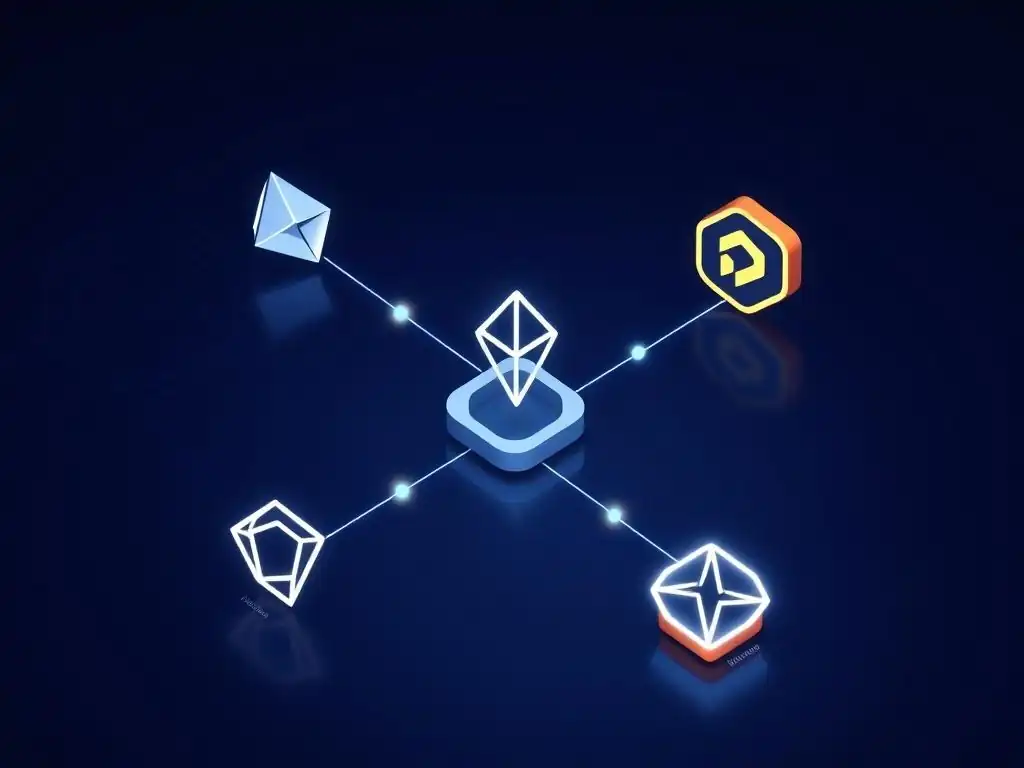
Decentralized Finance (DeFi) Interoperability: [Cross-Chain Lending with Aave and Avalanche]
DeFi is arguably the sector that stands to benefit most from interoperability. Cross-chain DeFi unlocks new possibilities for yield aggregation, arbitrage, and access to a wider range of financial instruments across different blockchains. Imagine a user being able to deposit collateral on Ethereum and borrow assets on Avalanche, or participate in yield farming opportunities across multiple chains seamlessly. This cross-chain composability enhances capital efficiency and expands the reach of DeFi protocols.
Aave, a leading lending protocol, has expanded to Avalanche and other blockchains, illustrating the potential of cross-chain DeFi. While not fully interoperable in the sense of seamless cross-chain transactions in a single interface, Aave's presence on multiple chains allows users to access lending and borrowing services on different ecosystems. Fully interoperable DeFi solutions would take this further, allowing users to manage positions and assets across chains within a unified experience, creating a more efficient and user-friendly DeFi landscape. Blockchain DApp interoperability solutions are key to realizing this vision.
Cross-Chain Gaming and NFTs: [Transferring NFTs Between Ethereum and Polygon]
Interoperability is crucial for the evolution of blockchain gaming and NFTs. Currently, NFTs are often siloed within the blockchain they are minted on, limiting their portability and utility across different gaming ecosystems. Cross-chain interoperability allows users to transfer NFTs between different blockchains, enabling true ownership and portability of digital assets across various games and metaverses. Imagine owning an NFT in a game built on Ethereum and being able to use it in a game on Polygon, or trade it on a marketplace on Solana.
The ability to transfer NFTs between Ethereum and Polygon, for example, is becoming increasingly common through bridge technologies. This enables users to leverage the lower transaction fees of Polygon while still benefiting from the broader NFT ecosystem and market liquidity associated with Ethereum. Cross-chain gaming and NFT interoperability fosters a more open and user-centric metaverse, where digital assets are not confined to specific platforms but can be freely moved and utilized across different virtual worlds. This is a significant driver for the adoption of blockchain DApp interoperability solutions.
Supply Chain Management with Interoperable DApps: [Tracking Products Across Hyperledger Fabric and Ethereum]
Supply chain management is another area where interoperability can bring significant benefits. Different organizations within a supply chain might utilize different blockchain platforms. For example, a manufacturer might use a permissioned blockchain like Hyperledger Fabric for internal tracking, while retailers might use a public blockchain like Ethereum for consumer-facing applications and transparency. Interoperability allows for seamless data exchange between these disparate systems, creating a more holistic and efficient supply chain tracking solution.
Imagine a scenario where product provenance is tracked across Hyperledger Fabric by manufacturers and then seamlessly transferred to Ethereum as the product moves through the retail chain and reaches consumers. This cross-chain data flow enhances transparency and traceability throughout the entire supply chain, improving efficiency and building trust. Interoperable DApps in supply chain management can break down data silos and create a more collaborative and transparent ecosystem, leveraging the strengths of different blockchain platforms for different stages of the supply chain.
Decentralized Identity Management Across Blockchains
Decentralized Identity (DID) management is significantly enhanced by interoperability. In a non-interoperable world, users might need to create and manage separate digital identities for each blockchain ecosystem they interact with. Interoperability enables the creation of portable and universally verifiable DIDs that can be used across multiple blockchains and DApps. This simplifies user experience and reduces identity fragmentation, making it easier for users to manage their digital identities in the decentralized web.
Imagine a user having a single DID that can be used to access DApps on Ethereum, Polkadot, and Solana, without needing to create separate accounts or manage multiple sets of credentials. Cross-chain DID solutions streamline user onboarding and enhance privacy by allowing users to control their identity data across different platforms. Interoperable DID frameworks are crucial for building a user-centric and privacy-preserving decentralized web, and blockchain DApp interoperability solutions play a vital role in enabling this vision.
The Future of Blockchain DApp Interoperability Solutions
Trends in Cross-Chain DApp Development
Several key trends are shaping the future of cross-chain DApp development. One prominent trend is the increasing focus on omnichain interoperability, aiming to connect as many blockchains as possible. Protocols like LayerZero and others are pushing the boundaries of omnichain communication, making it easier for DApps to reach users and assets across a wide range of blockchain ecosystems. Another trend is the development of more sophisticated and secure bridge technologies. Following past bridge exploits, there is a growing emphasis on enhancing bridge security through improved cryptographic techniques, decentralized validation mechanisms, and robust auditing practices.
Furthermore, we are seeing a rise in intent-centric architectures in cross-chain interactions. Instead of users explicitly managing cross-chain transactions step-by-step, intent-centric systems allow users to express their desired outcome (intent), and the underlying infrastructure handles the complexities of cross-chain execution. This simplifies user experience and makes cross-chain interactions more seamless. Finally, the development of developer-friendly tools and frameworks for cross-chain DApp development is crucial for accelerating adoption. These tools will lower the barrier to entry for developers and enable them to build interoperable DApps more efficiently.
The Role of Standards in Facilitating Interoperability
Standards play a crucial role in facilitating widespread blockchain DApp interoperability solutions. Standardized protocols for cross-chain communication, data exchange, and asset representation are essential for creating a truly interoperable ecosystem. Adopting common standards would reduce fragmentation, improve compatibility between different interoperability solutions, and foster a more developer-friendly environment. Standards can cover various aspects of interoperability, including message formats, security protocols, and API specifications.
Industry-wide collaboration and initiatives are needed to drive the development and adoption of interoperability standards. Organizations like the InterWork Alliance and others are working on standardization efforts in the blockchain space. Standardization can lead to greater interoperability, reduced development costs, and increased innovation by enabling developers to build on top of a common foundation. The establishment of robust and widely adopted standards is a key enabler for the future growth and scalability of blockchain DApp interoperability solutions.
The Impact of Interoperability on the Blockchain Ecosystem
Interoperability is poised to have a transformative impact on the blockchain ecosystem. By breaking down blockchain silos, interoperability can unlock the full potential of decentralized technology and drive wider adoption. It will foster a more connected and collaborative blockchain ecosystem, where DApps can seamlessly interact and leverage each other's functionalities. This will lead to the creation of more sophisticated and user-friendly decentralized applications, enhancing user experience and expanding the reach of blockchain technology.
Interoperability will also drive innovation by enabling developers to build more complex and versatile DApps that were previously impossible within isolated blockchain environments. Cross-chain DeFi, gaming, and supply chain applications are just a few examples of the innovative possibilities that interoperability unlocks. Ultimately, interoperability is essential for realizing the vision of a truly decentralized web, where blockchain networks work together seamlessly to create a more open, efficient, and user-centric digital future. Blockchain DApp interoperability solutions are central to this evolution.
Implementing Blockchain DApp Interoperability: Best Practices
Choosing the Right Interoperability Solution for Your DApp
Choosing the right interoperability solution is crucial for the success of a cross-chain DApp. The best solution depends on the specific requirements of the DApp, including the blockchains it needs to interoperate with, the types of data and assets being transferred, security considerations, and scalability needs. Developers should carefully evaluate different interoperability options, such as bridges, sidechains, parachains, and interoperability protocols, considering their trade-offs in terms of security, performance, cost, and complexity.
Factors to consider when choosing a solution include the security model of the interoperability mechanism, the level of decentralization it offers, its compatibility with the target blockchains, the transaction costs associated with cross-chain interactions, and the maturity and reliability of the technology. For instance, for simple token transfers, atomic swaps or established bridges might suffice. For more complex cross-chain DApp interactions, robust interoperability protocols or parachain architectures might be more suitable. A thorough assessment of these factors is essential for selecting the optimal blockchain DApp interoperability solution.
Security Considerations for Cross-Chain DApp Development
Security must be a top priority in cross-chain DApp development. Interoperability introduces new security risks, and developers must implement robust security measures to mitigate these vulnerabilities. This includes carefully auditing all smart contracts involved in cross-chain interactions, especially bridge contracts and relayers. Implementing multi-signature schemes and decentralized validation mechanisms can enhance the security of bridges and interoperability protocols. Regular security audits and penetration testing are crucial to identify and address potential vulnerabilities.
Furthermore, developers should adopt a defense-in-depth approach, layering security measures at different levels of the interoperable system. This includes securing smart contracts, communication channels, and infrastructure components. Monitoring cross-chain transactions and network activity for suspicious patterns is also important for detecting and responding to potential attacks. Prioritizing security throughout the development lifecycle is paramount for building robust and trustworthy blockchain DApp interoperability solutions.
Testing and Auditing Interoperable DApp Systems
Thorough testing and auditing are indispensable for ensuring the reliability and security of interoperable DApp systems. Testing should cover all aspects of cross-chain functionality, including asset transfers, data exchange, and smart contract interactions across different blockchains. This includes unit testing, integration testing, and end-to-end testing to validate the correct behavior of the interoperable DApp in various scenarios. Simulating real-world conditions and potential failure modes is crucial for identifying and addressing potential issues before deployment.
Independent security audits by reputable firms are essential for identifying vulnerabilities and ensuring the robustness of the interoperable system. Audits should cover smart contracts, interoperability protocols, and bridge infrastructure. Regular audits should be conducted throughout the lifecycle of the DApp, especially after any updates or changes to the system. Comprehensive testing and auditing are critical for building confidence in the security and reliability of blockchain DApp interoperability solutions and fostering user trust.
Conclusion: Unleashing the Potential of Interconnected Decentralized Applications
Overcoming the Challenges of DApp Interoperability
While significant challenges remain, the blockchain industry is making substantial progress in overcoming the hurdles to DApp interoperability. Ongoing research and development are leading to more secure and efficient bridge technologies, robust interoperability protocols, and standardized communication frameworks. The increasing focus on security, scalability, and user experience is driving innovation in blockchain DApp interoperability solutions. Collaboration within the blockchain community, including developers, researchers, and standardization bodies, is crucial for addressing the remaining challenges and accelerating the adoption of interoperability.
As interoperability solutions mature and become more widely adopted, the benefits of a connected blockchain ecosystem will become increasingly apparent. Overcoming the challenges of DApp interoperability is not just a technical endeavor; it is a crucial step towards realizing the full potential of blockchain technology and creating a truly decentralized and interconnected web.
The Promise of a Unified Blockchain Ecosystem
The promise of a unified blockchain ecosystem, enabled by DApp interoperability, is immense. It envisions a future where blockchain networks work together seamlessly, fostering innovation, enhancing user experience, and driving wider adoption of decentralized technologies. In this unified ecosystem, users can access a diverse range of DApps and services across different blockchains without friction, developers can build more versatile and powerful applications by leveraging the strengths of multiple platforms, and the overall blockchain space becomes more efficient, scalable, and user-friendly.
The realization of this unified blockchain ecosystem is a long-term endeavor, requiring continued innovation, collaboration, and standardization. However, the progress made in blockchain DApp interoperability solutions to date, and the ongoing efforts within the industry, point towards a future where interconnected decentralized applications unlock the transformative potential of blockchain technology and reshape the digital landscape.
Frequently Asked Questions
What are the main challenges hindering Blockchain DApp Interoperability?
The primary challenges include technical incompatibilities between different blockchain networks, varying consensus mechanisms, and the lack of standardized protocols for communication.
Why is DApp Interoperability important beyond just transferring tokens?
It allows for the creation of more complex and integrated applications, enabling data and functionality to be shared across different chains, leading to greater efficiency and innovation in the decentralized space.
What are some examples of existing Blockchain DApp Interoperability Solutions?
Examples include cross-chain bridges that facilitate asset transfers, atomic swaps enabling direct exchange without intermediaries, and interoperability protocols like Polkadot and Cosmos that aim to connect multiple blockchains.
How does regulation impact the development of Blockchain DApp Interoperability Solutions?
Regulatory uncertainty surrounding cross-border transactions and security standards can create hurdles for developers, potentially slowing down the adoption and implementation of interoperable DApps.
What is the future outlook for Blockchain DApp Interoperability and its impact on decentralized systems?
The future looks promising, with increasing investment and development in standardized protocols. This will likely lead to a more connected and user-friendly decentralized ecosystem, fostering greater adoption and utility of DApps.
Final Reflection: Bridging the Decentralized Future
The exploration of DApp interoperability solutions, as we've seen, isn't just a technical exercise; it's about building a truly connected and accessible decentralized future. The ability for DApps to seamlessly interact across different blockchains is no longer a futuristic ideal, but a critical necessity for the widespread adoption and realization of Web3's potential. Without it, we risk fragmented ecosystems and limited user experiences, hindering the very innovation these technologies promise.
The impact of blockchain DApp interoperability extends far beyond the technical realm, influencing the cultural and social landscape of the internet itself. The potential for frictionless data exchange and value transfer across diverse platforms promises to unlock unprecedented levels of collaboration and innovation. This resonates deeply with the core tenets of decentralization, empowering individuals and communities to participate in a more equitable and interconnected digital world. The beauty of interoperability lies not just in its technical prowess, but in its ability to foster a more inclusive and collaborative digital ecosystem, where innovation knows no bounds.
As we stand at the cusp of this interconnected decentralized future, let us not underestimate the power of collaboration and open standards. Consider how you can contribute to this movement, whether through supporting interoperable DApps, advocating for open-source solutions, or simply educating yourself and others about the transformative potential of blockchain DApp interoperability. The future of Web3 is not just about building decentralized applications; it's about building bridges between them, creating a truly interconnected and empowering digital world for all.
Ignite Cross-Chain Innovation!
Thank you for exploring the world of DApp interoperability! You now have a clear understanding of how connecting decentralized applications can open new opportunities for innovation and efficiency. Are you ready to be part of the future of blockchain technology? Let’s get started!
Here’s how you can take action:
- Identify a decentralized application you currently use and consider how it could benefit from interoperability. Think about increased liquidity, broader user access, or new features.
- Explore the technical details of cross-chain bridges and protocols. Gaining insight into how these mechanisms work is essential for making informed decisions in this fast-changing field.
- Share this article with your network and start a discussion about the potential of DApp interoperability. Together, we can build a more connected and collaborative blockchain ecosystem!
What innovative cross-chain integration do you envision that could transform the DApp landscape? Share your ideas below!
Leave a Reply