
Healthcare and Blockchain Identity: Patient Data Security and Control


Welcome to Blockchain Trends, your guide to the revolutionary world beyond crypto!
Ever wondered how blockchain could reshape healthcare, giving you unprecedented control over your sensitive information? Dive into our latest exploration of blockchain patient data security and discover how decentralized identity solutions are poised to transform the way your medical records are managed and protected. Learn how this cutting-edge technology is not just a buzzword, but a tangible solution for building a more secure and patient-centric future. Keep reading to unlock the potential of blockchain in healthcare and digital identity!
Healthcare and Blockchain Identity: Patient Data Security and Control
- Introduction: Blockchain's Role in Revolutionizing Healthcare Data Management
- The Current State of Patient Data Security: Challenges and Vulnerabilities
- Blockchain Identity for Enhanced Patient Data Security: A Solution
- Benefits of Blockchain for Patient Data Management
- Use Cases of Blockchain Identity in Healthcare
- Implementing Blockchain Identity in Healthcare: Key Considerations
- Addressing Concerns and Challenges of Blockchain Adoption in Healthcare
- The Future of Blockchain Identity in Healthcare: Trends and Predictions
- Conclusion: Blockchain Identity - Securing the Future of Patient Data
-
Frequently Asked Questions
- How does blockchain enhance patient data security compared to traditional systems?
- What role does blockchain identity play in giving patients more control over their healthcare information?
- Beyond security, what other benefits does blockchain offer for managing patient data?
- How does blockchain technology address concerns surrounding data privacy and compliance with regulations like HIPAA?
- What are the main challenges hindering the widespread adoption of blockchain in healthcare for patient data security?
- Final Reflection: Empowering Patients Through Blockchain
- Reimagine Your Healthcare Data: Take Control Now!
Introduction: Blockchain's Role in Revolutionizing Healthcare Data Management
The Growing Need for Enhanced Patient Data Security in Healthcare
The healthcare industry faces an unprecedented challenge in protecting sensitive patient data. With the increasing digitalization of health records and the pervasive threat of cyberattacks, ensuring robust Blockchain patient data security is paramount. Traditional centralized systems, while convenient for access, present significant vulnerabilities, making them attractive targets for malicious actors seeking to exploit valuable personal health information (PHI). The volume of data breaches in healthcare has surged, impacting millions of patients annually and leading to substantial financial losses and erosion of trust.
Recent reports highlight the severity of this issue. For instance, the average cost of a healthcare data breach globally reached approximately \$10.93 million in 2023, significantly higher than the average cost across all industries. This figure encompasses detection, containment, notification, and post-breach response. Beyond financial costs, the compromise of patient data can have severe consequences for individuals, including identity theft, medical fraud, and even physical harm if inaccurate or manipulated data affects treatment decisions. The imperative to enhance security measures to safeguard this critical information has never been stronger.
How Blockchain Technology Addresses Healthcare's Data Challenges
Blockchain technology, initially popularized by cryptocurrencies, offers a fundamentally different approach to data management that is inherently suited to addressing many of healthcare's most pressing data challenges. Its core principles of decentralization, immutability, and transparency provide a powerful framework for improving Blockchain patient data security, integrity, and interoperability. Unlike traditional databases where data resides in a single location vulnerable to attack, blockchain distributes data across a network of participants, making it significantly harder to compromise or alter.
The distributed ledger ensures that once a transaction or data entry is recorded, it is cryptographically linked to the previous entry, forming an immutable chain. Any attempt to tamper with the data would be immediately detectable by the network. This immutability is crucial for maintaining the integrity of patient records and ensuring that historical data remains accurate and trustworthy. Furthermore, the transparent nature of blockchain allows for a clear audit trail of all data access and modifications, enhancing accountability and trust among stakeholders in the healthcare ecosystem.
Article Overview: Exploring Blockchain Identity Solutions for Secure Patient Data
This article delves into the transformative potential of blockchain technology, specifically focusing on how blockchain-based identity solutions can revolutionize Blockchain patient data security and control. We will examine the current vulnerabilities in healthcare data management systems and explore how blockchain's unique features offer a robust alternative. The discussion will cover the concepts of decentralized identity (DID) and immutable records, highlighting their benefits for patient data privacy, integrity, and interoperability.
Furthermore, we will explore practical use cases of blockchain identity in healthcare, ranging from secure electronic health records and pharmaceutical supply chains to clinical trial management. We will also address key considerations for implementing blockchain technology in healthcare settings, including platform selection, integration challenges, and regulatory compliance. Finally, we will look at the future trends and predictions for blockchain adoption in healthcare, emphasizing how this technology is set to empower patients and build a more secure, efficient, and transparent healthcare ecosystem.
The Current State of Patient Data Security: Challenges and Vulnerabilities
Data Breaches and Security Threats in Healthcare: A Critical Overview
The healthcare sector remains a prime target for cybercriminals due to the high value and sensitivity of patient data. Data breaches are not isolated incidents but a persistent and evolving threat. Attack vectors range from ransomware and phishing attacks to insider threats and misconfigured systems. For instance, a single phishing campaign can compromise the credentials of multiple healthcare professionals, granting unauthorized access to vast amounts of protected health information (PHI). The consequences are severe, leading to identity theft, financial fraud, disruption of services, and significant reputational damage for healthcare providers.
Major breaches have affected millions of individuals. In one notable incident in 2020, a breach at a major health system potentially exposed the data of nearly 3.5 million patients. Another large-scale attack in 2021 impacted a vendor providing services to healthcare organizations, compromising data for over 1.5 million patients across multiple providers. These incidents underscore the systemic vulnerabilities inherent in current healthcare IT infrastructures and the urgent need for more resilient security paradigms, such as leveraging blockchain for enhanced patient data security.
Regulatory Compliance Issues: HIPAA and the Need for Secure Data Handling
Regulatory frameworks like the Health Insurance Portability and Accountability Act (HIPAA) in the United States establish stringent standards for protecting sensitive patient information. HIPAA mandates specific administrative, physical, and technical safeguards that covered entities and their business associates must implement. Failure to comply can result in significant civil and criminal penalties, including fines that can reach up to \$1.5 million per violation category per year. However, despite these regulations, breaches continue to occur, indicating that current implementations of security measures are often insufficient or complex to manage effectively across disparate systems.
Ensuring continuous compliance is a complex task in a dynamic threat landscape. Healthcare organizations must constantly update security protocols, train staff, and audit systems. The distributed nature of healthcare, involving multiple providers, specialists, laboratories, and pharmacies, further complicates compliance and secure data handling. Each interaction point represents a potential vulnerability. Implementing solutions that inherently enforce security and provide immutable audit trails, such as those offered by blockchain patient data security initiatives, can significantly simplify compliance efforts and reduce the risk of violations.
Centralized Data Storage: Single Points of Failure and Security Risks
A fundamental vulnerability in many existing healthcare data systems is their reliance on centralized databases. Patient records are often stored in large, centralized servers managed by hospitals, clinics, or electronic health record (EHR) vendors. While offering efficiency for specific use cases, this architecture creates attractive, high-value targets for cyberattacks. A successful breach of a single centralized database can compromise the data of thousands or even millions of patients simultaneously.
These single points of failure are susceptible to various threats, including external hacking attempts, insider misuse, and natural disasters or infrastructure failures. Once an attacker gains access to the central system, they can potentially view, alter, or steal massive amounts of data undetected for extended periods. This inherent structural weakness highlights the need for a more distributed and resilient data management approach, where the compromise of one node does not jeopardize the entire system, reinforcing the value proposition of blockchain patient data security models.
Blockchain Identity for Enhanced Patient Data Security: A Solution
Understanding Blockchain-Based Digital Identity for Healthcare
Blockchain-based digital identity shifts the paradigm from identities managed by central authorities (like governments or institutions) to identities that are self-owned and managed by the individual. In healthcare, this means a patient can have a digital identity anchored on a blockchain, granting them greater control over their personal health information. This identity is not a single, static profile but rather a collection of verifiable credentials (e.g., proof of vaccination, lab results, medical history fragments) issued by trusted entities (like doctors, hospitals, labs) and stored securely, often off-chain, but with cryptographic proofs recorded on the blockchain.
This approach enhances Blockchain patient data security by decentralizing the control layer. Instead of a hospital holding the primary key to a patient's entire record, the patient holds the key to their own identity wallet. They can then selectively share specific credentials or parts of their health record with healthcare providers, insurers, or researchers, granting access only when and to whom they choose. This model drastically reduces the risk associated with centralized identity databases and gives patients agency over their most sensitive data.
Decentralized Identity (DID): Empowering Patients with Data Control
Decentralized Identity (DID) is a core concept enabled by blockchain that directly empowers patients. With DID, patients control their digital identifiers and the data associated with them. They can grant or revoke access permissions for different healthcare providers or third parties as needed. For example, a patient visiting a new specialist can grant temporary access to relevant parts of their medical history stored securely via their DID, without transferring the entire record or relying on complex, often manual, record transfer processes between institutions.
This model contrasts sharply with traditional systems where patient data is siloed within individual provider systems, and patients have limited visibility or control over how their information is accessed or shared. By putting the patient in the center of the data flow, DID significantly improves privacy and security. The patient becomes the gatekeeper, deciding who can view their information, when, and for what purpose, fundamentally improving Blockchain patient data security by aligning data control with data ownership.
Immutable Records: Ensuring Data Integrity and Traceability in Healthcare
The immutable nature of blockchain is a critical feature for ensuring the integrity and traceability of patient data. Every transaction recorded on a blockchain, such as a doctor adding a new diagnosis, a lab uploading test results, or a patient granting access to their record, is timestamped and cryptographically linked to the previous transaction. Once added, this record cannot be altered or deleted without invalidating the entire chain that follows, which is practically impossible across a distributed network.
This immutability creates a tamper-proof audit trail of all interactions with patient data. Healthcare providers, regulators, and patients can verify the history of data entries and access requests with high confidence. This level of transparency and traceability is invaluable for identifying fraudulent activities, resolving disputes over medical history, and ensuring accountability. It provides a foundational layer of trust and integrity for patient records, significantly bolstering Blockchain patient data security by making unauthorized modifications immediately detectable.
Benefits of Blockchain for Patient Data Management
Enhanced Patient Data Security and Privacy
Blockchain technology inherently improves Blockchain patient data security and privacy through its decentralized architecture and cryptographic principles. Data is not stored in a single, vulnerable location but distributed across a network, making it much harder for attackers to compromise. Cryptography is used to secure data entries and control access, ensuring that only authorized parties with the correct keys can view or interact with the data. Patient identity can be managed using decentralized identifiers (DIDs), giving patients granular control over who can access their health information and under what conditions.
Privacy is further enhanced by the ability to store sensitive data off-chain while keeping cryptographic hashes or pointers on the blockchain. This allows for verification and auditability without exposing the sensitive content itself to the public ledger. Patients can grant permission to view the off-chain data via their blockchain identity, ensuring that their personal health information remains confidential while maintaining the integrity and traceability benefits of the blockchain.
Improved Data Interoperability and Sharing Among Healthcare Providers
One of the major challenges in healthcare is the lack of seamless data interoperability between different providers and systems. Patient records are often fragmented across various hospitals, clinics, and specialists, making it difficult for healthcare professionals to get a complete picture of a patient's medical history, especially during emergencies or when patients move between providers. Blockchain, combined with decentralized identity, offers a solution by creating a shared, secure infrastructure for managing access to patient data.
Instead of complex point-to-point integrations between disparate systems, blockchain can serve as a secure layer where patients manage access to their records. Providers can request access through this layer, and if the patient grants permission via their blockchain identity wallet, the provider can securely retrieve the necessary data from wherever it is stored (e.g., a patient-controlled data store or a secure, authorized repository). This streamlines the process of sharing information, improves care coordination, and reduces the administrative burden associated with traditional record requests, all while maintaining Blockchain patient data security.
Reduced Administrative Costs and Streamlined Processes
The administrative overhead in healthcare is substantial, partly due to the complex and often manual processes involved in managing patient data, verifying identities, and ensuring compliance. Blockchain technology has the potential to significantly reduce these costs and streamline various administrative processes. For example, managing patient consent for data sharing, which is currently often a paper-based or cumbersome digital process, can be automated and secured using smart contracts on a blockchain.
Identity verification for patients and providers can be simplified using blockchain-based digital identities, eliminating the need for repeated manual verification steps. Furthermore, the immutable audit trail automatically generated by the blockchain simplifies compliance reporting and reduces the resources required for audits. By creating a more efficient and transparent system for data management and access, blockchain can free up resources, allowing healthcare providers to focus more on patient care while simultaneously enhancing Blockchain patient data security.
Increased Transparency and Auditability of Patient Data Access
The transparent nature of blockchain (while maintaining privacy of the data content itself) provides an unprecedented level of auditability for patient data access. Every time a healthcare provider, researcher, or any authorized entity requests and is granted access to a patient's record or specific data points, this interaction can be recorded as a transaction on the blockchain. This creates a permanent, verifiable log of who accessed what data, when, and with whose permission (the patient's).
This enhanced transparency and auditability are crucial for building trust among patients, providers, and regulators. Patients can view the access history of their data, ensuring that their information is only being used appropriately. Healthcare organizations can easily demonstrate compliance with privacy regulations by providing verifiable audit trails. This inherent feature of blockchain significantly strengthens Blockchain patient data security by deterring unauthorized access and providing irrefutable evidence if a security incident or misuse occurs.
Use Cases of Blockchain Identity in Healthcare
Secure Electronic Health Records (EHR) Management with Blockchain
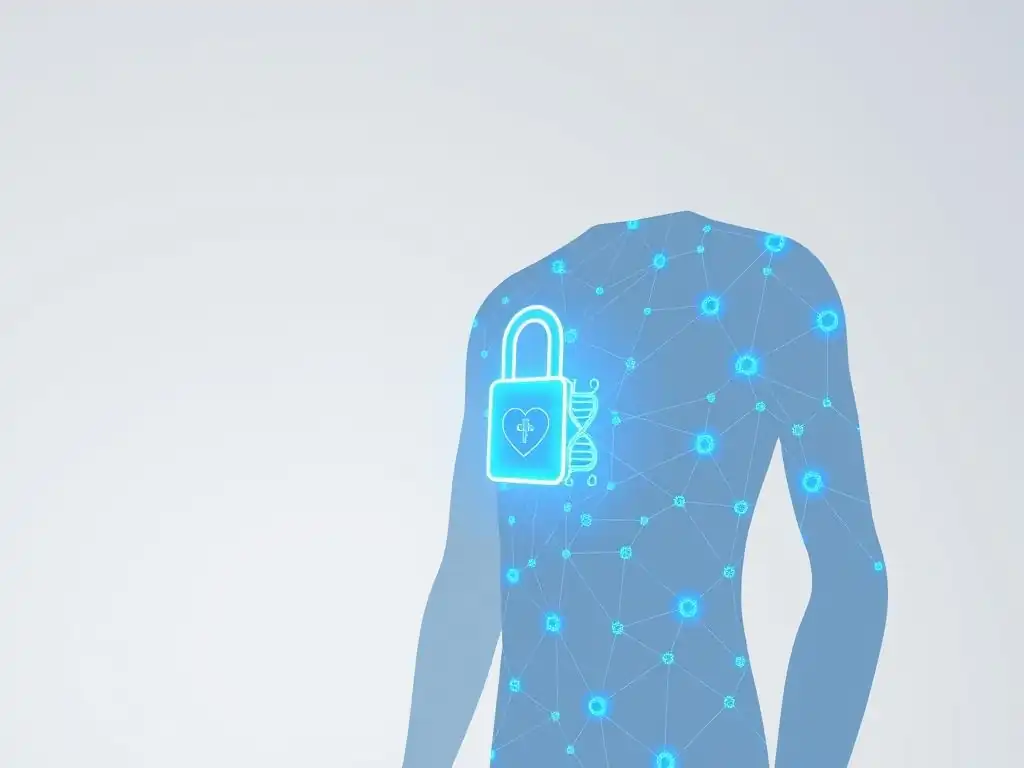
One of the most promising use cases for blockchain identity is in securing and managing Electronic Health Records (EHRs). Instead of storing entire EHRs directly on a blockchain (which is generally impractical due to data volume and privacy concerns), a common approach involves using the blockchain to manage patient identities and control access to the EHR data stored off-chain in existing systems or secure data vaults. The patient's blockchain identity acts as the key, granting permissions to view specific parts of their record held by different providers.
For example, a patient's record might be spread across their primary care physician's system, a hospital's system, and a laboratory's system. Using a blockchain-based DID, the patient can grant their new cardiologist permission to access relevant past cardiology reports and test results from these disparate sources, without requiring complex data transfers between institutions. This model enhances Blockchain patient data security by placing access control in the patient's hands and provides a single, secure point of reference for managing permissions across fragmented data sources.
Blockchain-Based Supply Chain Management for Pharmaceuticals
Beyond patient data, blockchain identity can also secure the healthcare supply chain, particularly for pharmaceuticals. Counterfeit drugs are a significant global problem, estimated by some organizations to account for up to 10% of the global drug market. Using blockchain, each batch of medication can be assigned a unique identity recorded on the ledger from manufacturing through distribution to the pharmacy. Every step of the journey – from production date and location to shipping, handling, and delivery – can be recorded as an immutable transaction.
This creates a transparent and verifiable history for every product. Pharmacists and patients can scan a code on the packaging and verify the authenticity and provenance of the drug by checking its history on the blockchain. This application of blockchain identity not only combats counterfeiting but also improves recall efficiency and ensures product integrity, indirectly contributing to patient safety and trust in the healthcare system, complementing efforts in Blockchain patient data security by ensuring the integrity of the treatments patients receive.
Streamlining Clinical Trial Data Management and Patient Consent
Clinical trials involve managing vast amounts of sensitive patient data and require rigorous consent processes. Blockchain can streamline these operations while enhancing data integrity and security. Patient consent for participating in a trial and for specific uses of their data can be managed using blockchain-based identities and smart contracts. Patients can grant or revoke consent granularly, and their decision is recorded immutably on the blockchain, providing a clear and verifiable audit trail for regulators and researchers.
Furthermore, clinical trial data, while stored off-chain for privacy, can have cryptographic hashes recorded on the blockchain at various stages. This ensures the integrity of the data collected throughout the trial, preventing tampering. Researchers and auditors can verify that the data used for analysis matches the original data recorded, improving the reliability and trustworthiness of trial results. This application enhances Blockchain patient data security for participants' sensitive trial information and ensures the integrity of the research process itself.
Estonia's KSI Blockchain for Healthcare Data Integrity
Estonia, a pioneer in digital governance, has implemented a form of blockchain technology, the Keyless Signature Infrastructure (KSI), to secure its national electronic health records system. While not a full decentralized identity system for patients in the sense of self-sovereign identity, KSI blockchain is used to ensure the integrity of the data stored in centralized databases. Every entry and modification in the EHR system is cryptographically hashed and recorded on the KSI blockchain.
This provides a continuous, tamper-proof log of all data activity. Auditors can verify the integrity of the EHR data by comparing the current state to the hash recorded on the blockchain. If any data has been modified without authorization, the hash will not match, immediately flagging the discrepancy. This system significantly enhances the security and trustworthiness of Estonia's health data by providing an immutable audit trail, demonstrating a real-world example of using blockchain for foundational patient data security and integrity.
Implementing Blockchain Identity in Healthcare: Key Considerations
Choosing the Right Blockchain Platform for Healthcare Applications
Selecting the appropriate blockchain platform is a critical first step for any healthcare organization considering implementing blockchain identity or data management solutions. Various platforms exist, each with different characteristics regarding consensus mechanisms, transaction throughput, privacy features, and governance models. Public blockchains like Ethereum or potentially Solana offer high decentralization but may raise privacy concerns for sensitive PHI and face scalability limitations for high transaction volumes.
Private or consortium blockchains (like Hyperledger Fabric or R3 Corda) are often preferred for enterprise healthcare applications. These platforms offer better control over network participation, enhanced privacy features (data can be shared only among authorized participants), and higher transaction speeds. The choice depends on the specific use case, regulatory requirements, and the need for interoperability. Factors like ease of integration with existing systems, development costs, and long-term support must also be carefully evaluated to ensure the chosen platform can effectively support Blockchain patient data security requirements.
Integrating Blockchain with Existing Healthcare Systems
Integrating new blockchain-based identity and data management solutions with existing, often complex and legacy healthcare IT systems (like EHRs, billing systems, and lab information systems) is a significant challenge. Most healthcare data currently resides in these traditional systems, and a blockchain solution needs to interact seamlessly with them without requiring a complete overhaul. This requires developing robust application programming interfaces (APIs) and middleware to bridge the gap between the blockchain layer and the existing databases and applications.
Interoperability standards, such as HL7 and FHIR (Fast Healthcare Interoperability Resources), play a crucial role in this integration. Blockchain solutions must be designed to work with these standards to ensure data can be exchanged securely and effectively. A phased approach to integration, starting with specific use cases like patient consent or data access logging before attempting broader EHR integration, can help manage complexity and mitigate risks. Successful integration is key to unlocking the full potential of Blockchain patient data security enhancements within the current healthcare infrastructure.
Addressing Scalability and Performance Challenges
Blockchain networks, especially public ones, can face scalability and performance limitations when dealing with the potentially massive volume of transactions generated in a large healthcare system (e.g., recording every data access request, every consent update). Transaction speed (transactions per second, TPS) and latency can be bottlenecks. While enterprise-focused blockchains offer better performance than public chains, they still need to demonstrate they can handle the throughput required by busy hospitals or health networks.
Solutions to address scalability include using permissioned blockchains with fewer nodes (though this reduces decentralization), employing off-chain transaction processing for high-volume activities (like state channels or sidechains), and optimizing data structures and smart contract efficiency. Careful design and testing are required to ensure that the blockchain solution can scale to meet the demands of real-world healthcare environments without compromising speed or increasing costs, thus maintaining the effectiveness of Blockchain patient data security measures at scale.
Ensuring Regulatory Compliance and Data Privacy
Navigating the complex landscape of healthcare regulations, such as HIPAA in the US and GDPR in Europe, is paramount when implementing blockchain solutions. While blockchain's immutability is beneficial for audit trails, it can pose challenges regarding the "right to be forgotten" under regulations like GDPR, which allows individuals to request the deletion of their personal data. Storing sensitive PHI directly on a public, immutable blockchain is generally not compliant with these regulations.
Strategies to ensure compliance include storing sensitive data off-chain in secure, compliant databases, with only cryptographic hashes or encrypted pointers recorded on the blockchain. Access control is managed through the blockchain-based identity layer, ensuring data is only accessed with patient consent and proper authorization. Robust key management systems are also essential to prevent unauthorized access. Designing the blockchain solution with privacy and compliance requirements from the outset is critical for successful and legal implementation of Blockchain patient data security.
Addressing Concerns and Challenges of Blockchain Adoption in Healthcare
Scalability Limitations of Blockchain Networks
As noted earlier, the inherent design of many blockchain networks, particularly those relying on computationally intensive consensus mechanisms like Proof-of-Work, can limit their transaction throughput compared to traditional centralized databases. While newer consensus mechanisms and Layer 2 scaling solutions are improving performance, handling the sheer volume of transactions generated by a large healthcare system – from managing millions of patient identities to logging countless data access events daily – remains a significant challenge.
Enterprise-grade blockchains offer better performance, often achieving hundreds or thousands of transactions per second, but this still needs to be carefully evaluated against the specific needs of the healthcare organization. Designing the solution to minimize on-chain transactions, perhaps by aggregating data or using off-chain solutions for high-frequency events, is crucial. Addressing scalability is vital to ensure that blockchain solutions can be practically implemented across large healthcare networks without becoming performance bottlenecks, thereby supporting effective Blockchain patient data security at scale.
Interoperability with Legacy Healthcare Systems
The healthcare industry is characterized by a fragmented IT landscape dominated by legacy systems that are often difficult and expensive to integrate. Many hospitals and clinics still rely on older EHR systems and data management platforms that may not easily interface with modern blockchain technology. Achieving seamless data flow between these legacy systems and a new blockchain layer requires significant development effort and careful planning.
Standardization efforts, such as the adoption of FHIR APIs, are helping, but full interoperability remains a distant goal for many organizations. Implementing blockchain requires a strategy for connecting to these existing data silos, potentially using middleware or data transformation layers. This integration challenge is one of the primary hurdles to widespread blockchain adoption in healthcare, impacting how quickly and effectively Blockchain patient data security benefits can be realized across the ecosystem.
Data Privacy Concerns and Compliance with Regulations (GDPR, HIPAA)
Despite blockchain's potential for enhancing security, the immutable nature of the ledger raises specific data privacy concerns, particularly in light of regulations like GDPR's "right to be forgotten" and HIPAA's requirements for data amendment and deletion under certain circumstances. Storing sensitive patient information directly on an immutable blockchain is generally not feasible or compliant.
Solutions involve storing sensitive data off-chain in secure, compliant storage solutions and using the blockchain only for managing metadata, access permissions, and immutable audit trails. Cryptographic techniques like zero-knowledge proofs can also be employed to verify information without revealing the underlying data. Ensuring that the blockchain architecture and associated data storage solutions fully comply with all relevant healthcare data privacy regulations is a complex but essential task for successful implementation of Blockchain patient data security.
Key Management Security and Recovery
While blockchain decentralizes data control, it centralizes the importance of private key management. If a patient loses the private key to their blockchain identity wallet, they could potentially lose access to their health records and control over their data. Similarly, if a healthcare provider's keys are compromised, it could lead to unauthorized access. Securely managing cryptographic keys is paramount for any blockchain implementation in healthcare.
Robust key management systems, including secure storage, backup, and recovery mechanisms, are critical. Solutions might involve multi-signature wallets, social recovery mechanisms, or integration with hardware security modules (HSMs). Educating patients and healthcare professionals on the importance of key security and providing user-friendly, secure key management tools are essential steps to mitigate this risk and ensure the long-term viability and security of Blockchain patient data security solutions.
The Future of Blockchain Identity in Healthcare: Trends and Predictions
Emerging Blockchain Applications in Healthcare Data Management
Beyond the use cases discussed, emerging applications of blockchain in healthcare data management continue to evolve. This includes using blockchain for managing clinical research data sharing agreements, tracking medical device provenance, securing health insurance claims processing, and even enabling secure peer-to-peer health data marketplaces where individuals can choose to monetize their anonymized data for research.
Another area of development is the use of tokenization in healthcare, where certain aspects of patient data or healthcare resources could potentially be represented as digital tokens on a blockchain, facilitating secure and controlled exchange. As the technology matures and regulatory clarity increases, we can expect to see innovative new ways blockchain is applied to secure and manage healthcare data, further enhancing Blockchain patient data security and efficiency.
The Role of AI and IoT in Enhancing Blockchain-Based Healthcare Solutions
The convergence of blockchain with other transformative technologies like Artificial Intelligence (AI) and the Internet of Medical Things (IoMT) is poised to create powerful new healthcare solutions. IoMT devices, such as wearable health monitors and remote patient monitoring systems, generate vast amounts of real-time data. Blockchain can provide a secure, immutable ledger for recording data streams from these devices, ensuring data integrity and privacy from the point of collection.
AI can then be applied to this secure, verified data on the blockchain to derive insights, predict health trends, and personalize treatments. For example, AI algorithms could analyze anonymized, blockchain-verified data from multiple patients to identify patterns related to disease progression or treatment effectiveness. Blockchain ensures the data used by AI is trustworthy and that patient privacy is maintained through controlled access, complementing the goal of robust Blockchain patient data security.
Increased Adoption of Self-Sovereign Identity (SSI)
The concept of Self-Sovereign Identity (SSI), where individuals have complete ownership and control over their digital identity and verifiable credentials, is expected to gain significant traction in healthcare. As patients become more aware of the value and sensitivity of their health data, the demand for greater control will increase. SSI frameworks, often built on blockchain technology, enable patients to manage their health records, consent, and access permissions directly.
This shift towards SSI will fundamentally change the relationship between patients and healthcare providers regarding data sharing. It moves away from providers acting as central custodians of patient data towards a model where patients are the primary controllers. This increased patient empowerment is a key driver for future Blockchain patient data security models, ensuring that data privacy and control are prioritized by design.
Convergence of Blockchain and Telemedicine
Telemedicine has seen rapid growth, particularly in recent years, offering convenient remote healthcare services. However, ensuring the security and privacy of data exchanged during telemedicine consultations and the integrity of remote diagnostic data are critical. Blockchain can play a vital role in securing telemedicine platforms.
Blockchain identity can be used to securely authenticate patients and providers participating in telemedicine sessions. Immutable logs on the blockchain can record session details, diagnostic data shared, and treatment plans, providing a secure and verifiable history. This convergence ensures that as healthcare becomes more distributed and digital, the underlying data management remains secure and compliant, reinforcing Blockchain patient data security in remote healthcare settings.
Conclusion: Blockchain Identity - Securing the Future of Patient Data
Recap of Blockchain's Potential to Transform Healthcare Data Security
Blockchain technology offers a compelling solution to many of the long-standing challenges in healthcare data management, particularly concerning Blockchain patient data security and privacy. By leveraging principles of decentralization, immutability, and cryptography, blockchain can create a more secure, transparent, and trustworthy infrastructure for handling sensitive patient information. From providing tamper-proof audit trails to enabling granular, patient-controlled access to records, blockchain presents a fundamental shift from vulnerable centralized systems.
We have seen how blockchain can enhance security, improve data interoperability, streamline administrative processes, and increase transparency across various healthcare functions, including EHR management, supply chain security, and clinical trials. While challenges related to scalability, integration, and regulatory compliance exist, ongoing development and strategic implementation can overcome these hurdles, paving the way for widespread adoption.
Empowering Patients with Control Over Their Healthcare Information
At its core, blockchain identity in healthcare is about empowering patients. By shifting control of digital identity and data access permissions from institutions to individuals, blockchain enables patients to become active participants in managing their health information. This increased control fosters trust, improves privacy, and ensures that patient data is shared only with explicit consent and for approved purposes.
This patient-centric approach is not just a technical upgrade; it represents a philosophical shift in healthcare data management. It acknowledges the patient's right to privacy and control over their most personal information, moving towards a future where healthcare data serves the patient first, underpinned by strong Blockchain patient data security.
Call to Action: Embracing Blockchain Innovation for a More Secure and Efficient Healthcare Ecosystem
The potential benefits of blockchain technology for healthcare data security and management are significant and transformative. While adoption requires careful planning, investment, and collaboration among stakeholders, the advantages in terms of enhanced security, improved efficiency, and increased patient empowerment are clear. Healthcare organizations, technology providers, and policymakers must work together to explore, pilot, and implement blockchain-based solutions.
Embracing blockchain innovation is not just about adopting a new technology; it is about building a more secure, efficient, and patient-centric healthcare ecosystem for the future. By prioritizing Blockchain patient data security through decentralized identity and immutable records, the industry can build trust, reduce costs, and ultimately improve the quality and accessibility of healthcare for everyone. The journey towards a blockchain-enabled healthcare future is underway, and the time to act is now.
Frequently Asked Questions
How does blockchain enhance patient data security compared to traditional systems?
Blockchain's decentralized and immutable nature offers enhanced security. Every transaction is recorded on a distributed ledger, making it extremely difficult to alter data and improving data integrity and audit trails.
What role does blockchain identity play in giving patients more control over their healthcare information?
Blockchain identity solutions allow patients to own and manage their digital identities. This grants them granular control over who can access their sensitive medical records and for what purpose, promoting patient autonomy.
Beyond security, what other benefits does blockchain offer for managing patient data?
Blockchain can streamline data sharing among healthcare providers, reducing administrative overhead. It also facilitates interoperability between different electronic health record (EHR) systems, leading to more efficient care.
How does blockchain technology address concerns surrounding data privacy and compliance with regulations like HIPAA?
Blockchain can incorporate privacy-enhancing technologies like zero-knowledge proofs to protect sensitive information. Permissioned blockchains also allow healthcare organizations to comply with HIPAA regulations by controlling access to patient data.
What are the main challenges hindering the widespread adoption of blockchain in healthcare for patient data security?
Challenges include scalability issues, the need for industry standardization, and regulatory uncertainty surrounding the use of blockchain for healthcare data. Overcoming these hurdles is crucial for realizing its full potential.
Okay, here's a final reflection designed to close your article "Healthcare and Blockchain Identity: Patient Data Security and Control," optimized for the keyword "Blockchain patient data security" and following the structure you provided:
Final Reflection: Empowering Patients Through Blockchain
The exploration of blockchain technology in healthcare underscores a critical need for enhanced patient data security and control in an increasingly digital world. The vulnerabilities inherent in centralized systems, coupled with the growing threat of cyberattacks, demand innovative solutions that prioritize patient autonomy and data integrity. Blockchain offers a promising pathway to achieving this, shifting the power dynamic and fostering a more transparent and secure healthcare ecosystem.
The potential of blockchain to revolutionize patient data management extends far beyond mere technological advancement; it represents a fundamental shift in how we perceive and interact with our own health information. This journey towards decentralized control is not just about security; it's about empowering individuals to actively participate in their healthcare journey and fostering trust in the system. The future of healthcare is personal, proactive, and participatory. Blockchain can be a key enabler of this future, giving individuals greater control over their health data and fostering a more collaborative relationship with their healthcare providers.
- Dr. John Halamka, President, Mayo Clinic Platform.
As we look to the future, let us embrace the transformative potential of blockchain to create a healthcare landscape where patient data security is not just a promise, but a reality. Consider how you can advocate for the adoption of these technologies, demand greater transparency from healthcare providers, and actively participate in shaping a future where your health data is truly yours to control. The time to act is now, to build a more secure, equitable, and patient-centric healthcare system for all.
Reimagine Your Healthcare Data: Take Control Now!
Thank you for exploring how blockchain technology can transform patient data security and give individuals greater control over their health information. You've gained valuable insights into how this innovative approach can empower you and shape the future of healthcare. Now, it's time to turn that knowledge into action!
Are you ready to embrace a future where your health data is genuinely yours?
- Demand greater data control: Ask your healthcare providers about their efforts to incorporate blockchain solutions that enhance data security and patient autonomy.
- Explore emerging blockchain health projects: Research innovative companies and initiatives leveraging blockchain to empower patients and improve healthcare delivery.
- Share this article and spark a conversation: Help raise awareness among friends, family, and colleagues about the potential of blockchain to improve data security and give control back to patients.
What are the first steps you'll take to advocate for blockchain-based healthcare solutions in your community or with your healthcare provider?
Leave a Reply