
The Potential of Smart Contracts for Affordable Housing Initiatives


Welcome to Blockchain Trends, where we delve into the transformative power of blockchain technology, moving beyond the hype to explore its real-world applications. Discover how this revolutionary technology is shaping industries from finance to supply chain management. Intrigued by how blockchain can address pressing societal challenges? Then you're in the right place.
This week, we're focusing on Blockchain in Real Estate, uncovering a fascinating application you might not have considered: affordable housing. Explore the innovative potential of smart contracts affordable housing – and how they could revolutionize access to safe and affordable homes. Read on to discover how these decentralized agreements are streamlining processes, increasing transparency, and potentially unlocking a new era of accessible housing solutions. What if the key to solving the affordable housing crisis lies within the code? Let's find out.
The Potential of Smart Contracts for Affordable Housing Initiatives
- Introduction: Revolutionizing Affordable Housing with Blockchain and Smart Contracts
- Smart Contracts: A Technological Overview for Real Estate Applications
-
Applying Smart Contracts to Affordable Housing: Specific Use Cases
- Streamlining Property Management with Smart Contracts
- Automating Rent Collection and Payment Distribution
- Facilitating Fractional Ownership and Co-Ownership Models for Affordable Housing
- Improving Transparency in Affordable Housing Development Projects
- Smart Contracts for Land Registry and Title Management
-
Overcoming Barriers to Smart Contract Adoption in Affordable Housing
- Addressing Regulatory and Legal Challenges: Insights from the U.S. and EU Frameworks
- Ensuring Data Privacy and Security in Smart Contract Implementations: GDPR Compliance and Encryption Techniques
- Overcoming Technological Barriers and Scalability Issues: Layer 2 Solutions and Interoperability
- Promoting User Adoption and Education for Smart Contract Systems: Community Outreach and Training Programs
- Real-World Examples and Case Studies of Smart Contracts in Affordable Housing
- The Future of Affordable Housing: Blockchain and Smart Contract Predictions
- Conclusion: Smart Contracts as a Catalyst for Affordable Housing Solutions
-
Frequently Asked Questions
- What role can smart contracts play in making affordable housing more accessible?
- How can smart contracts help with funding affordable housing projects?
- What are the key challenges to implementing smart contracts in the affordable housing sector?
- How can smart contracts ensure fairness and prevent discrimination in affordable housing applications?
- What is the future outlook for smart contracts in the affordable housing market?
- Final Reflection: Building Futures with Blockchain
- Unveil the Future of Housing: Take Action Now!
Introduction: Revolutionizing Affordable Housing with Blockchain and Smart Contracts
Understanding the Affordable Housing Crisis and Traditional Challenges
The global affordable housing crisis is a complex issue characterized by a significant gap between housing costs and household incomes. In many developed nations, including the United States and countries within the European Union, a substantial portion of the population spends more than 30% of their income on housing, a widely accepted threshold for affordability.
Data from organizations like the OECD often highlight this challenge, indicating that in some major cities, average rent or mortgage payments can consume upwards of 40-50% of median income. This situation is exacerbated by factors such as rising construction costs, land scarcity, bureaucratic hurdles in zoning and permitting, and speculative real estate markets.
Traditional processes for building, financing, and managing affordable housing projects are often slow, opaque, and burdened by significant administrative overhead, further limiting the supply of affordable units. These inefficiencies contribute directly to higher costs, making it difficult for developers and non-profits to deliver housing that is truly within reach for low- and moderate-income families.
Furthermore, the traditional real estate system involves numerous intermediaries—brokers, lawyers, banks, title companies—each adding layers of complexity, cost, and time to transactions. For affordable housing initiatives, where every dollar is critical, these added expenses can be prohibitive. The lack of standardized, efficient processes for things like tenant screening, rent collection, and property maintenance in affordable housing units also creates significant operational challenges.
These manual or semi-manual systems are prone to errors, disputes, and delays, all of which can strain the already limited resources available for affordable housing programs. The absence of real-time, transparent data on property ownership, transaction history, and building compliance also hinders efficient management and oversight, making it harder to ensure properties remain affordable and well-maintained in the long term. Addressing these systemic inefficiencies is crucial to scaling up the provision of smart contracts affordable housing options.
How Smart Contracts Can Address Affordability Issues in Housing
Smart contracts, self-executing contracts with the terms of the agreement directly written into code, offer a promising avenue to address some of the core inefficiencies driving the affordable housing crisis. By automating processes that traditionally require manual intervention and multiple intermediaries, smart contracts can significantly reduce transaction costs and timelines. For example, the process of verifying ownership, securing financing, and transferring deeds can be streamlined, potentially cutting down the administrative fees and legal costs associated with affordable housing development and distribution.
Early estimates from blockchain proponents suggest that transaction costs in real estate could be reduced by 1-3% of the property value by eliminating intermediaries and automating workflows, a saving that could be substantial for large-scale affordable housing projects. This direct reduction in overhead frees up resources that can be reinvested into creating more housing units or lowering costs for residents.
Beyond cost reduction, smart contracts enhance transparency and security, building trust among stakeholders in affordable housing initiatives—from developers and investors to residents and government bodies. All parties can view the terms of the contract and track its execution on a decentralized ledger (blockchain), making processes like fund disbursement for construction or subsidy allocation more auditable and less susceptible to fraud or mismanagement.
This increased transparency can attract more investment into affordable housing by providing greater assurance to funders about how their money is being used. Furthermore, smart contracts can automate compliance checks against regulatory requirements or program criteria, ensuring that housing units remain affordable for the intended beneficiaries over time.
This automation reduces the burden on administrative staff and minimizes the risk of non-compliance, which can lead to funding loss or program disruption. The potential of smart contracts affordable housing solutions lies in their ability to create a more efficient, transparent, and trustworthy ecosystem for developing and managing affordable properties.
Smart Contracts: A Technological Overview for Real Estate Applications
Defining Smart Contracts and Their Core Functionalities
Smart contracts are essentially digital agreements stored on a blockchain that automatically execute when predetermined conditions are met. Unlike traditional contracts that rely on legal frameworks and intermediaries for enforcement, smart contracts leverage code to enforce terms directly. Written in programming languages like Solidity for the Ethereum blockchain or other languages compatible with various distributed ledger technologies, these contracts are immutable once deployed and run on a decentralized network of computers, ensuring their integrity and resistance to censorship or tampering.
Their core functionalities include automation, verification, and execution. They can automatically trigger actions such as transferring funds, updating property records, or releasing escrow based on verified data inputs, such as the successful completion of a construction phase or the receipt of a payment.
The power of smart contracts lies in their ability to remove human error and bias from transactional processes. For instance, a smart contract designed for a real estate transaction could hold funds in escrow and automatically release them to the seller only upon the successful registration of the new ownership details on a blockchain-based land registry.
This eliminates the need for a third-party escrow agent and ensures that funds are transferred only when all predefined conditions related to the property title transfer are met. Other core functionalities include conditional logic (if X happens, then do Y), secure data storage on the blockchain, and the ability to interact with external data sources (oracles) to get real-world information needed for execution, such as interest rates or construction milestones.
These capabilities make them highly versatile tools for automating complex workflows within the real estate sector, paving the way for more efficient smart contracts affordable housing initiatives.
The Role of Blockchain in Securing and Automating Housing Transactions
Blockchain technology serves as the foundational infrastructure for smart contracts, providing the security, transparency, and immutability necessary for reliable automated transactions. A blockchain is a distributed, immutable ledger that records transactions across a network of computers. Each transaction is grouped into a block, which is cryptographically linked to the previous block, forming a chain.
Once a block is added to the chain through a consensus mechanism (like Proof-of-Work or Proof-of-Stake), it is extremely difficult to alter or delete, ensuring the integrity and historical record of all transactions. This distributed nature means there is no single point of failure, making the system highly resilient and secure against fraud or hacking attempts compared to centralized databases.
In the context of housing transactions, blockchain provides a secure and transparent platform for recording property ownership, transfer history, liens, and other relevant data. When combined with smart contracts, it enables the automation of complex multi-party agreements directly on this secure ledger. For example, a property deed could be represented as a digital token on the blockchain, and a smart contract could be programmed to transfer this token from seller to buyer automatically upon the verified transfer of funds, also recorded on the blockchain.
This eliminates the need for manual record-keeping and reduces the risk of title fraud. The transparency of the public ledger allows interested parties to verify the history of a property, while cryptographic techniques ensure that only authorized individuals can initiate transactions. This secure and automated environment provided by blockchain is essential for developing robust and trustworthy smart contracts affordable housing applications.
Benefits of Using Smart Contracts in Real Estate: Transparency, Efficiency, and Security
The adoption of smart contracts in real estate offers a trifecta of significant benefits: enhanced transparency, increased efficiency, and improved security. Transparency is bolstered because the terms of the smart contract and the record of its execution are visible on the blockchain to all authorized participants.
This shared, immutable ledger provides a single source of truth for all transaction details, reducing information asymmetry and building trust among parties involved in a property deal or management process. For affordable housing projects, this means clearer tracking of funds, compliance with program rules, and visibility into property status, benefiting residents, administrators, and funders alike.
Efficiency gains stem from the automation inherent in smart contracts. By eliminating manual processes and the need for intermediaries to verify and execute terms, transactions can be completed significantly faster and with less administrative effort. Tasks such as background checks, document verification, payment processing, and title transfers can be programmed to occur automatically when conditions are met.
This can drastically reduce closing times for property sales—potentially from weeks or months down to days or even hours in some theoretical models—and streamline ongoing management tasks like rent collection. These efficiencies translate directly into cost savings, which are particularly critical for making smart contracts affordable housing models viable and scalable. Finally, security is enhanced through blockchain's cryptographic foundation and the immutability of smart contracts.
Once deployed, the code cannot be easily altered, and the decentralized nature of the blockchain makes it highly resistant to fraud or tampering. This provides a robust and secure environment for handling valuable assets and sensitive information related to property ownership and transactions.
Applying Smart Contracts to Affordable Housing: Specific Use Cases
Streamlining Property Management with Smart Contracts
Property management for affordable housing often involves complex processes for rent collection, maintenance requests, lease enforcement, and compliance reporting. Smart contracts can automate many of these tasks, leading to greater efficiency and reduced administrative burden. For instance, a smart contract can be programmed to automatically deduct rent from a tenant's digital wallet or bank account on a specific date, provided funds are available.
If payment is missed, the contract could trigger automated notifications to the tenant and property manager, or even initiate late fee calculations according to the lease terms embedded in the contract. This automation reduces the need for manual tracking and follow-up, freeing up staff time to focus on resident support and property upkeep.
Beyond rent collection, smart contracts can manage maintenance workflows. A tenant could submit a maintenance request through a digital platform that triggers a smart contract. The contract could then automatically notify pre-approved contractors based on the type of repair needed.
Upon confirmation of job completion (perhaps verified through a digital signature or photo upload), the smart contract could automatically release payment to the contractor from a dedicated maintenance fund. This creates a transparent, efficient, and auditable system for managing repairs, ensuring timely maintenance of affordable housing units and providing clear records for budgeting and compliance. Implementing smart contracts affordable housing management can significantly improve operational efficiency and resident satisfaction.
Automating Rent Collection and Payment Distribution
One of the most immediate and impactful applications of smart contracts in affordable housing is the automation of rent collection and subsequent payment distribution. A smart lease agreement can be encoded into a smart contract, specifying rent amounts, due dates, and acceptable payment methods (e.g., stablecoins or fiat currencies linked via oracles). On the due date, the smart contract can automatically attempt to pull the rent amount from the tenant's linked account or trigger a payment request.
This eliminates the manual process of tracking payments, sending reminders, and processing checks or traditional transfers. For property managers overseeing hundreds or thousands of affordable units, this represents a massive saving in administrative time and cost.
Furthermore, smart contracts can automate the distribution of collected funds. In affordable housing models that involve multiple stakeholders—such as government subsidy providers, non-profit organizations, investors, and property management companies—rent payments often need to be split and distributed according to complex agreements. A smart contract can be programmed to automatically allocate portions of the collected rent to different parties based on pre-defined percentages or fixed amounts.
For example, a percentage might go to maintenance reserves, another to loan repayment, a portion to the management company, and the remainder potentially held for future capital expenditures. This ensures timely and accurate distribution of funds according to the terms of the smart contract affordable housing agreement, increasing transparency and reducing the potential for disputes.
Facilitating Fractional Ownership and Co-Ownership Models for Affordable Housing
Smart contracts and blockchain technology enable the tokenization of assets, including real estate. This allows a property to be digitally divided into smaller, tradable units or tokens, facilitating fractional ownership. For affordable housing, this opens up new possibilities for funding and ownership structures.
Instead of requiring a large lump sum for a down payment on a traditional mortgage, individuals could potentially buy tokens representing a fraction of a property's value. This lowers the barrier to entry for homeownership, making it more accessible to low- and moderate-income families who may not qualify for traditional loans or afford large down payments. A smart contract would govern the ownership of these tokens, the distribution of any rental income, and the terms for selling or transferring tokens.
Co-ownership models, such as housing cooperatives or community land trusts, can also be significantly streamlined using smart contracts. A smart contract can encode the rules and agreements governing the cooperative or trust, including member rights, responsibilities, voting procedures, and rules for transferring membership or equity. For instance, a smart contract could manage shared maintenance responsibilities or automate the process for residents to contribute to a community fund.
This provides a transparent and automated framework for managing complex co-ownership structures, reducing administrative overhead and potential for conflict. By enabling fractional ownership and automating co-ownership rules, smart contracts affordable housing initiatives can explore innovative models that increase accessibility and community involvement.
Improving Transparency in Affordable Housing Development Projects
Affordable housing development projects often involve complex funding structures, including government grants, private investment, and non-profit contributions. Ensuring that funds are used appropriately and that projects stay on track is crucial but can be challenging with traditional reporting methods. Smart contracts can significantly enhance transparency throughout the development lifecycle.
A smart contract can be set up to manage the flow of funds based on verified milestones. For example, funds from an investor or grant provider could be held in escrow within the smart contract and automatically released to the developer only when a specific construction phase (e.g., foundation completion, roofing) is independently verified, perhaps through an oracle linked to a construction management system or independent inspector.
This milestone-based funding release, governed by a smart contract, provides funders with real-time assurance that their capital is being deployed effectively as the project progresses. It reduces the risk of funds being misallocated or projects stalling due to payment disputes. Furthermore, smart contracts can automate reporting on project status and fund utilization, providing stakeholders with access to verifiable data directly from the blockchain. This level of transparency builds trust among all parties involved—developers, investors, government agencies, and future residents—and can help attract more funding for future smart contracts affordable housing projects by demonstrating accountability and efficiency.
Smart Contracts for Land Registry and Title Management
One of the foundational issues in real estate, particularly in developing regions but also a source of inefficiency in established markets, is the reliability and accessibility of land registries and title information. Traditional land registries can be centralized, prone to errors, vulnerable to corruption, and slow to update. This lack of clear, undisputed title can create legal hurdles and uncertainty, hindering development and investment, including for affordable housing. Smart contracts, combined with a blockchain-based land registry, offer a solution for secure, transparent, and efficient title management.
In a blockchain-based system, property titles can be digitized and represented as unique digital assets or tokens. Ownership transfers are then recorded as transactions on the immutable ledger, verified by the network. A smart contract can automate the process of transferring this digital title from seller to buyer upon the fulfillment of sale conditions, such as payment confirmation.
This eliminates the need for manual title searches and the potential for disputes arising from outdated or inaccurate records. While implementing a full national or regional blockchain land registry is a significant undertaking involving regulatory and legal changes, pilot projects in various countries (e.g., Sweden, Georgia, Honduras) have explored this potential. For smart contracts affordable housing initiatives, a reliable and efficient title management system is crucial for securing property rights, facilitating development, and enabling smoother transactions, whether for direct sale or fractional ownership models.
Overcoming Barriers to Smart Contract Adoption in Affordable Housing
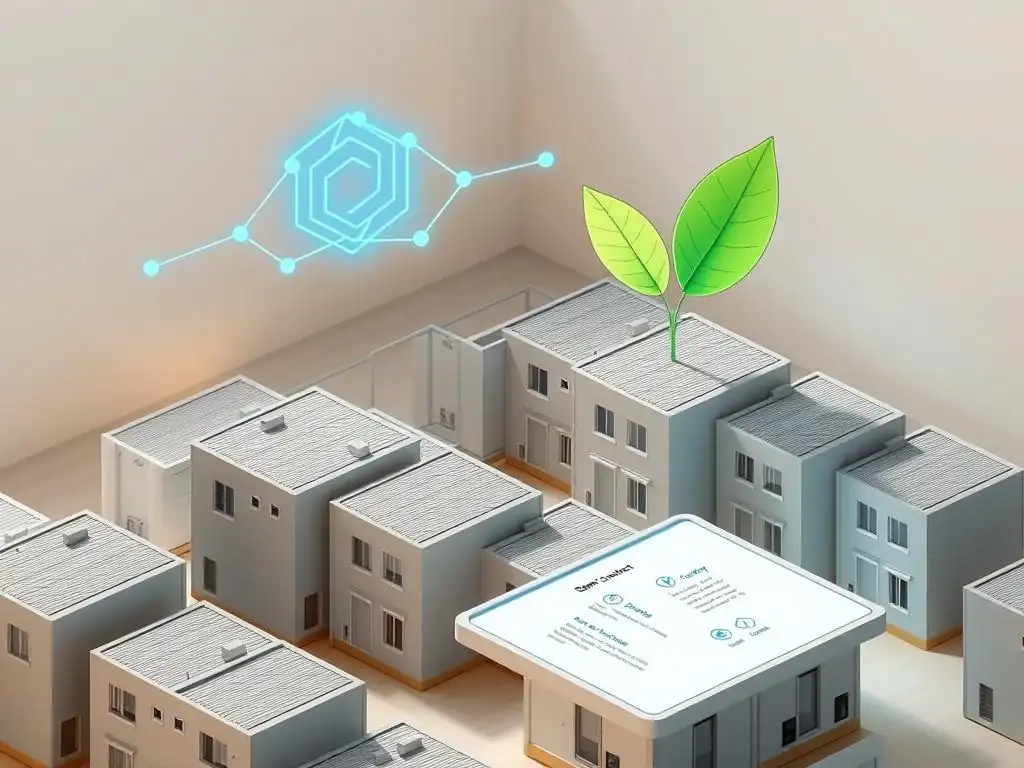
Addressing Regulatory and Legal Challenges: Insights from the U.S. and EU Frameworks
The adoption of smart contracts in real estate, including for affordable housing, faces significant regulatory and legal hurdles. Current real estate laws and regulations in jurisdictions like the U.S. and EU are largely based on traditional paper-based contracts and centralized record-keeping systems (like county land registries). For smart contracts to be legally binding and enforceable, existing legal frameworks need to be adapted or new ones created.
In the U.S., property law is primarily governed at the state level, leading to a patchwork of regulations. While some states, like Arizona and Tennessee, have passed legislation recognizing signatures and records secured by blockchain, the legal status of a fully automated smart contract as a legally binding real estate agreement is still largely untested in courts. Issues like contract interpretation, dispute resolution, and consumer protection need clear legal guidance.
Similarly, within the EU, while there is increasing recognition of digital contracts, applying them to real estate transactions involving land transfer faces challenges related to national property law requirements, which often mandate specific forms (e.g., notarized deeds) and registration processes. The eIDAS Regulation provides a framework for electronic identification and trust services for electronic transactions in the EU, but its application to complex smart contract real estate deals requires clarification.
Overcoming these barriers requires collaboration between legal experts, regulators, and blockchain technologists to develop clear legal standards, frameworks for enforcing smart contracts, and mechanisms for integrating blockchain-based processes with existing legal infrastructure. This is a critical step for enabling widespread adoption of smart contracts affordable housing solutions.
Ensuring Data Privacy and Security in Smart Contract Implementations: GDPR Compliance and Encryption Techniques
While blockchain offers transparency and security, implementing smart contracts for real estate, especially affordable housing, raises crucial data privacy concerns. Real estate transactions and property management involve sensitive personal information about buyers, sellers, tenants, and financial details. Public blockchains, while transparent, record data that is accessible to anyone, which can conflict with privacy regulations like the General Data Protection Regulation (GDPR) in the EU or various privacy laws in the U.S. GDPR, for instance, grants individuals rights regarding their personal data, including the right to erasure (the "right to be forgotten"), which is fundamentally challenging on an immutable blockchain.
Addressing these privacy concerns requires careful design of smart contract systems. Using permissioned or private blockchains, where access is restricted to authorized participants, can limit data visibility. Alternatively, storing sensitive personal data off-chain while using the blockchain solely for transaction hashes or limited, anonymized data points is a common strategy.
Encryption techniques, such as zero-knowledge proofs, can allow verification of information (e.g., verifying income eligibility for affordable housing) without revealing the underlying sensitive data itself. Smart contract code must also be rigorously audited to prevent vulnerabilities that could lead to data breaches or loss of funds. Implementing robust security practices and designing systems with privacy-by-design principles are essential for building trust and ensuring compliance when deploying smart contracts affordable housing applications.
Overcoming Technological Barriers and Scalability Issues: Layer 2 Solutions and Interoperability
Current blockchain technology, particularly public networks like Ethereum (though improving), has faced limitations regarding transaction speed, cost (gas fees), and scalability. Processing a high volume of real estate transactions, including numerous smaller transactions related to fractional ownership or automated rent payments for smart contracts affordable housing initiatives, can be expensive and slow on some mainnet blockchains. Scalability issues could hinder mass adoption and make the technology impractical for large-scale affordable housing programs.
Fortunately, significant progress is being made in overcoming these technological barriers. Layer 2 scaling solutions, such as rollups (Optimistic and ZK-rollups), Lightning Network, and sidechains, process transactions off the main blockchain (Layer 1) and periodically batch or anchor them back to the mainnet for security. These solutions can increase transaction throughput dramatically and reduce costs.
For example, some Layer 2 solutions claim to handle thousands or even tens of thousands of transactions per second at minimal cost, compared to the limited transactions per second and variable fees on some Layer 1 networks. Interoperability between different blockchains and traditional systems is another challenge.
Real estate involves interaction with banks, government agencies, and existing databases. Solutions like cross-chain bridges and API integrations are being developed to allow different systems and blockchains to communicate and exchange data securely, which is vital for the smooth functioning of smart contracts affordable housing platforms that need to interact with traditional financial institutions or government subsidy systems.
Promoting User Adoption and Education for Smart Contract Systems: Community Outreach and Training Programs
A significant barrier to the widespread adoption of smart contracts in affordable housing is the lack of familiarity and understanding among key stakeholders, including residents, property managers, non-profit organizations, and government officials. The technology can seem complex or intimidating, leading to resistance to change. For smart contracts affordable housing initiatives to succeed, extensive user adoption and education efforts are required.
This involves developing user-friendly interfaces and applications that abstract away the underlying blockchain complexity, making it easy for residents to pay rent or submit maintenance requests via a simple mobile app, or for administrators to manage properties through an intuitive dashboard. Beyond user interface design, comprehensive community outreach and training programs are essential. This could involve workshops explaining the benefits and mechanics of using smart contract-based systems for residents, providing technical training for property managers on new digital tools, and educating government partners on the transparency and efficiency gains.
Pilot programs with dedicated support teams can help build confidence and demonstrate the practical advantages of the technology in a real-world setting. Successful adoption hinges not just on the technology itself, but on effectively empowering the people who will use it daily.
Real-World Examples and Case Studies of Smart Contracts in Affordable Housing
Case Study 1: Propy’s Blockchain-Based Property Transactions in California Rent-to-Own Programs
Propy is a real estate transaction platform that utilizes blockchain technology and smart contracts to streamline the property buying process. While not exclusively focused on affordable housing, Propy has conducted blockchain-based property transactions in the U.S., including in California, which has various affordable housing challenges and programs like rent-to-own. Propy's platform aims to automate many steps of a real estate closing, such as escrow, title transfer, and fund disbursement, using smart contracts on a blockchain like Ethereum or Binance Smart Chain. In some transactions, they have facilitated the transfer of property NFTs (Non-Fungible Tokens) representing ownership.
For a rent-to-own program, where a tenant leases a property with an option to purchase it later, smart contracts could automate the tracking of rent payments that contribute towards a down payment, the calculation of the purchase price over time, and the eventual transfer of ownership if the tenant exercises their option. Propy's work in digitizing and automating property transactions demonstrates the technical feasibility of using smart contracts for complex real estate agreements.
While specific public data on Propy's direct impact on affordable housing costs or the number of smart contracts affordable housing units facilitated is limited, their case studies in automating general real estate closings show potential reductions in transaction time (reportedly from weeks to days in some pilots) and associated costs, which could be leveraged to make rent-to-own or similar programs more efficient and potentially more accessible.
Case Study 2: ShelterZoom’s Platform for Tokenized Affordable Housing Investments in Canada
ShelterZoom is another company exploring blockchain solutions for real estate. They have developed platforms for tokenizing real estate assets and facilitating transactions. While their focus spans various property types, the concept of tokenization is highly relevant to funding affordable housing.
In Canada, where housing affordability is a major issue in cities like Vancouver and Toronto, ShelterZoom's approach could potentially enable new investment models for affordable housing projects. By tokenizing a development project or a portfolio of affordable units, developers or non-profits could sell digital tokens representing shares of ownership or investment units to a broader range of investors, potentially lowering the minimum investment threshold compared to traditional real estate investment funds.
A smart contract would govern the terms of these investment tokens, including how rental income (if any) is distributed, how the value of the tokens is determined, and the rules for trading the tokens on a secondary market. This fractional investment model, enabled by smart contracts, could unlock new sources of capital for building and maintaining affordable housing, moving beyond reliance solely on government subsidies or large institutional investors.
While specific public data on the number of affordable housing units funded or the exact cost savings achieved through ShelterZoom's platform are not widely available, their initiatives demonstrate how smart contracts can create liquid, accessible investment opportunities that could funnel much-needed capital into smart contracts affordable housing developments.
Analyzing the Results and Impact of These Implementations
Analyzing the results and impact of smart contract implementations in the nascent field of blockchain real estate, particularly concerning affordable housing, requires looking at both direct outcomes and potential inferences. In cases like Propy's general transaction automation, reported outcomes often focus on efficiency gains, such as reducing closing times significantly—from an average of 30-45 days for traditional closings down to a few days or even hours in some pilot transactions.
While this doesn't directly measure a reduction in the price of housing, the reduction in associated transaction costs (legal fees, escrow fees, title insurance process costs) can be substantial, potentially amounting to thousands of dollars per transaction. For affordable housing, where margins are thin, these cost savings could either reduce the final price for a buyer/tenant or make a project more financially viable for a developer.
For platforms enabling tokenized investment, like ShelterZoom's approach, the impact is less about individual transaction speed and more about democratizing access to real estate investment and potentially increasing liquidity. By lowering the minimum investment (e.g., from $50,000+ in a traditional fund to potentially $100-$1,000 via tokens), these platforms could tap into a wider pool of investors, including smaller accredited investors or even retail investors depending on regulatory frameworks.
While specific affordable housing projects funded this way are still emerging, the potential impact is significant: enabling non-profits or developers to raise capital more efficiently and potentially at a lower cost than traditional financing, which could directly benefit smart contracts affordable housing supply. The overall impact, while still in early stages, points towards the technology's capacity to reduce friction, lower costs, and open new financial avenues, all of which are crucial for tackling the affordability challenge.
The Future of Affordable Housing: Blockchain and Smart Contract Predictions
Emerging Trends in Smart Contract Technology for Real Estate: Integration with IoT and AI
The future of smart contracts in real estate, including smart contracts affordable housing applications, will likely see increasing integration with other emerging technologies like the Internet of Things (IoT) and Artificial Intelligence (AI). IoT devices, such as smart locks, sensors monitoring property conditions (temperature, humidity, structural integrity), and smart meters for utilities, can provide real-time, verifiable data inputs for smart contracts.
For example, a smart contract governing a property management agreement could automatically release payment to a maintenance crew upon verification from an IoT sensor that a repair (like fixing a leak) has been completed and the condition normalized. Or, a smart lease could adjust utility payments based on real-time data from smart meters.
AI can be used to analyze the vast amounts of data generated by blockchain transactions and IoT devices to gain insights into property performance, market trends, and tenant behavior. AI algorithms could predict maintenance needs based on sensor data, optimize rental pricing in mixed-income developments, or even evaluate potential affordable housing development sites based on tokenized land data and zoning regulations encoded into smart contracts.
The combination of smart contracts for automated execution, blockchain for secure data storage, IoT for real-world data input, and AI for data analysis and prediction creates a powerful technological stack that could revolutionize property management, development, and investment, making smart contracts affordable housing initiatives more efficient, responsive, and data-driven.
Potential for Decentralized Autonomous Organizations (DAOs) in Affordable Housing: Community-Led Housing Cooperatives
Decentralized Autonomous Organizations (DAOs), organizations run by rules encoded as computer programs (often smart contracts) that are transparent and controlled by organization members rather than a central authority, hold significant potential for future affordable housing models, particularly community-led initiatives. DAOs could provide a framework for managing housing cooperatives or community land trusts in a highly transparent and democratic manner. The rules for membership, contributions, decision-making (e.g., voting on budgets, maintenance priorities, or new members), and profit/loss sharing could all be encoded within smart contracts governing the DAO.
In a DAO-managed housing cooperative, residents or community members could own governance tokens that grant them voting rights on key decisions affecting the property or cooperative. Smart contracts could automate the collection of monthly fees, manage a shared maintenance fund, and enforce community rules based on member votes. This model empowers residents, increases transparency in governance and finances, and potentially reduces administrative overhead compared to traditional co-op management structures. DAOs represent an advanced application of smart contracts affordable housing, enabling truly decentralized and community-controlled housing solutions that align with the principles of collective ownership and shared benefit.
The Role of Smart Contracts in Creating More Equitable Housing Markets
Ultimately, smart contracts have the potential to contribute to creating more equitable housing markets by increasing transparency, reducing costs, and lowering barriers to access. By automating processes and reducing reliance on intermediaries, smart contracts can make real estate transactions more affordable, benefiting low- and moderate-income individuals directly by reducing closing costs or indirectly by making affordable housing projects more financially viable to develop. Tokenization, enabled by smart contracts, can democratize real estate investment, allowing individuals to invest in property with smaller amounts of capital, potentially providing a new avenue for wealth building.
Furthermore, smart contracts can enforce fair terms and conditions transparently. In affordable housing programs, smart contracts can ensure that eligibility criteria are applied consistently, that subsidies are disbursed correctly, and that properties remain affordable for the agreed-upon period.
By providing an immutable and auditable record of transactions and agreements on the blockchain, smart contracts reduce the potential for discrimination, fraud, or mismanagement that can disproportionately affect vulnerable populations. While significant challenges remain, the core capabilities of smart contracts—automation, transparency, and security—position them as powerful tools for building a more efficient, accessible, and equitable housing ecosystem, significantly impacting the future of smart contracts affordable housing initiatives.
Conclusion: Smart Contracts as a Catalyst for Affordable Housing Solutions
Recap of the Benefits and Potential of Smart Contracts
Smart contracts, powered by blockchain technology, offer transformative potential for addressing the multifaceted challenges of the affordable housing crisis. We have explored how these self-executing digital agreements can significantly enhance transparency, boost efficiency, and improve security across the entire real estate lifecycle. From streamlining property management and automating rent collection to facilitating innovative fractional ownership models and increasing transparency in development projects, smart contracts provide concrete solutions to reduce the high costs and administrative burdens traditionally associated with providing and managing affordable housing. The ability to automate complex processes, reduce reliance on intermediaries, and provide an immutable record of transactions on a decentralized ledger creates a foundation for more cost-effective and trustworthy housing initiatives.
Real-world examples, such as Propy's work in automating property transactions and ShelterZoom's exploration of tokenized real estate investment, demonstrate that the application of smart contracts in real estate is moving beyond theoretical discussions into practical implementation. While these examples may not always directly measure impact within dedicated affordable housing programs, they showcase the technological feasibility and potential benefits—like reduced transaction times and costs, and new avenues for capital formation—that are directly applicable to making smart contracts affordable housing solutions a reality.
Overcoming existing barriers related to regulation, privacy, technology, and user adoption requires concerted effort, but the potential rewards in terms of increased housing affordability and accessibility are substantial.
Call to Action: Encouraging Innovation and Collaboration in the Blockchain Real Estate Space
The journey towards leveraging smart contracts for widespread affordable housing solutions is still in its early stages. Realizing the full potential of smart contracts affordable housing initiatives requires continued innovation, strategic collaboration, and proactive engagement from all stakeholders. Developers of blockchain and smart contract platforms must continue to improve scalability, reduce costs, and enhance user-friendliness. Real estate professionals, property managers, and affordable housing non-profits should explore pilot programs and adopt new technologies to identify best practices and demonstrate tangible benefits.
Crucially, regulators and policymakers must work towards creating clear legal frameworks that recognize and support the use of smart contracts in real estate transactions, ensuring consumer protection while fostering innovation. Investors and financial institutions have a role to play in exploring new funding models enabled by tokenization. Finally, educating communities and future users about the benefits and safe use of smart contract systems is paramount for successful adoption.
By fostering a collaborative environment focused on innovation and practical implementation, we can harness the power of smart contracts to build a more efficient, transparent, and equitable future for affordable housing globally. Let us actively explore and implement smart contracts affordable housing solutions to make a tangible difference in the lives of those struggling with housing insecurity.
Frequently Asked Questions
What role can smart contracts play in making affordable housing more accessible?
Smart contracts can streamline processes like rent collection and property management, reducing administrative costs and potentially lowering housing costs for tenants. They also offer greater transparency and security in housing agreements.
How can smart contracts help with funding affordable housing projects?
Smart contracts can facilitate tokenization of real estate assets, allowing smaller investors to participate in funding projects. This can unlock new sources of capital and accelerate the development of affordable housing units.
What are the key challenges to implementing smart contracts in the affordable housing sector?
Challenges include the lack of awareness among stakeholders, the complex regulatory landscape surrounding real estate, and the need for standardized smart contract templates that comply with legal requirements.
How can smart contracts ensure fairness and prevent discrimination in affordable housing applications?
Smart contracts can be programmed to enforce objective criteria for applicant selection, minimizing bias and promoting fair and transparent allocation of housing resources. This enhances accountability and reduces the risk of discriminatory practices.
What is the future outlook for smart contracts in the affordable housing market?
The future looks promising, with increasing adoption expected as blockchain technology matures and regulatory frameworks become clearer. This could lead to more efficient, transparent, and equitable affordable housing solutions.
Okay, here's a final reflection designed for your article "The Potential of Smart Contracts for Affordable Housing Initiatives," optimized for the keyword "Smart contracts affordable housing" and following the structure you provided:
Final Reflection: Building Futures with Blockchain
The exploration of smart contracts within affordable housing initiatives reveals a powerful synergy, demonstrating that technology can be a catalyst for social good. While the challenges are real, the potential to streamline processes, increase transparency, and ultimately expand access to affordable housing is undeniable. This isn't just about code; it's about building a more equitable future, brick by digital brick.
The promise of smart contracts to revolutionize affordable housing extends beyond mere efficiency. It touches upon the very core of community development and financial inclusion. Witnessing the potential to empower marginalized communities through decentralized solutions is profoundly inspiring. The future of housing is not just about building more homes, but about building more equitable systems.
This sentiment underscores the urgent need to explore and implement innovative solutions like smart contracts to address the global housing crisis.
As we conclude this exploration, I invite you to consider your role in shaping this future. How can you, whether as a developer, policymaker, or simply an engaged citizen, contribute to leveraging the power of smart contracts for affordable housing? Let us embrace this technology not just as a tool, but as a means to build a more just and sustainable world, one smart contract, one affordable home, at a time.
Unveil the Future of Housing: Take Action Now!
Thanks for exploring the game-changing potential of smart contracts in affordable housing. You've now got a glimpse into how blockchain technology can revolutionize access to homes. Ready to contribute to a more equitable future?
Here's how you can get started:
- Explore local affordable housing initiatives and identify opportunities to integrate smart contract solutions. This is your primary action to drive real change.
- Share this article with policymakers and housing advocates to spark crucial conversations about innovation in the sector.
- Dive deeper into the world of decentralized autonomous organizations (DAOs) and consider how they could be used to manage community-owned housing.
What innovative smart contract applications will you champion to make affordable housing a reality?
Leave a Reply