
Real Estate Reimagined: Tokenization and the Future of Property Ownership with Blockchain


Welcome to Blockchain Trends, your guide to the ever-evolving world of decentralized innovation. Are you ready to witness the future of property ownership? Dive into our latest article, "Real Estate Reimagined: Tokenization and the Future of Property Ownership with Blockchain," and discover how blockchain real estate tokenization future isn't just a concept, but a rapidly approaching reality. Uncover the potential benefits, challenges, and transformative impact this technology will have on the real estate landscape – and perhaps, your own investments. What exciting possibilities await? Read on to find out!
- Introduction: Blockchain's Impact on Real Estate and the Rise of Tokenization
- The Current State of Real Estate: Challenges and Inefficiencies
- Blockchain Tokenization: A Solution for Modern Real Estate Challenges
- How Blockchain Real Estate Tokenization Works: A Deep Dive
- Benefits of Tokenizing Real Estate with Blockchain Technology
- Real-World Examples of Successful Blockchain Real Estate Tokenization Projects
- The Future of Blockchain Real Estate: Trends and Predictions
- Challenges and Risks Associated with Blockchain Real Estate Tokenization
- Overcoming the Challenges: Building a Sustainable Blockchain Real Estate Ecosystem
- Conclusion: Blockchain and the Future of Real Estate Investment
-
Frequently Asked Questions
- What is real estate tokenization and how does blockchain enable it?
- How does tokenization potentially change the future of property ownership?
- What are some key benefits of using blockchain for real estate transactions?
- What are the current regulatory challenges surrounding blockchain real estate tokenization?
- What is the expected future impact of blockchain on the real estate industry?
- Final Reflection: Embracing the Decentralized Future
- Embrace the Future: Tokenize Your Real Estate Vision Today!
Introduction: Blockchain's Impact on Real Estate and the Rise of Tokenization
Exploring the Convergence of Blockchain Technology and Real Estate Investment
The traditional real estate market, long characterized by its illiquidity, high transaction costs, and complex legal frameworks, is beginning to witness a transformative shift driven by emerging technologies. Among these, blockchain stands out as a particularly disruptive force. Its inherent properties of transparency, security, and immutability offer compelling solutions to many of the inefficiencies that have plagued property investment for centuries.
The convergence of blockchain technology with real estate investment is paving the way for new models of ownership, trading, and management, fundamentally altering how individuals and institutions interact with tangible assets. This intersection is not merely theoretical; it is leading to tangible projects and platforms globally, signaling a significant evolution in how wealth stored in physical property can be accessed and leveraged in the digital age.
This technological integration promises to unlock value by enabling previously cumbersome processes to be streamlined and made more accessible. For instance, verifying ownership and transaction history, which traditionally involves extensive manual checks and reliance on intermediaries, can be significantly simplified and secured on a distributed ledger. Furthermore, blockchain's ability to facilitate fractional ownership opens up real estate investment to a much wider pool of potential investors who might otherwise be priced out of the market.
This democratizing effect is a key aspect of how blockchain is impacting the sector, moving beyond just a technology for cryptocurrencies to become a foundational layer for asset management and investment in tangible assets like real estate. The potential for the future of blockchain real estate tokenization looks promising, offering enhanced liquidity and reduced barriers to entry.
Defining Real Estate Tokenization: A New Paradigm for Property Ownership
Real estate tokenization is the process of issuing digital tokens on a blockchain, where each token represents a fractional ownership share in a specific real estate asset. Instead of owning a physical deed to a property, an investor holds tokens that entitle them to a portion of the property's value, including potential rental income and appreciation. This transforms illiquid real estate assets into more liquid, divisible digital assets that can be traded on secondary markets.
The underlying property is typically held in a special purpose vehicle (SPV), and the tokens represent shares in that SPV, directly linking the digital token to the physical asset. This mechanism allows for the benefits of property ownership to be distributed among multiple token holders in proportion to their holdings, creating a new, flexible paradigm for investing in property.
This process leverages the transparency and security of blockchain to provide a clear and verifiable record of ownership for each token. Smart contracts, self-executing contracts with the terms of the agreement directly written into code, play a crucial role by automating distributions of income or facilitating the transfer of tokens upon sale, reducing the need for intermediaries and minimizing potential disputes.
Unlike traditional real estate investments requiring significant capital and extensive paperwork, tokenization allows investors to buy small fractions of high-value properties, potentially for as little as a few hundred dollars. This fractionalization, enabled by blockchain real estate tokenization, is redefining accessibility and offering unprecedented flexibility in portfolio construction, marking a significant step towards a more inclusive and efficient global real estate market.
The Current State of Real Estate: Challenges and Inefficiencies
Traditional Real Estate Investment: Barriers to Entry and Liquidity Issues
Traditional real estate investment is notorious for its high barriers to entry. Acquiring property, whether residential or commercial, typically requires substantial capital outlay for the down payment, closing costs, and initial renovations or maintenance. This often excludes a large segment of potential investors, limiting participation primarily to high-net-worth individuals, institutional investors, or those willing to take on significant debt.
For example, purchasing a median-priced home in many major cities can require tens or even hundreds of thousands of dollars upfront, a sum simply unattainable for the average individual. Beyond the initial cost, the process involves complex financing, legal, and administrative hurdles, making it time-consuming and often intimidating for newcomers.
Furthermore, traditional real estate is inherently illiquid. Selling a property is a lengthy process, often taking months or even years from listing to closing, depending on market conditions. This lack of liquidity means investors cannot easily access their capital when needed, tying up significant portions of their wealth in a single asset.
The transaction process involves multiple intermediaries—agents, lawyers, appraisers, escrow companies—each adding layers of complexity, cost, and time. Unlike stocks or bonds, which can be traded instantaneously on exchanges, real estate transactions are manual, paper-intensive, and subject to delays. This illiquidity and the high transaction costs are significant drawbacks for investors seeking flexibility and efficient capital deployment.
High Transaction Costs and Complex Legal Processes in Traditional Real Estate
The costs associated with buying and selling traditional real estate are substantial. These include real estate agent commissions (typically 5-6% of the property price, split between buyer's and seller's agents), legal fees for conveyancing and contract review (often thousands of dollars), appraisal fees, title insurance, escrow fees, transfer taxes, and potentially mortgage origination fees.
Cumulatively, these costs can easily amount to 8-10% or more of the property's value, significantly impacting the return on investment, especially for shorter-term holdings. For a $500,000 property, these costs could reach $40,000 to $50,000 or higher, a considerable sum that deters frequent trading or portfolio adjustments.
Beyond the financial costs, the legal and administrative processes are notoriously complex and time-consuming. Each transaction involves extensive paperwork, due diligence, and coordination among multiple parties. Verifying ownership, clearing titles, drafting and executing contracts, and recording deeds require significant legal expertise and often lengthy waiting periods.
The process is opaque, with information often siloed among different parties, leading to potential delays and complications. This complexity and the reliance on manual processes introduce friction and inefficiency, making traditional real estate investment a slow, expensive, and often frustrating endeavor compared to investing in other asset classes. The contrast highlights the potential for blockchain real estate tokenization to offer a more streamlined approach.
Blockchain Tokenization: A Solution for Modern Real Estate Challenges
Democratizing Real Estate Investment through Fractional Ownership
One of the most significant benefits of blockchain real estate tokenization is its ability to democratize access to property investment. By dividing a single property into thousands or millions of digital tokens, investors can purchase fractions of expensive assets that were previously out of reach.
This means someone can invest in a portion of a high-rise commercial building in a prime location or a luxury resort with a relatively small amount of capital, potentially starting from just a few hundred dollars. This fractional ownership model lowers the financial barrier to entry dramatically, opening up the real estate market to a broader range of investors, including those with limited capital or those looking to start small.
This democratization fosters greater financial inclusion and allows individuals to participate in investment opportunities that were traditionally reserved for wealthy individuals or large institutions. It transforms real estate from an exclusive asset class into one that is accessible to the mass market, similar to how stock markets allow fractional ownership of companies. The ability to invest in small increments across multiple properties also allows for greater portfolio diversification, which is crucial for managing risk. This shift is fundamentally changing the landscape of real estate investment, making it possible for a wider population to build wealth through property ownership.
Enhancing Liquidity in the Real Estate Market with Tokenized Assets
Traditional real estate's illiquidity is a major drawback, but blockchain real estate tokenization offers a powerful solution by creating a secondary market for tokenized assets. Once a property is tokenized, the digital tokens representing ownership can be traded much more easily and quickly than physical property. These tokens can be listed and traded on specialized security token exchanges, potentially allowing investors to buy or sell their shares within minutes or hours, rather than months. This dramatically increases the liquidity of real estate assets, giving investors greater flexibility to enter or exit positions as needed.
The enhanced liquidity makes real estate a more attractive investment class, particularly for those who need the ability to access their capital more readily. It allows investors to respond more dynamically to market changes or personal financial needs. While the secondary market for tokenized real estate is still developing, the potential for rapid and efficient trading is immense.
This increased liquidity also contributes to more accurate price discovery, as continuous trading activity can provide a clearer market value for the underlying property. The future of blockchain real estate tokenization hinges significantly on the successful development and adoption of these liquid secondary markets.
Reducing Transaction Costs and Streamlining Processes via Blockchain
Blockchain technology inherently reduces the need for numerous intermediaries and simplifies complex processes, leading to significant cost savings in real estate transactions. By recording ownership and transaction history on a transparent, immutable ledger, blockchain minimizes the need for extensive title searches and reduces the risk of title fraud. Smart contracts can automate key aspects of the transaction, such as the transfer of tokens upon payment, escrow functions, and the distribution of rental income, eliminating the need for escrow agents and reducing legal complexities.
The elimination or reduction of intermediaries like brokers, lawyers (for certain functions), and escrow companies directly lowers the associated fees and commissions. While some costs will remain, such as platform fees or regulatory compliance costs, the overall transaction costs for buying and selling tokenized real estate are expected to be significantly lower than traditional methods, potentially reducing them by several percentage points of the property value.
Furthermore, the speed of transactions increases dramatically. Instead of weeks or months, a tokenized property transaction could potentially be completed in a matter of hours or even minutes, streamlining the entire investment process and making it far more efficient.
How Blockchain Real Estate Tokenization Works: A Deep Dive
Understanding the Tokenization Process: From Property to Digital Asset
The process of tokenizing real estate involves several key steps to transform a physical property into a digital asset represented by tokens on a blockchain. Initially, the property owner or a real estate tokenization platform establishes a legal structure, often a Special Purpose Vehicle (SPV), to hold the ownership of the physical property. This SPV then issues digital tokens that represent shares or equity in that legal entity.
The total number of tokens issued corresponds to the total value or equity of the property held within the SPV. For instance, a property valued at $10 million might be divided into 10 million tokens, each representing $1 of ownership.
The next critical step involves conducting thorough legal and financial due diligence on the property and the legal structure. This ensures that the asset is legitimate, the title is clear, and the legal framework supporting the tokenization is sound. An appraisal is performed to determine the property's market value, which forms the basis for the token issuance.
Once the legal and financial groundwork is complete, the digital tokens are created on a chosen blockchain platform, such as Ethereum (using standards like ERC-20 for security tokens) or other security token platforms like Tezos or Algorand. These tokens are then offered for sale to investors, either through a Security Token Offering (STO) or via a regulated trading platform. Each token transaction, including initial issuance and subsequent transfers, is recorded on the blockchain, providing a transparent and immutable ledger of ownership.
Smart Contracts and Their Role in Automating Real Estate Transactions
Smart contracts are self-executing pieces of code stored on the blockchain that automatically carry out predefined actions when specific conditions are met. In the context of blockchain real estate tokenization, smart contracts are fundamental to automating various aspects of property ownership and management.
They encode the rules governing the tokens, such as how fractional ownership is managed, how rental income is distributed to token holders, and how voting rights (if applicable) are exercised. For example, a smart contract can be programmed to automatically distribute a percentage of monthly rental income directly to the digital wallets of all token holders based on their proportional ownership, eliminating the need for manual calculations and transfers.
Smart contracts also play a crucial role in facilitating the transfer of tokenized property ownership. When an investor sells their tokens on a secondary market, the smart contract can verify that the buyer has sufficient funds and, upon receiving payment (often in cryptocurrency or stablecoins), automatically transfer the tokens to the buyer's wallet. This automation reduces reliance on escrow agents and speeds up the settlement process considerably.
Furthermore, smart contracts can enforce compliance rules, such as verifying investor accreditation status if required by regulations before allowing a token purchase. Their ability to execute agreements automatically, transparently, and without intermediaries makes them a cornerstone of the efficiency and trust promised by blockchain real estate tokenization.
Navigating the regulatory landscape is one of the most critical challenges for blockchain real estate tokenization, particularly in jurisdictions like the United States. In the US, tokenized real estate is typically considered a security because it represents an investment contract where investors expect to profit from the efforts of a third party (the property manager or platform operator). As such, these tokens fall under the purview of the Securities and Exchange Commission (SEC). Issuers of real estate tokens must comply with federal securities laws, which include requirements for registration or qualification for an exemption from registration.
Common exemptions used for security token offerings include Regulation D (Rule 506(c) for accredited investors) or Regulation A+ (allowing offerings to non-accredited investors up to certain limits, with public solicitation). Compliance involves significant legal work, including drafting offering documents, conducting audits, and adhering to ongoing reporting requirements. Platforms listing and trading these security tokens must also be registered as Alternative Trading Systems (ATS) or broker-dealers with the SEC, and potentially with FINRA.
The complexity and cost of complying with these regulations are significant factors that can impact the viability and scalability of blockchain real estate tokenization projects in the US. Ensuring compliance is paramount for the legitimate and sustainable future of blockchain real estate tokenization.
Benefits of Tokenizing Real Estate with Blockchain Technology
Increased Accessibility and Affordability for Investors
Blockchain real estate tokenization significantly lowers the entry barrier for individuals wanting to invest in property. Traditionally, real estate investment required large sums of capital, making it inaccessible to average investors. Tokenization allows properties to be fractionalized into digital tokens, each representing a small share of ownership. This means investors can buy into high-value assets like commercial buildings or luxury properties for much smaller amounts, sometimes just a few hundred dollars. This affordability opens up the real estate market to a much broader range of people globally, democratizing an asset class that was previously largely confined to the wealthy.
This increased accessibility also enables investors to diversify their portfolios more easily. Instead of concentrating a large sum into a single property, an investor can spread a smaller amount across multiple tokenized properties in different locations or asset classes (e.g., residential, commercial, industrial). This diversification helps mitigate risk and provides investors with greater control over their investment strategy. The ability to participate in the real estate market with modest capital is a game-changer for financial inclusion and wealth building.
Greater Transparency and Security in Real Estate Transactions
Blockchain's inherent characteristics of transparency and immutability provide a significant boost to security and trust in real estate transactions. Every transaction involving the tokenized asset, from the initial issuance to subsequent trades, is recorded on a public or permissioned blockchain ledger. This ledger is immutable, meaning records cannot be altered or deleted, creating a permanent and verifiable history of ownership and transactions. This transparency reduces the risk of fraud, disputes over ownership history, and hidden liens or encumbrances.
Furthermore, smart contracts automate transaction execution based on predefined rules, reducing the potential for human error or malicious manipulation during the transfer process. The security of the blockchain itself, based on cryptographic principles and distributed consensus mechanisms, makes it extremely difficult for unauthorized parties to tamper with the records. This enhanced security and transparency build greater confidence among investors and stakeholders, streamlining due diligence and reducing the need for extensive manual verification steps, contributing to a more trustworthy system for blockchain real estate tokenization.
Improved Portfolio Diversification Opportunities Through Tokenized Assets
Tokenization allows investors to easily build diversified real estate portfolios by acquiring fractional ownership in multiple properties across different types, locations, and risk profiles. Instead of being limited to investing in one or two properties with significant capital, an investor can allocate smaller amounts to a variety of tokenized assets. For example, an investor could simultaneously hold tokens representing shares in a residential building in New York, a commercial property in London, and a logistics center in Singapore.
This level of granular diversification was previously impractical for most investors due to the high cost and complexity of traditional real estate transactions. Tokenization makes it as easy to diversify across real estate assets as it is to diversify across different stocks or bonds in a brokerage account. By spreading investments across various properties, investors can reduce their exposure to the risks associated with a single asset or market, potentially improving risk-adjusted returns. This enhanced diversification capability is a key benefit enabled by blockchain real estate tokenization.
Enhanced Efficiency and Speed in Property Transfers
Traditional real estate transactions are notoriously slow, often taking months to complete due to the need for extensive paperwork, legal reviews, financing approvals, and manual record-keeping. Blockchain real estate tokenization dramatically accelerates this process. Once a property is tokenized, the ownership is represented by digital tokens that can be transferred between parties much faster than physical deeds. Using smart contracts to automate the transaction execution allows for near-instantaneous settlement once the agreed-upon conditions (e.g., payment) are met.
The elimination of many manual steps and intermediaries streamlines the entire process, reducing the time from initiating a transaction to final settlement from months to potentially hours or even minutes for secondary market trades of tokens. This increased efficiency benefits both buyers and sellers, providing greater speed, lower costs, and a more predictable transaction timeline. The ability to execute real estate transactions with the speed and efficiency of digital asset transfers is a major leap forward and a significant part of the appeal of the future of blockchain real estate tokenization.
Real-World Examples of Successful Blockchain Real Estate Tokenization Projects
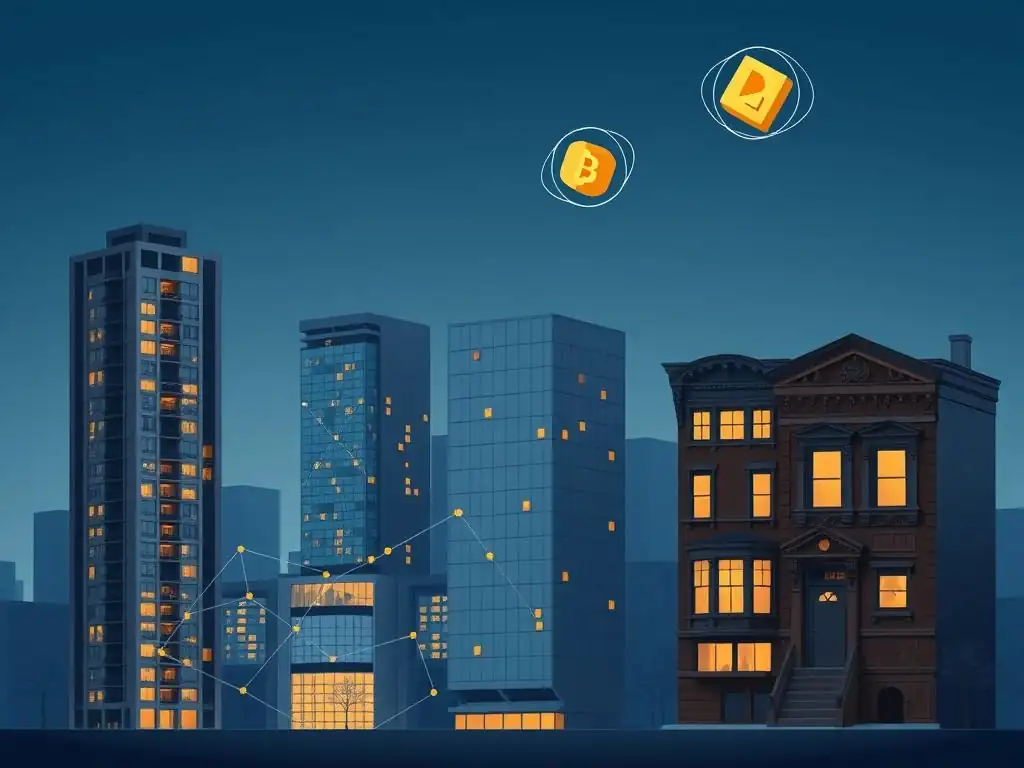
Case Study 1: Aspen Coin - Tokenizing a Luxury St. Regis Resort
One notable early example of real-world blockchain real estate tokenization is the St. Regis Aspen Resort in Colorado. In 2018, the property owners tokenized approximately $18 million worth of equity in the resort through a security token offering (STO). The tokens, known as Aspen Coins (ASPD), were issued on the Ethereum blockchain and represented fractional ownership in the property's limited partnership. This initiative aimed to provide liquidity to the property owners and offer accredited investors the opportunity to invest in a high-value, trophy asset without needing to purchase the entire property or a large traditional share.
The Aspen Coin STO demonstrated the feasibility of using blockchain to represent equity in significant real estate assets and distribute ownership among multiple investors. While the initial trading volume on secondary markets was limited, the project successfully navigated the complexities of issuing a regulated security token backed by a physical property. It highlighted the potential for tokenization to unlock value in luxury or commercial real estate by making ownership more divisible and potentially more tradable in the future, setting a precedent for similar high-value asset tokenization efforts.
Case Study 2: tZERO - A Security Token Exchange for Real Estate and Other Assets
tZERO is a prominent example of a regulated trading platform specifically designed for security tokens, including those representing real estate. While tZERO itself isn't a tokenization platform for specific properties, it provides the crucial infrastructure for trading these tokenized assets on a compliant secondary market.
Several real estate assets have been tokenized and listed on the tZERO ATS (Alternative Trading System), allowing investors to buy and sell shares represented by digital tokens. For instance, tZERO has facilitated trading for tokens representing equity in companies that own real estate, like the tokens issued by the company owning the St. Regis Aspen Resort.
tZERO operates under SEC and FINRA regulations, providing a compliant venue for trading security tokens. Its existence is vital for the liquidity aspect of blockchain real estate tokenization. Without regulated secondary markets, the tokens would remain illiquid, defeating one of the primary purposes of tokenization. Platforms like tZERO are essential building blocks for the future of blockchain real estate tokenization, creating the necessary infrastructure for a functioning market where tokenized property shares can be traded efficiently and compliantly.
Analyzing the Results and Impact of Tokenization on Specific Real Estate Ventures
Analyzing the results of early tokenization projects reveals both successes and challenges. Projects like the St. Regis Aspen tokenization successfully demonstrated the technical and legal feasibility of representing property equity as security tokens and conducting regulated offerings. They proved that blockchain could be used to create fractional ownership in high-value assets. The impact on accessibility was clear, allowing investors to participate with smaller ticket sizes than traditional private equity real estate deals, which often require minimum investments of $100,000 or more.
However, the impact on liquidity, while a key promise, has been more gradual. Secondary market trading volume for most tokenized real estate assets has been relatively low compared to traditional securities markets. This is partly due to the nascent nature of the market, the limited number of listed assets, and ongoing regulatory evolution. Despite this, the potential remains significant.
As more properties are tokenized and more investors become comfortable with the concept and the platforms, liquidity is expected to increase. The real impact lies in proving the model and laying the groundwork for a future where blockchain real estate tokenization is a standard method for property investment and trading. Early ventures are crucial learning experiences, informing the path forward for the industry.
The Future of Blockchain Real Estate: Trends and Predictions
The Growing Adoption of Tokenization by Real Estate Developers and Investors
Looking ahead, a significant trend is the increasing interest and adoption of blockchain real estate tokenization by key players within the traditional industry. Real estate developers are exploring tokenization as a novel way to raise capital for new projects, potentially offering more flexible and efficient funding alternatives compared to traditional debt or equity financing. By issuing tokens representing future project revenue or equity, they can tap into a wider pool of global investors. Investors, both institutional and individual, are becoming more aware of the benefits of tokenization, particularly the potential for fractional ownership, increased liquidity, and greater transparency.
While still in its early stages, the market is seeing more platforms emerge offering tokenization services for various property types, from commercial buildings to residential portfolios. Industry reports predict substantial growth in the tokenized real estate market value over the next decade.
For instance, some market forecasts suggest the tokenization of real estate could reach billions or even trillions of dollars in value within the next few years, although precise figures vary widely. This growing adoption is driven by the clear advantages tokenization offers in terms of accessibility, efficiency, and liquidity, positioning it as a significant component in the future of blockchain real estate tokenization.
The Potential for Decentralized Autonomous Organizations (DAOs) in Real Estate Management
Beyond ownership and trading, blockchain technology opens up possibilities for managing real estate assets through Decentralized Autonomous Organizations (DAOs). A DAO is an organization governed by rules encoded as computer programs (smart contracts) on a blockchain, without central management. In real estate, a DAO could potentially manage a portfolio of tokenized properties. Token holders could collectively vote on decisions related to property management, such as selecting tenants, approving maintenance budgets, or even deciding on the sale of a property.
This model could increase transparency and democratic participation in property management, giving fractional owners a direct voice in how the assets are handled. For example, a DAO could hold tokens representing shares in a rental property, with smart contracts automating rent collection and distribution, while token holders vote on major repairs or management personnel. While still largely experimental for large-scale commercial real estate, the potential for DAOs to create more transparent, efficient, and community-driven property management structures is a fascinating aspect of the future of blockchain real estate.
Predicting the Long-Term Impact of Blockchain on the Future of Property Ownership
The long-term impact of blockchain on the future of property ownership is likely to be profound, potentially reshaping how we perceive, invest in, and manage real estate. We can predict a future where fractional ownership of diverse property types becomes commonplace, making real estate investment as accessible as buying shares in a company. This will democratize wealth creation opportunities and allow for more sophisticated portfolio management for the average investor. The increased liquidity brought by secondary trading markets for tokenized assets will transform real estate from a static, long-term hold into a more dynamic asset class.
Furthermore, the inherent transparency and security of blockchain will likely reduce fraud, streamline legal processes, and lower transaction costs significantly over time. This could lead to more efficient markets and potentially lower prices for consumers by cutting out unnecessary intermediaries.
While challenges remain, including regulatory hurdles and market adoption speed, the trajectory suggests that blockchain real estate tokenization is not just a niche application but a foundational technology that will underpin a more accessible, liquid, and efficient global property market in the decades to come. The future of blockchain real estate tokenization points towards a more integrated and digital property ecosystem.
Challenges and Risks Associated with Blockchain Real Estate Tokenization
Regulatory Uncertainty and Compliance Issues in Different Jurisdictions
One of the most significant challenges facing blockchain real estate tokenization is the evolving and often uncertain regulatory landscape across different jurisdictions. As tokenized real estate is typically classified as a security, issuers and trading platforms must comply with complex securities laws, which vary significantly from country to country. What is permissible in one region may be illegal in another. This lack of global regulatory harmonization creates uncertainty for international projects and limits market reach.
Compliance itself is a complex and costly process. Navigating the requirements of regulatory bodies like the SEC in the US, or similar authorities in Europe or Asia, requires extensive legal expertise and can involve lengthy approval processes. Failure to comply can result in significant legal penalties, fines, and reputational damage. Furthermore, regulations are still being developed and adapted to address this new asset class, meaning the rules can change, creating ongoing compliance challenges for platforms and issuers operating in this space. Addressing this regulatory uncertainty is crucial for the widespread adoption and sustainable future of blockchain real estate tokenization.
Security Risks and Vulnerabilities in Smart Contracts and Blockchain Platforms
Despite the inherent security features of blockchain, blockchain real estate tokenization is not immune to technical risks, particularly those associated with smart contracts and the platforms they run on. Smart contracts are code, and like any code, they can contain bugs or vulnerabilities.
If a smart contract governing a tokenized property is poorly written or audited, it could be susceptible to hacks or exploits, potentially leading to loss of funds or ownership rights for token holders. The immutable nature of blockchain means that errors or malicious actions executed via a flawed smart contract can be difficult or impossible to reverse.
Furthermore, the security of the underlying blockchain platform itself is critical. While major public blockchains like Ethereum have robust security, permissioned or less-tested platforms might have vulnerabilities. Private keys used to access and manage tokens must also be securely stored, as their loss can result in permanent loss of access to the tokenized assets. While audits and best practices are evolving, ensuring the technical security of the tokenization process and ongoing management requires continuous vigilance and expertise.
Market Volatility and the Potential for Price Manipulation of Tokenized Assets
While tokenization aims to enhance liquidity, tokenized real estate assets can still be subject to market volatility and potential price manipulation, particularly in nascent or low-liquidity secondary markets. The value of the token is fundamentally linked to the value of the underlying physical property, but it can also be influenced by supply and demand dynamics on the trading platform, independent of the property's actual market value. In markets with low trading volume, a few large trades could potentially cause disproportionate price swings, making the asset volatile.
There is also a risk of price manipulation, where malicious actors could attempt to artificially inflate or deflate the price of tokens, especially if trading is concentrated on unregulated or less-monitored platforms. While regulated security token exchanges employ surveillance measures similar to traditional exchanges, the risk is higher on decentralized or less mature trading venues. Investors need to be aware that while tokenization offers benefits, it does not eliminate market risks, including volatility and the potential for manipulation, particularly as the market for blockchain real estate tokenization develops.
Overcoming the Challenges: Building a Sustainable Blockchain Real Estate Ecosystem
Collaboration Between Industry Stakeholders and Regulatory Bodies
Building a sustainable ecosystem for blockchain real estate tokenization requires close collaboration among all stakeholders: real estate developers, investors, technology providers, legal experts, and crucially, regulatory bodies. Open dialogue and cooperation are essential to develop clear, pragmatic, and consistent regulatory frameworks that protect investors while fostering innovation. Industry participants need to proactively engage with regulators to educate them about the technology and its applications, helping to shape rules that are appropriate for this new asset class.
Regulators, in turn, need to provide clarity and guidance on compliance requirements, potentially creating sandboxes or pilot programs to allow controlled testing of tokenization models. Harmonization of regulations across different jurisdictions would also significantly reduce complexity and facilitate cross-border investment in tokenized real estate. Establishing industry best practices and standards for tokenization platforms, legal structures, and smart contract development, perhaps through industry associations, can also contribute to a more trustworthy and sustainable market. This collaborative approach is key to unlocking the full potential of the future of blockchain real estate tokenization.
Implementing Robust Security Measures and Smart Contract Audits
To mitigate the technical risks associated with blockchain real estate tokenization, implementing robust security measures and rigorous smart contract auditing is paramount. Tokenization platforms must prioritize cybersecurity to protect investor data and digital assets. This includes securing wallets, implementing strong authentication protocols, and protecting against phishing and other cyber threats. The smart contracts that govern the tokenized assets should undergo thorough, independent security audits by reputable firms specializing in blockchain security.
These audits should identify and rectify any vulnerabilities in the code before the tokens are issued. Ongoing monitoring and potential bug bounty programs can also help ensure the long-term security of the smart contracts. Furthermore, educating investors about the importance of securing their private keys and using reputable, regulated platforms is vital. By prioritizing security at every layer—platform, smart contract, and user—the industry can build trust and resilience against potential exploits, which is fundamental for the growth and acceptance of blockchain real estate tokenization.
Educating Investors and Raising Awareness about the Benefits and Risks of Tokenization
A major hurdle for widespread adoption of blockchain real estate tokenization is the lack of awareness and understanding among potential investors and the broader public. Many people are still unfamiliar with blockchain technology, cryptocurrencies, or the concept of security tokens. Educating investors about how tokenization works, its potential benefits (like accessibility, liquidity, and transparency), and its associated risks (like regulatory uncertainty, market volatility, and technical risks) is crucial.
Platforms, issuers, and industry associations need to invest in clear, accessible educational materials and outreach programs. This includes explaining the legal structure behind tokenized assets, the role of smart contracts, the process of buying and selling tokens on regulated exchanges, and the due diligence investors should perform. Raising awareness about successful case studies and the long-term vision for the future of blockchain real estate tokenization can also help build confidence and encourage participation. A well-informed investor base is essential for the healthy development and growth of this emerging market.
Conclusion: Blockchain and the Future of Real Estate Investment
Tokenization as a Catalyst for Innovation and Disruption in the Real Estate Industry
Blockchain real estate tokenization represents a powerful catalyst for innovation and disruption within the traditionally slow-moving real estate industry. By enabling fractional ownership, it is fundamentally changing who can invest in real estate, making it significantly more accessible to a global pool of investors with varying levels of capital.
This democratization has the potential to unlock trillions of dollars in previously illiquid real estate value and channel new investment into the sector. The ability to trade tokenized assets on secondary markets promises to inject much-needed liquidity into an asset class long considered illiquid, offering investors greater flexibility and potentially leading to more efficient price discovery.
Moreover, the application of blockchain technology, particularly through smart contracts, is streamlining complex, paper-intensive processes, reducing transaction costs and increasing speed. This efficiency gain benefits all parties involved, from developers raising capital to investors buying and selling shares.
While challenges related to regulation, technology, and market maturity persist, the foundational benefits offered by tokenization—increased accessibility, enhanced liquidity, greater transparency, and improved efficiency—position it as a transformative force. Tokenization is not merely digitizing existing processes; it is creating entirely new possibilities for how real estate is owned, managed, and traded, setting the stage for a more dynamic and inclusive market landscape.
Embracing Blockchain Technology to Create a More Accessible, Transparent, and Efficient Real Estate Market
The journey towards a fully tokenized real estate market is ongoing, but the trajectory is clear: blockchain technology is poised to create a real estate investment environment that is significantly more accessible, transparent, and efficient than the traditional model. By lowering barriers to entry through fractional ownership, it allows a wider range of individuals to participate in wealth creation through property.
By leveraging the inherent transparency and immutability of distributed ledgers, it builds trust and reduces the potential for fraud and disputes. And by automating processes through smart contracts and enabling secondary market trading, it dramatically improves liquidity and reduces the time and cost associated with transactions.
Embracing blockchain real estate tokenization requires overcoming existing hurdles, including navigating complex regulations, ensuring robust technical security, and educating the market. However, the potential rewards—a global, liquid, and highly efficient real estate market—are substantial. As infrastructure develops, regulatory clarity improves, and adoption grows, blockchain is set to redefine the future of property ownership and investment, making real estate a more dynamic, inclusive, and attractive asset class for the 21st century. The future of blockchain real estate tokenization points towards a global transformation of the property market.
Frequently Asked Questions
What is real estate tokenization and how does blockchain enable it?
Real estate tokenization involves converting ownership rights into digital tokens on a blockchain. Blockchain provides a secure and transparent ledger, facilitating fractional ownership and easier trading of real estate assets.
How does tokenization potentially change the future of property ownership?
Tokenization can democratize access to real estate investment, allowing smaller investments through fractional ownership. This increases liquidity and efficiency in the market, leading to a more accessible and global investment landscape.
What are some key benefits of using blockchain for real estate transactions?
Blockchain offers enhanced transparency, reduced transaction costs, and increased security through immutable records. Smart contracts can automate processes like rent collection and property management, streamlining operations.
What are the current regulatory challenges surrounding blockchain real estate tokenization?
The legal landscape is still evolving, and regulations vary across jurisdictions. Clarity is needed regarding the classification of real estate tokens as securities and compliance with existing financial regulations.
What is the expected future impact of blockchain on the real estate industry?
Blockchain is expected to revolutionize the industry by increasing efficiency, accessibility, and transparency. The future of real estate may involve widespread adoption of tokenization for property ownership and investment, ultimately changing how we buy, sell, and manage properties.
Final Reflection: Embracing the Decentralized Future
The journey through blockchain real estate tokenization reveals a paradigm shift that's no longer a distant dream, but a rapidly approaching reality. The potential to democratize property ownership, increase liquidity, and streamline transactions is not just theoretical; it's actively reshaping the landscape of real estate investment as we know it. This isn't simply about technology; it's about empowering individuals and fostering a more inclusive and efficient market.
The impact of this technological revolution extends far beyond mere financial gains. It represents a fundamental shift in how we perceive and interact with property, transforming it from an often-inaccessible asset to a readily divisible and tradable commodity. This democratization has the power to reshape communities and create new opportunities for wealth creation. The future of real estate is not just about bricks and mortar, but about the seamless integration of technology to unlock value and empower individuals.
This quote encapsulates the transformative potential that blockchain brings to the table, promising a future where property ownership is more accessible and equitable.
As we stand on the cusp of this new era, let us not be passive observers. Let us embrace the possibilities that blockchain real estate tokenization offers, educate ourselves on its intricacies, and actively participate in shaping its future. Consider how you can leverage this technology to unlock new opportunities, build wealth, and contribute to a more equitable and accessible real estate market for all. The future of property ownership is being written now; let your voice be heard, and your actions contribute to a future where real estate truly belongs to everyone.
Okay, here's a CTA designed for the end of a web article titled "Real Estate Reimagined: Tokenization and the Future of Property Ownership with Blockchain," targeted for the website "Blockchain Trends" (blockchaintrends.org):
Embrace the Future: Tokenize Your Real Estate Vision Today!
Thank you for exploring the transformative potential of tokenized real estate with us. We hope you've gained a valuable understanding of how blockchain is revolutionizing property ownership. Now, let's put that knowledge into action!
Here's how you can take the next step:
- Dive Deeper: Research current platforms offering real estate tokenization and identify one that aligns with your investment goals.: This is the primary action.
- Share this article on your favorite social media platform (X, Linkedin, Facebook) to start a discussion with your network, or send the article to a friend or family member.
- Contribute to the community! Visit the Blockchain Trends forum and start a thread discussing your vision for the future of property investment and the impact of tokenization.
Ready to be a part of the revolution? What's one property you envision tokenizing and what unique benefit would this bring to investors?
Leave a Reply