
The Evolution of Blockchain Governance Models: From Centralized to Decentralized


Welcome to Blockchain Trends, your premier source for understanding the revolutionary impact of blockchain technology!
Delve into the fascinating world beyond cryptocurrencies and discover how blockchain is reshaping industries. Are you ready to explore the future of decentralized systems? In this article, we embark on a journey to understand the evolution of blockchain governance decentralized models, a critical aspect of blockchain's long-term viability and adoption. Prepare to uncover the challenges and opportunities that lie ahead, and how these models are shaping the future of this groundbreaking technology. Read on to learn more!
The Evolution of Blockchain Governance Models: From Centralized to Decentralized
- Introduction: Understanding Blockchain Governance and its Importance
- The Early Days: Centralized Governance in Blockchain's Infancy
- The Shift Towards Decentralization: Motivations and Challenges
- Exploring Different Decentralized Blockchain Governance Models
- Case Studies: Analyzing Real-World Blockchain Governance Systems
- The Future of Blockchain Governance: Trends and Innovations
- Conclusion: Embracing Decentralization and Building Sustainable Blockchain Ecosystems
-
Frequently Asked Questions
- What are the primary challenges with centralized blockchain governance models?
- How do decentralized blockchain governance models improve upon centralized systems?
- What key factors are driving the evolution of blockchain governance models?
- How do different decentralized governance models, like on-chain voting, compare in terms of efficiency and security?
- What role does regulation play in shaping the future of blockchain governance?
- Final Reflection: Embracing Decentralized Trust
- Embrace the Future: Decentralize Your Blockchain Understanding!
Introduction: Understanding Blockchain Governance and its Importance
What is Blockchain Governance? Defining Key Concepts
Blockchain governance refers to the system of rules, processes, and mechanisms by which decisions are made and implemented within a blockchain network. It encompasses how upgrades are proposed and adopted, how parameters like transaction fees or block size limits are set, and how disputes or disagreements among network participants are resolved.
Essentially, it's about how a decentralized system manages itself and evolves over time, ensuring consensus and stability among potentially disparate stakeholders such as developers, miners (or validators), token holders, and users. The effectiveness of blockchain governance models is paramount for the long-term health and adaptability of any decentralized network.
Understanding blockchain governance also involves defining key terms like consensus mechanisms (e.g., Proof-of-Work, Proof-of-Stake), which dictate how transactions are validated and blocks are added, and decision-making frameworks, which determine who has a say in protocol changes and how that influence is exercised. Whether through voting, delegated authority, or off-chain discussions, these frameworks shape the power dynamics and responsiveness of the network. The evolution of blockchain governance models reflects the ongoing search for the most robust, fair, and efficient ways to manage these complex, distributed systems as they scale and face new challenges.
Why is Blockchain Governance Crucial for Adoption and Sustainability?
Effective blockchain governance is crucial for several reasons, directly impacting a network's ability to achieve widespread adoption and long-term sustainability. Firstly, it provides a clear path for necessary technical upgrades and bug fixes. Without a defined governance process, fixing critical vulnerabilities or implementing performance improvements could lead to network forks or stagnation, hindering adoption. For instance, the Ethereum network's planned transition from Proof-of-Work to Proof-of-Stake (The Merge) required extensive governance coordination among core developers, researchers, and clients.
Secondly, governance mechanisms are essential for resolving conflicts and aligning incentives among diverse stakeholders. In a decentralized network, participants may have competing interests; miners might favor higher transaction fees, while users prefer lower ones. A well-designed governance model provides a framework for negotiating these differences and reaching consensus, preventing internal disputes from paralyzing the network. This ability to adapt and resolve conflict peacefully is vital for maintaining trust and attracting new users and developers, thereby driving the blockchain governance decentralized models evolution towards more resilient systems.
The Early Days: Centralized Governance in Blockchain's Infancy
The Genesis Block and Initial Control Mechanisms
In the very nascent stages of blockchain technology, particularly with Bitcoin, governance was inherently centralized around its creator, Satoshi Nakamoto. The initial control mechanisms were primarily dictated by the design choices embedded in the original protocol and the relatively small group of early developers who collaborated on the project. The Genesis Block itself, the first block ever mined on the Bitcoin network, contained an embedded message hinting at the contemporary financial crisis, reflecting the initial context and perhaps the philosophical underpinnings of the project laid down by Nakamoto.
This early phase was characterized by a strong reliance on the core development team's decisions regarding protocol changes and direction. While the network's operation was decentralized in terms of distributed ledger copies and mining, the power to propose and merge code changes rested heavily with a few key figures. This initial, somewhat centralized control was perhaps necessary for rapid iteration and development in the experimental phase, but it also highlighted the challenges that would arise as the network grew and the need for more robust blockchain governance decentralized models evolution became apparent.
Limitations of Centralized Blockchain Management
Centralized management, while potentially efficient for initial development, presents significant limitations for a technology fundamentally built on decentralization principles. A primary limitation is the single point of failure; if the core team or leader becomes unavailable, loses interest, or faces external pressure, the network's future direction can be jeopardized. Furthermore, centralized control contradicts the ethos of censorship resistance and distributed power that blockchain technology aims to embody. Decisions made by a small group, however well-intentioned, may not reflect the diverse needs and perspectives of a global user base and developer community.
Another significant drawback is the potential for lack of transparency and accountability compared to more open governance models. Decisions might be made behind closed doors, leading to distrust among stakeholders. For a technology aspiring to replace or complement traditional centralized systems with transparent, trustless alternatives, this inherent contradiction in governance structure is a major hurdle for widespread adoption. The limitations of early centralized blockchain governance mechanisms underscored the necessity for the blockchain governance decentralized models evolution.
Examples of Early Blockchains with Centralized Structures
Bitcoin, in its earliest phase, serves as a prime example of initial centralized influence, though its design inherently pushed towards decentralization over time through mining and node distribution. However, projects that emerged later, sometimes referred to as "altcoins" from that era, often exhibited even stronger centralized control, particularly those launched by specific companies or foundations with clear leadership structures. Ripple (XRP), for instance, has always maintained a significant degree of centralization compared to Bitcoin, with Ripple Labs holding a large portion of XRP and playing a central role in network development and validation.
Another example could be early iterations of platforms or tokens where a single entity held the majority of the tokens or controlled the majority of the mining/validation power. While some projects intentionally started with a degree of centralization for efficiency (e.g., private or consortium blockchains), public blockchains aiming for broad decentralization often struggled with this initial phase. The challenges faced by these early, more centralized systems in achieving true community buy-in and resisting external pressures highlighted the urgent need for exploring and implementing more decentralized blockchain governance models.
The Shift Towards Decentralization: Motivations and Challenges
The Rise of DAOs (Decentralized Autonomous Organizations)
The shift towards decentralization in blockchain governance was significantly propelled by the concept and implementation of Decentralized Autonomous Organizations (DAOs). DAOs are organizations represented by rules encoded as a transparent computer program, controlled by the organization members, and not influenced by a central government. In the context of blockchain governance, DAOs often manage a protocol or a project's treasury, allowing token holders to propose and vote on decisions ranging from funding new developments to implementing protocol upgrades. The DAO concept gained prominence, particularly on platforms like Ethereum, offering a potential framework for truly decentralized decision-making.
The rise of DAOs was motivated by the desire to eliminate central points of control and create governance systems that are more resilient, transparent, and inclusive. By distributing decision-making power among a wider group of stakeholders, typically proportional to their token holdings, DAOs aim to align incentives and foster a sense of ownership within the community. This model represents a significant step in the blockchain governance decentralized models evolution, moving away from relying on core teams towards a more community-driven approach, although it also introduced its own set of challenges, as seen with early DAO implementations.
Addressing the Shortcomings of Centralized Control: Security, Transparency, and Community Involvement
The shift towards decentralized blockchain governance models was a direct response to the inherent shortcomings of centralized control. Security is enhanced because decision-making is distributed, making it harder for a single entity to be compromised or coerced into making malicious changes. Transparency is dramatically increased as governance proposals, discussions, and voting records are often publicly available on the blockchain or associated forums, allowing anyone to scrutinize the process. This contrasts sharply with opaque decision-making processes in centralized systems.
Furthermore, decentralized governance aims to foster greater community involvement. By giving stakeholders a voice and a vote, projects can tap into a wider pool of expertise and ensure that the network evolves in a way that benefits its users and contributors. For example, platforms like Polkadot and Tezos implemented on-chain governance specifically to allow token holders direct participation in protocol upgrades. This increased involvement not only builds a stronger community but also ensures that the network remains relevant and adaptable, directly addressing the limitations observed in earlier, more centralized blockchain structures.
Challenges in Implementing Decentralized Blockchain Governance
Implementing truly effective decentralized blockchain governance is fraught with challenges. One major hurdle is achieving sufficient participation and engagement from token holders. Many token holders may be passive investors with little interest in technical details or governance proposals, leading to low voter turnout and potential apathy. This can result in decisions being made by a small, active minority, potentially leading to a different form of centralization or control by well-organized factions. For instance, some DAO votes have seen participation rates below 10%.
Another significant challenge is the potential for "whale" influence, where large token holders can disproportionately sway voting outcomes, leading to plutocracy rather than true democracy. There are also technical challenges, such as designing secure and efficient on-chain voting mechanisms, and social challenges, like coordinating complex discussions and reaching consensus among anonymous or pseudonymous participants across different time zones and cultures. The DAO hack of 2016 on Ethereum, which resulted in a loss of millions of dollars and a contentious hard fork, remains a stark reminder of the risks and complexities involved in pioneering decentralized governance models.
Exploring Different Decentralized Blockchain Governance Models
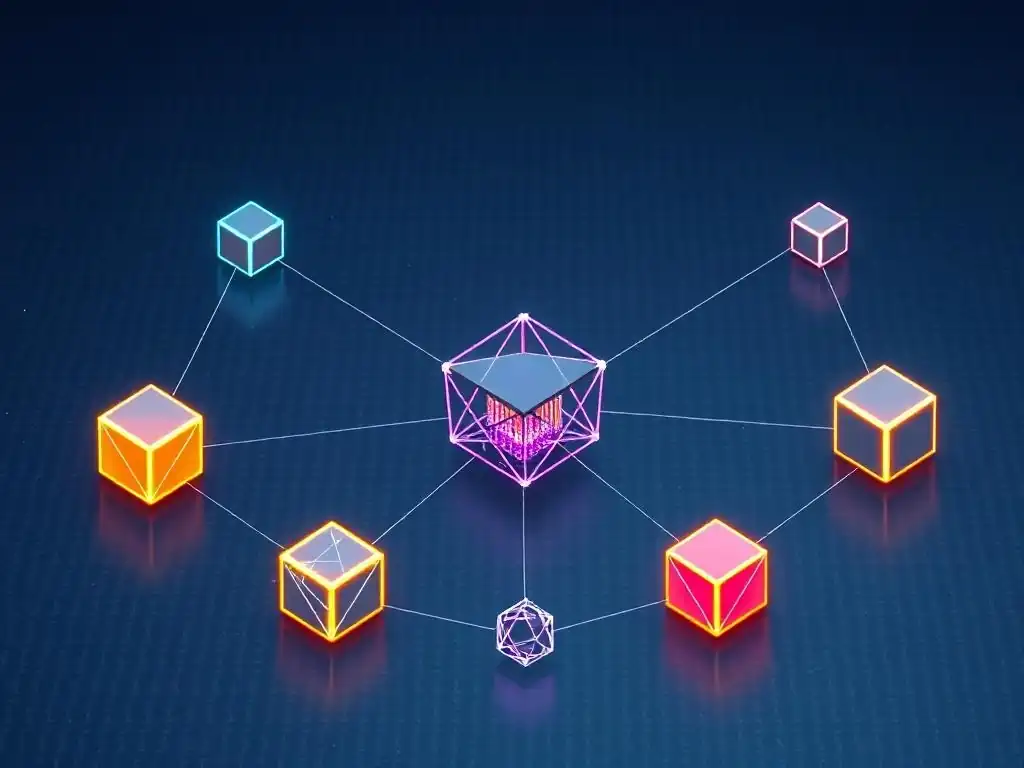
On-Chain Governance: Direct Democracy and Token-Based Voting
On-chain governance integrates the decision-making process directly into the blockchain protocol itself. This typically involves token holders using their tokens to vote on proposed changes, parameter adjustments, or funding allocations. Proposals are often submitted and executed via smart contracts, ensuring transparency and immutability of the governance process. Networks like Tezos, Polkadot, and Cosmos are prominent examples that utilize forms of on-chain governance, allowing stakeholders to directly participate in the network's evolution.
In a typical on-chain governance model, a proposal is submitted, often requiring a bond to prevent spam. The proposal then enters a voting period, during which token holders can cast their votes, usually weighted by the amount of tokens they hold. If the proposal receives sufficient support (meeting predefined thresholds for participation and approval), it is automatically implemented by the protocol. This direct, programmatic approach to decision-making is a key aspect of the blockchain governance decentralized models evolution, aiming for maximum transparency and resistance to off-chain political maneuvering.
Advantages of On-Chain Governance: Transparency and Immediacy
One of the primary advantages of on-chain governance is its inherent transparency. All proposals, votes, and outcomes are recorded on the public ledger, providing an auditable history of the decision-making process. This radical transparency helps build trust among participants and allows anyone to verify that the governance rules are being followed. For example, on Tezos, every governance cycle, from proposal to activation, is visible on block explorers.
Another significant advantage is the potential for immediacy in implementing approved changes. Once a proposal passes the voting threshold, the protocol can automatically enact the change via smart contracts, reducing the delay and potential friction associated with off-chain coordination and manual implementation. This can make the network more adaptable and responsive to needed updates or parameter changes. This direct, verifiable process is a strong selling point for proponents of on-chain blockchain governance decentralized models.
Disadvantages of On-Chain Governance: Potential for Manipulation and Plutocracy
Despite its advantages, on-chain governance faces significant disadvantages. A major concern is the potential for plutocracy, where governance power is concentrated in the hands of large token holders ("whales"). Their votes can easily outweigh those of smaller participants, leading to decisions that primarily benefit the wealthy few rather than the broader community. This contradicts the ideal of decentralized, equitable governance.
Furthermore, on-chain voting can be susceptible to manipulation, such as vote buying or coercion, which are difficult to detect and prevent on a public ledger. The immutability of the blockchain also means that errors in governance smart contracts or poorly considered proposals, once passed and implemented, can be difficult or impossible to reverse without a contentious hard fork. The complexity of participating in on-chain votes can also be a barrier for average users, leading to low participation rates and voter apathy, further concentrating power.
Off-Chain Governance: Community Proposals and Consensus-Building
Off-chain governance refers to decision-making processes that occur outside of the blockchain protocol itself, typically through community forums, discussion channels (like Discord or Telegram), social media, and developer mailing lists. Once a consensus or strong signal emerges from these discussions, core developers or a designated group are usually responsible for implementing the agreed-upon changes into the protocol's code. Bitcoin and Ethereum, despite their size and impact, largely rely on off-chain governance models for core protocol development and upgrades.
In off-chain governance, proposals might originate from anyone in the community but gain traction through discussion and social consensus-building. For Bitcoin, the Bitcoin Improvement Proposal (BIP) process is a formal example of off-chain governance, requiring proposals to go through stages of discussion and review before being potentially adopted by miners and node operators. Ethereum's governance similarly relies on Ethereum Improvement Proposals (EIPs) and extensive discussion among core developers, researchers, and the wider community before network upgrades are scheduled and implemented through client software updates.
Advantages of Off-Chain Governance: Flexibility and Inclusivity
A key advantage of off-chain governance is its flexibility. Discussions and proposals are not constrained by the rigid structure of a blockchain protocol. This allows for more nuanced debates, the consideration of complex issues that might be difficult to encode into simple yes/no votes, and the ability to iterate on ideas more freely. It can also be more inclusive, as participation isn't strictly tied to token ownership; anyone with relevant expertise or interest can join discussions and contribute their perspective, regardless of their financial stake.
Off-chain processes can also facilitate the incorporation of expert opinion and detailed technical review, which is often crucial for complex protocol changes. The social layer allows for reputation to play a role, where contributions from well-respected developers or researchers carry more weight in influencing consensus. This contrasts with purely token-weighted systems and allows for a broader range of input into the blockchain governance decentralized models evolution.
Disadvantages of Off-Chain Governance: Slower Decision-Making and Potential for Division
A significant disadvantage of off-chain governance is the potential for slower decision-making. Reaching a broad social consensus among a large, distributed community can be a lengthy and arduous process, often involving protracted debates and disagreements. This can lead to delays in implementing necessary upgrades or responding to urgent issues, potentially hindering the network's ability to adapt quickly.
Furthermore, off-chain governance can be less transparent and auditable than on-chain methods. Discussions might occur in private channels, and the exact process by which a decision was reached can be opaque. This lack of formal, verifiable process can lead to accusations of backroom deals, undue influence by powerful individuals or groups, and ultimately, division within the community if a significant minority feels excluded or ignored. The potential for social conflict and coordination failures is a constant challenge in off-chain blockchain governance decentralized models.
Hybrid Governance Models: Combining On-Chain and Off-Chain Approaches
Recognizing the strengths and weaknesses of purely on-chain and off-chain systems, many newer or evolving blockchain networks are adopting hybrid governance models. These models attempt to combine elements of both approaches, often using on-chain mechanisms for certain types of decisions (like funding proposals or simple parameter changes) while relying on off-chain discussion and consensus-building for more complex or contentious issues like protocol upgrades. This aims to leverage the transparency and automation of on-chain voting while benefiting from the flexibility and inclusivity of off-chain deliberation.
In a hybrid system, off-chain discussions might be used to vet and refine proposals before they are formally submitted for an on-chain vote. Alternatively, on-chain votes might be used to signal support for proposals, but the final decision and implementation responsibility might rest with a designated group guided by the community's signal. The specific mix of on-chain and off-chain elements varies widely depending on the network's design goals and philosophical approach to blockchain governance decentralized models.
Examples of Hybrid Blockchain Governance Implementations
Several blockchain projects implement hybrid governance structures. Dash is often cited as an early example, combining on-chain voting by masternode operators on funding proposals from its treasury with off-chain discussions and code development. Zcash utilizes a combination of a community-driven improvement proposal process (ZIPs), similar to Bitcoin's BIPs, and a foundation that plays a significant role in funding and coordinating development, representing a blend of off-chain technical governance and a form of delegated authority.
Another example is Cardano, which is developing a comprehensive governance system called Project Catalyst, aiming to combine off-chain proposal submission and refinement with on-chain voting by ADA holders for treasury funding and development priorities. Other networks might use on-chain votes for minor parameter adjustments but rely on core developer consensus and social pressure for major protocol upgrades requiring coordination across node operators and users. These examples showcase the diverse ways hybrid blockchain governance models are being explored.
The Benefits of a Balanced Approach to Decentralized Decision-Making
The primary benefit of a hybrid approach is the potential to achieve a more balanced and robust governance system. By using on-chain methods for suitable decisions, networks can gain transparency and efficiency. By retaining off-chain elements, they can ensure that complex technical issues receive adequate expert review and that the governance process is open to broader community input beyond just token holders. This balance can mitigate the risks of both pure on-chain plutocracy and pure off-chain opacity or coordination failure.
A well-designed hybrid model can foster greater legitimacy and resilience. It allows for flexibility in handling different types of decisions, from simple budgetary approvals to complex technical forks. By combining the strengths of formal, on-chain mechanisms with the adaptability and social dynamics of off-chain processes, hybrid models represent a mature step in the blockchain governance decentralized models evolution, seeking to build sustainable and inclusive decentralized ecosystems.
Case Studies: Analyzing Real-World Blockchain Governance Systems
Bitcoin's Governance: A Decentralized Yet Conservative Approach
Bitcoin's governance is largely an off-chain process, characterized by its decentralized and deliberately conservative nature. Changes to the protocol are proposed through Bitcoin Improvement Proposals (BIPs), which are discussed extensively on mailing lists, forums, and among core developers. There is no formal on-chain voting mechanism for protocol changes. Instead, consensus for major upgrades is achieved through a combination of developer agreement, miner signaling (especially historically), and node operator adoption. Nodes enforce the rules they agree with, and if enough nodes adopt a change, it becomes the de facto protocol.
This system prioritizes stability and security over rapid change. Major upgrades, like Segregated Witness (SegWit), took years of discussion and debate before widespread adoption. While highly decentralized in terms of who can propose ideas and run nodes, this model can be slow and sometimes contentious, as seen during the "block size wars" debate. Bitcoin's governance reflects its core philosophy as a store of value, emphasizing resistance to change and robust security, which has shaped its blockchain governance decentralized models evolution in a unique way.
Ethereum's governance is also primarily off-chain, relying on Ethereum Improvement Proposals (EIPs) and extensive discussion among a diverse group of core developers, researchers, client teams, and community members. Decision-making involves weekly core developer calls, forums like EthMagicians, and social media. Like Bitcoin, there's no direct on-chain voting for protocol changes by token holders, although some DAOs on Ethereum use on-chain voting for managing specific projects or treasuries.
Ethereum's governance has successfully navigated highly complex upgrades, most notably the transition from Proof-of-Work to Proof-of-Stake ("The Merge"). This required years of research, development, and coordination across numerous independent client teams. While often lauded for its vibrant research community and ability to execute ambitious technical roadmaps, Ethereum's off-chain governance can also be slow and faces challenges in coordinating its vast ecosystem. Its evolution showcases the complexities of governing a large, rapidly developing decentralized platform.
Tezos' Governance: An On-Chain Governance Experiment
Tezos was designed with formal on-chain governance from the outset, representing a significant experiment in the blockchain governance decentralized models evolution. Its protocol includes a built-in amendment process allowing stakeholders (token holders) to vote on proposed protocol upgrades. Developers can submit proposals, which include the actual code change. These proposals then go through multiple voting phases, requiring supermajority support and participation thresholds to be adopted and automatically activated on the network.
Tezos' on-chain system aims to provide a clear, transparent, and efficient path for protocol evolution, avoiding the social and political complexities often seen in off-chain systems. It has successfully implemented multiple upgrades through this process since its launch. However, it also faces challenges related to voter apathy and the potential for concentrated power among large bakers (validators) who participate heavily in governance. Tezos provides a valuable case study on the practicalities and challenges of implementing purely on-chain governance.
Comparing and Contrasting Different Blockchain Governance Strategies
Comparing these case studies reveals the trade-offs inherent in different blockchain governance models. Bitcoin's off-chain, conservative approach prioritizes security and stability but can be slow and resistant to change. Ethereum's off-chain, community-driven model fosters innovation and adaptability but relies heavily on social coordination and can also face delays. Tezos' on-chain system offers transparency and automated execution of upgrades but must contend with voter participation issues and potential plutocracy.
The choice of governance strategy significantly impacts a network's characteristics: its speed of evolution, resistance to censorship, security profile, and the distribution of power. The ongoing blockchain governance decentralized models evolution is partly a process of learning from these real-world examples, identifying what works and what doesn't, and iterating towards models that can better balance efficiency, security, decentralization, and inclusivity for the long term.
The Future of Blockchain Governance: Trends and Innovations
Liquid Democracy and Delegated Voting Systems
One significant trend in the future of blockchain governance is the exploration of liquid democracy and delegated voting systems. Recognizing that direct voting on every proposal can be burdensome or impractical for many token holders, these models allow participants to delegate their voting power to a representative or expert they trust. This representative can then vote on their behalf, and the delegation can often be changed at any time. This combines the scalability of representative democracy with the flexibility of direct participation.
Projects like Polkadot implement a form of delegated voting in their governance, where token holders can nominate and elect council members and technical committee members who have specific roles in the governance process. This approach aims to increase voter turnout and leverage expertise while still keeping the ultimate power rooted in token ownership. Liquid democracy is seen as a way to overcome voter apathy and improve the quality of decision-making in complex decentralized systems, pushing the blockchain governance decentralized models evolution forward.
The Role of Reputation and Identity in Decentralized Governance
Purely token-weighted voting in decentralized governance can lead to plutocracy. Future models are exploring ways to incorporate non-financial factors like reputation, identity, and proof of contribution. Systems might assign governance weight based on a participant's history of constructive engagement, technical contributions, or verified identity, rather than solely on the number of tokens held. This could help to create more equitable and meritocratic governance structures.
While challenging to implement in a pseudonymous environment, mechanisms like decentralized identity solutions, proof-of-personhood, or quadratic voting (where voting power increases less than linearly with the number of tokens) are being researched and piloted. The goal is to design blockchain governance decentralized models that are less susceptible to manipulation by wealthy actors and better reflect the diverse contributions of network participants, fostering a more inclusive ecosystem.
Addressing Governance Challenges: Scalability, Security, and Inclusivity
Addressing the inherent challenges of scalability, security, and inclusivity remains paramount for the future of blockchain governance. Scalability refers to the ability of the governance system to handle a large number of participants and proposals efficiently as the network grows. Security involves ensuring that the governance process itself is resistant to attacks, collusion, and manipulation. Inclusivity means designing systems that are accessible and fair to all stakeholders, not just a privileged few.
Future innovations in blockchain governance decentralized models will likely focus on developing more sophisticated mechanisms that can scale effectively, such as optimistic or ZK-rollup based governance solutions to reduce on-chain costs and improve throughput. Security will be enhanced through formal verification of governance smart contracts and more robust detection mechanisms for malicious proposals or voting patterns. Inclusivity will be improved by exploring alternative voting mechanisms, better user interfaces for participation, and incorporating diverse forms of stake beyond just token holdings.
The Impact of Regulation on Blockchain Governance Models
The evolving regulatory landscape is expected to have a significant impact on blockchain governance models. Regulators are increasingly scrutinizing decentralized systems, particularly concerning accountability, compliance with financial regulations (like KYC/AML), and consumer protection. This external pressure may force decentralized projects to adopt governance structures that include identifiable parties responsible for certain functions or that allow for compliance mechanisms to be implemented.
While regulation could potentially push projects towards more centralized or hybrid models to satisfy legal requirements, it could also spur innovation in designing decentralized governance systems that can interface with traditional legal frameworks without compromising core principles. The need to comply with regulations while maintaining decentralization will be a key tension shaping the future blockchain governance decentralized models evolution, requiring creative solutions from developers and legal experts alike.
Conclusion: Embracing Decentralization and Building Sustainable Blockchain Ecosystems
Key Takeaways on the Evolution of Blockchain Governance
The evolution of blockchain governance models reflects a journey from initial centralized control towards increasingly decentralized, yet complex, systems. We've seen the limitations of early centralized approaches, which lacked transparency and resilience, prompting the move towards community-driven models. The rise of DAOs and the exploration of on-chain, off-chain, and hybrid governance structures highlight the ongoing search for the optimal balance between efficiency, security, transparency, and inclusivity. Each approach presents distinct advantages and disadvantages, and no single model is universally applicable.
Key takeaways include the importance of aligning incentives among stakeholders, the challenges of achieving broad participation in decentralized decision-making, and the potential for plutocracy in token-weighted systems. The real-world case studies of Bitcoin, Ethereum, and Tezos provide valuable lessons on the practical implementation and consequences of different governance strategies. The blockchain governance decentralized models evolution is a dynamic process, continuously adapting to new technical possibilities and community needs.
The Importance of Adaptive Governance for Long-Term Success
For any blockchain network to achieve long-term success and widespread adoption, it must possess an adaptive governance system. The technology is constantly evolving, and external conditions, such as market dynamics and regulatory environments, are subject to change. A rigid or ineffective governance model can stifle innovation, prevent necessary upgrades, and ultimately lead to the network's stagnation or irrelevance.
Adaptive governance means having mechanisms in place to smoothly implement protocol upgrades, resolve disputes, allocate resources, and modify the governance rules themselves if necessary. It requires a balance of stability and flexibility, ensuring that the network can evolve in a secure and coordinated manner while remaining responsive to the needs of its users and developers. The ability to adapt through effective governance is a critical factor distinguishing thriving blockchain ecosystems from those that fail.
Decentralized Governance as a Key Driver for Blockchain Adoption
Decentralized governance is not merely a technical detail; it is a fundamental pillar supporting the broader adoption of blockchain technology. For users and enterprises to trust and utilize decentralized networks, they need confidence that the underlying protocol is managed fairly, transparently, and predictably. Centralized control introduces points of failure and potential for arbitrary decisions that undermine this trust.
As blockchain technology moves beyond speculative assets towards real-world applications in finance, supply chain, identity, and more, the assurance of decentralized control becomes even more critical. Users and organizations need to know that their access and participation cannot be unilaterally revoked or altered by a central authority. Therefore, the continued development and refinement of robust, inclusive, and decentralized blockchain governance models are essential drivers for building trust and facilitating the widespread adoption of decentralized systems across various industries.
Frequently Asked Questions
What are the primary challenges with centralized blockchain governance models?
Centralized models often suffer from a lack of transparency and are vulnerable to single points of failure, hindering the true spirit of blockchain's decentralized nature. This can impact trust and adoption.
How do decentralized blockchain governance models improve upon centralized systems?
Decentralized models promote greater participation and transparency by distributing decision-making power among network participants. This fosters a more democratic and resilient system.
What key factors are driving the evolution of blockchain governance models?
The increasing complexity of DeFi applications, the need for regulatory compliance, and the growing demand for scalable and secure solutions are driving this evolution.
How do different decentralized governance models, like on-chain voting, compare in terms of efficiency and security?
On-chain voting offers direct participation but can be slow and expensive. Other models, like Delegated Proof-of-Stake (DPoS), prioritize efficiency but may compromise on complete decentralization. Trade-offs exist.
What role does regulation play in shaping the future of blockchain governance?
Regulation aims to provide clarity and accountability, potentially impacting the design and implementation of governance mechanisms. Finding the right balance between innovation and oversight is crucial.
Final Reflection: Embracing Decentralized Trust
The journey through the evolution of blockchain governance models, from centralized control to increasingly decentralized structures, highlights a fundamental shift in how we perceive and implement trust in digital systems. This evolution is not merely a technological advancement; it's a philosophical one, reflecting a growing desire for transparency, accountability, and community ownership in the digital age. The pursuit of truly decentralized governance is a continuous process, one that demands constant innovation and adaptation to ensure these systems remain resilient and aligned with the values they seek to uphold.
The impact of decentralized blockchain governance extends far beyond the realm of cryptocurrencies and finance. It's reshaping how organizations operate, how communities are formed, and how power is distributed in the digital world. This shift resonates deeply with the human yearning for autonomy and control, fostering a sense of collective responsibility and shared purpose. As the technology matures, its potential to empower individuals and challenge traditional hierarchies becomes increasingly apparent. The beauty of blockchain isn't just that it's a distributed ledger. It's that it's a distributed consensus mechanism, allowing people to agree on a single truth without needing a central authority.
- Andreas Antonopoulos.
As we stand at the precipice of a more decentralized future, let us consider the lessons learned from the evolution of blockchain governance. Reflect on the power of collective decision-making, the importance of transparency, and the enduring value of trust. How can you apply these principles in your own life, in your own communities, and in your own endeavors? Embrace the spirit of decentralization, not just in technology, but in thought and action, and contribute to building a more equitable and empowered world for all.
Embrace the Future: Decentralize Your Blockchain Understanding!
Thank you for exploring the fascinating world of blockchain governance. We hope you've gained valuable insights into the shift from centralized to decentralized models. Now, it's time to apply that knowledge and become a more active participant in shaping the future of blockchain.
Here's how you can take the next step:
- Dive Deep: Evaluate a blockchain project's governance model based on the principles discussed and share your findings. This is the most impactful action you can take to deepen your understanding.
- Explore: Research emerging governance models like decentralized autonomous organizations and discover how they are transforming decision-making processes.
- Engage: Join the conversation on our forum and share your thoughts on the ideal balance between centralization and decentralization in blockchain governance.
What governance model do you believe offers the greatest potential for long-term sustainability and innovation within the blockchain ecosystem? Share your perspective below!
Leave a Reply