
NFT Gaming and Intellectual Property: Ownership, Rights, and Creative Control

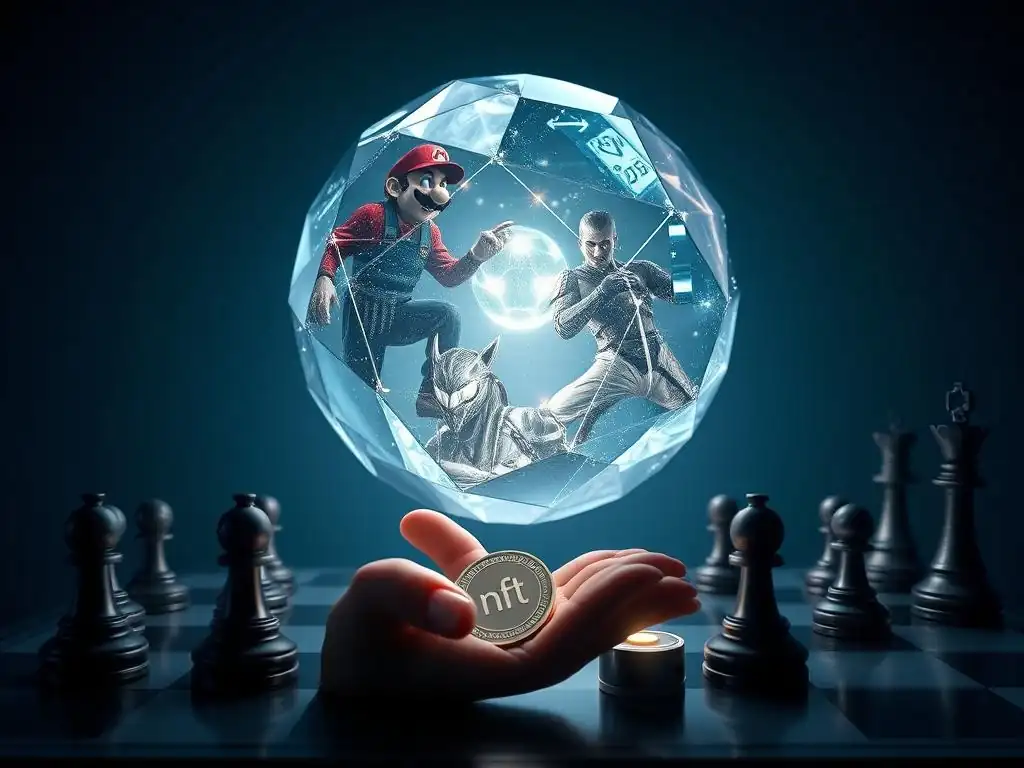
Welcome to Blockchain Trends, your guide to understanding the revolutionary impact of blockchain beyond the hype. Ready to delve into the intersection of gaming and blockchain?
Unraveling the complexities of NFT gaming intellectual property rights is crucial for both creators and players. Are you truly in control of your digital assets, and what rights do you really possess? Explore our in-depth analysis to uncover the answers and navigate the evolving landscape of decentralized ownership.
NFT Gaming and Intellectual Property: Ownership, Rights, and Creative Control
- Understanding NFT Gaming and its Intersection with Intellectual Property
- NFT Gaming Intellectual Property Rights: Ownership and Licensing
- Creative Control and Decentralization in NFT Games
- Legal and Ethical Considerations for NFT Gaming IP
- Case Studies: IP Management in NFT Games
- Protecting Intellectual Property in NFT Gaming
- Future Trends and Predictions for NFT Gaming Intellectual Property
- Conclusion: Responsible IP Management in NFT Gaming
-
Frequently Asked Questions
- What are the key intellectual property (IP) rights involved in NFT gaming?
- How does NFT gaming impact traditional ownership models for game assets?
- What are the potential legal challenges surrounding NFT gaming and intellectual property?
- How can game developers protect their intellectual property in the NFT gaming space?
- What future trends can we expect regarding NFT gaming and intellectual property rights?
- Final Reflection: Reclaiming Creative Control in the Metaverse
- Unleash Your Creative Control: Dive Deeper into NFT Gaming!
Understanding NFT Gaming and its Intersection with Intellectual Property
What is NFT Gaming?
NFT gaming, at its core, represents a paradigm shift in the digital entertainment landscape, merging the immersive worlds of video games with the revolutionary concept of Non-Fungible Tokens (NFTs). Unlike traditional video games where in-game assets are typically centralized and controlled by the game developers, NFT gaming leverages blockchain technology to tokenize these assets. This tokenization transforms digital items—such as characters, weapons, virtual land, and cosmetic items—into unique, verifiable, and tradeable NFTs.
Players in NFT games can genuinely own these digital assets, evidenced by their presence on a blockchain, typically Ethereum or similar platforms. This ownership transcends the boundaries of a single game, theoretically allowing assets to be used across different games or platforms, depending on interoperability.
The mechanics of NFT gaming vary widely, encompassing genres from collectible card games and virtual worlds to play-to-earn role-playing games and strategy titles. A defining feature is the integration of NFTs into gameplay loops, often incentivizing players through play-to-earn models. These models reward players with cryptocurrency or NFTs for their in-game activities, contributing to a player-owned economy.
For example, in games like Axie Infinity, players earn Smooth Love Potion (SLP) tokens and breed Axie NFTs, which can then be traded on open marketplaces. This blend of gaming and decentralized finance (DeFi) elements distinguishes NFT gaming and creates a novel ecosystem where players are not just consumers but also stakeholders in the game's economy.
The Importance of Intellectual Property in Gaming
Intellectual Property (IP) is the bedrock of the gaming industry, whether in traditional or NFT gaming. In traditional gaming, IP encompasses a wide array of elements, including game titles, characters, storylines, game mechanics, artwork, music, and software code. Strong IP protection allows game developers and publishers to safeguard their creative investments, prevent unauthorized copying or exploitation, and build valuable brands.
For instance, the globally recognized "Grand Theft Auto" franchise by Rockstar Games is heavily reliant on its protected IP, including its distinctive game mechanics, satirical world, and character designs, which contribute significantly to its market value and competitive edge. IP rights, primarily through copyright, trademarks, and patents, enable game companies to monetize their creations through sales, licensing, and merchandising, fostering innovation and investment within the sector.
The significance of IP is amplified in the NFT gaming space due to the inherent nature of blockchain and digital ownership. NFTs, while representing ownership of a digital asset, do not automatically confer the underlying intellectual property rights associated with that asset. This distinction is crucial. Imagine a game developer creates a unique character design and tokenizes it as an NFT.
While a player purchasing this NFT owns the token itself, representing a specific digital asset on the blockchain, they may not inherently own the copyright to the character design itself. The developer typically retains the underlying IP rights, dictating how the character can be used and reproduced beyond its in-game functionality. Therefore, clearly defined IP rights are paramount in NFT gaming to establish the scope of ownership, usage rights, and creative control for both developers and players, ensuring a sustainable and legally sound ecosystem.
NFTs and Traditional Gaming IP Models
Traditional gaming IP models are largely centralized, with game developers and publishers holding complete control over the game's intellectual property. This control extends to all aspects of the game, from characters and storylines to in-game items and virtual worlds. Players, under traditional models, are essentially licensees, granted permission to play the game and use its assets according to the terms of service and end-user license agreements (EULAs).
They do not own the in-game items they acquire; instead, they possess a license to use them within the confines of the game. For example, in games like "Fortnite," players purchase skins and items, but these remain the property of Epic Games and cannot be traded or used outside the Fortnite ecosystem. This centralized control enables developers to maintain consistency, enforce rules, and monetize their IP effectively through in-game purchases and other revenue streams.
NFTs disrupt this traditional model by introducing the concept of verifiable digital ownership and decentralization. By tokenizing in-game assets as NFTs, developers can grant players true ownership of these items. However, the integration of NFTs into gaming IP frameworks introduces complexities.
While NFTs can represent ownership of a digital asset, the underlying IP rights – such as copyright and trademark – may remain with the game developer. This creates a nuanced situation where players own the token but may not automatically gain the right to commercially exploit or modify the underlying IP associated with it. NFT gaming necessitates a re-evaluation of traditional IP models, requiring developers to clearly define the scope of rights granted to NFT holders.
This includes specifying whether NFT ownership grants commercial usage rights, rights to create derivative works, or merely usage rights within the game itself. The shift towards NFT gaming thus calls for innovative IP licensing and management strategies that balance developer control with player empowerment and the principles of decentralization.
NFT Gaming Intellectual Property Rights: Ownership and Licensing
Defining Ownership of NFTs
Ownership of NFTs in the context of NFT gaming is a multifaceted concept that differs significantly from traditional notions of digital asset ownership. When a player "owns" an NFT game asset, they are essentially recorded as the controller of a unique cryptographic token on a blockchain. This token cryptographically represents a specific digital item, like a character, weapon, or piece of virtual land, within the game’s ecosystem.
The blockchain record acts as an immutable certificate of authenticity and ownership, verifiable by anyone. This ownership is distinct from merely having an in-game item registered to a player's account on a centralized server, as is the case in traditional games. With NFTs, ownership is decentralized and resides with the token holder, independent of the game developer's direct control.
However, it's crucial to understand that NFT ownership typically pertains to the token itself, not necessarily the underlying intellectual property (IP) of the asset the NFT represents. For instance, owning an NFT of a character designed for a game does not automatically grant the NFT holder copyright over that character design or the right to commercially exploit it outside the game’s intended use, unless explicitly granted by the game developer.
The ownership is more akin to owning a unique digital collectible with specific in-game utility, rather than owning the creative work itself in its entirety. The extent of rights associated with NFT ownership is determined by the terms and conditions set by the game developer, often outlined in the game’s documentation or smart contract.
Therefore, defining NFT ownership in NFT gaming requires carefully distinguishing between token ownership and the underlying IP rights, ensuring clarity for both developers and players regarding their respective rights and limitations.
Copyright Implications for NFT Gaming Assets
Copyright law plays a pivotal role in NFT gaming, governing the protection and usage of creative works associated with game assets. In most jurisdictions, copyright automatically vests in the creator of an original work, such as game characters, artwork, music, and software code. For NFT gaming assets, copyright typically resides with the game developers or studios who create these assets.
When game developers tokenize these assets as NFTs, they are essentially creating a digital representation of their copyrighted work. The act of tokenization itself does not transfer the underlying copyright to the NFT holder unless explicitly stated in the terms of sale or a separate license agreement.
The copyright implications are significant for both developers and players. Developers must be mindful of copyright law when creating and distributing NFT game assets, ensuring they have the necessary rights to tokenize and utilize these assets. They also need to clearly define the scope of rights they are granting to NFT purchasers.
For example, are NFT holders permitted to create derivative works based on the NFT asset? Can they commercially exploit the NFT outside the game environment? Players, on the other hand, need to understand that purchasing an NFT typically grants them usage rights within the game and ownership of the specific token, but not necessarily broader copyright rights over the underlying asset.
Copyright infringement can arise if players use NFT assets in ways that exceed the granted rights, such as unauthorized commercial exploitation or reproduction of copyrighted game characters. Therefore, clear communication and licensing agreements are essential in NFT gaming to navigate the complexities of copyright and ensure compliance with legal frameworks.
Licensing Models for NFT Game Developers and Players
Licensing models are crucial instruments in NFT gaming for defining the rights and responsibilities of both game developers and players concerning intellectual property. Given that NFT ownership often does not automatically transfer underlying IP rights, licensing agreements establish the permitted uses of NFT game assets. Various licensing models can be employed, ranging from restrictive to permissive, each impacting the level of control and freedom afforded to NFT holders.
A common approach is to grant players a limited, non-exclusive license to use the NFT asset within the game ecosystem. This allows players to utilize their NFTs for gameplay purposes, such as playing with a character or using a weapon, while the developer retains broader IP control.
More permissive licenses, such as Creative Commons licenses or custom-designed licenses, can grant NFT holders broader rights. For instance, a developer might issue NFTs under a license that allows holders to create derivative works, merchandise their NFTs, or even use them in other compatible games or metaverses. The "Bored Ape Yacht Club" NFTs, although not strictly game assets, exemplify a more permissive approach, granting NFT holders commercial usage rights to their ape images, leading to widespread derivative works and commercial applications.
For players, understanding the licensing terms associated with NFTs is vital before purchase. Terms should clearly outline what they can and cannot do with their NFT assets, including usage limitations, commercial rights, and any restrictions on modification or distribution. Game developers must carefully consider which licensing model best aligns with their game's economy, community engagement goals, and long-term vision for their IP.
Smart Contracts and IP Rights Enforcement
Smart contracts, self-executing contracts with the terms of the agreement directly written into code, offer innovative mechanisms for managing and enforcing intellectual property rights within NFT gaming. By embedding licensing terms directly into the smart contract associated with an NFT, developers can automate the enforcement of these terms and ensure transparency and immutability.
For example, a smart contract can be programmed to automatically distribute royalties to the original creator whenever an NFT is resold on a secondary market. This provides a built-in mechanism for compensating creators for the ongoing value and circulation of their work, addressing a common challenge in digital content distribution.
Smart contracts can also be used to manage access rights and usage permissions for NFT game assets. For instance, a smart contract could restrict the use of a particular NFT asset to specific games or platforms, or limit its usage based on certain conditions. Furthermore, smart contracts can facilitate dispute resolution related to IP rights.
While not replacing traditional legal processes entirely, they can provide an auditable and transparent record of ownership, licensing terms, and transaction history, which can be valuable evidence in IP disputes. However, it's important to acknowledge the limitations of smart contracts in fully enforcing IP rights.
Smart contracts are effective at automating and codifying agreements within the digital realm but may not be sufficient to address all real-world IP infringement scenarios, which may still require legal recourse. Nevertheless, smart contracts represent a powerful tool for enhancing IP management and enforcement in NFT gaming, offering a more decentralized and efficient approach compared to traditional methods.
Creative Control and Decentralization in NFT Games
Player Empowerment through NFT Ownership
NFT ownership in gaming fundamentally shifts the balance of power, empowering players with unprecedented creative control and economic agency. In traditional gaming models, players are consumers, purchasing games and in-game items that remain under the control of game developers. NFTs transform players into stakeholders, granting them verifiable ownership of digital assets.
This ownership extends beyond mere usage rights; it enables players to control, trade, and potentially monetize their in-game possessions outside the confines of the game itself. For example, a player who earns a rare weapon NFT in a play-to-earn game can choose to sell it on an open NFT marketplace, effectively converting their in-game achievements into real-world value.
This empowerment fosters a sense of investment and participation. Players are no longer just users but become active participants in the game's economy and ecosystem. NFT ownership can also unlock new forms of creative expression. Some NFT games allow players to customize and modify their NFT assets, creating unique variations and derivative works.
This player-driven creativity can enrich the game's content and community, as players contribute to the game's evolving narrative and aesthetic. For instance, in games like "Cryptovoxels," players own virtual land NFTs and have significant creative control over building and designing their virtual spaces. The shift towards player empowerment through NFT ownership is reshaping the gaming landscape, fostering a more collaborative and player-centric approach to game development and design.
Maintaining Creative Integrity in Decentralized Games
Maintaining creative integrity in decentralized NFT games presents unique challenges compared to traditional, centralized game development. In centralized games, developers have direct control over all aspects of the game's design, ensuring consistency in art style, narrative, and overall vision. Decentralization, while offering benefits like player ownership and community participation, can potentially dilute creative control if not managed effectively.
One key challenge is ensuring consistency in user-generated content. If players are empowered to create and integrate their own NFT assets into a game, there's a risk of stylistic clashes or content that deviates significantly from the intended creative vision of the game.
Strategies for maintaining creative integrity in decentralized games often involve carefully designed frameworks and curation mechanisms. Some games implement guidelines and standards for user-generated content, ensuring that contributions align with the game's overall aesthetic and thematic direction. Curation processes, potentially involving community voting or developer oversight, can be used to filter and approve user-created assets before they are integrated into the game.
For example, "The Sandbox" utilizes a voxel-based art style and provides tools for users to create assets within this style, promoting visual consistency. Balancing decentralization with creative integrity requires a nuanced approach, combining player freedom with thoughtful design and community governance to preserve the game's artistic vision while embracing player contributions.
Community-Driven Content and Game Development
NFT gaming opens up new avenues for community-driven content creation and game development, leveraging the principles of decentralization and player ownership. Unlike traditional games where content creation is primarily the domain of game developers, NFT games can empower players to contribute directly to the game's content, features, and even its development direction.
This can take various forms, from players creating and trading in-game assets as NFTs to participating in community governance mechanisms that influence game updates and roadmap decisions. For instance, some NFT games utilize Decentralized Autonomous Organizations (DAOs) to allow token holders to vote on proposals related to game development, resource allocation, and community initiatives.
Community-driven content can significantly enrich the game experience and foster a stronger sense of ownership and engagement among players. User-generated content, such as custom levels, characters, or items, can add variety and dynamism to the game world, extending its lifespan and appeal. Furthermore, involving the community in game development can lead to more player-centric design decisions, as developers gain direct feedback and insights from their player base.
Examples include games that provide tools for players to create and monetize their own game assets, fostering a creator economy within the game ecosystem. This collaborative approach to content and development can create more vibrant and sustainable NFT gaming communities, where players are not just consumers but active co-creators of the game world.
Legal and Ethical Considerations for NFT Gaming IP
Copyright Law in a Decentralized Environment
Copyright law, designed for a centralized world, faces unique challenges in the decentralized environment of NFT gaming. Traditional copyright frameworks are built around identifiable creators and centralized entities controlling intellectual property. NFT gaming, with its decentralized nature and player-driven content, introduces complexities that strain these frameworks. One key challenge is determining copyright ownership and enforcement in scenarios involving user-generated content and derivative NFT works. If players create derivative works based on NFT game assets, questions arise about who owns the copyright to these derivatives and how to manage IP rights in a decentralized and often pseudonymous environment.
Enforcement of copyright in NFT gaming is also more complex. Traditional copyright enforcement relies on centralized intermediaries, such as platforms and marketplaces, to take down infringing content. In decentralized NFT marketplaces and games, there is no single central authority to enforce copyright.
Copyright holders may need to rely on blockchain-based mechanisms, community moderation, and potentially legal action against individual infringers, which can be costly and complex in a global and decentralized context. Furthermore, the cross-border nature of blockchain technology and NFT gaming introduces jurisdictional challenges, as copyright laws vary across countries. Navigating these legal complexities requires a nuanced understanding of copyright law in the digital age and potentially the development of new legal frameworks or interpretations that are better suited to the decentralized nature of NFT gaming.
Risks of IP Infringement and Counterfeiting
NFT gaming, while offering benefits of digital ownership and decentralization, also introduces risks of intellectual property infringement and counterfeiting. The ease of creating and distributing digital content, combined with the pseudonymous nature of blockchain, can make it easier for individuals to create and sell counterfeit NFT game assets or infringe on existing IP rights. Counterfeit NFTs, mimicking legitimate game assets, can deceive players and undermine the value of authentic NFTs. Similarly, unauthorized use of copyrighted characters, artwork, or game mechanics in NFT games can lead to IP infringement claims.
The decentralized and often unregulated nature of some NFT marketplaces can exacerbate these risks. While some marketplaces implement verification processes to combat counterfeiting, others may lack robust mechanisms, making it easier for infringing NFTs to proliferate. For game developers, protecting their IP in the NFT space requires proactive measures, such as registering trademarks and copyrights, monitoring NFT marketplaces for infringing content, and implementing technical solutions like watermarking or cryptographic verification to authenticate their official NFTs.
Players also need to be vigilant and exercise caution when purchasing NFTs, verifying the authenticity of assets and the legitimacy of sellers to avoid acquiring counterfeit or infringing NFTs. Addressing the risks of IP infringement and counterfeiting in NFT gaming requires a collaborative effort from developers, marketplaces, and the community, coupled with ongoing technological and legal solutions.
Ethical Considerations: Fair Use and Derivative Works
Ethical considerations surrounding fair use and derivative works are particularly relevant in NFT gaming, where player creativity and community-driven content are often encouraged. Fair use, a legal doctrine in some jurisdictions, allows limited use of copyrighted material without permission for purposes such as criticism, commentary, education, and parody. In NFT gaming, the application of fair use principles to user-generated content and derivative NFT works is not always clear-cut.
For example, if a player creates a derivative NFT artwork based on a copyrighted game character, does this qualify as fair use? The answer often depends on the specific context, jurisdiction, and the nature of the derivative work.
Ethical considerations extend beyond strict legal definitions of fair use. Even if a derivative work technically falls within fair use, there are ethical questions about respecting the original creator's IP and creative intent. In NFT gaming communities, there is often a tension between encouraging player creativity and protecting the rights of game developers and artists.
Some NFT projects adopt a more permissive approach, encouraging derivative works and community remixes, while others prioritize stricter IP control to maintain brand integrity and prevent unauthorized commercial exploitation. Finding an ethical balance requires open communication between developers and players, clear guidelines on acceptable use of IP, and community norms that value both creativity and respect for intellectual property rights. The evolving nature of NFT gaming necessitates ongoing dialogue and ethical reflection to navigate these complex issues responsibly.
Case Studies: IP Management in NFT Games
Axie Infinity: Breeding, Battling, and IP
Axie Infinity, a prominent play-to-earn NFT game, provides a compelling case study in IP management within the NFT gaming space. The game revolves around collectible creatures called Axies, which are NFTs that players can breed, battle, and trade. Sky Mavis, the developer of Axie Infinity, retains the intellectual property rights to the Axie characters, lore, and game mechanics.
However, they have adopted a relatively permissive approach to IP usage, allowing Axie NFT holders significant freedom in utilizing their Axies. For instance, Axie holders can breed their Axies to create new Axie NFTs, effectively participating in the expansion of the Axie universe. They can also use their Axies to compete in battles and earn rewards, further incentivizing engagement and ownership.
Axie Infinity's approach to IP management balances developer control with player empowerment. While Sky Mavis retains overall IP ownership and direction, they empower Axie holders through ownership of the NFTs themselves and the ability to generate value through gameplay and breeding. This model has contributed to a thriving Axie economy and a large, active community.
However, it also raises questions about the long-term sustainability of this model and the potential for IP disputes as the Axie ecosystem evolves. The success of Axie Infinity demonstrates the potential of a more open IP approach in NFT gaming, where players are treated as active participants and stakeholders in the game's IP ecosystem, but also highlights the need for careful consideration of long-term IP strategy and community governance.
Decentraland: Land Ownership and Content Creation
Decentraland, a decentralized virtual world built on the Ethereum blockchain, offers a different model of IP management centered around virtual land ownership and user-generated content. In Decentraland, users can purchase parcels of virtual land represented as NFTs, known as LAND. Owning LAND grants users significant creative control over their virtual space.
They can build on their LAND, create interactive experiences, host events, and even monetize their virtual properties. Decentraland's IP model is highly decentralized, empowering LAND owners to create and control content within their parcels, subject to community guidelines and platform-level rules. Decentraland itself does not claim ownership of the content created by LAND owners on their virtual land.
This approach fosters a vibrant ecosystem of user-generated content, ranging from virtual art galleries and casinos to social hubs and interactive games. Decentraland’s IP model prioritizes player ownership and creative freedom, aligning with the broader ethos of decentralization and Web3. However, this decentralized model also presents challenges in terms of content moderation, IP infringement, and ensuring a cohesive and high-quality user experience across the virtual world.
Decentraland relies on community governance mechanisms and platform-level tools to address these challenges, striking a balance between empowering individual creators and maintaining a functional and engaging virtual environment. The Decentraland case study highlights the potential and complexities of a highly decentralized IP model in NFT gaming and virtual worlds.
The Sandbox: User-Generated Content and Monetization
The Sandbox, another popular metaverse platform and NFT game, emphasizes user-generated content and monetization through NFTs and virtual land ownership. Similar to Decentraland, The Sandbox allows users to purchase virtual LAND NFTs and create experiences on their LAND. However, The Sandbox distinguishes itself through its focus on user-generated content creation tools, particularly VoxEdit and Game Maker, which empower users to create voxel-based assets and games without requiring coding skills. These user-created assets can be tokenized as NFTs and traded on The Sandbox marketplace, creating a creator economy within the platform.
The Sandbox's IP management strategy is centered around empowering creators while maintaining platform-level control and brand consistency. Users retain ownership of the NFTs they create, granting them the right to monetize and distribute their creations. The Sandbox platform provides tools and infrastructure for creators to showcase and sell their assets, fostering a thriving ecosystem of user-generated content.
However, The Sandbox also implements curation and quality control mechanisms to ensure that user-generated content aligns with the platform's overall aesthetic and standards. This balanced approach aims to empower creators, foster a rich content ecosystem, and maintain a consistent brand identity for The Sandbox. The Sandbox case study demonstrates a model of IP management that effectively combines user-generated content with platform-level curation and monetization, creating a sustainable and engaging metaverse experience.
Protecting Intellectual Property in NFT Gaming
Best Practices for NFT Game Developers
Protecting intellectual property is paramount for NFT game developers to ensure the long-term viability and success of their projects. One of the first best practices is to clearly define and register all relevant IP assets, including trademarks for game titles and logos, copyrights for game code, artwork, music, and character designs, and potentially patents for novel game mechanics or technologies. This legal foundation provides a strong basis for enforcing IP rights and preventing unauthorized use.
Developers should also establish clear terms of service and licensing agreements that outline the scope of rights granted to players who purchase NFT game assets. These agreements should specify what players can and cannot do with their NFTs, particularly regarding commercial use, derivative works, and redistribution.
Implementing technical measures to protect IP is also crucial. This can include embedding watermarks or digital signatures into NFT assets to verify authenticity and provenance. Regularly monitoring NFT marketplaces for counterfeit NFTs or IP infringement is essential for proactive protection. Developers should also consider using smart contracts to automate IP management, such as embedding royalty mechanisms for secondary sales and enforcing licensing terms programmatically.
Educating players about IP rights and responsible NFT usage is also a vital best practice. Clear communication and community guidelines can foster a culture of respect for IP and discourage infringement within the game ecosystem. Finally, building relationships with legal counsel specializing in blockchain and IP law is advisable to navigate the evolving legal landscape and ensure ongoing compliance and effective IP protection strategies.
Understanding and Respecting IP Rights as a Player
As NFT gaming becomes more prevalent, it is crucial for players to understand and respect intellectual property rights within these ecosystems. Players should be aware that purchasing an NFT game asset typically grants ownership of the token itself, but not necessarily the underlying IP rights to the asset's design, character, or concept, unless explicitly stated by the game developer.
Before purchasing NFTs, players should carefully review the terms of service and licensing agreements associated with the game or NFT collection to understand the scope of their usage rights. This includes understanding whether they have rights to commercially exploit the NFT, create derivative works, or use it outside the intended game environment.
Respecting IP rights also means avoiding the purchase or use of counterfeit NFTs or NFTs that infringe on existing copyrights or trademarks. Players should verify the authenticity of NFTs and purchase them from reputable marketplaces or directly from the game developer. It is also unethical and potentially illegal to create and distribute derivative works based on copyrighted NFT game assets without permission from the IP holder, unless explicitly permitted by the game's licensing terms or fair use principles apply.
Engaging in responsible NFT gaming practices involves not only enjoying the benefits of digital ownership but also acting as a responsible community member who respects the creative work and IP rights of game developers and artists. By understanding and respecting IP rights, players contribute to a healthy and sustainable NFT gaming ecosystem.
The Future of IP Law and Regulation
The future of IP law and regulation in the context of NFT gaming is uncertain but likely to evolve significantly as the technology matures and becomes more mainstream. Current IP laws, largely designed for a pre-blockchain era, are being tested and challenged by the decentralized nature of NFTs and Web3 technologies.
One potential trend is the development of new legal frameworks specifically tailored to address IP issues in decentralized environments. This could involve clarifying the legal status of NFTs, defining the scope of rights associated with NFT ownership, and establishing mechanisms for IP enforcement in decentralized marketplaces and virtual worlds.
Regulatory bodies may also play a more active role in shaping the legal landscape of NFT gaming. This could involve issuing guidelines or regulations related to consumer protection, IP rights, and responsible use of NFTs in gaming. Cross-border collaboration and harmonization of IP laws will be increasingly important to address the global nature of NFT gaming and ensure consistent legal frameworks across jurisdictions.
The legal concept of "smart contracts as contracts" may also be further developed, exploring how smart contracts can be legally recognized and enforced in IP-related agreements. The future of IP law and regulation in NFT gaming will likely be shaped by ongoing dialogue between legal experts, technology innovators, game developers, and policymakers, aiming to create a legal environment that fosters innovation, protects IP rights, and promotes responsible development and adoption of NFT gaming technologies.
Future Trends and Predictions for NFT Gaming Intellectual Property
Evolving IP Licensing Models
IP licensing models in NFT gaming are poised for significant evolution, moving beyond simple usage licenses towards more nuanced and player-centric approaches. One trend is the emergence of more flexible and granular licensing options, allowing developers to offer different tiers of NFT ownership with varying levels of IP rights. For example, a developer might offer "standard" NFTs with basic in-game usage rights and "premium" NFTs that grant commercial usage rights or rights to create derivative works. This tiered approach can cater to different player segments and create new revenue streams for developers.
Another evolving trend is the integration of Creative Commons licenses or similar open-source licensing models into NFT gaming. This could foster more collaborative and community-driven content creation, allowing players to freely remix, adapt, and build upon existing NFT assets within defined parameters. The concept of "fractionalized NFT ownership" may also impact IP licensing.
Fractionalization allows NFTs to be divided into smaller, tradable fractions, potentially distributing IP rights among multiple owners. This could lead to new forms of collaborative IP ownership and management in NFT gaming. The future of IP licensing in this space is likely to be characterized by greater flexibility, player empowerment, and innovative models that leverage the unique capabilities of blockchain technology to redefine digital ownership and creative expression.
DAOs and Game Development/IP Ownership
Decentralized Autonomous Organizations (DAOs) are emerging as a transformative force in game development and IP ownership within the NFT gaming sector. DAOs, governed by code and community consensus, offer a decentralized alternative to traditional game studios and corporate entities. In the context of NFT gaming, DAOs can be used to manage game development, govern game economies, and even own and manage game intellectual property. A DAO could be established to oversee the development and evolution of an NFT game, with token holders voting on key decisions related to game features, updates, and resource allocation.
DAOs can also revolutionize IP ownership models. Instead of a single entity owning the IP of an NFT game, a DAO could collectively own and manage the IP, distributing ownership and governance rights among token holders. This decentralized IP ownership model could lead to more community-driven game development and a fairer distribution of value and control.
DAOs can also facilitate transparent and community-governed licensing of game IP, allowing for more open and collaborative ecosystems. While DAOs are still in their early stages of adoption in gaming, they hold significant potential to reshape game development and IP ownership, fostering more decentralized, player-centric, and community-governed NFT gaming experiences.
New Legal Frameworks for NFT Gaming IP
The rapid growth of NFT gaming is likely to spur the development of new legal frameworks specifically designed to address the unique IP challenges and opportunities presented by this technology. Current IP laws may not fully accommodate the decentralized and global nature of NFT gaming, necessitating new legal interpretations and potentially new legislation. One area of focus could be the legal recognition and enforcement of smart contract-based IP licenses. Clarifying the legal status of smart contracts and establishing mechanisms for their enforcement will be crucial for ensuring legal certainty and predictability in NFT gaming IP management.
Another potential development is the creation of international legal standards or treaties related to NFT gaming IP. Given the cross-border nature of blockchain technology, harmonizing IP laws across jurisdictions will be essential to address issues like copyright infringement and counterfeit NFTs effectively. Legal frameworks may also evolve to address the specific challenges of IP ownership and governance in DAOs and decentralized game organizations.
This could involve defining the legal rights and responsibilities of DAO members in relation to game IP and establishing mechanisms for dispute resolution within decentralized governance structures. The development of new legal frameworks for NFT gaming IP will be a gradual process, requiring collaboration between legal experts, technology innovators, and policymakers to create a legal environment that supports innovation, protects creators, and fosters a thriving and responsible NFT gaming ecosystem.
Conclusion: Responsible IP Management in NFT Gaming
Responsible intellectual property management is not merely a legal necessity but a cornerstone for the sustainable growth and ethical development of the NFT gaming industry. For game developers, this entails proactive IP protection, transparent licensing practices, and a commitment to fostering a community that respects creative rights. Clearly defining IP rights associated with NFTs, implementing robust security measures against counterfeiting, and engaging in open communication with players are essential steps. Players, in turn, play a crucial role in upholding responsible IP management by understanding and respecting the rights of creators, avoiding infringement, and supporting legitimate NFT projects.
The future of NFT gaming hinges on striking a delicate balance between innovation, decentralization, and responsible IP practices. Evolving legal frameworks, community-driven governance models, and technological solutions will all contribute to shaping this balance.
As the industry matures, a collective commitment to ethical IP management will be paramount to ensure that NFT gaming not only offers groundbreaking entertainment experiences but also fosters a fair, sustainable, and thriving ecosystem for creators, players, and the broader digital economy. By prioritizing responsible IP management, the NFT gaming industry can unlock its full potential and pave the way for a more decentralized and creator-centric future of gaming.
Frequently Asked Questions
What are the key intellectual property (IP) rights involved in NFT gaming?
The key IP rights involved include copyright for game assets, trademarks for brand identity, and potentially patent rights for novel gameplay mechanics. Understanding these rights is crucial for creators and players.
How does NFT gaming impact traditional ownership models for game assets?
NFT gaming introduces a new paradigm by allowing players to own digital assets as NFTs, which contrasts with traditional models where game developers retain complete control. This fosters a sense of player empowerment.
What are the potential legal challenges surrounding NFT gaming and intellectual property?
Legal challenges may arise from copyright infringement, particularly regarding the unauthorized use of existing characters or assets in NFT games, and disputes over ownership and licensing.
How can game developers protect their intellectual property in the NFT gaming space?
Developers can protect their IP by implementing smart contract licensing agreements, registering trademarks, and actively monitoring for unauthorized use of their game assets on blockchain platforms.
What future trends can we expect regarding NFT gaming and intellectual property rights?
Expect to see more sophisticated licensing frameworks for NFTs, increased regulatory scrutiny, and the development of new legal precedents specifically addressing IP ownership in decentralized gaming.
Okay, here's a final reflection designed to close your article on NFT Gaming and Intellectual Property, optimized for the keyword "NFT gaming intellectual property rights" and following your specified structure:
Final Reflection: Reclaiming Creative Control in the Metaverse
The exploration of NFT gaming and intellectual property rights reveals a landscape ripe with opportunity and fraught with challenges. The promise of decentralized ownership and creative control, once a distant dream, is now tangibly within reach, yet the legal and ethical frameworks are still under construction. This nascent intersection demands careful consideration and proactive engagement from creators, players, and legal professionals alike to ensure a fair and sustainable future for digital ownership.
The rise of NFT gaming has profoundly impacted the cultural landscape, shifting the power dynamic between developers and players. The ability to truly own in-game assets and participate in the economic success of a game represents a paradigm shift, one that resonates deeply with the desire for autonomy and creative expression. The future of gaming isn't just about playing; it's about owning, creating, and participating in a shared digital economy.
This sentiment underscores the transformative potential of NFT gaming, but also highlights the crucial need to protect intellectual property rights within this evolving ecosystem.
As we stand at the cusp of this new era, let us not be passive observers but active architects of its future. Reflect on the power you hold as a creator, a player, or a consumer. Consider how you can contribute to a more equitable and transparent system where NFT gaming intellectual property rights are respected, innovation is encouraged, and the creative spirit thrives. The metaverse is being built now, and your choices will shape its destiny.
Unleash Your Creative Control: Dive Deeper into NFT Gaming!
Thank you for exploring the world of NFT gaming and intellectual property with us. You now have a solid understanding of ownership, rights, and how NFTs are transforming creative control within the gaming industry. Are you ready to take the next step?
Here are some ways to make the most of this knowledge:
- Claim Your Stake: Start exploring NFT gaming platforms like Axie Infinity, The Sandbox, or Decentraland to see how creators and players are building and trading intellectual property in real time.
- Delve Deeper: Read articles on our website about topics such as blockchain copyright or digital assets to stay updated on the latest trends.
- Share this article with friends who love gaming or are curious about NFTs, and join the conversation about the future of ownership in the metaverse.
What NFT gaming project are you most excited to see develop, and how do you think it will influence the future of intellectual property? Share your thoughts in the comments below!
Leave a Reply