
User Experience in Decentralized Real Estate: Making Blockchain Accessible to Everyone


Welcome to Blockchain Trends, your go-to source for understanding how blockchain is reshaping industries beyond the hype. Dive into the world of decentralized finance, enterprise solutions, and the evolving regulatory landscape.
Curious about how blockchain is revolutionizing real estate? Our latest article delves into the crucial role of blockchain real estate user experience in making this transformative technology accessible to everyone. Discover how intuitive design can unlock the full potential of decentralized property ownership and investment. Let's explore how we can build a future where blockchain empowers a seamless and transparent real estate experience.
User Experience in Decentralized Real Estate: Making Blockchain Accessible to Everyone
- Introduction: Bridging the Gap in Blockchain Real Estate User Experience
- The Promise of Decentralized Real Estate and its UX Challenges
- Decoding Blockchain Jargon for Real Estate Investors: Improving Clarity
- Designing User-Centric Decentralized Real Estate Platforms: Best Practices
- Case Studies: Examining Successful Blockchain Real Estate User Experiences
- Addressing Security Concerns in Blockchain Real Estate UX
- The Future of User Experience in Blockchain Real Estate
- Conclusion: Empowering Users in the Decentralized Real Estate Revolution
-
Frequently Asked Questions
- How does blockchain technology improve the real estate user experience?
- What are the main challenges in creating a user-friendly blockchain real estate platform?
- What is "DeFi" and how does it relate to blockchain real estate user experience?
- How can developers improve the user experience when integrating blockchain into real estate transactions?
- What are the potential regulatory hurdles that could impact the blockchain real estate user experience?
- Final Reflection: Bridging the Gap in Blockchain Real Estate
- Unlock Your Decentralized Real Estate Journey!
Introduction: Bridging the Gap in Blockchain Real Estate User Experience
Blockchain technology holds immense promise for revolutionizing the real estate sector, offering unprecedented transparency, efficiency, and liquidity. From fractional ownership to streamlined transactions, the potential benefits are clear. However, the path to widespread adoption is paved with challenges, not least of which is the complex and often daunting user experience (UX) associated with decentralized platforms. While the underlying technology is powerful, many potential users, including seasoned real estate investors and first-time buyers, find current blockchain real estate platforms difficult to navigate, understand, and trust.
Bridging this gap between technical innovation and practical usability is paramount. A poor blockchain real estate user experience acts as a significant barrier, preventing mainstream participation and limiting the technology's transformative impact. This article explores the current state of UX in decentralized real estate, identifies key pain points, and outlines strategies and best practices for designing platforms that are intuitive, secure, and accessible to everyone, ultimately fostering a more inclusive and efficient future for property transactions.
The Promise of Decentralized Real Estate and its UX Challenges
Decentralized real estate, powered by blockchain, offers compelling advantages over traditional systems. These benefits, however, often come packaged within complex technical frameworks that pose significant hurdles for the average user. Understanding both the potential and the current usability challenges is crucial for improving the blockchain real estate user experience.
Understanding the Potential of Blockchain in Real Estate Transactions
Blockchain introduces a new paradigm for real estate transactions by creating a secure, immutable, and transparent digital ledger. This allows for the tokenization of assets, enabling fractional ownership where investors can buy and sell portions of a property, potentially opening up real estate investment to a much wider audience. Estimates suggest that the global tokenized real estate market could reach trillions of dollars in value within the next decade, driven by this increased accessibility and liquidity.
Furthermore, blockchain can significantly reduce the time and cost associated with traditional real estate transactions. By automating processes through smart contracts – self-executing agreements where the terms are written directly into code – intermediaries like escrow agents and title companies could potentially be bypassed or have their roles streamlined.
This could cut transaction times from weeks or months down to days or even hours in some scenarios, leading to substantial cost savings, potentially reducing overall transaction costs by 1-3% compared to traditional methods, depending on the jurisdiction and complexity. The inherent transparency of the blockchain also provides a clear, verifiable history of ownership and transactions, reducing the risk of fraud and increasing trust among parties involved.
Identifying Key UX Pain Points in Current Blockchain Real Estate Platforms
Despite the powerful underlying technology, users interacting with current blockchain real estate platforms often encounter significant friction. A primary pain point is the technical complexity. Users are frequently required to manage cryptographic wallets, understand public and private keys, navigate gas fees (transaction costs on the blockchain, which can be volatile), and interact with smart contracts, all of which are concepts far removed from traditional online interfaces. Losing a private key, for instance, can mean permanent loss of access to assets, a terrifying prospect for users accustomed to password recovery options.
Another major challenge is the lack of standardization across platforms. Different platforms may use different blockchain networks, token standards, or interface designs, creating a fragmented and confusing landscape. Users may struggle with onboarding processes that require complex identity verification (KYC/AML procedures) integrated with decentralized systems, or find it difficult to understand the specific legal and regulatory implications of tokenized property ownership. The sheer volume of technical jargon and the steep learning curve significantly detract from the overall blockchain real estate user experience, making it inaccessible for many.
Why User Experience Matters for Mass Adoption of Decentralized Real Estate
The success and widespread adoption of any technology hinge on its usability. Just as the internet only became ubiquitous with the advent of user-friendly web browsers and search engines, and mobile banking took off when apps became intuitive, blockchain real estate requires a seamless and accessible user experience to move beyond early adopters. If a platform is difficult to use, confusing, or feels risky, potential users will simply revert to traditional, albeit less efficient, methods.
A positive blockchain real estate user experience builds trust and confidence. Users need to feel secure that their investments are safe, that transactions will execute correctly, and that they understand what is happening at each step. Poor design, unclear instructions, or confusing error messages can erode this trust instantly. Conversely, a well-designed interface that simplifies complex processes, provides clear feedback, and offers robust support can empower users, making decentralized real estate an attractive and viable option for a broader market segment, from large institutional investors to individual buyers and sellers looking for a more efficient process.
Decoding Blockchain Jargon for Real Estate Investors: Improving Clarity
One of the most significant hurdles for newcomers to decentralized real estate is the specialized language. Terms like "wallet," "private key," "gas," "smart contract," "NFT," and "tokenization" are fundamental to blockchain but alien to most real estate professionals and investors. Effectively translating these concepts into understandable terms is vital for enhancing the blockchain real estate user experience.
Simplifying Complex Blockchain Concepts for Real Estate Beginners
Platforms must actively work to abstract or explain complex blockchain mechanics in plain language. Instead of forcing users to understand the intricacies of public-key cryptography, interfaces can present the concept of a "digital wallet" as simply a secure online account for managing property tokens and funds, much like an online bank account but with added security features. A "private key" can be analogized to a unique, highly secure digital signature or the master key to a safe, emphasizing its importance without requiring technical understanding of its generation.
Smart contracts, the backbone of automated transactions, can be explained not as lines of code but as "automated, self-enforcing agreements" or "digital escrow instructions" that execute automatically once predefined conditions (like payment confirmation or verification of identity) are met. Visual aids, simple analogies, and interactive tutorials that demonstrate concepts rather than just explaining them textually can significantly improve comprehension. For instance, a step-by-step visual flow showing how a property token sale works via a smart contract can be far more effective than a technical description.
An intuitive interface guides users naturally through processes without requiring prior technical knowledge. For a decentralized real estate marketplace, this means designing layouts that resemble familiar online property portals while integrating the unique aspects of blockchain seamlessly. The process of browsing listings, viewing property details, making offers, and completing transactions should feel logical and straightforward.
Key elements of intuitive design include clear navigation menus, prominent search bars with relevant filters (e.g., location, property type, price, but also token specifics like yield or fractional share size), and well-organized property pages that present both traditional real estate information (photos, descriptions, location) and blockchain-specific data (token standard, contract address, ownership history on-chain) in an easily digestible format. Consistent design language, clear calls to action (like "Make Offer" or "Buy Token Share"), and responsive design that works equally well on desktop and mobile devices are fundamental to a positive blockchain real estate user experience.
Error messages should be helpful and actionable, guiding the user on how to resolve an issue rather than simply stating that an error occurred.
The Role of Education in Enhancing User Confidence in Blockchain Real Estate Investments
Education is not merely a supplementary feature; it is a core component of a successful blockchain real estate user experience. Users need to feel confident not only in how to use the platform but also in what they are doing and the underlying technology. Providing easily accessible educational resources builds trust and empowers users to make informed decisions.
This can take many forms: comprehensive FAQ sections addressing common blockchain and real estate questions, a glossary of terms explained in simple language, step-by-step guides for key processes like setting up a wallet or participating in a tokenized sale, and even webinars or video tutorials. Highlighting the security features and transparency benefits of blockchain through educational content reinforces why the platform is trustworthy. By equipping users with knowledge, platforms reduce anxiety associated with new technology and increase the likelihood of successful interactions, thereby significantly improving the overall blockchain real estate user experience.
Designing User-Centric Decentralized Real Estate Platforms: Best Practices
Designing a decentralized real estate platform requires a deliberate focus on the user at every stage of development. Applying established principles of user-centered design, adapted for the unique challenges of blockchain, is essential for creating usable and effective platforms.
Prioritizing User Research in Blockchain Real Estate Development
Effective design begins with a deep understanding of the target user. For blockchain real estate, users can range from seasoned crypto investors familiar with wallets and transactions to traditional real estate professionals and everyday individuals with little to no blockchain experience. Conducting thorough user research – through interviews, surveys, usability testing, and analyzing user feedback – is critical to identify their needs, pain points, technical comfort levels, and goals.
Research might reveal, for example, that while some users are comfortable with self-custody of private keys, others prefer a custodial solution or a simpler abstraction layer. It could highlight that understanding property yields based on token distribution is more important to investors than knowing the specific smart contract language used.
Using insights gained from this research allows development teams to make informed decisions about feature prioritization, interface design, and the level of abstraction needed for blockchain complexities, directly impacting the quality of the blockchain real estate user experience. Iterative testing with real users throughout the development cycle ensures that the platform remains aligned with user expectations and needs.
Implementing Clear and Concise Onboarding Processes for New Users
The initial onboarding experience is the user's first interaction with the platform and is critical for retention. A complex or confusing sign-up process can lead to immediate drop-off. For decentralized real estate, onboarding often involves multiple steps, including account creation, identity verification (Know Your Customer - KYC, which is often legally required for real estate transactions), and potentially setting up or connecting a blockchain wallet.
A best practice is to break down this process into small, manageable steps with clear instructions at each stage. Progress indicators help users understand where they are in the process. Explanations for why certain information (like identity verification) is required, framed in terms of security and compliance, can alleviate user concerns.
Providing options for wallet management – such as integrations with popular existing wallets or offering a simplified, potentially custodial wallet option within the platform for beginners – can cater to different user comfort levels. A guided tour or interactive tutorial immediately following successful onboarding can introduce key features and functionalities, giving users confidence in exploring the platform.
Finding relevant properties is a primary task on any real estate platform. For decentralized marketplaces, optimizing navigation and search is crucial, incorporating both traditional real estate criteria and blockchain-specific filters. Users should be able to easily browse properties based on location, price range, property type (residential, commercial, land), number of bedrooms/bathrooms, etc., just like on conventional platforms.
In addition, advanced filtering based on token characteristics is essential for tokenized properties. This could include filtering by:
- Minimum/maximum fractional share size
- Expected yield or dividend payout history
- Blockchain network (e.g., Ethereum, Polygon, Solana)
- Token standard (e.g., ERC-20, ERC-721)
- Liquidity metrics (if available data points exist)
Presenting property details in a structured and easily comparable format, including both traditional photos/descriptions and clear information about the associated token or ownership structure, is vital. Features like map integration showing property locations and the ability to save favorite listings further enhance usability. A well-optimized search and navigation system significantly improves the blockchain real estate user experience by making it efficient for users to find investment opportunities.
Ensuring Secure and Transparent Real Estate Transactions through UX Design
Trust is paramount in real estate, and even more so when dealing with blockchain technology. UX design plays a critical role in communicating security and transparency to the user. During the transaction process, every step should be clearly explained, from initiating an offer to executing a smart contract.
Design elements can reinforce security:
- Clear confirmation screens summarizing all transaction details (price, property ID, token amount, recipient address, estimated gas fees) before requiring user approval.
- Visual indicators showing the status of a transaction on the blockchain (e.g., "Pending," "Confirmed," "Failed") with links to block explorers for those who want to verify independently.
- Prominent display of security measures, such as requiring multi-factor authentication for sensitive actions or clearly explaining how funds/tokens are held in escrow via smart contracts.
Transparency is enhanced by providing users with easy access to their transaction history, ownership records (verified on-chain), and the details of the smart contracts governing their assets. Presenting complex smart contract information in a simplified, auditable format or providing plain-language summaries of contract terms builds confidence. A well-designed interface makes the inherent transparency of blockchain technology accessible and understandable, thereby improving the overall blockchain real estate user experience and building essential trust.
Case Studies: Examining Successful Blockchain Real Estate User Experiences
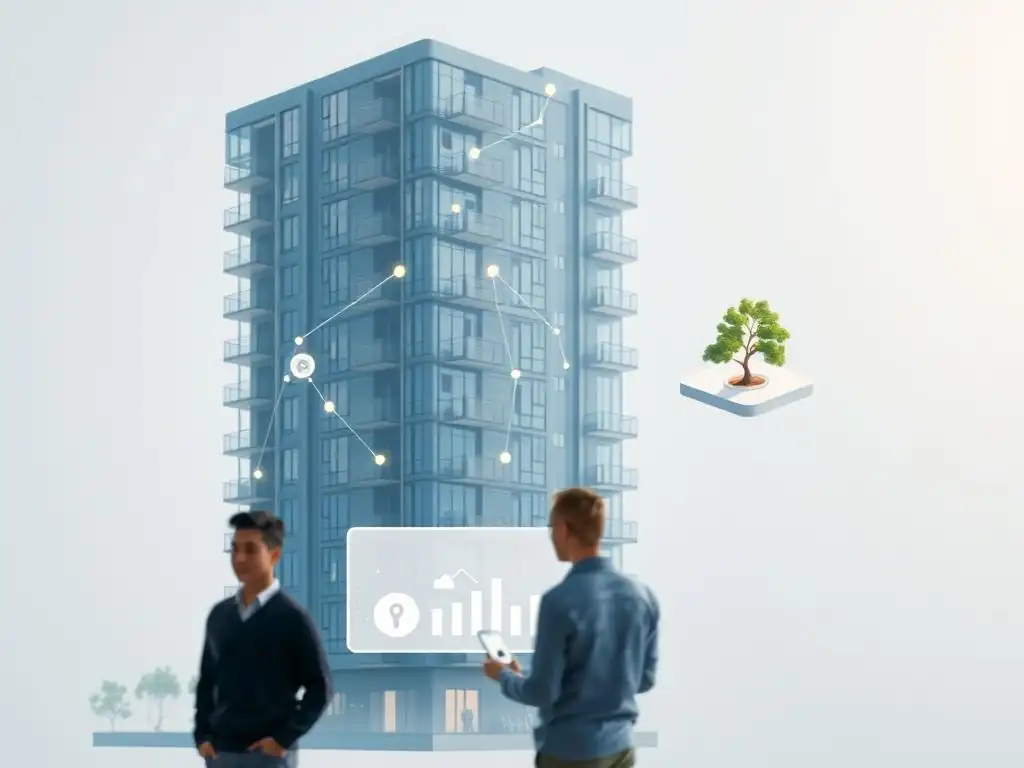
Looking at platforms that have successfully navigated the complexities of blockchain real estate provides valuable insights into effective UX design. Companies like Propy and Atlant have made strides in making decentralized property transactions and investments more accessible.
Analyzing Propy's Approach to User-Friendly Blockchain Real Estate
Propy is a notable example of a platform focused on facilitating real estate transactions on the blockchain. Their approach prioritizes simplifying the end-to-end process, aiming to reduce the complexity traditionally associated with cross-border real estate deals and even domestic transactions. Propy has facilitated actual property sales recorded on the blockchain, including a widely reported transaction in Florida in 2017 and subsequent deals. Their platform guides users through the legal and technical steps involved in transferring ownership using NFTs (Non-Fungible Tokens) or tokenized deeds.
A key aspect of Propy's user experience is abstracting away many of the lower-level blockchain interactions. While the transaction is recorded on-chain, the user interface focuses on the real estate aspects – viewing properties, submitting offers, signing digital documents (often linked to the blockchain transaction), and tracking the deal's progress through a dashboard.
They integrate legal frameworks and compliance checks into their platform flow, which, while adding steps, makes the process more familiar and trustworthy for users accustomed to traditional real estate procedures. Propy's focus on making the outcome (a completed property transaction) straightforward, rather than highlighting the underlying blockchain mechanics, is central to their blockchain real estate user experience strategy.
Atlant's Strategy for Engaging Newcomers in Decentralized Property Investment
Atlant focused on simplifying fractional ownership of real estate through tokenization. Their platform aimed to allow users to buy and sell tokens representing shares in specific properties, making real estate investment accessible with potentially much smaller capital outlays than traditional methods. Atlant's UX strategy centered on creating an investment experience similar to trading stocks or cryptocurrencies on a user-friendly exchange, applying it to real estate assets.
Their interface presented properties available for tokenized investment with clear metrics like price per token, total tokens available, property valuation, and projected rental yields. The process for buying or selling tokens was designed to be as simple as executing a trade order on a crypto exchange.
By focusing on the 'investment' aspect and providing familiar trading tools, Atlant aimed to lower the barrier to entry for individuals interested in real estate but intimidated by large capital requirements or complex property management. Their approach demonstrated that framing decentralized real estate investment within a recognizable financial model could improve the blockchain real estate user experience for a specific segment of investors.
Lessons Learned: Key Takeaways from Successful Blockchain Real Estate UX Implementations
Analyzing platforms like Propy and Atlant reveals common themes in successful blockchain real estate user experience design. Firstly, abstraction is key: platforms should strive to hide unnecessary blockchain complexity from the end-user, presenting it only when relevant or requested. Secondly, familiarity matters: leveraging design patterns and workflows from traditional real estate or financial platforms can reduce the learning curve.
Thirdly, education is non-negotiable: providing clear, accessible information about both the real estate asset and the underlying blockchain mechanics is crucial for building confidence. Fourthly, focusing on the user's goal (buying, selling, investing) and streamlining the path to achieving that goal, while ensuring security and transparency are clearly communicated, is paramount. Finally, integrating necessary compliance steps (like KYC) smoothly into the user flow, rather than treating them as separate, clunky requirements, contributes significantly to a positive blockchain real estate user experience.
Addressing Security Concerns in Blockchain Real Estate UX
Security is a top priority for any platform dealing with high-value assets like real estate. In the decentralized space, where users often have more direct control over their assets and interactions occur on an immutable ledger, communicating and ensuring security through user experience design is critical for building trust in blockchain real estate.
Building Trust through Transparent Security Measures
Users need to feel confident that their investments and personal information are secure. Platforms can build this trust by being transparent about the security measures they employ. This includes clearly stating how assets are protected, whether through audited smart contracts, multi-signature wallets for pooled funds, or secure storage of sensitive data (if applicable, noting what remains off-chain).
Displaying audit certificates from reputable blockchain security firms or providing simple explanations of the underlying cryptographic security principles can reassure users. During transactions, making it clear exactly what action the user is confirming (e.g., "You are approving a transfer of 100 property tokens for ABC Street") and showing the associated smart contract address or transaction hash provides verifiable transparency. A dashboard that clearly outlines the user's assets and their current status, with easily accessible transaction history, reinforces the platform's reliability and enhances the blockchain real estate user experience by making security visible.
Implementing Multi-Factor Authentication and Biometric Verification
Standard security practices, such as Multi-Factor Authentication (MFA) and biometric verification, are essential layers of protection that must be seamlessly integrated into blockchain real estate platforms. Requiring users to verify their identity through a second method (like a code sent to their phone or email) in addition to a password significantly reduces the risk of unauthorized access to their account and assets.
For particularly sensitive actions, such as initiating a large token transfer or changing account settings, requiring multiple forms of authentication or biometric verification (fingerprint or facial recognition, where supported) adds robust security. The user experience design should make these security steps feel like a natural part of the process, clearly explaining why they are required ("For your security, please confirm this action using your registered device") rather than presenting them as arbitrary obstacles. Implementing these features effectively is fundamental to a secure and trustworthy blockchain real estate user experience.
Educating Users about Security Best Practices in Decentralized Real Estate
While platforms must implement strong security measures, users also play a crucial role in protecting their assets in a decentralized environment. Educating users about personal security best practices is an indispensable part of a comprehensive blockchain real estate user experience. This includes guiding them on how to securely store their private keys (if they are self-custodial), recognize phishing attempts or malicious websites, use strong unique passwords, and understand the risks associated with sharing account information.
Platforms can provide security tips within the application interface, through educational content, and via timely alerts. Clear warnings before executing irreversible actions (like sending tokens to an external address) or interacting with external smart contracts can prevent costly mistakes. By empowering users with knowledge about potential threats and how to mitigate them, platforms foster a more secure ecosystem and improve the overall confidence users have in engaging with decentralized real estate, contributing positively to their blockchain real estate user experience.
The Future of User Experience in Blockchain Real Estate
The field of decentralized real estate is still nascent, and the user experience is continuously evolving. As the technology matures and designers gain more insights into user needs, we can expect significant advancements that will make blockchain real estate more intuitive, integrated, and personalized.
Exploring Emerging Technologies for Enhanced User Interaction
Emerging technologies are set to dramatically enhance the user experience in blockchain real estate. Augmented Reality (AR) and Virtual Reality (VR) could allow potential buyers or investors to virtually tour properties listed on decentralized marketplaces from anywhere in the world, providing a more immersive and informed viewing experience than static photos or videos. Imagine walking through a tokenized property in a VR headset, with interactive overlays displaying blockchain data like ownership history or yield projections.
Furthermore, advancements in blockchain interoperability and layer-2 scaling solutions promise faster, cheaper, and more seamless transactions, reducing friction points like high gas fees and slow confirmation times that currently detract from the blockchain real estate user experience. Integration with other decentralized finance (DeFi) protocols could allow for more complex financial operations, such as obtaining decentralized mortgages or using tokenized property as collateral, all accessible through a streamlined interface.
The Impact of AI and Machine Learning on Personalized Real Estate Experiences
Artificial Intelligence (AI) and Machine Learning (ML) have the potential to personalize the blockchain real estate user experience significantly. AI algorithms can analyze user behavior on the platform, their stated preferences, and market data (both on-chain and off-chain) to provide highly tailored property recommendations or investment opportunities. Instead of sifting through hundreds of listings, users could be presented with a curated selection of tokenized properties or fractional investment opportunities that align with their specific criteria, risk tolerance, and investment goals.
ML models could also be used to provide more accurate property valuations based on a vast dataset of transactional history available on the blockchain, or to predict potential rental yields for tokenized properties. Chatbots powered by AI could offer instant support, answering user questions about the platform, blockchain concepts, or specific property details, further simplifying the learning curve and improving accessibility for users engaging with blockchain real estate.
Predicting the Evolution of Blockchain Real Estate Interfaces and User Flows
The trajectory of UX design in blockchain real estate is moving towards greater abstraction and integration. Future interfaces are likely to hide most of the underlying blockchain complexity, presenting users with familiar real estate concepts and workflows while the decentralized technology operates seamlessly in the background. We might see interfaces that resemble traditional real estate apps but with added features like instant, verifiable ownership transfer and fractional investment options clearly presented.
User flows will become more streamlined, with onboarding processes simplified, transaction steps reduced, and security measures integrated non-intrusively. Mobile-first design will become even more prevalent, allowing users to manage their tokenized property portfolios on the go. Ultimately, the goal is to make the blockchain real estate user experience so intuitive and effortless that users focus solely on the real estate aspect, perhaps barely even realizing they are interacting with a blockchain, thereby unlocking the technology's full potential for mass adoption.
Conclusion: Empowering Users in the Decentralized Real Estate Revolution
Blockchain technology offers a compelling vision for the future of real estate – one characterized by increased transparency, efficiency, and accessibility. However, realizing this vision depends critically on overcoming the existing challenges in user experience. The current technical complexity and unfamiliarity of decentralized platforms act as significant barriers to entry for the vast majority of potential users.
By prioritizing user-centric design, simplifying complex blockchain concepts, implementing clear and intuitive interfaces, and providing robust educational resources, platforms can transform the blockchain real estate user experience from daunting to delightful. Learning from successful implementations and embracing emerging technologies will further refine usability. Ultimately, by focusing on making blockchain real estate accessible, secure, and easy to use for everyone, we can empower individuals and institutions to participate fully in the decentralized real estate revolution, unlocking unprecedented opportunities in the global property market.
Frequently Asked Questions
How does blockchain technology improve the real estate user experience?
Blockchain can improve the user experience by offering increased transparency in property transactions, streamlined processes like smart contracts for automated agreements, and enhanced security against fraud. This leads to a more efficient and trustworthy real estate experience.
What are the main challenges in creating a user-friendly blockchain real estate platform?
The challenges include simplifying the complexities of blockchain for the average user, designing intuitive interfaces that don't require technical expertise, and building trust in a relatively new and unfamiliar technology.
What is "DeFi" and how does it relate to blockchain real estate user experience?
DeFi, or Decentralized Finance, offers new financial instruments like fractional ownership and lending opportunities within real estate. A positive user experience is crucial for DeFi adoption, ensuring users can easily access and understand these new financial products.
How can developers improve the user experience when integrating blockchain into real estate transactions?
Developers can focus on simplifying the onboarding process, providing clear and concise information about blockchain benefits, and designing interfaces that are familiar and easy to navigate, creating a seamless user journey.
What are the potential regulatory hurdles that could impact the blockchain real estate user experience?
Uncertainty surrounding regulations and compliance can create friction for users. Clear and consistent regulations are needed to foster trust and ensure a positive and legally sound experience for all parties involved.
Final Reflection: Bridging the Gap in Blockchain Real Estate
The journey of exploring user experience in decentralized real estate reveals a crucial truth: technology's potential is only realized when it's accessible and intuitive. The complexities of blockchain, while offering revolutionary possibilities for the real estate industry, present significant barriers to entry for the average user. Overcoming these UX challenges is not just about aesthetics; it's about democratizing access to a future where real estate transactions are transparent, secure, and efficient for everyone.
The impact of a positive blockchain real estate user experience extends far beyond mere convenience. It has the power to reshape the very fabric of property ownership and investment, empowering individuals and fostering greater financial inclusion. My hope is that this exploration sparks a deeper understanding of the human element within technological innovation, reminding us that technology should serve humanity, not the other way around. The best user interface is no interface.
- Golden Krishna, highlighting the ideal of seamless and intuitive technology.
As we stand at the cusp of a decentralized future, let us not forget the importance of empathy and user-centered design. Consider how you can contribute to making blockchain technology more approachable and understandable for all. Reflect on your own experiences with complex technologies and ask yourself: how can we build a future where everyone can participate in the benefits of blockchain real estate, regardless of their technical expertise? The future of real estate is decentralized, but its success hinges on our collective commitment to creating a truly user-friendly experience.
Unlock Your Decentralized Real Estate Journey!
Thank you for exploring how user experience is paving the way for broader adoption of blockchain in real estate. Now that you understand the key challenges and opportunities, it's time to take action and help shape the future of this exciting field.
Here are a few ways you can get started:
- Research a specific decentralized real estate platform and identify three ways its user experience could be improved. This practical exercise will deepen your understanding and inspire innovative ideas.
- Share this article with a friend or colleague interested in blockchain or real estate, and discuss the potential benefits of better user experience. Spreading awareness is essential for driving adoption.
- Join online forums dedicated to decentralized real estate and contribute your ideas on how to make these platforms more accessible to newcomers. Your input can influence the future of this technology!
What is one small change to user experience that you believe could have the biggest impact in attracting mainstream users to decentralized real estate platforms? Share your thoughts in the comments below!
Leave a Reply