
Optimism for Smart Contracts: Developing on an Optimistic Rollup


Welcome to Blockchain Trends, your gateway to understanding the evolving world of blockchain beyond the hype. Are you ready to delve into the future of scalable smart contracts? This week, we're unpacking the intricacies of Optimistic rollup smart contract development. Discover how this Layer-2 scaling solution is revolutionizing decentralized applications and unlocking unprecedented efficiency. Curious to learn how you can leverage optimistic rollups for your next project? Let's explore the possibilities together!
Developing Smart Contracts on Optimism: A Practical Guide
- Understanding Optimistic Rollups for Ethereum Scaling
-
Frequently Asked Questions
- What are Optimistic Rollups, and why are they relevant to smart contract development?
- How does Optimistic Rollup smart contract development differ from traditional Ethereum smart contract development?
- What are the key advantages of using Optimistic Rollups for smart contract deployment?
- What are some potential challenges or considerations when developing smart contracts on Optimistic Rollups?
- Where can developers find resources and tools for learning about Optimistic Rollup smart contract development?
- Final Reflection: Embracing the Optimistic Future of Smart Contracts
- Ignite Your Optimism: Start Building!
Understanding Optimistic Rollups for Ethereum Scaling
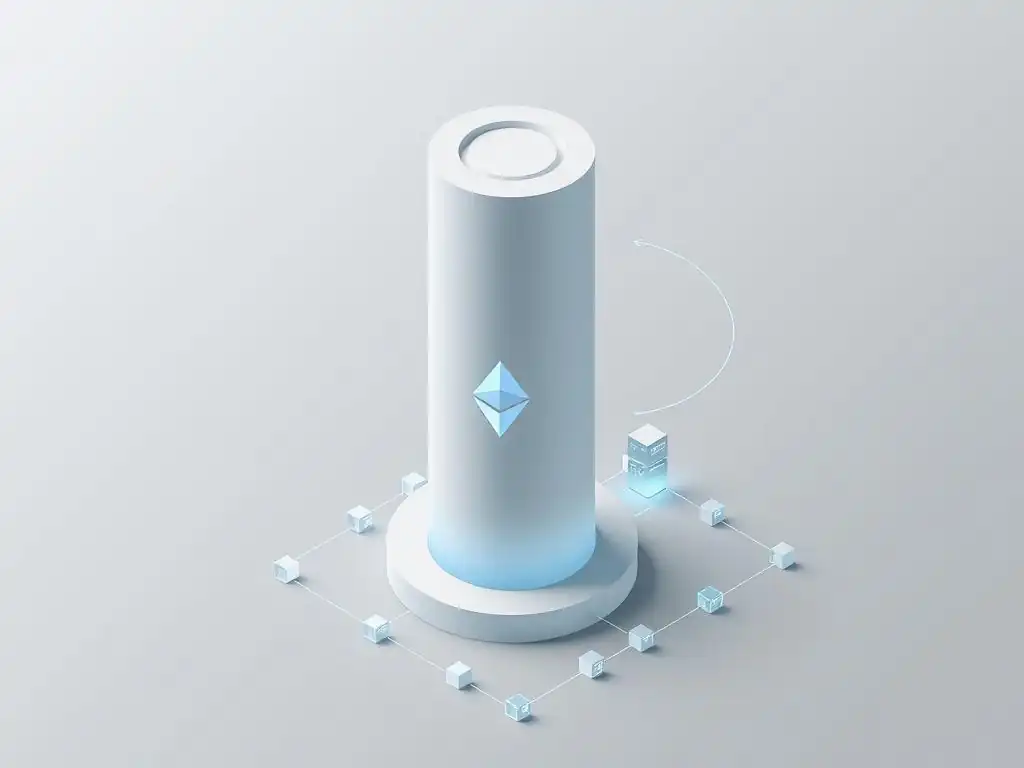
Optimistic Rollups: Principles and Benefits
Optimistic rollups represent a significant Layer-2 scaling solution for Ethereum, designed to increase transaction throughput and reduce gas fees. The core principle of an optimistic rollup is "optimism" itself: transactions are assumed to be valid by default. Instead of computing and verifying each transaction on the Ethereum mainnet, optimistic rollups execute transactions off-chain and only post the transaction data (in a compressed form) and the resulting state root onto the main chain. This drastically reduces the computational burden on Ethereum, allowing for higher transaction speeds and lower costs for users.
The key benefit of optimistic rollups lies in their scalability. By processing transactions off-chain, they can achieve significantly higher transaction throughput compared to Ethereum's mainnet. Estimates suggest optimistic rollups can increase Ethereum's transaction throughput by 10-100x. For users, this translates to drastically reduced gas fees, making decentralized applications (dApps) more accessible and affordable. Furthermore, optimistic rollups inherit the security of Ethereum.
While transactions are initially assumed valid, they are subject to a challenge period, typically around 7 days. During this period, anyone can submit a "fraud proof" if they believe a transaction within the rollup is invalid. If a fraud proof is successful, the invalid transaction is reverted, and the sequencer (the entity processing transactions in the rollup) is penalized. This challenge mechanism ensures the integrity and security of the rollup, anchored to the Ethereum mainnet.
Optimism's Architecture and Key Components
Optimism, as a leading optimistic rollup, boasts a robust architecture designed for efficiency and compatibility with Ethereum. At its heart lies the Optimistic Virtual Machine (OVM), a modified version of the Ethereum Virtual Machine (EVM) designed to execute smart contracts within the Optimism rollup. The OVM is crucial for ensuring near-perfect compatibility with existing Ethereum smart contracts, allowing developers to migrate their applications to Optimism with minimal code changes.
The architecture also includes the Sequencer, responsible for ordering transactions, executing them off-chain, and submitting transaction batches and state roots to the Ethereum mainnet. Currently, Optimism utilizes a centralized sequencer operated by the Optimism Foundation, which is a point of ongoing decentralization efforts. Another critical component is the Verifier (or Fault Prover).
This entity is responsible for monitoring the sequencer and submitting fraud proofs during the challenge period if invalid state transitions are detected. Anyone can act as a verifier, contributing to the security of the network. Finally, the Bridge facilitates the transfer of assets between Ethereum and Optimism.
Users can deposit ETH and ERC-20 tokens from Ethereum to Optimism and withdraw them back, enabling seamless interaction between the two layers. The Optimism architecture is designed to be EVM-equivalent, aiming for a developer experience as close to Ethereum mainnet development as possible, but with the added benefits of scalability and reduced costs.
Comparing Optimism to Other Layer-2 Solutions: ZK-Rollups and Sidechains
While optimistic rollups like Optimism offer a compelling scaling solution, it's crucial to understand how they compare to other Layer-2 technologies, notably ZK-rollups and sidechains. ZK-rollups (Zero-Knowledge Rollups) are another type of rollup that also processes transactions off-chain but utilizes zero-knowledge proofs to ensure transaction validity. Unlike optimistic rollups, ZK-rollups generate cryptographic proofs for each batch of transactions, which are then verified on-chain.
This eliminates the need for a challenge period, leading to faster finality. However, ZK-rollups are generally more complex to implement and have historically had limitations in terms of EVM compatibility, though advancements are rapidly being made. Examples of ZK-rollups include zkSync and StarkNet.
Optimistic rollups strike a balance between security and EVM compatibility, offering relatively easy migration for Ethereum dApps and strong security guarantees inherited from Ethereum, albeit with a longer withdrawal period due to the challenge window. ZK-rollups offer faster finality and potentially higher security in the long run but are currently more complex to develop for. Sidechains provide high scalability but with a trade-off in security compared to rollups. The choice between these solutions depends on the specific needs and priorities of a project, with Optimistic rollups being a popular choice for projects seeking EVM compatibility and strong Ethereum-derived security for their optimistic rollup smart contract development.
Frequently Asked Questions
What are Optimistic Rollups, and why are they relevant to smart contract development?
Optimistic Rollups are a layer-2 scaling solution for Ethereum. They significantly reduce transaction fees and increase throughput, making them ideal for complex smart contract applications that would be too expensive to run directly on the Ethereum mainnet.
How does Optimistic Rollup smart contract development differ from traditional Ethereum smart contract development?
The core smart contract logic remains largely the same, using languages like Solidity. However, developers must consider the challenge period and potential for fraud proofs, which require careful design and testing to ensure contract integrity.
What are the key advantages of using Optimistic Rollups for smart contract deployment?
Using Optimistic Rollups provides lower gas fees and faster transaction speeds compared to Ethereum mainnet. This makes decentralized applications (dApps) more accessible and usable, especially for applications requiring frequent transactions.
What are some potential challenges or considerations when developing smart contracts on Optimistic Rollups?
Developers need to understand the fraud proof mechanism and potential latency due to the challenge period. Furthermore, cross-chain communication between the rollup and mainnet requires careful planning and implementation.
Where can developers find resources and tools for learning about Optimistic Rollup smart contract development?
The Optimism team provides extensive documentation and tutorials on their website. Additionally, various online courses and developer communities offer guidance and support for getting started with Optimistic Rollup development.
Final Reflection: Embracing the Optimistic Future of Smart Contracts
The journey into Optimistic Rollup Smart Contract Development reveals not just a technological advancement, but a paradigm shift in how we approach scalability and efficiency within the blockchain ecosystem. The potential for faster transaction speeds and reduced gas fees, as explored throughout this article, is not merely theoretical; it's actively shaping the future of decentralized applications and making blockchain technology more accessible to a wider audience.
This shift towards optimism, both in the technical architecture and in our outlook for the future of blockchain, has profoundly influenced the cultural landscape surrounding smart contract development. It's inspiring to witness the community's embrace of innovative solutions like Optimistic Rollups, fostering a collaborative environment where developers are empowered to build more complex and impactful applications. The future belongs to those who believe in the beauty of their dreams.
- Eleanor Roosevelt. This quote resonates deeply, as the dream of a scalable and efficient blockchain is now within our grasp, fueled by the ingenuity and dedication of developers worldwide.
As you navigate the evolving world of smart contracts, remember the power of optimism. Embrace the challenges, explore the possibilities, and contribute to the ongoing development of solutions like Optimistic Rollups. Let the lessons learned here inspire you to build a more decentralized, accessible, and efficient future for all.
Ignite Your Optimism: Start Building!
Thank you for exploring the potential of Optimistic Rollups with us! We hope you now have a clearer understanding of how this technology can revolutionize smart contract development. Now, it's time to take your knowledge and put it into action.
Here are a few ways you can begin:
- Dive into the official documentation to understand the nuances and best practices for building on the Optimism network.
- Explore existing open-source projects built on Optimism to see real-world examples and find inspiration.
- Share this article with fellow developers who might be interested in the advantages of Optimistic Rollups.
What is the first decentralized application you plan to build on Optimism, and what unique problem will it address? Share your ideas in the comments below!
Leave a Reply