
Blockchain's Ethical Advantage: Building Trust and Transparency in Supply Networks

Welcome to Blockchain Trends, your compass in the rapidly evolving world of decentralized technology! Are you ready to uncover the real-world impact of blockchain beyond the hype? We delve into its transformative potential, from DeFi innovations to enterprise solutions and emerging regulations. Dive into our latest article to explore blockchain supply chain ethics, and discover how this technology is poised to revolutionize transparency and accountability, building a future where trust isn't just an ideal, but a verifiable reality. Uncover the power of decentralized systems and see how they are shaping a more ethical future, starting now.
Blockchain's Ethical Advantage: Building Trust and Transparency in Supply Networks
- Introduction: The Urgent Need for Ethical Supply Chains and Blockchain's Role
- Understanding Blockchain Supply Chain Ethics
- Blockchain's Impact on Transparency and Traceability
- Building Trust in Supply Networks with Blockchain Technology
- Case Studies: Blockchain in Action for Ethical Supply Chains
- Overcoming Challenges in Implementing Blockchain for Supply Chain Ethics
- The Future of Blockchain and Ethical Supply Chains
- Conclusion: Blockchain as a Catalyst for Ethical Transformation in Supply Networks
-
Frequently Asked Questions
- What are the primary ethical concerns in traditional supply chains that blockchain aims to address?
- How can blockchain technology improve the ethical sourcing of materials in supply chains?
- What role does immutability play in ensuring the integrity of ethical claims made about products tracked on a blockchain?
- Beyond traceability, how can blockchain facilitate fair labor practices within supply chains?
- What are some challenges to the widespread adoption of blockchain for ethical supply chain management?
- Final Reflection: Forging a Future of Ethical Supply Chains
- Unlock Supply Chain Transparency Today!
Introduction: The Urgent Need for Ethical Supply Chains and Blockchain's Role
The Growing Demand for Ethical Sourcing and Transparency
Consumers globally are increasingly concerned about the origins of the products they purchase and the ethical implications of supply chains. Reports highlighting issues such as forced labor, unsustainable environmental practices, and unsafe working conditions have spurred public demand for greater transparency. A 2020 study by IBM and the National Retail Federation indicated that 70% of consumers want to know more about product sustainability and ethical sourcing. This heightened awareness puts significant pressure on companies to demonstrate responsibility and build trust, moving beyond simple compliance to proactive ethical leadership.
This demand is not limited to consumer goods; businesses are also scrutinizing their B2B supply chains, recognizing that their reputation and resilience depend on the ethical conduct of their partners. Supply chain disruptions, whether caused by natural disasters, geopolitical events, or ethical scandals, can have severe financial and reputational consequences. The push for ethical sourcing is therefore becoming a strategic imperative, driving companies to seek innovative solutions that can provide verifiable proof of ethical practices throughout complex, multi-tiered supply networks. The challenge lies in capturing and validating this information reliably across numerous intermediaries.
How Blockchain Addresses Supply Chain Challenges
Traditional supply chains often suffer from opacity, fragmentation, and a lack of trust among participants. Information is frequently siloed, incomplete, or easily altered, making it difficult to trace products back to their source or verify claims about ethical practices. This lack of visibility creates vulnerabilities for fraud, counterfeiting, and the concealment of unethical activities, hindering efforts to improve blockchain supply chain ethics. The manual processes and reliance on paper records or disparate digital systems further exacerbate these issues, making comprehensive auditing and verification prohibitively complex and expensive.
Blockchain technology offers a potential paradigm shift by providing a shared, immutable ledger that records transactions and information across the network. Unlike traditional databases, blockchain's decentralized nature means no single entity controls the data, and once information is added, it is extremely difficult to alter.
This inherent immutability and transparency, when applied to supply chain data, can create a single, trustworthy source of truth regarding a product's journey, its components, and the conditions under which it was handled. This foundational capability directly addresses the core challenges of opacity and mistrust that plague traditional supply chains, paving the way for enhanced blockchain supply chain ethics.
Understanding Blockchain Supply Chain Ethics
Defining Blockchain Supply Chain Ethics: Principles and Values
Blockchain supply chain ethics refers to the application of blockchain technology to uphold and improve ethical standards within supply networks. At its core, it is about leveraging the unique properties of blockchain – transparency, immutability, and decentralization – to ensure that goods are produced, transported, and sold in a manner that respects human rights, protects the environment, and adheres to fair business practices. Key principles include ensuring fair labor wages and safe working conditions, minimizing environmental impact, preventing the use of conflict resources, and combating corruption and bribery across the supply chain.
The values underpinning blockchain supply chain ethics align with broader corporate social responsibility (CSR) goals and the United Nations Sustainable Development Goals (SDGs). By implementing blockchain solutions, companies aim to create supply chains that are not only efficient and profitable but also socially responsible and environmentally sustainable. This involves establishing verifiable records of compliance with ethical standards, providing stakeholders (including consumers, regulators, and NGOs) with access to reliable information about product origins and ethical attributes, and fostering a culture of accountability among all participants in the network.
Key Benefits of Blockchain in Promoting Ethical Practices
One of the primary benefits of blockchain for promoting ethical practices is its ability to create a tamper-proof record of transactions and events. This makes it significantly harder for unethical actors to hide non-compliance or falsify records related to labor conditions, environmental impact, or material sourcing.
For example, a record of a fair wage payment or a certification of sustainable farming practices, once added to the blockchain, provides a persistent and verifiable data point that contributes to the overall ethical profile of a product or supplier. This immutability builds a foundation of trust that is often lacking in traditional systems.
Furthermore, blockchain enables enhanced traceability, allowing companies and consumers to follow a product's journey from origin to destination. This detailed provenance is crucial for verifying ethical claims. If a product is marketed as "fair trade" or "sustainably sourced," blockchain can potentially provide the granular data – such as farm location, date of harvest, processing facility details, and transportation routes – needed to substantiate these claims. This level of transparency empowers stakeholders to make informed decisions and holds suppliers accountable for their ethical commitments, directly contributing to stronger blockchain supply chain ethics.
Blockchain's Impact on Transparency and Traceability
Enhanced Product Provenance and Tracking with Blockchain
Blockchain significantly enhances product provenance by creating a chronological and immutable record of every step a product takes through the supply chain. Each transfer of ownership, processing step, or location change can be recorded as a transaction on the blockchain ledger. For instance, in the food industry, this could mean tracking a head of lettuce from the specific farm plot where it was grown, through washing and packaging facilities, distribution centers, and finally to the retail store shelf. Each participant in the chain adds their relevant data, creating a comprehensive digital history.
This granular level of tracking provides unprecedented visibility. If an issue arises, such as a food safety recall or a question about sourcing, the blockchain record allows for rapid identification of the origin and affected batches. This is far more efficient than traditional paper-based or disparate database systems, which can take days or weeks to piece together. For ethical sourcing, this means being able to trace components or raw materials back to their precise origin, verifying that they did not come from prohibited regions or were not produced using unethical methods.
Verifying Ethical Claims: Certifications and Audits on the Blockchain
Blockchain provides a robust mechanism for verifying and validating ethical certifications and audit results. Instead of relying on paper certificates or centralized databases that can be forged or manipulated, certifications (like Fair Trade, organic, or conflict-free diamond assurance) can be tokenized or have their key data points recorded on the blockchain. An auditor's verification of a supplier's compliance with labor standards, for example, could be recorded as a transaction linked to that supplier's identity on the chain.
This approach makes ethical claims more credible and easily verifiable by any authorized party accessing the ledger. Companies can demonstrate compliance with specific standards not just by displaying a certificate, but by providing a verifiable link to the blockchain record of their audit or certification. This increased transparency and verifiability are critical for building consumer trust and combating "greenwashing" or misleading ethical marketing. It shifts the focus from simply claiming ethical practices to being able to prove them through verifiable data.
Reducing Counterfeiting and Ensuring Product Authenticity
Counterfeiting is a significant problem across many industries, from luxury goods and pharmaceuticals to electronics and auto parts, costing the global economy hundreds of billions of dollars annually. Counterfeit goods not only represent financial losses but can also pose serious health and safety risks, eroding consumer trust and damaging brand reputations. Traditional anti-counterfeiting measures, such as holograms or serial numbers, can often be replicated by sophisticated counterfeiters.
Blockchain offers a powerful tool to combat counterfeiting by creating a unique, verifiable digital identity for each physical product. This can be achieved by linking a physical product to a digital token or record on the blockchain, often using technologies like QR codes, NFC tags, or tamper-proof seals.
As the product moves through the supply chain, each legitimate transfer or inspection is recorded on the blockchain. Consumers or retailers can scan the code and verify the product's authenticity and provenance against the immutable blockchain record, ensuring they are purchasing a genuine item that has followed the expected, ethical path through the supply chain.
Building Trust in Supply Networks with Blockchain Technology
Immutable Records and Data Integrity: The Foundation of Trust
Trust in supply chains is fundamentally built on the reliability and integrity of information. In traditional systems, data can be altered, lost, or kept hidden, creating opportunities for deception and eroding confidence among participants. Blockchain's core feature of immutability addresses this directly.
Once data is added to the blockchain – whether it's a record of origin, a quality inspection result, or a payment transaction – it is cryptographically sealed into a block and linked to the previous block, forming a chain. Altering data in a past block would require recalculating the cryptographic proof for that block and all subsequent blocks, a computationally infeasible task on a widely distributed network.
This inherent immutability ensures that the historical record of the supply chain is accurate and trustworthy. Participants can rely on the data on the blockchain as a single source of truth, confident that it has not been tampered with. This foundational data integrity is crucial for building trust, as it provides a verifiable history that all parties can agree upon, reducing disputes and increasing accountability regarding blockchain supply chain ethics.
Decentralization and Distributed Ledger Technology (DLT): Minimizing Manipulation
Traditional supply chains often rely on centralized databases or systems controlled by a single entity. This creates a single point of failure and allows the controlling entity significant power over the data, potentially enabling manipulation or selective sharing of information. Blockchain, as a Distributed Ledger Technology (DLT), fundamentally changes this structure. The ledger is not stored in one place but is replicated across multiple computers or nodes in the network.
This decentralization means that no single participant has unilateral control over the entire dataset. To add a new record, a consensus mechanism (like Proof of Work or Proof of Stake) is typically required, involving multiple nodes agreeing on the validity of the transaction.
This distributed nature and the need for consensus make it incredibly difficult for any one party to manipulate the ledger for their own benefit without being detected by others in the network. This distributed trust model is essential for fostering genuine collaboration and confidence among diverse and sometimes competing entities within a supply chain, bolstering blockchain supply chain ethics by reducing the risk of data tampering.
Smart Contracts for Automated Compliance and Ethical Agreements
Smart contracts are self-executing contracts with the terms of the agreement directly written into code. They run on the blockchain and automatically execute actions when predefined conditions are met. In the context of supply chains, smart contracts can automate processes based on verifiable data recorded on the ledger, reducing the need for intermediaries and manual checks. For example, a smart contract could automatically trigger a payment to a supplier once a shipment is verified as received and meeting quality standards, as recorded by an inspector on the blockchain.
For blockchain supply chain ethics, smart contracts can be used to enforce ethical agreements and compliance rules programmatically. A smart contract could be programmed to release payment for raw materials only after a blockchain record confirms that the supplier has uploaded verifiable proof of fair labor practices or environmental compliance (e.g., a verified audit report or certification). This automation removes ambiguity, ensures timely adherence to agreed-upon ethical terms, and provides a transparent, auditable record of compliance execution, further solidifying trust within the network.
Case Studies: Blockchain in Action for Ethical Supply Chains
Tracking Tuna from Ocean to Table: Provenance and Sustainability
The seafood industry faces significant challenges related to illegal fishing, overfishing, and ensuring fair labor practices for fishers. Tracing seafood from the ocean to the consumer's plate is notoriously difficult in traditional supply chains, making it hard to verify sustainability claims or ethical sourcing. Several initiatives have leveraged blockchain to address these issues. For instance, the Thai Union Group, one of the world's largest seafood companies, partnered with Blockchain for Seafood to pilot a traceability system for tuna.
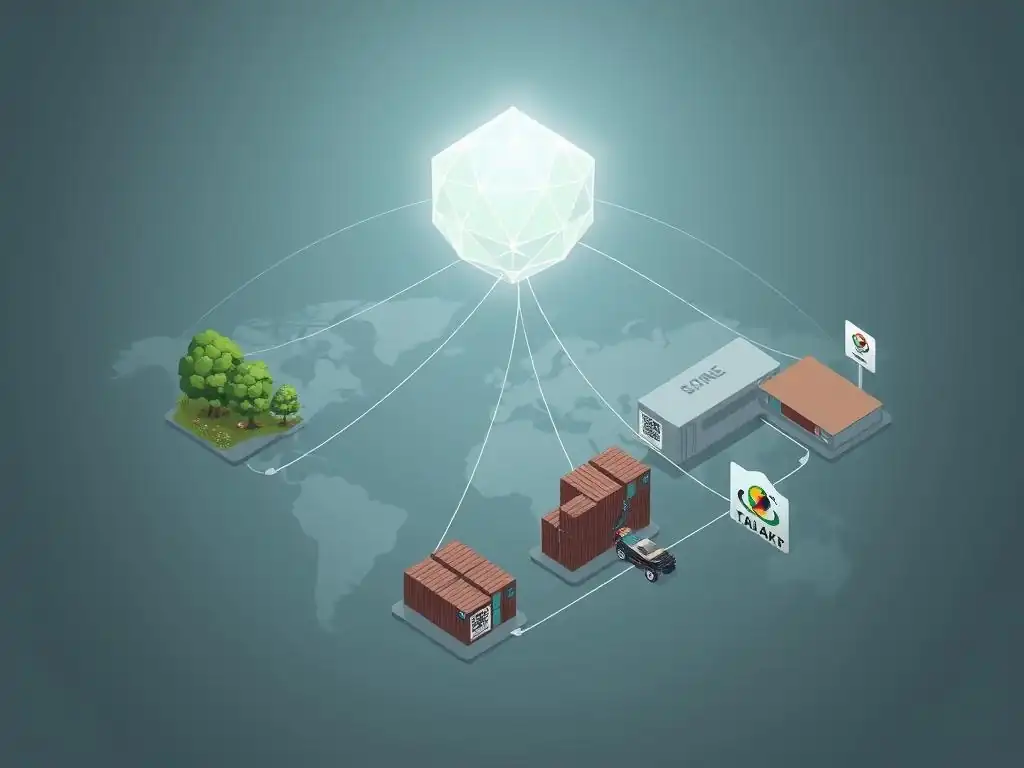
This system tracks tuna from the vessel catch information (including location, date, and species) through processing plants, distribution, and retail. Key data points, such as vessel identity, catch area, processing details, and logistics information, are recorded on the blockchain. This creates an immutable record that consumers can access by scanning a QR code on the product packaging. This enhanced transparency allows consumers to verify the origin and journey of their tuna, providing assurance that it was caught legally and responsibly, and supporting the company's commitment to sustainable and ethical fishing practices.
De Beers' Tracr: Ensuring Conflict-Free Diamonds
The diamond industry has long struggled with the issue of "conflict diamonds" – diamonds mined in war zones and sold to finance insurgencies. While efforts have been made to certify diamonds as conflict-free through processes like the Kimberley Process, tracing individual diamonds with certainty has remained a challenge. De Beers, a leading diamond company, developed the Tracr platform using blockchain technology specifically to address this.
Tracr creates a unique, immutable digital record for each diamond, registered at the point it is discovered. Key attributes of the rough diamond are recorded, and this digital identity follows the diamond through cutting, polishing, wholesale, and retail stages. Each handler adds information to the diamond's digital trail on the blockchain. This allows anyone with permission to trace a diamond back to its rough form and origin, providing a high degree of assurance that it is natural, untreated, and conflict-free. By providing this verifiable provenance, Tracr enhances trust throughout the diamond value chain and strengthens ethical sourcing practices.
Addressing Ethical Concerns in Palm Oil Production with Blockchain
The palm oil industry is frequently associated with significant ethical and environmental challenges, including deforestation, habitat destruction, and labor rights abuses. Tracing palm oil back to sustainable and ethical sources is complex due to the fragmented nature of the supply chain, involving millions of smallholder farmers and numerous intermediaries. Initiatives are exploring blockchain to improve transparency and accountability in this sector.
For example, projects have been piloted to track palm oil from specific plantations or collection points through mills and refineries. Data such as GPS coordinates of the farm, details of sustainable farming certifications (like RSPO - Roundtable on Sustainable Palm Oil), and records of transactions are uploaded to a blockchain ledger.
This creates a verifiable chain of custody for sustainable and ethically produced palm oil. While still in early stages of widespread adoption, these blockchain initiatives hold the potential to provide corporations and consumers with the assurance that the palm oil in their products does not contribute to deforestation or human rights abuses, improving blockchain supply chain ethics in this critical industry.
Overcoming Challenges in Implementing Blockchain for Supply Chain Ethics
Scalability and Interoperability Issues
One significant challenge in implementing blockchain for large-scale supply chains is scalability. Public blockchains, while highly decentralized, can struggle to handle the high volume of transactions generated by complex global supply networks. Transaction speeds can be slow, and costs (like gas fees on some networks) can become prohibitive for recording every granular event. Private or permissioned blockchains offer better scalability and speed but may sacrifice some degree of decentralization, raising questions about who controls access and validation. Finding the right blockchain architecture that balances scalability, security, and decentralization is critical.
Interoperability is another major hurdle. Supply chains involve numerous disparate systems and technologies used by different companies. Integrating these legacy systems with blockchain platforms can be complex and costly. Furthermore, different blockchain platforms may not easily communicate with each other, creating silos within the broader supply chain ecosystem. For blockchain to achieve widespread adoption in enhancing blockchain supply chain ethics, solutions are needed that enable seamless data exchange and interaction between various participants and their existing IT infrastructure, as well as across different blockchain networks.
Data Privacy Concerns and GDPR Compliance
While transparency is a key benefit of blockchain for supply chain ethics, it also raises data privacy concerns. Supply chain data can contain sensitive information, including proprietary business processes, pricing details, and potentially personal data related to workers or farmers. Putting all this information on a public, immutable ledger might violate privacy regulations like the General Data Regulation (GDPR) in Europe, which grants individuals the right to have their data erased.
Addressing privacy requires careful design of blockchain solutions. This might involve using permissioned blockchains where access to sensitive data is restricted to authorized parties, employing zero-knowledge proofs to verify data without revealing the underlying information, or storing sensitive data off-chain with only verifiable hashes stored on the blockchain. Ensuring compliance with evolving data privacy laws while maintaining the necessary level of transparency for blockchain supply chain ethics is a complex balancing act that requires careful legal and technical consideration.
The Need for Industry Collaboration and Standardization
Implementing blockchain for supply chain ethics requires collaboration across multiple stakeholders: raw material suppliers, manufacturers, logistics providers, retailers, technology providers, auditors, and even regulators and NGOs. Establishing a shared blockchain network requires agreement on data standards, governance models, access permissions, and the specific ethical metrics to be tracked. Without broad participation and agreement, a blockchain solution will only cover a small part of the supply chain, limiting its effectiveness in providing end-to-end visibility and trust.
Furthermore, the lack of universal standards for blockchain technology and supply chain data makes widespread adoption difficult. Different industries and even companies within the same industry may use different blockchain platforms and data formats. The development of open standards and frameworks is crucial to facilitate interoperability, reduce implementation costs, and encourage broader participation. Collaborative initiatives and industry consortiums are essential drivers for establishing these standards and fostering the necessary trust and cooperation to leverage blockchain effectively for improving blockchain supply chain ethics.
The Future of Blockchain and Ethical Supply Chains
Emerging Trends and Innovations in Blockchain Technology
The blockchain landscape is rapidly evolving, with several emerging trends poised to impact its application in ethical supply chains. Layer 2 scaling solutions (like Lightning Network or Polygon) are being developed to increase transaction throughput and reduce costs on public blockchains, potentially making them more viable for high-volume supply chain data. Advancements in privacy-preserving technologies, such as zero-knowledge proofs and homomorphic encryption, are addressing data confidentiality concerns, allowing verification of compliance without revealing sensitive underlying data.
Furthermore, the integration of blockchain with other technologies like the Internet of Things (IoT) and Artificial Intelligence (AI) is creating powerful new possibilities. IoT sensors can automatically record data points (e.g., temperature during transport, location, environmental conditions) directly onto the blockchain, providing real-time, verifiable information about product handling and conditions. AI can analyze the vast amounts of data collected on the blockchain to identify patterns, predict risks, and flag potential ethical violations, moving from reactive reporting to proactive monitoring in blockchain supply chain ethics.
The Role of Blockchain in Sustainable Supply Chain Management
Blockchain is expected to play a crucial role in advancing sustainable supply chain management beyond just ethical sourcing. Its ability to track materials and products offers unprecedented opportunities for verifying circular economy practices, such as tracking recycled content, documenting proper waste disposal, and managing product end-of-life processes. By recording the flow of materials in a verifiable way, blockchain can help companies demonstrate their commitment to sustainability goals and comply with environmental regulations.
Moreover, blockchain can facilitate carbon footprint tracking by recording energy consumption and emissions data at various stages of the supply chain. This allows for more accurate reporting and identification of areas for improvement. As companies face increasing pressure from regulators, investors, and consumers to demonstrate environmental responsibility, blockchain provides a transparent and credible platform for reporting on sustainability performance, making it a key enabler for both blockchain supply chain ethics and environmental responsibility.
Predictions for the Adoption of Blockchain in Various Industries
While still in relatively early stages for widespread adoption beyond pilot projects, predictions suggest increasing implementation of blockchain for ethical and transparent supply chains across various sectors. Industries with high consumer scrutiny or complex, opaque supply chains are likely to see faster adoption. This includes food and agriculture (focusing on provenance and safety), fashion and apparel (addressing labor practices and material sourcing), mining and extractives (combating conflict resources), and pharmaceuticals (preventing counterfeiting and ensuring integrity).
Market research reports indicate significant growth potential. For example, estimates project the global blockchain supply chain market to reach several billion dollars in the coming years, driven by the need for enhanced transparency, trust, and efficiency. While challenges remain, the compelling benefits in terms of risk reduction, brand reputation enhancement, and meeting consumer and regulatory demands for blockchain supply chain ethics are strong incentives for companies to invest in and implement blockchain solutions.
Conclusion: Blockchain as a Catalyst for Ethical Transformation in Supply Networks
Blockchain technology holds significant power to drive positive social impact by fundamentally transforming the transparency and accountability of global supply networks. By creating immutable, verifiable records of transactions and events, it shines a light on previously opaque areas, making it harder for unethical practices – such as forced labor, environmental damage, or the use of conflict resources – to remain hidden. This increased visibility empowers consumers, regulators, and civil society organizations to hold companies accountable for their ethical commitments.
Beyond simply enabling tracking, blockchain facilitates a shift towards more collaborative and trustworthy supply chain ecosystems. Smart contracts can automate compliance with ethical standards, while distributed ledgers ensure no single party has undue control over the narrative. This technological foundation supports the development of genuinely ethical blockchain supply chain ethics, pushing industries towards greater responsibility and sustainability, ultimately contributing to improved human rights and environmental protection globally.
Embracing Blockchain for a More Transparent and Accountable Future
Embracing blockchain technology is becoming increasingly essential for companies committed to building truly ethical and resilient supply chains. While not a silver bullet that solves all ethical challenges on its own, blockchain provides the critical infrastructure needed to underpin claims of ethical sourcing and sustainable practices with verifiable data. It moves the conversation from promises to provable actions, fostering a level of trust and transparency that was previously unattainable.
For businesses looking to navigate the complexities of modern supply chains while meeting growing demands for ethical conduct, exploring and implementing blockchain solutions is a strategic imperative. It represents an investment not just in efficiency and security, but in building a reputation for integrity and responsibility. By leveraging the unique capabilities of blockchain, companies can contribute to a more transparent, accountable, and ultimately, more ethical future for global supply networks, solidifying their commitment to blockchain supply chain ethics.
Frequently Asked Questions
What are the primary ethical concerns in traditional supply chains that blockchain aims to address?
Traditional supply chains often suffer from a lack of transparency and accountability, leading to issues like exploitative labor practices, environmental degradation, and counterfeit goods. Blockchain offers a way to create a more transparent and traceable system.
How can blockchain technology improve the ethical sourcing of materials in supply chains?
Blockchain enables the tracking and verification of materials from origin to end consumer, making it easier to ensure ethical sourcing. This helps combat issues like child labor and conflict minerals by providing verifiable proof of origin and handling.
What role does immutability play in ensuring the integrity of ethical claims made about products tracked on a blockchain?
The immutability of blockchain records ensures that once a piece of information is recorded, it cannot be altered or deleted. This provides a permanent and auditable record of a product's journey, making it difficult to falsify ethical claims.
Beyond traceability, how can blockchain facilitate fair labor practices within supply chains?
Blockchain can be used to directly pay workers in developing countries, bypassing intermediaries and ensuring fair wages. Furthermore, smart contracts can automate the enforcement of labor standards and working conditions, promoting ethical practices.
What are some challenges to the widespread adoption of blockchain for ethical supply chain management?
Challenges include the complexity of implementing blockchain solutions, the need for collaboration among stakeholders, and the potential for data privacy concerns. Also, the cost of implementation can be a barrier for smaller businesses.
Final Reflection: Forging a Future of Ethical Supply Chains
The exploration of blockchain's potential to revolutionize supply chain ethics culminates in a crucial realization: transparency and trust are no longer optional, but essential for sustainable and responsible business practices. The vulnerabilities exposed in global supply networks, from labor exploitation to environmental degradation, demand innovative solutions, and blockchain offers a compelling pathway towards accountability and ethical conduct.
The impact of blockchain on supply chain ethics extends far beyond mere technological advancement; it represents a fundamental shift in how we perceive and interact with the products we consume. This technology empowers consumers to make informed choices, knowing the origin and journey of goods, and holding businesses accountable for their ethical commitments. The ultimate test of a moral society is the kind of world that it leaves to its children.
- Dietrich Bonhoeffer. This quote underscores the urgency of building ethical supply chains for future generations.
As we look ahead, let us embrace the transformative power of blockchain to create supply chains that are not only efficient and profitable but also transparent, equitable, and environmentally sound. Consider how you, as a consumer, a business leader, or a policymaker, can champion the adoption of blockchain-based solutions to foster a future where ethical sourcing and responsible production are the cornerstones of global commerce. Let's work together to build a world where every product tells a story of integrity and sustainability.
Unlock Supply Chain Transparency Today!
Thank you for exploring the ethical aspects of blockchain technology in supply networks. We hope this article has highlighted how blockchain can enhance trust and accountability in the journey of goods from origin to consumer. Now, it's time to put this knowledge into practice.
Here are a few ways you can get started:
- Explore further: Begin mapping your supply chain using blockchain principles.: Consider testing a small project to track a specific product or component.
- Share and discuss: Present this article to your colleagues to initiate conversations about the benefits of blockchain for ethical supply chains.:
- Engage with related content: Read other articles on this portal about blockchain's role in transparency and ethics.:
How do you plan to use blockchain to build a more transparent and ethical supply chain in your industry? Share your ideas in the comments below!
Leave a Reply