
The Future of Virtual Land: Investing in Decentralized Metaverse Real Estate


Welcome to Blockchain Trends, your guide to navigating the ever-evolving world of decentralized technologies!
Ever wondered what lies beyond the hype of crypto? We delve into the real-world applications of blockchain, from revolutionizing finance to reshaping industries. Today, we're exploring a particularly fascinating frontier: Decentralized metaverse real estate investing. Discover how blockchain is transforming the ownership and trade of virtual land, and uncover the potential opportunities (and risks) that await in this rapidly expanding digital landscape. Ready to stake your claim in the future?
The Future of Virtual Land: Investing in Decentralized Metaverse Real Estate
- Introduction: Exploring the Booming Market of Decentralized Metaverse Real Estate
- Understanding Decentralized Metaverse Real Estate
- Opportunities in Decentralized Metaverse Real Estate Investing
- Assessing the Risks of Decentralized Metaverse Real Estate Investing
- Top Decentralized Metaverse Platforms for Real Estate Investment
- Strategies for Successful Decentralized Metaverse Real Estate Investing
- The Future of Virtual Land and Decentralized Metaverse Real Estate
- Conclusion: Navigating the Landscape of Decentralized Metaverse Real Estate Investing
-
Frequently Asked Questions
- How does decentralized metaverse real estate investing differ from traditional real estate investing?
- What are the potential benefits of investing in decentralized metaverse real estate?
- What are the key risks associated with investing in decentralized metaverse real estate?
- What is the role of NFTs in decentralized metaverse real estate ownership?
- What are some examples of applications or use cases for decentralized metaverse real estate beyond just buying and holding land?
- Final Reflection: Building Tomorrow's Worlds Today
- Unleash Your Metaverse Potential Now!
Introduction: Exploring the Booming Market of Decentralized Metaverse Real Estate
The Allure of Virtual Land in Decentralized Metaverses
The concept of owning virtual land might seem futuristic, yet it's rapidly becoming a tangible and investable asset within decentralized metaverse platforms. The allure stems from the fundamental human desire for ownership and creation, now extended into digital realms. Imagine owning a prime piece of digital real estate in a thriving virtual city, capable of hosting events, building virtual businesses, or simply serving as a digital sanctuary.
This potential for creativity and control, coupled with the scarcity inherent in these virtual worlds – land is often limited and finite – drives the appeal of decentralized metaverse real estate. Early adopters envision a future where these digital lands are not just collectibles but functional spaces within immersive digital economies, mirroring and augmenting real-world interactions and commerce.
Furthermore, the decentralized nature of these metaverses adds another layer of attraction. Unlike centralized gaming platforms where virtual assets are ultimately controlled by a single entity, decentralized metaverses leverage blockchain technology to grant users true ownership. This means that when you acquire virtual land in platforms like Decentraland or The Sandbox, you genuinely own it as a non-fungible token (NFT) on the blockchain. This ownership is verifiable, transparent, and, crucially, independent of the platform itself. This fundamental shift in digital ownership is a major catalyst for the burgeoning interest in decentralized metaverse real estate investing.
Why Decentralized Metaverse Platforms are Driving Real Estate Investment
Decentralized metaverse platforms are uniquely positioned to drive real estate investment due to their inherent characteristics that address key concerns in the digital asset space. The foundation of these platforms on blockchain technology provides transparency and security, making virtual land ownership verifiable and trustworthy. This contrasts sharply with traditional virtual worlds where ownership is often precarious and subject to the platform's terms of service. Decentralization fosters a sense of community ownership and governance, often through Decentralized Autonomous Organizations (DAOs), which can influence the platform's development and future, further incentivizing investment.
Moreover, decentralized platforms often feature open and interoperable ecosystems, albeit still in early stages of development. The vision is that assets and identities will eventually be portable across different metaverses, enhancing the utility and long-term value of virtual land.
This potential for interoperability reduces the risk of platform lock-in and increases the potential for network effects, where the value of virtual land increases as the metaverse ecosystem grows. The promise of a user-owned, interconnected digital future is a powerful magnet for investors seeking to participate in the next iteration of the internet and digital economies, making decentralized metaverse real estate investing a compelling frontier.
Understanding Decentralized Metaverse Real Estate
Defining Virtual Land Ownership in the Decentralized Metaverse
Virtual land ownership in the decentralized metaverse fundamentally differs from traditional conceptions of digital assets in online games or virtual worlds. In decentralized platforms, virtual land is represented as Non-Fungible Tokens (NFTs) on a blockchain, most commonly Ethereum or Polygon. This means that owning virtual land is akin to owning a unique digital certificate of ownership, recorded on a public and immutable ledger.
When you purchase a parcel of virtual land, you are essentially acquiring the NFT that represents that specific piece of digital terrain. This ownership is verifiable by anyone on the blockchain, providing a transparent and secure record of who owns what.
This NFT-based ownership grants users significant control and autonomy over their virtual land. Unlike centralized platforms where virtual assets are often leased or subject to platform-specific rules that can change, owning a virtual land NFT in a decentralized metaverse means you have the freedom to develop, rent, sell, or even leave the land undeveloped as you see fit, within the platform's broader community guidelines.
The key is that the ownership is independent of the platform operators in a fundamental way, residing with the individual who holds the private keys associated with the NFT. This true digital ownership is a core tenet of decentralized metaverse real estate investing.
How Blockchain Technology Secures Virtual Land Assets
Blockchain technology is the bedrock of security and ownership in decentralized metaverse real estate. The immutability of the blockchain ledger is paramount; once a transaction recording the ownership of a virtual land NFT is confirmed and added to the blockchain, it cannot be altered or reversed. This provides an unparalleled level of security against fraud and tampering, ensuring that ownership records are permanently and reliably stored. Furthermore, the cryptographic nature of blockchain, using private and public keys, ensures that only the legitimate owner with the private key can control and transfer the virtual land NFT.
Smart contracts, self-executing contracts coded on the blockchain, further enhance security and trust in virtual land transactions. When buying or selling virtual land on a decentralized marketplace, smart contracts automate the process, ensuring that funds are only released to the seller once the NFT ownership is transferred to the buyer. This eliminates the need for intermediaries and reduces the risk of scams or disputes.
The transparency of the blockchain also plays a crucial role; all transactions are publicly auditable, allowing anyone to verify the history and ownership of a particular piece of virtual land. This combination of immutability, cryptography, and smart contracts makes blockchain technology the ideal foundation for securing virtual land assets in decentralized metaverses.
Key Differences Between Centralized and Decentralized Metaverse Real Estate
The distinction between centralized and decentralized metaverse real estate is crucial for understanding the investment landscape. In centralized metaverses, often associated with traditional gaming companies or tech giants, virtual land and assets are ultimately controlled by the platform operator. Users may "own" in-game items or land in a practical sense, but this ownership is subject to the platform's terms of service, which can be changed unilaterally.
The platform operator can shut down servers, alter asset values, or even remove user accounts, effectively nullifying any perceived ownership. Furthermore, transactions often occur within the platform's closed ecosystem, with limited or no interoperability with other platforms.
Decentralized metaverse real estate, in contrast, offers true digital ownership through NFTs on a blockchain. As discussed, this ownership is independent of the platform, verifiable, and transferable. Decentralized platforms often aim for greater user governance, allowing communities to participate in decision-making processes.
While still evolving, the vision of decentralized metaverses is one of open, interoperable, and user-controlled digital worlds. This fundamental difference in ownership and control is the primary reason why decentralized metaverse real estate is attracting significant attention from investors who value digital sovereignty and long-term asset security, compared to the more ephemeral and platform-dependent nature of centralized virtual assets.
Opportunities in Decentralized Metaverse Real Estate Investing
Buying, Selling, and Renting Virtual Land
The primary opportunity in decentralized metaverse real estate investing lies in the fundamental activities of buying, selling, and renting virtual land. Just as in the physical world, virtual land can be acquired through direct purchases on platform marketplaces, such as OpenSea, Nifty Gateway, or specific metaverse platforms' own marketplaces. The price of virtual land varies significantly based on location within the metaverse, perceived desirability, and overall market sentiment, mirroring real-world real estate dynamics. For example, land parcels near virtual hubs or popular districts often command premium prices, similar to prime real estate in physical cities.
Selling virtual land can be done through the same marketplaces, allowing investors to capitalize on price appreciation or adjust their portfolio. Beyond buying and selling, the burgeoning rental market presents another avenue for generating returns. Landowners can rent out their virtual parcels to individuals or businesses looking to host events, establish virtual storefronts, or build experiences.
This rental income can provide a steady stream of passive revenue, similar to traditional real estate rentals. The development of sophisticated virtual land management tools and platforms is further streamlining these buy, sell, and rent processes, making decentralized metaverse real estate investing increasingly accessible.
Developing and Monetizing Virtual Land Assets
Beyond simple land ownership, significant opportunities exist in developing and monetizing virtual land assets within decentralized metaverses. Virtual land is not just a static digital plot; it's a canvas for creativity and commerce. Owners can develop their land to create diverse experiences, from virtual art galleries and interactive games to virtual stores and social hubs. The potential for monetization is vast, limited only by imagination and development capabilities. For instance, landowners can build virtual venues to host events, concerts, or conferences, charging admission or sponsorship fees.
Virtual storefronts can be established to sell digital goods, NFTs, or even real-world products, leveraging the metaverse's reach to a global audience. Interactive games and experiences built on virtual land can attract users and generate revenue through in-game purchases or play-to-earn models. Furthermore, virtual advertising is emerging as a significant monetization strategy, with brands seeking to establish a presence in popular metaverse locations. The development and monetization of virtual land assets represent a dynamic and evolving frontier in decentralized metaverse real estate investing, offering diverse revenue streams beyond simple land appreciation.
Investing in Metaverse Real Estate Companies and DAOs
For investors seeking indirect exposure to decentralized metaverse real estate investing, opportunities exist in investing in companies and Decentralized Autonomous Organizations (DAOs) focused on this sector. Several companies are emerging that specialize in virtual land development, management, and investment. These companies often offer services like virtual land acquisition, development, and portfolio management, providing a more hands-off approach for investors. Investing in the equity of these companies can provide exposure to the growth of the metaverse real estate market without directly managing individual land parcels.
DAOs are also playing an increasingly important role in the decentralized metaverse real estate space. Real estate DAOs pool resources from members to collectively invest in virtual land, manage portfolios, and distribute profits. Joining a real estate DAO can offer diversification and access to expertise, allowing individuals to participate in larger-scale virtual land investments than they might be able to undertake on their own.
Furthermore, some DAOs are focused on developing specific metaverse projects or infrastructure, offering investment opportunities in the broader metaverse ecosystem. Investing in metaverse real estate companies and DAOs provides alternative entry points into this burgeoning market, catering to different risk appetites and investment strategies.
Assessing the Risks of Decentralized Metaverse Real Estate Investing
Market Volatility and Liquidity Concerns
Decentralized metaverse real estate investing, while promising, is inherently subject to market volatility and liquidity concerns, typical of emerging asset classes, especially within the cryptocurrency and NFT space. The value of virtual land is often tied to the overall sentiment towards cryptocurrencies and NFTs, experiencing significant price fluctuations. The market is still relatively nascent and speculative, meaning prices can be heavily influenced by hype cycles and social media trends. Investors should be prepared for potentially sharp price swings and not invest capital they cannot afford to lose.
Liquidity can also be a concern, particularly for less popular metaverse platforms or less desirable land parcels. While marketplaces exist for trading virtual land NFTs, the volume and frequency of transactions can vary significantly. Selling virtual land quickly at a desired price may not always be guaranteed, especially during market downturns. Compared to more established real estate markets, the decentralized metaverse real estate market is still relatively illiquid, requiring investors to have a longer-term investment horizon and be comfortable with potential delays in converting virtual assets back into fiat currency.
Regulatory Uncertainty Surrounding Virtual Land Ownership
Regulatory uncertainty is a significant risk factor in decentralized metaverse real estate investing. The legal status of virtual land ownership is still largely undefined in most jurisdictions. Governments and regulatory bodies are only beginning to grapple with the implications of NFTs and virtual assets, and clear legal frameworks are yet to emerge. This lack of regulatory clarity creates uncertainty regarding property rights, taxation, and legal recourse in case of disputes or platform failures.
Different countries and regions may adopt varying approaches to regulating virtual assets, potentially leading to fragmented regulatory landscapes and compliance challenges. Changes in regulations could significantly impact the value and usability of virtual land NFTs. Investors need to be aware of the evolving regulatory environment and understand that the legal framework surrounding decentralized metaverse real estate is still in its formative stages, posing potential risks to their investments.
Technological Risks and Platform Sustainability
Technological risks and platform sustainability are crucial considerations when assessing the risks of decentralized metaverse real estate investing. Metaverse platforms are built upon complex technologies, including blockchain, virtual reality, and augmented reality, which are constantly evolving. Technological advancements could render existing platforms or virtual land assets obsolete. For example, the emergence of more advanced metaverse technologies could lead to a shift in user preference towards newer platforms, potentially diminishing the value of land on older platforms.
Platform sustainability is another significant concern. While decentralized platforms aim for longevity, their long-term viability depends on factors like user adoption, community support, and financial sustainability. A metaverse platform could fail due to lack of user interest, technical issues, or financial mismanagement, potentially leading to the loss of value for virtual land assets within that platform. Investors need to carefully evaluate the technological robustness and long-term sustainability of the metaverse platforms they are investing in, recognizing that platform risk is an inherent part of decentralized metaverse real estate investing.
Top Decentralized Metaverse Platforms for Real Estate Investment
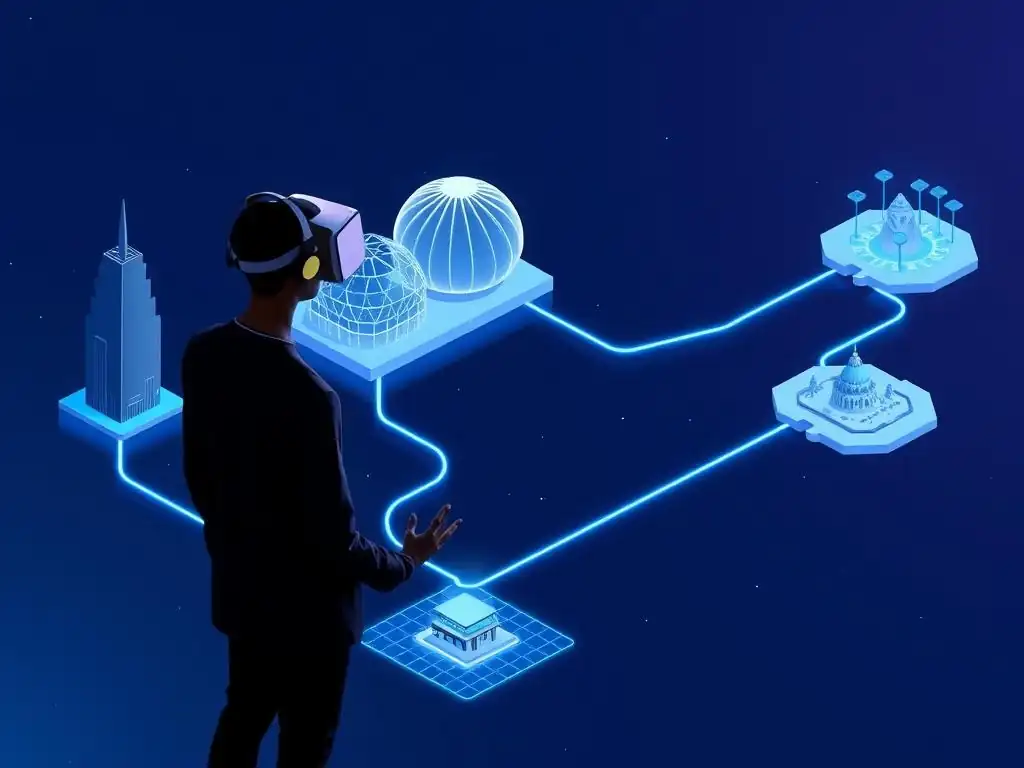
Decentraland: A Pioneer in Decentralized Virtual Worlds
Decentraland stands as a pioneering platform in the decentralized virtual world space and a prominent example for decentralized metaverse real estate investing. Launched in 2017 and open to the public in 2020, Decentraland is a user-owned, decentralized virtual world built on the Ethereum blockchain. It is governed by a DAO, giving LAND owners voting rights on key decisions regarding the platform's development and policies. Decentraland offers a vast, explorable 3D world where users can buy, sell, and develop virtual land parcels, known as LAND, represented as NFTs.
Decentraland has attracted significant attention and investment, hosting virtual events, concerts, art galleries, and businesses. Brands like Adidas and Samsung have established a presence in Decentraland, showcasing the platform's potential for marketing and commerce. The finite supply of LAND parcels – 90,000 in total – contributes to its scarcity and potential value appreciation. Decentraland's established history, active community, and robust infrastructure make it a leading platform for those interested in exploring decentralized metaverse real estate.
The Sandbox: User-Generated Content and Virtual Land Ownership
The Sandbox is another leading decentralized metaverse platform that emphasizes user-generated content and virtual land ownership, making it a compelling option for decentralized metaverse real estate investing. The Sandbox distinguishes itself with its voxel art style and focus on empowering creators. Users can create, own, and monetize their gaming experiences and assets using The Sandbox's tools. Virtual land in The Sandbox, known as LAND, is also represented as NFTs and can be purchased, sold, and rented.
The Sandbox has partnered with numerous well-known brands and celebrities, including Snoop Dogg, Adidas, and Atari, bringing a diverse range of experiences and communities to the platform. The platform's focus on gaming and user-generated content creates a dynamic and engaging environment, attracting a large and active user base. The limited supply of LAND and the platform's strong partnerships and creator ecosystem contribute to the investment appeal of The Sandbox for decentralized metaverse real estate.
Somnium Space: Immersive Experiences and Blockchain-Based Real Estate
Somnium Space differentiates itself in the decentralized metaverse landscape by focusing on immersive VR experiences and blockchain-based real estate, offering a unique avenue for decentralized metaverse real estate investing. Somnium Space is designed to be deeply immersive, prioritizing VR compatibility and creating a visually rich and interactive virtual world. Land in Somnium Space, known as PARCELs, is also represented as NFTs on the Ethereum blockchain and is finite in supply.
Somnium Space emphasizes realism and customization, allowing landowners to deeply personalize their parcels and create sophisticated virtual environments. The platform supports seamless integration with VR headsets, enhancing the sense of presence and immersion. Somnium Space has fostered a community focused on high-quality virtual experiences and digital ownership, attracting users and investors interested in the more immersive and visually advanced aspects of the metaverse. Its emphasis on VR and detailed virtual environments makes Somnium Space a distinctive platform in the decentralized metaverse real estate market.
Otherside: Yuga Labs' Metaverse and Land Ownership
Otherside is a highly anticipated metaverse project from Yuga Labs, the creators of the Bored Ape Yacht Club (BAYC), and represents a significant entry in decentralized metaverse real estate investing. Leveraging the immense popularity and community of the BAYC and other Yuga Labs NFT collections, Otherside aims to create an interoperable and gamified metaverse world. Land in Otherside, known as Otherdeeds, was launched as NFTs and generated significant initial demand, reflecting the strong brand recognition and community backing of Yuga Labs.
Otherside is envisioned as a metaverse platform that connects various NFT worlds and communities, creating a broader and more interconnected metaverse ecosystem. The project's association with the BAYC and its promise of interoperability and gamified experiences have generated considerable excitement and speculation in the decentralized metaverse space. While still in early development, Otherside's strong foundation and ambitious vision position it as a platform to watch for those interested in decentralized metaverse real estate and the future of interconnected virtual worlds.
Strategies for Successful Decentralized Metaverse Real Estate Investing
Due Diligence: Researching Platforms and Land Parcels
Successful decentralized metaverse real estate investing hinges on rigorous due diligence, starting with thorough research into different platforms and individual land parcels. Before investing in any platform, it's crucial to understand its vision, community, technology, and long-term roadmap. Factors to consider include the platform's user base, activity levels, governance model, development team, and partnerships. Analyzing the platform's whitepaper, community forums, and social media channels can provide valuable insights.
When evaluating specific land parcels, location within the metaverse is paramount. Parcels near popular hubs, virtual attractions, or areas with high foot traffic are generally more valuable. Understanding the surrounding environment, planned developments, and community activity around a parcel is essential. Tools like metaverse explorers and data analytics platforms can help visualize land locations and assess their potential value. Just as in physical real estate, location, location, location is a key principle in decentralized metaverse real estate investing, requiring careful research and analysis.
Diversification: Spreading Investments Across Multiple Metaverses
Diversification is a crucial strategy for mitigating risk in decentralized metaverse real estate investing. Given the nascent and volatile nature of the market, spreading investments across multiple metaverse platforms is prudent. Relying on a single platform exposes investors to platform-specific risks, such as platform failure, technological obsolescence, or changes in platform governance. Diversifying across platforms with different focuses, communities, and technologies can help reduce overall portfolio risk.
Furthermore, diversifying within a single metaverse can also be beneficial. Investing in land parcels in different locations, with varying sizes and characteristics, can spread risk and potentially capture different growth opportunities. Diversification should be tailored to individual risk tolerance and investment goals, but the principle of not putting all eggs in one basket is particularly relevant in the dynamic and evolving landscape of decentralized metaverse real estate.
Long-Term Vision: Understanding the Potential of Virtual Land
Successful decentralized metaverse real estate investing requires a long-term vision and an understanding of the evolving potential of virtual land. The metaverse is still in its early stages of development, and the full utility and value of virtual land are yet to be realized. Investors should approach decentralized metaverse real estate as a long-term investment, recognizing that significant returns may take time to materialize as the metaverse ecosystem matures and adoption grows.
Understanding the potential use cases of virtual land beyond simple ownership is crucial. Virtual land can become the foundation for virtual businesses, entertainment venues, social hubs, and educational spaces. As metaverse experiences become more immersive and integrated into daily life, the demand for and utility of virtual land are likely to increase. Adopting a long-term perspective, focusing on the evolving use cases and potential of virtual land, and being patient are key elements of a successful decentralized metaverse real estate investing strategy.
The Future of Virtual Land and Decentralized Metaverse Real Estate
The Evolution of Metaverse Experiences and Land Use
The future of virtual land and decentralized metaverse real estate is inextricably linked to the evolution of metaverse experiences and land use. As metaverse technology matures and adoption expands, we can anticipate a diversification and sophistication of virtual experiences. Early metaverses are primarily focused on social interaction and basic virtual experiences, but future iterations are likely to incorporate more complex functionalities, including advanced gaming, virtual commerce, remote collaboration, and immersive education.
This evolution will drive new use cases for virtual land. Beyond virtual storefronts and event venues, virtual land could host sophisticated virtual offices, educational institutions, and even virtual manufacturing facilities. The development of interoperability standards will further enhance land utility, allowing assets and experiences to be ported across different metaverses, increasing the value proposition of virtual land ownership. The evolution of metaverse experiences will be a key driver shaping the future landscape of decentralized metaverse real estate.
The Impact of AR/VR Technology on Virtual Land Value
Augmented Reality (AR) and Virtual Reality (VR) technologies are poised to significantly impact the value of virtual land in decentralized metaverses. As AR/VR technology becomes more accessible and refined, immersive metaverse experiences will become more widespread and engaging. VR headsets will enable users to fully immerse themselves in virtual worlds, enhancing the sense of presence and realism, making virtual land feel more tangible and valuable.
AR technology, on the other hand, can blend virtual experiences with the real world, creating new hybrid use cases for virtual land. Imagine owning virtual land that overlays onto real-world locations, enabling AR-enhanced experiences for users in physical spaces. The convergence of AR/VR technologies with decentralized metaverses will likely drive increased user adoption and engagement, ultimately increasing the demand for and value of virtual land. The advancement of AR/VR is a critical factor to consider when assessing the long-term potential of decentralized metaverse real estate investing.
Decentralized Metaverse Real Estate as an Emerging Asset Class
Decentralized metaverse real estate is increasingly being recognized as an emerging asset class, attracting interest from both individual and institutional investors. While still in its early stages, the market capitalization of virtual land NFTs is growing, and trading volumes are increasing. The potential for virtual land to become a functional and valuable asset within digital economies is driving this recognition. Just as digital assets like cryptocurrencies have gained mainstream acceptance, decentralized metaverse real estate is following a similar trajectory.
The emergence of institutional investors and traditional real estate companies exploring the metaverse space further validates virtual land as a legitimate asset class. As the metaverse ecosystem matures and regulatory frameworks become clearer, decentralized metaverse real estate is expected to attract even greater investment, solidifying its position as a novel and potentially lucrative asset class in the digital age. The long-term growth potential of the metaverse and the increasing institutional interest suggest a promising future for decentralized metaverse real estate as an emerging asset class.
Key Takeaways for Potential Investors
Decentralized metaverse real estate investing presents a unique and potentially rewarding opportunity, but it's essential for potential investors to navigate this landscape with informed awareness. Key takeaways include understanding the fundamentals of decentralized ownership through NFTs and blockchain technology, recognizing the diverse opportunities in buying, selling, developing, and renting virtual land, and acknowledging the inherent risks associated with market volatility, regulatory uncertainty, and technological evolution. Thorough due diligence, diversification, and a long-term vision are crucial strategies for successful decentralized metaverse real estate investing.
Furthermore, investors should stay informed about the evolving metaverse landscape, including platform developments, technological advancements, and regulatory changes. Engaging with metaverse communities and seeking expert advice can also enhance investment decision-making. Decentralized metaverse real estate is a dynamic and rapidly evolving space, requiring continuous learning and adaptation to navigate effectively.
Embracing the Future of Digital Ownership in the Metaverse
Investing in decentralized metaverse real estate is not just about acquiring digital land; it's about embracing the future of digital ownership and participating in the evolution of the metaverse. Decentralized metaverses represent a paradigm shift in how we interact with and own digital assets, moving towards user-centric and community-driven virtual worlds. By investing in decentralized metaverse real estate, individuals are not only seeking potential financial returns but also contributing to the development of a more open, accessible, and user-owned digital future.
The metaverse holds the promise of transforming various aspects of our lives, from social interaction and entertainment to commerce and education. Decentralized metaverse real estate is poised to play a central role in this transformation, providing the digital infrastructure for these emerging virtual economies and experiences. Embracing the future of digital ownership in the metaverse through informed and strategic decentralized metaverse real estate investing is a way to participate in shaping the next iteration of the internet and the digital world.
Frequently Asked Questions
How does decentralized metaverse real estate investing differ from traditional real estate investing?
Decentralized metaverse real estate investing involves acquiring virtual land assets within blockchain-based virtual worlds. Unlike traditional real estate, ownership is secured via NFTs and transactions occur on decentralized platforms, removing intermediaries.
What are the potential benefits of investing in decentralized metaverse real estate?
Potential benefits include capital appreciation as the metaverse grows, passive income through virtual renting or development, and access to a global and liquid market. However, it's crucial to understand the risks involved.
What are the key risks associated with investing in decentralized metaverse real estate?
Key risks include market volatility within the metaverse, the potential for project failure or abandonment, and the evolving regulatory landscape surrounding virtual assets. Due diligence is paramount.
What is the role of NFTs in decentralized metaverse real estate ownership?
NFTs (Non-Fungible Tokens) act as unique digital certificates representing ownership of virtual land parcels. They provide provable scarcity and authenticity, enabling secure and transparent transactions on the blockchain.
What are some examples of applications or use cases for decentralized metaverse real estate beyond just buying and holding land?
Beyond simply holding land, applications include virtual storefronts for businesses, hosting virtual events and experiences, creating interactive games and simulations, and building decentralized communities.
Final Reflection: Building Tomorrow's Worlds Today
The exploration of decentralized metaverse real estate investing isn't just about pixels and transactions; it's about reimagining ownership and community in a digital age. The potential for this nascent market to reshape how we interact, create, and even define value is immense, making its current relevance undeniable. The metaverse, once a futuristic fantasy, is rapidly becoming a tangible landscape for investment and innovation, demanding our attention and understanding.
The concept of owning virtual land, while seemingly abstract, holds profound implications for the future of digital identity and social interaction. This exploration has personally reinforced the belief that the metaverse is not merely a game, but a burgeoning ecosystem where creativity and commerce converge. The metaverse is coming, and it will affect every product, company, and person it touches.
- Matthew Ball. This quote encapsulates the transformative power of this technology and its potential to reshape our world, underscoring the importance of understanding and engaging with its development.
As we stand at the cusp of this digital revolution, let us not be passive observers. Let us be active participants, shaping the future of decentralized metaverse real estate investing with foresight, responsibility, and a commitment to building inclusive and vibrant virtual communities. Consider how you can contribute to this evolving landscape, whether through investment, creation, or simply by fostering a deeper understanding of its potential. The future of the metaverse is being written now, and your voice matters.
Unleash Your Metaverse Potential Now!
Thank you for exploring the exciting world of virtual land with Blockchain Trends. We hope you've gained valuable insights into the possibilities and potential of investing in decentralized Metaverse real estate. Ready to take the next step?
Here's how you can start your Metaverse journey today:
- Explore different Metaverse platforms: Dive into popular environments such as Decentraland, The Sandbox, or Somnium Space, and learn about their unique features and land economics.
- Join the Conversation: Connect with other investors and enthusiasts on Blockchain Trends' forum to share insights and strategies.
- Discover New Uses: Investigate innovative ways to utilize virtual land, such as hosting virtual events, creating interactive experiences, or building virtual businesses.
What is the most creative way you can imagine using virtual land, and how will you bring that idea to life? Share your vision in the comments below!
Leave a Reply