
Web3 and the Future of Digital Art: NFTs and the Democratization of Creativity

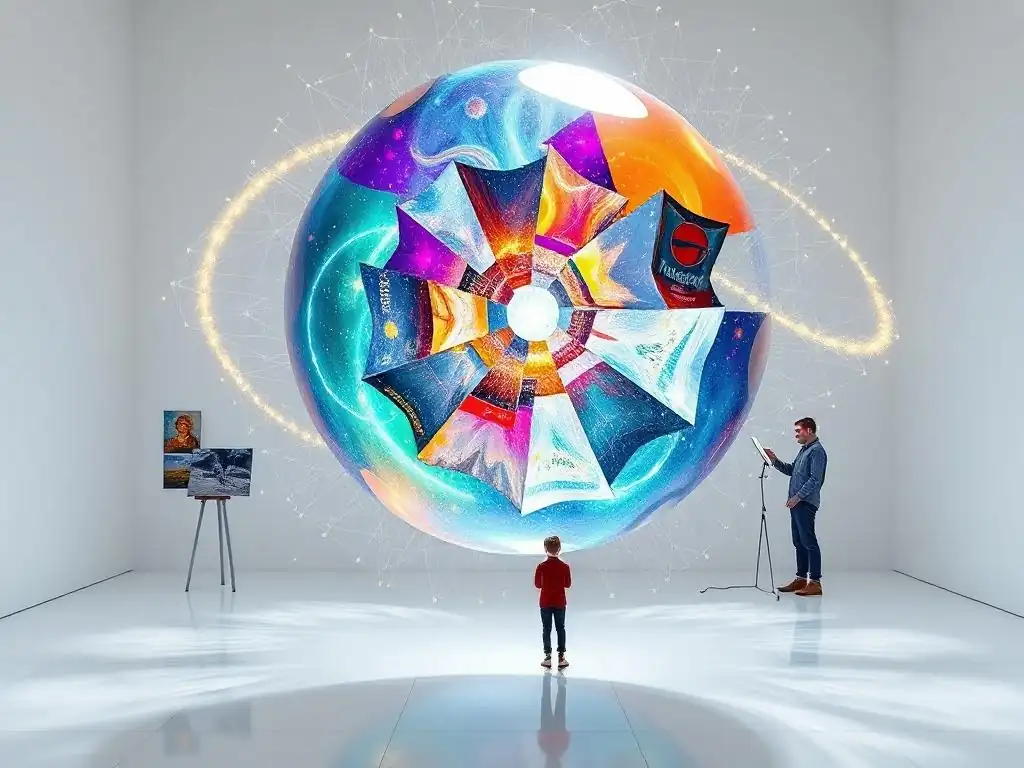
Welcome to Blockchain Trends, your guide to understanding the revolutionary power of blockchain beyond the hype. Discover how this technology is reshaping industries, from decentralized finance to enterprise solutions. This week, we delve into The Future of Blockchain with a fascinating look at NFTs transforming digital art creation. But are NFTs really democratizing art, or just creating a new elite? Explore the possibilities and the pitfalls as we unpack the potential of Web3 to revolutionize creativity. Read on to uncover the impact of this technology and decide for yourself!
Web3 and the Future of Digital Art: NFTs and the Democratization of Creativity
- Introduction: NFTs Revolutionizing Digital Art
- Understanding the Fundamentals: NFTs and Blockchain
- NFTs Transforming Digital Art Creation: Key Benefits
- Exploring the NFT Art Ecosystem
- Challenges and Criticisms of NFT Art
- NFT Art Use Cases and Examples
- The Future of NFTs in Digital Art: Trends and Predictions
- Conclusion: NFTs Shaping the Future of Digital Art and Creativity
-
Frequently Asked Questions
- What role do NFTs play in transforming digital art creation?
- How does Web3 contribute to the democratization of creativity in the art world?
- What are some potential challenges and risks associated with using NFTs for digital art?
- Beyond art, what other applications of NFTs are being explored in the digital creative space?
- What is the future outlook for NFTs and their impact on the digital art market?
- Final Reflection: Embracing the Decentralized Canvas
- Unleash Your Inner Digital Artist Today!
Introduction: NFTs Revolutionizing Digital Art
The Rise of NFTs in the Art World: A New Paradigm
The emergence of Non-Fungible Tokens (NFTs) has dramatically reshaped the landscape of the digital art world, introducing a novel paradigm for ownership, authenticity, and value. Before NFTs, digital art faced a significant challenge: its inherent reproducibility made it difficult to establish scarcity and, consequently, market value comparable to physical art. A digital image could be copied infinitely without degradation.
NFTs, however, leverage blockchain technology to create a unique, verifiable digital asset tied to a specific piece of digital art. This has allowed artists to sell digital creations – from images and videos to interactive experiences – as scarce, ownable items, opening up entirely new economic models. The market saw explosive growth, with total NFT sales volume reaching approximately $25 billion in both 2021 and 2022, demonstrating significant collector and investor interest in this nascent asset class.
This new paradigm extends beyond mere financial transactions; it represents a fundamental shift in how digital art is perceived and consumed. Collectors are no longer just acquiring a digital file but a unique token representing ownership or a specific set of rights to that file. This has fostered a sense of digital collecting akin to physical art, spurring the development of dedicated galleries, exhibition spaces in virtual worlds, and a vibrant community of digital art enthusiasts.
The ability to track provenance on the blockchain also adds a layer of trust and transparency previously absent in the often opaque art market, whether digital or physical. This verifiable history contributes significantly to the perceived value and legitimacy of NFT-backed digital art.
Web3 and its Impact on Creative Ownership
Web3, often described as the next evolution of the internet, built on decentralized technologies like blockchain, is fundamentally altering the concept of creative ownership. In the Web2 era, creators often relied on centralized platforms (social media, streaming services) that controlled distribution, monetization, and user data. This often meant creators had limited control over their content and revenue streams, with platforms acting as intermediaries that captured significant value.
Web3, powered by technologies like NFTs, aims to shift this power back to the creators. By tokenizing digital assets, artists can establish direct ownership that is verifiable on a public blockchain, independent of any single platform.
This decentralized ownership model empowers artists in unprecedented ways. Instead of licensing their work or relying on third-party platforms for sales, artists can sell their digital creations directly to collectors as NFTs, retaining more control and a larger share of the revenue. Furthermore, smart contracts embedded within NFTs can automatically enforce rules, such as perpetual royalty splits on secondary sales.
For instance, an artist might program an NFT to automatically send them 10% of the sale price every time the NFT is resold on a marketplace, creating a continuous income stream that was previously impossible with traditional digital media or even physical art resales. This direct connection and automated value flow are key aspects of how Web3 is impacting and enhancing creative ownership.
Understanding the Fundamentals: NFTs and Blockchain
What are NFTs? Non-Fungible Tokens Explained
NFT stands for Non-Fungible Token. To understand NFTs, it's crucial to grasp the concept of fungibility. Fungible assets are interchangeable; one unit is essentially identical to another. Think of currency – a $1 bill is interchangeable with any other standard $1 bill.
Non-fungible assets, however, are unique and cannot be directly exchanged on a one-to-one basis because each one has distinct properties. A specific painting, a house, or a unique trading card are examples of non-fungible items. An NFT is a digital certificate of authenticity and ownership for a unique asset, secured by blockchain technology. While the digital asset itself (like an image file) can still be copied, the NFT representing it cannot.
NFTs are typically created on a blockchain, most commonly Ethereum, using standards like ERC-721 or ERC-1155. These standards define how non-fungible tokens are issued, owned, and transferred. Each NFT has a unique identifier and metadata that links it to the underlying digital asset.
This metadata often includes details about the creator, a description of the work, and a link (often a hash or a URL) to the digital file itself. The blockchain records every transaction associated with the NFT, creating a transparent and immutable history of ownership from its creation (minting) onwards. This verifiable history is a core component of an NFT's value proposition, particularly in the art world.
How Blockchain Technology Enables NFT Art
Blockchain technology provides the foundational infrastructure that makes NFT art possible. At its core, a blockchain is a distributed, immutable ledger that records transactions across a network of computers. When an artist "mints" an NFT, they are essentially creating a new block on the blockchain that contains information about the unique digital asset and the token representing it. This transaction is then verified by the network's participants (nodes) and added to the chain, creating a permanent, tamper-proof record. This process ensures that the ownership and transaction history of the NFT are transparent and verifiable by anyone on the network.
The decentralized nature of blockchain is also critical. Unlike traditional centralized databases that can be controlled or altered by a single entity, a blockchain's data is distributed across many nodes. This makes it highly resistant to censorship or single points of failure.
For digital art, this means the record of ownership and the existence of the NFT are not dependent on a single platform or company. Even if an NFT marketplace goes offline, the ownership information remains recorded on the underlying blockchain. This resilience and transparency are key to establishing trust and value in the digital art market represented by NFTs.
Smart Contracts and Digital Art: Automating Royalties and Ownership
Smart contracts are self-executing contracts with the terms of the agreement directly written into code. They reside on the blockchain and automatically execute when predefined conditions are met, without the need for intermediaries. In the context of NFT art, smart contracts are integral to the token's functionality and value proposition. When an NFT is minted, a smart contract is associated with it, defining its properties, who created it, who owns it, and crucially, how it should behave upon transfer or sale.
One of the most significant applications of smart contracts in NFT art is the automation of artist royalties on secondary sales. Artists can program a percentage (e.g., 5%, 10%, or 15%) into the smart contract that dictates that every time their NFT is resold on a compatible marketplace, a portion of the sale price is automatically sent back to the artist's wallet.
This provides a potentially continuous revenue stream for artists long after the initial sale, a stark contrast to the traditional art market where artists typically receive nothing from subsequent resales of their work. Smart contracts also handle the secure and automatic transfer of ownership from seller to buyer upon successful payment, streamlining transactions and reducing counterparty risk.
NFTs Transforming Digital Art Creation: Key Benefits
Democratization of Art Creation: Empowering Independent Artists
NFTs are significantly contributing to the democratization of art creation and distribution, empowering independent artists who previously faced high barriers to entry in the traditional art world. Galleries and auction houses often act as gatekeepers, making it difficult for emerging or non-traditionally trained artists to gain exposure and sell their work. NFTs bypass these traditional gatekeepers by providing artists with direct access to a global market. Any artist, regardless of their location or background, can mint an NFT representing their digital creation and list it on a decentralized marketplace, reaching potential collectors worldwide without needing gallery representation.
This direct-to-collector model gives artists unprecedented autonomy over their careers. They control the pricing of their work, the terms of sale (like royalty percentages), and the narrative surrounding their art. This empowerment is particularly impactful for digital artists, whose medium was often undervalued or misunderstood in the traditional art market.
Platforms like OpenSea, Rarible, and Foundation have enabled thousands of artists to find an audience and generate income directly from their creations. For example, countless digital artists who previously shared work freely online are now able to monetize their passion, earning significant amounts from NFT sales, thereby enabling "NFTs transforming digital art creation" into a viable career path.
New Revenue Streams for Digital Artists: Beyond Traditional Galleries
The introduction of NFTs has unlocked entirely new and potentially lucrative revenue streams for digital artists, moving them beyond the limitations of traditional gallery sales, commissions, or licensing fees. The primary revenue stream is, of course, the initial sale of the NFT to a collector. However, as discussed, smart contracts enable perpetual royalties on secondary market sales, providing ongoing income that scales with the popularity and trading volume of the artist's work. This is a revolutionary concept for artists, offering long-term financial sustainability.
Beyond direct sales and royalties, NFTs facilitate other innovative revenue models. Artists can create limited editions of their digital work as a series of identical NFTs, offering different price points. They can bundle digital art NFTs with physical goods or exclusive experiences.
Some artists are also exploring fractional ownership of high-value pieces, allowing multiple collectors to own a share of a single NFT, thereby broadening the collector base. The flexibility of NFTs allows artists to experiment with diverse strategies for monetizing their creativity, such as selling unique digital collectibles, offering membership tokens that grant access to exclusive content, or even tokenizing aspects of their creative process.
Provenance and Authenticity: Solving the Problem of Digital Art Copies
One of the fundamental problems plaguing digital art before NFTs was the ease of perfect duplication. While a physical painting's brushstrokes and texture make it unique and difficult to counterfeit perfectly, a digital image file can be copied identically with a simple command. This made establishing the authenticity and scarcity of a 'digital original' incredibly challenging. NFTs provide a cryptographic solution to this problem by creating a unique, verifiable token linked to the digital asset on an immutable blockchain ledger.
When an NFT is minted, its unique identifier and metadata are recorded on the blockchain. Every subsequent transfer of ownership is also recorded. This creates a transparent, public, and permanent history of the NFT's journey from the artist's wallet to the current owner.
Collectors can verify the authenticity and provenance of an NFT by examining its transaction history on the blockchain, confirming that it originated from the artist's wallet or a verified source. While anyone can still download and view the associated digital file, owning the NFT signifies owning the unique token representing the original or a specific edition, analogous to owning a signed print versus a widely distributed poster. This verifiable scarcity and provenance are critical aspects of how NFTs are transforming digital art creation into valuable collectibles.
Exploring the NFT Art Ecosystem
NFT Marketplaces: Platforms for Buying and Selling Digital Art
NFT marketplaces are the primary platforms where collectors can browse, buy, sell, and trade digital art represented by NFTs. These platforms serve as digital galleries and auction houses, connecting artists directly with potential buyers.
Marketplaces vary in their focus, some being open platforms where anyone can mint and list NFTs (like OpenSea, the largest by volume), while others are curated, requiring artist applications or invitations (like Foundation or SuperRare), aiming for higher exclusivity and perceived quality. The infrastructure provided by these marketplaces includes tools for artists to "mint" (create) their NFTs, list them for sale (either at a fixed price or via auction), and manage their collections.
For collectors, marketplaces offer discovery tools, wallet integration for managing their purchased NFTs, and interfaces to view transaction histories and verify provenance on the blockchain. They typically charge fees for transactions, which support the platform's operation. The user experience and features vary significantly between marketplaces, including support for different blockchains (Ethereum, Polygon, Solana, etc. ), types of NFTs (art, collectibles, music, video), and payment methods (primarily cryptocurrencies, though some are integrating fiat options). These platforms are crucial components enabling the widespread adoption and trading that characterize NFTs transforming digital art creation into a global market.
Decentralized Autonomous Organizations (DAOs) in the Art World: Collective Curation
Decentralized Autonomous Organizations (DAOs) are emerging as significant players within the NFT art ecosystem, particularly in facilitating collective curation, investment, and governance. A DAO is an organization whose rules are encoded as a transparent computer program, controlled by the organization members, and not influenced by a central government.
In the art world, DAOs can pool funds from members to collectively acquire high-value NFTs, effectively creating a shared digital art collection. Members typically receive governance tokens that represent their share in the DAO and grant them voting rights on decisions such as which art to purchase, how to display it, or how to manage the treasury.
Art DAOs like Flamingo DAO or PleasrDAO have amassed impressive collections of blue-chip NFTs, including pieces by renowned digital artists and valuable collectibles. This model allows individuals to participate in owning and appreciating high-value art that might be prohibitively expensive for a single person. Beyond collecting, some DAOs focus on supporting emerging artists through grants or commissions, curating virtual exhibitions, or even governing decentralized art platforms. This collective, transparent approach to art ownership and patronage represents a novel application of Web3 principles within the art world, fostering community-driven initiatives and democratizing access to high-end digital art investments.
The Metaverse and Digital Art: Displaying NFTs in Virtual Worlds
The rise of metaverses – persistent, shared, 3D virtual spaces – presents an exciting frontier for displaying and experiencing NFT art. In these virtual worlds (such as Decentraland, Somnium Space, or Cryptovoxels), users can own virtual land and build structures, including art galleries. NFT owners can connect their digital wallets to these metaverses and display their purchased digital art NFTs within their virtual properties. This allows collectors to showcase their collections in immersive, interactive environments, much like displaying physical art in a home or gallery.
Metaverse galleries are becoming popular venues for virtual art exhibitions, launches, and social gatherings. Artists can host virtual exhibitions of their NFT collections, reaching a global audience without the logistical constraints of physical shows. Some metaverses are even integrating marketplaces directly into the virtual world, allowing users to discover and purchase NFT art while exploring. This integration of NFTs into virtual environments provides a spatial and social context for digital art that goes beyond viewing it on a flat screen, enhancing the collector experience and creating new avenues for artistic expression and engagement within the burgeoning metaverse.
Challenges and Criticisms of NFT Art
Environmental Concerns: Addressing the Energy Consumption of NFTs
One of the most significant criticisms leveled against NFTs, particularly those minted on proof-of-work blockchains like Ethereum (prior to its transition to proof-of-stake), is their environmental impact due to high energy consumption. Proof-of-work consensus mechanisms require vast amounts of computational power, and thus electricity, to validate transactions and secure the network.
Minting and transacting NFTs on such networks contributed to a considerable carbon footprint, sparking widespread concern among artists, collectors, and environmental advocates. While estimates vary, analyses prior to Ethereum's "Merge" suggested that a single NFT transaction could consume energy comparable to an average household's usage over several days or even weeks.
However, the landscape is rapidly evolving. Ethereum, the dominant blockchain for NFTs, successfully transitioned to a proof-of-stake consensus mechanism in September 2022. This transition dramatically reduced its energy consumption by over 99.9%, effectively addressing the primary environmental concern associated with a vast majority of NFT transactions.
Furthermore, many newer blockchains designed for NFTs, such as Flow, Polygon (a layer-2 on Ethereum), Solana, and Tezos, already utilize more energy-efficient proof-of-stake or delegated proof-of-stake mechanisms. While some legacy NFTs still reside on proof-of-work chains, the trend is overwhelmingly towards energy-efficient alternatives, mitigating this critical challenge for the future of NFTs transforming digital art creation.
Copyright and Intellectual Property Issues in the NFT Space
Despite representing ownership of a unique token linked to a digital asset, owning an NFT does not automatically grant the buyer copyright or full intellectual property rights to the underlying artwork. This has led to confusion and legal challenges. Typically, when someone buys an NFT, they are purchasing the token and potentially a license to display the associated digital art for personal, non-commercial use. The artist usually retains the copyright, meaning they still hold the exclusive rights to reproduce, distribute, and create derivative works based on the art, unless explicitly transferred through a separate legal agreement.
Issues arise when unauthorized individuals mint NFTs of artwork they do not own, infringing on the original creator's copyright. While marketplaces are implementing measures to combat this, it remains a challenge in a decentralized environment. Furthermore, the lack of standardized licensing terms associated with NFTs creates ambiguity.
Clearer legal frameworks and industry standards are needed to define what rights are transferred upon the sale of an NFT. Artists and collectors must be diligent in understanding the terms associated with specific NFTs and consider separate legal agreements if transferring broader intellectual property rights is intended, ensuring that the rise of NFTs transforming digital art creation respects existing legal frameworks.
Market Volatility and Speculation: Risks Associated with NFT Investments
The NFT market has experienced periods of extreme volatility and speculation, presenting significant risks for both artists and collectors. Following the initial boom in 2021, the market saw a substantial downturn in 2022 and 2023, with trading volumes and average prices for many NFTs dropping sharply. This volatility is partly driven by speculative trading, where buyers are motivated by the potential for rapid profits rather than a long-term appreciation of the art itself. This speculative bubble dynamic can lead to inflated prices followed by crashes, leaving late buyers with assets worth significantly less than their purchase price.
This market fluctuation poses challenges for artists as well. While some artists have achieved remarkable success, others struggle to gain traction or find their work's value tied to unpredictable market sentiment rather than artistic merit alone. The focus on quick gains can overshadow the artistic value and cultural significance of the work.
Potential investors in NFT art must be aware of the inherent risks, including the illiquidity of some NFTs, the potential for market manipulation, and the overall nascent and unregulated nature of the space. A cautious approach, focusing on understanding the art, the artist, and the long-term potential rather than just short-term price movements, is advisable in this volatile market.
NFT Art Use Cases and Examples
Beeple's "Everydays: The First 5000 Days" and its Impact on Digital Art Valuation
One of the most pivotal moments demonstrating the potential of NFTs transforming digital art creation valuation occurred in March 2021 with the sale of Beeple's "Everydays: The First 5000 Days" at Christie's auction house. This digital collage, minted as an NFT, sold for an astonishing $69.3 million. This sale was groundbreaking for several reasons: it was the first purely digital artwork ever offered by a major auction house, it achieved one of the highest prices ever paid for a work by a living artist, and it brought the concept of NFTs into mainstream global headlines.
The Beeple sale legitimized NFTs and digital art as a serious asset class within the traditional art world's perception. It demonstrated that collectors were willing to pay significant sums for verifiable digital ownership. The event spurred immense interest from both artists exploring new ways to monetize their digital creations and collectors looking for new investment opportunities. While an outlier price, it set a precedent and significantly raised the ceiling for what digital art, authenticated and tokenized by NFTs, could be valued at, forever altering expectations around digital art's economic potential.
Refik Anadol's AI Data Sculptures Leveraging NFTs for Ownership and Licensing
Refik Anadol, a media artist, director, and pioneer in the aesthetics of machine intelligence, provides compelling examples of how NFTs are used for complex digital art forms like AI data sculptures. Anadol's work often involves using massive datasets and machine learning algorithms to create dynamic, ever-evolving digital visualizations. Minting these data sculptures or specific moments/iterations of them as NFTs allows for the ownership and distribution of these unique digital experiences.
Anadol has utilized NFTs to sell editions of his works, such as pieces from his "Machine Hallucinations" series. These NFTs represent verifiable ownership of a specific digital artwork generated by his AI models.
Beyond simple ownership, NFTs can potentially be used to manage licensing rights for installations or public displays of these complex digital works, providing a clear, blockchain-backed record of who has the right to display or interact with the art in certain contexts. This showcases how NFTs are applicable not just to static images but to sophisticated, data-driven, and even interactive digital creations, expanding the scope of NFTs transforming digital art creation.
Generative Art Platforms like Art Blocks Utilizing NFTs for Distribution and Verification
Generative art, where an artist writes code that produces unique artistic outputs based on parameters, has found a natural synergy with NFTs, particularly through platforms like Art Blocks. Art Blocks is a platform dedicated to curated, on-demand generative art. When a collector purchases a piece on Art Blocks, they are essentially buying an NFT that corresponds to a unique hash. This hash is then fed into the artist's generative script (stored on the blockchain or IPFS), which executes in the collector's browser to produce a unique, never-before-seen artwork based on the parameters defined by the artist.
Each output is unique because the hash is unique to that specific NFT purchase. The NFT serves as the certificate of authenticity and ownership for that specific generative output. This model allows artists to create a collection of parameters and possibilities, and collectors to participate in the creation process by generating a unique piece within those constraints. Platforms like Art Blocks demonstrate how NFTs can be used not just for pre-rendered digital art but for dynamic, code-based creations, ensuring the uniqueness and verifiable ownership of each generative output, further highlighting the diverse ways NFTs transforming digital art creation.
The Future of NFTs in Digital Art: Trends and Predictions
Increased Interoperability Between NFT Platforms
A key trend expected in the future of NFTs in digital art is increased interoperability between different platforms and blockchains. Currently, many NFTs are tied to a specific blockchain (e.g., Ethereum, Solana), and transferring them or displaying them across different platforms or metaverses can be challenging. As the ecosystem matures, there is a growing need for seamless interaction between various chains and marketplaces.
Future developments may involve cross-chain bridges that allow NFTs to be moved between different blockchains or the adoption of layer-2 scaling solutions that facilitate faster and cheaper transactions while remaining connected to a base layer like Ethereum. Standardized protocols and APIs could also enable marketplaces and applications to easily recognize and display NFTs regardless of their origin chain. This increased interoperability will enhance liquidity, provide artists with wider distribution channels, and allow collectors greater flexibility in managing and showcasing their digital art across the expanding Web3 landscape.
Integration of NFTs with Augmented Reality (AR) and Virtual Reality (VR)
The integration of NFTs with Augmented Reality (AR) and Virtual Reality (VR) is poised to create new immersive experiences for digital art. As AR/VR technologies become more sophisticated and accessible, NFTs can serve as the ownership layer for digital assets displayed within these environments. Imagine owning an NFT artwork that you can place and view in your physical living room through an AR app or display in a personalized gallery within a VR world.
This integration will provide artists with new mediums for expression, creating interactive or location-aware NFT art experiences. Collectors will be able to engage with their digital art in more dynamic and engaging ways than simple screen viewing. Projects are already exploring how NFTs can unlock unique experiences or content within AR/VR applications, blurring the lines between the digital and physical worlds. This merging of technologies promises to make NFTs transforming digital art creation into more experiential and interactive forms.
Evolution of NFT Art: New Forms and Creative Possibilities
The definition of "NFT art" is continuously expanding beyond static images and videos. The future will likely see an evolution into new, more complex, and interactive forms. This includes dynamic NFTs whose appearance or characteristics can change based on external data or interactions, generative art that evolves over time, and multi-layered or programmable art that responds to viewer input.
Artists are also experimenting with tokenizing performances, interactive installations, and even aspects of their creative process. NFTs could represent ownership in collaborative art projects or grant access to exclusive creative communities. The underlying technology allows for immense flexibility in defining what a unique digital asset can be. As artists push the boundaries of digital creativity and blockchain technology evolves, the forms and creative possibilities unlocked by NFTs are virtually limitless, solidifying the concept of NFTs transforming digital art creation into ever more innovative realms.
Conclusion: NFTs Shaping the Future of Digital Art and Creativity
The Long-Term Impact of NFTs on the Art World
The long-term impact of NFTs on the art world is likely to be profound and lasting, extending far beyond the initial speculative frenzy. NFTs have fundamentally challenged traditional notions of ownership, scarcity, and value for digital creations. They have provided a viable framework for artists to monetize their work directly, bypass intermediaries, and establish verifiable provenance in a digital realm previously plagued by easy reproducibility. While the market will undoubtedly continue to mature and stabilize, the core innovation of using blockchain to authenticate and track unique digital assets is here to stay.
NFTs are fostering a new generation of digital art collectors and patrons who are comfortable acquiring and displaying assets in virtual spaces. They are also pushing traditional institutions, like galleries and museums, to consider how they will engage with digital art and blockchain technology. The infrastructure being built around NFTs – marketplaces, metaverses, and decentralized communities – is creating a robust ecosystem that supports digital artists and their work in ways previously unimaginable. The technology's potential to create continuous royalty streams also represents a significant shift towards more sustainable careers for digital artists.
Embracing the Potential of Web3 for Artists and Collectors
For both artists and collectors, embracing the potential of Web3, powered by technologies like NFTs, offers significant opportunities. For artists, it means taking control of their distribution, connecting directly with their audience, and unlocking new, potentially global, revenue streams that reward them for their ongoing success through secondary market royalties. It encourages experimentation with new digital mediums and interactive formats that are uniquely suited to tokenized ownership. Artists are empowered to build their own brands and communities around their work in a decentralized manner.
For collectors, Web3 and NFTs provide a new avenue for collecting, investing in, and supporting digital art with verifiable ownership and provenance. It opens up access to a global pool of digital artists and allows participation in community-driven art initiatives through DAOs.
While navigating the volatility and technical complexities requires diligence, the opportunity to own unique pieces of digital culture and participate in a rapidly evolving creative economy is compelling. Ultimately, NFTs are a powerful tool within the broader Web3 movement that is reshaping how digital art is created, owned, valued, and experienced, undeniably positioning NFTs transforming digital art creation and collecting for the digital age.
Frequently Asked Questions
What role do NFTs play in transforming digital art creation?
NFTs provide verifiable ownership and unique provenance for digital art, enabling artists to directly monetize their work and bypass traditional gatekeepers. This fosters greater artist autonomy.
How does Web3 contribute to the democratization of creativity in the art world?
Web3 technologies like blockchain and decentralized platforms empower artists by providing direct access to audiences, tools for community building, and new models for funding and collaboration.
What are some potential challenges and risks associated with using NFTs for digital art?
Challenges include environmental concerns related to certain blockchain technologies, copyright issues surrounding digital ownership, and the volatility of the NFT market.
Beyond art, what other applications of NFTs are being explored in the digital creative space?
NFTs are being used for music ownership, virtual real estate, in-game assets, and digital collectibles, expanding the possibilities for creators to monetize their work.
What is the future outlook for NFTs and their impact on the digital art market?
The future likely involves increased regulation, greater accessibility through user-friendly platforms, and wider adoption of NFTs as a standard for digital ownership and creative expression.
Final Reflection: Embracing the Decentralized Canvas
The exploration of Web3 and NFTs has revealed a profound shift in the digital art landscape, and its impact is only beginning to unfold. The democratization of creativity, once a theoretical ideal, is now tangibly within reach, empowered by blockchain technology and the burgeoning NFT ecosystem. This is not merely a technological advancement; it's a cultural revolution reshaping how art is created, valued, and experienced.
This transformation extends far beyond the digital realm, influencing our perceptions of ownership, community, and artistic expression. The potential for artists to connect directly with their audiences, bypassing traditional gatekeepers, is a powerful force that promises to unlock unprecedented levels of innovation and inclusivity. The purpose of art is washing the dust of daily life off our souls.
- Pablo Picasso. This quote resonates deeply as NFTs offer a new avenue for artists to connect with their audience and share their unique perspectives, free from the constraints of traditional art institutions.
As we stand at the cusp of this decentralized future, let us embrace the possibilities that Web3 and NFTs offer to the world of digital art. Consider how you can support artists directly, explore new forms of creative expression, and contribute to a more equitable and vibrant art ecosystem. The canvas is expanding, and the future of digital art is in our hands.
Unleash Your Inner Digital Artist Today!
Thanks for exploring the exciting world of Web3 and its influence on digital art! We hope you now have a better understanding of how NFTs are transforming creativity and empowering artists. Are you ready to get started?
Here are some next steps:
- Begin creating your own digital art and mint it as an NFT! Platforms like OpenSea and Rarible make it simple to start.
- Discover other NFT projects on platforms such as Foundation and SuperRare to find inspiring artworks and support independent creators.
- Join the conversation! Share your thoughts on how NFTs are changing the art world with the hashtag #Web3Art on social media.
What kind of digital art are you most excited to create or collect in the Web3 space? Share your ideas in the comments below!
Leave a Reply