
Blockchain Cryptography and the Metaverse: Securing Virtual Worlds and Digital Ownership


Welcome to Blockchain Trends, your guide to the evolving landscape of decentralized innovation.
Are you ready to explore how blockchain is revolutionizing more than just finance? Dive into our deep dive on Blockchain Cryptography and the Metaverse, where we uncover cutting-edge blockchain metaverse security solutions poised to protect virtual worlds and digital ownership. Discover the critical innovations necessary to safeguard your assets and identity in the emerging metaverse – and what challenges remain. Intrigued? Let's unlock the future of digital security, together.
-
Blockchain Metaverse Security Solutions: Protecting Virtual Worlds & Digital Assets
- Introduction: The Convergence of Blockchain, Cryptography, and the Metaverse
- Understanding Blockchain Cryptography for the Metaverse
- Security Challenges in the Metaverse: Where Blockchain Can Help
- Blockchain-Based Security Solutions for Metaverse Applications
- The Future of Blockchain Metaverse Security Solutions
-
Frequently Asked Questions
- What role does blockchain cryptography play in securing the metaverse?
- How can blockchain technology address the issue of digital asset ownership in virtual worlds?
- What are some specific blockchain metaverse security solutions being developed?
- What are the current regulatory challenges surrounding blockchain and the metaverse?
- What is the future outlook for blockchain metaverse security solutions?
- Final Reflection: Forging Trust in the Metaverse
- Unleash Your Metaverse Potential!
Blockchain Metaverse Security Solutions: Protecting Virtual Worlds & Digital Assets
Introduction: The Convergence of Blockchain, Cryptography, and the Metaverse
The metaverse, envisioned as a persistent, shared, 3D virtual universe, is rapidly evolving from a futuristic concept to a tangible reality. As users increasingly spend time, interact, and transact within these digital realms, the need for robust security measures becomes paramount. At the heart of securing this burgeoning digital frontier lies the powerful combination of blockchain technology and advanced cryptography. Blockchain, with its inherent characteristics of decentralization and immutability, intertwined with cryptographic techniques ensuring data integrity and secure transactions, offers a unique and compelling solution for safeguarding metaverse environments and the valuable digital assets within them.
The convergence of these technologies is not merely coincidental but rather a natural progression. The metaverse, by its very nature, demands trust, transparency, and verifiable ownership of digital assets – principles that blockchain and cryptography are fundamentally designed to uphold.
From securing digital identities and ensuring verifiable ownership of virtual lands and avatars to protecting sensitive user data and facilitating secure transactions of virtual currencies and NFTs, blockchain cryptography emerges as the bedrock upon which a secure and trustworthy metaverse can be built. This intricate relationship is essential for fostering user confidence and enabling the metaverse to reach its full potential as a vibrant and secure extension of our digital lives.
Understanding Blockchain Cryptography for the Metaverse
Blockchain technology's security framework is deeply rooted in cryptographic principles. At its core, blockchain utilizes cryptographic hashing algorithms to ensure data integrity. Hashing functions, like SHA-256, employed by Bitcoin, take input data of any size and produce a fixed-size output, a unique "fingerprint" of the data.
Any alteration to the original data, even a single bit, results in a drastically different hash, making it virtually impossible to tamper with blockchain records without detection. This immutability is crucial for verifying the integrity of transactions and historical data within the metaverse, ensuring that records of ownership and interactions remain tamper-proof and auditable.
Furthermore, digital signatures are fundamental for securing transactions and establishing authenticity on blockchain networks. Employing asymmetric cryptography, digital signatures use a pair of keys: a private key, kept secret by the user, and a public key, which can be shared. When a user initiates a transaction in the metaverse, such as buying a virtual asset, they use their private key to create a digital signature.
This signature, verifiable by anyone using the corresponding public key, proves that the transaction originated from the owner of the private key and that the transaction hasn't been altered in transit. Algorithms like ECDSA (Elliptic Curve Digital Signature Algorithm), popular in Ethereum, underpin these secure digital identities and transaction verification mechanisms within blockchain-based metaverse platforms. Encryption, while not always directly associated with the core consensus mechanisms of blockchain, plays a vital role in securing data within and around metaverse applications built on blockchain.
Security Challenges in the Metaverse: Where Blockchain Can Help
The metaverse, while promising immersive and interconnected digital experiences, presents a unique set of security challenges that traditional web security models struggle to address effectively. One of the most pressing concerns is identity and access management. In a metaverse populated by avatars representing real individuals, secure and verifiable digital identities are crucial to prevent impersonation, fraud, and unauthorized access to virtual spaces and assets.
Imagine a scenario where an attacker impersonates a user and gains access to their virtual wallet or digital land within a metaverse platform. This highlights the need for robust identity solutions. Blockchain-based decentralized identity (DID) systems offer a solution by empowering users with self-sovereign identities, giving them control over their digital credentials and enabling secure and verifiable authentication within metaverse environments.
Another critical challenge lies in digital asset ownership and provenance. The metaverse economy thrives on digital assets like virtual land, avatars, wearables, and in-game items, often represented as Non-Fungible Tokens (NFTs). Securing the ownership and provenance of these assets is paramount to prevent theft, counterfeiting, and disputes over ownership rights.
Without a robust system, users risk losing valuable digital possessions or falling victim to scams involving fake or duplicated assets. Blockchain's inherent immutability and transparency, coupled with NFTs, provide a verifiable and secure way to represent digital ownership. NFTs recorded on a blockchain act as unique digital certificates of authenticity and ownership, making it possible to track the history and provenance of digital assets within the metaverse, thereby mitigating risks of fraud and ensuring legitimate ownership.
Blockchain-Based Security Solutions for Metaverse Applications
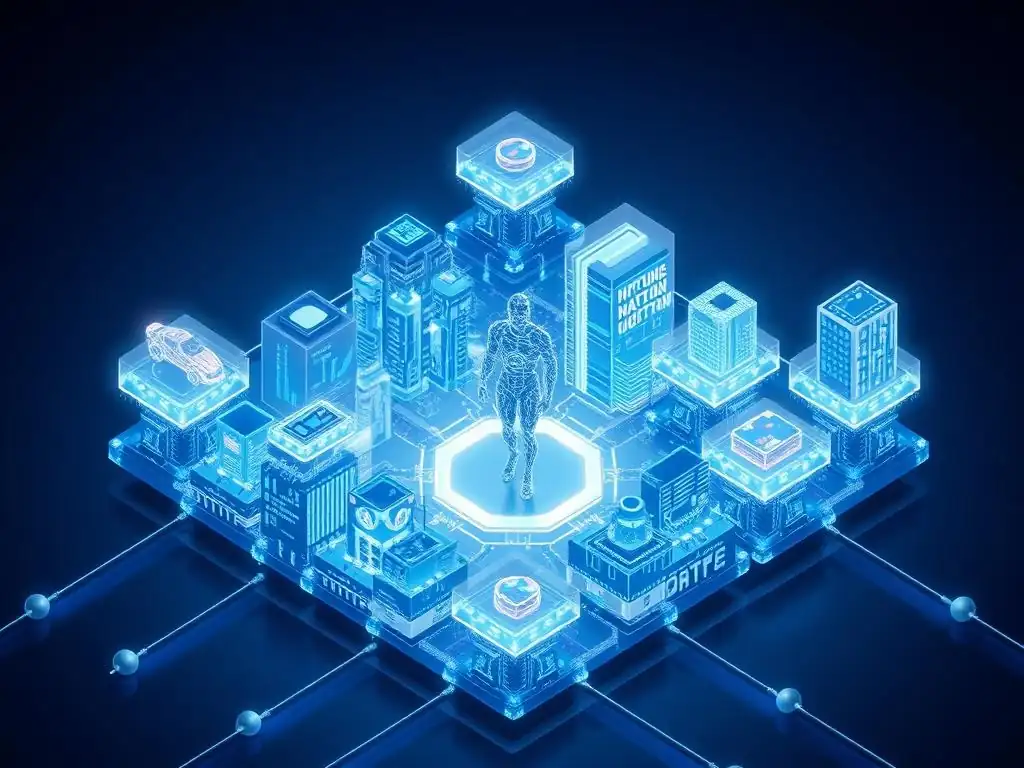
Blockchain offers a suite of security solutions tailored to address the unique challenges of the metaverse. Decentralized Identity (DID) solutions are emerging as a cornerstone of metaverse security. Projects like Sovrin and uPort leverage blockchain to create self-sovereign identities, giving users complete control over their digital identities and data.
In the metaverse context, DIDs allow users to manage their avatar identities, control access to virtual spaces, and securely interact with metaverse applications without relying on centralized authorities. This significantly reduces the risk of identity theft and data breaches, as users are not dependent on single points of failure for identity verification.
NFT-based digital ownership is revolutionizing how virtual assets are secured and traded in metaverse platforms. Platforms like Decentraland and The Sandbox utilize NFTs to represent ownership of virtual land and in-world items. By representing these assets as NFTs on a blockchain, users gain verifiable and transparent proof of ownership.
Each NFT is unique and its ownership history is publicly recorded on the blockchain, making it easy to verify authenticity and prevent counterfeiting. This secure ownership mechanism fosters trust and enables a thriving digital economy within the metaverse, where users can confidently buy, sell, and trade virtual assets knowing their ownership is securely recorded and protected.
The Future of Blockchain Metaverse Security Solutions
Looking ahead, the future of blockchain metaverse security solutions is poised for significant advancements and wider adoption. One key area of development is scalability. As metaverse user bases and transaction volumes grow exponentially, the underlying blockchain infrastructure must scale to handle the increased demand without compromising security or performance. Layer-2 scaling solutions, such as sidechains and rollups, are being explored to enhance blockchain scalability for metaverse applications, enabling faster transaction processing and reduced fees. For instance, Polygon, an Ethereum Layer-2 scaling solution, is increasingly being used by metaverse projects to improve transaction throughput.
Interoperability is another crucial aspect for the future of blockchain metaverse security. As the metaverse likely evolves into a network of interconnected virtual worlds, seamless and secure interoperability between different blockchain platforms and metaverse environments will be essential. Cross-chain protocols and standards are being developed to enable users to move their digital assets and identities across different metaverse platforms securely and efficiently.
This interoperability will be vital for creating a truly open and interconnected metaverse experience. Furthermore, advancements in cryptographic technologies, such as zero-knowledge proofs and homomorphic encryption, promise to enhance privacy and security within the metaverse. These technologies could enable secure data processing and verification without revealing sensitive user information, further strengthening blockchain metaverse security solutions and fostering user trust in these immersive digital worlds.
Frequently Asked Questions
What role does blockchain cryptography play in securing the metaverse?
Blockchain cryptography provides the foundation for secure transactions and verifiable digital ownership within the metaverse, using technologies like public-key cryptography for secure identity and asset management.
How can blockchain technology address the issue of digital asset ownership in virtual worlds?
Blockchain's immutable ledger allows for the creation of unique, non-fungible tokens (NFTs) representing digital assets, providing proof of ownership and provenance within the metaverse.
What are some specific blockchain metaverse security solutions being developed?
Solutions include decentralized identity (DID) systems for secure avatar management, smart contract audits to prevent exploits in virtual economies, and blockchain-based access control for virtual spaces and assets.
What are the current regulatory challenges surrounding blockchain and the metaverse?
The regulatory landscape is evolving, with concerns about data privacy, intellectual property rights, and the legal status of digital assets requiring clarification and international coordination.
What is the future outlook for blockchain metaverse security solutions?
The future involves increased adoption of zero-knowledge proofs for privacy, integration of AI for threat detection, and the development of interoperable blockchain solutions across different metaverses.
Final Reflection: Forging Trust in the Metaverse
The exploration of blockchain cryptography as a cornerstone for metaverse security isn't merely a theoretical exercise; it's a critical imperative for the future of digital interaction and ownership. As we stand on the cusp of widespread metaverse adoption, the vulnerabilities inherent in centralized systems become increasingly apparent, making robust, decentralized security solutions not just desirable, but absolutely essential for fostering trust and enabling genuine economic activity within these virtual realms.
The promise of the metaverse lies in its potential to democratize access and empower individuals, but this potential hinges on our ability to safeguard digital assets and identities. The ongoing debate surrounding data privacy and control underscores the urgent need for solutions like those discussed in this article, solutions that prioritize user autonomy and security. The metaverse is not just a technological revolution; it's a societal one. And like any societal shift, it demands careful consideration of ethical implications and the protection of individual rights.
This quote encapsulates the responsibility we bear to build a metaverse that is both innovative and equitable.
As you navigate the evolving landscape of the metaverse, consider the role you can play in shaping its future. Reflect on the principles of decentralization, cryptography, and user empowerment. What steps can you take to advocate for secure and transparent systems? The future of the metaverse is not predetermined; it is being built, brick by digital brick, by each of us. Let us strive to build a future where digital ownership is truly secure and where virtual worlds are spaces of trust and opportunity for all.
Unleash Your Metaverse Potential!
Thank you for exploring the intriguing world of blockchain security in the metaverse. We hope this article has given you a clearer understanding of how cryptography is shaping the future of digital ownership and virtual experiences. Now, it's time to put that knowledge into practice!
Here's how you can take the next step:
- Explore blockchain-based metaverse projects. Discover innovative platforms that utilize cryptography to ensure secure digital ownership.
- Share your insights! Discuss this article with your network and start conversations about the future of blockchain in virtual worlds.
- Contribute solutions: Suggest ways blockchain technology can address security challenges in the metaverse on our forum.
What specific security challenge in the metaverse excites you the most? Share your thoughts in the comments below!
Leave a Reply