
How Blockchain Technology is Revolutionizing InGame Economies

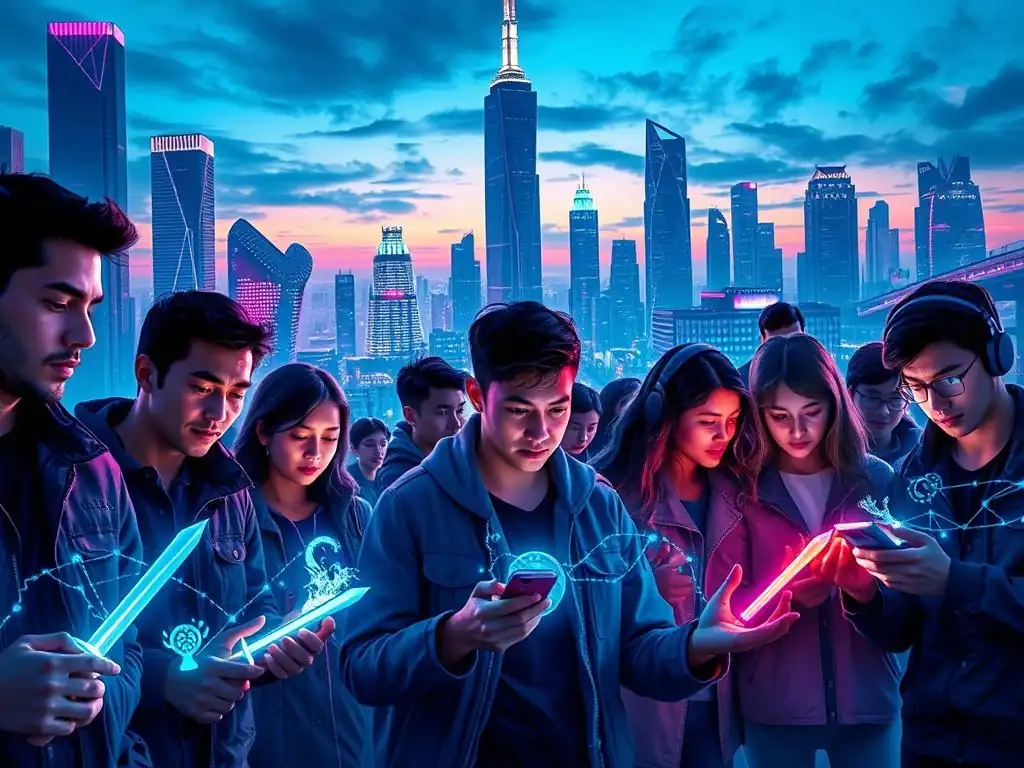
Welcome to Blockchain Trends, your compass in the rapidly evolving world of decentralized technologies. Beyond the hype, lies a universe of possibilities. Have you considered how blockchain is poised to reshape entire industries? Dive into our analysis of how blockchain gaming economies revolutionize the way we play, earn, and interact within virtual worlds, and discover how this transformative technology extends far beyond just digital currencies. Prepare to explore the future.
- How Blockchain Technology is Revolutionizing In-Game Economies
- Understanding the Fundamentals: Blockchain and In-Game Assets
- Revolutionizing In-Game Economies with Blockchain Technology
- The Power of Play-to-Earn (P2E) and Blockchain Gaming Economies
- Case Studies: Blockchain Game Economies in Action
- Addressing the Challenges and Limitations of Blockchain Gaming Economies
- The Future of Decentralized Gaming Platforms and Metaverse Economies
- Conclusion: Blockchain Gaming Economies Revolutionize the Future of Play
-
Frequently Asked Questions
- How does blockchain technology revolutionize in-game economies?
- What are the benefits of using NFTs for in-game items?
- How does blockchain impact the relationship between game developers and players?
- What are the potential regulatory challenges surrounding blockchain gaming economies?
- What is the future outlook for blockchain gaming economies?
- Final Reflection: Embracing the Decentralized Future of Play
- Unleash the Power of Blockchain Gaming!
How Blockchain Technology is Revolutionizing In-Game Economies
Introduction: The Dawn of Blockchain Gaming and Decentralized Economies
The gaming industry, a behemoth of entertainment, is undergoing a seismic shift thanks to the advent of blockchain technology. For decades, in-game economies have been centralized, controlled by game developers and publishers. Players invest countless hours and resources acquiring virtual items, currencies, and assets, yet these hold little to no real-world value and are often confined within the walls of a single game.
Blockchain is dismantling this paradigm, ushering in an era of decentralized gaming economies where players can truly own their in-game assets, trade them freely, and even earn real-world value through gameplay. This transformation promises to revolutionize the relationship between players and games, fostering more engaging, sustainable, and player-centric gaming ecosystems.
The integration of blockchain into gaming is not merely about adding cryptocurrencies; it's a fundamental reimagining of game economies. It's about empowering players with digital ownership, transparency, and control, concepts largely absent in traditional gaming models. This nascent field, often referred to as Web3 gaming or crypto gaming, is rapidly evolving, attracting significant investment and innovation. As blockchain technology matures and becomes more accessible, its impact on in-game economies is poised to become even more profound, fundamentally altering how games are designed, played, and monetized.
Understanding the Fundamentals: Blockchain and In-Game Assets
What is Blockchain Technology and Why is it Relevant to Gaming?
Blockchain technology, at its core, is a decentralized, distributed, and immutable ledger. Imagine a digital record book that is shared across a network of computers. Every transaction or piece of data, known as a "block," is added to this chain in a chronological and tamper-proof manner. This is achieved through cryptographic hashing and consensus mechanisms, ensuring that once data is recorded, it cannot be altered or deleted. This inherent security and transparency are precisely why blockchain is so relevant to gaming.
In the context of gaming, blockchain provides a secure and transparent infrastructure to manage in-game assets and transactions. Traditionally, virtual items exist within the game's central database, controlled solely by the game company. Blockchain allows for the tokenization of these assets, turning them into unique, verifiable digital tokens, often Non-Fungible Tokens (NFTs). This tokenization process moves ownership away from the game developer and into the hands of the players. Because the blockchain ledger is public and immutable, players can definitively prove ownership of their digital assets, fostering trust and enabling new forms of player-driven economies.
Exploring the Concept of Tokenization in Games
Tokenization is the process of representing real-world or digital assets as digital tokens on a blockchain. In gaming, this means transforming in-game items like characters, weapons, virtual land, and currency into blockchain-based tokens. These tokens can be broadly categorized into two main types: Fungible Tokens and Non-Fungible Tokens (NFTs). Fungible tokens are interchangeable and divisible, much like cryptocurrencies or in-game gold, where one token is always equal to another. NFTs, on the other hand, are unique and indivisible, representing distinct items with varying attributes and rarity.
The use of tokens unlocks a plethora of possibilities within game economies. Fungible tokens can serve as in-game currencies, facilitating transactions and rewarding players. NFTs, due to their uniqueness, are ideal for representing collectible items, rare gear, or virtual land parcels. Tokenization allows for the creation of open and permissionless in-game economies. Players can trade, sell, or lend their tokenized assets outside of the game's controlled environment, often on decentralized marketplaces. This portability of assets is a fundamental shift from traditional gaming, where virtual items are locked within a single game.
Key Benefits of Integrating Blockchain into Game Economies
Integrating blockchain into game economies offers several key benefits, fundamentally reshaping the gaming experience and the relationship between players and developers. Firstly, true digital ownership is established. Players genuinely own their in-game assets as NFTs, verified on the blockchain, unlike traditional games where ownership is essentially a license granted by the game company. This ownership empowers players and grants them control over their digital investments.
Secondly, blockchain enables decentralized and transparent economies. All transactions and asset ownership are recorded on the blockchain, creating a publicly verifiable and transparent record. This transparency builds trust within the game ecosystem, reducing the risks of fraud and manipulation. Furthermore, blockchain facilitates player-driven economies.
With the ability to trade and sell assets freely on open marketplaces, players can participate in and shape the game's economy, creating new earning opportunities and fostering a more dynamic and engaging gaming environment. Finally, interoperability is a potential future benefit. While still in its early stages, blockchain technology could allow for in-game assets to be used across different games and metaverse experiences, breaking down silos and creating a more interconnected and valuable digital ecosystem for players.
Revolutionizing In-Game Economies with Blockchain Technology
Enhanced Ownership and Control for Players
Blockchain technology empowers players with unprecedented ownership and control over their in-game assets. In traditional games, players purchase items or earn rewards, but these remain under the control of the game developer. If a game shuts down, or a player is banned, these assets are lost. Blockchain flips this model. When in-game assets are tokenized as NFTs, players hold the private keys that control these assets, similar to owning cryptocurrency in a wallet. This means players have verifiable and undeniable ownership, independent of the game developer.
This enhanced ownership translates to greater control. Players are free to trade, sell, or gift their NFTs on open marketplaces without needing permission from the game developer. They can even potentially use these assets in different games or metaverse experiences if interoperability standards become more prevalent. This level of control and freedom is a significant departure from the limitations of traditional in-game economies, where players are essentially renters of their digital possessions. This shift towards player ownership is fostering a new paradigm where players are not just consumers but also stakeholders in the game's ecosystem.
Creating True Digital Scarcity and Value
Digital scarcity, a concept often elusive in the digital realm, is effectively established by blockchain technology, particularly through NFTs. In traditional games, developers can arbitrarily create an unlimited supply of in-game items, potentially devaluing existing assets and undermining the game's economy. NFTs, with their unique and limited nature enforced by blockchain, introduce verifiable digital scarcity. Each NFT is distinct and its total supply is fixed, coded into its smart contract. This inherent scarcity creates a sense of value and collectibility for in-game assets.
For example, consider a limited edition weapon in a blockchain game. If only 100 such weapons are ever created as NFTs, their scarcity is guaranteed and verifiable on the blockchain. This scarcity can drive demand and potentially increase the value of these digital items, mirroring the dynamics of real-world collectibles. This mechanism of digital scarcity is crucial for building sustainable and thriving in-game economies. It ensures that player effort and investment in acquiring rare or valuable items are rewarded, and it fosters a sense of digital ownership that is inherently linked to tangible value.
Secure and Transparent In-Game Transactions
Blockchain provides a secure and transparent infrastructure for in-game transactions, addressing a key concern in traditional online gaming: fraud and lack of transparency. In centralized gaming systems, transaction records are held within the game developer's database, which can be vulnerable to manipulation or hacking. Blockchain's decentralized and immutable nature eliminates these vulnerabilities. Every in-game transaction, such as buying, selling, or trading NFTs or fungible tokens, is recorded on the blockchain ledger, making it transparent and auditable by anyone.
This transparency fosters trust and reduces the risk of fraudulent activities. Players can verify the authenticity and provenance of in-game assets, ensuring they are not counterfeit or duplicated. Furthermore, smart contracts, self-executing agreements coded on the blockchain, can automate in-game transactions, removing intermediaries and ensuring fair and efficient exchanges. For instance, a smart contract could automatically distribute rewards to players based on their in-game achievements or facilitate peer-to-peer trading of NFTs with predetermined conditions, all executed transparently and securely on the blockchain.
Interoperability of In-Game Assets Across Different Games [Gods Unchained vs. Splinterlands]
The concept of interoperability, where in-game assets can be used across different games and platforms, is a highly anticipated potential of blockchain gaming. While still in its early stages, some projects are beginning to explore this vision. Imagine owning a powerful sword NFT in one game and being able to bring it into another compatible game, retaining its utility and value. This is the promise of interoperability, breaking down the silos between individual games and creating a more interconnected gaming metaverse.
Examples of games exploring aspects of interoperability, albeit indirectly, include Gods Unchained and Splinterlands, both trading card games utilizing NFTs. While direct asset transfer between these specific games isn't yet a feature, their assets are traded on common NFT marketplaces like OpenSea.
This demonstrates a foundational level of interoperability – the assets are not locked within a single game's ecosystem and can be traded freely in a broader digital asset market. The future of blockchain gaming may see the development of open standards and protocols that facilitate seamless interoperability, allowing players to truly own and utilize their digital assets across a multitude of gaming experiences, enhancing their value and utility.
The Power of Play-to-Earn (P2E) and Blockchain Gaming Economies
Understanding the P2E Model and its Impact on Player Engagement
The Play-to-Earn (P2E) model is a revolutionary concept enabled by blockchain gaming economies. It shifts the traditional gaming paradigm from "play-to-win" or "pay-to-win" to one where players can earn real-world value through their gameplay. In P2E games, players earn cryptocurrency or NFTs by participating in game activities such as completing quests, winning battles, or contributing to the game's ecosystem. These earned digital assets can then be traded or sold on cryptocurrency exchanges or NFT marketplaces, allowing players to monetize their gaming skills and time.
The P2E model has a profound impact on player engagement. It transforms gaming from a purely leisure activity into a potential source of income, particularly in regions where traditional income opportunities are limited. This economic incentive significantly boosts player participation and investment in the game world. Players are not just playing for fun; they are actively contributing to and benefiting from the game's economy. This creates a more engaged and dedicated player base, fostering stronger game communities and potentially extending the lifespan of blockchain games.
Real-World Earning Opportunities in Blockchain Games
Blockchain gaming economies, particularly through the P2E model, are creating tangible real-world earning opportunities for players globally. Unlike traditional games where in-game rewards are purely virtual, blockchain games offer assets with inherent monetary value that can be converted to fiat currency. Players in developing countries, in particular, have found P2E gaming to be a significant source of income.
For instance, in some regions, players have been able to earn more playing blockchain games than through minimum wage jobs. The income generated from P2E games can be used to cover essential expenses, invest in further gaming activities, or contribute to local economies. This democratization of earning potential through gaming is a powerful aspect of blockchain technology, potentially bridging economic divides and offering new avenues for financial empowerment. However, it's also important to acknowledge the volatility and risks associated with cryptocurrency and NFT markets, and the sustainability of P2E models is still under evaluation.
Examples of Successful P2E Games and Their Economies [Axie Infinity, The Sandbox]
Several blockchain games have successfully implemented P2E models, demonstrating their viability and impact on player engagement. Axie Infinity, a Pokémon-inspired game, is a prominent example. Players earn Smooth Love Potion (SLP) tokens by battling and breeding digital creatures called Axies, which are themselves NFTs. SLP tokens can be traded on cryptocurrency exchanges, and Axies can be bought and sold on NFT marketplaces. At its peak, Axie Infinity's economy generated significant income for players worldwide, particularly in Southeast Asia.
The Sandbox, a metaverse platform game, is another success story. Players can purchase virtual land as NFTs and create experiences on their land. They can earn SAND tokens, the game's native cryptocurrency, by participating in the ecosystem, creating and selling NFTs, or renting out their land. The Sandbox's economy allows players to monetize their creativity and digital real estate, showcasing the diverse earning opportunities within blockchain gaming. These examples illustrate the potential of P2E models to create thriving in-game economies and offer players real-world financial rewards for their gaming engagement.
Case Studies: Blockchain Game Economies in Action
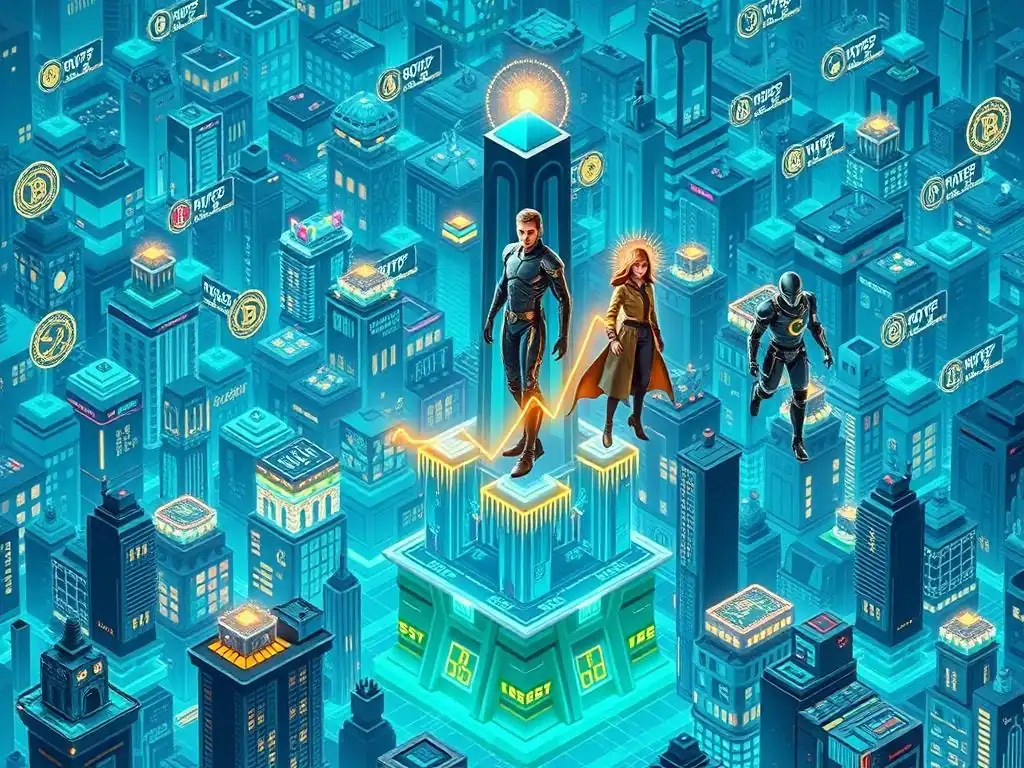
Case Study 1: Analyzing the Economy of Illuvium
Illuvium is an upcoming open-world exploration and battle game built on the Ethereum blockchain, known for its visually stunning graphics and complex in-game economy. The game features a dual-token system: ILV, the governance and staking token, and sILV, an in-game reward token. Players earn ILV and sILV through gameplay, participating in tournaments, and completing quests. ILV holders can participate in governance decisions, influencing the future direction of the game, and can stake their tokens to earn rewards. sILV is used for in-game purchases and activities.
A key feature of Illuvium's economy is its deflationary mechanism. A portion of revenue generated from in-game transactions and NFT sales is used to buy back and burn ILV tokens, reducing the token supply over time and potentially increasing its value. Illuvium also utilizes NFTs extensively, representing Illuvials (creatures), items, and land.
These NFTs are tradable on marketplaces, creating a player-driven economy. The game's economic model is designed to be sustainable, rewarding both players and stakers, and fostering a long-term, player-owned ecosystem. While still in its early stages, Illuvium's ambitious economic design is a case study in creating complex and potentially robust blockchain gaming economies.
Case Study 2: Examining the Economic Model of Star Atlas
Star Atlas is a massively multiplayer online metaverse game set in space, built on the Solana blockchain. It aims to create a vast and immersive universe with a complex and player-driven economy. Star Atlas utilizes a dual-token system: ATLAS, the primary in-game currency, and POLIS, the governance token. ATLAS is used for all in-game transactions, from buying spaceships and resources to participating in the game's economy. POLIS holders have governance rights, influencing key decisions about the game's development and future.
The game's economy is designed around resource scarcity and player-driven markets. Players explore the universe, mine resources, build infrastructure, and engage in trade and combat. All in-game assets, including spaceships, land, and resources, are represented as NFTs, allowing for true digital ownership and tradability.
Star Atlas aims to create a persistent and dynamic economy where players actively shape the game world and its economic landscape. The use of Solana blockchain enables fast and low-cost transactions, crucial for a large-scale metaverse economy. Star Atlas's ambitious economic model is a case study in creating a decentralized, player-owned, and potentially self-sustaining metaverse economy within a blockchain gaming context.
Comparing and Contrasting Different Blockchain Gaming Economy Models
Comparing the economic models of games like Illuvium and Star Atlas reveals different approaches to designing blockchain gaming economies. Illuvium focuses on a deflationary token model with a strong emphasis on governance and staking, aiming for long-term token value appreciation and player participation in decision-making. Its economy is centered around creature collection and battling, with NFTs playing a key role in representing in-game assets.
Star Atlas, in contrast, emphasizes a vast, player-driven metaverse economy with resource scarcity and dynamic markets. Its dual-token system separates in-game currency (ATLAS) from governance (POLIS), allowing for distinct functions. Star Atlas's economy is built around exploration, resource management, and player-driven trade within a large-scale persistent universe.
While both games utilize NFTs and P2E mechanics, their economic models differ in their focus and design. Illuvium prioritizes tokenomics and governance, while Star Atlas emphasizes a complex and player-driven metaverse economy. These examples demonstrate the diverse possibilities and evolving nature of blockchain gaming economy design, with different games adopting models tailored to their specific gameplay and vision.
Addressing the Challenges and Limitations of Blockchain Gaming Economies
Scalability Issues and Potential Solutions [Polygon, Immutable X]
Scalability remains a significant challenge for blockchain gaming economies. Blockchains like Ethereum, while popular, can suffer from high transaction fees (gas fees) and slow transaction speeds, especially during periods of high network activity. These limitations can hinder the smooth functioning of in-game economies that rely on frequent and low-cost transactions. For example, trading low-value in-game items as NFTs becomes impractical if gas fees are higher than the item's worth.
Layer-2 scaling solutions are emerging as potential solutions to address these scalability issues. Polygon (formerly Matic Network) is a Layer-2 scaling solution for Ethereum that provides faster and cheaper transactions. Many blockchain games are adopting Polygon to enable more efficient and cost-effective in-game economies.
Immutable X is another Layer-2 scaling solution specifically designed for NFTs on Ethereum. It offers near-instant and gas-free NFT trading, making it ideal for blockchain games with high volumes of NFT transactions. These scaling solutions are crucial for enabling mainstream adoption of blockchain gaming by overcoming the limitations of base layer blockchains and creating more user-friendly and economically viable in-game economies.
Security Concerns and Best Practices
Security is paramount in blockchain gaming economies, given the financial value associated with in-game assets and cryptocurrencies. Smart contract vulnerabilities, phishing attacks, and hacks are potential risks that can compromise player assets and undermine trust in blockchain games. Robust security measures are essential to mitigate these risks and ensure the safety of player funds and assets.
Best practices for security in blockchain gaming include rigorous smart contract audits by reputable security firms to identify and fix potential vulnerabilities. Implementing multi-factor authentication (MFA) for player accounts adds an extra layer of security against unauthorized access. Educating players about phishing scams and best practices for securing their wallets and private keys is also crucial.
Game developers should prioritize security throughout the development process, from smart contract design to infrastructure security, to build trustworthy and secure blockchain gaming environments. Regular security updates and proactive monitoring are also essential to stay ahead of potential threats and maintain the integrity of the game economy.
Regulatory Uncertainty and Compliance
Regulatory uncertainty poses a significant challenge to the growth and adoption of blockchain gaming economies. The legal and regulatory landscape for cryptocurrencies, NFTs, and blockchain technology is still evolving globally. Different jurisdictions have varying approaches to regulating these technologies, creating uncertainty and potential compliance hurdles for blockchain game developers and players.
Issues such as the classification of NFTs as securities, regulations around cryptocurrency transactions, and tax implications for P2E earnings are areas of ongoing regulatory scrutiny. Blockchain game developers need to navigate this complex and evolving regulatory landscape to ensure compliance and avoid legal risks. This may involve seeking legal counsel, implementing KYC/AML (Know Your Customer/Anti-Money Laundering) procedures, and adapting their game economies to comply with local regulations. Clarity and harmonization in global regulations are crucial for fostering a stable and predictable environment for the continued development and growth of blockchain gaming economies.
The Environmental Impact of Blockchain Gaming [Proof-of-Stake vs Proof-of-Work]
The environmental impact of blockchain technology, particularly energy consumption, is a growing concern, and this extends to blockchain gaming. Proof-of-Work (PoW) consensus mechanisms, used by blockchains like Bitcoin and initially Ethereum, require significant computational power, leading to high energy consumption. This has raised environmental concerns about the carbon footprint of blockchain applications, including gaming.
However, many newer blockchains and scaling solutions, including those increasingly adopted by blockchain games, utilize Proof-of-Stake (PoS) consensus mechanisms. PoS is significantly more energy-efficient than PoW, reducing the environmental impact of blockchain transactions. Ethereum itself has transitioned to PoS, drastically reducing its energy consumption. Blockchain game developers are increasingly choosing PoS-based blockchains or Layer-2 solutions to minimize the environmental footprint of their games and align with sustainability goals. The shift towards more energy-efficient blockchain technologies is crucial for addressing environmental concerns and ensuring the long-term sustainability of blockchain gaming economies.
The Future of Decentralized Gaming Platforms and Metaverse Economies
The Role of NFTs in Shaping the Future of In-Game Assets
NFTs are poised to play a central role in shaping the future of in-game assets and decentralized gaming economies. They provide the foundation for true digital ownership, scarcity, and interoperability, transforming virtual items from mere in-game decorations to valuable digital assets. As NFT technology matures and adoption grows, we can expect to see even more innovative uses of NFTs in gaming.
Beyond representing in-game items, NFTs could evolve to represent player identities, game progress, or even access keys to exclusive game content or events. Dynamic NFTs, which can change their properties based on in-game events or external data, could add another layer of complexity and engagement to in-game assets. The continued evolution of NFT standards and functionalities will further unlock their potential to revolutionize in-game economies and create richer, more player-centric gaming experiences.
Exploring the Potential of DAOs in Gaming Governance
Decentralized Autonomous Organizations (DAOs) are emerging as a potentially transformative model for gaming governance in the blockchain space. DAOs are community-led organizations governed by rules encoded in smart contracts on a blockchain. In the context of gaming, DAOs could empower players to participate in the decision-making processes of game development, economy management, and community direction.
Imagine a game where players who hold governance tokens (often NFTs or native game tokens) can vote on proposed game updates, changes to the game economy, or even the roadmap for future development. This level of decentralized governance could foster a stronger sense of ownership and community participation, aligning the interests of players and developers. DAOs in gaming are still in their early stages, but their potential to democratize game governance and create more player-driven and sustainable gaming ecosystems is significant.
The Convergence of Blockchain Gaming and the Metaverse
The convergence of blockchain gaming and the metaverse is creating exciting new possibilities for immersive and interconnected digital experiences. The metaverse, often envisioned as a persistent, shared virtual world, can be significantly enhanced by blockchain technology. Blockchain provides the infrastructure for verifiable digital ownership, decentralized economies, and interoperability, all crucial elements for a thriving metaverse.
Blockchain games are increasingly becoming entry points into the metaverse, offering players opportunities to own virtual land, create and trade digital assets, and participate in decentralized economies within these virtual worlds. The metaverse, in turn, provides a broader context for blockchain gaming, extending the utility and value of in-game assets beyond individual games. This convergence is blurring the lines between gaming, social interaction, and digital commerce, paving the way for more immersive, player-owned, and interconnected metaverse experiences powered by blockchain technology.
Predictions for the Evolution of Blockchain Gaming Economies
The evolution of blockchain gaming economies is predicted to be rapid and transformative in the coming years. We can expect to see increased adoption of blockchain technology by both indie and AAA game developers, driven by the potential for enhanced player engagement, new monetization models, and the growing demand for digital ownership. Interoperability between games and metaverse platforms is likely to become more prevalent, unlocking greater utility and value for in-game assets.
P2E models will continue to evolve, potentially shifting towards more sustainable and balanced economies that reward both skilled gameplay and ecosystem contribution. Regulatory clarity will be crucial for mainstream adoption, and we can anticipate increased regulatory attention and potentially more defined legal frameworks for blockchain gaming. Ultimately, blockchain gaming economies are poised to revolutionize the gaming industry, creating more player-centric, decentralized, and economically vibrant gaming ecosystems that empower players and reshape the future of play.
Conclusion: Blockchain Gaming Economies Revolutionize the Future of Play
Blockchain gaming economies are not just a trend; they represent a fundamental shift in the gaming landscape. By leveraging blockchain technology, games are transitioning from centralized, developer-controlled systems to decentralized, player-owned ecosystems. This revolution is driven by the core principles of blockchain: true digital ownership, transparency, and decentralization. Blockchain gaming economies revolutionize the way players interact with games, transforming them from mere consumers to active participants and stakeholders.
The impact is multifaceted. Players gain unprecedented control over their in-game assets, fostering a sense of ownership and investment previously absent in traditional gaming. The emergence of Play-to-Earn models creates real-world earning opportunities, democratizing access to income generation through gaming. While challenges remain, including scalability and regulatory uncertainty, the potential of blockchain to revolutionize in-game economies is undeniable. As the technology matures and adoption expands, blockchain gaming economies are poised to reshape the future of play, creating more engaging, equitable, and economically vibrant gaming experiences for players worldwide.
Frequently Asked Questions
How does blockchain technology revolutionize in-game economies?
Blockchain introduces decentralized ownership, allowing players to truly own in-game assets as NFTs. This enables real-world value and trading opportunities, unlike traditional centralized systems.
What are the benefits of using NFTs for in-game items?
NFTs provide verifiable scarcity and authenticity for in-game items. This creates digital collectibles with potential value that can be transferred across different games or platforms.
How does blockchain impact the relationship between game developers and players?
Blockchain fosters greater transparency and trust. Players have more control over their assets, and developers can create more equitable revenue models, potentially sharing profits with players.
What are the potential regulatory challenges surrounding blockchain gaming economies?
Regulatory uncertainty around NFTs and cryptocurrency integration poses a significant challenge. Governments are grappling with how to classify and regulate these digital assets and transactions.
What is the future outlook for blockchain gaming economies?
The future involves more seamless integration of blockchain into mainstream gaming. We can expect new game mechanics, player-owned economies, and innovative ways to reward player contributions.
Final Reflection: Embracing the Decentralized Future of Play
The exploration of blockchain technology's transformative power within in-game economies reveals a profound shift, highlighting how decentralization is not just a technological advancement, but a cultural revolution in gaming. The potential for true ownership, transparent transactions, and player-driven economies is no longer a distant dream, but a rapidly approaching reality reshaping the very fabric of how we interact with virtual worlds.
This revolution extends far beyond mere gameplay; it touches upon fundamental concepts of value, ownership, and community. The ability for players to genuinely own and trade their in-game assets, to participate in the economic governance of their favorite games, and to benefit directly from their contributions represents a paradigm shift. The future of gaming is not just about playing games, it's about owning a piece of the game.
This sentiment underscores the profound impact blockchain is having on the relationship between developers and players, fostering a more equitable and engaging ecosystem.
As we stand on the cusp of this decentralized future, let us embrace the possibilities that blockchain offers to revolutionize gaming economies. Consider how you, as a player, developer, or investor, can contribute to building a more transparent, equitable, and rewarding gaming landscape. The power to shape the future of play is in our hands; let us use it wisely and create a world where everyone can truly own their digital destiny.
Unleash the Power of Blockchain Gaming!
Thank you for exploring how blockchain technology is transforming in-game economies. Now that you’re familiar with the opportunities, it's time to get involved and help shape the future of gaming.
Here are some steps you can take today:
- Start playing a blockchain-based game to experience the benefits firsthand. Explore the marketplace, earn tokens, and own your in-game assets securely.
- Dive deeper into the space by researching platforms like Enjin, WAX, or Immutable X to find the one that best aligns with your gaming preferences.
- Share this article with friends and fellow gamers to ignite conversations about ownership and value in gaming. Let’s build a decentralized gaming community together!
Which blockchain game are you most excited to try, and what aspects of its in-game economy appeal to you? Share your thoughts in the comments below!
Leave a Reply