
Blockchain's Bold Promise: Reshaping the Future of Digital Identity


Welcome to Blockchain Trends, your go-to source for unraveling the transformative power of blockchain technology. Beyond the hype, we delve into the real-world applications shaping our future. Curious about how this technology is revolutionizing security and control? Dive into our featured article and explore the intricate world of blockchain digital identity management solutions and discover how they are poised to redefine trust and security in the digital age. What possibilities are unlocked when you own your digital self? Let's explore!
- Blockchain's Bold Promise: Reshaping the Future of Digital Identity
- Blockchain Digital Identity Management Solutions: An Overview
- How Blockchain Enhances Digital Identity Security
- Use Cases of Blockchain in Digital Identity
- The Role of Decentralized Identifiers (DIDs) in Blockchain Identity
- Challenges and Considerations for Blockchain Identity Adoption
- The Future of Digital Identity: A Blockchain-Powered Vision
- Implementing Blockchain Digital Identity Management Solutions
- Case Studies: Successful Blockchain Digital Identity Implementations
- Conclusion: Blockchain's Transformative Potential for Digital Identity
-
Frequently Asked Questions
- What are the main benefits of using blockchain for digital identity management?
- How does blockchain enhance user control over their digital identity?
- What are some potential enterprise applications of blockchain in digital identity?
- What role does regulation play in the adoption of blockchain-based digital identity solutions?
- What is the future outlook for blockchain digital identity management solutions?
- Final Reflection: Embracing Trust in a Trustless World
- Unlock Your Secure Digital Future Today!
Blockchain's Bold Promise: Reshaping the Future of Digital Identity
Limitations of Centralized Digital Identity Systems
Traditional digital identity systems are predominantly centralized. This means a single entity, such as a government agency, bank, or social media company, holds and manages a vast amount of sensitive user data. While seemingly convenient, this model presents significant vulnerabilities.
A primary limitation is the single point of failure; a successful cyberattack on one of these centralized databases can expose millions, sometimes hundreds of millions, of user identities, leading to widespread identity theft and financial fraud. For instance, major data breaches involving centralized systems have resulted in the exposure of sensitive information for over 100 million individuals in single incidents, highlighting the inherent risks.
Furthermore, centralized systems often grant users limited control over their own data. Individuals typically cannot choose who accesses their information, for what purpose, or for how long. This lack of user agency creates privacy concerns and makes it difficult for individuals to assert their rights regarding their personal data, such as the right to be forgotten or the right to data portability. The reliance on intermediaries also introduces friction and costs into verification processes across different services, as each service often requires its own separate identity verification process, leading to fragmentation and inefficiency in managing one's digital presence.
The Need for Secure and User-Centric Identity Solutions
The growing volume of online transactions and interactions necessitates a fundamental shift towards more secure and user-centric approaches to digital identity. Current systems, prone to breaches and misuse, fail to meet the demands of a truly digital society where identity is foundational to accessing services, proving credentials, and participating in the digital economy. There is a pressing need for solutions that prioritize user privacy, enhance security against evolving cyber threats, and empower individuals with control over their personal information.
A user-centric paradigm envisions individuals as the primary custodians of their identity data, granting access to others only when necessary and with explicit consent. This model moves away from the siloed, fragmented nature of current identities held by various service providers. The goal is to enable a portable, verifiable, and secure digital identity that can be used across multiple platforms and services seamlessly, without compromising privacy or increasing the risk of identity theft. Developing robust blockchain digital identity management solutions is seen as a promising path to achieve this vision.
Blockchain Digital Identity Management Solutions: An Overview
Defining Blockchain-Based Digital Identity
Blockchain-based digital identity refers to a system where an individual's identity attributes and credentials are cryptographically secured and potentially managed on a decentralized ledger. Unlike traditional systems where identity data is stored in a central database controlled by an authority, in a blockchain model, the individual holds their identity, often referred to as a Decentralized Identifier (DID), and controls who can access specific pieces of information associated with that identity.
This identity is not necessarily stored entirely on the blockchain, but rather the verifiable links, proofs, or anchors related to the identity are recorded, ensuring immutability and transparency regarding the origin and validity of credentials.
These blockchain digital identity management solutions leverage the core properties of blockchain technology, such as immutability, transparency, and cryptography, to create a more secure and trustworthy framework. The identity holder can selectively share verified claims about themselves (e.g., "I am over 18", "I have a university degree") without revealing the underlying sensitive data (like date of birth or specific degree details) to the verifying party. This selective disclosure mechanism significantly enhances privacy compared to current practices where full identity documents are often required for simple verification tasks.
Key Features of Decentralized Identity Platforms
Decentralized identity platforms built on blockchain technology offer a suite of features designed to empower users and enhance security. A fundamental feature is self-sovereignty, placing the individual at the center of their identity management. Users control their private keys, which are essential for managing their identity and signing transactions or proofs. Another key feature is the use of Verifiable Credentials (VCs), which are tamper-evident digital certificates issued by trusted authorities (like universities, governments, or employers) that can be cryptographically verified using the blockchain.
- Decentralized Identifiers (DIDs): Unique, persistent identifiers that do not require a centralized registration authority and are controlled by the individual.
- Verifiable Credentials (VCs): Cryptographically secured, tamper-evident digital proofs of attributes (e.g., age, education, employment).
- Selective Disclosure: The ability for the identity holder to share only the minimum necessary information or proof with a verifier, without revealing underlying sensitive data.
- Immutable Audit Trails: Transactions related to the issuance or verification of credentials are recorded on the blockchain, providing a transparent and tamper-proof history.
- Cryptographic Security: Relies on public-key cryptography to secure identity keys and verify the authenticity of credentials and claims.
These features collectively enable a paradigm shift in how identity is managed, moving from a system of relying on third-party assertions to a system where individuals hold and control their own verified attributes. The implementation of robust blockchain digital identity management solutions incorporates these elements to build trust and efficiency.
Benefits of Self-Sovereign Identity with Blockchain
Self-Sovereign Identity (SSI), powered by blockchain technology, offers compelling benefits over traditional identity models. Foremost among these is enhanced privacy and security. By granting individuals control over their data and employing cryptographic methods, the risk of large-scale data breaches and identity theft is significantly reduced. Users decide what information to share and with whom, minimizing their digital footprint left with third-party services.
Beyond security, SSI improves user experience and reduces friction. Instead of repeatedly providing personal information and undergoing cumbersome verification processes for every new service, users can leverage their existing verified credentials. For example, proving age for an online service could involve simply presenting a cryptographically signed credential from a trusted issuer, verified instantly on the blockchain, rather than uploading a driver's license.
This streamlines onboarding processes for businesses and improves accessibility for users. Moreover, SSI fosters trust and transparency by providing verifiable proofs of identity and credentials, potentially reducing fraud and increasing efficiency in sectors ranging from finance (Know Your Customer - KYC) to education and employment verification. Blockchain digital identity management solutions are key to realizing these benefits at scale.
How Blockchain Enhances Digital Identity Security
Immutable Records and Enhanced Transparency
One of the foundational ways blockchain enhances digital identity security is through its immutable ledger technology. Once a transaction or record is added to the blockchain – such as the issuance of a verifiable credential or a record of its verification – it is exceptionally difficult, if not impossible, to alter or delete. This creates a tamper-evident audit trail for identity-related events. For instance, when an educational institution issues a degree as a verifiable credential anchored to a blockchain, any attempt to forge or modify that credential would be immediately detectable upon verification against the immutable record.
This immutability provides a high degree of trust in the validity and history of identity attributes. Verifiers can be confident that the credentials presented are authentic and have not been tampered with since issuance. Combined with the transparency inherent in public or permissioned blockchains (where transactions are visible, though potentially pseudonymized), this allows for greater accountability and reduces opportunities for fraudulent identity creation or manipulation that plague traditional, siloed databases lacking comprehensive audit trails. Implementing blockchain digital identity management solutions inherently benefits from these core security features.
Cryptographic Security and Key Ownership
Blockchain identity systems rely heavily on advanced cryptography to secure user identities and interactions. Each identity holder controls a pair of cryptographic keys: a private key and a public key. The private key, kept secret by the user, is used to sign transactions and proofs, asserting ownership and control over the identity. The public key, which can be shared, is used by others to verify those signatures. This cryptographic link ensures that only the legitimate owner can use or share their identity credentials.
This model shifts security away from relying on a central authority to protect passwords or data and places it directly in the hands of the individual through control of their private key. Loss or compromise of the private key is a significant risk, necessitating robust key management strategies, but it fundamentally empowers the user. Cryptography also underpins the security of Verifiable Credentials, where digital signatures ensure the credential's origin and integrity, making forgery extremely difficult. These cryptographic foundations are essential components of secure blockchain digital identity management solutions.
Mitigating Identity Theft and Fraud
Blockchain-based digital identity solutions offer powerful mechanisms to mitigate identity theft and fraud. By moving away from storing large pools of sensitive personal data in centralized honeypots, the primary targets for cybercriminals are eliminated or significantly reduced. Instead of stealing a full identity profile, attackers would need to compromise an individual's private key, a much more targeted and difficult endeavor than breaching a server farm.
Furthermore, the use of Verifiable Credentials and selective disclosure reduces the amount of sensitive information shared during transactions. A user might only need to prove they are over 21, without revealing their exact date of birth, name, or address. This minimizes the exposure of data points that could be exploited for identity theft.
The immutable and transparent nature of blockchain records also makes it easier to detect fraudulent credentials or activities related to an identity, providing a strong deterrent against malicious actors attempting to create fake identities or misuse legitimate ones. Effective blockchain digital identity management solutions are designed with these threat vectors in mind.
Use Cases of Blockchain in Digital Identity
Secure Government ID Issuance and Verification
Governments worldwide are exploring blockchain technology to enhance the security and efficiency of issuing and verifying official identities like national IDs, passports, or driver's licenses. Issuing these as verifiable credentials anchored to a blockchain can provide citizens with a secure, digital form of identification that is difficult to forge and easy to verify.
For example, a government agency could issue a digital driver's license as a VC, which the individual stores on their secure digital wallet. When pulled over by law enforcement, the driver could present a cryptographically signed proof of their license's validity without handing over a physical card or revealing unnecessary personal details.
This approach can streamline bureaucratic processes, reduce administrative costs associated with managing physical documents, and improve the citizen experience. It also enhances security by providing a verifiable audit trail of credential issuance and usage. Estonia, a pioneer in digital governance, has already integrated blockchain into its e-Residency program and is exploring further applications for secure identity management, demonstrating the practical application of blockchain digital identity management solutions in the public sector.
Patient Data Security and Interoperability in Healthcare
In healthcare, managing patient identity and securely sharing medical records is a critical challenge. Centralized health records are vulnerable to breaches, and interoperability between different healthcare providers is often poor, leading to fragmented patient histories and potentially compromised care. Blockchain digital identity management solutions can address these issues by providing patients with control over their health data. A patient could have a decentralized identifier linked to their medical history, stored in a secure, potentially decentralized manner.
Verifiable credentials could be used to represent medical conditions, vaccinations, test results, or prescriptions, issued by healthcare providers. The patient could then grant specific providers or researchers access to relevant portions of their record using their private key, creating an immutable log of access. This enhances patient privacy, improves data security, and facilitates seamless, secure sharing of critical medical information between hospitals, clinics, and specialists, ultimately leading to better coordinated and more efficient healthcare.
Supply Chain Traceability and Authentication
Blockchain-based identity is not limited to personal identification; it can also be applied to authenticate entities and products within complex supply chains. Each participant in a supply chain – from raw material suppliers and manufacturers to distributors and retailers – can have a verifiable decentralized identity on a blockchain. This allows for transparent and immutable recording of interactions and transactions between these parties.
Furthermore, individual products can be assigned unique digital identities (often linked to physical identifiers like QR codes or NFC tags). As a product moves through the supply chain, each handling entity can cryptographically sign off on its status or location using their blockchain identity, creating a verifiable history on the ledger. This helps combat counterfeiting by allowing consumers and businesses to authenticate a product's origin and journey, and improves traceability for recalls or quality control issues. Blockchain digital identity management solutions enable this level of trust and transparency across global supply networks.
Verifiable Credentials for Education and Employment
The verification of educational degrees, certifications, and employment history is often a slow, manual, and fraud-prone process. Blockchain identity solutions offer a secure and efficient alternative through verifiable credentials. Universities, colleges, and employers can issue digital credentials anchored to a blockchain, representing degrees earned, courses completed, or periods of employment.
Job applicants or individuals applying for further education can then share these cryptographically signed credentials directly from their digital wallet to potential employers or institutions. The verifying party can instantly and reliably check the authenticity and validity of the credential against the blockchain record, eliminating the need for manual checks, reducing delays, and significantly mitigating the risk of forged qualifications. This application of blockchain digital identity management solutions streamlines hiring and admissions processes while building trust in presented credentials.
Streamlining KYC and AML Processes in Finance
Financial institutions face significant regulatory burdens related to Know Your Customer (KYC) and Anti-Money Laundering (AML) regulations. These processes are typically manual, repetitive, and costly, involving the collection and verification of extensive personal documentation. Blockchain digital identity management solutions offer a potential path to streamline these procedures.
Users could undergo a one-time KYC verification with a trusted identity provider or financial institution, which then issues a verifiable credential confirming their identity status (e.g., "KYC Verified Level 2"). This credential, anchored to a blockchain, could then be selectively shared with other financial institutions requiring KYC, eliminating the need for repeated full verification processes. The financial institution receiving the credential can cryptographically verify its authenticity and the issuer's identity on the blockchain. This approach reduces operational costs for institutions, improves the customer onboarding experience, and enhances security by minimizing the sharing of sensitive data across multiple entities.
The Role of Decentralized Identifiers (DIDs) in Blockchain Identity
Understanding Decentralized Identifiers (DIDs)
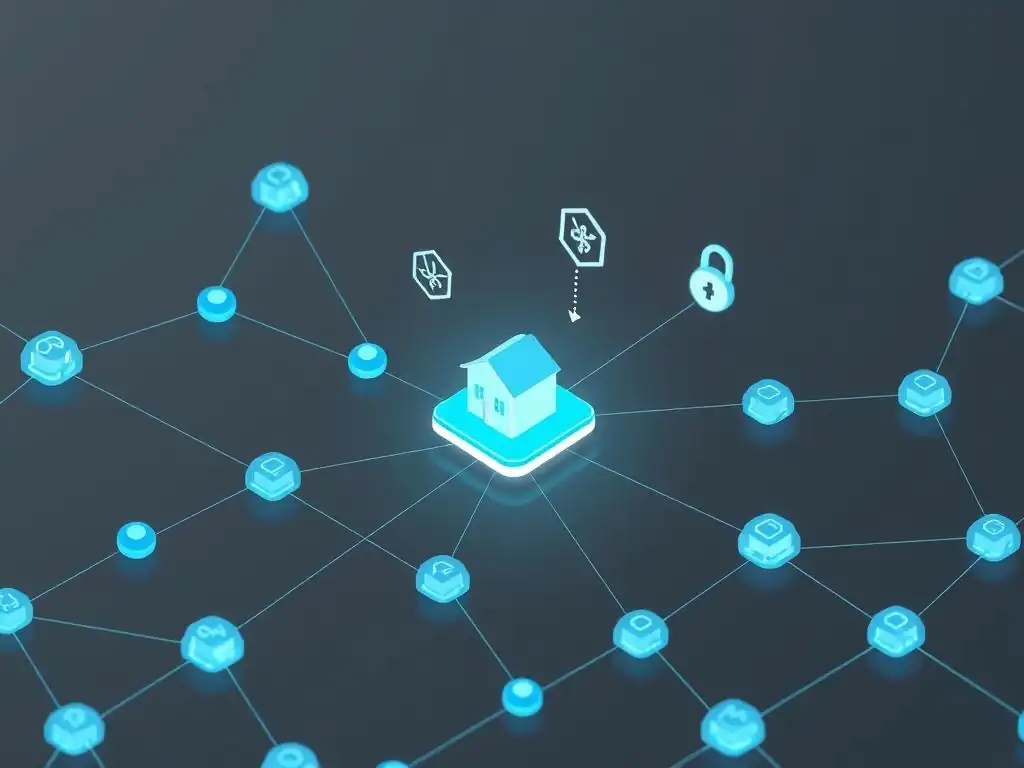
Decentralized Identifiers (DIDs) are a core component of many blockchain digital identity management solutions and the broader self-sovereign identity movement. A DID is a new type of identifier designed to enable verifiable, decentralized digital identity. Unlike traditional identifiers like usernames or email addresses, which are typically managed by a central authority (like a website or service provider), DIDs are globally unique identifiers that do not require a centralized registration authority. They are controlled by the individual or entity they identify.
DIDs are designed to be persistent and resolvable to a DID document. The DID document contains information associated with the DID, such as cryptographic keys and service endpoints, which are necessary to interact securely with the identity holder and verify credentials. This document is typically stored or anchored on a decentralized network, such as a blockchain or distributed ledger technology (DLT), ensuring its availability and integrity without relying on a single point of control or failure.
How DIDs Enable User-Controlled Identity
The architecture of DIDs fundamentally empowers users by placing control over their identity in their own hands. The individual generates their DID and manages the associated private keys. This means they, not a third party, dictate how their identity is used and who can access information linked to it. When a user interacts with a service or requests a verifiable credential, they use their private key associated with their DID to prove ownership or sign a transaction.
This model contrasts sharply with traditional systems where users rely on service providers to manage their identity credentials (like passwords) and where the provider holds significant control over the user's data. With DIDs, the user is the authority over their identifier and its associated data. This decentralized control is essential for achieving self-sovereign identity and forms the backbone of many advanced blockchain digital identity management solutions.
DID Standards and the W3C Recommendation
The development and adoption of Decentralized Identifiers are guided by standards bodies to ensure interoperability and widespread usability. The World Wide Web Consortium (W3C), a leading international standards organization for the internet, has played a crucial role in defining the specifications for DIDs. In 2022, the W3C published the DID Core specification as a W3C Recommendation, a significant milestone for the technology.
This recommendation provides a standardized framework for creating, resolving, and updating DIDs and their associated DID documents across various decentralized networks, including different blockchains and DLTs. The standardization effort is vital for enabling different identity platforms and services to interact seamlessly, fostering a more connected and functional decentralized identity ecosystem. Adherence to these standards is key for developers building blockchain digital identity management solutions to ensure compatibility and broad adoption.
Challenges and Considerations for Blockchain Identity Adoption
Scalability and Performance Optimization
One of the significant challenges facing the widespread adoption of blockchain digital identity management solutions is scalability. Public blockchains, while offering high levels of decentralization and security, can sometimes face limitations in processing high volumes of transactions quickly and at low cost, especially during peak network activity. Handling millions or billions of identity-related transactions, such as issuing verifiable credentials or verifying proofs on a global scale, requires robust and scalable infrastructure.
Different approaches are being explored to address this, including using permissioned or private blockchains for specific identity use cases, leveraging Layer 2 scaling solutions on public blockchains, or utilizing alternative DLTs that are designed for higher throughput. Optimizing the performance of these networks to handle frequent identity operations, such as updating DID documents or recording credential issuances, without incurring prohibitive costs or delays is crucial for enterprise and public sector adoption.
The implementation of blockchain digital identity management solutions operates within a complex and evolving legal and regulatory landscape. Existing laws governing data privacy (like GDPR in Europe or CCPA in California), digital signatures, and identity verification were largely designed for centralized systems. Applying these frameworks to decentralized, self-sovereign models presents challenges. Questions arise around data ownership, responsibility for data stored or referenced on a decentralized ledger, and compliance with 'right to be forgotten' principles when data is immutable.
Regulators are still grappling with how to categorize and govern decentralized identity technologies. Widespread adoption requires clear legal recognition of decentralized identifiers and verifiable credentials as valid forms of identification and proof. Engaging with policymakers and developing clear guidelines that balance innovation with necessary consumer protection and regulatory compliance is essential for the successful deployment of blockchain digital identity management solutions.
User Experience and Accessibility
For blockchain digital identity to achieve mass adoption, the user experience must be intuitive and accessible to non-technical users. Managing private keys, understanding concepts like DIDs and VCs, and interacting with decentralized applications (dApps) can be daunting for individuals accustomed to simple username/password logins. Poor user interfaces, complex setup processes, or the risk of losing access to one's identity due to mishandling keys are significant barriers.
Solutions need to be developed with user-friendliness at the forefront, potentially abstracting away some of the underlying blockchain complexity through well-designed digital wallets and intuitive applications. Accessibility for individuals with varying technical skills and disabilities must also be a key consideration. Improving the user experience is paramount to encourage broad participation in decentralized identity networks and the adoption of blockchain digital identity management solutions.
Integration with Legacy Systems
Integrating new blockchain digital identity management solutions with existing, often decades-old, legacy systems used by governments, businesses, and institutions is a significant technical and operational challenge. These legacy systems are typically built around centralized databases and traditional identity verification protocols. Replacing or extensively modifying these systems is often cost-prohibitive and complex.
Therefore, successful adoption requires developing interoperability layers and integration strategies that allow decentralized identity systems to interact with and provide identity verification services to legacy infrastructure. This might involve creating APIs or middleware that translate between the decentralized identity model and the requirements of existing systems. Addressing this integration hurdle is crucial for enabling a smooth transition and unlocking the full potential of blockchain identity in established sectors.
The Future of Digital Identity: A Blockchain-Powered Vision
Self-Sovereign Identity and Individual Empowerment
The future of digital identity, significantly shaped by blockchain technology, points towards a world of Self-Sovereign Identity (SSI). In this vision, individuals are no longer passive subjects whose identity data is managed by third parties. Instead, they become active participants, holding and controlling their identity and personal data. This shift represents a fundamental empowerment of the individual in the digital realm.
SSI promises to restore privacy, enhance security, and provide users with unprecedented control over their digital footprint. Imagine a future where you can prove your age, qualifications, or professional licenses instantly and securely, without revealing any more information than necessary, all managed from your personal digital identity wallet. This vision is being actively built upon blockchain digital identity management solutions, moving towards a decentralized internet where identity is user-controlled and verifiable.
The Growth of Decentralized Identity Networks
The development and adoption of blockchain identity are fostering the growth of interconnected decentralized identity networks. These networks are composed of various actors: identity holders (individuals or organizations), issuers (entities that issue verifiable credentials, like universities or governments), and verifiers (entities that request and verify credentials, like businesses or service providers).
As more organizations and individuals adopt DIDs and VCs based on common standards like those from the W3C, these networks will become more robust and valuable. Interoperability between different blockchain platforms and identity solutions will be key to ensuring a seamless experience across various services and jurisdictions. This growth signifies a move away from fragmented, proprietary identity silos towards a more open, interconnected, and user-centric identity ecosystem powered by blockchain digital identity management solutions.
Synergies Between Blockchain, AI, and Privacy-Enhancing Technologies
The future of digital identity will likely see powerful synergies between blockchain, Artificial Intelligence (AI), and other privacy-enhancing technologies (PETs). Blockchain provides the secure, decentralized layer for managing identity anchors and verifiable credentials. AI could be used to enhance the security of identity verification processes, detect fraudulent patterns in identity usage (without necessarily accessing sensitive underlying data), or personalize user experiences based on verified attributes.
PETs like Zero-Knowledge Proofs (ZKPs) are already being integrated with blockchain identity solutions to enable even more privacy-preserving verification, allowing a user to prove a statement is true (e.g., "I meet the minimum credit score") without revealing the underlying data (the actual credit score). Combining the immutable, transparent nature of blockchain with the capabilities of AI and PETs holds the potential to create highly secure, privacy-preserving, and intelligent blockchain digital identity management solutions for the future.
Implementing Blockchain Digital Identity Management Solutions
Selecting a Suitable Blockchain or DLT for Identity
Implementing a blockchain digital identity management solution requires careful consideration of the underlying distributed ledger technology (DLT). Various blockchains and DLTs offer different characteristics regarding consensus mechanisms, transaction speed, cost, scalability, and privacy features. Public blockchains like Ethereum (especially with Layer 2 solutions) or newer protocols optimized for identity might be suitable for applications requiring high decentralization and transparency.
Permissioned blockchains or private DLTs, such as Hyperledger Fabric or R3 Corda, might be preferred for enterprise or government use cases where control over network participants and data access is paramount, and higher transaction throughput is needed. The choice of the ledger technology depends heavily on the specific requirements of the identity solution, including the required level of decentralization, transaction volume, data privacy needs, and regulatory environment. Evaluating these factors is a critical first step in deploying effective blockchain digital identity management solutions.
Building a Comprehensive Identity Management Framework
Implementing blockchain identity goes beyond simply choosing a ledger; it involves building a comprehensive framework that addresses all aspects of identity lifecycle management. This includes developing or integrating components for:
- DID Creation and Management: Secure tools for users to generate and manage their Decentralized Identifiers and associated keys.
- Verifiable Credential Issuance: Systems for trusted authorities (issuers) to create, sign, and anchor VCs on the ledger.
- Credential Storage (Wallets): Secure digital wallets for individuals to store and manage their DIDs and VCs.
- Credential Verification: Tools and protocols for verifiers to request proofs and cryptographically verify credentials against the ledger.
- Key Management: Robust and user-friendly solutions for users to securely manage their private keys, potentially including recovery mechanisms.
Building such a framework requires expertise in blockchain technology, cryptography, user experience design, and security. It often involves integrating various software components and adhering to established standards like W3C DIDs and Verifiable Credentials specifications to ensure interoperability. Successful blockchain digital identity management solutions are built upon such robust frameworks.
Adhering to Data Privacy Regulations (GDPR, CCPA, etc.)
A critical aspect of implementing blockchain digital identity management solutions is ensuring strict adherence to global data privacy regulations such as the General Data Protection Regulation (GDPR) in Europe, the California Consumer Privacy Act (CCPA) in the US, and similar laws emerging worldwide. While blockchain offers privacy-enhancing features like selective disclosure, the immutable nature of the ledger can pose challenges for requirements like the "right to be forgotten."
Strategies to address this include storing sensitive personal data off-chain, with only cryptographic hashes or references recorded on the blockchain, or using privacy-preserving techniques like zero-knowledge proofs. Legal and technical experts must work together to design solutions that comply with these regulations while leveraging the benefits of decentralization. Demonstrating compliance and building trust with users regarding the handling of their data is paramount for the successful and ethical deployment of blockchain digital identity management solutions.
Case Studies: Successful Blockchain Digital Identity Implementations
Estonia's Digital Identity Ecosystem
Estonia stands out as a pioneering nation in leveraging digital technologies for governance, and its e-Residency program and digital identity infrastructure provide valuable insights, including their exploration and integration of blockchain-like technologies (specifically, KSI blockchain technology) for securing digital records. While not a pure self-sovereign identity model for all citizen interactions, Estonia's system uses cryptography and distributed ledger principles to ensure the integrity and auditability of digital actions and identity data held by the state.
The Estonian ID card, which serves as a digital identity, allows citizens to securely authenticate online, sign documents digitally, and access a wide range of public and private services. The underlying technology provides a secure logging mechanism for all interactions with government databases, ensuring that any access or change is recorded and verifiable, thus enhancing trust and transparency in the system. This demonstrates how blockchain-inspired approaches can be applied at a national level to build more secure and accountable digital identity infrastructure, paving the way for more advanced blockchain digital identity management solutions.
IBM's Blockchain Solution for Identity Management
IBM has been actively involved in developing enterprise-grade blockchain solutions, including those focused on identity management. Leveraging platforms like Hyperledger Fabric, a permissioned blockchain framework, IBM has worked on solutions aimed at streamlining processes like Know Your Customer (KYC) for financial institutions. One notable initiative involved exploring a blockchain network where banks and identity providers could share verified identity attributes of customers in a secure and permissioned manner, reducing the need for each institution to conduct full, redundant verification processes.
These solutions focus on creating trusted networks where participants can share and verify credentials related to identity, employment, or other attributes, improving efficiency and security for businesses. By using a permissioned ledger, these enterprise blockchain digital identity management solutions can offer higher transaction throughput and stricter control over data access compared to public networks, catering to the specific needs of regulated industries. While specific deployment figures can vary, IBM's efforts highlight the potential of blockchain for creating more efficient and secure identity workflows within corporate and institutional settings.
Conclusion: Blockchain's Transformative Potential for Digital Identity
Blockchain technology holds immense promise for fundamentally reshaping the landscape of digital identity. By shifting control from centralized authorities to individuals, enabling secure and verifiable credentials, and leveraging immutable ledgers, blockchain-based solutions address many of the critical limitations of current identity systems, including vulnerability to breaches, lack of user control, and fragmentation.
The development of Decentralized Identifiers (DIDs) and Verifiable Credentials (VCs), guided by international standards, is paving the way for a future where individuals possess a self-sovereign digital identity – one that is portable, secure, and entirely under their control. While challenges related to scalability, regulation, user experience, and integration with legacy systems remain, ongoing innovation and increasing industry adoption demonstrate the viability and significant benefits of blockchain digital identity management solutions.
As these technologies mature and gain wider acceptance, they are set to unlock new possibilities for privacy, security, and efficiency across virtually every digital interaction, truly transforming the future of digital identity.
Frequently Asked Questions
What are the main benefits of using blockchain for digital identity management?
Blockchain offers enhanced security through its immutable ledger, greater transparency for users, and improved control over personal data. This reduces the risk of identity theft and fraud.
How does blockchain enhance user control over their digital identity?
Blockchain empowers users by allowing them to own and manage their identity data directly. They can selectively share information with third parties, ensuring data privacy and consent management.
What are some potential enterprise applications of blockchain in digital identity?
Enterprises can utilize blockchain for streamlining KYC/AML processes, improving supply chain traceability, and managing employee credentials securely and efficiently.
What role does regulation play in the adoption of blockchain-based digital identity solutions?
Clear and supportive regulations are crucial for fostering trust and adoption of blockchain technology. Regulatory frameworks need to address data privacy concerns and legal liability issues.
What is the future outlook for blockchain digital identity management solutions?
The future looks promising, with increased adoption driven by the need for secure and decentralized identity. Expect to see more interoperable solutions and integration with existing identity systems.
Final Reflection: Embracing Trust in a Trustless World
The exploration of blockchain's potential to revolutionize digital identity management underscores a critical truth: the future of our online interactions hinges on establishing verifiable trust. As we've seen, blockchain offers a compelling alternative to centralized systems, promising greater security, transparency, and user control over personal data. This is not merely a technological advancement; it's a paradigm shift in how we conceive of identity in the digital age, one that demands our attention and proactive engagement.
The implications of this shift are profound, influencing everything from online banking and healthcare to voting systems and social media. The ability to securely and verifiably own and control our digital identities is not just a convenience; it's a fundamental right that empowers individuals and fosters a more equitable and trustworthy digital landscape. As the saying goes: Identity is the new perimeter of security.
This quote encapsulates the urgency and importance of securing our digital selves in an increasingly interconnected world.
Now, consider the possibilities. Imagine a world where identity theft is a relic of the past, where accessing services is seamless and secure, and where individuals are truly in control of their data. This future is within reach, but it requires a collective commitment to understanding, adopting, and refining blockchain-based digital identity management solutions. What steps can you take, in your own sphere of influence, to advocate for a more secure and empowering digital future? The time to act is now.
Unlock Your Secure Digital Future Today!
Thank you for exploring the exciting potential of blockchain to transform digital identity. Now that you understand the possibilities, it’s time to take action and secure your digital future.
Here are some steps to get started:
- Begin researching blockchain-based identity solutions to see how they could benefit you or your organization. Consider exploring decentralized identity wallets.
- Share this article with your network to promote awareness about the importance of secure and verifiable digital identities in our connected world.
- Join a local or virtual blockchain meetup to connect with experts and enthusiasts, and learn more about practical applications of this innovative technology.
What small step can you take this week to protect your digital identity and explore the benefits of blockchain?
Leave a Reply