
Scalability Challenges in Web3: Can Blockchain Handle Mass Adoption?


Welcome to Blockchain Trends, your guide to navigating the evolving landscape of blockchain technology.
Delve into the transformative potential beyond cryptocurrencies, exploring DeFi, enterprise applications, and the future of decentralized systems. Are you ready to uncover the hurdles standing in the way of a fully decentralized future? This week, we tackle a critical question: Can blockchain handle mass adoption? Join us as we dissect the pressing Web3 blockchain scalability issues that could determine the fate of the decentralized web. Read on to explore the solutions and challenges that lie ahead...
Scalability Challenges in Web3: Can Blockchain Handle Mass Adoption?
- Introduction: Blockchain's Scalability Bottleneck and the Path to Mass Adoption
- Defining Blockchain Scalability Issues: A Deep Dive
- Root Causes of Blockchain Scalability Problems
- Layer-2 Scaling Solutions: Enhancing Blockchain Performance
- Sharding: Dividing the Blockchain for Increased Throughput
- Alternative Consensus Mechanisms: Beyond PoW and PoS
- Addressing Data Storage Issues in Blockchain
- The Future of Blockchain Scalability: Innovations and Predictions
- Conclusion: Overcoming Blockchain's Scalability Hurdle for a Decentralized Future
-
Frequently Asked Questions
- What are the main Web3 blockchain scalability issues hindering mass adoption?
- How do Web3 blockchain scalability issues impact the user experience?
- What are some potential solutions being explored to address Web3 blockchain scalability issues?
- How does regulation impact the development and implementation of solutions to Web3 blockchain scalability issues?
- Beyond technical solutions, what other factors contribute to resolving Web3 blockchain scalability issues?
- Final Reflection: Navigating the Web3 Scalability Labyrinth
- Unlock Web3's Potential: Your Next Steps to Scalability!
Introduction: Blockchain's Scalability Bottleneck and the Path to Mass Adoption
The transformative potential of blockchain technology for Web3 is widely acknowledged, promising decentralized applications, digital ownership, and novel economic models. However, a significant hurdle stands in the way of widespread adoption: scalability. While blockchains excel at providing security and decentralization, their current capacity to handle a large volume of transactions efficiently remains limited, presenting core Web3 blockchain scalability issues. This limitation impacts everything from user experience in decentralized applications (dApps) to the feasibility of enterprise-level blockchain solutions.
Addressing the Web3 blockchain scalability issues is paramount for the technology to move beyond niche use cases and become a foundational layer for the next generation of the internet. Without the ability to process thousands, or even millions, of transactions per second at a low cost, the vision of a truly decentralized and widely used Web3 ecosystem remains constrained. This article delves into the nature of these challenges and explores the various innovative solutions being developed to overcome them, paving the way for blockchain's integration into everyday life.
Understanding the Promise and Limitations of Blockchain Technology
Blockchain technology, at its core, offers a distributed, immutable ledger secured by cryptography. This structure provides significant advantages, such as enhanced transparency, security against single points of failure, and the ability to execute trustless transactions. These features are foundational to the Web3 vision, enabling peer-to-peer interactions, verifiable digital assets, and decentralized governance structures that bypass traditional intermediaries.
Despite these powerful promises, the inherent design of many blockchain networks, particularly early iterations like Bitcoin and Ethereum (prior to significant upgrades), introduces limitations. The requirement for consensus among distributed nodes and the sequential processing of transactions mean that throughput is significantly lower than centralized payment systems. This trade-off between decentralization, security, and performance is a central theme when discussing Web3 blockchain scalability issues.
The Critical Role of Scalability in Blockchain's Growth
Scalability is the capacity of a system to handle a growing amount of work, or in the context of blockchain, an increasing number of transactions and users. For blockchain to power mass adoption in Web3, it must be able to support transaction volumes comparable to, or exceeding, those handled by global payment networks and large-scale internet services. Without sufficient scalability, networks become congested, transaction costs skyrocket, and the speed at which operations are confirmed slows to a crawl.
These performance bottlenecks directly impact the viability of dApps, decentralized finance (DeFi) protocols, non-fungible token (NFT) marketplaces, and other Web3 applications. A dApp that takes minutes or hours to confirm a simple action, or costs several dollars in fees for each interaction, cannot compete with existing centralized services that offer instant, low-cost transactions. Therefore, resolving the Web3 blockchain scalability issues is not merely a technical challenge but a fundamental requirement for unlocking the full potential of a decentralized future.
Defining Blockchain Scalability Issues: A Deep Dive
Scalability issues in blockchain manifest in several key areas, each contributing to the overall performance bottleneck. These challenges are interconnected and often exacerbate one another, creating a complex problem set that requires multifaceted solutions. Understanding these specific issues is crucial for appreciating the efforts being made to enhance network capacity.
The primary Web3 blockchain scalability issues revolve around the network's ability to process a high volume of transactions quickly and cheaply. When demand exceeds the network's capacity, users experience delays and increased costs, which are significant deterrents for mainstream adoption. These limitations are inherent in the design choices made to prioritize security and decentralization in many foundational blockchain protocols.
Transaction Throughput Limitations in Current Blockchains
Transaction throughput refers to the number of transactions a network can process per unit of time, typically measured in transactions per second (TPS). Early blockchains like Bitcoin were designed with a low throughput, processing roughly 7 TPS, sufficient for its initial purpose but inadequate for global payments or complex applications. Ethereum, while more versatile, initially managed only around 15-30 TPS on its mainnet.
Compare these figures to centralized systems like Visa, which can handle tens of thousands of transactions per second. The vast difference highlights a major Web3 blockchain scalability issue. Low throughput leads to long queues of pending transactions, especially during periods of high network activity, making the network slow and inefficient for applications requiring rapid confirmations, such as gaming, real-time trading, or micropayments.
High Transaction Fees and Network Congestion: A Barrier to Entry
When a blockchain network experiences high transaction volume that pushes against its throughput limits, network congestion occurs. In many blockchain architectures, particularly those using fee markets (like Ethereum's gas system pre-EIP-1559), users must pay a fee to incentivize miners or validators to include their transaction in the next block. During congestion, users must offer higher fees to get their transactions prioritized, leading to bidding wars and exorbitant costs.
These high transaction fees, often referred to as "gas fees" on Ethereum, represent a significant barrier to entry and usability for many Web3 applications. Simple operations that might cost fractions of a cent in traditional systems can cost dollars or even tens of dollars on a congested blockchain. This makes many types of transactions economically unfeasible, hindering the development and adoption of applications that rely on frequent, low-value interactions, thereby worsening the Web3 blockchain scalability issues.
Latency and Confirmation Times: Impeding User Experience
Latency refers to the delay between initiating a transaction and it being confirmed and added to the blockchain. In many proof-of-work systems, block times (the average time it takes to mine a new block) can range from seconds to minutes (e.g., Ethereum's ~13 seconds, Bitcoin's ~10 minutes). While a single block confirmation might suffice for some applications, others require multiple block confirmations to achieve a higher degree of finality, adding further delay.
These long confirmation times significantly impede user experience. Imagine waiting minutes or tens of minutes for a simple action within a dApp, like buying an item in a game or swapping tokens in a DeFi protocol, to be finalized. Such delays are unacceptable compared to the near-instantaneous feedback users expect from modern online services. Addressing this aspect of Web3 blockchain scalability issues is vital for creating responsive and engaging decentralized applications.
Root Causes of Blockchain Scalability Problems
Understanding the symptoms of Web3 blockchain scalability issues is necessary, but identifying their root causes is key to developing effective solutions. The fundamental challenges often stem from the core design principles that give blockchain its unique properties: decentralization, security, and immutability. These principles, while desirable, impose constraints on performance.
The trade-offs inherent in blockchain design, particularly the famous "Blockchain Trilemma," lie at the heart of the scalability problem. Furthermore, the mechanisms used to achieve consensus among distributed participants and the way data is managed on the network contribute significantly to the limitations on throughput and speed.
The Blockchain Trilemma: Security, Decentralization, and Scalability
The Blockchain Trilemma, a concept popularized by Ethereum co-founder Vitalik Buterin, posits that it is extremely challenging for a blockchain to simultaneously achieve high levels of security, decentralization, and scalability. Typically, protocols must sacrifice one characteristic to optimize for the other two.
- Security: Refers to the network's resistance to attacks, such as double-spending or tampering with the ledger.
- Decentralization: Means that control over the network is distributed among many participants rather than concentrated in a single entity.
- Scalability: As discussed, is the ability to handle increasing transaction volumes efficiently.
Many early blockchains prioritized security and decentralization, leading to inherent Web3 blockchain scalability issues. Achieving consensus across a large, distributed network of nodes, each verifying every transaction, is computationally intensive and limits the rate at which new blocks can be added, directly impacting throughput.
Consensus Mechanisms: Impact on Scalability
The consensus mechanism is the method by which network participants agree on the validity of transactions and the state of the ledger. Different mechanisms have varying impacts on scalability, often due to the computational or communication overhead required to reach agreement.
The choice of consensus mechanism is a primary factor influencing the Web3 blockchain scalability issues of a particular network. Mechanisms that require extensive participation from all nodes for every transaction verification tend to be more secure and decentralized but less scalable.
Proof-of-Work (PoW) Scalability Limitations
Proof-of-Work (PoW), used by Bitcoin and historically by Ethereum, requires participants (miners) to expend significant computational energy to solve complex mathematical problems. The first miner to solve the problem gets to propose the next block and earn rewards. This process is secure and highly decentralized but inherently slow and resource-intensive.
PoW's reliance on computational puzzles and the need for every node to validate the work of miners limits the block creation rate. Furthermore, increasing block size or reducing block time in a naive way can lead to increased centralization (as only powerful nodes can keep up) or reduced security (due to higher orphan block rates). These factors contribute significantly to the Web3 blockchain scalability issues observed in PoW networks.
Proof-of-Stake (PoS) Scalability Trade-offs
Proof-of-Stake (PoS), adopted by Ethereum 2.0 (now known as the Consensus Layer) and used by many newer blockchains, replaces computational work with economic stake. Validators are chosen to propose and validate blocks based on the amount of cryptocurrency they "stake" in the network. PoS is significantly more energy-efficient than PoW.
While PoS generally offers higher potential throughput than PoW, it still faces scalability challenges. The need for validators to communicate and agree on the state of the chain can become a bottleneck as the number of transactions increases. Achieving consensus among a large set of validators efficiently without sacrificing decentralization or security requires sophisticated protocol design, highlighting ongoing Web3 blockchain scalability issues even in PoS systems.
Data Storage and Bandwidth Constraints
Every transaction on a blockchain network is recorded and added to the ledger, which grows over time. For full nodes to participate in the network and validate transactions, they must download and store the entire history of the blockchain. As the blockchain grows, the storage requirements for running a full node increase, potentially leading to centralization as fewer participants can afford the necessary hardware.
Furthermore, verifying transactions and propagating new blocks requires significant bandwidth. As transaction volume increases, the data that needs to be transmitted across the network grows proportionally. This can strain the bandwidth capabilities of nodes, leading to slower propagation of blocks and transactions, increasing latency, and contributing to network congestion – all facets of the Web3 blockchain scalability issues. Managing the ever-increasing size of the blockchain and the associated data load is a persistent challenge.
Layer-2 Scaling Solutions: Enhancing Blockchain Performance
Given the fundamental constraints of scaling Layer-1 blockchains (the base layer), a major focus of development has shifted to Layer-2 scaling solutions. These technologies operate on top of the main blockchain, processing transactions off-chain and only using the Layer-1 chain for security and final settlement. This approach allows for significantly higher transaction throughput and lower costs without compromising the security and decentralization of the underlying network.
Layer-2 solutions are seen as critical for overcoming the immediate Web3 blockchain scalability issues and enabling dApps to achieve performance levels required for mass adoption. By moving the bulk of computational and transactional activity off-chain, they alleviate the load on the Layer-1 network, freeing it up for settlement and security.
Overview of Layer-2 Scaling Approaches
Layer-2 scaling solutions employ various techniques to process transactions off the main chain. While the specifics differ, the general principle involves users depositing funds or state onto a Layer-2 protocol, interacting within that protocol at high speed and low cost, and then withdrawing back to Layer-1 when finished. The security of these off-chain interactions is typically guaranteed by cryptographic proofs or economic incentives tied back to the Layer-1 chain.
The diversity of Layer-2 approaches reflects the complexity of Web3 blockchain scalability issues and the need for tailored solutions depending on the type of application. Some solutions are optimized for simple payment channels, while others are designed to support complex smart contract execution. Each approach has its own set of trade-offs regarding speed, cost, security assumptions, and complexity.
State Channels: Enabling Off-Chain Transactions
State channels allow participants to conduct multiple transactions off-chain, with only the initial setup and final settlement transactions recorded on the Layer-1 blockchain. Think of it like opening a tab at a bar: you record the initial deposit, make many transactions (drinks) without updating the bar's main ledger each time, and only settle the final bill when you close the tab.
For example, the Lightning Network for Bitcoin is a payment channel network. Users open payment channels by locking funds on the main chain. They can then send near-instant, low-cost payments back and forth within the channel. Only when the channel is closed is the final balance recorded on the Bitcoin blockchain. This approach significantly reduces the number of on-chain transactions required for frequent interactions between the same parties, addressing a specific aspect of Web3 blockchain scalability issues.
Rollups: Optimistic and Zero-Knowledge (ZK) Rollups
Rollups are a type of Layer-2 solution that executes transactions off-chain but posts a summary of these transactions (a "rollup") back to the Layer-1 chain. The key innovation is that the Layer-1 chain doesn't re-execute all the transactions; it only verifies the validity of the rollup summary. This drastically reduces the amount of data and computation required on Layer-1.
Rollups are particularly promising for scaling general-purpose smart contracts, which is crucial for the complexity of Web3. They can handle thousands of transactions off-chain and bundle them into a single transaction on Layer-1. This approach offers a significant leap in transaction throughput and a substantial reduction in fees compared to directly interacting with a congested Layer-1, directly tackling major Web3 blockchain scalability issues.
Optimistic Rollups: Advantages and Disadvantages
Optimistic Rollups assume that transactions processed off-chain are valid by default ("optimistically"). They post the transaction data (or a compressed version) to Layer-1. There is a challenge period during which anyone can flag a potentially invalid transaction by submitting a "fraud proof" to Layer-1. If a fraud proof is successful, the invalid transaction is reverted, and the party that submitted the invalid state is penalized.
Advantages include easier implementation compared to ZK-Rollups, as they can support existing smart contracts more readily. However, their main disadvantage is the withdrawal period. Users must wait for the challenge period to expire (typically 1-2 weeks) before they can withdraw funds from the Layer-2 back to Layer-1, introducing latency and impacting capital efficiency.
ZK-Rollups: Enhancing Privacy and Scalability
ZK-Rollups use zero-knowledge proofs (specifically SNARKs or STARKs) to cryptographically prove the validity of off-chain transactions. Instead of posting all transaction data, they post a minimal amount of data plus a cryptographic proof that verifies the correctness of all transactions within the rollup batch. The Layer-1 contract verifies this proof, which is computationally less expensive than executing each transaction individually.
ZK-Rollups offer strong security guarantees, similar to Layer-1, as the validity of the off-chain state is cryptographically proven on-chain. They also have much faster finality and withdrawal times compared to Optimistic Rollups, as there is no challenge period. The primary challenge is the computational complexity of generating the zero-knowledge proofs, which is resource-intensive. Developing ZK-Rollups for general-purpose smart contracts (ZK-EVMs) is a complex and ongoing effort, but they hold immense potential for solving Web3 blockchain scalability issues.
Sidechains: Independent Blockchains for Scalability
Sidechains are independent blockchain networks that are connected to a main blockchain (like Ethereum) via a two-way peg. This peg allows assets to be transferred between the main chain and the sidechain. Transactions are processed on the sidechain using its own consensus mechanism (which may be different from the main chain's) and block parameters (like block size and block time), potentially offering much higher throughput and lower fees.
Examples include Polygon PoS Chain (formerly Matic Network) and Skale. Sidechains offer flexibility and can be optimized for specific use cases. However, their security model is typically independent of the main chain. This means users must trust the sidechain's validators or consensus mechanism, which may not be as robust or decentralized as the main chain, representing a different security trade-off compared to Rollups.
Validium: An Alternative Data Availability Solution
Validium is a scaling solution similar to ZK-Rollups in that it uses zero-knowledge proofs to verify the validity of off-chain state transitions. However, unlike ZK-Rollups, Validium does not store transaction data on the Layer-1 chain. The data is stored off-chain by a data availability committee or another mechanism.
By keeping data off-chain, Validium can achieve significantly higher throughput than ZK-Rollups, potentially handling thousands or even millions of transactions per second. The trade-off is a different security assumption: while users can be sure that the state transitions are valid (thanks to the ZK proofs), they must trust that the data availability committee will make the transaction data available if needed (e.g., to reconstruct the state or withdraw funds). This makes Validium suitable for applications where data availability is less critical or can be handled by a trusted third party, offering another approach to tackle Web3 blockchain scalability issues.
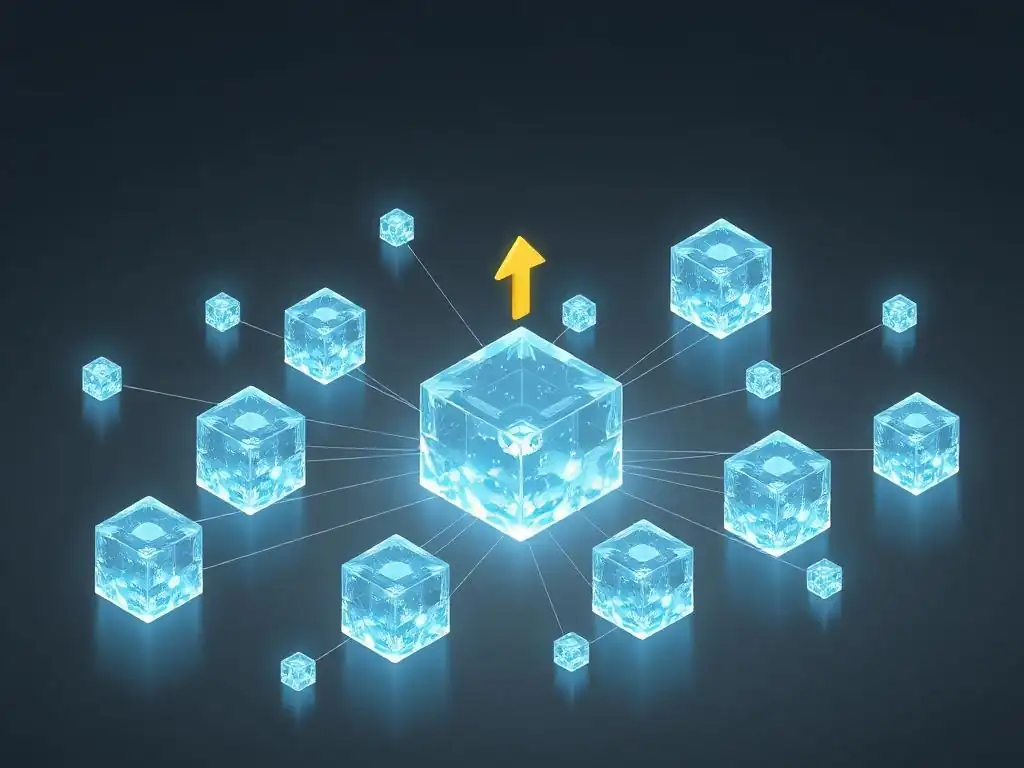
Sharding is a technique borrowed from traditional database scaling that involves splitting a blockchain's state and transaction processing load across multiple smaller, independent segments called "shards." Instead of every node processing every transaction, nodes are assigned to specific shards and only process transactions within their assigned shard. This parallel processing significantly increases the network's overall capacity.
Implementing sharding on a decentralized blockchain is complex, particularly ensuring security and cross-shard communication. Ethereum 2.0's roadmap includes sharding as a key component to dramatically increase its throughput, aiming for potentially hundreds of thousands of transactions per second. Sharding is a Layer-1 scaling solution, modifying the base protocol itself to handle more load.
How Sharding Works: Splitting the Blockchain Network
In a sharded blockchain, the network is divided into multiple shards, each acting like a mini-blockchain capable of processing its own set of transactions and maintaining its own state. Nodes specialize in validating transactions and maintaining the state for one or a few specific shards, rather than the entire chain.
When a transaction occurs, it is routed to the appropriate shard based on criteria like the address involved. Transactions within a shard are processed and validated in parallel with transactions in other shards. A main chain (often called the beacon chain in Ethereum 2.0's design) coordinates the shards, manages validators, and ensures the overall security and consistency of the sharded network. This parallelization is the core mechanism by which sharding addresses Web3 blockchain scalability issues at the base layer.
Types of Sharding: State Sharding, Transaction Sharding, and Computation Sharding
Sharding can be implemented in different ways, targeting various aspects of the blockchain's load:
- State Sharding: The most comprehensive form, where the entire state of the blockchain (account balances, contract storage) is divided among shards. Nodes only need to store and process the state for their assigned shards. This is the most complex to implement but offers the greatest scaling potential.
- Transaction Sharding: Only the processing of transactions is sharded. Nodes still need access to the global state to validate transactions, which can limit scalability.
- Computation Sharding: Focuses on parallelizing the execution of smart contract code across different shards.
Ethereum 2.0's sharding design primarily focuses on state sharding, aiming to distribute the data storage and processing burden across a large number of validator nodes. Initially, it planned for 64 shards, significantly increasing the network's capacity. Each type of sharding offers a different approach to alleviating the Web3 blockchain scalability issues by distributing the workload.
Challenges and Considerations for Implementing Sharding
Implementing sharding in a decentralized and secure manner presents significant technical challenges. One major challenge is cross-shard communication: how do transactions or smart contract calls that involve multiple shards interact securely and efficiently? This requires sophisticated mechanisms to prevent double-spending or inconsistent states between shards.
Another challenge is security: ensuring that an attacker cannot compromise a single shard by controlling a disproportionate number of validators within that shard (a "single-shard takeover"). Solutions involve randomly assigning validators to shards and frequently rotating them to make it difficult for an attacker to concentrate power. The complexity of coordinating multiple shards and ensuring data availability across the entire sharded network are critical considerations when deploying this Layer-1 scaling solution to tackle Web3 blockchain scalability issues.
Alternative Consensus Mechanisms: Beyond PoW and PoS
While PoW and PoS are the most prominent consensus mechanisms, the search for improved scalability, efficiency, and decentralization has led to the exploration and development of various alternative approaches. These mechanisms often make different trade-offs than PoW or PoS, aiming to achieve higher transaction throughput or lower latency while maintaining sufficient security and decentralization for specific use cases.
Exploring alternative consensus mechanisms is a vital part of the broader effort to overcome Web3 blockchain scalability issues. These mechanisms can offer different performance characteristics, potentially being better suited for certain types of decentralized applications or network structures than traditional PoW or PoS.
Delegated Proof-of-Stake (DPoS): A Scalable Consensus Model
Delegated Proof-of-Stake (DPoS) is a variation of PoS where token holders do not directly validate transactions. Instead, they vote for a smaller set of delegates or "witnesses" who are responsible for validating transactions and producing blocks. This smaller set of validators (typically 20-100) can reach consensus much faster than a network where thousands of nodes must agree.
Examples of networks using DPoS include EOS, Tron, and Steem. DPoS can achieve significantly higher transaction throughput (potentially hundreds or even thousands of TPS) and faster block times compared to traditional PoS or PoW. However, the trade-off is a degree of centralization, as power is concentrated in the hands of a smaller number of elected delegates. This highlights that addressing Web3 blockchain scalability issues often involves navigating the trilemma's trade-offs.
Directed Acyclic Graph (DAG) Technology: A Different Approach to Consensus
Directed Acyclic Graphs (DAGs) represent a departure from the traditional linear blockchain structure. In a DAG-based system, instead of blocks being added sequentially, individual transactions directly reference and approve one or more previous transactions. This structure allows for parallel processing of transactions.
DAG projects like IOTA (Tangle) and Nano claim to offer very high transaction throughput with minimal to no transaction fees. As more transactions are added, the network's capacity theoretically increases because more "tips" (unapproved transactions) are available to be approved. However, DAGs face different challenges regarding security (e.g., preventing double-spends with low transaction volumes) and achieving finality compared to blockchains, presenting a different set of considerations when evaluating solutions for Web3 blockchain scalability issues.
Practical Byzantine Fault Tolerance (pBFT)
Practical Byzantine Fault Tolerance (pBFT) is a consensus algorithm designed for asynchronous systems, commonly used in distributed databases and permissioned blockchain networks. It works by having a fixed set of known validators agree on the order of transactions through a multi-round voting process. As long as a supermajority (more than two-thirds) of validators are honest, the network can reach consensus.
pBFT and its variations (like Tendermint, used by Cosmos) can achieve high transaction throughput and fast finality in networks with a limited and known set of participants. This makes them suitable for enterprise blockchains or consortium chains where participants are identified and trusted to some extent. However, they are generally less suitable for public, permissionless networks with a large and dynamic set of validators due to communication overhead, limiting their application as a universal solution for public Web3 blockchain scalability issues.
Addressing Data Storage Issues in Blockchain
Beyond transaction throughput, the ever-growing size of the blockchain ledger presents its own set of Web3 blockchain scalability issues, particularly concerning data storage and availability. As the number of transactions increases, so does the amount of data that full nodes must store. This can become a barrier to running a node, potentially leading to fewer full nodes and increased centralization.
Solutions are being developed to address these data storage challenges, ranging from decentralized storage networks to techniques for optimizing the data stored on the main chain. Ensuring that blockchain data remains accessible and manageable for network participants is crucial for maintaining decentralization and enabling future growth.
Decentralized Storage Solutions: IPFS, Filecoin, Arweave
Decentralized storage networks offer an alternative to storing large amounts of data directly on the blockchain. Instead, the blockchain can store a hash or pointer to data stored on a decentralized storage system like IPFS (InterPlanetary File System), Filecoin, or Arweave. This significantly reduces the data footprint on the blockchain itself.
IPFS allows for peer-to-peer file storage and retrieval, addressing content addressing rather than location addressing. Filecoin is a decentralized storage network that incentivizes participants to store data reliably over time. Arweave offers permanent, decentralized data storage. By offloading large datasets (like NFT metadata, dApp files, or historical transaction data not needed for current state) to these networks, Layer-1 blockchains can remain leaner and more manageable, mitigating storage-related Web3 blockchain scalability issues.
Data Availability Solutions: Ensuring Data Integrity
Data availability is a critical concept, especially for Layer-2 rollups that process transactions off-chain. Users and validators need to be able to access the data for off-chain transactions to reconstruct the state, verify proofs, or challenge invalid transitions. If this data is not available (e.g., if the Layer-2 operator withholds it), the security of the rollup can be compromised.
Solutions like Ethereum's Danksharding (part of its future roadmap) aim to provide a dedicated layer for data availability. This involves nodes storing and making available a portion of the transaction data for rollups, without needing to execute the transactions themselves. This ensures that the data needed for verification or withdrawal is always accessible, enhancing the security and viability of rollup-based scaling solutions and addressing key Web3 blockchain scalability issues related to data handling.
Optimizing On-Chain Data Storage: Techniques and Strategies
Even with off-chain storage solutions, optimizing the data stored directly on the Layer-1 blockchain is important. Techniques include state rent (charging users for the amount of storage their contracts or accounts consume on-chain), state expiry (removing inactive state after a certain period), and more efficient data structures.
Protocol upgrades can also introduce more efficient ways of storing and verifying state, reducing the amount of data full nodes need to process and store. For example, stateless clients, a long-term goal for Ethereum, would allow nodes to verify new blocks without needing to store the entire blockchain state, significantly reducing hardware requirements. These optimizations are crucial for keeping the cost and resource requirements of running a full node manageable, which is essential for maintaining decentralization and addressing Web3 blockchain scalability issues related to network participation.
The Future of Blockchain Scalability: Innovations and Predictions
The pursuit of blockchain scalability is an active and rapidly evolving field of research and development. While significant progress has been made with Layer-2 solutions and planned Layer-1 upgrades like sharding, the demand for higher throughput and lower costs in Web3 continues to grow. Future innovations will likely involve further refinements of existing techniques, new cryptographic primitives, and increased interoperability between different networks and scaling solutions.
Predicting the exact future is challenging, but it is clear that a multi-layered approach involving a combination of Layer-1 improvements, diverse Layer-2 solutions, and efficient data management will be necessary to support the mass adoption of Web3. The focus remains on achieving high performance without sacrificing the core principles of decentralization and security that make blockchain valuable.
Emerging Technologies and Research in Scalability
Research continues into novel consensus mechanisms that can offer better performance characteristics, such as various forms of BFT-inspired protocols or hybrid approaches. Cryptographic advancements, particularly in zero-knowledge proofs, are enabling more efficient and private transaction verification, paving the way for more powerful ZK-Rollups and other privacy-preserving scaling solutions.
Furthermore, research into state management, peer-to-peer networking protocols, and efficient data serialization are all contributing to incremental but important improvements in network performance. Concepts like 'optimistic validation' or different block propagation strategies are being explored to reduce latency and increase effective throughput. These ongoing efforts highlight the dynamic nature of addressing Web3 blockchain scalability issues.
The Role of Interoperability in Scalable Blockchain Ecosystems
As the blockchain ecosystem expands with numerous Layer-1 networks and Layer-2 solutions, interoperability becomes increasingly important for overall scalability and user experience. The ability for assets and data to move seamlessly between different chains and scaling layers prevents fragmentation and allows users to leverage the best solution for a given task.
Protocols and standards for cross-chain communication (like bridges, though they have their own security considerations) and Layer-2 interoperability are under active development. A future scalable Web3 ecosystem will likely not rely on a single blockchain but rather a network of interconnected chains and layers working together. This interconnectedness is crucial for unlocking the full potential and addressing the holistic Web3 blockchain scalability issues across the ecosystem.
Case Study: Polygon - A Layer-2 Scaling Solution for Ethereum
Polygon is a prominent example of a project dedicated to addressing Web3 blockchain scalability issues, particularly for Ethereum. While initially known for its PoS sidechain (Polygon PoS), the project has evolved into a platform offering a suite of scaling solutions, including various types of rollups (e.g., Polygon zkEVM, Polygon Miden, Polygon Zero).
The Polygon PoS chain, with its DPoS-based consensus, offers significantly higher throughput (reportedly up to 7,000 TPS in tests, though real-world usage varies) and much lower transaction fees compared to Ethereum mainnet. This has made it a popular destination for dApps and users seeking faster and cheaper transactions. Polygon's expansion into ZK-Rollups demonstrates the industry trend towards leveraging advanced cryptography for more robust scaling solutions, showcasing a multi-pronged approach to tackling Web3 blockchain scalability issues.
Conclusion: Overcoming Blockchain's Scalability Hurdle for a Decentralized Future
Blockchain technology holds the key to a decentralized future with Web3, but its path to mass adoption is significantly challenged by scalability limitations. Issues like low transaction throughput, high fees, and latency inherent in early blockchain designs have created bottlenecks that prevent decentralized applications from competing with centralized alternatives on performance and cost. Addressing these Web3 blockchain scalability issues is not optional; it is essential for realizing the vision of a decentralized internet.
The industry has responded with a wave of innovation. Layer-2 solutions such as state channels, optimistic rollups, ZK-rollups, sidechains, and Validium offer ways to process transactions off-chain at high speed and low cost, leveraging the Layer-1 chain for security. Simultaneously, Layer-1 improvements like sharding aim to fundamentally increase the base layer's capacity through parallel processing. Alternative consensus mechanisms and advancements in data management further contribute to the toolkit available for scaling.
Summarizing Key Scalability Solutions and Their Potential Impact
The landscape of blockchain scaling solutions is diverse, each with its own strengths and trade-offs:
- Layer-2 Rollups (Optimistic & ZK): Offer high throughput and low costs for general computation, inheriting strong security from Layer-1. ZK-Rollups promise faster finality but are more complex to implement.
- Sidechains: Provide independent, high-performance chains connected via a bridge, offering flexibility but with potentially different security assumptions.
- State Channels: Ideal for frequent, low-value interactions between specific parties.
- Sharding: A Layer-1 approach to parallelize transaction processing and state storage, promising significant base-layer throughput increases.
- Alternative Consensus Mechanisms: Explore different models to optimize for speed and efficiency, often with trade-offs in decentralization.
- Data Solutions: Address the growing size of the blockchain through decentralized storage and data availability techniques.
Collectively, these solutions have the potential to increase blockchain transaction capacity by orders of magnitude, from tens of transactions per second to thousands or even millions. This level of performance is critical for supporting the complex applications and high user volumes expected in a truly decentralized Web3.
The Ongoing Evolution of Blockchain and the Pursuit of Scalability
The journey to overcome Web3 blockchain scalability issues is far from over. It is an ongoing process of research, development, and deployment. As new applications emerge and user demand grows, the need for more efficient and scalable infrastructure will continue to drive innovation. The ecosystem is constantly experimenting with new techniques, refining existing ones, and working towards greater interoperability between different scaling layers and networks.
The successful scaling of blockchain is not just a technical challenge; it is the gateway to mainstream adoption. As solutions mature and become more accessible, the promise of Web3 – a more open, equitable, and decentralized digital world – moves closer to reality. The continuous pursuit of scalability is perhaps the most critical factor in determining how quickly and completely that future will arrive.
Frequently Asked Questions
What are the main Web3 blockchain scalability issues hindering mass adoption?
The primary issues involve transaction throughput, where current blockchains struggle to process a high volume of transactions quickly. This leads to slow confirmation times and high transaction fees, making the experience frustrating for users.
How do Web3 blockchain scalability issues impact the user experience?
Slow transaction speeds and high gas fees directly affect user experience. This can make using decentralized applications (dApps) expensive and inconvenient, thus deterring widespread adoption.
What are some potential solutions being explored to address Web3 blockchain scalability issues?
Solutions include Layer-2 scaling solutions like rollups, which process transactions off-chain, and sharding, which divides the blockchain into smaller, more manageable parts. These aim to increase transaction throughput without sacrificing security.
How does regulation impact the development and implementation of solutions to Web3 blockchain scalability issues?
Regulatory uncertainty can slow down innovation and discourage investment in scalability solutions. Clear and consistent regulations are needed to provide a stable environment for development and adoption.
Beyond technical solutions, what other factors contribute to resolving Web3 blockchain scalability issues?
Community collaboration and industry standardization are crucial. A unified approach to addressing scalability, with shared protocols and best practices, can accelerate progress and ensure interoperability.
The exploration of Web3 blockchain scalability issues reveals a critical juncture for the technology's future. The promise of a decentralized, user-owned internet hinges directly on overcoming these limitations. Without addressing the current bottlenecks, the vision of mass adoption remains a distant dream, overshadowed by high transaction fees, slow processing times, and a frustrating user experience.
The ongoing struggle to scale Web3 technologies has profoundly shaped the perception of blockchain's potential, often leading to skepticism and delayed adoption. This challenge underscores the importance of continuous innovation and collaborative problem-solving within the Web3 community. The biggest challenge in Web3 is not building the technology, but scaling it to meet the demands of a global user base.
- Vitalik Buterin. This quote perfectly encapsulates the sentiment that technological prowess alone is insufficient; practical, scalable solutions are paramount.
As we stand on the precipice of a potentially transformative era, let us not be deterred by the current hurdles. Instead, let us embrace the challenge of Web3 blockchain scalability issues as an opportunity to innovate, collaborate, and build a truly decentralized future. Consider how you can contribute to this evolution, whether through supporting promising projects, advocating for improved solutions, or simply educating yourself and others about the potential of a scalable Web3. The future of the decentralized web is not predetermined; it is being shaped by our collective actions today.
Unlock Web3's Potential: Your Next Steps to Scalability!
Thank you for exploring the crucial topic of scalability in Web3 with Blockchain Trends. We hope you now have a clearer understanding of the challenges and potential solutions facing mass adoption. Don’t let the complexities intimidate you—the future of Web3 is in our hands.
Ready to take action? Here’s how you can contribute:
- Dive deep into the code: Explore open-source Web3 projects focusing on Layer-2 solutions and consensus mechanisms. Contributing to these projects is a direct way to address scalability issues!
- Share your newfound knowledge: Spark a discussion on social media or within blockchain communities about the scalability solutions you found most promising.
- Experiment with alternative blockchains: Try building a small decentralized application on a less popular but highly scalable blockchain to understand the trade-offs.
What specific scaling solution excites you most, and how do you envision it shaping the future of decentralized applications? Share your thoughts in the comments below!
Leave a Reply