
Fractional NFTs: Shared Ownership and Monetization of HighValue Creator Assets


Welcome to Blockchain Trends, your compass in the rapidly evolving world of decentralized technology. Beyond the hype of cryptocurrencies lies a realm of transformative potential, from revolutionizing finance to reshaping industries. Curious about how you can participate in this revolution, even with limited capital? Discover innovative Fractional NFTs investment strategies and unlock the possibilities of shared ownership in high-value creator assets. Dive in to explore the future of blockchain and decentralized systems.
Fractional NFTs: Shared Ownership and Monetization of High-Value Creator Assets
- Understanding Fractional NFTs and Creator Economy
- Fractional NFT Investment Strategies: A Deep Dive
- Benefits of Fractionalization for Creators and Collectors
- Use Cases of Fractional NFTs in the Creator Economy
- Technical Aspects of Fractional NFT Creation and Trading
- Legal and Regulatory Landscape of Fractional NFTs
- Risks and Challenges of Fractional NFTs
- Frequently Asked Questions
- Final Reflection: Democratizing Digital Ownership
- Unleash the Power of Shared NFT Ownership!
Understanding Fractional NFTs and Creator Economy
Fractional NFTs represent a groundbreaking evolution in the non-fungible token (NFT) space, enabling shared ownership of typically indivisible digital assets. Imagine a highly sought-after piece of digital art, a rare virtual collectible, or even a valuable piece of metaverse land. Traditionally, owning such an NFT required the full purchase price, often placing these assets out of reach for many.
Fractionalization breaks down this barrier by dividing a single NFT into multiple, smaller ERC-20 tokens (or similar standards on other blockchains). These fractional tokens represent proportional ownership of the underlying NFT, allowing multiple individuals to collectively own and participate in the value appreciation of a high-value digital asset.
This process essentially transforms a unique NFT into a collection of fungible tokens, each representing a claim to a fraction of the original NFT. Think of it like owning shares in a company versus owning the entire company outright. Fractional NFTs leverage smart contracts to lock the original NFT in escrow, minting fungible tokens that represent ownership fractions. The total supply of these fractional tokens dictates the degree of ownership distribution. This mechanism not only democratizes access to premium digital assets but also introduces new avenues for investment and community engagement within the digital ownership landscape.
The Rise of the Creator Economy and the Need for New Monetization Models
The creator economy has witnessed explosive growth in recent years, fueled by platforms that empower individuals to monetize their skills, talents, and content directly with their audience. From artists and musicians to writers, gamers, and educators, creators are increasingly seeking alternative revenue streams beyond traditional gatekeepers. However, monetization for creators often remains fragmented and reliant on platform dependencies, advertising revenue, or direct sales that may not fully capture the value of their unique creations. This is where blockchain technology, particularly NFTs, emerges as a powerful tool for creators to assert ownership and unlock new monetization opportunities.
NFTs, in their initial form, provided creators with a way to tokenize their digital works, establishing provenance and scarcity, and enabling direct sales to collectors. Yet, the high price points of premium NFTs and the limited liquidity in the NFT market presented challenges for both creators and aspiring collectors. Fractional NFTs address these limitations directly.
They offer creators a mechanism to unlock liquidity from their high-value assets without selling them entirely. For collectors, fractionalization democratizes access to premium creations, enabling participation in the value appreciation of assets that would otherwise be financially inaccessible. This intersection of the burgeoning creator economy and the innovative potential of fractional NFTs is paving the way for more sustainable and equitable monetization models.
How Fractional NFTs Empower Creators: New Revenue Streams and Community Building
Fractional NFTs offer creators a suite of powerful tools to enhance their monetization strategies and foster deeper engagement with their communities. One primary advantage is the ability to unlock immediate liquidity from high-value digital assets. Imagine a digital artist who has created a highly acclaimed NFT artwork. Instead of solely relying on finding a single buyer at a premium price, they can fractionalize the artwork into thousands of tokens. This allows them to sell a portion of these fractional tokens to a wider audience, generating immediate revenue while retaining a significant stake in their creation's future value appreciation.
Beyond immediate revenue, fractional NFTs facilitate community building and shared governance. Creators can distribute fractional tokens to their loyal fans, early supporters, or community members. This grants token holders partial ownership and a vested interest in the creator's success.
Furthermore, some fractional NFT projects incorporate governance mechanisms, allowing token holders to participate in decisions related to the asset, such as future collaborations, utilization of the asset in metaverse experiences, or even potential sale of the underlying NFT. This shared ownership model fosters a stronger sense of community and loyalty around the creator and their work, transforming passive fans into active participants in the creator's ecosystem.
Fractional NFT Investment Strategies: A Deep Dive
Investing in Fractional NFTs: Opportunities and Risks
Investing in fractional NFTs presents a compelling avenue for exposure to the burgeoning digital asset market, offering both significant opportunities and inherent risks. The primary opportunity stems from democratized access to high-value NFTs. Assets previously unattainable for individual investors due to prohibitive costs are now accessible through fractional ownership.
This allows investors to diversify their portfolios with blue-chip digital art, rare collectibles, or valuable virtual land fractions, potentially participating in the growth of the overall NFT market and specific asset classes. Furthermore, fractional NFTs can offer increased liquidity compared to whole NFTs. Selling a fraction of an NFT can be easier and faster than finding a buyer for the entire, high-value NFT.
However, the fractional NFT market is still nascent and carries considerable risks. Liquidity risk remains a concern, particularly for fractions of less popular NFTs or on less established fractional NFT platforms. While fractionalization aims to improve liquidity, the trading volume for specific fractional NFTs might be limited, making it challenging to buy or sell tokens at desired prices. Valuation is another significant risk. Determining the fair price of a fractional NFT, and consequently its underlying whole NFT, can be complex and speculative.
Market sentiment, hype cycles, and the perceived value of the creator or asset significantly influence pricing, making accurate valuation difficult. Investors must also be aware of smart contract risks. Bugs or vulnerabilities in the smart contracts governing fractional NFTs could lead to loss of funds or ownership issues. Thorough due diligence and understanding of these risks are crucial before investing in fractional NFTs.
Analyzing Fractional NFT Projects: Key Metrics and Due Diligence
Successful fractional NFT investment requires rigorous analysis and due diligence, going beyond the hype and focusing on key metrics and project fundamentals. Firstly, scrutinize the underlying NFT being fractionalized. Assess its provenance, rarity, historical sales data (if available), and the reputation of the creator or collection. Blue-chip NFTs from established creators or collections generally carry less risk than fractionalized NFTs of lesser-known assets.
Examine the total supply of fractional tokens. A very high supply might dilute the value per token, while a very low supply could limit liquidity. Understand the fractionalization platform or protocol being used. Reputable platforms with audited smart contracts and a track record of security are preferable.
Community engagement and sentiment surrounding the fractional NFT project are crucial indicators. Active communities, strong social media presence, and positive discussions often suggest higher demand and potential for price appreciation. Analyze the fractional token distribution. Is the distribution fair and transparent, or is a significant portion held by a small group, potentially leading to manipulation?
Look for projects with clear utility or roadmap for the fractional tokens. Do they offer governance rights, access to exclusive content, or other benefits beyond simple ownership? Finally, always conduct your own research and never invest more than you can afford to lose in this highly volatile and speculative market. Consider using tools like NFT marketplaces analytics platforms to track sales data and market trends for fractionalized collections.
Building a Diversified Fractional NFT Portfolio: Investment Strategies for Different Risk Profiles
Constructing a diversified fractional NFT portfolio is essential to mitigate risks and maximize potential returns, catering to different investor risk profiles. For risk-averse investors, focusing on fractional NFTs backed by established blue-chip NFTs is a prudent strategy. These might include fractions of CryptoPunks, Bored Apes, or Art Blocks Curated collections. While the potential for explosive growth might be lower compared to riskier assets, blue-chip fractional NFTs offer a relative degree of stability and established market value. Diversification within this category could involve allocating capital across different blue-chip collections and platforms.
Moderate-risk investors can explore fractional NFTs of emerging artists or collections with strong potential but less established track records. This strategy involves greater research and analysis to identify promising projects early on. Diversification here could include allocating capital across different art forms (digital art, music NFTs, metaverse land fractions), and different platforms, balancing blue-chip fractions with higher-growth potential assets.
High-risk investors, comfortable with significant volatility, might consider investing in fractional NFTs of highly speculative assets, such as fractions of metaverse land in unproven virtual worlds, or fractions of NFTs from very new and unproven creators. This approach carries the potential for substantial returns but also a higher risk of losses.
Regardless of risk profile, diversification across different asset types, platforms, and creators within the fractional NFT space is crucial for a balanced and resilient investment portfolio. Regular portfolio rebalancing and staying informed about market trends are also vital components of a successful fractional NFT investment strategy.
Benefits of Fractionalization for Creators and Collectors
Increased Liquidity for High-Value Digital Assets
Fractionalization fundamentally transforms the liquidity landscape for high-value digital assets, benefiting both creators and collectors. For creators, fractionalizing a valuable NFT unlocks immediate liquidity without requiring a full sale. Imagine a musician who tokenizes the rights to a successful song as an NFT.
Selling the entire NFT might take time and limit their immediate access to capital. However, by fractionalizing the music royalty NFT into thousands of tokens, they can sell a portion on fractional NFT marketplaces, generating instant revenue to fund new projects or initiatives, while retaining ownership of a portion of the asset and its future royalty streams.
Collectors also benefit from enhanced liquidity. Owning a fraction of a high-value NFT allows for easier entry and exit from positions. If a collector needs to liquidate some of their digital asset holdings, selling a fraction of an NFT is significantly faster and less cumbersome than finding a buyer for the entire, expensive NFT.
This increased liquidity makes fractional NFTs more attractive as investment vehicles, as it reduces the risk of capital being locked up in illiquid assets. The ability to trade fractions also fosters more dynamic price discovery and market activity, contributing to a more efficient and accessible NFT ecosystem overall.
Democratized Access to Exclusive NFTs: Lowering the Barrier to Entry
Fractional NFTs are democratizing access to the world of exclusive and high-value NFTs, significantly lowering the financial barrier to entry for a wider audience. Previously, owning a coveted piece of digital art from a renowned artist, a rare collectible from a popular NFT collection, or a prime piece of metaverse real estate required substantial capital, often placing these assets out of reach for the average collector or investor. Fractionalization dismantles this barrier by dividing these expensive NFTs into smaller, affordable fractions.
This newfound accessibility opens up investment opportunities to individuals who were previously priced out of the premium NFT market. Someone with a smaller budget can now own a fraction of a blue-chip NFT, participating in the potential upside and cultural cachet associated with these assets, without needing to commit a large sum of money. This democratization of access broadens the collector base, potentially driving further demand and value appreciation for both fractional and whole NFTs. It also fosters a more inclusive and diverse NFT community, allowing more people to participate in the digital ownership revolution.
Enhanced Price Discovery and Market Efficiency
Fractional NFTs contribute to enhanced price discovery and greater market efficiency within the NFT ecosystem. When a high-value NFT is fractionalized into numerous tokens and traded on open marketplaces, the collective buying and selling activity of a larger pool of participants leads to more accurate and efficient price discovery. The price of fractional tokens reflects the aggregated market sentiment and demand for the underlying NFT, providing a more transparent and dynamic valuation mechanism compared to relying solely on infrequent whole NFT sales.
This enhanced price discovery benefits both buyers and sellers. Sellers, such as creators fractionalizing their assets, gain a clearer understanding of the market value of their creations based on the trading activity of the fractions. Buyers, including fractional NFT investors, benefit from a more transparent and efficient market where prices are more likely to reflect the true perceived value of the underlying asset. The increased trading volume and liquidity associated with fractional NFTs contribute to a more mature and efficient NFT market overall, reducing information asymmetry and fostering greater market stability in the long run.
Fractional NFTs extend beyond mere shared ownership; they pave the way for shared governance of creator assets, fostering a new paradigm of community participation and creator-fan interaction. By distributing fractional tokens to their community, creators can empower token holders with a voice in the management and direction of the underlying NFT asset. This could involve voting rights on decisions related to future collaborations, usage of the asset in metaverse experiences, merchandising opportunities, or even proposals for the eventual sale or further development of the original NFT.
This shared governance model fosters a stronger sense of community ownership and engagement. Fractional token holders transition from passive consumers to active stakeholders in the creator's ecosystem. This can lead to increased loyalty, stronger community bonds, and a more collaborative environment between creators and their fans. For instance, a musician fractionalizing the NFT rights to their album could allow token holders to vote on which tracks to release as singles, or even influence the creative direction of future projects. This participatory model not only strengthens creator-fan relationships but also unlocks new possibilities for decentralized and community-driven creative endeavors.
Use Cases of Fractional NFTs in the Creator Economy
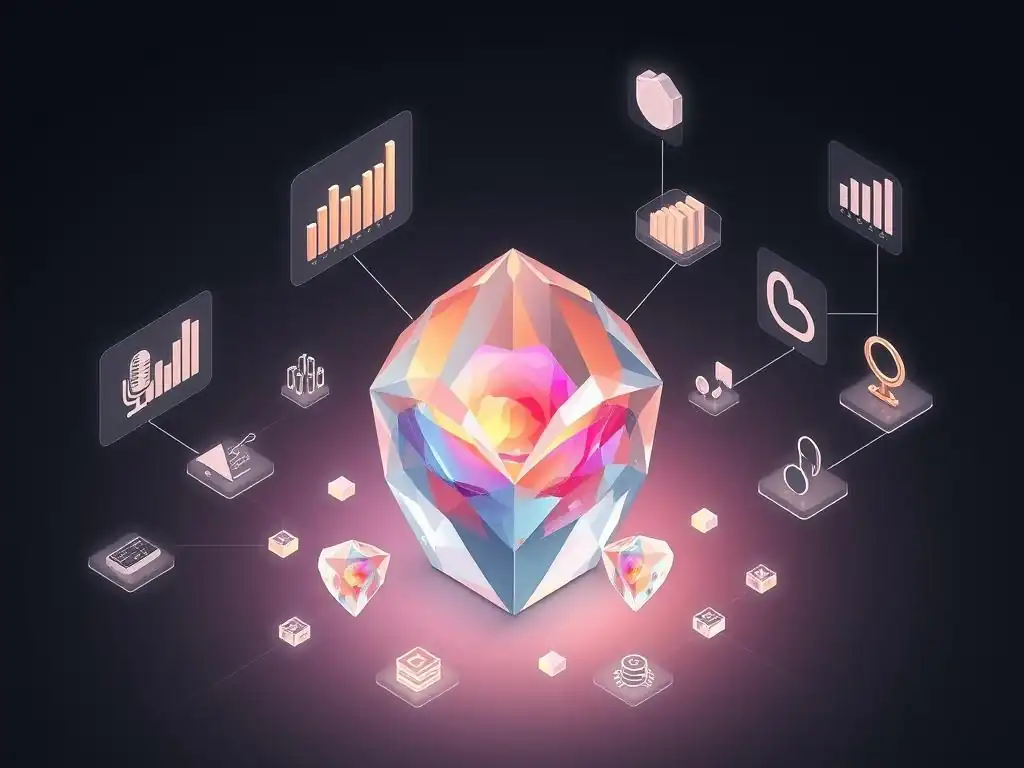
Music Royalties and Fractional NFT Ownership
Fractional NFTs are revolutionizing music royalty ownership and distribution, offering musicians and rights holders innovative monetization and fan engagement avenues. Traditionally, music royalties are complex to manage and distribute, often involving intermediaries and opaque systems. Fractionalizing music royalty NFTs allows artists to tokenize a portion of their future royalties, selling fractions to fans, investors, or even other musicians. This provides artists with upfront capital, while fractional token holders gain a share in the future revenue generated by the music.
For example, a band could fractionalize the NFT representing the royalties for their hit song. They could sell a percentage of these fractional tokens to fans, offering them a direct stake in the song's continued success. This not only generates revenue for the band but also strengthens fan loyalty by turning fans into active participants in the artist's financial ecosystem. Platforms like Royal.io are pioneering this space, enabling artists to directly connect with fans and share ownership in their music through fractional NFTs, creating a more direct and transparent royalty distribution model.
Fractionalizing Art and Collectibles for Wider Audience Engagement
Fractional NFTs are transforming the art and collectibles market by making high-value pieces accessible to a wider audience and fostering deeper engagement with art enthusiasts. Traditionally, owning a masterpiece painting or a rare collectible required significant wealth, limiting access to a select few. Fractionalization allows museums, galleries, or individual collectors to fractionalize ownership of valuable artworks and collectibles, offering fractions to a broader public. This democratizes art ownership, enabling more people to participate in the appreciation and potential value growth of fine art and rare collectibles.
Consider a museum that owns a historically significant digital artwork. By fractionalizing this NFT, they can offer fractions to museum members or the general public. This not only generates revenue for the museum but also fosters a stronger sense of community ownership and engagement with the artwork. Fractional ownership can also be linked to exclusive experiences, such as access to private viewings or voting rights on future acquisitions, further enhancing audience engagement and creating new revenue streams for art institutions and collectors.
Gaming Assets and In-Game Item Fractionalization
The gaming industry is ripe for fractional NFT adoption, particularly for in-game assets and virtual items. High-value in-game items, such as rare weapons, virtual land plots, or unique avatars, can be fractionalized, allowing gamers to own a piece of these valuable digital assets without needing to purchase them outright. This opens up new investment opportunities within the gaming metaverse and enhances the utility and tradability of in-game items.
Imagine a rare virtual sword in a popular metaverse game. Instead of being owned by a single player, this sword could be fractionalized into thousands of tokens. Gamers could purchase fractions of the sword, gaining shared ownership and potentially benefiting from its increasing value or utility within the game. Fractional ownership could also unlock shared usage rights or governance within gaming guilds or communities. Platforms are emerging that facilitate the fractionalization of in-game assets, creating new economies and ownership models within the gaming world and blurring the lines between gaming and investment.
Fractional NFTs for Virtual Real Estate and Metaverse Land
Virtual real estate and metaverse land are prime candidates for fractional NFT ownership, democratizing access to valuable digital land parcels and fostering collaborative metaverse development. Prime metaverse land in popular virtual worlds can command exorbitant prices, making individual ownership prohibitive for many. Fractional NFTs enable the division of these expensive land parcels into smaller, more affordable fractions, allowing individuals to own a piece of virtual real estate in desirable metaverse locations.
For instance, a large plot of land in a popular metaverse like Decentraland or The Sandbox could be fractionalized. Individuals could purchase fractions of this land, collectively owning a prime piece of virtual real estate. Fractional ownership can facilitate shared development of metaverse spaces. Groups of fractional land owners could pool resources and collectively decide on the development and utilization of their shared virtual land, creating collaborative metaverse projects and shared revenue streams, opening up new possibilities for metaverse investment and community-driven virtual world building.
Technical Aspects of Fractional NFT Creation and Trading
Smart Contracts and Fractional NFT Standards
The creation and functionality of fractional NFTs rely heavily on smart contracts and established NFT standards. Typically, fractional NFTs are created by locking the original, whole NFT within a smart contract. This smart contract acts as an escrow, securing the original NFT and preventing its separate transfer or sale while fractional ownership exists. Once the original NFT is locked, the smart contract mints a specified number of ERC-20 tokens (or equivalent standards on other blockchains like BEP-20 on Binance Smart Chain or FA2 on Tezos). These ERC-20 tokens are fungible and represent proportional ownership of the underlying NFT.
The ERC-20 standard, primarily used on Ethereum, is widely adopted for fractional NFTs due to its fungibility and broad compatibility with decentralized exchanges (DEXs) and wallets. While ERC-721 and ERC-1155 are standards for NFTs themselves, ERC-20 is designed for fungible tokens, making it ideal for representing fractions of an NFT.
Smart contracts governing fractional NFTs typically include functionalities for minting, burning (redeeming fractions for the original NFT under certain conditions), and transferring fractional tokens. Different platforms and projects may implement variations in their smart contract logic and fractionalization mechanisms, but the core principle of using smart contracts to lock the original NFT and mint fractional ERC-20 tokens remains consistent.
Platforms and Marketplaces for Trading Fractional NFTs
A growing ecosystem of platforms and marketplaces is emerging specifically designed for trading fractional NFTs. These platforms provide the infrastructure for users to buy, sell, and manage fractional ownership of NFTs. Some platforms focus exclusively on fractional NFTs, while others integrate fractional NFT trading into broader NFT marketplace offerings. Platforms like Fractional.art (now Tessera), Unicly, and NIFTEX were early pioneers in the fractional NFT space, offering tools for fractionalizing NFTs and marketplaces for trading the resulting fractional tokens.
Many general NFT marketplaces, such as OpenSea and Rarible, are also starting to support or integrate fractional NFT trading, either directly or through partnerships with dedicated fractionalization platforms. Decentralized Exchanges (DEXs) play a crucial role in fractional NFT trading, particularly for the ERC-20 fractional tokens. Platforms like Uniswap, SushiSwap, and Balancer enable permissionless trading of fractional tokens, providing liquidity and facilitating price discovery through automated market maker (AMM) mechanisms.
Choosing the right platform for trading fractional NFTs depends on factors like fees, supported NFTs, liquidity, security, and user interface. Investors should research different platforms and marketplaces to identify those best suited to their investment strategies and risk tolerance.
Security Considerations for Fractional NFT Investments
Security is paramount when investing in fractional NFTs, given the inherent risks associated with smart contracts and the nascent nature of the market. A primary security consideration is the smart contract governing the fractional NFT. It is crucial to ensure that the smart contract has been audited by reputable security firms to identify and mitigate potential vulnerabilities. Bugs or flaws in the smart contract code could potentially lead to loss of funds, unauthorized access, or manipulation of ownership. Investors should prioritize fractional NFT projects that utilize audited and well-vetted smart contracts.
Platform security is another critical aspect. Fractional NFT platforms and marketplaces handle user funds and sensitive data, making them potential targets for cyberattacks. Investors should choose platforms with robust security measures, including secure infrastructure, multi-factor authentication, and insurance coverage to protect against potential losses. Wallet security is also crucial.
Users should utilize secure cryptocurrency wallets, such as hardware wallets or reputable software wallets, to store their fractional NFTs and private keys. Practicing safe online habits, being wary of phishing scams, and regularly reviewing account security settings are essential for protecting fractional NFT investments. As the fractional NFT market matures, security best practices and risk mitigation strategies will continue to evolve and become increasingly important for investor protection.
Legal and Regulatory Landscape of Fractional NFTs
Legal Ownership and Rights Associated with Fractional NFTs
The legal ownership and rights associated with fractional NFTs are still evolving and lack clear-cut legal precedents in most jurisdictions. While fractional NFTs represent a share of ownership in the underlying digital asset, the precise legal interpretation of this ownership is complex and varies depending on local laws and regulations.
It is crucial to understand that owning a fractional NFT typically does not grant the same legal rights as owning the entire NFT. Fractional ownership often implies economic rights, such as the right to a proportional share of future sales or royalties, but may not necessarily confer full control or usage rights over the underlying asset.
Legal frameworks are still adapting to the concept of fractionalized digital assets. The legal status of fractional NFTs may be interpreted differently across jurisdictions, potentially falling under securities regulations, property laws, or new categories altogether. The terms and conditions of the smart contract governing the fractional NFT play a crucial role in defining the specific rights and obligations of fractional token holders.
Investors should carefully review the smart contract terms and seek legal advice if needed to fully understand the legal implications of owning fractional NFTs in their specific jurisdiction. As the fractional NFT space matures, legal clarity and standardization of ownership rights will be essential for fostering wider adoption and investor confidence.
Regulatory Considerations for Fractional NFT Platforms
Fractional NFT platforms and marketplaces face increasing regulatory scrutiny as the market grows and attracts wider investor participation. Regulatory bodies worldwide are grappling with how to classify and regulate NFTs and fractional NFTs, particularly in relation to securities laws and investor protection. Depending on the jurisdiction and the specific characteristics of the fractional NFT offerings, platforms may need to comply with regulations related to securities offerings, money transmission, or anti-money laundering (AML) and know-your-customer (KYC) compliance.
The regulatory landscape for fractional NFTs is fragmented and evolving. Some jurisdictions may view fractional NFTs as securities if they are deemed to represent an investment contract with an expectation of profit derived from the efforts of others. This could trigger securities registration requirements and compliance obligations for fractional NFT platforms. Platforms must navigate these evolving regulatory frameworks carefully, seeking legal counsel and implementing compliance measures to ensure they operate within legal boundaries. Regulatory clarity and international harmonization of rules are crucial for fostering a compliant and sustainable fractional NFT market, protecting investors, and preventing illicit activities.
The Future of Fractional NFTs: Trends and Predictions
The future of fractional NFTs is promising, with several key trends and predictions shaping its trajectory. Increased mainstream adoption is expected as awareness and understanding of fractional NFTs grow among both creators and investors. As platforms become more user-friendly and regulatory clarity emerges, fractional NFTs are likely to attract a broader audience beyond early adopters and crypto-native users. We can anticipate greater integration of fractional NFTs into various sectors of the creator economy, including music, art, gaming, metaverse, and potentially real-world assets.
Further innovation in fractionalization mechanisms and smart contract functionalities is also anticipated. We may see more sophisticated governance models for fractional NFT communities, enhanced utility for fractional tokens beyond simple ownership, and the development of more robust and secure fractional NFT infrastructure. Interoperability between different blockchain platforms and fractional NFT standards will become increasingly important for fostering a seamless and interconnected fractional NFT ecosystem.
The convergence of fractional NFTs with decentralized finance (DeFi) is another key trend. Fractional NFTs could be used as collateral in DeFi lending platforms, further enhancing their utility and liquidity. Overall, fractional NFTs are poised to play a significant role in the future of digital ownership, creator monetization, and the evolution of the open metaverse.
Risks and Challenges of Fractional NFTs
Liquidity Risks in Fractional NFT Markets
Despite aiming to improve liquidity, fractional NFT markets still face inherent liquidity risks. While fractionalization divides high-value NFTs into smaller, tradable units, the actual liquidity of specific fractional NFTs can vary significantly. Low trading volume for a particular fractional NFT collection or on a specific platform can make it challenging for investors to buy or sell tokens at desired prices, especially during periods of market volatility or downturns. Liquidity can be further fragmented across multiple platforms and decentralized exchanges, making it difficult to aggregate liquidity and ensure efficient trading.
The liquidity of fractional NFTs is heavily dependent on the demand and popularity of the underlying whole NFT and the fractional token itself. Fractions of less sought-after NFTs or projects with weak community support may experience low trading volume and limited liquidity, increasing the risk of slippage and difficulty in exiting positions. Investors should carefully assess the liquidity of fractional NFTs before investing, considering factors like trading volume, market capitalization of the fractional token, and the platform's liquidity depth. Concentrating investments in fractional NFTs with established liquidity and active trading communities can help mitigate liquidity risks.
Valuation Challenges of Fractionalized Assets
Valuing fractionalized assets presents significant challenges due to the inherent complexities of NFT valuation and the added layer of fractional ownership. Determining the "fair price" of a fractional NFT is not straightforward, as it is influenced by multiple factors, including the perceived value of the underlying whole NFT, market sentiment, scarcity, utility (if any), and the overall market conditions.
Traditional valuation metrics used for fungible tokens or equities may not be directly applicable to fractional NFTs. The illiquidity of some fractional NFT markets can further exacerbate valuation challenges, as limited trading data and price history make it difficult to establish reliable benchmarks.
Speculative bubbles and hype cycles can also distort valuations in the fractional NFT market. Prices of fractional NFTs can be driven by short-term trends and social media buzz, leading to inflated valuations that may not be sustainable in the long run. Accurately assessing the intrinsic value of a fractional NFT requires a deep understanding of the underlying asset, the fractionalization mechanism, market dynamics, and potential future utility. Investors should exercise caution and conduct thorough due diligence before investing in fractional NFTs, avoiding solely relying on hype-driven valuations and focusing on fundamental factors and long-term value potential.
Security Vulnerabilities in Smart Contracts
Smart contract security vulnerabilities pose a significant risk to fractional NFT investments. Fractional NFTs rely on smart contracts to govern ownership, fractionalization, and trading mechanisms. If these smart contracts contain bugs, flaws, or vulnerabilities, they can be exploited by malicious actors, potentially leading to loss of funds, unauthorized access, or manipulation of ownership rights. Smart contract vulnerabilities can arise from coding errors, design flaws, or unforeseen interactions with other smart contracts or protocols.
Even audited smart contracts are not entirely immune to vulnerabilities, as new exploits and attack vectors can emerge over time. The complexity of smart contracts and the evolving nature of blockchain technology make it challenging to guarantee complete security. Investors should be aware of the smart contract risks associated with fractional NFTs and prioritize projects that utilize audited smart contracts from reputable security firms. Regular monitoring of smart contract security audits, updates, and community discussions is crucial for staying informed about potential vulnerabilities and mitigating risks in fractional NFT investments.
Regulatory Uncertainty Surrounding Fractional NFTs
Regulatory uncertainty remains a significant challenge for the fractional NFT market. The legal and regulatory landscape for NFTs and fractional NFTs is still evolving, with varying interpretations and approaches across different jurisdictions. The lack of clear regulatory frameworks creates ambiguity and potential risks for both platforms and investors. Regulatory uncertainty can hinder institutional adoption, limit market growth, and create compliance challenges for fractional NFT projects.
Different jurisdictions may classify fractional NFTs differently, potentially categorizing them as securities, commodities, or novel asset classes. The application of existing securities laws or the development of new regulations specifically tailored to fractional NFTs is still under debate and development in many countries. Regulatory actions, such as enforcement actions or stricter compliance requirements, could impact the fractional NFT market, potentially affecting platform operations, investor access, and market valuations. Navigating this regulatory uncertainty requires careful monitoring of regulatory developments, seeking legal counsel, and adopting proactive compliance measures to mitigate potential risks and ensure long-term sustainability in the fractional NFT market.
Frequently Asked Questions
What are Fractional NFTs and why are they gaining popularity?
Fractional NFTs are NFTs that have been split into smaller, tradable tokens, allowing for shared ownership. They are popular because they democratize access to high-value assets, making them more affordable and liquid for investors.
How does fractionalization of NFTs benefit creators?
Fractionalization allows creators to monetize their digital assets more effectively. They can retain partial ownership while releasing a portion to the market, generating revenue and increasing the NFT's visibility.
What are some common Fractional NFTs investment strategies?
Common strategies include investing in fractions of blue-chip NFTs to gain exposure to valuable assets at a lower cost, diversifying a portfolio with various fractionalized assets, and trading fractions based on market trends and perceived value.
What are the risks associated with Fractional NFTs?
Risks include illiquidity of certain fractions, security vulnerabilities in the fractionalization platforms, and the regulatory uncertainty surrounding NFTs and fractional ownership.
How is the regulatory landscape affecting Fractional NFTs?
The regulatory landscape is still evolving, but securities laws may apply to fractional NFTs depending on their structure. Compliance and clarity are needed to ensure the long-term viability of this market.
Final Reflection: Democratizing Digital Ownership
The exploration of Fractional NFTs and their investment strategies reveals a potent shift in the digital landscape, where shared ownership is no longer a futuristic concept but a tangible reality. This article has illuminated the potential of fractionalization to unlock liquidity and democratize access to high-value creator assets, a concept that resonates deeply in today's increasingly digital and interconnected world.
The rise of Fractional NFTs is not merely a technological advancement; it represents a fundamental change in how we perceive and interact with digital ownership. This shift towards shared ownership has the power to empower creators, engage communities, and redefine the very notion of value in the digital age. The future of finance is decentralized, and Fractional NFTs are a crucial step in that direction.
This quote encapsulates the transformative potential of this technology, highlighting its capacity to disrupt traditional investment models and foster a more inclusive and equitable digital economy.
As we conclude this exploration, I invite you to consider the implications of Fractional NFTs in your own life. How can you leverage this innovative technology to support creators you admire, participate in shared ownership opportunities, or even fractionalize your own digital assets? The possibilities are vast and the future is being written now. Embrace the power of shared ownership and become an active participant in shaping the future of the digital economy.
Thank you for exploring the world of Fractional NFTs and discovering how they are transforming creator monetization. Now that you understand their potential, it's time to take action.
Here's how you can get involved:
- Start exploring platforms that enable fractional ownership of NFTs. Discover the possibilities of owning a part of something extraordinary.
- Contribute to the conversation by sharing this article with fellow creators and collectors who could benefit from fractionalization. Let’s spread awareness!
- Brainstorm innovative ways you could apply fractionalization—whether for art, music, or other valuable assets you own. What new opportunities could this open up for you?
What unique asset would you consider fractionalizing to unlock its value and promote wider community participation? Share your ideas in the comments below!
Leave a Reply