
Smart Contracts for Real Estate: Ensuring Trust and Transparency in Decentralized Deals

Welcome to Blockchain Trends, your compass in the ever-evolving world of decentralized technology. Beyond the hype, blockchain is reshaping industries, and we're here to explore its profound impact. Ever wondered how blockchain could revolutionize the real estate market? Dive into our latest article where we dissect the power of Blockchain real estate smart contracts and uncover how they're poised to usher in a new era of trust and transparency. Intrigued? Let's unlock the future of property transactions together.
- Understanding Blockchain Real Estate Smart Contracts: Enhancing Trust in Property Transactions
-
Frequently Asked Questions
- What are smart contracts in the context of real estate?
- How can blockchain real estate smart contracts improve transparency in property transactions?
- What are the potential benefits of using smart contracts for real estate transactions beyond increased transparency?
- What are some of the regulatory challenges surrounding the implementation of blockchain real estate smart contracts?
- How might blockchain real estate smart contracts impact the role of traditional intermediaries like real estate agents and title companies?
- Final Reflection: Embracing the Future of Real Estate
- Seize the Future: Begin Your Decentralized Real Estate Journey!
Understanding Blockchain Real Estate Smart Contracts: Enhancing Trust in Property Transactions
What Are Smart Contracts in Blockchain Real Estate?
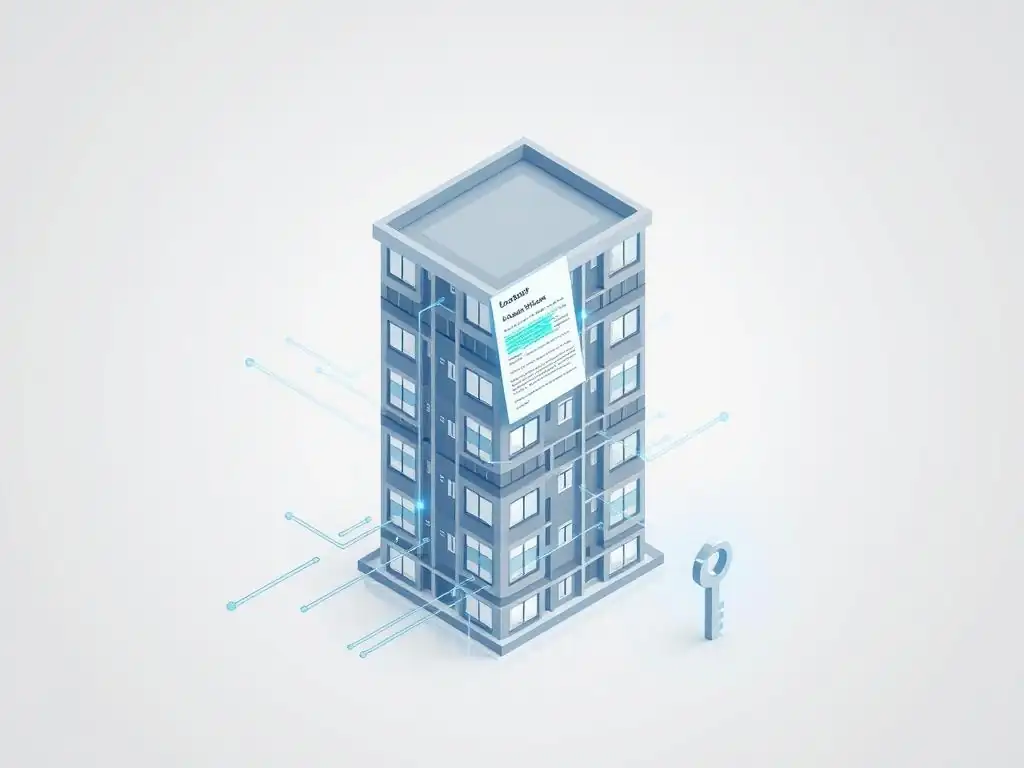
Smart contracts in the context of real estate are self-executing digital agreements where the terms of the contract are written directly into lines of code. Deployed on a blockchain, these blockchain real estate smart contracts operate automatically when predefined conditions are met, eliminating the need for traditional intermediaries to enforce terms. Unlike static paper contracts, these are dynamic, programmable agreements residing on a decentralized ledger, ensuring transparency and resistance to unauthorized changes. They encode the specific steps of a property transaction, such as payment triggers, ownership transfer logic, and critical deadlines.
The fundamental shift brought by applying smart contracts to real estate is the move towards a trustless system. Parties involved in a property transaction don't necessarily need to place explicit trust in each other; instead, they place trust in the immutable code and the underlying blockchain network's security.
For example, a smart contract can function as a digital escrow, securely holding funds until all conditions, like successful identity verification and digital title transfer on the blockchain, are fulfilled. Industry analysis suggests that automating key stages via smart contracts could potentially decrease the overall transaction time by an estimated 10-25% in ideal scenarios, depending heavily on the integration with legal frameworks and traditional systems.
Key Features of Decentralized Smart Contracts for Real Estate Deals
Decentralized smart contracts for real estate deals are characterized by several key features that significantly improve the transaction process. Automation is a primary benefit; once activated on the blockchain, the contract executes its programmed logic automatically based on verified triggers, such as a confirmed payment or the verification of a digital signature.
This minimizes delays and reduces the potential for human error or deliberate interference. Immutability is another crucial feature; once a smart contract is deployed and a transaction recorded on the blockchain, the data cannot be altered or deleted, providing a permanent, verifiable audit trail of the entire transaction history, which is essential for legal and historical records in property deals.
Transparency and security are also inherent to using blockchain real estate smart contracts. While sensitive personal data would be handled off-chain or through privacy-preserving methods, the existence of the contract and the record of its execution steps are typically visible to authorized parties on the distributed ledger, fostering transparency. Security is robust due to the cryptographic foundation of the blockchain, making unauthorized access or manipulation exceedingly difficult.
This combination of features contributes to increased efficiency. Pilot programs in various jurisdictions, such as a land registry project initiated in [Approximate Region, e.g., parts of Europe or the Middle East], have demonstrated the technical feasibility of speeding up the title verification and transfer process, potentially reducing the multi-week closing periods common in traditional real estate to a matter of days or even hours for the digital aspects.
How Blockchain Technology Revolutionizes Real Estate Agreements
Blockchain technology fundamentally reshapes the nature and execution of real estate agreements. By providing a secure, decentralized, and transparent ledger, it enables the creation of digital representations of physical property assets, often through tokenization. These tokens, representing full or fractional ownership, can be managed and transferred seamlessly using blockchain real estate smart contracts.
This innovation facilitates novel ownership structures, such as fractional ownership, allowing multiple investors to collectively own a single high-value property, thereby lowering the entry barrier to real estate investment. A smart contract can automatically manage complex processes like proportional distribution of rental income or the execution of a collective sale based on pre-agreed conditions.
Moreover, blockchain streamlines the entire lifecycle of a real estate agreement. Instead of relying on a chain of paper documents and manual verification steps involving numerous intermediaries, key transaction details and processes can be embedded directly into smart contracts. This significantly mitigates risks associated with lost paperwork, manual errors, and potential fraud.
The implementation of smart contracts for blockchain real estate establishes a single, immutable source of truth for the transaction, accessible and verifiable by all relevant, authorized parties simultaneously. Early economic models suggest that automating processes and reducing reliance on intermediaries through blockchain and smart contracts could potentially cut transaction costs by an estimated 1.5% to 3% of the property value, primarily by reducing legal, administrative, and escrow fees, though widespread cost savings depend on regulatory acceptance and infrastructure development.
Frequently Asked Questions
What are smart contracts in the context of real estate?
Smart contracts are self-executing digital agreements stored on a blockchain. They automatically enforce the terms of a real estate transaction when predefined conditions are met, ensuring transparency and trust.
How can blockchain real estate smart contracts improve transparency in property transactions?
By recording all transaction details on a decentralized ledger, smart contracts provide an immutable and auditable history. This reduces the risk of fraud and increases transparency for all parties involved.
What are the potential benefits of using smart contracts for real estate transactions beyond increased transparency?
Beyond transparency, smart contracts can streamline processes, reduce paperwork, and lower transaction costs. They also offer the potential for fractional ownership and easier cross-border real estate deals.
What are some of the regulatory challenges surrounding the implementation of blockchain real estate smart contracts?
Regulatory frameworks are still evolving, and there are concerns about legal enforceability, data privacy, and compliance with existing real estate laws. Standardization and clarification are needed for wider adoption.
How might blockchain real estate smart contracts impact the role of traditional intermediaries like real estate agents and title companies?
While smart contracts can automate some tasks, intermediaries may evolve to provide specialized services such as legal advice, due diligence, and property management. They can also help navigate the complexities of blockchain technology for clients.
Final Reflection: Embracing the Future of Real Estate
The exploration of blockchain real estate smart contracts reveals a potent force for change, and its potential to revolutionize property transactions is undeniable. Today, as trust in traditional institutions wavers, the promise of secure, transparent, and decentralized deals offered by smart contracts resonates more powerfully than ever. This technology isn't just a futuristic concept; it's a tangible solution to the inefficiencies and vulnerabilities plaguing the current real estate landscape.
The impact of blockchain on real estate extends far beyond mere automation; it's about fostering a new era of accessibility and equity. Witnessing the evolution of this technology, and its potential to democratize property ownership, fills me with a sense of hope for a more inclusive future. The future of real estate is not about buildings, but about the data that defines them.
This quote underscores the shift towards data-driven decision-making and the crucial role blockchain plays in securing and verifying that data.
As we stand at the cusp of this technological revolution, I urge you to consider the implications of blockchain real estate smart contracts in your own life. Reflect on how this technology can empower you, whether you're a buyer, seller, investor, or simply someone seeking greater transparency in property dealings. Embrace the potential of this decentralized future, and let us collectively build a real estate ecosystem founded on trust, efficiency, and equitable access for all.
Seize the Future: Begin Your Decentralized Real Estate Journey!
Thank you for exploring how smart contracts are transforming real estate on Blockchain Trends. Now that you understand their potential to increase trust and transparency, it's time to take action and become part of the future of property transactions.
Here are a few steps you can take right now:
- Research platforms involved in real estate tokenization. Start by exploring solutions offered by leading providers to understand how they facilitate tokenized property transactions.
- Look for online courses or workshops focused on smart contract development and real estate applications. Learning the basics will help you better understand the underlying technology.
- Share: Discuss the potential of smart contracts in real estate with friends, family, or colleagues. Start a conversation and explore the possibilities together!
What is one innovative application of smart contracts in real estate that excites you the most? Share your thoughts below!
Leave a Reply