
Web3 and the Semantic Web: Enhancing Data Meaning and Context

Welcome to Blockchain Trends, your compass in the rapidly evolving world of decentralized technology. Delve into the transformative potential of blockchain, far beyond the headlines of cryptocurrency. This month, we're exploring the exciting intersection of Web3 and the Semantic Web. But how can these technologies combine to revolutionize data meaning and context? Discover the fascinating possibilities in our main article, "Blockchain’s semantic web applications future," and unlock the next level of decentralized innovation. Intrigued? Read on to learn more about The Future of Blockchain!
Web3 and the Semantic Web: Enhancing Data Meaning and Context
- Introduction: The Synergistic Potential of Web3 and Semantic Web Technologies
- The Challenges of Traditional Web Data and the Role of Semantics
- Key Components of the Semantic Web for Web3 Applications
- Use Cases: Semantic Web Applications in Web3 in Action
- Benefits of Integrating Semantic Web with Web3
- The Future of Web3 and the Semantic Web: Challenges and Opportunities
- Conclusion: Realizing Semantic Web Applications in Web3
-
Frequently Asked Questions
- What is the relationship between Web3 and the Semantic Web?
- How can blockchain technology contribute to the Semantic Web?
- What are some potential applications of combining blockchain and the Semantic Web?
- What are the key challenges in integrating blockchain and Semantic Web technologies?
- How will the integration of blockchain and the Semantic Web shape the future of decentralized systems?
- Final Reflection: Embracing the Future of Meaningful Data
- Unleash the Power of Meaning: Your Web3 Journey Starts Now!
Introduction: The Synergistic Potential of Web3 and Semantic Web Technologies
Understanding Web3: A Decentralized and User-Centric Internet
Web3 represents the next evolutionary stage of the internet, moving beyond the static websites of Web1 and the interactive, platform-controlled applications of Web2. At its core, Web3 aims to create a decentralized, permissionless, and trustless online environment where users have greater control over their data and digital identities. Built upon foundational technologies like blockchain, peer-to-peer networks, and cryptography, Web3 enables novel applications such as decentralized finance (DeFi), non-fungible tokens (NFTs), and decentralized autonomous organizations (DAOs). This shift signifies a move from centralized servers and data silos towards distributed ledgers and user-owned data.
The growth of Web3, though still nascent compared to Web2, is accelerating. While precise user numbers are difficult to track across all decentralized applications, estimates suggest hundreds of millions of individuals globally have interacted with cryptocurrencies or blockchain-based platforms, indicating a growing interest in decentralized technologies. This expanding ecosystem generates vast amounts of data, from transaction records on public blockchains to metadata associated with digital assets and interactions within decentralized applications. However, much of this data, while transparent on-chain, lacks inherent context or standardized meaning, posing challenges for complex analysis and interoperability.
The Semantic Web: Adding Meaning to Data on the Internet
The Semantic Web, often referred to as Web 3.0 (though distinct from Web3), is an initiative led by World Wide Web inventor Tim Berners-Lee. Its goal is to transform the web into a global, linked database where data is not just presented for human consumption but is also understandable and processable by machines. This is achieved by adding semantic meaning to data using standardized formats and technologies. Key components include Resource Description Framework (RDF) for data modeling, SPARQL for querying, and ontologies (like OWL) for defining concepts and relationships within specific domains.
Unlike the current web, where machines primarily understand the structure of documents (HTML), the Semantic Web allows them to grasp the meaning of the data within those documents or datasets. For instance, a machine can understand that a specific entity is a "person," that this person "created" a certain "artwork," and that the artwork "is owned by" a particular "wallet address," based on predefined vocabularies and relationships.
While the vision of a fully semantic web hasn't been universally realized across the entire internet, its principles and technologies are widely applied in various domains, such as knowledge graphs used by search engines, scientific data integration, and enterprise data management.
Semantic Web Applications in Web3: A Powerful Combination
The convergence of Web3's decentralized infrastructure and the Semantic Web's data layer offers a powerful synergy. Web3 provides the robust, immutable, and decentralized foundation for data storage and ownership, while semantic technologies provide the crucial layer of meaning, context, and interoperability needed to make that decentralized data truly usable and intelligent. This combination addresses a core challenge in Web3: making the vast amount of on-chain and off-chain decentralized data understandable and linkable, not just within specific dApps but across the entire decentralized ecosystem.
Exploring Blockchain’s semantic web applications future reveals a path towards a more intelligent and interconnected decentralized web. By applying semantic principles, data associated with blockchain transactions, smart contracts, decentralized identities, and digital assets can be enriched with context, enabling sophisticated querying, analysis, and automation that is currently difficult or impossible. This integration is essential for unlocking the full potential of Web3, moving beyond simple transactions and asset transfers to build complex, data-driven decentralized applications that can reason about information and interact autonomously.
The Challenges of Traditional Web Data and the Role of Semantics
Limitations of Web2 Data Structures: Silos and Lack of Interoperability
Traditional Web2 applications often rely on centralized databases with rigid, proprietary data schemas. This approach leads to significant data silos, where information is locked within specific applications or organizations. Integrating data across these disparate systems is notoriously difficult and expensive. Estimates suggest that enterprises spend billions of dollars annually on data integration efforts, often involving complex ETL (Extract, Transform, Load) processes tailored to specific data formats and structures. The lack of standardized ways to describe data meaning makes it hard for machines to automatically understand and combine information from different sources.
Furthermore, Web2 data often lacks persistent, global identifiers for entities (people, places, things), making it challenging to link related information across different websites or databases. While APIs exist, they typically expose data in formats tied to the specific application's internal structure, requiring significant effort from developers to map and integrate. This fundamental limitation hinders the ability to build applications that can seamlessly access, understand, and combine data from multiple sources on the web, restricting the potential for truly interconnected and intelligent systems.
The Semantic Web's Approach to Data Integration: Ontologies and Linked Data
The Semantic Web addresses these limitations through a fundamentally different approach centered on describing data meaning and relationships. Instead of relying on rigid, centralized schemas, it uses flexible graph-based data models like RDF, where data is represented as triples (subject-predicate-object). This allows for incremental data description and integration from diverse sources. Ontologies, which are formal specifications of concepts and their relationships within a domain (e.g., "Person," "Organization," "hasEmployee," "locatedIn"), provide shared vocabularies that enable different parties to describe data using common terms, facilitating understanding and interoperability.
Linked Data principles build upon RDF, advocating for publishing structured data on the web and linking it to other data sources. By using URIs (Uniform Resource Identifiers) to name things and relationships, and providing RDF data when those URIs are dereferenced, Linked Data creates a global graph of interconnected information. Projects like DBpedia (extracting structured data from Wikipedia) and Schema.org (a vocabulary for marking up web pages) are prominent examples of Linked Data in action, demonstrating how data from different sources can be linked and queried collectively, creating a web of data rather than just a web of documents.
How Semantic Technologies Address Web3's Data Challenges
Web3, while decentralized, faces similar data challenges, albeit in a new context. Data exists across numerous blockchains, layer-2 solutions, decentralized storage systems, and off-chain oracles. Data formats and smart contract interfaces vary significantly between protocols and applications. Without a semantic layer, understanding the meaning of data – such as a specific byte sequence representing a complex financial instrument in one DeFi protocol versus another – requires deep, application-specific knowledge. This fragmentation hinders the development of interoperable dApps, cross-chain communication, and sophisticated data analysis tools needed for the future of Blockchain’s semantic web applications future.
Semantic technologies offer a solution by providing a standardized framework for describing and linking decentralized data. By using RDF to model data, ontologies to define common vocabularies for Web3 concepts (like "Token," "Liquidity Pool," "DAO Proposal," "Verifiable Credential"), and Linked Data principles to connect data across different decentralized sources, developers can create a layer of meaningful, interoperable data on top of the decentralized infrastructure. This allows machines and applications to understand the context and relationships of decentralized data, facilitating integration, analysis, and automation that transcends individual protocols or chains.
Key Components of the Semantic Web for Web3 Applications
Resource Description Framework (RDF): Standardizing Data Representation in Web3
The Resource Description Framework (RDF) serves as the fundamental data model for the Semantic Web, providing a flexible and standardized way to represent information as graphs. At its core, RDF describes resources using triples, consisting of a subject, a predicate, and an object. For example, the statement "Wallet 0x123 owns NFT #456" can be represented as a triple: (Subject: 0x123), (Predicate: owns), (Object: NFT #456). Both subjects and predicates are typically identified by URIs, providing a global scope for naming. Objects can be URIs or literal values (like strings or numbers).
In the context of Web3, RDF can be used to model a vast array of decentralized data, from token ownership and transaction details to smart contract metadata and decentralized identity claims. Its graph-based nature is particularly well-suited for representing complex relationships inherent in decentralized systems, such as the interactions between users, smart contracts, DAOs, and digital assets. Unlike the rigid table structures of traditional databases, RDF graphs can be easily extended by adding new triples, making them adaptable to the evolving landscape of Web3 applications and crucial for enabling Blockchain’s semantic web applications future.
SPARQL: Querying and Retrieving Semantic Data from Decentralized Sources
SPARQL (SPARQL Protocol and RDF Query Language) is the standard query language for RDF data. Just as SQL is used to query relational databases, SPARQL allows users and applications to retrieve, manipulate, and update data stored in RDF format. SPARQL queries can traverse the graph structure of RDF data, allowing for complex pattern matching and retrieval of interconnected information across potentially distributed data sources. This is significantly more powerful than simple key-value lookups or basic filters often available for on-chain data.
For Web3, SPARQL provides a powerful mechanism for querying the semantic layer built on top of decentralized data. Imagine querying for "all NFTs owned by wallets that are members of a specific DAO and have participated in a particular DeFi protocol." Such a query, spanning multiple types of decentralized data and relationships, is challenging with current Web3 data access methods but becomes feasible with SPARQL operating over a semantic graph. This capability is vital for building sophisticated analytics tools, dashboards, and intelligent agents that can understand and interact with the decentralized web based on the meaning of the data.
Ontologies: Defining Concepts and Relationships in Web3 Data
Ontologies are formal, explicit specifications of shared conceptualizations. In simpler terms, they are structured vocabularies that define the types of entities (classes) that exist in a domain, their properties (attributes), and the relationships between them. Ontologies provide a common understanding and vocabulary for describing data within a specific area, enabling interoperability between different applications and systems that use the same ontology. Web Ontology Language (OWL) is a common standard for building ontologies on the Semantic Web.
In Web3, ontologies can define the concepts relevant to specific domains like DeFi (e.g., "Yield Farm," "Liquidity Pool Token," "Borrowing Protocol"), supply chain (e.g., "Product Batch," "Manufacturing Event," "Shipper"), or decentralized identity (e.g., "Verifiable Credential," "Claim Type," "Issuer"). By using shared ontologies, different dApps and services can describe their data in a consistent manner, making it understandable and linkable across the ecosystem. This shared understanding is fundamental for realizing the promise of interoperability and unlocking complex Blockchain’s semantic web applications future.
Semantic Reasoning: Inferring New Knowledge from Existing Web3 Data
Semantic reasoning is the process of inferring new facts or knowledge from existing data based on the rules and definitions provided in an ontology. For example, if an ontology defines that "every member of a DAO is also a holder of the DAO's governance token," and the data states that "Alice is a member of DAO X," a semantic reasoner can infer that "Alice holds DAO X's governance token," even if that fact wasn't explicitly stated in the raw data. This inference capability adds a layer of intelligence to the data, allowing applications to derive implicit information.
For Web3 applications, semantic reasoning can enable smarter decision-making and automation. It can be used to verify compliance with complex rules defined in ontologies (e.g., checking if a set of credentials meets the requirements for accessing a service), categorize data based on its properties (e.g., classifying a smart contract based on its functions), or detect inconsistencies in decentralized data. This ability to automatically derive new knowledge from existing semantic data is a key enabler for building truly intelligent and autonomous agents within the decentralized web, shaping the potential of Blockchain’s semantic web applications future.
Use Cases: Semantic Web Applications in Web3 in Action
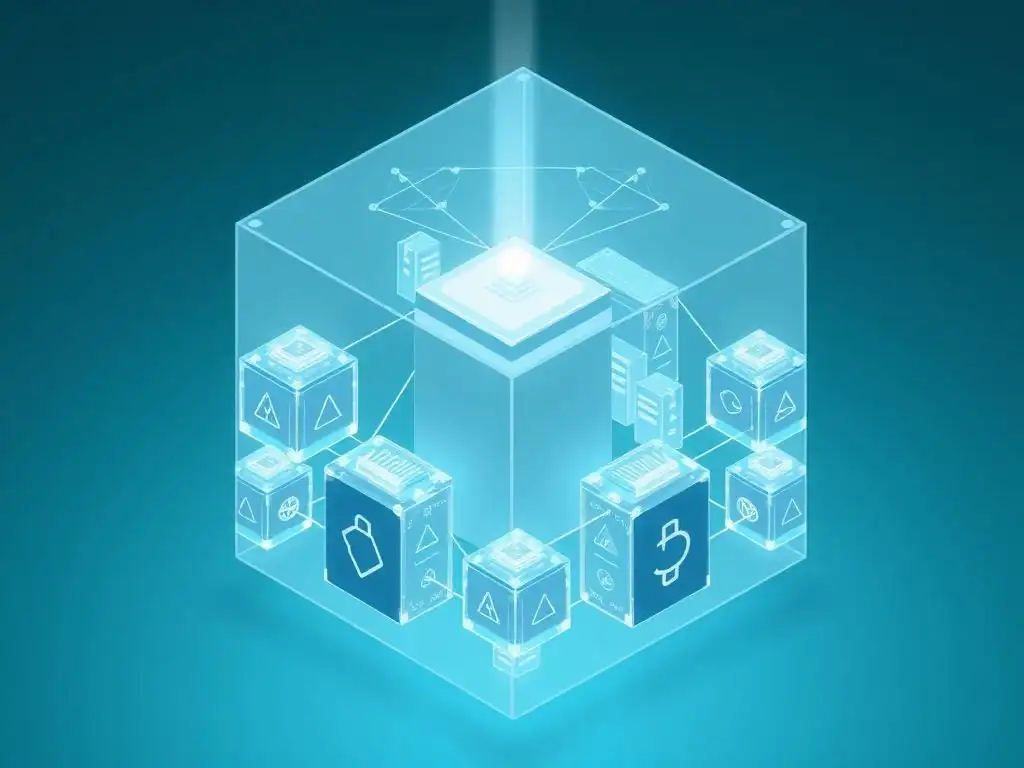
Semantic DeFi: Enhancing Financial Data Analysis and Transparency
Decentralized Finance (DeFi) is a prime candidate for semantic enhancement. While blockchain provides transparency of transactions, understanding the complex interactions between various protocols, smart contracts, and assets remains challenging. Semantic DeFi aims to add a layer of meaning to financial data and smart contracts, making the ecosystem more understandable, auditable, and less prone to errors or exploits stemming from misinterpretation. The complexity of DeFi protocols, with hundreds of millions or even billions of dollars locked in smart contracts, underscores the need for enhanced clarity and analysis.
Improving Smart Contract Interpretability with Semantic Annotations
Smart contracts are the backbone of DeFi, but their code can be opaque and difficult for both humans and machines to fully interpret without extensive analysis. Adding semantic annotations to smart contract code and interfaces can describe the intended function of different parts of the contract (e.g., "this function adds liquidity," "this variable represents total value locked").
Using standardized vocabularies, these annotations can provide machine-readable context. For instance, extending vocabularies like Schema.org with financial concepts could allow smart contract functions to be described in a way that financial analysis tools can automatically understand, reducing the risk of misinterpreting contract behavior and potential vulnerabilities.
Semantic Analysis for Risk Management in Decentralized Finance
Analyzing risk in DeFi is complex due to the interconnected nature of protocols and the lack of standardized data representations across platforms. Semantic technologies can help by building knowledge graphs that integrate on-chain transaction data, smart contract semantics, oracle data feeds, and off-chain market information.
By representing these diverse data sources in a unified semantic model, sophisticated queries and reasoning can be performed to identify potential systemic risks, analyze dependencies between protocols, detect anomalous behavior indicative of exploits, or assess the health of liquidity pools. This semantic approach enables more robust and automated risk assessment tools, which are desperately needed given the significant losses (sometimes hundreds of millions of dollars in a single incident) that have occurred due to the complexity and interconnectedness of the DeFi ecosystem.
Semantic Supply Chain Management: Tracking Products with Enhanced Data Context
Blockchain is increasingly used in supply chain management to provide an immutable ledger for tracking goods and ensuring provenance. However, raw blockchain entries often lack the rich context needed for comprehensive supply chain visibility. Integrating semantic technologies with blockchain enables the creation of detailed, context-rich digital twins of physical products and supply chain events, improving transparency, authenticity verification, and efficiency.
Using Blockchain and Semantics for Provenance and Authenticity
Blockchain can record key events in a product's lifecycle, such as manufacturing, shipping, and ownership transfers. By adding a semantic layer, this on-chain data can be linked to detailed information about the product itself (materials used, certifications, batch number), the entities involved (manufacturer, transporter, retailer, identified by decentralized identities), and the conditions of transit (temperature readings from IoT sensors, linked via URIs).
This combined semantic data provides a comprehensive, verifiable history of the product. For example, tracking pharmaceuticals or luxury goods using this method can significantly combat the global issue of counterfeiting, which costs the world economy estimated hundreds of billions to over a trillion dollars annually, by allowing consumers and businesses to verify authenticity through rich, linked data.
Enhancing Supply Chain Visibility through Semantic Data Integration
Modern supply chains are vast and complex networks involving numerous participants and systems (ERP, WMS, IoT platforms, regulatory databases). Integrating data from these disparate sources is a major challenge. Semantic technologies, using shared ontologies for supply chain concepts, can integrate data from these varied systems and blockchain records into a unified knowledge graph.
This semantic graph provides end-to-end visibility, allowing stakeholders to query and analyze the entire supply chain history with rich context. For instance, identifying the source of a contaminated product batch becomes much faster and more precise when all relevant data – manufacturing details, logistics records, ingredient provenance – are linked and semantically described, leading to significant efficiency gains and improved recall processes.
Semantic Identity Management: Secure and Interoperable Digital Identities
Decentralized identity solutions, often built on blockchain, aim to give individuals and organizations control over their digital identities and credentials (Self-Sovereign Identity - SSI). Blockchain provides the trust anchor for verifying claims, but the claims themselves (e.g., "I have a degree from University X") can be represented in various formats. Adding a semantic layer makes these decentralized identity claims and credentials more meaningful and interoperable across different services and applications.
Leveraging Blockchain for Decentralized Identity Solutions
Blockchain serves as a public or permissioned ledger to anchor decentralized identifiers (DIDs) and verifiable credentials (VCs). Instead of relying on centralized identity providers, users control their DIDs and selectively present VCs issued by trusted entities (e.g., a university issuing a degree credential). This approach significantly reduces the risk of large-scale data breaches associated with centralized identity databases, which expose millions or billions of records annually. Blockchain ensures the integrity and tamper-evidence of the credential issuance and revocation status.
Adding Semantic Layers to Digital Identities for Enhanced Context
While blockchain provides the decentralized infrastructure for identity, semantic technologies enrich the credentials with meaning. A verifiable credential stating "degree: Bachelor of Science" can be semantically annotated to link "Bachelor of Science" to a specific concept in an educational ontology.
This allows automated systems to understand the specific level, field, and awarding institution of the degree without needing human interpretation or application-specific parsers. This semantic richness enables greater interoperability, allowing users to seamlessly use their decentralized identity and credentials across different Web3 and even Web2 services that understand the relevant ontologies, paving the way for more sophisticated Blockchain’s semantic web applications future in areas requiring identity verification.
Semantic Data Governance: Ensuring Data Quality and Compliance in Web3
Ensuring data quality, integrity, and compliance with regulations (like GDPR or CCPA) in decentralized systems is a significant challenge. Data can originate from various sources, and enforcing universal standards or applying complex access rules across distributed ledgers is difficult. Semantic technologies offer tools to define data governance policies and verify compliance in a machine-readable way.
Ontologies can be used to formally define data quality rules (e.g., "a product ID must follow format X") and compliance requirements (e.g., "personally identifiable information must be encrypted or pseudonymized"). By modeling data using these ontologies, semantic reasoners can automatically check if the data stored or shared within a Web3 application adheres to the defined policies. This is particularly important for regulated industries operating on decentralized infrastructure.
While blockchain ensures data immutability, semantics can ensure data meaning and quality are maintained and that access/usage complies with rules defined outside the core protocol. This capability is essential for enterprise adoption of Web3, where regulatory compliance and data governance are non-negotiable, and non-compliance can result in significant fines, potentially up to 4% of global annual revenue under regulations like GDPR.
Benefits of Integrating Semantic Web with Web3
Enhanced Data Interoperability and Integration Across Blockchain Networks
One of the primary benefits of integrating Semantic Web technologies with Web3 is the significant enhancement of data interoperability. By providing a common framework (RDF, ontologies) for describing and linking data, semantics acts as a universal translator between different blockchain protocols, decentralized applications, and even traditional data sources.
This allows data from various chains and platforms – whether it's token metadata from Ethereum, supply chain events from VeChain, or identity claims from a Hyperledger network – to be understood and integrated seamlessly. This level of interoperability is crucial for building truly composable and interconnected decentralized ecosystems, realizing a key aspect of Blockchain’s semantic web applications future.
Improved Data Discovery and Searchability within Decentralized Systems
Finding relevant data within the vast and growing landscape of decentralized systems can be challenging. Unlike centralized databases with defined schemas, decentralized data is distributed and often lacks a unified structure or indexing mechanism based on meaning. Semantic technologies improve data discovery by making decentralized data machine-readable and context-rich.
Users and applications can query the semantic layer using SPARQL to find data based on its meaning and relationships, rather than just keywords or identifiers. This enables more powerful search capabilities, allowing users to discover assets, services, or information within Web3 based on sophisticated criteria related to their properties and context.
Increased Trust and Transparency through Semantic Data Validation
While blockchain provides trust in the integrity of transactions, semantic technologies enhance trust in the meaning and quality of the data itself. By defining clear ontologies and rules, semantic reasoners can automatically validate data against expected structures and constraints. For instance, a semantic layer can verify if a verifiable credential conforms to the defined structure for a "University Degree" or if supply chain data contains all required provenance information.
This automated validation increases confidence in the data's accuracy and completeness. Furthermore, the transparency provided by linked, semantically described data allows users and auditors to better understand the context and origin of information within decentralized systems, fostering greater accountability, a critical feature for the future of Blockchain’s semantic web applications future.
Enabling More Intelligent and Automated Web3 Applications
Perhaps the most transformative benefit is the ability to build more intelligent and automated Web3 applications. Access to machine-readable, context-rich data enables dApps and autonomous agents to understand complex information, make informed decisions, and perform sophisticated tasks without human intervention.
From automated risk management systems in DeFi that can react to market conditions based on semantically analyzed data, to supply chain agents that automatically trigger actions based on the semantic state of goods, the integration of semantics unlocks a new level of functionality and intelligence in decentralized systems. This enhanced capability is fundamental to realizing the full potential of the decentralized web and driving the future of Blockchain’s semantic web applications future.
The Future of Web3 and the Semantic Web: Challenges and Opportunities
Overcoming Scalability Issues in Semantic Web Technologies for Web3
One significant challenge for integrating semantic technologies with Web3 is scalability. While RDF and SPARQL are flexible, processing and querying large-scale knowledge graphs, especially with complex reasoning tasks, can be computationally intensive. The volume of data on major blockchains is already in the terabytes, and adding a semantic layer on top of this, plus integrating off-chain data, could create massive datasets.
Scaling semantic technologies to handle the potentially billions of entities and relationships in a global decentralized knowledge graph requires efficient graph databases, distributed querying techniques, and optimized reasoning engines. Research and development in scalable semantic technologies are crucial for the widespread adoption of Blockchain’s semantic web applications future.
Addressing Data Privacy Concerns in Semantic Web3 Applications
While Web3 and the Semantic Web both aim for greater transparency and data sharing, privacy remains a critical concern, especially when dealing with personal or sensitive information. Linking data extensively through semantic graphs could inadvertently expose relationships or infer sensitive facts if not handled carefully. Simply putting all semantically described data on a public blockchain is not feasible for many use cases.
Future developments must integrate privacy-preserving techniques, such as zero-knowledge proofs, selective disclosure of verifiable credentials, and access control mechanisms at the semantic layer. Balancing the desire for data linkage and interoperability with the necessity of privacy and compliance with regulations is a key challenge for Blockchain’s semantic web applications future.
Standardizing Semantic Data Formats for Wider Adoption in the Web3 Ecosystem
For semantic integration to be truly effective across Web3, there needs to be greater standardization of ontologies and data vocabularies within different domains (DeFi, gaming, social, identity, etc.). Currently, various projects might use different terms or structures to describe similar concepts, hindering interoperability. A concerted effort from the Web3 community to develop and adopt common, well-defined ontologies is essential.
Initiatives like schema.org provide a model for collaborative vocabulary development. Without widely accepted standards, the semantic layer could become as fragmented as the underlying data it seeks to unify, slowing down the progress towards a truly interoperable Blockchain’s semantic web applications future.
AI and Semantic Web Integration within Web3
A major opportunity lies in the synergy between Artificial Intelligence (AI) and the semantic web within Web3. AI models often require large volumes of structured, high-quality data for training and effective operation. The semantic web provides exactly this: machine-readable data rich in context and relationships, organized according to formal ontologies.
By leveraging semantic graphs, AI agents in Web3 can gain a deeper understanding of the decentralized environment, enabling more sophisticated automation, analysis, and interaction. Conversely, AI techniques, particularly machine learning and natural language processing, can assist in building and maintaining complex ontologies and automatically extracting semantic data from unstructured or semi-structured sources. This integration of AI and semantics is poised to unlock unprecedented levels of intelligence and automation in decentralized applications, significantly shaping the landscape of Blockchain’s semantic web applications future.
Conclusion: Realizing Semantic Web Applications in Web3
Embracing Semantic Technologies for a More Meaningful and Intelligent Web3
The path towards a truly decentralized, user-centric, and intelligent internet requires more than just robust infrastructure; it requires data that is understandable and usable by machines. Integrating Semantic Web technologies like RDF, SPARQL, and ontologies into the Web3 stack provides the crucial layer of meaning and context needed to unlock the full potential of decentralized systems. By transforming raw, siloed data on blockchains and decentralized storage into a rich, interconnected graph of knowledge, we can build applications that are not only decentralized but also deeply intelligent, interoperable, and capable of sophisticated reasoning.
The Transformative Impact of Semantics on the Future of Decentralized Systems
The transformative impact of semantics on the future of decentralized systems cannot be overstated. It is the key to moving beyond basic asset transfers and simple dApps towards complex, data-driven ecosystems where applications can understand and interact with information across different protocols and domains.
From enabling sophisticated risk management in DeFi and creating transparent, verifiable supply chains to powering self-sovereign identity systems with rich, interoperable credentials and facilitating intelligent data governance, the semantic web provides the tools needed to make decentralized data truly valuable and actionable. This integration is fundamental to realizing the vision of Blockchain’s semantic web applications future – a future where the web is not just decentralized, but also inherently meaningful and intelligent.
Call to Action
Explore how semantic standards and technologies can be applied to your Web3 projects. Investigate existing ontologies in your domain or contribute to developing new ones. Experiment with tools for modeling and querying decentralized data using RDF and SPARQL. Engaging with the semantic layer is essential for building the next generation of interoperable, intelligent, and user-centric decentralized applications.
Frequently Asked Questions
What is the relationship between Web3 and the Semantic Web?
Web3 aims to create a more decentralized and user-centric internet, while the Semantic Web focuses on making data on the web more understandable and usable by machines. The Semantic Web principles can significantly enhance Web3 by improving data interoperability and context.
How can blockchain technology contribute to the Semantic Web?
Blockchain can ensure the integrity and provenance of semantic data. By storing metadata and ontologies on a blockchain, you can create a trustworthy and auditable source of semantic information.
What are some potential applications of combining blockchain and the Semantic Web?
Applications include supply chain management, where provenance data is linked to products via blockchain and enhanced with semantic descriptions, enabling better tracking and verification. Another area is identity management, using self-sovereign identity solutions.
What are the key challenges in integrating blockchain and Semantic Web technologies?
Scalability is a major hurdle, as blockchain networks can be slow and expensive for storing large volumes of semantic data. Interoperability between different blockchain platforms and semantic web standards also presents a challenge.
How will the integration of blockchain and the Semantic Web shape the future of decentralized systems?
It will enable more intelligent and autonomous decentralized applications, allowing for better data-driven decision-making and improved user experiences. This integration will also foster a more transparent and trustworthy ecosystem.
Final Reflection: Embracing the Future of Meaningful Data
The journey through Web3 and the Semantic Web reveals a powerful convergence, highlighting the transformative potential of blockchain technology to unlock deeper meaning and context within our digital world. This isn't just about decentralized finance or NFTs; it's about building a future where data is not only secure and transparent but also intelligently interconnected and readily understandable. The implications for industries ranging from healthcare to supply chain management are profound, promising a new era of efficiency, accuracy, and innovation.
The ongoing evolution of the Semantic Web, fueled by the decentralized nature of blockchain, is reshaping how we interact with information. This shift towards a more intuitive and interconnected web resonates deeply, reminding us that technology should serve to enhance human understanding and collaboration. The goal of the Web is to serve humanity. We build it now so that those who come to it later will be able to use it.
- Tim Berners-Lee. This quote encapsulates the very essence of our exploration, urging us to consider the long-term impact of our technological advancements and to prioritize the creation of a web that is truly accessible and beneficial to all.
As we stand on the cusp of this new digital frontier, let us embrace the possibilities that Web3 and the Semantic Web offer. Consider how you can contribute to building a more meaningful and interconnected future. Explore the potential of blockchain's semantic web applications in your own field, and let's collectively shape a world where data empowers us to make more informed decisions, foster deeper connections, and unlock unprecedented levels of innovation. The future of data, and indeed the future of the web, is in our hands.
Unleash the Power of Meaning: Your Web3 Journey Starts Now!
Thank you for exploring the world of Web3 and the Semantic Web! We hope this article helped clarify how these technologies can transform data by adding deeper meaning and context. Now, it's time to turn that knowledge into action.
Here are some ways you can further engage with this exciting field:
- Start experimenting: Create a simple Semantic Web ontology by mapping key concepts from your area of expertise to established vocabularies such as schema.org.
- Share this article: Spread the word within your network and ignite discussions about the potential of semantic technologies in Web3.
- Get involved: Look into smaller Web3 projects that focus on enhancing data context and semantic understanding to help shape the future of the internet.
Are you ready to harness the potential of a more meaningful Web3? What's one small step you'll take this week to explore how the Semantic Web can integrate with blockchain technology?
Leave a Reply