
Understanding Layer 2 Solutions: Future Enhancements for Blockchain Platforms

Welcome to Blockchain Trends, your compass in the ever-evolving world of decentralized technologies. Delve into the transformative potential of blockchain beyond the hype, from groundbreaking DeFi applications to enterprise-level solutions. Today, we're focusing on a critical advancement: Layer 2 scaling solutions. But what exactly are they, and how will they shape the future of blockchain platforms? Uncover the answers as we explore their intricacies and impact, starting with a deep dive into their role in enhancing blockchain scalability.
Understanding Layer 2 Solutions: Future Enhancements for Blockchain Platforms
- Introduction to Layer 2 Scaling Solutions for Blockchain
- Types of Layer 2 Scaling Solutions: A Detailed Overview
-
Benefits of Implementing Layer 2 Solutions for Blockchain Platforms
- Enhanced Transaction Throughput: Processing More Transactions Per Second (TPS)
- Reduced Transaction Fees: Making Blockchain More Affordable
- Improved User Experience: Faster Confirmations and Easier Interactions
- Increased Scalability: Preparing Blockchain for Mass Adoption
- Security Considerations for Layer 2 Implementations
- The Future of Layer 2 Scaling Technologies
- Layer 2 Solutions and Blockchain Adoption: The Path Forward
-
Frequently Asked Questions
- What are Layer 2 scaling solutions and why are they important for blockchain?
- How do Layer 2 solutions differ from Layer 1 solutions in addressing blockchain scalability?
- What are some common examples of Layer 2 scaling solutions?
- What are the potential benefits of implementing Layer 2 solutions for businesses?
- What are some potential risks or challenges associated with Layer 2 scaling solutions?
- Final Reflection: Scaling Beyond Limits
- Ignite Your Blockchain Journey!
Introduction to Layer 2 Scaling Solutions for Blockchain
The Blockchain Scalability Problem: A Bottleneck for Adoption
Blockchain technology, since its inception with Bitcoin, has promised decentralization, security, and transparency. However, a significant challenge hindering its widespread adoption is scalability. Traditional blockchain architectures, often referred to as Layer 1, struggle to process a high volume of transactions efficiently.
For instance, Bitcoin's network can handle approximately 7 transactions per second (TPS), while Ethereum's original architecture managed around 15 TPS. These figures pale in comparison to centralized payment processors like Visa, which can handle thousands of transactions per second. This inherent limitation creates network congestion, leading to slower transaction times and increased transaction fees, making blockchain platforms less practical for mainstream applications requiring high throughput.
The scalability bottleneck directly impacts user experience and the economic viability of blockchain applications. As network usage increases, transaction fees can skyrocket, sometimes making microtransactions or everyday use prohibitively expensive. This issue is particularly pronounced during periods of high network activity, such as during the peak of DeFi (Decentralized Finance) activity or NFT (Non-Fungible Token) minting events.
Without effective scaling solutions, blockchain technology risks remaining niche, unable to fulfill its potential as a foundational technology for a wide range of industries and use cases. Addressing this scalability challenge is therefore paramount to unlocking the true potential of blockchain and facilitating its mass adoption.
What are Layer 2 Solutions? Defining Off-Chain Scaling
Layer 2 solutions represent a suite of protocols and techniques built on top of an existing blockchain (Layer 1) to enhance its scalability and efficiency. Instead of modifying the base Layer 1 protocol itself, Layer 2 solutions operate "off-chain," meaning they handle transactions outside of the main blockchain network.
This off-chain processing significantly reduces the burden on the main chain, allowing it to focus on security and decentralization while Layer 2 handles the bulk of transaction processing. By abstracting transaction execution and computation away from the Layer 1, Layer 2 scaling solutions aim to achieve significantly higher transaction throughput and lower fees without compromising the security of the underlying blockchain.
These solutions are designed to inherit the security of the Layer 1 blockchain. Transactions processed on Layer 2 are ultimately anchored or settled on the Layer 1 chain, ensuring that the security guarantees of the main blockchain are maintained. Different Layer 2 approaches achieve this anchoring in various ways, but the fundamental principle remains the same: leveraging the security of Layer 1 while optimizing transaction processing off-chain. This separation of concerns—security on Layer 1 and scalability on Layer 2—is a key architectural principle behind Layer 2 scaling solutions and their effectiveness in addressing the blockchain scalability problem.
Why Layer 2 Matters: Improving Transaction Speed and Reducing Fees
The primary drivers for developing and implementing Layer 2 solutions are to dramatically improve transaction speed and reduce transaction fees on blockchain platforms. By processing transactions off the main chain, Layer 2 solutions can achieve significantly faster confirmation times. For users, this translates to quicker transaction finality, making blockchain applications more responsive and user-friendly. Imagine waiting minutes or even hours for a simple transaction to confirm on a congested Layer 1 network; Layer 2 solutions aim to reduce this wait time to seconds or even sub-seconds, approaching the speed expected in traditional centralized systems.
Furthermore, Layer 2 solutions are crucial for lowering transaction costs. High transaction fees on Layer 1 blockchains can be a major barrier to entry, particularly for users engaging in frequent or low-value transactions. By moving transaction processing off-chain, Layer 2 solutions can drastically reduce the gas costs associated with each transaction.
In some cases, Layer 2 solutions can reduce transaction fees by orders of magnitude, making blockchain technology accessible to a wider range of users and use cases, including micropayments, decentralized social media, and high-frequency trading in decentralized exchanges. This combination of increased speed and reduced cost is essential for enabling blockchain to scale and compete with traditional systems in terms of performance and affordability.
Types of Layer 2 Scaling Solutions: A Detailed Overview
State Channels: Direct and Efficient Transactions
State channels are a Layer 2 scaling solution that enables direct, off-chain transactions between participants who need to transact frequently. They work by establishing a communication channel directly between transacting parties, allowing them to conduct multiple transactions without broadcasting each one to the main blockchain. Once the channel is established, participants can exchange value and update their balances off-chain, only interacting with the main chain to open and close the channel. This approach significantly reduces the load on the main blockchain and speeds up transaction processing for the involved parties.
State channels are particularly well-suited for applications where there are repeated interactions between a defined set of participants. Examples include payment channels for micropayments, gaming applications where players frequently exchange in-game assets, or subscription services where users make recurring payments. By keeping the majority of transactions off-chain within the state channel, the main blockchain is only utilized for the initial setup and final settlement, leading to substantial improvements in transaction speed and reduced fees for these specific use cases.
How State Channels Work: Opening, Transacting, and Closing
The lifecycle of a state channel involves three key stages: opening, transacting, and closing. To open a state channel, participants lock up a certain amount of cryptocurrency in a multi-signature contract on the main blockchain. This contract requires the agreement of all participants to release the funds. Once the channel is open, participants can transact directly with each other off-chain, exchanging signed messages that represent updates to their balances within the channel. These off-chain transactions are fast and inexpensive, as they do not require blockchain confirmation for each step.
When participants are finished transacting, they collaboratively close the state channel. To close, they submit the final agreed-upon state, representing the final balances, to the main blockchain. The multi-signature contract then releases the funds according to the latest agreed state.
In case of disputes or non-cooperation, there are mechanisms, often involving time locks and dispute resolution processes on the main chain, to ensure that participants can still retrieve their funds fairly based on the last valid state they can prove. This process of opening, transacting off-chain, and closing on-chain allows state channels to provide efficient and scalable transactions for specific scenarios.
Advantages of State Channels: Speed and Privacy
State channels offer several key advantages, primarily centered around speed and privacy. Transactions within a state channel are virtually instantaneous, as they bypass the typical blockchain confirmation process. The speed is limited only by the communication speed between the participants, making transactions nearly as fast as centralized systems for users within the channel. This speed advantage is crucial for applications requiring real-time interactions or high-frequency transactions.
Furthermore, state channels provide enhanced privacy compared to on-chain transactions. Only the opening and closing transactions are recorded on the public blockchain. The numerous intermediate transactions occurring within the channel are kept private between the participants, not visible to the broader blockchain network. This privacy aspect can be beneficial for users who prefer not to publicly disclose every transaction they make, particularly in use cases involving sensitive financial transactions or business dealings. The combination of speed and privacy makes state channels a valuable Layer 2 solution for specific applications.
Limitations of State Channels: Complexity and Use Cases
Despite their advantages, state channels also have limitations that restrict their applicability. One significant limitation is complexity. Setting up and managing state channels can be more complex than standard on-chain transactions, requiring participants to manage channel states and engage in potentially intricate closing procedures. This complexity can be a barrier to adoption for less technically savvy users and may require specialized software or wallets to manage channels effectively.
Another key limitation is their restricted use cases. State channels are most effective when there is a pre-defined set of participants who expect to transact repeatedly with each other. They are less suitable for scenarios where transactions are ad-hoc or involve constantly changing participants.
For example, state channels are not ideal for general-purpose scaling of a blockchain for all types of transactions. Their application is more niche, focused on specific use cases like micropayments, gaming, or scenarios with established relationships between transacting parties. Furthermore, state channels typically require funds to be locked up for the duration of the channel's existence, which can introduce capital inefficiency if funds are not actively being transacted.
Sidechains: Independent Blockchains Working in Parallel
Sidechains are independent blockchains that run parallel to the main Layer 1 blockchain and are connected to it via a two-way peg. This peg allows assets to be transferred between the main chain and the sidechain. Sidechains operate with their own consensus mechanisms and block parameters, allowing them to be optimized for different functionalities, including higher transaction throughput and lower fees, compared to the main chain. They essentially act as separate, but interoperable, blockchains designed to offload transaction processing from the main chain.
By processing transactions on a separate blockchain, sidechains can significantly improve scalability. The main chain is relieved of the burden of processing all transactions, while the sidechain can be designed to handle a higher volume of transactions more efficiently. Sidechains are often used to experiment with new features or functionalities without risking the stability of the main chain. If a sidechain encounters issues, it does not directly impact the operation of the main Layer 1 blockchain, providing a degree of isolation and risk mitigation.
Sidechain Architecture: Security and Interoperability
The architecture of sidechains hinges on the two-way peg mechanism and their independent consensus. The two-way peg allows users to move assets from the main chain to the sidechain and back again. Typically, this involves locking up assets on the main chain in a smart contract and then minting an equivalent representation of those assets on the sidechain.
The reverse process occurs when moving assets back to the main chain: assets are burned on the sidechain, and the original assets are unlocked on the main chain. The security of this peg mechanism is crucial for the overall security of the sidechain system.
Sidechains operate with their own consensus mechanisms, which can differ from the main chain. This flexibility allows sidechains to be tailored for specific performance requirements. For example, a sidechain might use a Proof-of-Stake (PoS) consensus mechanism for faster block times and lower fees, even if the main chain uses Proof-of-Work (PoW). However, the security of a sidechain is often dependent on its own consensus mechanism and the participants securing it. While sidechains are designed to be interoperable with the main chain through the peg, the security model of the sidechain itself is distinct and needs careful consideration.
Examples of Sidechains: Polygon, Skale
Several prominent blockchain projects utilize sidechain architectures to enhance scalability. Polygon (formerly Matic Network) is a well-known example of a sidechain for Ethereum. Polygon acts as a Layer 2 scaling solution by providing a framework for building and connecting Ethereum-compatible blockchain networks. It offers significantly lower transaction fees and faster transaction speeds compared to the Ethereum mainnet, making it popular for DeFi applications and NFT marketplaces. Polygon uses a Proof-of-Stake consensus mechanism and its own set of validators to secure its network.
Another example is Skale, which is designed as an elastic blockchain network. Skale provides highly configurable sidechains that are optimized for decentralized applications (dApps). Each Skale sidechain, or "SKALE Chain," can be customized in terms of size, consensus mechanism, and virtualized execution environment. Skale aims to provide developers with the performance and scalability needed to run complex dApps without the limitations of main chain scalability. These examples illustrate how sidechains can be implemented in practice to address scalability challenges and provide enhanced functionality for blockchain platforms.
Sidechain Trade-offs: Security Considerations and Centralization Risks
While sidechains offer scalability benefits, they also introduce certain trade-offs, particularly in terms of security and potential centralization risks. The security of a sidechain is not automatically inherited from the main chain. Instead, it relies on its own consensus mechanism and the validators or participants securing the sidechain. If a sidechain has a weaker consensus mechanism or fewer validators than the main chain, it may be more vulnerable to attacks. Users need to be aware that the security assumptions of a sidechain may differ from those of the main Layer 1 blockchain.
Furthermore, sidechains can sometimes introduce centralization risks. Depending on the design and governance of a sidechain, control over the sidechain and its validators might be more centralized than the main chain. For instance, if a small number of entities control a significant portion of the validators on a sidechain, it could lead to censorship or manipulation risks. While sidechains aim to improve scalability, it's important to carefully consider their security models and governance structures to mitigate potential risks and ensure they maintain the core principles of decentralization and security that blockchain technology aims to provide.
Rollups: Bundling Transactions for Enhanced Throughput
Rollups are a Layer 2 scaling solution that enhances throughput by bundling or "rolling up" multiple transactions into a single transaction on the Layer 1 blockchain. Instead of each transaction being individually processed and recorded on the main chain, rollups execute transactions off-chain and then submit only summarized transaction data, along with cryptographic proofs, to the Layer 1. This drastically reduces the amount of data and computation required on the main chain, leading to significant scalability improvements. Rollups come in two primary types: Optimistic Rollups and ZK-Rollups, each employing different approaches to ensure the validity of off-chain transactions.
The key advantage of rollups lies in their ability to increase transaction throughput without compromising the security of the Layer 1 blockchain. Because transaction data is ultimately anchored on Layer 1, rollups inherit the security guarantees of the main chain. They achieve scalability by optimizing how transaction processing is handled: computation and state storage are moved off-chain, while Layer 1 is used for data availability and dispute resolution. This efficient use of Layer 1 resources makes rollups a promising approach for scaling blockchain platforms while maintaining a high level of security.
Optimistic Rollups: Scalability with Fraud Proofs
Optimistic Rollups operate under the "optimistic" assumption that transactions are valid by default. They execute transactions off-chain and post the transaction data to the Layer 1 blockchain. However, they do not initially submit cryptographic proofs of validity with each batch of transactions. Instead, they rely on a fraud-proof system. A challenge period is established after a batch of transactions is posted to Layer 1, during which anyone can challenge the validity of the transactions by submitting a fraud proof.
If a fraud proof is successfully submitted and verified on the Layer 1 chain, the invalid transaction batch is rolled back, and the state is corrected. This fraud-proof mechanism ensures that even though transactions are initially assumed to be valid, any invalid transactions can be detected and corrected by network participants.
Optimistic Rollups are relatively simpler to implement compared to ZK-Rollups and offer significant scalability improvements. However, the challenge period introduces a delay in transaction finality, typically lasting several hours or even days, as users must wait for the challenge period to expire before considering their transactions fully finalized on Layer 1.
ZK-Rollups: Leveraging Zero-Knowledge Proofs for Security
ZK-Rollups, or Zero-Knowledge Rollups, utilize zero-knowledge proofs to ensure transaction validity. Unlike Optimistic Rollups, ZK-Rollups generate cryptographic proofs, specifically succinct non-interactive zero-knowledge arguments of knowledge (zk-SNARKs) or similar technologies, for each batch of transactions processed off-chain. These proofs mathematically verify the correctness of the off-chain computations and state transitions. Along with transaction data, these validity proofs are submitted to the Layer 1 blockchain.
Because ZK-Rollups submit validity proofs with each transaction batch, there is no need for a challenge period. Transactions are considered finalized on Layer 1 as soon as the validity proof is verified on-chain. This provides faster finality compared to Optimistic Rollups.
ZK-Rollups offer strong security guarantees as the validity proofs cryptographically ensure that all transactions are valid. However, ZK-Rollups are generally more complex to implement and computationally intensive compared to Optimistic Rollups, particularly in generating the zero-knowledge proofs. Despite the complexity, ZK-Rollups are considered a highly promising Layer 2 scaling solution due to their combination of scalability and strong security.
Rollups vs. Sidechains: A Comparison of Layer 2 Approaches
Rollups and sidechains are both Layer 2 scaling solutions, but they differ significantly in their approach and security models. Sidechains are independent blockchains with their own consensus mechanisms, while rollups are tightly integrated with the Layer 1 blockchain for security. In terms of security, rollups generally inherit stronger security from the Layer 1 blockchain. Optimistic Rollups rely on fraud proofs and economic incentives to ensure validity, while ZK-Rollups use cryptographic validity proofs. Sidechains, on the other hand, rely on their own security, which may be weaker or stronger than the main chain depending on their design.
For scalability, both rollups and sidechains offer substantial improvements compared to Layer 1. However, rollups, particularly ZK-Rollups, are often considered to have greater scalability potential as they optimize Layer 1 usage more efficiently by submitting only essential data and proofs. Sidechains, being independent blockchains, can offer more flexibility in terms of customization and functionality but may require more resources and infrastructure to maintain. In essence, rollups prioritize security and efficiency through tight integration with Layer 1, while sidechains offer more autonomy and flexibility at the cost of potentially different security assumptions and infrastructure requirements.
Plasma: Modular Framework for Scalable Applications
Plasma is a Layer 2 scaling framework that aims to create "child chains" anchored to the main Layer 1 blockchain. It utilizes a hierarchical structure of blockchains, where multiple Plasma chains can be created as off-chain extensions of the main chain. Each Plasma chain is designed to handle a specific set of applications or functionalities, processing transactions independently and periodically committing a summary of their state to the main chain. This modular approach allows for significant scalability by distributing transaction processing across multiple Plasma chains.
Plasma aims to provide a framework for building scalable decentralized applications. By creating dedicated Plasma chains for specific applications, developers can customize these chains for optimal performance and functionality. Plasma chains are designed to inherit the security of the main Layer 1 blockchain through fraud proofs and data availability guarantees. Users retain control over their funds even within Plasma chains, as they can always exit back to the main chain if they detect fraudulent activity or data unavailability on the Plasma chain.
Plasma Chains: Hierarchical Structure for Scalability
Plasma chains operate in a hierarchical structure, branching off from the main Layer 1 blockchain. A root Plasma chain is anchored directly to the main chain, and further child Plasma chains can be created branching off from the root or even other child chains, forming a tree-like structure. Each Plasma chain is responsible for processing a subset of transactions and periodically commits a Merkle root of its state to the parent chain. This Merkle root acts as a checkpoint, anchoring the state of the Plasma chain to the parent chain and ultimately to the main Layer 1.
The hierarchical structure of Plasma allows for a high degree of scalability and customization. Different Plasma chains can be optimized for specific application needs, such as payments, exchanges, or social media. Transactions within a Plasma chain are processed independently, reducing congestion on the main chain. Security is maintained through fraud proofs and data availability requirements. Plasma chains are designed to ensure that all transaction data is available and that users can challenge invalid transactions or state transitions by submitting fraud proofs to the parent chain.
Challenges and Limitations of Plasma
Despite its potential, Plasma has faced several challenges and limitations that have hindered its widespread adoption. One significant challenge is the complexity of implementation and development. Building robust and secure Plasma chains requires intricate engineering and careful consideration of data availability and fraud proof mechanisms. The complexity has made it challenging to create general-purpose Plasma implementations that are easy for developers to use.
Another limitation is the data availability problem. Plasma relies on the assumption that all transaction data from Plasma chains is available to users so they can construct fraud proofs if necessary. Ensuring data availability in a decentralized and scalable manner has proven to be a complex technical challenge.
Furthermore, Plasma's exit mechanisms, which allow users to withdraw their funds from a Plasma chain back to the main chain, can be slow and cumbersome, particularly in cases of mass exits or data unavailability. These challenges have contributed to Plasma being less widely adopted compared to other Layer 2 solutions like rollups, which have gained more traction in recent years.
Benefits of Implementing Layer 2 Solutions for Blockchain Platforms
Enhanced Transaction Throughput: Processing More Transactions Per Second (TPS)
One of the most significant benefits of implementing Layer 2 scaling solutions is the dramatic increase in transaction throughput. By offloading transaction processing from the main Layer 1 blockchain, Layer 2 solutions can handle a significantly higher volume of transactions per second (TPS). For example, some Layer 2 solutions, like rollups, can potentially increase Ethereum's transaction throughput from around 15 TPS to thousands of TPS. This enhanced throughput is crucial for supporting applications that require high transaction volumes, such as decentralized exchanges (DEXs), blockchain-based gaming platforms, and payment systems aiming for mass adoption.
The increased TPS enabled by Layer 2 solutions directly addresses the blockchain scalability bottleneck. By processing more transactions efficiently, these solutions pave the way for blockchain platforms to handle the demands of mainstream applications and user bases. This improvement in transaction throughput is not merely a marginal increase; it represents a fundamental shift in the capacity of blockchain networks, enabling them to compete with traditional centralized systems in terms of performance and scalability. The ability to process more transactions per second is a cornerstone of making blockchain technology viable for widespread use.
Reduced Transaction Fees: Making Blockchain More Affordable
Layer 2 solutions are instrumental in reducing transaction fees on blockchain platforms. High transaction fees, often referred to as gas fees on networks like Ethereum, can be a major deterrent to user adoption, especially for small transactions or frequent interactions. By processing transactions off-chain, Layer 2 solutions drastically lower the computational burden and data storage requirements on the main Layer 1 blockchain. This reduction in demand for Layer 1 resources translates directly into lower transaction fees for users.
In some cases, Layer 2 solutions can reduce transaction fees by orders of magnitude. Transactions on Layer 2 networks can cost fractions of a cent, compared to potentially several dollars or even tens of dollars for transactions directly on Layer 1 during periods of network congestion.
This drastic reduction in fees makes blockchain technology accessible and affordable for a much wider range of users and use cases, including microtransactions, everyday payments, and participation in decentralized applications without incurring prohibitive costs. Lower transaction fees are a critical enabler for mass adoption and for fostering a more inclusive and economically viable blockchain ecosystem.
Improved User Experience: Faster Confirmations and Easier Interactions
Implementing Layer 2 solutions leads to a significantly improved user experience on blockchain platforms. Faster transaction confirmation times are a key aspect of this improvement. Transactions processed on Layer 2 networks often confirm in seconds or even sub-seconds, compared to the potentially minutes or hours required for confirmations on a congested Layer 1 blockchain. This speed enhancement makes blockchain applications feel more responsive and user-friendly, approaching the instant confirmation experiences users are accustomed to with centralized systems.
Beyond speed, Layer 2 solutions can also simplify user interactions with blockchain technology. Some Layer 2 solutions abstract away the complexities of dealing directly with the main chain, providing users with a smoother and more intuitive experience. For example, certain wallets and dApps integrate Layer 2 solutions seamlessly, allowing users to transact and interact with decentralized applications without needing to be acutely aware of the underlying Layer 2 mechanisms. This improved user experience is essential for attracting and retaining mainstream users who may be less tolerant of slow confirmations and complex technical interfaces.
Increased Scalability: Preparing Blockchain for Mass Adoption
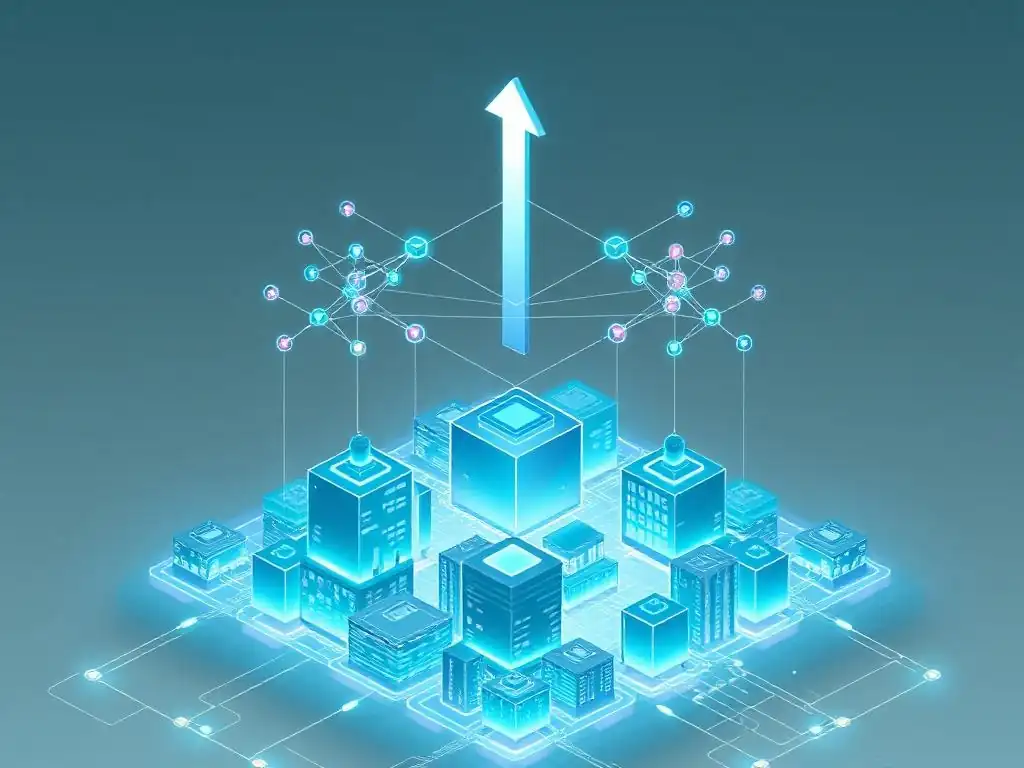
Ultimately, the implementation of Layer 2 solutions is crucial for increasing the overall scalability of blockchain platforms and preparing them for mass adoption. Scalability is no longer just a technical challenge; it is a fundamental requirement for blockchain technology to realize its potential as a foundational infrastructure for various industries and applications. Layer 2 solutions address the scalability bottleneck directly, enabling blockchain networks to handle a significantly larger number of users and transactions without sacrificing security or decentralization.
By enhancing transaction throughput, reducing fees, and improving user experience, Layer 2 solutions pave the way for blockchain to move beyond niche applications and become a mainstream technology. They enable blockchain platforms to support use cases that demand high performance and low costs, such as global payment systems, high-volume decentralized exchanges, and mass-market decentralized applications. The increased scalability provided by Layer 2 solutions is not just about incremental improvements; it is about fundamentally transforming the capacity of blockchain networks to meet the demands of a global, interconnected digital economy.
Security Considerations for Layer 2 Implementations
While Layer 2 solutions offer significant scalability benefits, it's crucial to acknowledge and address the security considerations associated with their implementations. Each type of Layer 2 solution has its own security model and potential risks that must be carefully managed. Ensuring the security of Layer 2 solutions is paramount to maintaining user trust and the overall integrity of the blockchain ecosystem.
It is important to understand that Layer 2 security is often different from, though ultimately anchored to, Layer 1 security. While Layer 2 solutions are designed to inherit the security of the underlying Layer 1 blockchain, they introduce new complexities and potential vulnerabilities in their off-chain operations and interactions with Layer 1. Rigorous security audits, careful design, and ongoing monitoring are essential for mitigating risks and ensuring the robust security of Layer 2 implementations.
Mitigating Risks in State Channels
State channels, while offering speed and privacy, require careful risk mitigation. One key risk is related to channel state management. Participants must properly manage and synchronize channel states off-chain. If there are discrepancies or failures in state synchronization, it can lead to disputes or loss of funds. Robust protocols and software implementations are necessary to ensure accurate state management and prevent vulnerabilities.
Another risk stems from the cooperative nature of channel closure. State channels are ideally closed collaboratively by all participants. However, in cases of non-cooperation or malicious behavior, dispute resolution mechanisms on the main chain are invoked. The design and effectiveness of these dispute resolution mechanisms are crucial for ensuring that participants can fairly retrieve their funds even in adversarial scenarios. Time locks and watchtower services are often used to mitigate risks associated with non-cooperative channel closures and ensure the security of funds within state channels.
Security Audits for Sidechains
Sidechains, being independent blockchains, require thorough security audits. The security of a sidechain depends on its own consensus mechanism, validator set, and code implementation. Independent security audits are essential to identify potential vulnerabilities in the sidechain's architecture, consensus protocol, and smart contracts. These audits help to ensure that the sidechain is resistant to attacks and that user funds are secure.
Furthermore, the security of the two-way peg mechanism connecting the sidechain to the main chain is critical. Vulnerabilities in the peg mechanism could lead to assets being locked or stolen. Security audits must specifically focus on the peg implementation to identify and address potential weaknesses. Ongoing monitoring of sidechain network activity and regular security updates are also essential for maintaining the long-term security of sidechain solutions.
Ensuring Data Integrity in Rollups
Rollups, particularly Optimistic Rollups and ZK-Rollups, have unique security considerations related to data integrity and validity proofs. For Optimistic Rollups, the security relies on the fraud-proof system and the assumption that there are honest participants who will monitor and challenge invalid transactions. The economic incentives for submitting fraud proofs and the effectiveness of the challenge mechanism are crucial for security. Robust fraud-proof mechanisms and well-designed incentive structures are needed to ensure data integrity.
For ZK-Rollups, security depends on the cryptographic soundness of the zero-knowledge proofs and the correctness of their implementation. While ZK-Rollups offer strong cryptographic guarantees, vulnerabilities could still arise from flaws in the cryptographic libraries or implementation errors. Rigorous cryptographic audits and formal verification of ZK-Rollup implementations are vital to ensure the integrity of the validity proofs and the overall security of ZK-Rollup solutions. Data availability also remains a crucial security consideration for rollups, as the transaction data needs to be accessible for dispute resolution in Optimistic Rollups and for users to reconstruct state in general.
The Future of Layer 2 Scaling Technologies
Layer 2 Interoperability: Connecting Different Layer 2 Solutions
The future of Layer 2 scaling technologies is increasingly focused on interoperability. As various Layer 2 solutions emerge and gain adoption, the ability for these solutions to communicate and interact with each other becomes crucial. Currently, many Layer 2 solutions operate in isolation, creating fragmented liquidity and limiting the composability of decentralized applications across different Layer 2 environments. Layer 2 interoperability aims to bridge these silos, enabling seamless asset transfers and communication between different Layer 2 networks.
Achieving Layer 2 interoperability would unlock significant benefits. It would allow users to move assets and data freely between different Layer 2 solutions, creating a more unified and interconnected blockchain ecosystem. This interoperability would enhance liquidity, improve user experience, and foster greater innovation by allowing developers to build applications that can leverage the strengths of different Layer 2 technologies. Research and development efforts are underway to explore various approaches to Layer 2 interoperability, including cross-Layer 2 bridges and standardized communication protocols.
Hybrid Layer 1 and Layer 2 Architectures: The Best of Both Worlds
The future likely involves hybrid architectures that combine the strengths of both Layer 1 and Layer 2 solutions. Layer 1 blockchains will continue to serve as the secure and decentralized base layer, providing settlement and data availability guarantees. Layer 2 solutions will operate on top of Layer 1, handling the bulk of transaction processing and providing scalability and efficiency. This hybrid approach aims to leverage the best of both worlds: the security and decentralization of Layer 1 and the scalability and performance of Layer 2.
Hybrid architectures can take various forms. For example, a blockchain platform might utilize Layer 1 for high-value transactions and critical operations that require maximum security, while routing everyday transactions and application-specific operations through Layer 2 solutions. This approach optimizes resource utilization and allows for a more balanced trade-off between security and scalability. The development of robust and flexible hybrid architectures is a key direction for the evolution of blockchain platforms, enabling them to meet diverse application requirements and achieve both scalability and security.
Evolving Layer 2 Landscape: New Innovations and Future Developments
The Layer 2 landscape is constantly evolving, with ongoing research and development leading to new innovations and improvements. New Layer 2 solutions are emerging, building upon existing approaches and addressing their limitations. For example, advancements in ZK-Rollup technology are making them more practical and efficient, potentially overcoming some of the complexity challenges associated with earlier implementations. Research into recursive rollups and other advanced techniques is exploring further scalability enhancements.
Furthermore, the integration of Layer 2 solutions with Layer 1 blockchains is becoming more seamless and user-friendly. Wallets and developer tools are increasingly incorporating Layer 2 support, making it easier for users and developers to leverage Layer 2 scaling benefits. The ongoing innovation and development in the Layer 2 space are driving continuous improvements in scalability, security, and user experience, paving the way for a more scalable and accessible blockchain future.
Layer 2 Solutions and Blockchain Adoption: The Path Forward
Overcoming Adoption Barriers: Education and Integration
Despite the significant advancements in Layer 2 scaling solutions, adoption barriers still exist. One key barrier is a lack of widespread understanding and awareness of Layer 2 technologies among users and developers. Education and outreach efforts are crucial to inform the blockchain community about the benefits of Layer 2 solutions and how to effectively utilize them. Clear and accessible educational resources, tutorials, and documentation are needed to demystify Layer 2 technologies and encourage their adoption.
Another barrier is the complexity of integrating Layer 2 solutions into existing applications and infrastructure. Simplifying the integration process and providing developer-friendly tools and frameworks are essential for lowering this barrier. Wallet providers, dApp developers, and infrastructure providers need to collaborate to create seamless Layer 2 integrations and make it easier for users to access and benefit from Layer 2 scaling. Overcoming these adoption barriers through education and streamlined integration is crucial for realizing the full potential of Layer 2 solutions and driving broader blockchain adoption.
Real-World Applications of Layer 2: DeFi Platforms, Blockchain Gaming
Layer 2 solutions are already finding real-world applications across various blockchain sectors, particularly in DeFi platforms and blockchain gaming. In DeFi, Layer 2 solutions are being used to address scalability and cost issues that have hindered the growth of decentralized finance. DEXs built on Layer 2 can offer faster trading speeds and significantly lower transaction fees, making DeFi more accessible and efficient for traders. Lending and borrowing platforms are also leveraging Layer 2 to reduce gas costs and improve user experience.
Blockchain gaming is another area where Layer 2 solutions are proving to be highly valuable. Games often require high transaction throughput and low latency for in-game asset trading and interactions. Layer 2 solutions enable blockchain games to offer a smoother and more responsive gaming experience, allowing for complex in-game economies and player interactions without being constrained by Layer 1 scalability limitations. The increasing adoption of Layer 2 solutions in DeFi and blockchain gaming demonstrates their practical utility and their potential to unlock new possibilities for blockchain applications.
Conclusion: Layer 2 as a Key Enabler for Blockchain's Future
Layer 2 scaling solutions are a critical component for the future of blockchain technology. They effectively address the scalability bottleneck that has long hindered the widespread adoption of blockchain platforms. By enhancing transaction throughput, reducing fees, and improving user experience, Layer 2 solutions unlock the potential for blockchain to scale to meet the demands of mainstream applications and user bases.
As the blockchain landscape continues to evolve, Layer 2 solutions will play an increasingly important role in shaping its trajectory. Ongoing innovations in Layer 2 technologies, coupled with growing adoption across various sectors, solidify Layer 2 as a key enabler for blockchain's future. By embracing and further developing Layer 2 scaling solutions, the blockchain industry can pave the way for a more scalable, accessible, and impactful decentralized future.
Frequently Asked Questions
What are Layer 2 scaling solutions and why are they important for blockchain?
Layer 2 solutions are off-chain scaling methods designed to improve blockchain transaction throughput and reduce transaction fees. They are crucial because they help blockchains overcome scalability limitations, making them more usable and accessible.
How do Layer 2 solutions differ from Layer 1 solutions in addressing blockchain scalability?
Layer 1 solutions modify the base blockchain protocol itself, like increasing block size. Layer 2 solutions, however, operate on top of the existing Layer 1, leaving the core blockchain unchanged and leveraging it for security and settlement.
What are some common examples of Layer 2 scaling solutions?
Examples include Rollups (Optimistic and ZK), State Channels, and Sidechains. These technologies utilize different mechanisms to process transactions off-chain and then batch or summarize them back to the main Layer 1 blockchain.
What are the potential benefits of implementing Layer 2 solutions for businesses?
Businesses can benefit from reduced transaction costs, faster transaction speeds, and increased efficiency when using blockchain. This can lead to wider adoption of blockchain technology across various industries and use cases.
What are some potential risks or challenges associated with Layer 2 scaling solutions?
Risks can include increased complexity, potential security vulnerabilities in the specific Layer 2 implementation, and dependency on the Layer 1 blockchain's security. Careful consideration and auditing are necessary before deployment.
Final Reflection: Scaling Beyond Limits
The exploration of Layer 2 scaling solutions reveals not just a technological advancement, but a fundamental shift in how we perceive the potential of blockchain technology. The promise of faster, cheaper, and more scalable blockchains is no longer a distant dream, but a tangible reality being actively shaped by these innovative solutions. The current landscape demands efficient and accessible blockchain networks, and Layer 2 solutions are proving to be crucial in meeting these demands, paving the way for wider adoption and real-world applications.
The ongoing evolution of Layer 2 solutions profoundly influences the cultural and social landscape by democratizing access to decentralized technologies. This evolution is deeply personal to me, as I believe it holds the key to unlocking a more equitable and transparent future for digital interactions. The ability to transact and interact on the blockchain without prohibitive costs or delays empowers individuals and fosters innovation. The future is already here – it's just not evenly distributed.
- William Gibson. This quote perfectly encapsulates the current state of blockchain; Layer 2 solutions are the key to distributing its benefits more equitably.
As we stand at the cusp of a new era of blockchain scalability, I invite you to reflect on the potential of these technologies to reshape our world. Consider how Layer 2 solutions can empower you, your community, and the industries you care about. Embrace the opportunity to learn, experiment, and contribute to the ongoing development of these transformative tools. The future of blockchain is not just about technology; it's about the collective vision and action of individuals like you.
Ignite Your Blockchain Journey!
Thank you for exploring the potential of Layer 2 solutions with us! We hope you now have a clearer understanding of how these innovations are shaping the future of blockchain. Now, let's turn that knowledge into action.
Here's how you can dive deeper:
- Experiment with deploying a simple Layer 2 solution, like a basic state channel, on a test network. Seeing it work firsthand is the best way to truly understand it.
- Explore projects such as Polygon, Optimism, and Arbitrum and examine their distinctive approaches.
- Share this article with your network and spark a discussion about the most effective Layer 2 strategies for different blockchain applications.
What exciting Layer 2 application are you most eager to see become a reality, and how can you contribute to its development? Let us know in the comments!
Leave a Reply