
Crypto Wallet Security Myths Debunked: Separating Fact from Fiction


Welcome to Blockchain Trends, your guide to understanding the real impact of blockchain technology. Beyond the hype, lies a universe of innovation waiting to be unlocked. Are you ready to navigate the complexities of crypto security? Let's start by debunking some common misconceptions. Dive into our latest article, "Crypto Wallet Security Myths Debunked," and discover the truth behind secure crypto wallet myths. Is your digital vault as safe as you think? Explore further and find out!
- Crypto Wallet Security Myths Debunked: Separating Fact from Fiction
- Myth 1: Hot Wallets Are Just As Secure As Cold Wallets
- Myth 2: Storing Crypto on an Exchange is the Safest Option
- Myth 3: My Seed Phrase Only Needs to Be Stored Digitally
- Myth 4: Antivirus Software Fully Protects My Software.
- Frequently Asked Questions
- Final Reflection: Navigating the Labyrinth of Crypto Security
- Safeguard Your Crypto: Take Action Now!
Crypto Wallet Security Myths Debunked: Separating Fact from Fiction
Understanding Real Crypto Wallet Security
Real crypto wallet security goes far beyond simply having a password or a basic software application. It fundamentally revolves around the protection of your private keys – the cryptographic string that proves ownership of your cryptocurrency and allows you to authorize transactions. Think of your private key as the master key to a vault; without it, your funds are inaccessible to others, but if compromised, your assets can be instantly stolen. Understanding this core principle is the first step in navigating the complex landscape of digital asset protection.
Beyond the private key, robust security involves multiple layers. This includes the type of wallet used (hot vs. cold), the security practices of the user, and the underlying infrastructure. For instance, a hardware wallet employs a secure element chip designed to prevent private keys from ever leaving the device, even if connected to a compromised computer. Conversely, a software wallet relies heavily on the security of the device it's installed on, making it vulnerable to malware and phishing attacks. True security is a holistic approach, combining technical safeguards with diligent user behavior to mitigate risks effectively.
Why Debunking Secure Crypto Wallet Myths Matters
Misinformation surrounding crypto wallet security is rampant and directly contributes to significant financial losses for individuals. Many newcomers, and even some experienced users, fall victim to scams or hacks because they operate under false assumptions about how wallets work and how assets should be protected. Debunking these secure crypto wallet myths is crucial for fostering a safer ecosystem and empowering users to take control of their digital wealth.
Addressing these common secure crypto wallet myths helps clarify the genuine threats and the most effective countermeasures. For example, believing that storing large amounts of crypto on an online exchange is safe ignores the historical data of numerous exchange breaches, resulting in billions of dollars in lost user funds over the past decade. By presenting facts and real-world examples, we can help users understand the critical differences between various storage methods and implement best practices to safeguard their investments from the pervasive risks of the digital frontier.
Myth 1: Hot Wallets Are Just As Secure As Cold Wallets
The Common Belief About Hot Wallets
Many users initially perceive hot wallets (wallets connected to the internet) as sufficiently secure for all their cryptocurrency needs. This belief often stems from their convenience and ease of use – they can be accessed instantly from a computer or smartphone, allowing for quick transactions and portfolio monitoring. The perception is that standard digital security measures, like strong passwords and basic antivirus software, are adequate to protect these online wallets from threats, making them comparable in safety to offline solutions for everyday use.
This perspective overlooks the fundamental difference in attack surface. While hot wallets do employ security features like encryption and two-factor authentication, their constant online connection inherently exposes them to a wider array of potential threats. Users might assume that because their funds are visible in an app or browser extension, they are safely stored within that application, similar to a bank account, without fully grasping that the private keys held by the wallet software are the actual target for attackers seeking to steal funds.
The Reality: Risks of Online Connectivity
The primary security vulnerability of hot wallets lies in their online connectivity. Any device connected to the internet is susceptible to malware, phishing attacks, keyloggers, and remote access Trojans (RATs). If a user's computer or smartphone is compromised, malicious software can potentially access the wallet's private keys or seed phrase stored on the device, even if encrypted, especially if the device is unlocked or the malware intercepts decryption attempts.
Real-world incidents highlight these risks. While specific wallet provider hacks are less common than exchange hacks, individual users frequently lose funds stored in hot wallets due to personal device compromises. For instance, a study published in late 2022 estimated that millions of dollars are lost annually through malware specifically targeting crypto wallets on user computers. Phishing attacks, where users are tricked into revealing their seed phrase on a fake website, remain a persistent threat, with reports indicating tens of millions lost through these social engineering tactics each year.
Enhancing Security with Cold Storage Solutions: Ledger vs. Trezor
Cold storage solutions, primarily hardware wallets like Ledger and Trezor, represent a significant leap in security compared to hot wallets, especially for storing substantial amounts of cryptocurrency. These devices keep your private keys offline, isolated from internet-connected devices. When you need to make a transaction, you connect the hardware wallet to a computer or phone, but the signing of the transaction using your private key happens within the secure chip of the device itself, never exposing the key to the potentially compromised online environment.
Both Ledger and Trezor dominate the hardware wallet market, offering robust security features. Ledger utilizes a certified Secure Element chip (similar to those found in passports and credit cards) designed to withstand sophisticated physical attacks, while Trezor relies on open-source firmware and rigorous security audits. While their specific technical implementations differ slightly, the core principle remains the same: they provide a secure, offline environment for your private keys, making them impervious to online threats like malware and phishing that plague hot wallets.
How Hardware Wallets Protect Your Private Keys
Hardware wallets employ sophisticated cryptographic and physical security measures to protect your private keys. When you set up the device, it generates your private keys and seed phrase internally, in an offline environment. These keys are then stored within a secure chip that is specifically designed to prevent extraction. Even if the device is connected to a computer infected with malware, the malware cannot access the private keys because they never leave the isolated secure element.
To authorize a transaction, the hardware wallet receives the transaction details from your computer or phone. You then verify these details on the hardware wallet's trusted display and confirm the transaction using physical buttons on the device. The private key remains on the device, signing the transaction data internally. Only the signed transaction is sent back to the computer to be broadcast to the blockchain. This process ensures that your critical private key is never exposed online, offering a vastly superior level of security compared to any hot wallet.
Myth 2: Storing Crypto on an Exchange is the Safest Option
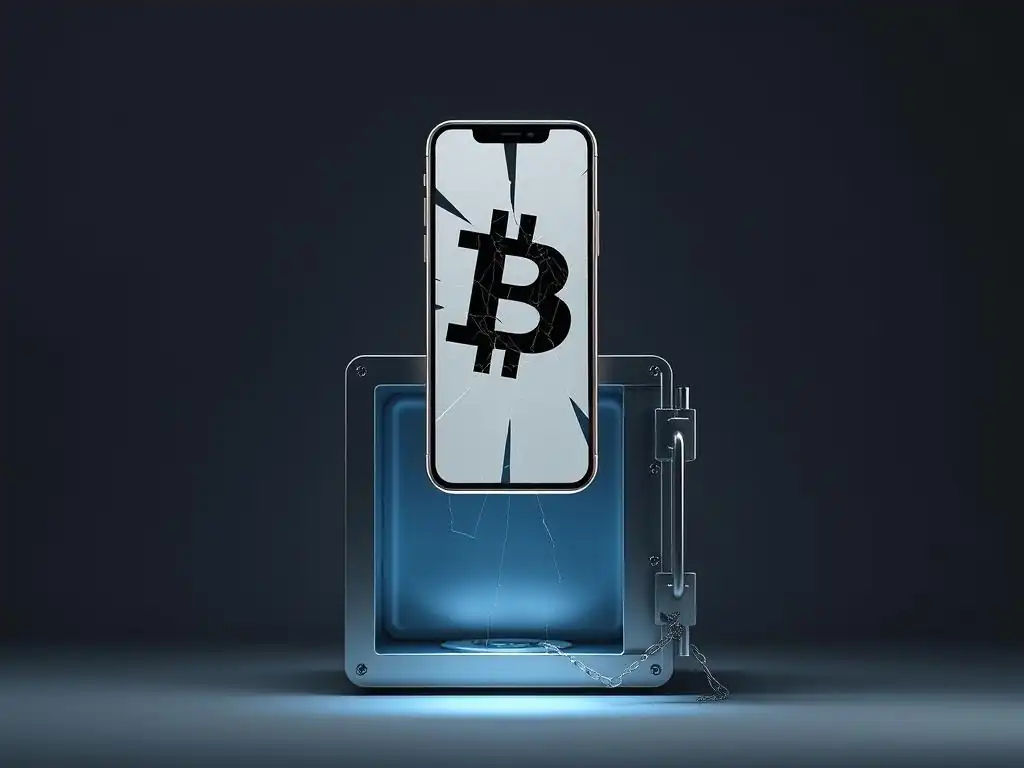
The Convenience of Exchange Wallets
For many users, especially those new to cryptocurrency, storing assets on a centralized exchange seems like the most straightforward and safest option. Exchanges offer a familiar interface, similar to online banking platforms, where users can easily buy, sell, and hold various cryptocurrencies. The convenience of having funds readily available for trading or withdrawal, without the perceived complexity of managing personal wallets and private keys, makes exchanges an attractive default storage solution for millions of users worldwide.
Furthermore, exchanges often invest heavily in security infrastructure, employing teams of cybersecurity professionals, implementing multi-factor authentication, and sometimes even holding insurance policies. This can lead users to believe that their funds are inherently safer with these large, professional entities than they would be managing security themselves. The ease of use and the appearance of robust security measures provided by exchanges contribute significantly to the myth that they are the safest place to store crypto.
The Reality: "Not Your Keys, Not Your Crypto"
The fundamental truth often overlooked when storing crypto on an exchange is encapsulated in the widely cited blockchain adage: "Not Your Keys, Not Your Crypto." When you deposit cryptocurrency onto a centralized exchange, you are essentially transferring ownership of those assets to the exchange's custody. The exchange holds the private keys for the wallets where your funds are stored, not you. You merely have an IOU or a claim against the exchange's reserves.
This reality means that if the exchange is hacked, becomes insolvent, or faces regulatory issues that freeze assets, your funds are at risk and potentially beyond your control. The history of cryptocurrency is unfortunately littered with examples of exchanges losing user funds. The infamous Mt.
Gox hack in 2014 resulted in the loss of hundreds of thousands of Bitcoin (worth billions today). More recently, the collapse of FTX in 2022 led to billions in user funds being inaccessible, highlighting the counterparty risk inherent in trusting a third party with your private keys. Your assets are only as secure as the exchange's own security and solvency.
Taking Control with Self-Custodial Wallets: MetaMask and Trust Wallet
Self-custodial wallets, also known as non-custodial wallets, empower users to hold and manage their own private keys. Popular examples include MetaMask, a widely used browser extension and mobile app primarily for interacting with the Ethereum network and other EVM-compatible chains, and Trust Wallet, a mobile-first wallet supporting a vast array of cryptocurrencies and blockchains. With these wallets, the private keys are generated and stored locally on the user's device (or encrypted and backed up by the user), giving the user complete control and responsibility.
Using a self-custodial wallet means you are the sole owner and controller of your private keys and, therefore, your funds. There is no central authority that can freeze your assets or be targeted by hackers to access your specific wallet, provided you keep your private keys secure. While this shifts the burden of security onto the user, it eliminates the counterparty risk associated with exchanges. Millions of users choose these wallets specifically for the autonomy and enhanced security that comes from not relying on a third party to hold their most critical asset information.
The Importance of Holding Your Own Private Keys
Holding your own private keys is paramount for true ownership and security in the decentralized world of cryptocurrency. It is the digital equivalent of holding physical cash rather than having a bank hold it for you. Your private key is the cryptographic proof of ownership; possessing it means you can access and control your funds on the blockchain without needing permission from any third party. This is a core tenet of blockchain technology, designed to remove intermediaries and give individuals sovereignty over their finances.
By controlling your private keys, you protect yourself from the risks associated with centralized entities, such as exchange hacks, regulatory seizures, or insolvency. While it requires responsible management of your seed phrase and device security, it aligns with the decentralized ethos of crypto. It ensures that your assets remain accessible to you, and only you, as long as you protect your private keys diligently. This control is the ultimate form of secure crypto wallet management.
Myth 3: My Seed Phrase Only Needs to Be Stored Digitally
The Ease of Digital Backups
The convenience of digital storage solutions leads many users to believe that saving their 12 or 24-word seed phrase on a computer, phone, cloud storage, or password manager is sufficient. It's quick, easily accessible, and avoids the perceived hassle of physical storage methods. Users might rationalize that strong passwords, encryption, and the security measures of cloud providers or password managers offer adequate protection for this critical piece of information, making digital backups seem like a perfectly acceptable approach for secure crypto wallet recovery.
This method often feels intuitive in our increasingly digital world. Saving a document file, a note in an app, or an entry in a digital vault feels standard for important information. The ease of copying, pasting, and accessing the seed phrase across devices or platforms reinforces the idea that digital is convenient and therefore acceptable, overshadowing the unique risks associated with storing the master key to your entire crypto portfolio in an online or easily accessible digital format.
The Reality: Digital Storage Risks (Malware, Hacks, Physical Loss)
Storing your seed phrase digitally exposes it to a multitude of severe risks that can lead to the permanent loss of your funds. Any device connected to the internet or even just a local network is vulnerable to malware specifically designed to scan for and steal seed phrases or private keys. Keyloggers can record everything you type, including a seed phrase entered into a document or note. Remote access Trojans can allow attackers to browse your files and find digitally stored phrases.
Cloud storage accounts, while convenient, are not impervious to breaches. If your cloud account credentials are compromised, or if the provider itself experiences a security incident, your seed phrase could be exposed. Similarly, password managers, while useful for other logins, become single points of failure if their master password is weak or if the software has a vulnerability.
Furthermore, digital files can be accidentally deleted, corrupted, or lost due to device failure, leaving you with no way to recover your wallet if your primary device is lost or broken. The potential for loss from digital storage is estimated to run into the millions of dollars annually from various forms of cyber attack.
Secure Physical Storage Solutions for Seed Phrases: Billfodl and Cryptosteel
Given the inherent risks of digital storage, secure physical storage solutions for your seed phrase are highly recommended as part of a robust secure crypto wallet strategy. Devices like Billfodl and Cryptosteel are designed specifically for this purpose. They allow you to engrave or stamp your seed phrase words onto durable metal plates, typically made of stainless steel, which are resistant to fire, flood, and physical corrosion.
These metal backups are designed to withstand extreme conditions that would destroy paper or digital media. Stainless steel, for instance, has a melting point far exceeding that of typical house fires (around 1370°C or 2500°F), and it is impervious to water damage.
Storing your seed phrase on such a device, kept in a secure physical location like a home safe or a safety deposit box, provides a layer of protection against environmental disasters and digital threats that no online or software-based solution can match. The cost of these devices is minimal compared to the potential value of the crypto they protect.
Best Practices for Seed Phrase Backup and Protection
Protecting your seed phrase is arguably the single most important aspect of secure crypto wallet management. Losing it or having it compromised means losing access to your funds forever or having them stolen.
Here are some best practices:
Store the seed phrase on any internet-connected device.Take a picture of the seed phrase with your phone.Store the seed phrase in a plain text file named "crypto_passwords.txt".- Generate your seed phrase offline using a trusted hardware wallet or an air-gapped computer.
- Write down your seed phrase on high-quality paper using a durable pen immediately after generation.
- Consider using a metal backup solution like Billfodl or Cryptosteel for long-term, disaster-proof storage.
- Store your physical seed phrase backup in multiple secure, geographically separated locations (e.g., home safe, bank safety deposit box, trusted family member).
- Never share your seed phrase with anyone, under any circumstances. No legitimate service will ever ask for it.
- If you must temporarily digitize it (e.g., to transfer to a metal backup device), do so on an offline computer that is immediately wiped afterward.
- Use a passphrase (a 25th word) if your wallet supports it, adding an extra layer of security, but remember that the passphrase also needs to be backed up securely.
# Example of a task list for seed phrase backup steps:
- [x] Generate seed phrase offline.
- [x] Write down seed phrase on paper.
- [x] Create a metal backup of the seed phrase.
- [ ] Store backup in secure location 1.
- [ ] Store backup in secure location 2 (different location).
- [ ] Verify the backup is readable.
Myth 4: Antivirus Software Fully Protects My Software.
Frequently Asked Questions
What are the most common myths about crypto wallet security?
Common myths include the belief that hardware wallets are completely immune to hacks and that all software wallets are insecure. Understanding the limitations of each type is crucial for safe cryptocurrency management.
How can I ensure my crypto wallet is secure?
To ensure your wallet is secure, use strong passwords, enable two-factor authentication, and keep your private keys offline. Regularly update your wallet software and stay informed about security practices.
Is it true that hardware wallets are the safest option?
While hardware wallets offer enhanced security, they are not foolproof. Users must still take precautions, such as keeping the device in a safe location and not sharing their recovery phrases.
Can I trust my crypto wallet provider's security measures?
Trusting your wallet provider's security measures requires research. Look for transparent security practices, user reviews, and any security audits they may have undergone.
What role do regulations play in crypto wallet security?
Regulations can enhance crypto wallet security by setting standards for wallet providers and protecting users from fraud. As the industry evolves, regulatory frameworks aim to ensure a safer environment for all users.
The digital frontier of cryptocurrency, while brimming with opportunity, remains a landscape fraught with peril. The persistent myths surrounding secure crypto wallets, as we've explored, can be deceptively dangerous, leading to vulnerabilities that threaten the very foundation of decentralized finance. Understanding and dismantling these misconceptions is not merely academic; it's a crucial step towards fostering a safer and more trustworthy crypto ecosystem for everyone.
The allure of quick gains often overshadows the critical need for robust security practices. This has profoundly shaped the cultural perception of crypto, sometimes painting it as a Wild West where only the technologically savvy can truly thrive. My hope is that by demystifying these security concerns, we can empower individuals to participate in the crypto revolution with greater confidence and control. Security is always excessive until it's not enough.
This quote perfectly encapsulates the proactive mindset needed to navigate the complexities of crypto wallet security.
As you venture further into the world of digital assets, remember that knowledge is your strongest defense. Let the insights shared in this article serve as a compass, guiding you away from the pitfalls of misinformation and towards a future where your crypto holdings are truly secure. Embrace a culture of continuous learning, question assumptions, and always prioritize the safety of your digital assets. The future of decentralized finance depends on it, and so does your financial well-being.
Safeguard Your Crypto: Take Action Now!
Thank you for exploring the importance of securing your cryptocurrency holdings. Now that you understand the key risks and best practices, it’s time to put that knowledge into action. Protect your digital assets from threats with these essential steps:
- Immediately review and update your crypto wallet’s security settings, ensuring you enable two-factor authentication and use a strong, unique password.
- Consider additional security measures, such as purchasing a hardware wallet for long-term storage or setting up multi-signature authentication for increased protection.
- Share this information with fellow crypto enthusiasts on social media to help them avoid common security pitfalls.
What specific step will you take today to strengthen the security of your crypto assets? Share your plan in the comments below!
Leave a Reply