
Decentralized Social Media: Is This the Future of Online Connection?


Welcome to Blockchain Trends, your guide to understanding the revolutionary impact of blockchain technology!
Imagine a world where your online presence is truly yours, free from centralized control and censorship. Our exploration into blockchain social media benefits reveals how this vision is becoming a reality. Dive in to discover how decentralized platforms are poised to reshape the future of online connection, offering enhanced security, user empowerment, and a more equitable digital landscape. But what are the real advantages and challenges? Let's explore!
Decentralized Social Media: Is This the Future of Online Connection?
- Introduction: The Promise of Blockchain Social Media
- Understanding Blockchain Social Media Platforms
-
Blockchain Social Media Benefits: A Deep Dive
- Enhanced Data Privacy and User Control: Taking Back Your Information
- Freedom of Speech and Resistance to Censorship: A Platform for Open Dialogue
- Monetization Opportunities for Content Creators: Rewarding Value Directly
- Reduced Reliance on Centralized Authorities: The Power of Community Governance
- Improved Security and Transparency: Building Trust in the Digital Age
- Comparing Centralized and Decentralized Social Media: A Detailed Analysis
- Challenges and Limitations of Decentralized Social Media
- Real-World Examples of Decentralized Social Media Platforms
- The Future of Online Connection: Will Decentralized Social Media Prevail?
- Conclusion: Embracing the Decentralized Social Media Revolution
-
Frequently Asked Questions
- What are the key blockchain social media benefits compared to traditional platforms?
- How does blockchain technology enhance user privacy on social media platforms?
- What role does decentralization play in combating censorship on social media?
- Beyond privacy and censorship, what other advantages do blockchain-based social media networks offer?
- What are some potential challenges facing the widespread adoption of decentralized social media?
- Final Reflection: Embracing the Decentralized Dawn
- Unleash the Power of Decentralized Connection!
Social media has fundamentally transformed how we communicate, share information, and build communities online. From the early days of platforms like MySpace and Facebook, the internet has witnessed an explosion in social networking, connecting billions across geographical boundaries. These platforms have become integral to daily life, influencing everything from news consumption to political discourse and social trends. However, this evolution has not been without its challenges. Centralized social media platforms, while offering convenience and scale, have increasingly faced scrutiny regarding data privacy, censorship, and the concentration of power in the hands of a few corporations.
Concerns about data breaches, algorithmic bias, and the manipulation of user feeds have grown significantly. Users are often unaware of how their data is collected, used, and monetized, leading to a sense of unease and a lack of control over their online identities. Furthermore, the centralized nature of these platforms makes them vulnerable to single points of failure and censorship, raising questions about freedom of expression and the democratic nature of online discourse. These challenges have paved the way for exploring alternative models of social media, models that prioritize user empowerment, data privacy, and decentralization.
The Rise of Decentralization: A New Paradigm for Online Interaction
Decentralization, enabled by blockchain technology, presents a compelling alternative to the centralized model of social media. It proposes distributing power and control away from single entities and towards a network of users. This paradigm shift aims to address the core issues plaguing traditional social media, offering a vision of online interaction that is more transparent, secure, and user-centric. Decentralized systems, by their very nature, are designed to be more resilient to censorship and single points of failure, as no single entity controls the entire network.
The rise of decentralization across various sectors, from finance (DeFi) to data storage, reflects a growing desire for greater autonomy and control in the digital age. In the context of social media, decentralization promises to empower users with ownership of their data, greater freedom of expression, and new opportunities for content monetization.
This movement towards decentralization is not merely a technological trend; it represents a fundamental rethinking of how online platforms should be governed and how value should be distributed within digital ecosystems. The potential of blockchain to underpin this new paradigm is significant, offering the tools necessary to build a more equitable and open internet.
Decentralized social media refers to social networking platforms built on blockchain technology. Unlike traditional platforms that are centrally controlled by a single company, decentralized social media distributes control across a network of users or nodes. This means that no single entity can unilaterally censor content, control user data, or dictate platform policies. Instead, these platforms leverage blockchain's inherent characteristics of transparency, security, and immutability to create a more democratic and user-owned social media experience.
The core principle of decentralized social media is to shift power away from large corporations and back to the users. By utilizing blockchain, these platforms aim to provide users with greater control over their data, enhanced privacy, and more direct relationships with content creators and communities. This new model seeks to address the growing concerns about data exploitation and censorship prevalent in centralized social media, promising a more equitable and open online environment.
Blockchain technology is the foundational infrastructure that enables decentralized social networks to function. It provides a distributed ledger system that is transparent, secure, and tamper-proof. In the context of social media, blockchain can be used to store user data, content, and interactions in a decentralized manner. This means that information is not held on a central server but is distributed across a network of computers, making it much harder to censor or manipulate.
Smart contracts, another key component of blockchain technology, can automate various functions within decentralized social networks, such as content moderation, content distribution, and reward systems. These self-executing contracts ensure that rules and agreements are enforced transparently and automatically, reducing the need for intermediaries and fostering trust within the network. Furthermore, blockchain's cryptographic security features ensure data integrity and protect user privacy through techniques like encryption and pseudonymity. By leveraging these features, blockchain empowers decentralized social media platforms to offer a fundamentally different user experience compared to their centralized counterparts.
Decentralized social media platforms are characterized by several key features that distinguish them from traditional platforms. Firstly, user data ownership is paramount. Users typically have full control over their data and decide who can access it, contrasting sharply with centralized platforms where user data is often a valuable asset for the company. Secondly, censorship resistance is a core principle. Due to the distributed nature of the network, it becomes significantly more difficult for any single entity to censor content or silence voices, promoting freedom of expression.
Thirdly, many decentralized platforms incorporate cryptocurrency and tokenization. This allows for new monetization models where creators can be directly rewarded for their content through cryptocurrency tips or platform-specific tokens, bypassing traditional advertising-based revenue models. Fourthly, community governance is often a feature, empowering users to participate in decision-making processes regarding platform policies and development. Finally, enhanced privacy and security are inherent benefits, stemming from blockchain's cryptographic security and the distributed nature of data storage, reducing the risk of data breaches and surveillance. These features collectively contribute to the unique value proposition of decentralized social media.
Enhanced Data Privacy and User Control: Taking Back Your Information
One of the most significant blockchain social media benefits is enhanced data privacy and user control. In the current centralized social media landscape, user data is a highly valuable commodity, often collected, analyzed, and monetized by platforms without explicit user consent or control. Decentralized social media platforms aim to reverse this trend by placing data ownership firmly in the hands of users. By utilizing blockchain technology, these platforms can enable users to control what data is collected, how it is used, and who can access it.
For instance, some decentralized platforms employ encrypted data storage, ensuring that only the user holds the keys to their information. Others utilize zero-knowledge proofs to allow users to verify information without revealing the data itself. This level of control empowers individuals to take back their digital identities and mitigates the risks associated with data breaches and privacy violations that are common in centralized systems. The shift towards user-centric data management is a core benefit of blockchain social media, fostering a more trustworthy and respectful online environment.
Freedom of Speech and Resistance to Censorship: A Platform for Open Dialogue
Another key blockchain social media benefit is the promise of enhanced freedom of speech and resistance to censorship. Centralized social media platforms, while often espousing principles of free expression, are ultimately controlled by corporate entities that can, and do, censor content based on their own policies, legal pressures, or even political considerations. Decentralized platforms, in contrast, are designed to be inherently more resistant to censorship due to their distributed and permissionless nature.
Because no single entity controls the network, it is significantly more difficult to remove content or silence users. Content is typically stored across a distributed network, and moderation policies, if any, are often determined by community consensus rather than centralized authority. This architecture fosters a more open and democratic space for online dialogue, where diverse perspectives can be shared and debated without fear of arbitrary censorship. This resilience to censorship is a crucial benefit of blockchain social media, particularly in regions where freedom of expression is restricted or under threat.
Monetization Opportunities for Content Creators: Rewarding Value Directly
Blockchain social media benefits content creators by offering novel and more equitable monetization opportunities. Traditional social media platforms often rely on advertising-based revenue models, where the platform itself captures the majority of the economic value generated by user-created content. Creators often receive a small fraction of the revenue, if any, and are subject to platform algorithms that can significantly impact their reach and earnings. Decentralized social media platforms, leveraging blockchain and cryptocurrency, can disrupt this model.
Many decentralized platforms integrate cryptocurrency tipping systems or platform-specific tokens that allow users to directly reward creators for their content. Smart contracts can automate royalty payments and ensure transparent distribution of revenue. Furthermore, some platforms are exploring models where creators own a stake in the platform itself, sharing in its overall success.
These alternative monetization models aim to empower creators, providing them with more direct control over their earnings and fostering a more sustainable and creator-centric online ecosystem. This direct reward mechanism is a significant benefit of blockchain social media, incentivizing high-quality content creation and fostering a fairer digital economy.
A significant blockchain social media benefit lies in the reduced reliance on centralized authorities and the empowerment of community governance. Centralized social media platforms are governed by a single company that dictates policies, algorithms, and the overall direction of the platform. Users have limited input into these decisions, and the interests of the platform often take precedence over the needs of the community. Decentralized social media platforms, in contrast, strive to distribute governance power across the user base.
Many platforms are exploring models of decentralized autonomous organizations (DAOs) or other forms of community governance, where users can participate in decision-making processes through voting mechanisms or token-based governance. This empowers users to shape the rules and policies of the platform, fostering a sense of ownership and collective responsibility. By reducing reliance on centralized authorities, decentralized social media aims to create more democratic and user-driven online communities. This shift towards community governance is a vital benefit of blockchain social media, promoting a more equitable and participatory digital landscape.
Improved Security and Transparency: Building Trust in the Digital Age
Blockchain social media benefits users through improved security and transparency. Centralized social media platforms are vulnerable to data breaches, hacking attempts, and opaque algorithms that govern content distribution and user experiences. Decentralized platforms, underpinned by blockchain technology, offer enhanced security and transparency. Blockchain's cryptographic security features protect user data and make it significantly harder to tamper with or manipulate information. The distributed nature of the network also reduces the risk of single points of failure and data loss.
Furthermore, blockchain provides inherent transparency as all transactions and data are recorded on a publicly auditable ledger. This transparency can extend to platform algorithms and governance processes, fostering greater trust and accountability. Users can verify the integrity of the platform and understand how decisions are made. By enhancing security and transparency, blockchain social media benefits users by creating a more trustworthy and reliable online environment, addressing a critical concern in the current digital age where trust in centralized platforms is eroding.
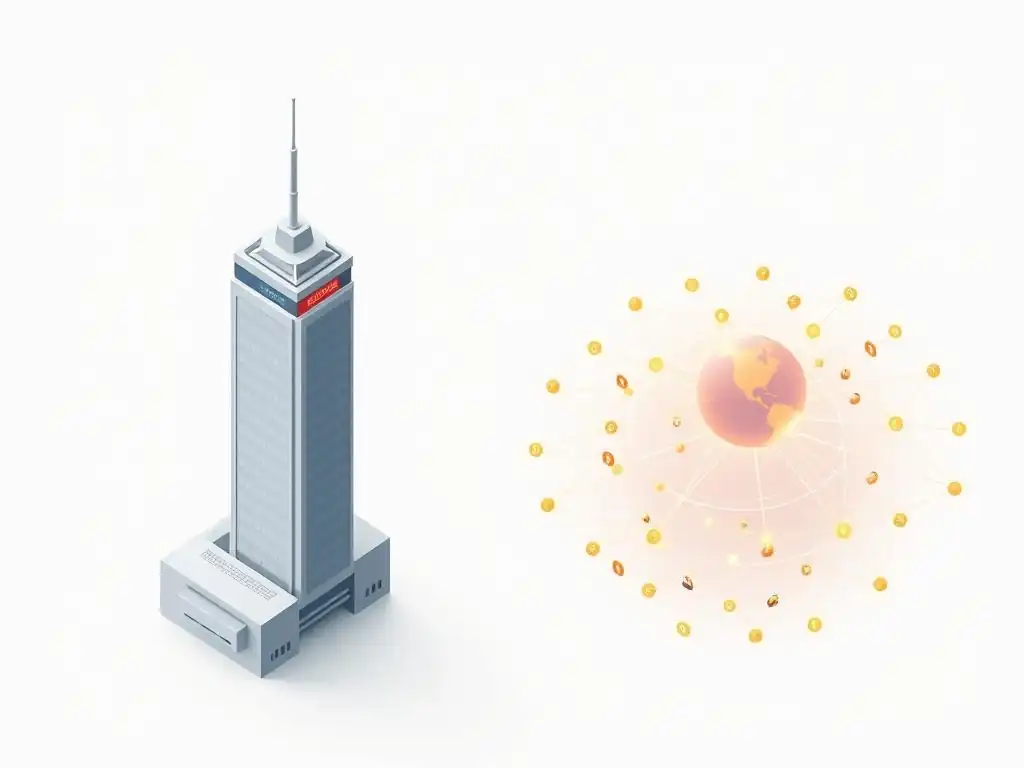
Data Ownership and Control: Who Owns Your Information?
In centralized social media, data ownership and control predominantly reside with the platform company. Users generate data through their interactions, but the platform dictates how this data is collected, used, and monetized. Terms of service often grant platforms broad rights to user data, leaving individuals with limited agency. This model has led to concerns about data exploitation and privacy violations, as user information becomes a valuable asset for targeted advertising and platform growth.
Decentralized social media platforms offer a stark contrast, aiming to place data ownership and control back into the hands of users. Through cryptographic keys and decentralized data storage, users can manage their own data, decide who has access, and potentially even monetize it themselves. This user-centric approach to data ownership is a fundamental shift, empowering individuals and fostering a more equitable data economy.
Content Moderation and Censorship: Balancing Freedom with Responsibility
Centralized social media platforms grapple with the complex challenge of content moderation and censorship. While aiming to foster free expression, they also face pressure to remove harmful content, combat misinformation, and comply with legal regulations. Content moderation policies are often set by the platform itself and can be perceived as arbitrary or biased, leading to accusations of censorship and stifling of dissenting voices. The centralized control over content moderation creates a bottleneck and raises questions about accountability and fairness.
Decentralized social media approaches content moderation in diverse ways. Some platforms prioritize minimal moderation to maximize freedom of speech, relying on community-based flagging or filtering mechanisms. Others experiment with decentralized moderation systems, distributing moderation responsibilities across the network or utilizing tokenized voting systems to determine content policies. The challenge remains to balance freedom of expression with the need to prevent abuse and harmful content within a decentralized framework.
Monetization Models: How Creators are Rewarded
Centralized social media platforms primarily rely on advertising-based monetization models. User attention is monetized through targeted ads, and content creators often receive a small share of the revenue, if any, through partnership programs or creator funds. The platform itself captures the majority of the economic value generated by user-created content. This model can be opaque and often undervalues the contributions of individual creators.
Decentralized social media explores alternative monetization models that aim to reward creators more directly and equitably. Cryptocurrency tipping, tokenized rewards, and decentralized marketplaces for content are common features. Some platforms are building economies where users can earn platform tokens for contributing value, fostering a more participatory and creator-centric ecosystem. These models seek to disrupt the traditional advertising-dominated landscape and empower creators to capture a greater share of the value they generate.
Security and Privacy: Protecting User Data
Centralized social media platforms, despite significant investments in security, remain vulnerable to data breaches and privacy violations due to their centralized architecture. Large databases of user information are attractive targets for hackers, and security failures can expose sensitive personal data to unauthorized access. Furthermore, centralized data storage can be subject to government surveillance and legal demands for user data.
Decentralized social media, leveraging blockchain's inherent security features and distributed data storage, offers enhanced security and privacy. Cryptographic encryption, pseudonymity, and the absence of a central point of failure make decentralized networks more resilient to attacks and data breaches. Users often have greater control over their privacy settings and can choose to share information selectively. While no system is entirely foolproof, decentralized architectures offer a stronger foundation for security and privacy compared to centralized counterparts.
Scalability Issues: Handling a Growing User Base
One of the primary challenges facing decentralized social media platforms is scalability. Blockchain technology, while offering security and decentralization, can face limitations in transaction throughput and processing speed compared to centralized databases. As decentralized social networks grow and user activity increases, platforms may encounter bottlenecks and slower performance.
Various scalability solutions are being explored, including layer-2 scaling solutions, sharding, and optimized consensus mechanisms. However, achieving the scale necessary to support millions or billions of users, comparable to mainstream social media platforms, remains a significant technical hurdle. Overcoming these scalability issues is crucial for the widespread adoption of decentralized social media.
User Experience: Bridging the Gap to Mainstream Adoption
User experience (UX) is another critical challenge for decentralized social media. Many decentralized platforms currently have a steeper learning curve and a less polished user interface compared to established centralized platforms. Onboarding processes, managing cryptocurrency wallets, and understanding blockchain concepts can be daunting for non-technical users.
Bridging the UX gap is essential for mainstream adoption. Decentralized platforms need to prioritize user-friendly interfaces, intuitive navigation, and seamless onboarding experiences. Simplifying blockchain complexities and focusing on usability will be key to attracting a wider audience beyond early adopters and crypto enthusiasts.
Content Moderation Challenges: Preventing Abuse and Misinformation
While censorship resistance is a core tenet of decentralized social media, it also presents challenges in content moderation. Preventing abuse, harassment, spam, and misinformation in a decentralized environment is complex. Without centralized control, traditional moderation methods may be less effective.
Decentralized platforms are experimenting with various moderation approaches, including community-based moderation, reputation systems, and algorithmic filtering. Finding effective and scalable solutions to content moderation that align with the principles of decentralization and free speech remains an ongoing challenge. Balancing freedom with responsibility is crucial for creating healthy and sustainable decentralized social media communities.
Decentralized social media platforms operate in a rapidly evolving regulatory landscape. The legal status of cryptocurrencies, decentralized technologies, and user-generated content in decentralized environments is still being defined in many jurisdictions. Regulatory uncertainty can create challenges for platform development, legal compliance, and user adoption.
Navigating the legal landscape requires careful consideration of data privacy regulations, content liability laws, and cryptocurrency regulations in different regions. Engaging with regulators, adopting best practices, and fostering legal clarity will be essential for the long-term sustainability and growth of decentralized social media.
Mastodon: Features, Benefits, and Community
Mastodon is a free, open-source, decentralized social network often cited as a leading example in the space. It distinguishes itself from platforms like Twitter by operating as a federated network of independent servers, called "instances." Each instance is run by different administrators and can have its own rules and community guidelines, while still being interconnected within the broader Mastodon network. Users choose an instance to join but can interact with users on other instances.
Features and Benefits: Mastodon emphasizes user privacy and control. It is ad-free and prioritizes chronological timelines, avoiding algorithmic feeds. Its decentralized nature provides resilience against censorship and platform shutdowns. The open-source nature encourages community contributions and customization.
Community: Mastodon's community is diverse, spanning various interests and perspectives. The federated structure allows for smaller, niche communities to thrive while still being part of a larger network. Mastodon has gained traction among users seeking alternatives to centralized social media and valuing privacy and community-driven moderation.
Peepeth: Features, Benefits, and Community
Peepeth is a decentralized microblogging platform built on the Ethereum blockchain. It focuses on short-form content, similar to Twitter, but with a strong emphasis on permanence and immutability. "Peeps" (posts) are stored on the blockchain, making them resistant to censorship and alteration.
Features and Benefits: Peepeth leverages blockchain for content immutability and censorship resistance. It offers a simple, minimalist interface and focuses on ethical and privacy-conscious social networking. Users own their data and have more control over their online presence. Peepeth has experimented with tokenized rewards for users.
Community: Peepeth's community is smaller and more niche, often attracting users interested in blockchain technology, decentralization, and privacy. It is known for its focus on thoughtful content and a less noisy, more curated social experience compared to mainstream platforms.
Minds: Features, Benefits, and Community
Minds is a decentralized social network that combines features of platforms like Facebook and Twitter, while integrating blockchain technology and cryptocurrency. It aims to be a more transparent and user-centric alternative to centralized social media.
Features and Benefits: Minds offers encrypted messaging, groups, channels, and content monetization through its native cryptocurrency, MINDS tokens. Users can earn tokens for contributing to the platform and use them to promote their content or tip creators. Minds emphasizes free speech and open-source principles.
Community: Minds has attracted a diverse community, including users interested in free speech, cryptocurrency, and decentralized technologies. It has positioned itself as an alternative for those seeking greater control over their data and a more equitable reward system for content creation. Minds has seen growth among users concerned about censorship and algorithmic manipulation on mainstream platforms.
Predicting the future of decentralized social networks is complex, but several trends suggest significant growth potential. As concerns about data privacy, censorship, and platform power in centralized social media continue to rise, the appeal of decentralized alternatives is likely to increase. Market research indicates a growing interest in blockchain-based social media solutions, with projections suggesting substantial market growth in the coming years.
Factors driving this growth include increasing awareness of blockchain social media benefits, such as enhanced privacy and user control, as well as the maturation of blockchain technology and scalability solutions. Furthermore, as younger generations become more digitally native and privacy-conscious, the demand for user-centric and decentralized online platforms is expected to rise. While mainstream adoption is not guaranteed, the trajectory points towards a significant expansion of the decentralized social media landscape.
Blockchain technology is poised to play a transformative role in shaping the future of social interaction online. Beyond decentralized social media platforms, blockchain can underpin various aspects of online communities and digital interactions. Decentralized identity solutions, powered by blockchain, can empower users with greater control over their digital identities across different platforms. Blockchain-based reputation systems can foster trust and accountability within online communities.
Furthermore, blockchain can enable new forms of digital ownership and value exchange within social networks. Non-fungible tokens (NFTs) can represent digital collectibles, content ownership, and community memberships, creating new economic models for creators and users. The integration of blockchain into social interaction is likely to lead to more transparent, secure, and user-empowering online experiences.
Overcoming the Obstacles to Mass Adoption
Despite the potential of decentralized social media, overcoming obstacles to mass adoption is crucial for its widespread success. Addressing scalability issues, improving user experience, and navigating regulatory uncertainty are key challenges. Simplifying blockchain complexities and making decentralized platforms as user-friendly as mainstream alternatives is essential.
Educating the broader public about the blockchain social media benefits, particularly concerning data privacy and control, is also vital. Building bridges between the crypto community and mainstream users, fostering collaborations, and demonstrating the practical advantages of decentralized social media will be crucial steps towards mass adoption. Overcoming these obstacles requires sustained innovation, community building, and a focus on user needs.
The question remains whether decentralized social media will ultimately replace centralized platforms or serve as a complementary solution. It is likely that both centralized and decentralized models will coexist in the future online landscape. Centralized platforms offer convenience, scale, and established network effects, while decentralized platforms provide unique blockchain social media benefits in terms of privacy, control, and censorship resistance.
Decentralized social media may initially appeal to specific niches and user segments who prioritize these benefits, gradually expanding its reach over time. Hybrid models, combining elements of both centralized and decentralized approaches, may also emerge. Ultimately, the success of decentralized social media will depend on its ability to address user needs effectively, overcome technical and usability challenges, and demonstrate its value proposition to a broader audience. It is likely that decentralized platforms will carve out a significant space in the social media landscape, offering users a viable alternative and contributing to a more diverse and user-centric online ecosystem.
Blockchain social media holds immense potential to transform online communities. By shifting power away from centralized corporations and back to users, these platforms can foster more democratic, transparent, and equitable online environments. The blockchain social media benefits – enhanced data privacy, freedom of speech, and creator monetization – address critical concerns with the current centralized social media model.
Decentralized platforms can empower individuals to take control of their digital identities, participate in community governance, and build more authentic and meaningful online connections. This shift towards decentralization represents a fundamental rethinking of how social media should function and who should benefit from its value creation.
The decentralized social media revolution is driving a movement towards a more transparent, secure, and user-centric social experience. By leveraging blockchain technology, these platforms are building a foundation for greater trust, accountability, and user empowerment online. The emphasis on data privacy, censorship resistance, and community governance represents a significant step forward in creating a more ethical and user-respectful digital landscape.
As decentralized platforms mature and overcome existing challenges, they have the potential to reshape online interactions and foster a more positive and empowering social media experience for users worldwide. This movement is not just about technological innovation; it is about fundamentally rethinking the power dynamics and values that underpin online communities.
The Importance of Exploring and Supporting Decentralized Alternatives
Exploring and supporting decentralized social media alternatives is crucial for fostering a more diverse, resilient, and user-centric internet. By experimenting with and adopting decentralized platforms, users can contribute to the growth of a more equitable and open online ecosystem. Developers and entrepreneurs can contribute by building innovative solutions and addressing the challenges facing decentralized social media.
Policymakers and regulators have a role to play in creating a supportive regulatory environment that fosters innovation while protecting user rights. Embracing decentralized alternatives is not just about adopting new technologies; it is about actively shaping the future of online connection and building a more democratic and empowering digital world for all.
Frequently Asked Questions
Decentralized social media offers users greater control over their data and content. It also promises increased transparency and potentially fairer monetization models.
Blockchain allows for encrypted data storage and reduces reliance on centralized servers. This minimizes the risk of data breaches and unauthorized access.
Decentralized platforms are more resistant to censorship because content is distributed across a network. No single entity can easily control or remove information.
Blockchain can facilitate direct user-to-creator payments via cryptocurrencies. This eliminates intermediaries and allows creators to earn more fairly from their work.
Scalability, user experience, and regulation remain significant hurdles. Building intuitive interfaces and navigating legal complexities are crucial for mass adoption.
Final Reflection: Embracing the Decentralized Dawn
The exploration of decentralized social media and its potential, particularly the blockchain social media benefits, reveals a critical juncture in how we connect online. The promises of enhanced privacy, user empowerment, and resistance to censorship are not merely theoretical advantages; they are increasingly vital in a world grappling with data breaches, algorithmic manipulation, and the erosion of trust in centralized platforms. The shift towards decentralized models represents a fundamental re-evaluation of power dynamics within the digital sphere, offering a glimpse into a future where users, not corporations, control their online experiences.
The impact of this shift is already being felt, though still in its nascent stages. Witnessing the initial sparks of decentralized social networks ignites a sense of hope for a more equitable and authentic online environment. The potential for creators to directly monetize their content, for communities to self-govern, and for individuals to express themselves freely without fear of deplatforming is profoundly empowering. The future of social media is not about bigger platforms, but about smaller, more meaningful connections.
This sentiment underscores the core value proposition of decentralized platforms: fostering genuine engagement and empowering users to build communities based on shared values, not algorithms.
As we stand on the cusp of this decentralized dawn, let us consider the role we can play in shaping its trajectory. Embrace the opportunity to explore these emerging platforms, to support creators who are building a more equitable online ecosystem, and to advocate for policies that protect user privacy and freedom of expression. The future of online connection is not predetermined; it is a future we are actively creating. Let us strive to build a future where technology empowers us all to connect, collaborate, and create in a truly decentralized and democratic manner.
Unleash the Power of Decentralized Connection!
Thank you for exploring the potential of decentralized social media with us! We hope you now have a clearer understanding of how blockchain technology could revolutionize online interaction and empower users like you. Now it’s time to take the next step and shape the future!
Here’s how you can get involved:
- Try out a decentralized social media platform such as Mastodon or Peepeth to experience the benefits firsthand.
- Explore blockchain-based identity solutions to better understand the power of self-sovereign digital identities.
- Share this article with your network and start a conversation about building a more equitable and censorship-resistant online world.
Which decentralized platforms are you most excited to explore, and what features do you believe are essential for their success? Share your thoughts below!
Leave a Reply