
Blockchain and Escrow Services: Secure and Transparent Property Transactions


Welcome to Blockchain Trends, your premier source for understanding the revolutionary impact of blockchain technology!
Delve into the future of secure and transparent dealings as we explore the potential of blockchain escrow property transactions. Curious about how blockchain is poised to reshape the real estate landscape, offering unprecedented security and efficiency? Uncover the intricacies and benefits of this groundbreaking application right here.
Blockchain and Escrow Services: Secure and Transparent Property Transactions
- Introduction: Revolutionizing Real Estate with Blockchain Escrow
- Understanding Traditional Escrow Processes and Their Limitations
- Blockchain Escrow: A Decentralized Solution for Property Transactions
- Benefits of Using Blockchain Escrow for Real Estate
- Use Cases of Blockchain Escrow in Property Transactions
- Comparing Blockchain Escrow with Traditional Escrow Services
- Challenges and Considerations for Implementing Blockchain Escrow
- The Future of Blockchain Escrow in Real Estate
- Case Studies of Blockchain Escrow in Real Estate
- Conclusion: Embracing Blockchain for Secure and Transparent Property Transactions
-
Frequently Asked Questions
- What are the primary benefits of using blockchain for escrow in property transactions?
- How does blockchain improve the traditional escrow process for property transactions?
- What role do smart contracts play in blockchain-based property escrow?
- What are the key regulatory considerations for using blockchain in property escrow transactions?
- What are the potential risks and challenges associated with implementing blockchain escrow for property transactions?
- Final Reflection: Embracing Trust in the Digital Age
- Unveil the Future of Secure Property Transactions!
Introduction: Revolutionizing Real Estate with Blockchain Escrow
The Growing Need for Secure Transactions in Real Estate
Real estate transactions are among the most significant financial events in a person's life, often involving large sums of money exchanged over extended periods. This inherent complexity and value make them prime targets for fraud and errors. From forged documents and identity theft to wire fraud and title issues, the risks are substantial.
For instance, the FBI reported that real estate wire fraud schemes cost victims hundreds of millions of dollars annually, with losses estimated to be in the hundreds of millions in recent years, impacting both individuals and businesses. The traditional process, relying on multiple parties and paper trails, creates vulnerabilities that malicious actors can exploit.
The lengthy timeline of property transactions, often spanning 30 to 60 days or more, exacerbates these security concerns. During this period, sensitive information is shared across various intermediaries, increasing the potential for data breaches or manipulation. Buyers and sellers alike require assurance that funds are held securely and that the transfer of ownership is legitimate and irreversible once all conditions are met. The lack of a single, immutable record of the transaction's progress and the reliance on trust between numerous parties highlight a critical need for enhanced security protocols and a more robust framework to protect all involved.
Blockchain's Potential to Transform Property Transactions
Blockchain technology, known for its decentralized, immutable, and transparent ledger system, offers a compelling solution to many of the challenges plaguing traditional real estate transactions. By providing a secure and tamper-proof record of every step, blockchain can fundamentally alter how properties are bought and sold. It enables the creation of a single source of truth regarding ownership, contractual agreements, and payment flows, significantly reducing opportunities for fraud and disputes. This distributed ledger capability promises to streamline processes that are currently fragmented and opaque.
The application of blockchain extends beyond simply recording ownership; it can facilitate the entire transaction lifecycle. This includes the crucial escrow phase, where funds and documents are held by a trusted third party until all conditions of the sale agreement are satisfied. Implementing blockchain escrow property transactions leverages the technology's core strengths – security, transparency, and automation – to create a more efficient and trustworthy system. By replacing or augmenting traditional escrow agents with smart contracts, blockchain can automate the release of assets based on predefined, verifiable conditions, revolutionizing the safety and speed of real estate deals.
Understanding Traditional Escrow Processes and Their Limitations
Inefficiencies and Risks in Traditional Property Escrow
Traditional property escrow, while designed to provide security, is often characterized by significant inefficiencies and introduces various risks. The process typically involves a third-party escrow agent holding funds and documents until all contractual obligations, such as title searches, inspections, and financing approvals, are met. This sequential, manual process can be slow, requiring extensive paperwork and coordination among multiple parties including buyers, sellers, lenders, inspectors, appraisers, and title companies. Delays are common, pushing closing dates back and causing frustration.
Furthermore, the reliance on human intermediaries and paper-based processes introduces the risk of human error, miscommunication, or even malicious activity like fraud. Funds held in escrow accounts are susceptible to the risks associated with the financial institution or the escrow company itself, although regulatory safeguards exist. The lack of real-time visibility into the status of the escrow process for all parties can lead to uncertainty and a diminished sense of control. The entire system is built on trust in the intermediary, which, while generally reliable, is not immune to failure or compromise.
The Role of Intermediaries and Associated Costs
In the traditional escrow model, intermediaries play a central and indispensable role. Escrow officers, title companies, and attorneys manage the complex flow of funds and documents, ensuring that all conditions of the purchase agreement are met before the transaction is finalized. These intermediaries are crucial for verifying identities, confirming clear title, handling funds, and ensuring compliance with legal requirements. Their expertise and oversight provide a necessary layer of security in a system built on trust.
However, the services provided by these intermediaries come at a significant cost. Escrow fees, title insurance premiums, and legal fees constitute a substantial portion of the closing costs in a real estate transaction. Escrow fees alone can range from 0.5% to 2% of the property's sale price, depending on location and transaction complexity, adding thousands or even tens of thousands of dollars to the overall cost. While these costs cover essential services, they represent a significant financial burden that could potentially be reduced or reallocated through more efficient, technology-driven processes like blockchain escrow property transactions.
Blockchain Escrow: A Decentralized Solution for Property Transactions
How Blockchain Escrow Works: A Step-by-Step Explanation
Blockchain escrow for property transactions operates by leveraging smart contracts on a decentralized ledger. Instead of a human escrow agent, a self-executing smart contract holds the digital representation of funds (cryptocurrency or tokenized fiat) and potentially the digital representation of the property title. The process begins when the buyer and seller agree on the terms of the sale, which are then coded into the smart contract. This contract specifies the conditions that must be met for the funds to be released to the seller and the property title to be transferred to the buyer.
Once the smart contract is deployed on the blockchain, the buyer deposits the agreed-upon funds into the contract's address. These funds are held securely by the contract, visible on the immutable ledger to all authorized parties, but inaccessible to either the buyer or the seller until the conditions are fulfilled. Conditions can include verification of identity, confirmation of a clear title recorded on a property registry blockchain, successful inspection reports, or loan approval.
When external data feeds (or oracles) or authorized parties confirm that all specified conditions are met, the smart contract automatically executes, releasing the funds to the seller and transferring the tokenized property title to the buyer, all recorded transparently on the blockchain. This automation reduces reliance on manual processes and human intervention.
Key Features of Blockchain-Based Escrow Systems
Blockchain-based escrow systems for real estate offer several key features that distinguish them from traditional models. Foremost is the use of smart contracts, which automate the escrow logic and execution based on predefined, verifiable conditions. This replaces the need for a human intermediary to manually verify and release funds. Another critical feature is the inherent transparency of the blockchain ledger; while details can be permissioned, the existence and status of the escrow agreement and the movement of funds are recorded immutably, providing a clear audit trail accessible to relevant parties.
Security is paramount, and blockchain's cryptographic nature ensures that transactions are secure and resistant to tampering. Funds held in a smart contract are protected by the contract's code and the blockchain's security, rather than relying solely on the security measures of a single institution.
Furthermore, the decentralization aspect means there is no single point of failure, unlike traditional escrow where the escrow company itself could face issues. These systems also offer increased efficiency, potentially reducing the time required for the escrow phase from weeks to days or even hours, once all conditions are met and verifiable on-chain or via reliable oracles.
Benefits of Using Blockchain Escrow for Real Estate
Enhanced Security and Reduced Fraud in Property Deals
One of the most significant advantages of using blockchain escrow for property transactions is the substantial enhancement in security and reduction in fraud potential. Traditional real estate fraud, such as fraudulent deeds or wire transfer scams, often exploits vulnerabilities in manual processes and fragmented information systems. By contrast, blockchain's immutable ledger provides a tamper-proof record of all transaction details, making it virtually impossible to alter records undetected. Once a transaction is recorded on the blockchain, it cannot be retroactively changed.
The use of smart contracts in blockchain escrow further bolsters security. The terms of the escrow agreement are coded directly into the contract, and its execution is automatic based on verifiable conditions. This eliminates the risk of an intermediary absconding with funds or improperly releasing them. Cryptographic signatures ensure the authenticity of parties involved and the integrity of data inputs. While no system is entirely immune, blockchain's architecture significantly raises the bar for security, making fraudulent activities considerably more difficult and detectable compared to conventional methods.
Increased Transparency and Traceability of Funds
Blockchain technology inherently offers high levels of transparency, which is a major benefit for blockchain escrow property transactions. Every transaction, including the deposit of funds into the escrow smart contract and their eventual release, is recorded on the public or a permissioned blockchain ledger. This provides a clear, auditable, and transparent trail of the funds throughout the escrow process. While sensitive personal details can be kept private through various cryptographic techniques or off-chain data storage, the fact of the transaction and the movement of assets are recorded.
This traceability ensures that both the buyer and the seller have visibility into the status of the funds held in escrow. They can verify that the funds have been deposited and monitor the process towards the fulfillment of contractual conditions that will trigger the release. This level of visibility contrasts sharply with traditional escrow, where parties often rely solely on updates from the escrow agent. The enhanced transparency builds greater trust among participants and reduces potential disputes regarding the handling of funds.
Lower Transaction Costs and Faster Processing Times
Implementing blockchain escrow property transactions has the potential to significantly lower transaction costs and accelerate processing times. A substantial portion of traditional closing costs is attributed to fees paid to intermediaries – escrow companies, title insurers, and others.
By automating the escrow function through smart contracts and reducing the manual workload and administrative overhead, blockchain can potentially reduce or even eliminate some of these fees. Estimates suggest that traditional closing costs can amount to 2% to 5% of the property value; blockchain solutions aim to reduce this percentage considerably, possibly by 1-2% or more in some scenarios, though this varies greatly by jurisdiction and service provider.
Beyond cost savings, speed is a major advantage. Traditional escrow can take weeks or months to complete, bogged down by manual verification steps and coordination across multiple parties. Blockchain escrow, powered by automated smart contracts and potentially integrating with digital identity and tokenized assets, can execute much faster. Once all on-chain or verifiable off-chain conditions are met, the smart contract can release funds and transfer ownership almost instantaneously. This could potentially reduce the escrow period to days or even hours for straightforward transactions, dramatically speeding up the closing process.
Automation and Smart Contracts in Escrow Agreements
At the core of blockchain escrow lies the power of automation driven by smart contracts. A smart contract is a self-executing contract with the terms of the agreement directly written into lines of code. In the context of real estate escrow, this code defines the conditions under which funds are held and released. For example, a smart contract might be programmed to release the buyer's funds to the seller only when verifiable proof of title transfer is recorded on a related property tokenization platform and confirmation of a successful final inspection is received via a trusted oracle.
This automation removes the need for a human escrow officer to manually check if conditions are met and disburse funds. The smart contract enforces the agreement automatically and impartially, reducing the risk of human error or bias. Furthermore, the logic of the smart contract is transparent (assuming the code is publicly auditable), allowing all parties to understand exactly how and when funds will be released. This shift from a trust-based system reliant on an intermediary to a trust-minimized system based on code execution represents a fundamental improvement in the reliability and efficiency of the escrow process for property transactions.
Use Cases of Blockchain Escrow in Property Transactions
Streamlining Cross-Border Real Estate Investments
Cross-border real estate investments are notoriously complex, involving multiple legal systems, currency exchange risks, and lengthy due diligence processes. Traditional escrow in this context can be particularly challenging due to varying regulations, difficulties in verifying foreign entities, and the time and cost associated with international wire transfers. Blockchain escrow offers a streamlined solution by providing a single, transparent, and secure platform for managing such transactions, regardless of the geographical location of the parties involved.
Using blockchain escrow for property transactions across borders allows investors to deposit funds in cryptocurrency or tokenized fiat into a smart contract. The smart contract can be programmed to handle currency conversion complexities using decentralized exchanges or oracles. Verification of identity and property title can potentially be integrated through blockchain-based identity solutions and digital land registries being developed in various jurisdictions. This system minimizes the need for multiple layers of international intermediaries, reduces transaction costs associated with currency exchange and wire fees, and provides a uniform, transparent process that instills confidence in international participants.
Facilitating Fractional Ownership of Properties
Blockchain technology is a powerful enabler of fractional ownership, allowing investors to buy and sell portions of high-value assets like real estate. This process typically involves tokenizing the property, where digital tokens representing shares of the property are issued on a blockchain. Managing the transactions for these tokens, especially initial sales or subsequent transfers, requires a secure mechanism to ensure that payment is received before tokens are released, and vice versa.
Blockchain escrow property transactions are perfectly suited for facilitating these tokenized real estate deals. A smart contract can hold the buyer's payment (in crypto or stablecoin) and the seller's property tokens simultaneously. The contract is programmed to release the tokens to the buyer and the payment to the seller only when both assets are confirmed to be in the contract and all purchase conditions are met. This provides a secure, automated, and transparent method for exchanging fractional ownership stakes, opening up real estate investment opportunities to a wider range of investors by lowering the entry barrier.
Securing Rental Agreements and Payments
While often overlooked in the context of large-scale property sales, rental agreements and the secure handling of rental payments and security deposits also represent a viable use case for blockchain escrow. Traditionally, security deposits are held by landlords or in separate bank accounts, sometimes leading to disputes over their return or use. Monthly rental payments also rely on traditional banking systems, which can be subject to delays or lack transparency for both parties.
A blockchain escrow smart contract can be used to hold a tenant's security deposit. The contract would be programmed to release the deposit back to the tenant under specific conditions (e.g., confirmation from a third-party inspector or mutual agreement recorded on-chain) or release portions to the landlord for verified damages, based on predefined terms. Similarly, monthly rental payments could be made into a smart contract, which automatically forwards the funds to the landlord on a specific date, providing an immutable record of payment history. This application of blockchain escrow property transactions enhances trust and transparency in the landlord-tenant relationship.
Comparing Blockchain Escrow with Traditional Escrow Services
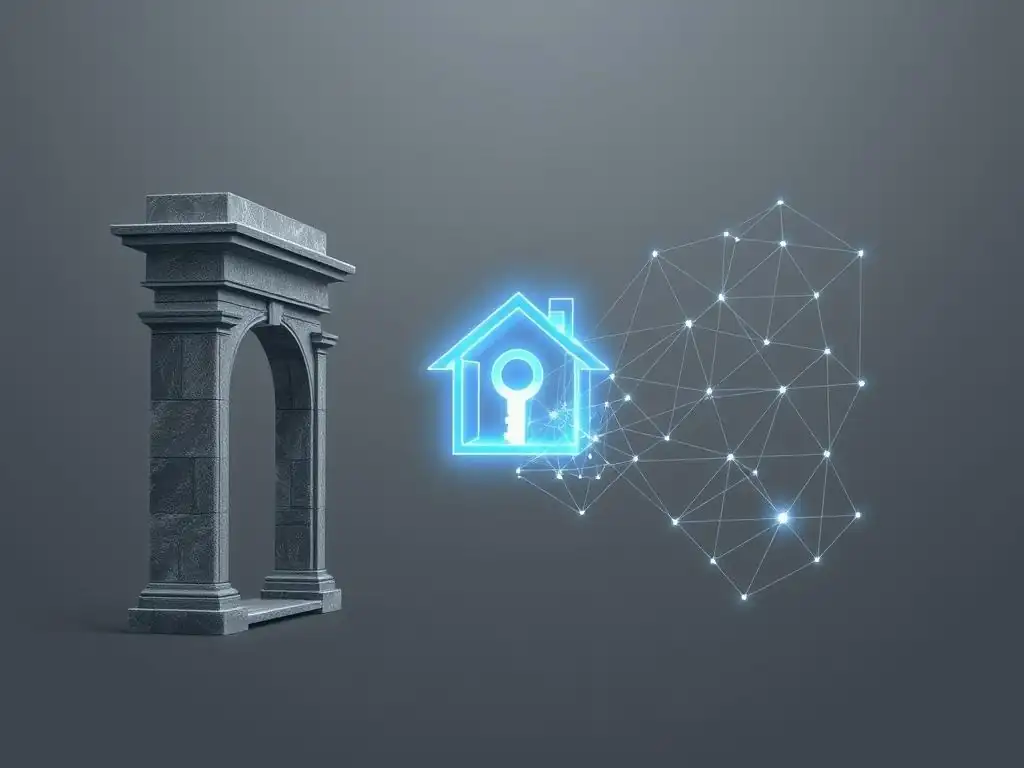
Blockchain Escrow vs. Traditional Escrow: A Feature-by-Feature Comparison
Comparing blockchain escrow and traditional escrow highlights key differences across various aspects:
- Security: Traditional escrow relies on the security measures of the escrow company and bank. Blockchain escrow uses cryptographic security and the immutability of the ledger, offering a tamper-resistant record.
- Transparency: Traditional escrow provides limited transparency, with parties relying on updates from the agent. Blockchain escrow offers high transparency (on-chain), allowing relevant parties to view transaction status in real-time.
- Automation: Traditional escrow is largely manual, requiring human verification and action. Blockchain escrow is automated via smart contracts, executing based on coded conditions.
- Cost: Traditional escrow involves significant fees (0.5-2% of value). Blockchain escrow has the potential for lower costs by reducing intermediary fees and administrative overhead, although transaction fees (gas fees) apply.
- Speed: Traditional escrow takes weeks to months. Blockchain escrow can potentially reduce the process to days or hours once conditions are met.
- Intermediaries: Traditional escrow requires a trusted human escrow agent. Blockchain escrow replaces the human intermediary with a trust-minimized smart contract.
- Accessibility: Traditional escrow is typically confined by geographical and banking system limitations. Blockchain escrow can facilitate cross-border transactions more easily.
| Feature | Traditional Escrow | Blockchain Escrow |
|---|---|---|
| Security | Bank/Company security, human processes | Cryptography, Immutability, Smart Contracts |
| Transparency | Limited, dependent on agent | High (on-chain), real-time visibility |
| Automation | Manual | Automated via Smart Contract |
| Cost | Significant (0.5-2%+) | Potentially Lower (reduced intermediaries) |
| Speed | Weeks to Months | Days to Hours (once conditions met) |
| Intermediary | Human Escrow Agent | Smart Contract (Trust-Minimized) |
| Accessibility | Geographic/Bank Limited | Potentially Global (internet access) |
Cost Analysis: Blockchain Escrow vs. Traditional Escrow
A detailed cost analysis reveals the potential for significant savings with blockchain escrow property transactions, although the landscape is still evolving. Traditional escrow fees typically range from 0.5% to 2% of the property's sale price, split between buyer and seller in many cases. For a $500,000 property, this could mean $2,500 to $10,000 in escrow fees alone, separate from title insurance, legal fees, and other closing costs which can add another 2-3%. The total closing costs can easily reach 3-5% of the sale price.
In contrast, blockchain escrow eliminates the need for a human escrow company's fee. The costs associated with blockchain escrow primarily include:
- Smart Contract Development/Platform Fee: A fee for using or deploying the specific blockchain escrow platform or smart contract template. This might be a flat fee or a small percentage, potentially much lower than traditional fees (e.g., a fraction of a percent or a fixed platform fee).
- Transaction Fees (Gas Fees): Costs associated with executing transactions on the blockchain (e.g., depositing funds, triggering the contract execution). These fees vary depending on network congestion and the complexity of the smart contract. While they can fluctuate, they are often relatively small compared to traditional fees for high-value transactions.
- Oracle Costs: If the smart contract relies on external data feeds (oracles) to verify conditions (like government registry updates), there might be associated costs for the oracle service.
While specific figures are still emerging as blockchain escrow platforms mature, the potential to reduce intermediary costs suggests overall savings. A transaction that might incur $15,000-$25,000 in combined escrow, title, and related fees traditionally might see these costs potentially reduced by 20-50% or more in a fully optimized blockchain ecosystem, primarily through the elimination of redundant manual processes and intermediary profit margins. However, this depends heavily on the maturity of the ecosystem, regulatory acceptance, and the specific platform used.
Challenges and Considerations for Implementing Blockchain Escrow
Regulatory Uncertainty and Legal Frameworks
One of the primary hurdles for widespread adoption of blockchain escrow property transactions is the current state of regulatory uncertainty and the lack of clear legal frameworks in many jurisdictions. Real estate law is deeply rooted in centuries of tradition and relies on established concepts of ownership, title, and contracts that are often tied to physical documents and centralized government registries. Integrating blockchain technology, particularly decentralized smart contracts and tokenized property, into this existing legal structure is complex.
Questions arise regarding the legal standing of a smart contract as an escrow agreement, the enforceability of its terms in court, and how disputes would be resolved if the code malfunctions or external data feeds are inaccurate. Furthermore, transferring legal title requires recognition by government land registries, most of which are not yet blockchain-enabled. Until clear regulations are established, and legal frameworks adapt to recognize and govern blockchain-based property transactions and escrow services, adoption may be limited to pilot projects or specific, forward-thinking jurisdictions.
Scalability and Interoperability Issues
Blockchain technology, particularly public blockchains, can sometimes face challenges related to scalability – the ability to handle a large volume of transactions quickly and efficiently. While significant advancements are being made, some networks can experience congestion, leading to slower transaction times and higher fees (gas costs), which could impact the speed and cost benefits of blockchain escrow for high-volume real estate markets. Private or consortium blockchains might offer better scalability for specific enterprise use cases, but they trade some decentralization for performance.
Interoperability is another key consideration. A successful blockchain escrow property transaction often relies on interaction with external systems: government land registries (even if they are becoming digital, they might not be on the same blockchain or any blockchain), identity verification services, and potentially lending platforms.
For blockchain escrow to function seamlessly, there needs to be reliable and secure ways for the smart contract to receive verifiable information from these external, often off-chain, sources (via oracles) and for the blockchain records to be recognized by traditional legal and financial systems. Building these bridges and ensuring secure data exchange is a significant technical challenge.
Security Risks and Smart Contract Audits
While blockchain is celebrated for its security, the implementation of blockchain escrow property transactions introduces new potential security risks, primarily related to the smart contracts themselves. Smart contracts are code, and like any code, they can contain bugs or vulnerabilities. A flaw in the smart contract governing an escrow agreement could lead to funds being locked permanently, released incorrectly, or even stolen if exploited by malicious actors. The immutable nature of blockchain means that once a faulty contract is executed, it can be extremely difficult or impossible to reverse the effects.
Therefore, rigorous auditing of smart contracts is absolutely critical before they are used for high-value transactions like real estate escrow. Expert security auditors must review the code line by line to identify potential vulnerabilities. Furthermore, the security of the oracles providing external data is crucial; compromised oracles could feed false information to the smart contract, leading to incorrect execution. While blockchain eliminates certain traditional risks, it necessitates a high degree of technical expertise and careful implementation to mitigate these new, code-based security challenges.
Adoption Barriers and User Education
Despite the compelling benefits, widespread adoption of blockchain escrow property transactions faces significant barriers related to user familiarity and education. The general public, including many real estate professionals, is often unfamiliar with blockchain technology, cryptocurrencies, smart contracts, and digital wallets. The perceived complexity and novelty of these concepts can create apprehension and resistance to change from established, albeit less efficient, processes.
Educating all stakeholders – buyers, sellers, real estate agents, lawyers, and regulators – about how blockchain escrow works, its benefits, and how to use it securely is essential for driving adoption. This includes explaining concepts like digital identity, tokenized assets, and the role of smart contracts in simple, accessible terms. Overcoming inertia within the established real estate industry, which has deep-seated practices and vested interests in the current system, also presents a significant challenge that requires clear demonstrations of value and ease of use.
The Future of Blockchain Escrow in Real Estate
Predictions for the Growth of Blockchain-Based Property Transactions
Industry analysts and blockchain proponents predict significant growth in the use of blockchain technology within the real estate sector, with blockchain escrow property transactions playing a pivotal role. While still in early stages globally, pilot projects and regulatory sandboxes are demonstrating feasibility. It's anticipated that within the next 5-10 years, blockchain-based systems for aspects of real estate, including escrow, will move from niche applications to becoming more mainstream, particularly in markets open to technological innovation.
The growth will likely be gradual, starting with specific use cases like fractional ownership, cross-border investments, or within specialized real estate platforms. As regulatory clarity improves and standardized protocols emerge, the technology's application is expected to expand to include traditional residential and commercial property transactions.
The increasing focus on efficiency, security, and transparency in real estate, coupled with the maturation of blockchain technology, positions blockchain escrow as a key component in the digital transformation of the industry. Some market reports project the tokenized real estate market, which heavily relies on secure transfer mechanisms like blockchain escrow, to reach billions or even trillions of dollars in value over the next decade.
Emerging Trends and Innovations in Blockchain Escrow
Several emerging trends and innovations are shaping the future of blockchain escrow for property transactions. One key trend is the development of specialized real estate blockchain platforms designed specifically to handle property tokenization, digital identities, and smart contract-based transactions, including escrow. These platforms aim to provide end-to-end solutions that integrate various aspects of the real estate lifecycle onto a single distributed ledger.
Another innovation involves the integration of decentralized identity solutions (DIDs) and verifiable credentials into the escrow process. This would allow parties to cryptographically prove their identity and eligibility without relying on centralized identity providers, enhancing privacy and security. Furthermore, advancements in oracle technology are crucial for reliably bringing off-chain data, such as inspection results or government record updates, onto the blockchain to trigger smart contract execution. Finally, ongoing work on blockchain interoperability standards will help connect different blockchain networks and traditional systems, making complex transactions involving multiple digital assets and data sources more feasible.
Industry Expert Perspectives on Blockchain Escrow Adoption
Industry experts generally view blockchain escrow property transactions as a promising area with transformative potential, though acknowledging the significant challenges ahead. Many experts emphasize that while the technology offers clear advantages in security, transparency, and efficiency, its adoption is intrinsically linked to the broader digital transformation of the real estate industry and the evolution of legal and regulatory frameworks.
According to reports and commentary from real estate technology analysts, key factors influencing adoption include overcoming regulatory hurdles, developing user-friendly interfaces, and achieving critical mass in terms of network participants. Experts suggest that initial adoption will likely be driven by specific segments, such as proptech innovators, large institutional investors engaged in cross-border deals, or developers focused on tokenized assets.
While acknowledging that fully replacing traditional escrow globally is a long-term prospect, there is a consensus that blockchain will increasingly play a role in specific functions of property transactions, starting with areas where current inefficiencies and risks are most pronounced, such as securing funds and automating conditional releases.
Case Studies of Blockchain Escrow in Real Estate
Case Study: Streamlining International Property Purchase with Blockchain Escrow
Consider a hypothetical case study where a buyer in Country A wishes to purchase a property in Country B. Traditionally, this involves navigating complex international banking regulations, potentially significant currency exchange fees, and relying on escrow agents in a foreign jurisdiction. The process can take months and incur substantial costs, possibly upwards of 5-7% of the transaction value when accounting for all fees and currency conversion spreads.
Using blockchain escrow property transactions, the buyer and seller agree to terms coded into a smart contract on a real estate-focused blockchain platform. The buyer deposits the purchase price in a stablecoin (like USDT or USDC) or tokenized fiat into the smart contract.
The contract is programmed to release the funds upon verification of property title transfer on a digital land registry in Country B (potentially integrated via an oracle) and digital confirmation of required legal reviews. This blockchain-based system provides real-time transparency on the fund's status, minimizes currency conversion steps (if stablecoins are used), and potentially reduces the transaction time from months to weeks or even days, while cutting down on international wire fees and foreign escrow agent costs, possibly reducing overall transaction costs by 2-3% or more in this complex scenario.
Case Study: Reducing Escrow Costs and Time with a Blockchain Platform
Imagine a real-world initiative (or a plausible scenario based on existing pilots) by a real estate development company or a proptech firm to sell new condominium units using a blockchain platform that includes integrated blockchain escrow services. In traditional sales, managing escrow for potentially hundreds of units involves significant administrative overhead, legal review for each contract, and processing fees for every transaction. Escrow costs per unit could range from a few thousand dollars to over ten thousand, depending on the price point.
By implementing blockchain escrow property transactions through their platform, the developer tokenizes the units and uses smart contracts for the purchase agreements and escrow. Buyers send funds (e.g., tokenized fiat or a major cryptocurrency) to the smart contract.
The contract holds the funds and is programmed to release them to the developer upon completion of construction milestones verified via oracles or authorized parties, and upon digital transfer of the unit token to the buyer. This approach significantly reduces the per-transaction escrow cost by automating the process and eliminating traditional escrow fees.
It also speeds up the release of funds to the developer as milestones are met, improving cash flow, and provides buyers with transparent, real-time updates on the status of their payment and the project's progress. This could potentially cut traditional escrow costs by 50% or more per unit and reduce the time funds are held in escrow after conditions are met from days to minutes.
Conclusion: Embracing Blockchain for Secure and Transparent Property Transactions
The Potential of Blockchain Escrow to Revolutionize the Real Estate Industry
Blockchain escrow property transactions represent a powerful application of distributed ledger technology with the potential to fundamentally revolutionize the real estate industry. By leveraging the inherent security, transparency, and automation capabilities of blockchain and smart contracts, this technology offers a compelling alternative to traditional escrow processes that are often slow, costly, and susceptible to fraud. The shift towards a trust-minimized system, where contractual terms are enforced by code rather than relying solely on human intermediaries, promises a more efficient and secure environment for buying and selling property.
From enhancing security against wire fraud and title issues to dramatically reducing transaction times and costs, the benefits are substantial. Furthermore, blockchain escrow facilitates innovative real estate models like fractional ownership and streamlines complex cross-border investments. While challenges related to regulation, scalability, and adoption remain, ongoing technological advancements and increasing industry interest suggest that blockchain-based escrow will play an increasingly vital role in the future of real estate.
Moving Towards a More Efficient and Trustworthy Property Transaction Ecosystem
The real estate sector is on the cusp of a significant transformation, moving towards a more efficient, transparent, and trustworthy ecosystem. The adoption of blockchain escrow property transactions is a key component of this evolution. As digital identities become more common, property titles are increasingly tokenized or recorded on digital registries, and legal frameworks adapt, the necessary infrastructure for widespread blockchain escrow will fall into place.
This future ecosystem envisions a process where buyers and sellers can conduct transactions with greater confidence, knowing that funds are held securely by an impartial smart contract and released automatically upon verifiable fulfillment of conditions. The increased transparency reduces information asymmetry, while automation cuts down on delays and administrative burdens. While the journey requires collaboration between technology providers, real estate professionals, legal experts, and regulators, the trajectory towards leveraging blockchain for secure and transparent property transactions is clear, promising a more streamlined experience for all participants in the property market.
Frequently Asked Questions
What are the primary benefits of using blockchain for escrow in property transactions?
Blockchain offers enhanced security and transparency in property transactions. It provides a decentralized and immutable ledger, reducing the risk of fraud and disputes. This also streamlines the escrow process.
How does blockchain improve the traditional escrow process for property transactions?
Blockchain replaces the traditional middleman with a smart contract, automating the release of funds. This reduces delays and costs, while increasing trust and efficiency. It allows for faster and more transparent transactions.
What role do smart contracts play in blockchain-based property escrow?
Smart contracts act as self-executing agreements, automatically releasing funds when pre-defined conditions are met. This eliminates the need for a traditional escrow agent and ensures fairness and impartiality. They automate the entire process.
What are the key regulatory considerations for using blockchain in property escrow transactions?
Regulatory frameworks are still evolving, but compliance with data privacy laws and anti-money laundering (AML) regulations is crucial. Understanding the legal implications of using smart contracts is also essential. Legal compliance is paramount.
What are the potential risks and challenges associated with implementing blockchain escrow for property transactions?
Challenges include scalability issues, smart contract vulnerabilities, and the need for widespread adoption. Educating stakeholders and ensuring interoperability with existing systems are also significant hurdles. Adoption and security are key concerns.
Final Reflection: Embracing Trust in the Digital Age
The exploration of blockchain's potential within escrow services for property transactions reveals a powerful intersection of technology and trust. The promise of secure, transparent, and efficient property transactions is no longer a futuristic fantasy, but a tangible possibility within our grasp. This shift has profound implications for how we perceive and engage with the real estate market, moving away from traditional intermediaries and embracing a decentralized, verifiable system.
This technological evolution isn't just about streamlining processes; it's about fundamentally reshaping the power dynamics within property transactions. The ability to verify ownership, track funds, and execute contracts with unprecedented transparency empowers individuals and fosters a more equitable landscape. This resonates deeply with the growing demand for ethical and accountable systems in all aspects of our lives. Trust is the glue of life. It's the most essential ingredient in effective communication. It's the foundational principle that holds all relationships.
- Stephen Covey. This quote aptly captures the essence of what blockchain-based escrow services aim to achieve: building trust in a traditionally opaque and often complex process.
As we stand on the cusp of this transformative era, let us not only marvel at the technological advancements but also consider the ethical responsibilities that accompany them. Let us strive to build blockchain-based escrow systems that are accessible, inclusive, and designed to protect the interests of all parties involved. Consider how you can contribute to this future, whether as a developer, an investor, or simply an informed citizen advocating for greater transparency and security in property transactions. The future of real estate is being written now, and your voice matters in shaping its narrative.
Unveil the Future of Secure Property Transactions!
Thank you for exploring how blockchain is transforming escrow services and making property transactions safer and more transparent. Now that you understand the potential, it's time to take action and help shape the future of real estate!
Here are a few ways you can get involved:
- Start researching blockchain-based escrow platforms. Find platforms that meet your needs and evaluate their features to ensure transparency and security in your transactions.
- Share this article with friends or colleagues interested in real estate or blockchain technology. Help spread awareness about this innovative approach!
- Consider joining local meetups or online groups focused on blockchain or real estate to discuss these advancements and connect with others interested in the field.
What new feature would you most like to see added to blockchain-based escrow services to improve security and transparency? Share your ideas in the comments!
Leave a Reply