
From Theory to Practice: Blockchain Projects Driving Environmental Change

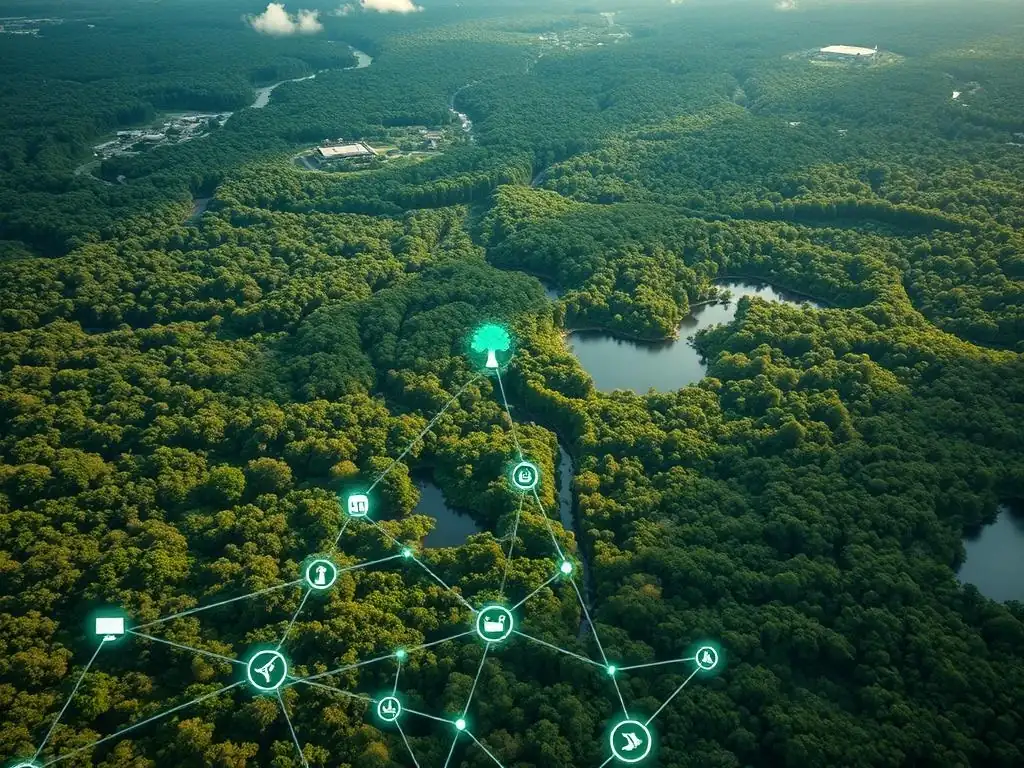
Welcome to Blockchain Trends, your compass in the rapidly evolving world of decentralized technology. Beyond the hype of cryptocurrencies, lies a revolution reshaping industries and impacting our planet. Intrigued by the potential? Dive in to uncover how blockchain environmental projects impact is becoming a tangible reality. Explore the compelling evidence and discover how this innovative technology is driving positive change, one block at a time.
- From Theory to Practice: Blockchain Projects Driving Environmental Change
- Blockchain Environmental Projects Impact: Real-World Applications
- Case Studies: Successful Blockchain Initiatives for Environmental Conservation
- Overcoming Challenges in Implementing Blockchain for Environmental Good
- The Future of Blockchain and Environmental Conservation: Trends and Predictions
- Measuring the Environmental Impact of Blockchain Solutions: Metrics and Evaluation
- Conclusion: Blockchain as a Catalyst for Environmental Transformation
-
Frequently Asked Questions
- How can blockchain technology be used in environmental projects?
- What are some examples of blockchain projects focused on environmental impact?
- What role does blockchain play in improving transparency in carbon offsetting?
- What challenges are associated with implementing blockchain in environmental projects?
- How will regulations impact the development of blockchain-based environmental solutions?
- Final Reflection: Blockchain's Green Potential Unleashed
- Ignite Change: Champion a Greener Future with Blockchain!
From Theory to Practice: Blockchain Projects Driving Environmental Change
The Promise of Blockchain Technology for a Greener Future
Blockchain technology, often associated primarily with cryptocurrencies, holds significant, yet often underestimated, potential for addressing global environmental challenges. Its core attributes — transparency, immutability, and decentralization — offer novel ways to track, verify, and incentivize sustainable practices. By creating tamper-proof records and enabling peer-to-peer interactions without intermediaries, blockchain can foster greater accountability and efficiency in environmental initiatives, potentially leading to a measurable Blockchain environmental projects impact. This technological shift moves beyond theoretical discussions, enabling the implementation of practical solutions for conservation, pollution tracking, and sustainable resource management.
The application of blockchain in environmental contexts is rapidly evolving. It's moving from conceptual frameworks to deployed projects that tackle issues like carbon emissions, waste management, and biodiversity loss. This transition is crucial because it demonstrates that blockchain is not just a financial tool but a versatile technology capable of supporting complex environmental systems. The promise lies in its ability to build trust and coordination among disparate stakeholders – governments, corporations, NGOs, and individuals – all working towards common environmental goals, thereby amplifying the potential Blockchain environmental projects impact.
Key Characteristics of Blockchain Enabling Environmental Solutions: Transparency, Traceability & Security
Transparency is a cornerstone of blockchain technology that is particularly valuable for environmental projects. Every transaction or data entry on a public or permissioned blockchain is visible to authorized participants, creating an open ledger of activities. This inherent transparency helps combat corruption and ensures that funds allocated for conservation or emissions reduction are used as intended. For instance, tracking climate finance flows on a blockchain can provide unprecedented clarity on where money is going and the projects it is supporting, making the Blockchain environmental projects impact easier to verify.
Traceability is another critical feature. Blockchain allows for the creation of a digital trail for physical assets, resources, or even actions. This enables end-to-end tracking of supply chains to verify sustainable sourcing, monitor the movement of waste materials, or record land use changes.
The immutability of the blockchain ensures that once data is recorded, it cannot be altered or deleted, providing a reliable history. This robust traceability is essential for proving compliance with environmental regulations or certifying the origin of eco-friendly products, directly contributing to a positive Blockchain environmental projects impact. Furthermore, the cryptographic security underpinning blockchain protects data integrity and prevents fraudulent activities, building trust in the environmental data collected and shared.
Blockchain Environmental Projects Impact: Real-World Applications
Tracking Carbon Footprints with Blockchain Technology: Enhanced Accountability
Tracking carbon emissions accurately across complex global supply chains and individual activities is a significant challenge. Traditional methods often rely on self-reporting and fragmented databases, which can lack transparency and verifiability. Blockchain offers a solution by creating immutable, shared ledgers where emissions data can be recorded directly from sources like smart meters, IoT devices, or verified audits. This allows for a more precise and trustworthy calculation of carbon footprints at various levels, from a single product to an entire organization's operations. The resulting enhanced accountability is a key aspect of the Blockchain environmental projects impact.
Several initiatives are exploring or implementing blockchain for carbon tracking. Some projects aim to tokenize carbon credits, making them more liquid and tradable, while ensuring that each token represents a verified reduction or removal of a specific amount of CO2 (e.g., 1 ton). Others focus on supply chain emissions, allowing companies to track and share the carbon intensity of their products from raw material extraction to delivery.
For example, a pilot project might track the emissions associated with transporting goods across continents, providing verifiable data that can inform reduction strategies and demonstrate a tangible Blockchain environmental projects impact. This level of granular, verifiable data is crucial for meeting climate targets and informing policy.
Supply Chain Transparency for Sustainable Products: Blockchain's Role
Ensuring that products are sourced and manufactured sustainably is increasingly important to consumers and regulators. However, complex global supply chains make it difficult to verify claims of ethical labor, sustainable forestry, or conflict-free mining. Blockchain's traceability feature provides a powerful tool to create transparent and verifiable records of a product's journey from origin to consumer.
By recording key data points at each stage – such as sourcing location, certifications, processing details, and transportation – a digital thread is created on the blockchain that is accessible to all authorized parties. This dramatically enhances supply chain transparency and contributes to a positive Blockchain environmental projects impact.
Consider the timber industry: blockchain can track logs from certified sustainable forests, through milling and manufacturing, to the final furniture product. Each step, potentially verified by third-party auditors or IoT sensors, is recorded on the ledger. This makes it difficult for illegally logged timber to enter the supply chain and allows consumers to scan a QR code on a product to see its verified history.
Similar applications exist for tracing minerals used in electronics, verifying sustainable fishing practices, or ensuring ethical sourcing of agricultural products. The verifiable transparency enabled by blockchain builds trust and incentivizes sustainable practices throughout the supply chain, showcasing a direct Blockchain environmental projects impact.
Empowering Conservation Efforts Through Decentralized Autonomous Organizations (DAOs)
Conservation projects, such as protecting endangered species or preserving rainforests, often face challenges related to funding transparency, coordination among stakeholders, and ensuring that resources reach the front lines effectively. Decentralized Autonomous Organizations (DAOs) offer a new governance model powered by blockchain that can address these issues. A conservation DAO can manage funds and decision-making through smart contracts and token-based voting, allowing a global community of supporters, scientists, and local communities to participate directly and transparently. This decentralized approach can empower local conservationists and ensure funds are allocated based on collective, verifiable decisions, enhancing the Blockchain environmental projects impact.
In a conservation DAO, donations can be received and held in a transparent treasury on the blockchain. Proposals for conservation activities – like hiring rangers, purchasing land, or implementing reforestation programs – can be submitted and voted upon by token holders. Smart contracts can then automatically release funds based on pre-defined conditions or successful votes, reducing administrative overhead and potential for misappropriation.
This model fosters a sense of ownership and direct participation among supporters, potentially unlocking new funding mechanisms for vital conservation work. The transparent and democratic nature of DAOs can significantly improve the efficiency and accountability of conservation projects, demonstrating a unique Blockchain environmental projects impact.
Case Studies: Successful Blockchain Initiatives for Environmental Conservation
Case Study 1: Plastic Bank - Empowering Waste Collectors and Reducing Ocean Plastic
Plastic Bank is a social enterprise that builds ethical recycling ecosystems in coastal communities and empowers collectors to exchange plastic waste for digital tokens, which can be redeemed for necessities like groceries, cooking fuel, or even school tuition. While not solely a blockchain project, they utilize blockchain technology, specifically in tracking the collected plastic and managing the credit system for collectors. This system ensures transparency in the collection process and provides a secure, immutable record of the plastic collected, preventing double-counting and ensuring collectors are fairly compensated.
Since its inception, Plastic Bank has established collection points in countries like Haiti, the Philippines, Indonesia, and Egypt. As of early 2023, the organization reported preventing over 70 million kilograms of plastic from entering the ocean – equivalent to more than 3.5 billion plastic bottles.
This plastic is then recycled into what they call 'Social Plastic,' which is sold to brands for use in new products. The blockchain-based system underpins the integrity of this process, allowing companies purchasing Social Plastic credits to verify the source and environmental benefit, highlighting a tangible Blockchain environmental projects impact on waste reduction and economic empowerment.
Case Study 2: Power Ledger - Enabling Peer-to-Peer Renewable Energy Trading
Power Ledger is an Australian technology company that uses blockchain to facilitate peer-to-peer (P2P) energy trading. Their platform allows households and businesses with rooftop solar panels or other renewable energy sources to sell their excess energy directly to neighbors or other consumers on the grid, rather than solely selling it back to the utility at a lower feed-in tariff.
The blockchain ledger tracks the generation and consumption of energy among participants transparently and automatically settles transactions using smart contracts. This system incentivizes the generation and local consumption of renewable energy, contributing to grid decentralization and reducing reliance on fossil fuels.
Power Ledger has deployed projects in several countries, including Australia, Thailand, and the United States. For example, a project in Fremantle, Australia, involved over 100 households trading solar energy. By enabling consumers to directly benefit from generating renewable energy and making it easier for others to buy clean energy locally, the platform encourages greater adoption of renewables. While specific figures on CO2 reduction solely attributable to the platform's trading volume are complex to isolate, the underlying mechanism supports a transition towards a decentralized, renewable energy grid, showcasing a significant potential Blockchain environmental projects impact in the energy sector.
Case Study 3: Treejer - Supporting Reforestation Efforts through Transparent Tracking
Treejer is a blockchain-based platform focused on supporting reforestation efforts globally. It allows individuals and organizations to fund tree planting projects and transparently track the growth and health of the trees using a combination of blockchain records and potentially satellite imagery or local reporting. When a tree is planted and verified, a 'Treejer Token' is created, representing the environmental value and ownership rights associated with that tree. These tokens can be held or traded, creating an economic incentive tied to successful tree growth and carbon sequestration.
The platform aims to connect tree planters (often local communities) with funders in a transparent and verifiable way. By recording each planting event and subsequent verification on the blockchain, Treejer provides an immutable record of the reforestation progress. While specific numbers of trees planted through Treejer can vary and are constantly growing, the model itself introduces accountability and traceability into reforestation finance, a sector that has sometimes lacked transparency. This verifiable tracking mechanism is crucial for demonstrating the real Blockchain environmental projects impact of funding contributions towards increasing forest cover and combating climate change.
Overcoming Challenges in Implementing Blockchain for Environmental Good

Scalability Issues and Blockchain's Environmental Footprint: Addressing Concerns
One of the primary criticisms leveled against blockchain technology, particularly proof-of-work (PoW) networks like Bitcoin, is their significant energy consumption and resulting environmental footprint. The computational power required for mining in PoW systems translates into substantial electricity usage, often sourced from fossil fuels. This poses a paradox when advocating for blockchain as an environmental solution.
However, it's crucial to distinguish between different types of blockchain technologies. Newer consensus mechanisms, such as proof-of-stake (PoS), consume drastically less energy – estimates suggest PoS networks can use over 99% less energy than PoW. As the industry transitions towards more energy-efficient protocols, the environmental cost of running blockchain applications is significantly reduced.
Beyond energy consumption, scalability remains a technical hurdle for many blockchain networks. Processing a high volume of transactions efficiently and cost-effectively is necessary for widespread adoption in large-scale environmental monitoring or supply chain tracking systems.
While public blockchains can face throughput limitations (e.g., Bitcoin processes around 7 transactions per second, Ethereum historically around 15-30 on PoW, though much higher post-merge to PoS and with Layer 2 solutions), ongoing research into scaling solutions like sharding, Layer 2 networks (e.g., optimistic rollups, zero-knowledge rollups), and alternative distributed ledger technologies is addressing these constraints. Successful implementation of large-scale Blockchain environmental projects impact depends heavily on these technical advancements.
Data Privacy and Security Considerations in Environmental Blockchain Applications
While transparency is a key benefit, certain environmental data may be sensitive or require privacy. For example, tracking the exact location of endangered species, proprietary corporate supply chain data, or sensitive land ownership information needs careful consideration regarding public accessibility. Simply putting all data on a public, open blockchain may not be appropriate or legally compliant. Designing blockchain solutions for environmental applications requires balancing the need for transparency and verifiability with data privacy and security requirements. This involves choosing the right type of blockchain (public, private, or consortium) and employing privacy-enhancing technologies.
Techniques like zero-knowledge proofs (ZKPs) can allow parties to verify the truth of a statement (e.g., "this product was sourced from a certified sustainable farm") without revealing the underlying sensitive data (e.g., the farm's exact location or owner's identity). Permissioned or private blockchains can restrict access to data to authorized participants, providing traceability and transparency within a defined group while keeping sensitive information confidential from the wider public.
Implementing robust access controls and cryptographic methods is essential to ensure data security and privacy, building trust among stakeholders and facilitating the responsible deployment of blockchain technology for a positive Blockchain environmental projects impact.
Regulatory Hurdles and the Need for Standardization
The regulatory landscape for blockchain technology is still evolving globally. Uncertainty around the legal status of tokens, smart contracts, and decentralized organizations can pose significant challenges for implementing environmental projects that rely on these technologies. Different jurisdictions may have conflicting rules regarding data ownership, liability for smart contract execution, or the recognition of blockchain-based environmental credits or certificates. This lack of regulatory clarity can hinder investment, slow down adoption, and create compliance risks for organizations attempting to leverage blockchain for environmental good.
Furthermore, the absence of widely accepted standards for environmental data representation and exchange on blockchain platforms complicates interoperability. For example, different projects might use varying methods to record carbon emissions data or define sustainable practices, making it difficult to aggregate data or ensure compatibility between different systems. Developing common data standards and best practices for blockchain-based environmental monitoring, reporting, and verification (MRV) is crucial. Collaboration between industry, regulators, and environmental bodies is needed to create a supportive legal framework and technical standards that can unlock the full potential Blockchain environmental projects impact.
The Future of Blockchain and Environmental Conservation: Trends and Predictions
Emerging Technologies: Combining Blockchain with IoT and AI for Enhanced Environmental Monitoring
The true power of blockchain in environmental applications is magnified when combined with other emerging technologies. The Internet of Things (IoT) enables the deployment of sensors in remote locations to collect real-time environmental data – such as air quality, water levels, soil moisture, or wildlife movements. Integrating these IoT devices with blockchain allows for the creation of an immutable and verifiable record of this data stream.
This prevents tampering with sensor readings and ensures data integrity, providing a trustworthy foundation for environmental monitoring and decision-making. For example, blockchain could secure data from sensors tracking pollution levels in a river or monitoring deforestation rates in a protected area, providing reliable evidence of environmental conditions.
Artificial Intelligence (AI) can analyze the vast amounts of data collected via IoT and secured on the blockchain. AI algorithms can identify patterns, predict environmental events (like floods or wildfires), or detect anomalies that might indicate illegal activities (like poaching or illegal dumping). By combining AI's analytical power with blockchain's data integrity and transparency, environmental monitoring becomes more sophisticated, accurate, and actionable. This synergy allows for proactive interventions and provides verifiable evidence for enforcement, significantly enhancing the potential Blockchain environmental projects impact through data-driven insights and trust.
Decentralized Finance (DeFi) for Green Investments: Funding Sustainable Projects
Decentralized Finance (DeFi), which leverages blockchain to recreate traditional financial instruments outside of centralized intermediaries, presents a promising avenue for funding environmental projects. DeFi platforms can enable the creation of "green" financial products, such as tokenized green bonds, carbon credit markets, or investment pools specifically dedicated to sustainable initiatives like renewable energy farms or conservation land trusts. By lowering transaction costs, increasing accessibility, and providing transparency over fund allocation through smart contracts, DeFi can potentially unlock new sources of capital for environmental efforts.
Tokenizing environmental assets or outcomes allows for fractional ownership and increased liquidity. For instance, a large-scale reforestation project could issue tokens representing future carbon sequestration credits, allowing a broader range of investors to participate and benefit from the project's success. DeFi protocols can automate the distribution of revenue generated from these projects or the trading of environmental tokens based on predefined rules embedded in smart contracts. This innovative approach to financing can accelerate the deployment of sustainable solutions and amplify the Blockchain environmental projects impact by channeling investment directly and transparently to where it's needed most.
The Role of Blockchain in Achieving Sustainable Development Goals (SDGs)
The United Nations' Sustainable Development Goals (SDGs) provide a global framework for addressing pressing economic, social, and environmental challenges by 2030. Blockchain technology has the potential to contribute to the achievement of several SDGs, particularly those related to climate action (SDG 13), life on land (SDG 15), clean energy (SDG 7), responsible consumption and production (SDG 12), and partnerships for the goals (SDG 17). By providing tools for transparent tracking, verifiable reporting, and efficient resource allocation, blockchain can help monitor progress towards these goals and ensure accountability among stakeholders.
For example, blockchain can support SDG 13 by enabling transparent carbon markets and tracking climate finance. It can contribute to SDG 15 by providing verifiable records for land use, deforestation monitoring, and conservation efforts. For SDG 7, it can facilitate peer-to-peer renewable energy trading.
Furthermore, blockchain's ability to create transparent and immutable records can improve reporting mechanisms for all SDGs, making it easier to measure progress and identify areas needing more attention. The inherent transparency and trust-building capabilities of blockchain make it a valuable tool for fostering the global collaboration required to achieve the ambitious targets set out in the SDGs, significantly contributing to the overall Blockchain environmental projects impact on a global scale.
Measuring the Environmental Impact of Blockchain Solutions: Metrics and Evaluation
Defining Key Performance Indicators (KPIs) for Blockchain-Based Environmental Projects
Accurately assessing the Blockchain environmental projects impact requires defining clear and measurable Key Performance Indicators (KPIs). These KPIs should be specific to the environmental challenge being addressed and the solution being implemented.
For a project tracking carbon emissions, relevant KPIs might include tons of CO2 equivalent avoided or reduced, the number of participants reporting emissions on the platform, or the percentage increase in data accuracy compared to previous methods. For a waste management project, KPIs could be the amount of plastic collected and recycled (in kilograms or tons), the number of collectors empowered, or the reduction in waste entering landfills or oceans.
For reforestation projects, KPIs might include the number of trees planted, the survival rate of planted trees over a specific period, or the area of land under restoration. In renewable energy trading platforms, relevant KPIs could be the volume of peer-to-peer energy traded (in kWh), the number of households participating, or the percentage increase in local renewable energy consumption.
Defining these quantitative metrics upfront is crucial for evaluating the effectiveness of the blockchain solution and demonstrating its tangible contribution to environmental improvement. These KPIs provide the data necessary to move beyond theoretical claims and quantify the real Blockchain environmental projects impact.
Assessing the Long-Term Sustainability of Blockchain Initiatives
Beyond initial impact metrics, assessing the long-term sustainability of blockchain environmental projects is vital. This involves considering the economic viability, technical resilience, and social acceptance of the initiative over time. An economically sustainable project generates sufficient revenue or secures consistent funding to cover its operational costs, including blockchain network fees (if applicable), development, maintenance, and outreach. Projects relying solely on grants may struggle for long-term survival unless a viable business model is developed. The economic model should also ideally incentivize continued participation and positive environmental behavior.
Technical sustainability depends on the chosen blockchain technology's scalability, energy efficiency, and ongoing development support. As mentioned earlier, opting for energy-efficient protocols is crucial for environmental projects. The platform must also be robust enough to handle growing data volumes and user bases.
Social sustainability involves ensuring the project is accepted and actively supported by the communities it aims to benefit. This requires inclusive governance models (like DAOs), clear communication, and ensuring that the technology serves the needs of local stakeholders. Projects that successfully integrate economic, technical, and social considerations are more likely to achieve a lasting Blockchain environmental projects impact.
How to Accurately Measure the Environmental Impact of Blockchain Projects
Accurately measuring the environmental impact of any project, including those utilizing blockchain, requires a rigorous methodology. This often involves establishing a baseline – the environmental conditions or metrics before the project was implemented. The project's impact is then measured as the change from this baseline. For instance, measuring the reduction in ocean plastic requires knowing the amount entering the ocean in a specific area before a collection project began. Tracking carbon reduction needs a baseline calculation of emissions from a specific activity or region.
Measurement methodologies should be transparent, verifiable, and ideally align with established environmental accounting standards (e.g., GHG Protocol for carbon emissions). Blockchain's role is primarily to provide a trustworthy infrastructure for collecting, storing, and sharing the data used in these calculations. Smart contracts can potentially automate parts of the measurement and reporting process, reducing the potential for human error or manipulation.
Third-party audits and verification are also critical to lend credibility to the reported Blockchain environmental projects impact. While blockchain ensures data integrity on the ledger, the accuracy of the data input into the blockchain remains paramount and requires careful design and verification processes.
Conclusion: Blockchain as a Catalyst for Environmental Transformation
Embracing Innovation for a Sustainable Future with Blockchain
Blockchain technology is demonstrating its potential to be a powerful catalyst for environmental transformation. Moving beyond its origins in cryptocurrency, its core attributes of transparency, traceability, and security are being leveraged to build innovative solutions for some of the world's most pressing environmental challenges. From enhancing the accountability of carbon tracking and bringing transparency to sustainable supply chains to empowering grassroots conservation efforts through decentralized governance models, the real-world Blockchain environmental projects impact is beginning to take shape.
The case studies of initiatives like Plastic Bank, Power Ledger, and Treejer showcase diverse applications where blockchain is not just a theoretical concept but a practical tool creating tangible environmental benefits. While challenges related to scalability, energy consumption of certain networks, data privacy, and regulatory clarity persist, ongoing technological advancements and collaborative efforts are actively addressing these hurdles. The transition towards more energy-efficient consensus mechanisms and the development of robust scaling and privacy solutions are paving the way for broader adoption.
The Potential for Widespread Adoption of Blockchain Environmental Solutions
The future holds significant promise for the widespread adoption of blockchain environmental solutions. As the technology matures and becomes more accessible, and as the urgency of environmental action grows, we can expect to see blockchain integrated into more systems designed to monitor, manage, and protect our planet. The convergence of blockchain with other technologies like IoT and AI will unlock even greater capabilities for real-time environmental monitoring and data-driven decision-making. Furthermore, the application of DeFi principles to green finance can unlock new and efficient funding mechanisms for sustainable projects globally.
Ultimately, the success of blockchain in driving environmental change depends on continued innovation, collaboration among diverse stakeholders, and the development of supportive regulatory frameworks and technical standards. By providing a foundation of trust and transparency in environmental data and transactions, blockchain can help overcome barriers that have hindered traditional approaches. Embracing this technology thoughtfully and strategically offers a path towards more effective, accountable, and scalable environmental solutions, contributing significantly to a sustainable future and demonstrating a profound Blockchain environmental projects impact on a global scale.
Frequently Asked Questions
How can blockchain technology be used in environmental projects?
Blockchain offers transparency and traceability for environmental initiatives, enabling secure data management and verifiable carbon offsetting. This can improve accountability and prevent greenwashing.
What are some examples of blockchain projects focused on environmental impact?
Examples include platforms for carbon credit trading, systems for tracking sustainable supply chains, and initiatives that incentivize eco-friendly behavior through tokenized rewards.
What role does blockchain play in improving transparency in carbon offsetting?
Blockchain provides an immutable record of carbon offset transactions, ensuring greater transparency and preventing double-counting. This increases trust in carbon offset markets.
What challenges are associated with implementing blockchain in environmental projects?
Challenges include the energy consumption of some blockchain networks, the need for standardization across projects, and the lack of widespread adoption by stakeholders.
How will regulations impact the development of blockchain-based environmental solutions?
Regulations can provide clarity and legitimacy to blockchain projects, but overly restrictive rules could stifle innovation. A balanced approach is essential for sustainable growth.
Final Reflection: Blockchain's Green Potential Unleashed
The journey from theoretical discussions about blockchain's potential to tangible environmental projects is now undeniably underway. The real-world impact of blockchain environmental projects is no longer a distant promise, but a demonstrable reality, with initiatives across diverse sectors proving its capacity to revolutionize sustainability efforts. The projects highlighted in this article serve as compelling evidence that blockchain technology can be a powerful tool in addressing some of the planet's most pressing ecological challenges.
This shift from concept to implementation is profoundly influencing the cultural understanding of technology's role in environmental stewardship. Witnessing blockchain's application in areas like carbon offsetting, supply chain transparency, and renewable energy trading instills a sense of hope and empowers individuals to envision a future where technology actively contributes to ecological balance. We are at the cusp of a technological revolution that can redefine our relationship with the environment. Blockchain, with its inherent transparency and security, offers a unique opportunity to build trust and accountability into our sustainability efforts.
This quote encapsulates the transformative potential that blockchain holds for a greener future.
As we conclude this exploration of blockchain's environmental impact, I urge you to consider how you can contribute to this evolving landscape. Reflect on the projects discussed, explore the possibilities within your own sphere of influence, and embrace the opportunity to be a part of a technological revolution that prioritizes the health of our planet. Let's collectively harness the power of blockchain to build a more sustainable and equitable future for all.
Ignite Change: Champion a Greener Future with Blockchain!
Thank you for exploring how blockchain is transforming environmental efforts. You’ve seen how this technology can promote transparency and sustainability. Now, it's time to turn knowledge into meaningful action.
Here's how you can help create a more sustainable world:
- Research and identify a blockchain-based environmental project that aligns with your values, and consider offering your skills or resources to support it. Your contribution can make a real difference.
- Follow Blockchain Trends on social media and share this article with your network to raise awareness and inspire others to get involved.
- Think about ways blockchain could address specific environmental challenges in your community. Could you develop a proposal and present it to local organizations?
Are you ready to become a blockchain-powered environmental advocate? What’s the first step you will take today to bring innovative solutions to environmental action?
Leave a Reply