
Cosmos: The Internet of Blockchains – Realizing the Promise

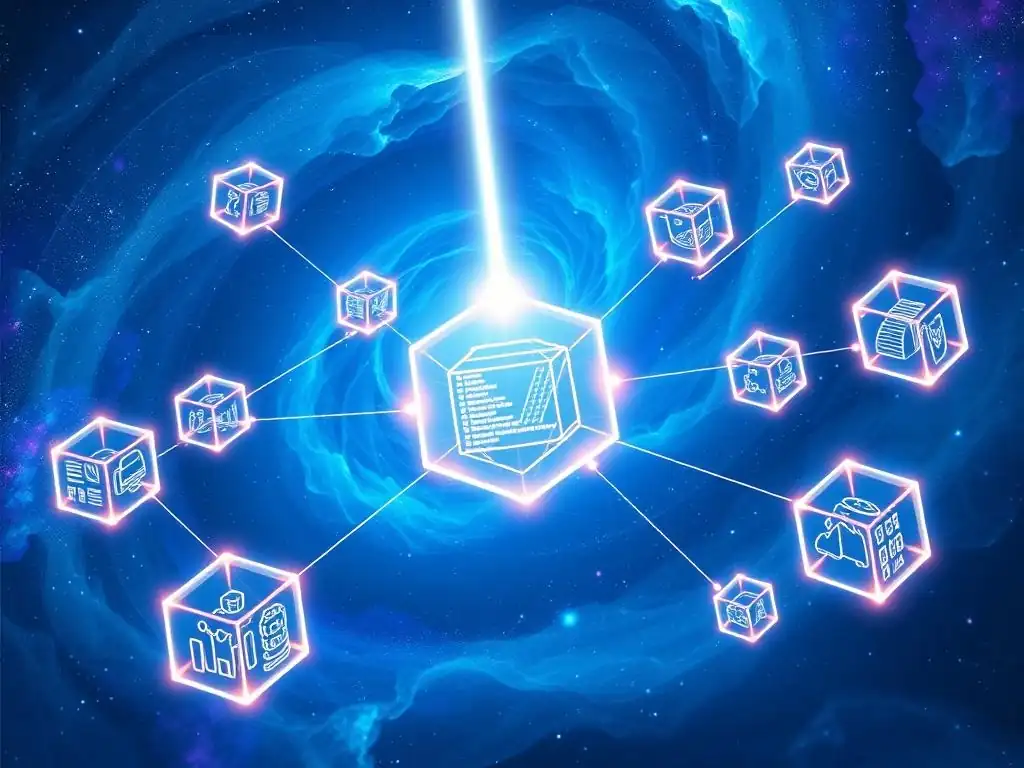
Welcome to Blockchain Trends, your compass in the rapidly evolving world of decentralized technologies. Beyond the hype of cryptocurrencies, lies a universe of possibilities. Are you ready to delve into the future of interconnected blockchains? This week, we're exploring Cosmos: The Internet of Blockchains, a deep dive into realizing its promise and the broader landscape of blockchain interoperability solutions future. Discover how Cosmos is shaping the next generation of decentralized systems and what it means for the future of blockchain innovation. Intrigued? Let's begin.
Cosmos: The Internet of Blockchains – Realizing the Promise
- Introduction to Cosmos: A Vision for Blockchain Interoperability
- Cosmos Architecture: How the Internet of Blockchains Works
- Key Features and Advantages of the Cosmos Network
- Cosmos vs. Ethereum vs. Polkadot: A Comparative Analysis of Blockchain Platforms
- Use Cases and Applications of the Cosmos Network
- The Future of Cosmos: Roadmap and Development
- Conclusion: Cosmos and the Realization of Blockchain's Potential
-
Frequently Asked Questions
- What is the core problem that Cosmos aims to solve?
- How does Cosmos achieve interoperability between different blockchains?
- What are some key benefits of using Cosmos for blockchain development?
- What is the role of the Cosmos Hub in the Cosmos ecosystem?
- What is the future outlook for Cosmos and blockchain interoperability solutions in general?
- Final Reflection: Embracing the Interconnected Blockchain Future
- Ignite Your Interchain Journey!
Introduction to Cosmos: A Vision for Blockchain Interoperability
Understanding the Need for Blockchain Interoperability Solutions
The blockchain space, since the inception of Bitcoin, has experienced exponential growth, leading to a proliferation of diverse blockchains, each designed with unique features and functionalities. However, this expansion has also created silos, hindering seamless communication and value transfer between different blockchain networks. This fragmentation poses a significant challenge to the widespread adoption and realization of blockchain's full potential.
Imagine the internet without the ability for different websites and servers to communicate – this is the current state of many blockchains. The need for blockchain interoperability solutions arises from the fundamental desire to break down these barriers, enabling blockchains to interact, share data, and transact with each other efficiently and securely. Without interoperability, the promise of a truly interconnected and decentralized web, often referred to as Web3, remains significantly limited.
The lack of interoperability restricts innovation and user experience. For instance, assets locked on one blockchain cannot be easily utilized in applications built on another, limiting the composability and network effects that are crucial for a thriving ecosystem. Users are often forced to navigate complex bridges and centralized exchanges to move assets between chains, introducing friction, security risks, and higher costs.
Furthermore, developers are constrained to build within the confines of a single blockchain ecosystem, limiting their reach and the potential impact of their applications. Blockchain interoperability solutions aim to address these limitations by creating pathways for blockchains to connect and collaborate, fostering a more unified, efficient, and user-friendly blockchain landscape. This is where projects like Cosmos step in, offering a vision for a future where blockchains are not isolated islands but interconnected components of a larger, decentralized internet.
Cosmos's Role in the Future of Decentralized Ecosystems
Cosmos envisions a future where numerous blockchains, each tailored for specific applications and use cases, coexist and communicate seamlessly. It aims to be the "Internet of Blockchains," a network of interconnected blockchains capable of transferring value and data between each other in a decentralized and trustless manner.
This vision directly addresses the critical need for blockchain interoperability solutions future, moving away from a fragmented landscape towards a cohesive and collaborative ecosystem. Cosmos is not just about bridging existing blockchains; it provides a framework and tools for building new, interoperable blockchains from the ground up, ensuring that future decentralized applications can leverage the strengths of multiple specialized chains.
Cosmos's approach is fundamentally different from simply building bridges between existing blockchains. It provides a standardized protocol and architecture for new blockchains to be built in a way that makes them inherently interoperable. This proactive approach, centered around the Inter-Blockchain Communication (IBC) protocol, allows for a more organic and scalable solution to interoperability.
By focusing on creating a platform for interconnected blockchains, Cosmos aims to unlock the true potential of blockchain technology, enabling complex, cross-chain applications and use cases that are currently difficult or impossible to implement. This focus on building a network of interconnected blockchains positions Cosmos as a key player in shaping the future of decentralized ecosystems, paving the way for a more interconnected and collaborative blockchain world.
Cosmos Architecture: How the Internet of Blockchains Works
The Tendermint Consensus Engine: Powering Secure Blockchains
At the heart of the Cosmos network lies Tendermint Core, a robust and high-performance consensus engine. Tendermint is not just a consensus algorithm; it's a complete, ready-to-use consensus and networking engine that can be used to build Byzantine Fault Tolerant (BFT) applications. It packages the consensus algorithm (Tendermint consensus) with networking and application interfaces, allowing developers to focus on the application logic rather than the complex underlying infrastructure.
This modularity and ease of use have made Tendermint a popular choice for building blockchains, including many within the Cosmos ecosystem and beyond. Its proven track record in powering secure and reliable blockchain networks is a cornerstone of Cosmos's architecture.
Tendermint consensus itself is based on classic BFT algorithms, known for their strong safety guarantees even in asynchronous network environments. It ensures that even if up to one-third of validators are malicious or fail, the network will continue to operate and reach consensus on new blocks. This resilience is crucial for building secure and trustworthy blockchain applications.
Furthermore, Tendermint is designed for high performance, capable of achieving block times of around 1 second, significantly faster than many other consensus mechanisms. This speed and security combination makes Tendermint a powerful foundation for the Cosmos network and the blockchains built upon it, enabling fast and reliable transactions within the ecosystem and contributing significantly to the overall performance of blockchain interoperability solutions.
The Inter-Blockchain Communication (IBC) Protocol: Enabling Seamless Communication
The Inter-Blockchain Communication (IBC) protocol is the key to Cosmos's vision of interoperability. It acts as the foundational protocol that enables secure and reliable communication between different blockchains within the Cosmos network. IBC is designed to be a generalized and versatile protocol, allowing for the transfer of not just tokens but also arbitrary data between connected blockchains.
This broad capability opens up possibilities for a wide range of cross-chain applications, from decentralized exchanges spanning multiple chains to complex smart contracts that leverage functionalities across different blockchain environments. The development and implementation of IBC is a significant step towards realizing the promise of blockchain interoperability solutions future.
IBC operates on the principle of "relayers," which are off-chain processes that relay packets between blockchains. When a blockchain wants to send a message to another blockchain, it posts a message onto its chain, and relayers pick up this message and submit it to the destination chain. IBC utilizes light clients on each chain to verify the consensus and state of the counterparty chain, ensuring that communication remains trustless and secure without relying on a central intermediary.
This decentralized architecture and reliance on cryptographic proofs for cross-chain communication are crucial for maintaining the security and integrity of the Cosmos network. The successful implementation and adoption of IBC are pivotal for realizing the full potential of Cosmos as the Internet of Blockchains.
Cosmos Hub and Zones: The Central Network and Independent Blockchains
The Cosmos network is structured around the Cosmos Hub and Zones. The Cosmos Hub serves as the central router and backbone of the network. It is a blockchain itself, secured by Tendermint consensus, and its primary role is to facilitate the exchange of tokens and data between different Zones.
Think of the Cosmos Hub as a major internet exchange point, connecting various independent networks (Zones). The ATOM token is the native token of the Cosmos Hub, used for staking, governance, and transaction fees on the Hub. The Hub's stability and security are paramount, as it underpins the interoperability of the entire Cosmos ecosystem.
Zones, on the other hand, are independent blockchains that are sovereign and can be customized to suit specific application needs. These Zones are connected to the Cosmos Hub via IBC, enabling them to communicate and transact with each other through the Hub. Each Zone can have its own consensus mechanism (although many use Tendermint for its proven security and performance), its own validators, and its own governance structure.
This modular and independent design is a key strength of Cosmos, allowing for a highly scalable and adaptable ecosystem. The Cosmos Hub and Zones architecture provides a framework for building a decentralized network of interconnected blockchains, each contributing to the overall functionality and robustness of the Internet of Blockchains, and providing concrete blockchain interoperability solutions.
Key Features and Advantages of the Cosmos Network
Horizontal Scalability Solutions: Addressing Blockchain Scalability Challenges
One of the most significant advantages of the Cosmos network is its inherent horizontal scalability. Traditional blockchains often face scalability limitations, struggling to handle increasing transaction volumes and user adoption. Cosmos addresses this challenge through its architecture, which allows for the creation of parallel blockchains (Zones) that can operate independently and process transactions concurrently.
Instead of relying on a single, monolithic blockchain to handle all transactions, Cosmos distributes the load across multiple Zones, each capable of handling a specific set of applications or use cases. This horizontal scaling approach is crucial for building blockchain applications that can scale to meet the demands of mass adoption and provides a viable solution for blockchain scalability challenges.
Each Zone in the Cosmos network acts as a separate blockchain, capable of processing its own transactions and managing its own state. By connecting these Zones through the Cosmos Hub and IBC, Cosmos effectively creates a network of interconnected blockchains that can scale horizontally. As demand grows, new Zones can be added to the network to accommodate increased transaction volume and application complexity, without compromising the performance or security of the existing network.
This scalability is a significant advantage compared to monolithic blockchains that often require complex and sometimes risky layer-2 solutions to achieve similar scalability improvements. Cosmos's architecture provides a natural and robust framework for achieving blockchain interoperability solutions future and scalability simultaneously.
Customizability and Flexibility: Building Tailored Blockchains with the Cosmos SDK
The Cosmos SDK (Software Development Kit) is a powerful framework that empowers developers to build custom blockchains tailored to specific needs. It is a modular and open-source framework that provides pre-built modules for common blockchain functionalities, such as consensus, governance, and staking. Developers can leverage these modules and customize them or build their own modules to create blockchains with unique features and functionalities.
This flexibility and customizability are key advantages of the Cosmos ecosystem, allowing for the creation of application-specific blockchains that are optimized for particular use cases. The Cosmos SDK significantly lowers the barrier to entry for building blockchains and promotes innovation within the decentralized space.
Using the Cosmos SDK, developers can build blockchains in Go programming language, benefiting from Go's performance, concurrency, and extensive libraries. The SDK provides a structured approach to blockchain development, guiding developers through the process of defining application logic, state transitions, and message handling. It also integrates seamlessly with Tendermint Core, providing a robust and secure consensus engine.
The combination of the Cosmos SDK and Tendermint allows developers to rapidly prototype and deploy custom blockchains that are not only interoperable within the Cosmos network but also highly performant and secure. This ease of development and customization is a significant driver for the growth of the Cosmos ecosystem and the development of diverse blockchain interoperability solutions.
Sovereignty and Governance: Empowering Individual Blockchain Communities
Cosmos emphasizes blockchain sovereignty, meaning that each Zone within the network is an independent blockchain with its own governance and decision-making processes. Unlike some interoperability solutions that might impose centralized control or governance structures, Cosmos respects the autonomy of individual blockchains. Each Zone can define its own rules, upgrade its software independently, and govern its own community. This sovereignty is crucial for fostering innovation and allowing blockchain communities to evolve and adapt to their specific needs and priorities. Cosmos provides the infrastructure for interoperability without sacrificing the independence and self-governance of individual blockchains.
The governance of each Zone is typically managed by its community of token holders, who can participate in proposals and voting to shape the future direction of their blockchain. This decentralized governance model aligns with the core principles of blockchain technology and empowers users to have a direct say in the evolution of the networks they use.
Cosmos itself also has its own governance mechanism for the Cosmos Hub, allowing ATOM token holders to participate in decisions related to the Hub's development and upgrades. This commitment to decentralized governance at both the Hub and Zone levels reinforces Cosmos's vision of a truly decentralized and community-driven Internet of Blockchains, providing a robust and sustainable foundation for blockchain interoperability solutions future.
Cosmos vs. Ethereum vs. Polkadot: A Comparative Analysis of Blockchain Platforms
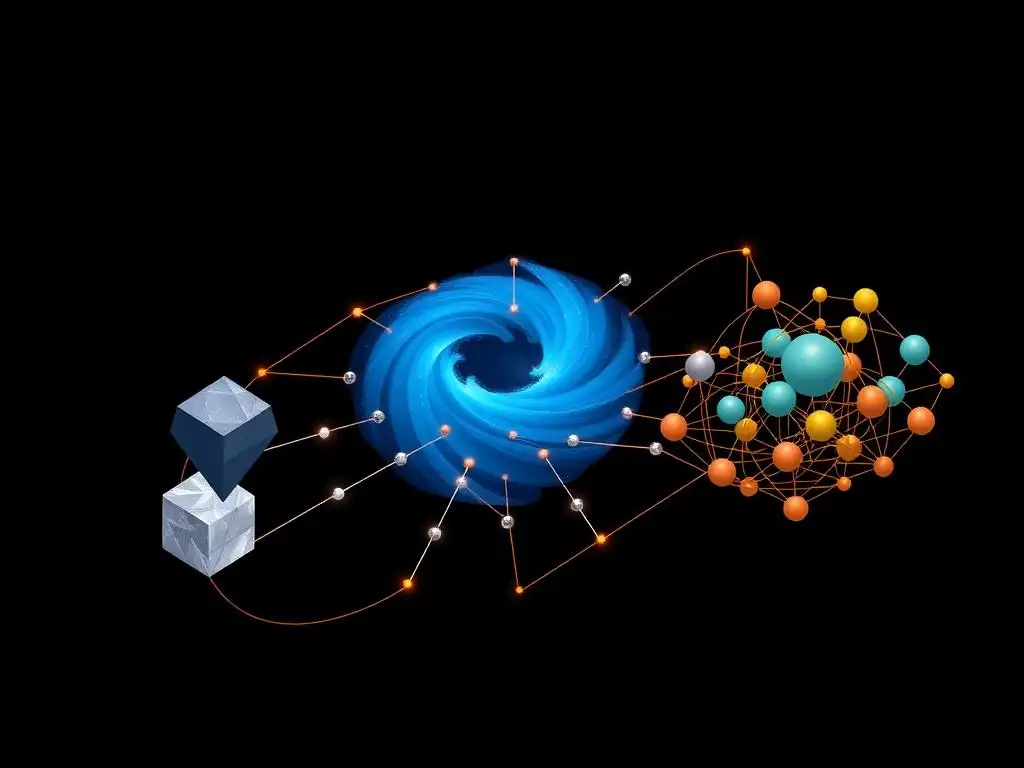
Blockchain Interoperability: Cosmos, Ethereum, and Polkadot Compared
When comparing Cosmos, Ethereum, and Polkadot in terms of blockchain interoperability, distinct approaches emerge. Cosmos is architected from the ground up for interoperability, with IBC as a core protocol for connecting independent blockchains (Zones). It focuses on creating a network of sovereign blockchains designed to communicate with each other. Polkadot, similarly, aims for interoperability but through a different structure.
Polkadot uses a central Relay Chain to which parachains (parallel blockchains) connect. The Relay Chain provides shared security and interoperability for parachains. Ethereum, while not initially designed for interoperability in the same way, is evolving with Layer-2 solutions and cross-chain bridges to connect to other blockchains. However, native interoperability is not a fundamental design principle of Ethereum's base layer like it is for Cosmos and Polkadot.
In terms of approach, Cosmos emphasizes blockchain sovereignty and application-specific blockchains. Each Zone is designed to be independent and tailored for a specific purpose, communicating through IBC. Polkadot, while also allowing for parachain customization, focuses more on shared security provided by the Relay Chain.
Parachains in Polkadot benefit from the pooled security of the Relay Chain validators. Ethereum's interoperability efforts are more focused on bridging to existing blockchains and scaling through Layer-2 solutions, rather than creating a network of inherently interoperable blockchains from scratch. Therefore, Cosmos and Polkadot are more directly competing in the space of native blockchain interoperability solutions future, while Ethereum's approach is evolving to address interoperability needs in a different manner.
Scalability and Performance: A Head-to-Head Comparison
Comparing scalability and performance, Cosmos, Ethereum, and Polkadot also present different profiles. Cosmos's horizontal scalability through Zones is a significant advantage. Each Zone can process transactions independently, and the network can scale by adding more Zones. Tendermint consensus within each Zone contributes to fast block times (around 1 second). Polkadot also offers parallel processing through parachains, connected to the Relay Chain.
The performance of Polkadot parachains is influenced by the Relay Chain and the consensus mechanism used. Ethereum's base layer, while widely adopted, has faced scalability challenges. Ethereum 2.0 aims to address scalability through sharding, but the full rollout is still ongoing. Currently, Ethereum relies heavily on Layer-2 solutions like rollups to improve scalability and transaction throughput.
In terms of transaction speed and throughput, Cosmos and Polkadot, with their parallel processing architectures, generally offer higher potential scalability compared to the current Ethereum mainnet. Cosmos, with Tendermint, boasts fast finality and block times. Polkadot's performance depends on the parachain and Relay Chain dynamics, but it is also designed for high throughput.
Ethereum's Layer-2 solutions are improving transaction speeds and reducing fees, but the base layer's inherent scalability limitations remain a challenge until Ethereum 2.0 is fully implemented. Thus, for applications requiring high scalability and performance, especially in the context of blockchain interoperability solutions future, Cosmos and Polkadot offer architectures designed for these demands, while Ethereum is actively evolving to meet these needs.
Ecosystem Development and Adoption: Evaluating Community Growth
Ecosystem development and adoption are crucial metrics for evaluating the success and potential of blockchain platforms. Ethereum boasts the largest and most mature ecosystem, with a vast number of decentralized applications (dApps), developers, and users. Its first-mover advantage and strong network effects have contributed to its dominant position. Polkadot, while younger than Ethereum, has been rapidly growing its ecosystem, attracting developers and projects building on its parachain platform.
Polkadot's focus on interoperability and shared security has resonated with many projects seeking to build interconnected and scalable applications. Cosmos also has a vibrant and expanding ecosystem, with a strong focus on application-specific blockchains and interoperability. The Cosmos SDK has empowered numerous projects to build their own blockchains, contributing to a diverse and growing ecosystem.
In terms of community size and developer activity, Ethereum currently leads, followed by Polkadot and Cosmos, which are both experiencing significant growth. However, in terms of the number of independent blockchains and interoperable zones, Cosmos has a unique advantage. The number of Zones connected via IBC is steadily increasing, demonstrating the realization of Cosmos's vision of an Internet of Blockchains.
Polkadot's parachain auctions have also driven ecosystem growth, attracting projects to secure parachain slots. While Ethereum's ecosystem is the most established, Cosmos and Polkadot are rapidly expanding their communities and project deployments, particularly in the realm of blockchain interoperability solutions, showing strong potential for future growth and adoption in the evolving blockchain landscape.
Use Cases and Applications of the Cosmos Network
Decentralized Finance (DeFi) on Cosmos: Exploring Opportunities
Decentralized Finance (DeFi) is a prominent use case for the Cosmos network, leveraging its interoperability and scalability to create innovative financial applications. Cosmos enables the development of cross-chain DeFi protocols that can access liquidity and assets across multiple blockchains. This is particularly relevant in a multi-chain future where assets and users are distributed across different networks.
By utilizing IBC, DeFi applications built on Cosmos can facilitate seamless trading, lending, borrowing, and yield farming across various Zones, creating a more interconnected and efficient DeFi ecosystem. The focus on blockchain interoperability solutions future is directly applicable to enhancing DeFi's capabilities and reach.
Several DeFi projects are already thriving within the Cosmos ecosystem. Osmosis, a decentralized exchange (DEX) built on Cosmos, is a prime example, showcasing the potential of cross-chain DeFi. Other projects are exploring lending platforms, stablecoins, and yield aggregators that leverage IBC to interact with assets and users on different Cosmos Zones.
The Cosmos SDK makes it easy to build custom DeFi protocols with specific features and functionalities, while IBC provides the crucial interoperability layer to connect these protocols and create a more unified and accessible DeFi landscape. The growth of DeFi on Cosmos demonstrates the practical applications of its interoperability-focused architecture and its potential to contribute to the broader DeFi revolution.
Enterprise Blockchain Solutions: Implementing Cosmos in Business
Beyond DeFi, Cosmos is also gaining traction in enterprise blockchain solutions, offering a framework for businesses to build custom, interoperable blockchains tailored to their specific needs. Enterprises are increasingly exploring blockchain technology for supply chain management, digital identity, data provenance, and other applications. Cosmos provides the tools and architecture to build permissioned or public blockchains that can address specific enterprise requirements while also enabling interoperability with other enterprise systems and public networks.
The customizability of the Cosmos SDK and the interoperability of IBC make it an attractive platform for businesses seeking robust and adaptable blockchain solutions. The need for blockchain interoperability solutions future is also felt in the enterprise space as businesses seek to integrate blockchain with existing systems and partners.
For example, a supply chain company could build a Cosmos Zone to track goods across its network, ensuring transparency and efficiency. This Zone could then interoperate with other blockchains used by suppliers, distributors, and retailers in the ecosystem, creating a seamless and interoperable supply chain network.
Similarly, financial institutions could use Cosmos to build permissioned blockchains for secure data sharing and settlement, while still being able to interact with public DeFi networks through IBC. The flexibility and sovereignty offered by Cosmos, combined with its interoperability capabilities, make it a compelling platform for enterprises looking to implement blockchain solutions that are both tailored to their needs and connected to the broader blockchain ecosystem.
Osmosis: A Successful Cosmos-Based Decentralized Exchange
Osmosis is a prominent example of a successful decentralized exchange (DEX) built on the Cosmos network. It leverages the Cosmos SDK and IBC to create a powerful and versatile DEX that supports cross-chain asset trading. Osmosis is designed specifically for interchain DeFi, allowing users to trade tokens from different Cosmos Zones seamlessly and efficiently. It utilizes automated market makers (AMMs) to facilitate trading and offers advanced features like superfluid staking and customizable liquidity pools. Osmosis serves as a flagship application within the Cosmos ecosystem, demonstrating the real-world applicability and success of Cosmos's interoperability-focused architecture.
Since its launch, Osmosis has grown to become one of the leading DEXs in the Cosmos ecosystem, attracting significant liquidity and trading volume. Its user-friendly interface and cross-chain capabilities have made it popular among DeFi users seeking to trade assets from various Cosmos Zones. Osmosis's success highlights the potential of Cosmos to build robust and user-centric DeFi applications that leverage blockchain interoperability solutions.
It serves as a compelling case study for developers considering building on Cosmos and demonstrates the practical benefits of the Internet of Blockchains vision. Osmosis exemplifies how Cosmos can facilitate a more interconnected and efficient DeFi ecosystem by breaking down silos between different blockchains.
The Future of Cosmos: Roadmap and Development
Interchain Security and Liquid Staking: Upcoming Features and Enhancements
The future roadmap for Cosmos includes significant features and enhancements aimed at further strengthening its interoperability and utility. Interchain Security is a highly anticipated feature that will allow blockchains (Zones) to "rent" security from the Cosmos Hub validator set. This will enable new and smaller Zones to benefit from the robust security of the Hub without having to bootstrap their own validator networks.
Interchain Security will significantly lower the barrier to entry for new blockchains to join the Cosmos ecosystem and enhance the overall security of the network. It is a key development in the evolution of blockchain interoperability solutions future.
Liquid staking is another important feature being developed for Cosmos. It will allow users to stake their ATOM tokens while maintaining liquidity, enabling them to participate in staking rewards and governance without locking up their assets completely. Liquid staking enhances the utility of staked assets and can improve capital efficiency within the Cosmos ecosystem. These upcoming features, Interchain Security and liquid staking, are designed to further strengthen the Cosmos network, enhance its security, and increase the utility of its native token, ATOM, contributing to the long-term growth and sustainability of the Internet of Blockchains.
Community Involvement and Governance in Shaping the Future of Cosmos
Community involvement and governance are integral to the development and evolution of the Cosmos network. Cosmos is a decentralized and open-source project, and its community plays a crucial role in shaping its future direction. The Cosmos Hub governance allows ATOM token holders to propose and vote on changes to the Hub, including upgrades, parameter adjustments, and the allocation of community funds.
This decentralized governance model ensures that the Cosmos network evolves in a way that reflects the interests and needs of its community. Community involvement is also vital for the development of the Cosmos SDK and IBC, with contributions from developers around the world.
The active and engaged Cosmos community is a significant strength of the project. Through forums, governance proposals, and community calls, stakeholders can participate in discussions, contribute ideas, and help shape the roadmap for Cosmos. This collaborative approach to development and governance is essential for the long-term success and sustainability of any decentralized blockchain platform. Cosmos's commitment to community involvement and decentralized governance ensures that it remains a truly open and community-driven project, fostering innovation and ensuring that blockchain interoperability solutions are developed in a collaborative and inclusive manner.
The Long-Term Vision for Blockchain Interoperability
The long-term vision for Cosmos is to realize a truly interconnected and multi-chain future where blockchains are not isolated silos but seamlessly integrated components of a larger decentralized web. Cosmos aims to be the foundational infrastructure for this Internet of Blockchains, enabling value and data to flow freely between different blockchains. This vision extends beyond just token transfers; it encompasses the ability for complex cross-chain applications to emerge, leveraging the unique capabilities of different blockchains to create new and innovative services. The pursuit of blockchain interoperability solutions future is at the core of Cosmos's long-term vision.
Cosmos envisions a world where users can interact with various blockchain applications without needing to worry about which blockchain they are on or how to bridge assets between chains. The goal is to create a user experience that is seamless and intuitive, regardless of the underlying blockchain infrastructure.
This vision of a multi-chain future is not just about technological interoperability; it is also about fostering collaboration and innovation across different blockchain communities. Cosmos aims to be the catalyst for this multi-chain future, driving the adoption of blockchain technology and unlocking its full potential to transform various industries and aspects of our digital lives.
Conclusion: Cosmos and the Realization of Blockchain's Potential
The Impact of Cosmos on the Blockchain Landscape
Cosmos has already made a significant impact on the blockchain landscape by championing interoperability and providing the tools and architecture to build interconnected blockchains. Its vision of an Internet of Blockchains has resonated with many projects and developers seeking to break down blockchain silos and create a more unified ecosystem. The Cosmos SDK has empowered numerous projects to build custom blockchains, contributing to a more diverse and specialized blockchain landscape.
IBC has proven to be a robust and reliable protocol for cross-chain communication, enabling a growing number of Zones to interoperate within the Cosmos network. Cosmos's impact on promoting blockchain interoperability solutions is undeniable.
By focusing on interoperability, scalability, and customizability, Cosmos has offered a compelling alternative to monolithic blockchain architectures. Its approach has inspired other projects to prioritize interoperability and has contributed to a broader industry shift towards recognizing the importance of interconnected blockchain networks. Cosmos's success has demonstrated that a multi-chain future is not just a theoretical concept but a tangible possibility, and its continued development and adoption are shaping the evolution of the blockchain landscape towards a more interconnected and collaborative ecosystem.
Is Cosmos the Key to Widespread Blockchain Adoption?
Whether Cosmos is the key to widespread blockchain adoption is a complex question, but it certainly plays a crucial role in paving the way for broader adoption. Blockchain interoperability is a critical factor for mainstream adoption, as it addresses fragmentation and improves user experience. Cosmos's focus on interoperability solutions future directly tackles this barrier to adoption. By making it easier for blockchains to communicate and for users to interact with different blockchain applications, Cosmos contributes to a more user-friendly and accessible blockchain ecosystem. Its scalability and customizability also address key challenges that have hindered broader blockchain adoption.
While Cosmos is not the only project working on interoperability, its architecture and vision position it as a leading contender in the race to realize a truly interconnected blockchain future. The success of projects built on Cosmos, like Osmosis, demonstrates the practical benefits of its approach and its potential to drive adoption. Ultimately, widespread blockchain adoption will likely be driven by a combination of factors, including technological advancements, regulatory clarity, and real-world use cases. Cosmos, with its focus on interoperability and its growing ecosystem, is undoubtedly a significant contributor to this journey towards widespread blockchain adoption.
Realizing a Multi-Chain Future with Cosmos
Cosmos is actively contributing to the realization of a multi-chain future, where different blockchains coexist and collaborate to create a more robust and versatile decentralized web. Its architecture, centered around the Cosmos Hub, Zones, and IBC, provides a practical framework for building and connecting independent blockchains. The growing number of Zones connected via IBC and the increasing adoption of the Cosmos SDK demonstrate the tangible progress towards this multi-chain vision. Cosmos is not just building technology; it is building a network and a community that are driving the evolution towards a more interconnected blockchain landscape.
The multi-chain future envisioned by Cosmos is not about replacing existing blockchains but about complementing them and creating a more collaborative ecosystem. It is about leveraging the strengths of different blockchains and enabling them to work together to create more powerful and innovative applications. Cosmos's commitment to blockchain interoperability solutions future is central to this vision. As the Cosmos ecosystem continues to grow and evolve, it is playing an increasingly important role in realizing the full potential of blockchain technology and ushering in a truly decentralized and interconnected future.
Frequently Asked Questions
What is the core problem that Cosmos aims to solve?
Cosmos aims to solve the problem of blockchain fragmentation and lack of interoperability. It seeks to create an "Internet of Blockchains" where different blockchains can communicate and transact with each other seamlessly.
How does Cosmos achieve interoperability between different blockchains?
Cosmos achieves interoperability through its Inter-Blockchain Communication (IBC) protocol. IBC allows independent blockchains, or "zones," built using the Cosmos SDK to transfer tokens and data between each other in a secure and decentralized manner.
What are some key benefits of using Cosmos for blockchain development?
Using Cosmos provides benefits like modular architecture through the Cosmos SDK, allowing developers to build custom blockchains easily. It also fosters sovereignty and scalability for individual blockchains within the Cosmos network.
What is the role of the Cosmos Hub in the Cosmos ecosystem?
The Cosmos Hub acts as the first blockchain within the Cosmos network and serves as a central hub for facilitating communication between other zones. It also provides security and governance for the overall ecosystem.
What is the future outlook for Cosmos and blockchain interoperability solutions in general?
The future outlook is promising, with increasing adoption of interoperable blockchain solutions like Cosmos. As more blockchains emerge, the need for seamless communication and data sharing will drive further development and innovation in the field of blockchain interoperability.
Final Reflection: Embracing the Interconnected Blockchain Future
The exploration of Cosmos and its role in realizing the promise of blockchain interoperability solutions underscores a critical juncture in the evolution of decentralized technology. The fragmented landscape of isolated blockchains has long hindered the true potential of this revolutionary technology, and Cosmos offers a compelling vision for a future where these silos are broken down, fostering seamless communication and collaboration. This is not just about technological advancement; it's about unlocking new possibilities for innovation, efficiency, and accessibility across industries.
The impact of blockchain interoperability extends far beyond the technical realm, influencing the very fabric of our digital interactions. The ability for blockchains to communicate and transact with each other opens doors to a more decentralized, transparent, and efficient world, impacting everything from supply chain management to decentralized finance (DeFi). The future of blockchain is not about isolated ecosystems, but about interconnected networks that work together to create a more open and collaborative world.
This interconnectedness promises to reshape how we interact with data, value, and trust in the digital age, paving the way for a more equitable and accessible future for all.
As we stand on the cusp of this interconnected blockchain future, I invite you to reflect on the potential of this technology and its implications for your own life and work. Consider how the principles of interoperability, collaboration, and decentralization can be applied to your own endeavors, fostering innovation and creating a more connected and collaborative world. Embrace the possibilities that lie ahead, and become an active participant in shaping the future of blockchain.
Ignite Your Interchain Journey!
Thank you for exploring the vast potential of Cosmos with us! You've seen how the "Internet of Blockchains" is set to transform the decentralized landscape. Now is the time to take action and become part of this innovative ecosystem.
Here's how to get started:
- Dive Deep: Explore the Cosmos SDK and begin building your own blockchain tailored to your needs. This is your chance to shape the future of interconnected chains.
- Learn about the Inter-Blockchain Communication (IBC) protocol. Understanding this essential technology will enable you to contribute to a seamlessly connected blockchain environment.
- Share this article! Help spread awareness about Cosmos and its potential to revolutionize blockchain technology.
Ready to create the next generation of decentralized applications on Cosmos? Share your thoughts and project ideas in the comments below!
Leave a Reply