
Security Vulnerabilities: Addressing Potential Risks in Blockchain Identity Architectures


Welcome to Blockchain Trends, your go-to source for understanding the revolutionary power of blockchain beyond the hype. Delve into the emerging landscapes of DeFi, enterprise solutions, and the evolving world of decentralized systems. But how secure are these groundbreaking innovations? This week, we're tackling a critical question: What are the potential blockchain identity security risks that we need to be aware of, and how can we mitigate them? Explore the vulnerabilities and discover the proactive strategies for a safer, more decentralized future.
Security Vulnerabilities: Addressing Potential Risks in Blockchain Identity Architectures
- Introduction: The Promise and Perils of Blockchain Identity
- Understanding Blockchain Identity Architectures
- Common Blockchain Identity Security Risks and Vulnerabilities
- Mitigation Strategies and Best Practices for Blockchain Identity Security
- Case Studies: Real-World Examples of Blockchain Identity Security Breaches
- The Future of Blockchain Identity Security
- Conclusion: Building Secure and Trustworthy Blockchain Identity Systems
-
Frequently Asked Questions
- What are some common blockchain identity security risks associated with decentralized identity solutions?
- How can blockchain identity security risks be mitigated within a decentralized identity architecture?
- What role does regulation play in addressing blockchain identity security risks?
- Beyond cryptocurrencies, how are blockchain identity security risks different in enterprise applications?
- What is the future outlook for addressing blockchain identity security risks as decentralized systems evolve?
- Final Reflection: Securing the Future of Identity
- Fortify Your Future: Secure Your Blockchain Identity Today!
Introduction: The Promise and Perils of Blockchain Identity
Exploring Blockchain's Potential for Secure Digital Identity Management
Blockchain technology offers a compelling paradigm shift in how we manage digital identities. Traditional centralized identity systems are often plagued by single points of failure, data breaches, and a lack of user control. Blockchain, with its inherent properties of decentralization, immutability, and transparency, presents an alternative that promises enhanced security, privacy, and user empowerment.
Imagine a future where individuals have complete control over their identity data, selectively sharing verifiable credentials without relying on intermediaries. This vision is fueled by the potential of blockchain to create self-sovereign identity (SSI) systems, where individuals, not institutions, are at the center of their digital identity. This shift could revolutionize various sectors, from online transactions and healthcare to government services and supply chain management, by establishing trust and security in digital interactions.
However, the transformative potential of blockchain for digital identity is not without its challenges, particularly in the realm of security. While blockchain inherently offers certain security advantages, deploying identity solutions on this technology introduces a new set of potential vulnerabilities and risks. The complexity of blockchain architectures, the nascent stage of identity standards, and the evolving threat landscape necessitate a thorough examination of potential security pitfalls.
The promise of a more secure and user-centric digital identity hinges on our ability to proactively identify and effectively mitigate these "blockchain identity security risks". Failing to address these vulnerabilities could not only undermine the trust in blockchain-based identity systems but also expose users to significant risks, including identity theft, data breaches, and financial losses.
The Growing Need for Robust Security in Decentralized Identity Systems
As the world increasingly embraces digital interactions, the need for secure and reliable digital identity systems becomes paramount. The escalating frequency and sophistication of cyberattacks targeting centralized identity databases underscore the vulnerabilities inherent in traditional approaches.
Recent data breaches, such as the Equifax breach in 2017, which exposed the sensitive information of over 147 million individuals, and the Marriott International data breach in 2018, affecting approximately 500 million guests, highlight the devastating consequences of security failures in centralized identity systems. These incidents not only result in significant financial losses for organizations but also erode public trust and cause lasting damage to individuals whose personal information is compromised.
Decentralized identity systems built on blockchain offer a compelling alternative, aiming to distribute trust and control, thereby reducing reliance on vulnerable central authorities. However, the decentralized nature of these systems also introduces new security considerations. Instead of a single point of failure, the security burden is distributed across the network and its participants.
This shift necessitates a deep understanding of the specific "blockchain identity security risks" associated with decentralized architectures. From vulnerabilities in smart contracts and consensus mechanisms to the challenges of private key management and data privacy, a comprehensive security strategy is crucial for building robust and trustworthy blockchain identity solutions. The growing adoption of blockchain technology for identity management amplifies the urgency of addressing these security concerns to ensure the widespread and safe adoption of decentralized identity systems.
Understanding Blockchain Identity Architectures
Centralized vs. Decentralized Identity Management: A Comparative Overview
Traditional centralized identity management systems rely on a central authority, such as a government agency, a corporation, or an identity provider, to manage and verify user identities. This model, while familiar and widely implemented, presents inherent security risks due to its single point of failure. All identity data is concentrated in a central database, making it a prime target for cyberattacks. Furthermore, users have limited control over their data and are often subject to the privacy policies and security practices of the central authority. Examples of centralized systems include government-issued IDs, social media logins, and traditional directory services.
Decentralized identity management, in contrast, aims to distribute control and ownership of identity data to the individual user. Blockchain technology plays a crucial role in enabling this paradigm shift. In a decentralized system, users typically control their own identifiers and cryptographic keys, and identity data is often stored in a distributed ledger rather than a central database. This architecture reduces the risk of single points of failure and enhances user privacy and control.
Self-sovereign identity (SSI) is a prominent concept within decentralized identity, emphasizing user autonomy and minimizing reliance on intermediaries. While offering enhanced security and privacy in theory, decentralized systems introduce new "blockchain identity security risks" related to key management, smart contract vulnerabilities, and the robustness of the underlying blockchain infrastructure. Understanding these differences is crucial for appreciating the unique security challenges and opportunities presented by blockchain-based identity solutions.
Key Components of a Blockchain-Based Identity Architecture
A typical blockchain-based identity architecture comprises several key components working in concert to enable secure and decentralized identity management. At the core are Decentralized Identifiers (DIDs), which are globally unique identifiers that enable verifiable, decentralized digital identity. DIDs are not controlled by any central authority but are instead owned and controlled by the DID subject. Verifiable Credentials (VCs) are another crucial component.
These are digital credentials that are cryptographically signed by an issuer and can be verified by a verifier. VCs allow users to selectively share specific attributes about themselves without revealing unnecessary information. Wallets serve as secure storage for DIDs and private keys, enabling users to manage their identities and interact with blockchain-based identity systems. These wallets can be software applications or hardware devices.
The Blockchain itself provides the underlying infrastructure for storing and verifying DIDs and VCs. Different blockchain platforms may be used, each with its own consensus mechanism and security characteristics. Smart contracts, if utilized, can automate identity-related processes and enforce access control policies.
Finally, Identity Providers (IdPs) and Verifiers play roles in issuing and verifying credentials, respectively, although their functions are often decentralized and distributed in blockchain-based systems. Understanding how these components interact is essential for identifying potential "blockchain identity security risks" within the architecture. For instance, vulnerabilities in smart contracts, insecure key management within wallets, or weaknesses in the chosen blockchain platform can all compromise the security of the entire identity system.
Different Blockchain Platforms for Identity Solutions
Various blockchain platforms are being utilized for building decentralized identity solutions, each offering different features, strengths, and trade-offs in terms of security, scalability, and functionality. Hyperledger Indy, for example, is specifically designed for decentralized identity and provides a robust framework for SSI implementation. It focuses on privacy-preserving identity management and offers features like zero-knowledge proofs and selective disclosure. Indy is permissioned blockchain, which can offer different security characteristics compared to public permissionless blockchains.
Ethereum, a public permissionless blockchain, is also widely used for identity solutions, leveraging its smart contract capabilities and large developer community. Ethereum-based identity solutions often utilize ERC-725 and ERC-735 standards for identity and claims management. However, public blockchains like Ethereum introduce different "blockchain identity security risks" associated with network congestion, gas fees, and the public visibility of transactions. Sovrin Network, built on Hyperledger Indy, is another prominent platform specifically focused on SSI.
It provides a global, public, permissioned ledger for decentralized identity and aims to establish a trusted ecosystem for digital identity interactions. Other platforms like EOS, Polkadot, and Cardano are also being explored for their potential in decentralized identity, each offering unique features and security models. The choice of blockchain platform significantly impacts the overall security posture of the identity solution, and careful consideration of platform-specific vulnerabilities and security best practices is crucial.
Common Blockchain Identity Security Risks and Vulnerabilities
Smart Contract Vulnerabilities in Identity Solutions
Smart contracts, self-executing agreements written in code and deployed on blockchains, are often integral to blockchain identity solutions, automating processes like credential issuance, verification, and access control. However, smart contracts are susceptible to vulnerabilities if not carefully designed, developed, and audited. These vulnerabilities represent significant "blockchain identity security risks" as they can be exploited to manipulate identity data, steal credentials, or disrupt identity services. The immutability of smart contracts once deployed on the blockchain means that vulnerabilities can be difficult and costly to fix, requiring complex and potentially contentious upgrade mechanisms.
The complexity of smart contract code, often written in languages like Solidity, combined with the relative novelty of blockchain development, contributes to the potential for errors and oversights. Furthermore, the transparent and public nature of blockchain transactions means that smart contract code is readily accessible for scrutiny by both developers and malicious actors, increasing the incentive to discover and exploit vulnerabilities. Therefore, robust security practices throughout the smart contract lifecycle, from design and development to testing and deployment, are essential for mitigating these risks in blockchain identity architectures.
Common Smart Contract Exploits
Several common types of exploits target vulnerabilities in smart contracts, posing significant "blockchain identity security risks" for identity solutions. Reentrancy attacks, famously exploited in the DAO hack on Ethereum in 2016, occur when a contract calls another contract externally, and the external contract calls back into the original contract before the first call is completed. This can be used to drain funds or manipulate contract state.
Integer overflow and underflow vulnerabilities arise from improper handling of integer data types, potentially leading to unexpected behavior and security breaches. Denial-of-Service (DoS) attacks can target smart contracts, making them unavailable by exploiting gas limits or other resource constraints.
Timestamp dependency vulnerabilities can occur when smart contracts rely on block timestamps for critical logic, as block timestamps can be manipulated by miners. Unhandled exceptions and unchecked external calls can also create vulnerabilities, potentially leading to unexpected contract behavior or allowing attackers to gain control. These are just a few examples, and the landscape of smart contract exploits is constantly evolving. For blockchain identity solutions that rely on smart contracts, understanding and mitigating these common exploit types is paramount to ensure the security and integrity of the system.
Mitigation Strategies for Smart Contract Security Risks
Mitigating smart contract vulnerabilities in blockchain identity solutions requires a multi-faceted approach encompassing secure development practices, rigorous testing, and ongoing monitoring. Secure coding practices are fundamental, including following established security guidelines for smart contract development, using secure coding patterns, and avoiding known vulnerability patterns. Thorough testing, including unit testing, integration testing, and fuzzing, is crucial for identifying potential vulnerabilities before deployment. Static analysis tools can automatically scan smart contract code for common vulnerabilities, providing an additional layer of security.
Formal verification methods, which mathematically prove the correctness of smart contract code, offer a higher level of assurance but can be complex and resource-intensive. Security audits conducted by independent security experts are highly recommended before deploying smart contracts to production. Audits provide an external perspective and can identify vulnerabilities that may have been missed during internal development and testing.
Regular monitoring of deployed smart contracts and blockchain networks is essential to detect and respond to potential attacks or anomalies. Finally, upgradeability mechanisms, while complex to implement securely, can provide a way to patch vulnerabilities in deployed smart contracts, although careful consideration must be given to the security implications of upgradeability itself. Employing these mitigation strategies proactively is crucial for minimizing "blockchain identity security risks" associated with smart contracts in identity solutions.
Private Key Management and Security
Private keys are the cryptographic cornerstone of blockchain identity systems, providing users with control over their digital identities and assets. Securing these private keys is of paramount importance, as unauthorized access to a user's private key effectively grants control over their identity. Poor private key management represents one of the most significant "blockchain identity security risks" in blockchain identity architectures.
If private keys are compromised, attackers can impersonate users, access their identity data, and potentially perform unauthorized actions on their behalf. Therefore, robust and user-friendly private key management solutions are essential for the widespread adoption and security of blockchain-based identity systems.
The challenge of private key management lies in balancing security with usability. Users need to be able to securely store and access their private keys without undue complexity or risk of loss. Different approaches to private key management offer varying levels of security and usability, ranging from software wallets and hardware wallets to multi-party computation (MPC) and social recovery mechanisms. Choosing the appropriate private key management strategy depends on the specific use case, user profile, and risk tolerance, but security must always be a primary consideration to mitigate "blockchain identity security risks".
The Importance of Secure Key Storage and Access Control
Secure storage and access control for private keys are fundamental to protecting blockchain identities. Private keys must be stored in a manner that prevents unauthorized access, both from external attackers and from malicious or compromised software or hardware. Access control mechanisms must ensure that only the legitimate key owner can access and utilize their private key. Compromised private key storage and weak access control are major "blockchain identity security risks" that can lead to identity theft and loss of control over digital assets.
Different storage methods offer varying levels of security. Software wallets, while convenient, are often more vulnerable to malware and phishing attacks if not properly secured. Hardware wallets, dedicated physical devices designed to securely store private keys offline, offer a higher level of security against online threats. Multi-signature schemes and multi-party computation (MPC) techniques can distribute key control across multiple parties, reducing the risk of single points of failure and enhancing security. Regardless of the chosen storage method, strong access control mechanisms, such as strong passwords, multi-factor authentication, and biometric authentication, are crucial for preventing unauthorized access to private keys.
Risks Associated with Key Loss or Theft
Beyond unauthorized access, private key loss or theft presents another significant set of "blockchain identity security risks". If a user loses their private key, they may permanently lose access to their digital identity and any associated assets. There is typically no central authority that can recover a lost private key in a decentralized system. Key theft, as discussed previously, allows attackers to impersonate the legitimate key owner and gain unauthorized access to their identity and assets. Both key loss and theft can have severe consequences for users, highlighting the critical importance of robust key management practices.
Key loss can occur due to various reasons, including device failure, accidental deletion, or forgotten passwords or recovery phrases. Key theft can result from phishing attacks, malware infections, social engineering, or physical theft of devices storing private keys. The irreversible nature of key loss in many blockchain systems underscores the need for users to take proactive steps to back up their private keys securely and implement recovery mechanisms where available. Mitigating both key loss and key theft requires a combination of secure storage practices, user education, and the implementation of appropriate recovery mechanisms.
Best Practices for Private Key Protection
Implementing best practices for private key protection is essential for mitigating "blockchain identity security risks". Utilizing hardware wallets is a highly recommended practice for storing private keys offline, significantly reducing the risk of online attacks. Strong password management and the use of multi-factor authentication (MFA) for accessing wallets and key management software add layers of security against unauthorized access.
Regularly backing up private keys in a secure and offline location is crucial for preventing key loss. Users should carefully store recovery phrases (seed phrases) associated with their wallets and treat them with the utmost secrecy, as these phrases can be used to recover private keys if lost.
Avoiding phishing attacks and being cautious about clicking on suspicious links or downloading software from untrusted sources is vital for preventing key theft. Keeping software and operating systems up to date helps patch security vulnerabilities that could be exploited to steal private keys. Educating users about the importance of private key security and best practices is crucial for fostering a security-conscious user base. Exploring and utilizing advanced key management techniques like multi-signature schemes, MPC, and social recovery mechanisms can further enhance private key security and resilience.
Data Privacy and Compliance Challenges
Blockchain identity systems, while offering potential privacy enhancements through user control and selective disclosure, also present unique data privacy and compliance challenges. The inherent transparency of many blockchains, where transactions and data are publicly recorded, can clash with data privacy regulations like the General Data Protection Regulation (GDPR). Balancing the transparency and immutability of blockchain with the principles of data minimization, user consent, and data subject rights under GDPR and similar regulations is a complex undertaking and a significant area of "blockchain identity security risks" and compliance concerns.
Furthermore, the global and decentralized nature of blockchain networks raises questions about data sovereignty and jurisdictional issues. Determining which jurisdiction's data privacy laws apply to a blockchain identity system and ensuring compliance across different jurisdictions can be challenging. Addressing these data privacy and compliance challenges is crucial for the widespread adoption of blockchain identity solutions, particularly in regulated industries and regions with stringent data protection laws.
Ensuring GDPR Compliance in Blockchain Identity Systems
Ensuring GDPR compliance in blockchain identity systems requires careful consideration of several key GDPR principles and their implications for blockchain technology. The right to be forgotten (Article 17 GDPR), for example, poses a challenge for immutable blockchains, where data is designed to be permanent.
While personal data itself might not be directly stored on-chain in some identity solutions (instead, cryptographic hashes or proofs are used), the immutability of blockchain transactions can still create challenges for fulfilling this right. Data minimization (Article 5(1)(c) GDPR) requires that only necessary personal data is processed, which aligns well with the principles of selective disclosure in SSI, but careful design is needed to ensure this principle is effectively implemented.
Consent (Article 6 GDPR) is another critical aspect. Users must provide explicit consent for the processing of their personal data, and blockchain identity systems must facilitate transparent and user-friendly consent mechanisms. Data security (Article 32 GDPR) is paramount, and blockchain's cryptographic features can contribute to data security, but vulnerabilities in smart contracts and key management must be addressed to maintain compliance.
Data breach notification (Articles 33 and 34 GDPR) requirements still apply to blockchain identity systems, and organizations must have procedures in place to detect and report data breaches in a timely manner. Achieving GDPR compliance in blockchain identity solutions requires a thorough understanding of both GDPR requirements and blockchain technology, and a proactive approach to address potential conflicts and "blockchain identity security risks" related to data privacy.
Balancing Transparency and Data Minimization
Balancing the inherent transparency of blockchain with the principle of data minimization is a key challenge in designing privacy-preserving blockchain identity systems. Blockchain's transparency can be beneficial for auditability and trust, but it can also conflict with the GDPR principle of processing only necessary personal data.
Data minimization requires limiting the amount of personal information exposed on the blockchain and ensuring that only essential data is processed for specific purposes. Strategies to achieve this balance include off-chain data storage, where sensitive personal data is stored off-chain in a more privacy-preserving manner, while only cryptographic proofs or hashes are recorded on the blockchain for verification purposes.
Zero-knowledge proofs (ZKPs) and other privacy-enhancing technologies can be used to verify information without revealing the underlying data, further enhancing data minimization. Selective disclosure mechanisms, inherent in SSI and Verifiable Credentials, allow users to selectively share only specific attributes from their credentials, minimizing the amount of personal data disclosed in each interaction.
Pseudonymization and anonymization techniques can be applied to on-chain data to reduce identifiability, although complete anonymization on a public blockchain can be challenging. Careful system design and the strategic use of privacy-enhancing technologies are essential for balancing transparency and data minimization in blockchain identity solutions and mitigating "blockchain identity security risks" related to data privacy.
Addressing Data Sovereignty Concerns
Data sovereignty, the concept that data is subject to the laws and governance structures of the jurisdiction where it is collected, processed, or stored, is a significant concern in the global and decentralized context of blockchain identity systems. Blockchain networks often span multiple jurisdictions, making it challenging to determine which jurisdiction's laws apply and how to ensure compliance across different regions.
This is particularly relevant for personal data processed in blockchain identity systems, as different countries have varying data protection laws and regulations. Addressing data sovereignty concerns is crucial for building globally interoperable and legally compliant blockchain identity solutions, and mitigating potential "blockchain identity security risks" associated with cross-border data flows and regulatory uncertainty.
Strategies to address data sovereignty in blockchain identity include data residency solutions, where data storage and processing are localized within specific jurisdictions to comply with local regulations. Jurisdictional frameworks and governance models can be designed to clarify which jurisdiction's laws apply to different aspects of the blockchain identity system. Data localization policies can be implemented to ensure that personal data is processed and stored within the user's jurisdiction of residence whenever possible.
Interoperability standards and legal frameworks that facilitate cross-border data transfers while respecting data sovereignty principles are also essential. Collaboration between technology developers, legal experts, and policymakers is crucial to develop effective solutions for navigating data sovereignty challenges in blockchain identity and minimizing related "blockchain identity security risks".
Sybil Attacks and Identity Verification
Sybil attacks, where a single attacker creates multiple fake identities to gain disproportionate influence or disrupt a system, pose a significant threat to blockchain identity systems. In the context of decentralized identity, Sybil attacks can undermine trust and integrity by allowing malicious actors to create numerous fraudulent identities and potentially manipulate reputation systems, voting mechanisms, or access control policies. Preventing and mitigating Sybil attacks is a critical aspect of "blockchain identity security risks" and is essential for ensuring the reliability and trustworthiness of decentralized identity solutions.
The decentralized and permissionless nature of many blockchain networks can make them inherently vulnerable to Sybil attacks, as there may be no central authority to verify the uniqueness or legitimacy of identities. Therefore, robust identity verification mechanisms and Sybil resistance strategies are necessary to protect blockchain identity systems from this type of attack. These mechanisms must be designed to be decentralized, privacy-preserving, and scalable to effectively address the threat of Sybil identities in decentralized environments.
Understanding the Threat of Sybil Identities
The threat of Sybil identities stems from the ability of attackers to create and control numerous identities without significant cost or barriers. In a blockchain identity system susceptible to Sybil attacks, a malicious actor could create thousands or even millions of fake identities.
These Sybil identities can then be used to manipulate various aspects of the system, such as unfairly influencing voting outcomes in decentralized governance mechanisms, gaining disproportionate access to resources or services, or artificially inflating reputation scores in decentralized reputation systems. In the context of identity verification, Sybil attacks can undermine the trustworthiness of verified identities if malicious actors can create and verify fraudulent identities.
The impact of Sybil attacks can range from minor disruptions to the complete collapse of trust in the identity system. For example, in a decentralized social network or online community, Sybil identities can be used to spread misinformation, spam users, or manipulate discussions. In more critical applications, such as decentralized finance (DeFi) or supply chain management, Sybil attacks could lead to financial losses, fraud, or supply chain disruptions. Understanding the potential consequences of Sybil attacks is crucial for prioritizing Sybil resistance in the design and implementation of blockchain identity systems and mitigating related "blockchain identity security risks".
Implementing Robust Identity Verification Mechanisms
Implementing robust identity verification mechanisms is crucial for mitigating Sybil attacks in blockchain identity systems. Traditional centralized identity verification methods, such as Know Your Customer (KYC) processes, can be adapted for decentralized environments, but with a focus on privacy preservation and user control. Decentralized KYC (dKYC) solutions aim to leverage blockchain technology to streamline and decentralize KYC processes, allowing users to reuse verified identity credentials across different services while maintaining control over their data.
Proof-of-personhood protocols are designed to verify that an identity represents a unique human being, rather than a bot or a Sybil identity. These protocols often rely on biometric verification, social graph analysis, or other methods to distinguish between genuine human users and Sybil identities.
Reputation systems, discussed further below, can also contribute to identity verification by tracking the behavior and trustworthiness of identities over time. Federated identity verification approaches can leverage existing identity verification infrastructure from trusted institutions, such as government agencies or banks, while still maintaining user control and privacy through decentralized mechanisms.
The choice of identity verification mechanism depends on the specific use case, the desired level of security, and the acceptable trade-offs between privacy, usability, and scalability. A layered approach, combining multiple verification methods, can often provide the most robust Sybil resistance and minimize "blockchain identity security risks" associated with fraudulent identities.
Decentralized Reputation Systems for Mitigating Sybil Attacks
Decentralized reputation systems can play a vital role in mitigating Sybil attacks in blockchain identity systems by establishing and tracking the trustworthiness of identities over time. Reputation systems assign scores or ratings to identities based on their past behavior and interactions within the system. Identities with high reputation scores are considered more trustworthy, while those with low scores or negative reputation may be treated with suspicion or restricted access. In a decentralized reputation system, reputation scores are typically calculated and maintained in a decentralized manner, often using blockchain technology to ensure transparency and immutability.
Reputation systems can help mitigate Sybil attacks by making it more costly and difficult for attackers to create and maintain large numbers of fake identities. Even if an attacker can create Sybil identities, these identities will initially have low or no reputation. Building up reputation for numerous Sybil identities can be time-consuming and resource-intensive, potentially deterring Sybil attacks.
Furthermore, reputation systems can be used to filter out or penalize Sybil identities, reducing their impact on the system. However, decentralized reputation systems themselves are not immune to manipulation and require careful design to prevent reputation gaming, collusion, and other forms of attack. Integrating robust reputation mechanisms into blockchain identity solutions is a valuable strategy for enhancing Sybil resistance and mitigating associated "blockchain identity security risks".
Consensus Mechanism Exploitation
The consensus mechanism, the algorithm used by a blockchain network to agree on the validity of transactions and the state of the ledger, is a critical security component of any blockchain system, including those used for identity management. Vulnerabilities or weaknesses in the consensus mechanism can be exploited by malicious actors to compromise the integrity and security of identity data stored on the blockchain. Exploiting consensus mechanisms represents a significant category of "blockchain identity security risks" that must be carefully considered and mitigated in blockchain identity architectures.
Different consensus mechanisms have different security properties and are susceptible to different types of attacks. Proof-of-Work (PoW) mechanisms, like those used in Bitcoin and Ethereum (currently transitioning to Proof-of-Stake), are vulnerable to 51% attacks, where an attacker controlling more than 50% of the network's hashing power can potentially double-spend coins or manipulate transaction ordering. Proof-of-Stake (PoS) mechanisms, while generally considered more energy-efficient, have their own set of vulnerabilities, such as nothing-at-stake attacks or long-range attacks.
Byzantine Fault Tolerance (BFT) algorithms, often used in permissioned blockchains, are designed to tolerate a certain number of faulty or malicious nodes, but they also have limitations and can be vulnerable to specific attack scenarios. Understanding the potential vulnerabilities of the chosen consensus mechanism and implementing appropriate mitigation strategies is crucial for ensuring the security of blockchain identity data.
Potential vulnerabilities in various consensus algorithms
Various consensus algorithms exhibit different potential vulnerabilities that could be exploited to compromise the integrity of identity data in blockchain identity systems. Proof-of-Work (PoW) is susceptible to 51% attacks, as mentioned, where an attacker controlling a majority of the network's computing power could potentially rewrite transaction history and manipulate identity data. While practically difficult and costly for large networks like Bitcoin, 51% attacks are a theoretical risk. PoW can also be vulnerable to selfish mining attacks, where miners strategically withhold blocks to gain an unfair advantage.
Proof-of-Stake (PoS) mechanisms, while mitigating the energy consumption of PoW, introduce different vulnerabilities. Nothing-at-stake attacks can occur in some PoS variants, where validators have no disincentive to vote on multiple forks of the blockchain, potentially leading to consensus instability. Long-range attacks in PoS involve an attacker acquiring a historical stake and using it to rewrite blockchain history from a distant point in the past.
Byzantine Fault Tolerance (BFT) algorithms, while robust against a certain number of faulty nodes, can be vulnerable if the number of malicious nodes exceeds the fault tolerance threshold. Specific BFT variants, like Practical Byzantine Fault Tolerance (pBFT), can be susceptible to performance degradation under high network load. The choice of consensus algorithm and its specific implementation details significantly impact the "blockchain identity security risks" associated with consensus mechanism exploitation.
Impact on Identity Data Integrity
Exploitation of consensus mechanism vulnerabilities can have severe consequences for the integrity of identity data stored on a blockchain. If a 51% attack or similar consensus manipulation is successful, attackers could potentially alter or delete identity data recorded on the blockchain, leading to identity theft, loss of verifiable credentials, or disruption of identity services. Attackers could also reverse transactions related to identity issuance or verification, effectively invalidating legitimate identities or credentials. Furthermore, consensus mechanism exploits could lead to forking or splitting of the blockchain, creating inconsistencies and uncertainty about the true state of identity data.
The immutability and auditability properties of blockchain, which are often touted as security advantages, can be undermined if the underlying consensus mechanism is compromised. If the integrity of the blockchain ledger is not guaranteed by a robust and secure consensus mechanism, the trust and reliability of blockchain identity systems can be severely eroded. Therefore, selecting a secure and appropriate consensus algorithm, implementing robust consensus protocols, and continuously monitoring the network for potential consensus-related attacks are essential for maintaining the integrity of identity data and mitigating "blockchain identity security risks".
Mitigation Strategies and Best Practices for Blockchain Identity Security
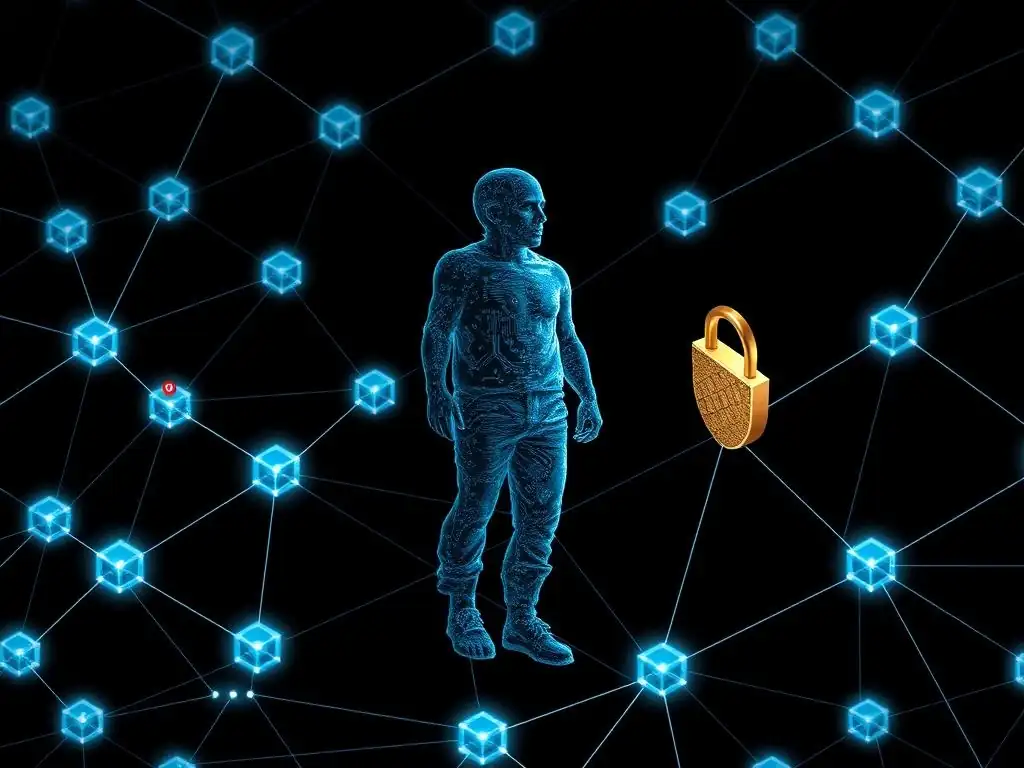
Implementing Multi-Factor Authentication (MFA)
Implementing Multi-Factor Authentication (MFA) is a crucial best practice for enhancing the security of blockchain identity systems, particularly in mitigating risks related to private key management and unauthorized access. MFA adds an extra layer of security beyond just passwords or private keys, requiring users to provide multiple verification factors before granting access to their identities or performing sensitive actions. This significantly reduces the risk of account compromise even if one factor, such as a password, is compromised. MFA is a fundamental mitigation strategy against various "blockchain identity security risks", particularly those stemming from weak or stolen credentials.
Common MFA factors include something the user knows (e.g., password, PIN), something the user has (e.g., hardware token, mobile device), and something the user is (e.g., biometrics like fingerprint or facial recognition). Combining different factor types significantly increases security, as an attacker would need to compromise multiple independent factors to gain unauthorized access. For blockchain identity wallets and applications, MFA can be implemented during key generation, wallet access, transaction signing, and other critical operations. Encouraging or requiring users to enable MFA is a simple yet highly effective way to strengthen the overall security posture of blockchain identity systems.
Regular Security Audits and Penetration Testing
Regular security audits and penetration testing are essential for proactively identifying and addressing vulnerabilities in blockchain identity systems. Security audits involve a comprehensive review of the system's architecture, code, and security controls by independent security experts. Audits can uncover vulnerabilities in smart contracts, key management practices, consensus mechanism implementations, and other critical components of the identity system.
Penetration testing, also known as ethical hacking, involves simulating real-world attacks to identify exploitable vulnerabilities and assess the system's resilience against cyber threats. Both security audits and penetration testing are crucial mitigation strategies for addressing "blockchain identity security risks" and ensuring the ongoing security of blockchain identity solutions.
These security assessments should be conducted regularly, especially after significant code changes, system upgrades, or the introduction of new features. Audits and penetration tests should be performed by reputable and experienced security firms with expertise in blockchain security. The findings of these assessments should be carefully reviewed and prioritized for remediation. Addressing identified vulnerabilities promptly and implementing recommended security improvements are essential for maintaining a strong security posture and preventing potential security breaches in blockchain identity systems.
Utilizing Formal Verification Methods for Smart Contracts
Utilizing formal verification methods for smart contracts is a powerful mitigation strategy for addressing vulnerabilities in smart contracts used in blockchain identity solutions. Formal verification involves using mathematical techniques to prove the correctness and security properties of smart contract code. This approach goes beyond traditional testing methods by providing mathematical guarantees that the smart contract behaves as intended and is free from certain types of vulnerabilities. Formal verification can significantly reduce "blockchain identity security risks" associated with smart contract exploits by proactively identifying and eliminating potential vulnerabilities during the development process.
While formal verification can be more resource-intensive and require specialized expertise, it offers a higher level of assurance compared to traditional testing alone. Formal verification tools and techniques can be used to verify properties such as the absence of reentrancy vulnerabilities, integer overflows, and other common smart contract flaws. Integrating formal verification into the smart contract development lifecycle, particularly for critical identity-related smart contracts, can significantly enhance the security and reliability of blockchain identity systems.
Implementing Identity Recovery Mechanisms
Implementing identity recovery mechanisms is crucial for mitigating the risk of permanent identity loss due to private key loss or device failure. In decentralized identity systems, where users are solely responsible for their private keys, key loss can result in irreversible loss of access to their digital identity and associated assets. Identity recovery mechanisms provide users with a way to regain access to their identities in such situations, improving usability and reducing the severity of "blockchain identity security risks" related to key loss.
Various identity recovery mechanisms can be implemented, such as social recovery, where trusted contacts can assist in recovering a lost identity, and key backup and restore mechanisms, where users securely back up their private keys and can restore them if lost. Custodial recovery involves relying on a trusted custodian to hold a backup of the private key, but this approach introduces a degree of centralization and trust in the custodian.
The choice of recovery mechanism depends on the desired balance between security, decentralization, and usability. Implementing appropriate identity recovery mechanisms is essential for making blockchain identity systems more user-friendly and resilient to key loss.
Data Encryption and Anonymization Techniques
Data encryption and anonymization techniques are vital for enhancing data privacy and mitigating "blockchain identity security risks" related to data exposure in blockchain identity systems. Encryption protects sensitive identity data by converting it into an unreadable format, ensuring that only authorized parties with the decryption key can access it. Encryption can be applied to data stored on-chain or off-chain, depending on the specific privacy requirements. Anonymization techniques aim to remove or obfuscate personally identifiable information from data, making it more difficult to link data back to individual users.
Homomorphic encryption is an advanced encryption technique that allows computations to be performed on encrypted data without decrypting it first, offering enhanced privacy for data processing on blockchains. Zero-knowledge proofs (ZKPs), as discussed earlier, enable verification of information without revealing the underlying data, providing a powerful tool for privacy-preserving identity verification.
Differential privacy is a technique for adding noise to data to protect individual privacy while still allowing for aggregate analysis. Applying these data encryption and anonymization techniques strategically can significantly enhance the privacy of blockchain identity systems and mitigate associated "blockchain identity security risks" related to data breaches and privacy violations.
Education and Awareness Training for Developers and Users
Education and awareness training for both developers and users are fundamental for fostering a security-conscious ecosystem and mitigating "blockchain identity security risks" in blockchain identity systems. Developer training should focus on secure coding practices for smart contracts, best practices for private key management, common blockchain vulnerabilities, and secure system design principles. Developers need to be aware of potential security pitfalls and equipped with the knowledge and skills to build secure blockchain identity solutions. User education is equally important to empower users to manage their identities securely and protect themselves from phishing attacks, social engineering, and other threats.
User training should cover topics such as the importance of private key security, best practices for password management, how to recognize and avoid phishing attempts, and how to use MFA and other security features. Providing clear and accessible educational materials, tutorials, and support resources is crucial for promoting user awareness and responsible security practices. Ongoing education and awareness campaigns are necessary to keep both developers and users informed about evolving security threats and best practices in the rapidly evolving landscape of blockchain identity security.
Case Studies: Real-World Examples of Blockchain Identity Security Breaches
[Case Study 1: Description of a Security Incident and its Impact]
[ Placeholder for Case Study 1: Example Scenario: A decentralized identity platform using a custom-built blockchain experienced a consensus mechanism vulnerability related to a flaw in their Proof-of-Authority (PoA) implementation. Attackers exploited this flaw to gain control of a majority of validator nodes by compromising weakly secured validator keys. Once in control, they were able to manipulate the blockchain ledger, altering identity data and issuing fraudulent verifiable credentials. This led to a significant loss of trust in the platform, and several relying parties stopped accepting credentials issued by the compromised system.
The incident resulted in financial losses for users who relied on the compromised identities and reputational damage to the platform. The vulnerability was eventually patched, but the platform struggled to regain user trust and adoption. This case highlights the critical importance of rigorous security audits of consensus mechanism implementations and robust key management for validator nodes.]
[Case Study 2: Analysis of Vulnerabilities and Lessons Learned]
[ Placeholder for Case Study 2: Example Scenario: A blockchain-based digital identity wallet application suffered a private key theft incident due to a vulnerability in their software wallet implementation. Attackers exploited a buffer overflow vulnerability in the wallet application's code to gain unauthorized access to users' devices and extract private keys stored in the software wallet.
This resulted in the theft of numerous private keys, and users lost control of their digital identities and associated assets. The investigation revealed that the wallet application had not undergone thorough security testing and had lacked basic input validation, leading to the buffer overflow vulnerability.
Lessons learned: This case underscores the importance of secure software development practices, rigorous security testing, including vulnerability scanning and penetration testing, and the inherent security risks associated with software wallets compared to hardware wallets. It also highlights the need for regular security updates and patches to address discovered vulnerabilities promptly.]
The Future of Blockchain Identity Security
Emerging Technologies for Enhanced Security
The future of blockchain identity security is being shaped by emerging technologies that promise to enhance security, privacy, and usability. Zero-knowledge proofs (ZKPs) are gaining traction for their ability to enable privacy-preserving identity verification, allowing users to prove claims about their identity without revealing sensitive underlying data. Homomorphic encryption could enable secure computation on encrypted identity data, further enhancing privacy. Multi-party computation (MPC) techniques are advancing to provide more secure and user-friendly private key management solutions, distributing key control and reducing single points of failure.
Federated learning and differential privacy are being explored for privacy-preserving data analysis in decentralized identity systems, allowing for insights to be derived from identity data without compromising individual privacy. Post-quantum cryptography is becoming increasingly important to address the potential threat of quantum computers breaking current cryptographic algorithms used in blockchain and identity systems. These emerging technologies hold significant promise for strengthening "blockchain identity security" and enabling more secure, private, and user-centric decentralized identity solutions in the future.
Standardization Efforts and Regulatory Landscape
Standardization efforts and the evolving regulatory landscape are crucial factors shaping the future of blockchain identity security. Organizations like the Decentralized Identity Foundation (DIF) and the World Wide Web Consortium (W3C) are actively working on developing standards for decentralized identifiers (DIDs), verifiable credentials (VCs), and other key components of blockchain identity systems. These standards aim to promote interoperability, security, and privacy in decentralized identity solutions, and contribute to a more robust and secure ecosystem. Standardization efforts are essential for reducing fragmentation and fostering wider adoption of secure blockchain identity technologies.
The regulatory landscape for digital identity and data privacy is also evolving rapidly. Regulations like GDPR and similar data protection laws around the world are influencing the design and implementation of blockchain identity systems, emphasizing data privacy, user consent, and data security. Regulatory clarity and supportive legal frameworks are crucial for fostering innovation and trust in blockchain identity while ensuring compliance with data protection principles. The interplay between standardization efforts and the regulatory landscape will significantly impact the future trajectory of "blockchain identity security" and the widespread adoption of decentralized identity technologies.
The Role of AI and Machine Learning in Detecting and Preventing Attacks
Artificial intelligence (AI) and machine learning (ML) are increasingly being explored for their potential to enhance blockchain identity security by detecting and preventing attacks. AI-powered security monitoring systems can analyze blockchain network activity, smart contract behavior, and user interactions to identify anomalies and potential security threats in real-time. Machine learning algorithms can be trained to detect patterns and indicators of malicious activity, such as Sybil attacks, phishing attempts, and smart contract exploits. AI and ML can also be used to automate security audits and vulnerability scanning, improving the efficiency and effectiveness of security assessments.
Behavioral biometrics and AI-driven authentication methods can enhance user authentication and fraud detection in blockchain identity systems. Threat intelligence platforms powered by AI can provide up-to-date information on emerging threats and vulnerabilities, enabling proactive security measures. While AI and ML offer promising tools for enhancing "blockchain identity security", it's important to recognize that they are not silver bullets and must be used in conjunction with other security best practices and human expertise. The responsible and ethical application of AI and ML can contribute to a more secure and resilient future for blockchain identity systems.
Conclusion: Building Secure and Trustworthy Blockchain Identity Systems
Emphasizing the Importance of a Proactive Security Approach
Building secure and trustworthy blockchain identity systems requires a proactive and holistic security approach. Security must be considered from the outset of system design and throughout the entire development lifecycle, not as an afterthought. This proactive approach involves incorporating security best practices at every stage, from secure coding and rigorous testing to ongoing monitoring and incident response planning. A proactive security mindset is essential for mitigating "blockchain identity security risks" and building confidence in decentralized identity solutions.
Organizations and developers deploying blockchain identity systems must prioritize security and invest in robust security measures. This includes conducting regular security audits and penetration testing, implementing MFA and other strong authentication mechanisms, utilizing formal verification methods for smart contracts, and providing comprehensive security training for developers and users. A proactive security approach is not just about preventing attacks, but also about building resilience and trust in blockchain identity systems, which are crucial for their widespread adoption and long-term success.
Key Takeaways for Mitigating Blockchain Identity Security Risks
Mitigating "blockchain identity security risks" requires a comprehensive and multi-layered approach. Key takeaways include the importance of:
- Secure Smart Contract Development: Employing secure coding practices, rigorous testing, and formal verification to minimize smart contract vulnerabilities.
- Robust Private Key Management: Implementing secure key storage solutions like hardware wallets, and utilizing MFA and key recovery mechanisms.
- Data Privacy by Design: Incorporating privacy-enhancing technologies like encryption and ZKPs, and adhering to data minimization principles.
- Sybil Attack Resistance: Implementing robust identity verification mechanisms and decentralized reputation systems.
- Consensus Mechanism Security: Selecting secure consensus algorithms and continuously monitoring for consensus-related vulnerabilities.
- Proactive Security Assessments: Conducting regular security audits and penetration testing.
- Education and Awareness: Providing comprehensive security training for developers and users.
By focusing on these key areas and adopting a proactive security mindset, organizations can effectively mitigate "blockchain identity security risks" and build more secure and trustworthy blockchain identity systems.
The Ongoing Evolution of Blockchain Identity Security
Blockchain identity security is an evolving field, constantly adapting to new threats and technological advancements. As blockchain technology matures and adoption increases, new attack vectors and vulnerabilities may emerge. Continuous research, innovation, and collaboration are essential for staying ahead of the evolving threat landscape and enhancing the security of blockchain identity systems. The development of new security technologies, standardization efforts, and regulatory frameworks will continue to shape the future of "blockchain identity security".
The ongoing evolution of blockchain identity security requires a commitment to continuous learning, adaptation, and improvement. Developers, researchers, security experts, and policymakers must work together to address emerging challenges and build a more secure and trustworthy future for decentralized digital identity. By embracing a proactive and collaborative approach, we can unlock the full potential of blockchain technology to create more secure, private, and user-centric digital identity systems for individuals and organizations worldwide.
Frequently Asked Questions
What are some common blockchain identity security risks associated with decentralized identity solutions?
Common risks include key management issues, smart contract vulnerabilities, and data privacy concerns related to storing personal information on a blockchain. These can lead to unauthorized access and identity theft.
How can blockchain identity security risks be mitigated within a decentralized identity architecture?
Mitigation strategies include implementing robust key management practices, regularly auditing smart contracts, and employing privacy-enhancing technologies like zero-knowledge proofs.
What role does regulation play in addressing blockchain identity security risks?
Regulation can help establish standards for data protection and accountability within blockchain identity systems, promoting responsible development and deployment of these technologies.
Beyond cryptocurrencies, how are blockchain identity security risks different in enterprise applications?
In enterprise settings, risks often involve integration with existing systems, access control management, and compliance with industry-specific regulations for handling sensitive data.
What is the future outlook for addressing blockchain identity security risks as decentralized systems evolve?
The future likely involves advancements in cryptographic techniques, improved smart contract security, and the development of more user-friendly and secure identity management solutions.
Final Reflection: Securing the Future of Identity
The exploration of blockchain identity security risks has revealed a landscape fraught with potential pitfalls, yet brimming with transformative possibilities. As we've seen, the decentralized nature of blockchain, while offering unprecedented control and transparency, also introduces novel vulnerabilities that demand constant vigilance and proactive mitigation strategies. The stakes are high, as the future of digital identity hinges on our ability to secure these emerging architectures.
The ongoing influence of blockchain identity solutions is undeniable, promising a future where individuals reclaim ownership of their data and navigate the digital world with greater autonomy. This potential for empowerment is what makes addressing these security risks so crucial. Security is not a product, but a process.
This quote underscores the continuous effort required to safeguard blockchain identity systems and ensure they fulfill their promise of a more secure and equitable digital future.
Now, as you reflect on the potential of blockchain identity and the inherent security risks we've discussed, consider your own role in shaping this future. What steps can you take, whether as a developer, a user, or a policymaker, to promote responsible innovation and prioritize security in the development and deployment of blockchain identity solutions? The future of digital identity is not predetermined; it is being built, brick by brick, with every decision we make today.
Fortify Your Future: Secure Your Blockchain Identity Today!
Thank you for exploring the importance of blockchain identity security. We hope this article provided valuable insights to help you understand the complexities and potential risks involved. Now, it's time to take concrete steps to protect your digital assets.
Here's how you can get started:
- Implement multi-factor authentication across all your blockchain identity applications and wallets. This is your primary defense against unauthorized access.
- Dive deeper: Research and test alternative consensus mechanisms beyond traditional Proof-of-Work to find more energy-efficient and secure options. Share your findings with the blockchain community!
- Join blockchain security forums and online communities to stay informed about the latest threats and best practices. Learning from others' experiences is invaluable.
What specific security measures are you prioritizing in your blockchain identity strategy? Are you exploring innovative approaches to enhance your system's resilience? Share your thoughts below!
Leave a Reply