
DApps for DeFi: Building the Future of Decentralized Finance Applications

Welcome to Blockchain Trends, your compass in the rapidly evolving world of decentralized innovation. Ever wondered how blockchain is revolutionizing industries beyond just cryptocurrencies? Dive in as we explore the transformative power of DeFi, enterprise solutions, and the regulatory landscape shaping our future. This week, we're focused on Decentralized finance application development: unlocking the potential of DApps and how they are forging a new era in finance. Curious to learn how you can be a part of this revolution? Keep reading to discover the building blocks of tomorrow's financial systems.
- Understanding Decentralized Finance Application Development
-
Frequently Asked Questions
- What are DApps, and how are they related to Decentralized Finance (DeFi)?
- What are some of the key benefits of using DApps in DeFi?
- What are the main challenges in decentralized finance application development using DApps?
- What programming languages are commonly used for decentralized finance application development?
- How does the future of Decentralized Finance Application Development look?
- Final Reflection: Embracing the Decentralized Dawn
- Uncover Your DeFi Potential: Dive Deeper Now!
Understanding Decentralized Finance Application Development
The Key Components of a DeFi DApp
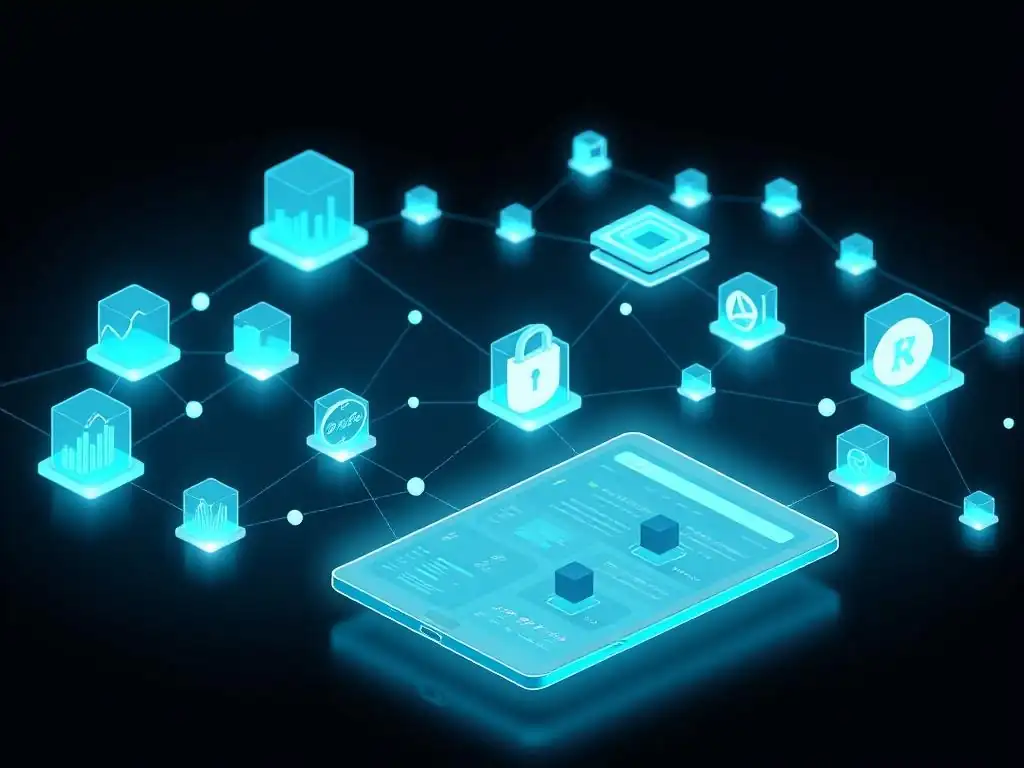
Developing a decentralized finance application, or DeFi DApp, involves integrating several crucial components that work together to provide financial services without intermediaries. At its core, a DeFi DApp typically consists of smart contracts deployed on a blockchain, a front-end user interface, and often, oracles to feed external data into the system. These elements are fundamental to successful decentralized finance application development, ensuring transparency, automation, and security. The smart contracts handle the logic and execution of financial transactions, such as lending, borrowing, or trading, directly on the blockchain.
Beyond the core smart contracts and user interface, many DeFi DApps incorporate additional components to enhance functionality and user experience. This includes integration with wallets like MetaMask or WalletConnect for user interaction and transaction signing, and subgraphs (like those provided by The Graph) for efficient data querying from the blockchain.
For instance, a decentralized exchange (DEX) requires smart contracts for liquidity pools and token swaps, a front-end for users to interact with these contracts, and potentially oracles for price feeds if implementing advanced features. Effective decentralized finance application development considers how these pieces fit together to create a robust and user-friendly platform.
Smart Contracts: The Foundation of DeFi Applications
Smart contracts are self-executing contracts with the terms of the agreement directly written into code. They are immutable and run on the blockchain exactly as programmed, removing the need for intermediaries and enabling trustless transactions.
In the context of decentralized finance application development, smart contracts automate complex financial operations like collateral management in lending protocols, automated market making (AMM) in DEXs, and distribution of yields in staking platforms. For example, in a lending protocol like Aave, smart contracts manage user deposits, calculate interest rates based on supply and demand, and execute liquidations if collateral falls below a certain threshold, all without manual intervention.
The reliability and security of a DeFi DApp are directly tied to the quality of its smart contracts. A single vulnerability in the code can lead to significant financial losses, as demonstrated by various incidents in the DeFi space, such as the exploit on the Poly Network in 2021 which resulted in a loss of over $600 million. Therefore, meticulous planning, secure coding practices, and rigorous auditing are paramount during decentralized finance application development. Developers must be proficient in languages like Solidity (for Ethereum and compatible chains) and understand potential attack vectors specific to blockchain environments.
Choosing the Right Blockchain Platform for Your DeFi DApp
Selecting the appropriate blockchain platform is a critical decision in decentralized finance application development, as it dictates transaction speed, cost (gas fees), security model, developer tools, and the potential user base. Ethereum has historically been the dominant platform for DeFi due to its mature ecosystem, large developer community, and the first-mover advantage that led to the creation of major protocols like Uniswap and Compound. However, Ethereum's high gas fees, particularly during periods of network congestion, have led to the exploration of alternative platforms and Layer-2 solutions.
Other popular choices for decentralized finance application development include Binance Smart Chain (now BNB Chain), which offers lower transaction fees and faster confirmation times (often under 3 seconds compared to Ethereum's 10-15 seconds), and Layer-2 solutions on Ethereum like Polygon, Arbitrum, and Optimism, which aim to provide scalability and lower costs while inheriting Ethereum's security. Newer Layer-1 blockchains such as Solana, Avalanche, and Polkadot also offer high throughput (Solana claims tens of thousands of transactions per second) and lower costs, attracting developers building new DeFi protocols.
The choice depends heavily on the specific requirements of the DApp, target audience, and the trade-offs between decentralization, security, scalability, and cost.
Frequently Asked Questions
DApps, or Decentralized Applications, are the building blocks of DeFi. They run on a blockchain network and enable users to access financial services without traditional intermediaries. They are essential for decentralized finance application development.
What are some of the key benefits of using DApps in DeFi?
DApps offer increased transparency and security compared to traditional financial systems. They also enable greater accessibility to financial services for a wider range of users globally, promoting financial inclusion.
What are the main challenges in decentralized finance application development using DApps?
Scalability is a major hurdle, as blockchain networks can struggle with high transaction volumes. Security vulnerabilities in DApp code can also lead to significant financial losses. Finally, regulatory uncertainty poses a risk to the long-term viability of some DeFi projects.
What programming languages are commonly used for decentralized finance application development?
Solidity is the most popular language for writing smart contracts on the Ethereum blockchain, a common platform for DApps. Other languages include Vyper and JavaScript, often used for the frontend development and interaction with the blockchain.
How does the future of Decentralized Finance Application Development look?
The future appears bright, with ongoing innovation focused on improving scalability solutions and enhancing security protocols. Expect to see more user-friendly interfaces and wider adoption as the technology matures.
Final Reflection: Embracing the Decentralized Dawn
The exploration of DApps for DeFi reveals more than just technological advancements; it highlights a fundamental shift in how we perceive and interact with financial systems. The promise of decentralized finance is no longer a distant dream, but a tangible reality being actively shaped by innovative DApp development. This evolution is not merely about code and algorithms, but about empowering individuals and fostering a more equitable and transparent financial landscape.
The ongoing influence of DeFi and its underlying DApps is undeniable, permeating every corner of the financial world. Witnessing this transformation firsthand has solidified my belief in the power of decentralized technologies to reshape our future. The potential for increased accessibility, reduced costs, and enhanced security is immense. The future of finance is decentralized, and DApps are the building blocks that will pave the way.
This sentiment encapsulates the profound impact these applications are poised to have on global economies and individual financial well-being.
As we stand on the cusp of a decentralized revolution, I invite you to consider your role in shaping this future. Reflect on the possibilities presented by DApps for DeFi and explore how you can contribute to building a more inclusive and transparent financial system. Embrace the decentralized dawn and let us collectively forge a future where financial empowerment is accessible to all.
Uncover Your DeFi Potential: Dive Deeper Now!
Thank you for exploring the world of decentralized applications and their potential to revolutionize finance! You've gained valuable insights into how these platforms are shaping the future of financial technology. Now, it's time to turn that knowledge into action.
Here are a few steps you can take to continue your journey:
- Start exploring DeFi applications! Choose one platform that aligns with your interests—whether it's lending, borrowing, or trading—and familiarize yourself with its interface and features. This hands-on experience is the best way to understand the transformative power of decentralized finance.
- Join the blockchain community and share your favorite DeFi tools and strategies with fellow enthusiasts.
- Research the security measures and audited smart contracts of a DeFi platform you find intriguing. Understanding the technology behind these platforms is essential for responsible participation in decentralized finance.
What small step will you take today to advance your DeFi journey? Share your plans in the comments below!
Leave a Reply