
Addressing Privacy Concerns in BlockchainBased Verifiable Credential Systems

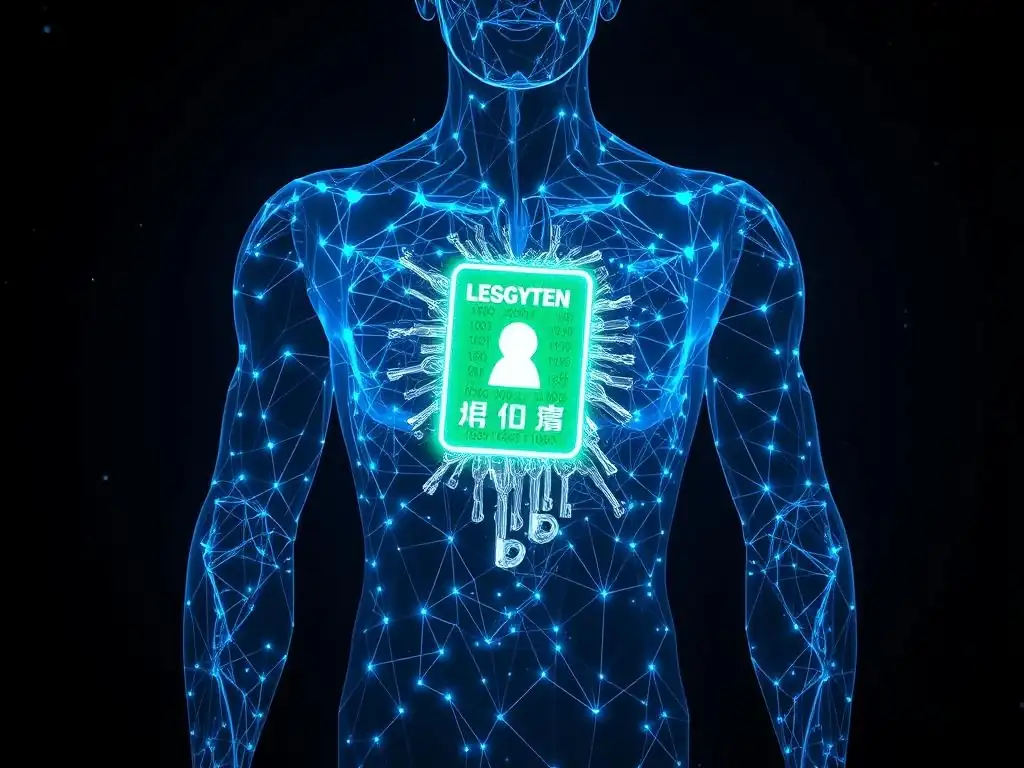
Welcome to Blockchain Trends, your go-to source for navigating the ever-evolving world of decentralized innovation. Ever wondered how blockchain can revolutionize more than just finance? Dive in as we explore its transformative power across industries, from DeFi to enterprise solutions.
Today, we tackle a critical aspect of this evolution: Blockchain privacy credential systems. How can we leverage the benefits of verifiable credentials on the blockchain while safeguarding sensitive user data? This is the question we explore in our latest article. Uncover the challenges and opportunities that lie ahead as we strive to build a future where digital identity is both secure and privacy-preserving. Read on to discover the innovative solutions shaping the future of digital identity on the blockchain...
- Introduction: The Promise and Peril of Blockchain Verifiable Credential Systems
- Key Privacy Challenges in Blockchain Credential Systems
- Mitigating Privacy Risks in Blockchain-Based Credentials
- Architectural Considerations for Privacy-Preserving Credential Systems
- Real-World Examples and Case Studies
- The Future of Privacy in Blockchain-Based Credentials
- Conclusion: Balancing Innovation and Privacy in Decentralized Credentialing
-
Frequently Asked Questions
- What are blockchain privacy credential systems, and why are they needed?
- How do blockchain privacy credential systems differ from traditional credential systems?
- What are some common techniques used to enhance privacy in blockchain credential systems?
- What are the potential benefits of implementing blockchain privacy credential systems for businesses and individuals?
- What are some challenges in developing and deploying blockchain privacy credential systems?
- Final Reflection: Embracing Privacy in the Decentralized Future
- Secure Your Credentials: Take Control of Your Blockchain Identity!
Introduction: The Promise and Peril of Blockchain Verifiable Credential Systems
Blockchain technology holds immense promise for transforming how we manage and verify digital identities and credentials. By leveraging the distributed, immutable, and transparent nature of blockchain, systems for verifiable credentials aim to empower individuals by giving them control over their digital attestations, such as academic degrees, professional licenses, or health records. This shift away from centralized authorities promises enhanced security, reduced fraud, and streamlined verification processes, fundamentally altering interactions between individuals, institutions, and service providers. The potential applications for blockchain privacy credential systems span numerous sectors, from education and employment to healthcare and finance.
However, the very transparency that makes blockchain valuable for immutability can also introduce significant privacy challenges. While a public blockchain might not store sensitive personal data directly, the transaction records themselves, or even identifiers linked to transactions, can potentially reveal information about individuals or their activities. This tension between the need for verifiable data and the imperative to protect personal privacy is a central concern in the development and deployment of blockchain-based verifiable credential systems. Addressing these privacy concerns is critical for widespread adoption and building trust in these decentralized identity solutions.
Understanding Verifiable Credentials and Blockchain Integration
Verifiable credentials are a tamper-evident way to express statements about a subject, issued by an issuer, and held by a holder. Think of a digital driver's license or a university diploma – these are credentials.
The "verifiable" aspect comes from cryptographic proofs, typically digital signatures, that allow a third party (a verifier) to cryptographically verify the authenticity of the credential, the issuer, and the holder's right to present it, without necessarily needing to contact the original issuer in real-time. This model is standardized by the W3C Verifiable Credentials Data Model specification, providing a common framework for creating, exchanging, and verifying credentials across different systems.
Integrating blockchain into this model often involves using the ledger as a decentralized public key infrastructure (PKI) or registry for Decentralized Identifiers (DIDs) and their associated public keys, or for publishing revocation status proofs. Instead of storing the full credential on the blockchain (which would be a privacy disaster), the blockchain typically stores a cryptographic proof (like a hash or a zero-knowledge proof) or a pointer related to the credential's issuance or revocation.
This allows verifiers to confirm the status or integrity of a credential without needing to see its contents, leveraging the blockchain's immutability and distributed nature to prevent censorship or tampering with the issuance or revocation status. This architectural choice is fundamental to building effective blockchain privacy credential systems.
The Growing Concerns Around Privacy in Decentralized Identity Solutions
As decentralized identity solutions, including those leveraging blockchain, gain traction, so do the privacy concerns associated with their implementation. While the goal is often to give users more control, the inherent characteristics of blockchain can inadvertently expose sensitive information.
For instance, if a user's DID is linked to multiple credentials issued by different organizations (e.g., a university, an employer, a healthcare provider) and these links are visible on a public ledger, it might be possible to correlate these activities and build a profile of the individual. Even seemingly innocuous transaction patterns can potentially reveal relationships or activities that users wish to keep private.
Furthermore, the immutability of blockchain, while beneficial for security, poses a challenge when it comes to the "right to be forgotten" or the need to update/remove information. While credentials themselves are typically stored off-chain, records on the blockchain related to their issuance, verification, or revocation might be permanent.
Ensuring that blockchain privacy credential systems comply with evolving data protection regulations like GDPR or CCPA, which grant individuals rights over their data, requires careful design to minimize the exposure of personal information on the ledger and provide mechanisms for managing the lifecycle of associated on-chain data points without compromising the integrity of the system.
Key Privacy Challenges in Blockchain Credential Systems
Deploying blockchain-based verifiable credential systems introduces specific privacy challenges that must be proactively addressed. These challenges stem from the tension between the need for verifiable, often sensitive, information and the public or transparent nature of many blockchain designs. Without careful architectural choices and the implementation of privacy-enhancing technologies, these systems risk undermining the very user empowerment they aim to achieve by inadvertently exposing personal data or activity patterns.
Three core privacy challenges stand out: minimizing the data footprint on the blockchain, enabling users to selectively disclose only necessary information, and managing the privacy implications of credential revocation processes. Each of these requires specific technical and design considerations to ensure that blockchain privacy credential systems are both functional and respectful of individual privacy rights.
Data Minimization: Reducing the Footprint of Personal Information on the Blockchain
A fundamental principle in privacy-preserving systems is data minimization – collecting and storing only the data absolutely necessary for a specific purpose. In the context of blockchain privacy credential systems, this means avoiding the storage of sensitive personal data directly on the blockchain ledger. Public blockchains, in particular, are not suitable for storing private information like names, addresses, or health conditions due to their transparent and immutable nature. Even encrypted data stored on a public ledger could potentially be compromised in the future with advances in decryption techniques or quantum computing.
Effective data minimization strategies involve storing the actual credential off-chain, typically in a digital wallet controlled by the user. The blockchain is then used only to anchor cryptographic proofs or identifiers related to the credential's issuance or status.
For example, instead of storing a hash of the entire credential (which might reveal information about the credential's content if the original is known), the system might store a hash of a commitment to the credential, or utilize techniques like zero-knowledge proofs to verify properties of the credential without revealing its contents. This approach ensures that the sensitive details remain under the user's control and are not exposed on the public ledger, significantly enhancing the privacy of blockchain privacy credential systems.
Selective Disclosure: Empowering Users to Control Data Sharing
Selective disclosure is a critical privacy feature that allows a credential holder to reveal only the specific pieces of information from a credential that are required for a particular transaction or verification, rather than presenting the entire credential. For example, when proving legal drinking age, a user should only need to reveal that they are over 21, not their exact date of birth, address, or driver's license number. Traditional physical credentials often require revealing much more information than necessary.
Implementing selective disclosure in blockchain privacy credential systems typically relies on cryptographic techniques like Zero-Knowledge Proofs (ZKPs) or verifiable presentations that allow the holder to prove a statement about the credential's attributes without revealing the attributes themselves. The verifier can then check the proof against the information anchored on the blockchain (e.g., the issuer's public key or a commitment) to confirm its validity.
This empowers users by giving them fine-grained control over their data, allowing them to share only the minimal information required, thereby significantly enhancing the privacy of their interactions. A well-designed blockchain privacy credential system prioritizes this capability.
Revocation Mechanisms and Privacy Implications
The ability to revoke a credential (e.g., if a professional license expires or is suspended) is essential for the integrity and trustworthiness of any credential system. However, the process of revocation in blockchain-based systems can have significant privacy implications. A common approach is to publish revocation information on the blockchain, perhaps by adding an entry to a revocation registry or changing the state associated with a credential identifier.
The challenge lies in performing revocation checks without compromising privacy. If a verifier needs to query a public revocation registry linked to a specific credential identifier, this query itself might reveal which credential is being verified and by whom, potentially leaking information about the user's activities or affiliations.
Privacy-preserving revocation mechanisms, such as using Merkle trees to prove inclusion in a non-revoked list without revealing the specific item being checked, or employing privacy-focused blockchain designs (like permissioned ledgers with restricted access to revocation data), are necessary. The design must balance the need for timely and verifiable revocation with the imperative to protect the user's privacy during the verification process within blockchain privacy credential systems.
Mitigating Privacy Risks in Blockchain-Based Credentials
Addressing the inherent privacy challenges in blockchain-based verifiable credential systems requires the application of advanced cryptographic techniques and careful architectural design. Simply placing credentials on a blockchain is insufficient and often detrimental to privacy. Instead, the focus must be on leveraging blockchain's strengths (immutability, decentralization) while employing technologies that protect sensitive data.
Several key technologies and design principles are crucial for building privacy-preserving blockchain privacy credential systems. These include Zero-Knowledge Proofs for proving facts without revealing the underlying data, Homomorphic Encryption for performing computations on encrypted data, and Secure Multi-Party Computation for collaborative data processing without revealing individual inputs.
Zero-Knowledge Proofs (ZKPs) for Enhanced Privacy
Zero-Knowledge Proofs (ZKPs) are a cornerstone technology for achieving privacy in blockchain privacy credential systems. A ZKP allows one party (the prover) to convince another party (the verifier) that a statement is true, without revealing any information beyond the validity of the statement itself. In the context of verifiable credentials, this means a user can prove they possess a credential meeting certain criteria (e.g., "I am over 21," "I have a valid medical license," "My degree is in Computer Science") without revealing the credential itself or any other details.
For example, a user holding a digital driver's license credential can use a ZKP to prove their age is >= 21 to a vendor, without revealing their exact date of birth. The proof is generated off-chain by the user's wallet based on the credential attributes.
The verifier receives the proof and uses the issuer's public key (often anchored or verifiable via the blockchain) and potentially a public setup string for the specific ZKP scheme (like zk-SNARKs or Bulletproofs) to verify the proof's validity. This process occurs without any sensitive data being transmitted or exposed on the blockchain ledger, making ZKPs invaluable for building privacy-preserving blockchain privacy credential systems.
Homomorphic Encryption: Performing Operations on Encrypted Data
Homomorphic Encryption (HE) is another powerful cryptographic tool with potential applications in blockchain privacy credential systems, particularly for scenarios requiring computation or comparison of data attributes without decryption. HE allows computations to be performed directly on encrypted data, yielding an encrypted result that, when decrypted, matches the result of the computation performed on the original unencrypted data.
While computationally intensive and not yet widely deployed for general use cases, HE could theoretically enable scenarios where a verifier needs to perform a check on credential data (e.g., "Is the sum of these two attributes greater than X?") without ever seeing the unencrypted values. For instance, in a healthcare scenario, aggregated, encrypted patient data could potentially be used for research or verification purposes while individual patient privacy is maintained. Although less common in current blockchain privacy credential system implementations compared to ZKPs, advancements in HE could open up new possibilities for privacy-preserving analytics and verification workflows.
Secure Multi-Party Computation (SMPC) in Credential Issuance and Verification
Secure Multi-Party Computation (SMPC) allows multiple parties to jointly compute a function over their inputs while keeping those inputs private. No single party learns anything about the other parties' inputs beyond what can be inferred from the final result. SMPC can be relevant in blockchain privacy credential systems, particularly during the issuance or verification processes involving multiple entities.
Consider a scenario where a credential relies on data from multiple sources (e.g., a professional license requiring verification from both an educational institution and a licensing board). SMPC could potentially be used to combine proofs or data from these sources to issue or verify a complex credential without any single party, or the blockchain, seeing the individual contributing data points. While complex to implement and potentially adding latency, SMPC offers a way to handle sensitive multi-source data dependencies in a privacy-preserving manner within blockchain privacy credential systems.
Architectural Considerations for Privacy-Preserving Credential Systems

Designing a blockchain-based verifiable credential system with privacy in mind requires careful consideration of the overall architecture, not just the cryptographic techniques used. The choice of identifiers, the underlying blockchain platform, and the data governance framework all significantly impact the level of privacy afforded to users.
A well-architected system prioritizes user control and data minimization at every layer. This involves selecting appropriate identifiers, leveraging privacy-enhancing features of the chosen blockchain, and establishing clear policies for how credential data is managed and accessed. Effective blockchain privacy credential systems are built on a foundation of privacy-by-design principles.
Decentralized Identifiers (DIDs) and Privacy-Enhancing Technologies
Decentralized Identifiers (DIDs) are a core component of many verifiable credential systems. DIDs are a new type of identifier designed to enable verifiable, decentralized digital identity. Unlike traditional identifiers tied to a centralized authority (like email addresses or government IDs), DIDs are under the control of the individual or organization using them. A DID is typically linked to a DID Document, which contains public keys and service endpoints associated with the DID, often anchored on a decentralized ledger like a blockchain.
While DIDs themselves are designed to be persistent, how they are used and managed is crucial for privacy. Using a single DID for all credentials and interactions could allow for correlation and tracking across different contexts. Privacy-enhancing approaches involve using multiple DIDs for different relationships or contexts (e.g., one DID for employment credentials, another for healthcare).
Furthermore, technologies like ZKPs can be linked to a DID, allowing a user to prove they control a DID or possess a credential linked to it without revealing the DID itself or the specific credential being used in a given interaction. Integrating DIDs effectively with privacy technologies is key to building robust blockchain privacy credential systems.
Choosing the Right Blockchain for Privacy-Sensitive Applications [Permissioned vs. Public]
The choice of the underlying blockchain platform is a critical architectural decision for blockchain privacy credential systems. Public, permissionless blockchains (like Bitcoin or Ethereum) offer high decentralization and censorship resistance but come with inherent transparency challenges, as transaction data is typically visible to everyone. While sensitive data isn't stored directly, transaction patterns or linked identifiers can still pose privacy risks if not mitigated with advanced techniques.
Permissioned blockchains (like Hyperledger Fabric or R3 Corda) offer more control over who can participate in the network and view transactions. This allows for potentially higher levels of privacy, as access to the ledger can be restricted to authorized participants. However, this comes at the cost of reduced decentralization compared to public chains.
For highly sensitive applications, such as healthcare or government identity management, a permissioned blockchain might be preferred to limit the exposure of transaction data. Hybrid approaches, using a public chain for anchoring minimal proofs (like existence or revocation status) and a permissioned network for more sensitive data management or interactions, are also being explored to balance privacy, security, and decentralization in blockchain privacy credential systems.
Implementing Data Governance Policies for Credential Management
Beyond the technical architecture, robust data governance policies are essential for ensuring privacy in blockchain privacy credential systems. These policies dictate how data is collected, stored, accessed, and used throughout the credential lifecycle. While the blockchain component might handle issuance anchoring or revocation status, the majority of sensitive credential data resides off-chain and is subject to traditional data governance rules.
Policies should clearly define:
- What data is included in a credential.
- How and where the credential is stored by the holder (e.g., encrypted in a digital wallet).
- How selective disclosure is implemented and controlled by the user.
- How revocation data is handled to minimize privacy exposure.
- How compliance with data protection regulations (like GDPR's right to erasure or data portability) is managed, especially considering the immutability of blockchain entries.
Implementing strict data governance, combined with technical privacy controls, builds trust and ensures that blockchain privacy credential systems operate responsibly and ethically, protecting user information effectively.
Real-World Examples and Case Studies
Examining real-world implementations and pilot projects of blockchain-based verifiable credential systems provides valuable insights into how privacy challenges are being addressed in practice. While widespread adoption is still developing, several sectors are exploring or deploying these systems, offering concrete examples of architectural choices and privacy considerations.
These case studies highlight the trade-offs involved and the specific privacy-enhancing techniques being employed to build functional and privacy-respecting blockchain privacy credential systems in areas like healthcare and education.
Privacy-Focused Healthcare Credential System for Medical Professionals
Healthcare is a sector with extremely sensitive data, making privacy paramount for any credentialing system. Several initiatives are exploring blockchain verifiable credentials for medical professionals, such as verifying licenses, certifications, or training records. A key privacy requirement is ensuring that a hospital or clinic can verify a doctor's credentials without revealing the doctor's entire work history or other sensitive details on a public ledger.
One approach involves using a permissioned blockchain or a hybrid architecture. Issuers (like medical boards or universities) issue credentials off-chain to the professional's digital wallet. A minimal proof or hash is anchored on the blockchain.
When a hospital (the verifier) needs to check a credential, the professional presents it from their wallet, potentially using selective disclosure (e.g., proving they have a valid license in a specific state without revealing their license number or training history). The verifier checks the proof against the information on the permissioned ledger or a public chain with strong privacy features, limiting who can see the transaction verifying the proof. This reduces the risk of exposing sensitive professional histories compared to a fully transparent public ledger, illustrating a practical application of blockchain privacy credential systems in a highly regulated environment.
Secure and Private Educational Credentials on Blockchain for Alumni Verification
Educational institutions are also exploring blockchain verifiable credentials for diplomas, transcripts, and certifications. This allows alumni to easily share verified credentials with potential employers or other institutions. Privacy concerns include preventing the public disclosure of an individual's educational history or making it easy to track an individual's academic path across multiple institutions.
Projects like those using the IMS Global Open Badges specification with blockchain anchoring often issue credentials off-chain. The blockchain is used primarily to record the issuance event or anchor the issuer's public key or DID. When an employer verifies a degree, the alumnus shares the credential from their wallet. The employer verifies its authenticity using the issuer's public key and potentially checks a minimal proof on the blockchain.
To enhance privacy, multiple DIDs can be used for different credentials, preventing correlation. Furthermore, selective disclosure allows the alumnus to prove, for example, that they hold a Bachelor's degree from a specific university without revealing their GPA or individual course grades. This demonstrates how educational blockchain privacy credential systems are being designed with user control and data minimization as core principles.
Analyzing the Privacy Trade-offs in Different Implementations
These case studies highlight that implementing blockchain privacy credential systems involves making trade-offs. Public blockchains offer high decentralization and transparency but require advanced techniques (like ZKPs, multiple DIDs, off-chain storage) to mitigate privacy risks. Permissioned blockchains can offer stronger inherent transaction privacy but sacrifice some degree of decentralization and require trust in the network operators.
The choice of architecture and privacy techniques depends heavily on the specific use case and regulatory environment. For instance, a system verifying professional licenses might prioritize the controlled environment of a permissioned ledger or a highly privacy-enhanced public chain implementation due to regulatory requirements and sensitivity of the data. Conversely, a system for verifying participation badges might tolerate a more transparent public chain if sensitive data is strictly kept off-chain and identifiers are managed carefully. Analyzing these trade-offs is crucial for designing blockchain privacy credential systems that effectively balance functionality, security, and user privacy.
The Future of Privacy in Blockchain-Based Credentials
The field of blockchain-based verifiable credentials is rapidly evolving, and the focus on privacy is becoming increasingly prominent. As these systems move from pilot projects to potential widespread deployment, addressing privacy concerns is not just a technical challenge but also a matter of regulatory compliance and building user trust.
The future development of blockchain privacy credential systems will be shaped by several factors, including the evolving legal landscape, ongoing standardization efforts, and breakthroughs in cryptographic research and emerging technologies.
Evolving Regulatory Landscape and Compliance Requirements [GDPR, CCPA]
Global data protection regulations like Europe's General Data Protection Regulation (GDPR) and California's Consumer Privacy Act (CCPA) have a significant impact on the design and implementation of blockchain privacy credential systems. These regulations grant individuals rights over their personal data, including the right to access, rectify, and in some cases, erase their data ("right to be forgotten").
The immutable nature of blockchain poses challenges to the right to erasure, requiring careful design to ensure that while records on the chain may persist, they do not contain personally identifiable information or can be managed in a way that meets regulatory requirements (e.g., by deleting off-chain data and invalidating on-chain pointers).
Future blockchain privacy credential systems must be designed with these regulations in mind from the outset (privacy-by-design). This means prioritizing data minimization, providing clear mechanisms for users to control their data and exercise their rights, and ensuring transparency in how the system handles personal information. Compliance will likely drive the adoption of privacy-preserving technologies and architectural patterns that limit the exposure of sensitive data on the ledger.
Standardization Efforts for Privacy-Preserving Credential Systems
Standardization is crucial for the interoperability and widespread adoption of verifiable credential systems. Organizations like the W3C (with its Verifiable Credentials Data Model) and the Decentralized Identity Foundation (DIF) are working on standards for DIDs, DID Methods, and related protocols. These standards are increasingly incorporating privacy considerations.
Future standardization efforts will likely focus on developing agreed-upon methods for implementing privacy-preserving features, such as standardized approaches for selective disclosure proofs (e.g., based on ZKPs), privacy-preserving revocation mechanisms, and best practices for managing DIDs to enhance privacy. Collaboration between technical standards bodies and regulatory authorities will be essential to ensure that future standards for blockchain privacy credential systems facilitate both functionality and strong privacy protection.
Emerging Technologies and Research Directions in Blockchain Privacy
Research in cryptography and distributed systems continues to push the boundaries of what is possible in privacy-preserving technologies. Beyond current techniques like ZKPs and HE, emerging areas like:
- Confidential Computing: Performing computations within secure enclaves where data remains encrypted even during processing.
- Differential Privacy: Adding noise to data sets to prevent the identification of individuals while still allowing for useful aggregate analysis.
- Advanced Cryptographic Schemes: Exploring new forms of encryption or signature schemes tailored for privacy-preserving operations on distributed ledgers.
These areas of research hold the potential to provide even stronger privacy guarantees for future blockchain privacy credential systems. As these technologies mature and become more efficient, they can be integrated into system designs, offering enhanced data protection without sacrificing the verifiability or security benefits that blockchain provides. The continuous exploration of new privacy-enhancing technologies is vital for the long-term success and trustworthiness of blockchain privacy credential systems.
Conclusion: Balancing Innovation and Privacy in Decentralized Credentialing
Blockchain-based verifiable credential systems represent a significant step forward in digital identity, promising greater user control, enhanced security, and streamlined verification processes. However, realizing this potential hinges on effectively addressing the inherent privacy challenges posed by blockchain technology. The tension between transparency, immutability, and the need to protect sensitive personal information requires careful design and the application of sophisticated privacy-enhancing techniques.
Successfully deploying blockchain privacy credential systems at scale requires a conscious effort to balance the innovative capabilities of blockchain with the fundamental right to privacy. This involves technical measures like data minimization, selective disclosure via ZKPs, and privacy-aware revocation, as well as architectural considerations like appropriate blockchain selection and robust data governance policies.
The Importance of User-Centric Design in Blockchain Privacy Solutions
At the core of building effective blockchain privacy credential systems is a user-centric design philosophy. Systems must be built with the user's control and privacy as primary considerations, not afterthoughts. This means:
- Making it easy for users to understand what data is in their credentials and how it can be shared.
- Providing intuitive interfaces for managing DIDs and exercising selective disclosure.
- Ensuring transparency about how the system uses the blockchain and what information, if any, is recorded or verifiable on the ledger.
- Giving users clear mechanisms to manage the lifecycle of their credentials and associated data, within the constraints of the system's design and regulatory requirements.
Empowering users with control over their data is the ultimate goal of decentralized identity, and privacy is a non-negotiable component of that empowerment. Without user trust, widespread adoption of blockchain privacy credential systems will remain limited.
Moving Towards a More Privacy-Respecting Future with Blockchain Credentials
The journey towards truly privacy-respecting blockchain privacy credential systems is ongoing. It requires continued collaboration between technologists, policymakers, legal experts, and users. As technology evolves and regulations mature, the approaches to balancing verifiability and privacy will continue to refine.
The promise of blockchain in digital identity is immense, offering a future where individuals have greater agency over their digital lives. By prioritizing privacy-by-design, leveraging advanced cryptographic techniques, and adhering to strong data governance principles, we can build blockchain privacy credential systems that not only deliver on the promise of decentralized identity but also uphold the fundamental right to privacy in an increasingly digital world. This careful balancing act is essential for building a trustworthy and widely adopted decentralized future.
Frequently Asked Questions
What are blockchain privacy credential systems, and why are they needed?
These systems use blockchain to issue and verify credentials while prioritizing user privacy. They are needed because traditional credential systems often require sharing excessive personal information, which can lead to privacy breaches.
How do blockchain privacy credential systems differ from traditional credential systems?
Traditional systems often rely on centralized authorities and require sharing sensitive data. Blockchain privacy credential systems leverage cryptography and decentralized ledgers to enable selective disclosure and zero-knowledge proofs, minimizing data exposure.
What are some common techniques used to enhance privacy in blockchain credential systems?
Common techniques include zero-knowledge proofs, which allow verification without revealing the underlying data; selective disclosure, enabling users to share only necessary attributes; and homomorphic encryption, allowing computations on encrypted data.
What are the potential benefits of implementing blockchain privacy credential systems for businesses and individuals?
Businesses can improve data security and compliance with privacy regulations like GDPR. Individuals gain greater control over their personal data and reduce the risk of identity theft and unauthorized data sharing.
What are some challenges in developing and deploying blockchain privacy credential systems?
Challenges include the complexity of implementing cryptographic techniques, ensuring interoperability between different systems, addressing scalability concerns, and navigating evolving regulatory landscapes.
Okay, here's a final reflection that aims to connect with the reader and leave a lasting impression, tailored for your article on "Addressing Privacy Concerns in Blockchain-Based Verifiable Credential Systems," optimized for the keyword "Blockchain privacy credential systems":
Final Reflection: Embracing Privacy in the Decentralized Future
The exploration of blockchain-based verifiable credential systems has revealed a critical juncture: while offering unprecedented potential for secure and decentralized identity management, they simultaneously present significant privacy challenges. The future utility of these systems hinges directly on our ability to prioritize and implement robust privacy-preserving mechanisms. Without addressing these concerns head-on, the promise of a truly empowering and user-centric digital identity landscape risks being undermined.
The ongoing evolution of blockchain privacy credential systems is not merely a technological pursuit; it's a reflection of our evolving understanding of individual rights in the digital age. The ability to control our own data, to selectively disclose information, and to maintain anonymity when necessary is fundamental to a free and just society. Privacy is not an option, and it shouldn't come with a price tag.
- Shoshana Zuboff. This quote underscores the urgency of integrating privacy by design into these systems, ensuring that individuals are not forced to sacrifice their fundamental rights for the sake of convenience or efficiency.
As we stand on the cusp of a decentralized future, let us not forget the lessons learned. The power to shape this technology lies in our hands. Consider how you can advocate for privacy-preserving solutions, demand transparency from developers, and actively participate in shaping the ethical framework that governs these systems. The future of blockchain privacy credential systems, and indeed, the future of digital identity, depends on our collective commitment to building a more secure, private, and empowering world for all.
Okay, I'm ready to craft a Call to Action for your web article on "Addressing Privacy Concerns in Blockchain-Based Verifiable Credential Systems" for Blockchain Trends (blockchaintrends.org). Here it is:
Secure Your Credentials: Take Control of Your Blockchain Identity!
Thank you for diving into the world of privacy-preserving verifiable credentials! You now have a solid understanding of the challenges and potential solutions for safeguarding your identity on the blockchain. It's time to put this knowledge into action.
Here's how you can get started:
- Implement Selective Disclosure: Begin exploring ways to selectively share only the necessary attributes from your verifiable credentials, minimizing your data footprint. Experiment with open-source libraries or frameworks designed for this purpose. This is the most crucial step to take ownership of your data privacy.
- Dive deeper into zero-knowledge proofs and homomorphic encryption to better understand advanced privacy techniques and how they protect your verifiable credentials. Look for tutorials and online courses that provide hands-on experience.
- Share this article with your network and spark a conversation about the importance of privacy in blockchain-based identity solutions. Use the hashtag #BlockchainPrivacy and tag Blockchain Trends (@BlockchainTrendsOrg - if you have a social media handle) to amplify your voice.
What innovative privacy solutions are you most excited to explore within the world of verifiable credentials? Share your thoughts in the comments below!
Leave a Reply