
Fair Launch vs. Premine: Token Distribution Models and Their Impact


Welcome to Blockchain Trends, your dedicated resource for navigating the evolving landscape of blockchain technology. Beyond the hype, we delve into the real-world applications that are shaping industries. Intrigued by how blockchain token distribution models impact project success and community engagement? Discover the critical differences between fair launch and premine approaches, and how these choices are fundamentally altering the future of decentralized systems. Keep reading to unlock the secrets.
Fair Launch vs. Premine: Token Distribution Models and Their Impact on Blockchain Projects
- Understanding Blockchain Token Distribution Models
- Fair Launch: A Decentralized Approach to Token Distribution
- Premine: A Centralized Approach to Token Distribution
- Fair Launch vs. Premine: A Detailed Comparison
- Blockchain Token Distribution Models Impact: The Long-Term Effects
- Case Studies: Analyzing Real-World Examples
- Choosing the Right Token Distribution Model for Your Blockchain Project
- The Future of Blockchain Token Distribution: Trends and Innovations
-
Frequently Asked Questions
- What are the primary differences between a fair launch and a premine token distribution model?
- How does the choice of token distribution model ( fair launch or premine) impact the perceived fairness of a blockchain project?
- What are the potential advantages and disadvantages of using a fair launch token distribution model?
- How do blockchain token distribution models impact the long-term success and sustainability of a decentralized project?
- Final Reflection: Navigating the Tokenomics Landscape
- Unlock Your Crypto Journey: Choose Your Path!
Understanding Blockchain Token Distribution Models
The Significance of Token Distribution in Blockchain Projects
The method by which tokens are initially distributed is a foundational element of any blockchain project's tokenomics. This process, often occurring during or shortly after the network's genesis, dictates who holds tokens, how concentrated that ownership is, and critically, the initial value perception and governance structure of the network. A well-designed blockchain token distribution model can foster a vibrant, decentralized ecosystem, while a poorly executed one can lead to centralization, lack of community trust, and ultimately, project failure. Understanding the various approaches and their Blockchain token distribution models impact is crucial for both project founders and potential participants.
The initial distribution sets the stage for the project's future trajectory, influencing everything from network security and governance to community engagement and market dynamics. It determines who has power, who benefits initially, and how incentives are aligned across different stakeholders. For instance, a model that heavily favors early insiders might deter broader community participation, whereas a more equitable model could encourage wider adoption and contribution. The choice between models like Fair Launch and Premine carries significant implications for a project's long-term health and decentralization goals.
Key Goals of Effective Token Distribution Strategies
Effective blockchain token distribution strategies aim to achieve a delicate balance among several critical objectives. Primarily, they seek to ensure sufficient funding for ongoing development and operations, providing the resources necessary to build and maintain the protocol. Secondly, they aim to incentivize early adoption and participation, rewarding users, developers, and validators who contribute to the network's initial growth and stability. Thirdly, a key goal is to promote decentralization by distributing tokens among a wide range of participants, reducing the risk of single points of control or manipulation.
Furthermore, successful distribution models strive for transparency and fairness, building trust within the community and attracting long-term holders rather than short-term speculators. They also consider the regulatory landscape, attempting to navigate complex legal requirements surrounding token sales and distributions. The specific approach chosen will heavily influence how well these goals are met, demonstrating the significant Blockchain token distribution models impact on a project's viability and adherence to core blockchain principles like decentralization and transparency.
Fair Launch: A Decentralized Approach to Token Distribution
Defining Fair Launch: Equal Opportunity Token Access
A fair launch is a blockchain token distribution model characterized by its emphasis on equal opportunity access to tokens from the outset. In this model, there is typically no pre-sale, pre-allocation to insiders (founders, team, early investors), or private rounds before the token becomes publicly available.
Instead, tokens are usually distributed through mechanisms like mining, yield farming, or liquidity provision, where anyone can participate and earn tokens based on their contribution to the network's operation or liquidity. The core principle is that everyone, regardless of their status or connection to the project team, has the same chance to acquire tokens under the same conditions from the moment the network goes live.
This model contrasts sharply with traditional venture capital funding models or pre-mine distributions where a significant portion of tokens is allocated to a select group before public access. The goal of a fair launch is to foster a more organic, community-driven growth process, aligning incentives among participants who are actively contributing to the network's utility or security. It embodies the decentralized ethos often championed in the blockchain space, aiming to prevent early concentration of wealth and power in the hands of a few, thereby influencing the overall Blockchain token distribution models impact towards greater equity.
The Mechanics of a Fair Launch: How it Works
No Pre-Allocation or Insider Advantages
A defining characteristic of a fair launch is the absence of pre-allocated tokens for founders, team members, or early investors. When the protocol or token goes live, there is no existing supply held by insiders waiting to be distributed or sold. Instead, the initial token supply is often zero, and tokens are minted or distributed over time through predefined, transparent rules accessible to everyone. For example, in early Bitcoin's fair launch, tokens were only obtainable through mining, and anyone with computing power could participate on equal footing from day one, earning rewards for securing the network.
This lack of pre-allocation means that founders and team members acquire tokens in the same way as any other participant – by contributing to the network (e.g., mining, providing liquidity, participating in governance). This structure is intended to align the team's long-term success with that of the broader community, as they benefit from the token's value appreciation only if the network thrives. This approach significantly impacts the initial power dynamics and trust levels within the community, showcasing a particular kind of Blockchain token distribution models impact focused on egalitarian access.
Open and Transparent Token Generation Events
Fair launches often involve open and transparent mechanisms for token generation or acquisition. These mechanisms are typically governed by smart contracts or protocol rules that are publicly auditable. Examples include liquidity mining programs, where users deposit assets into a decentralized exchange pool and earn tokens as a reward, or Proof-of-Work/Proof-of-Stake mining, where participants contribute computational power or stake tokens to secure the network and earn newly minted tokens. These events are announced publicly, and the rules for participation and reward distribution are clearly defined and verifiable on the blockchain.
The transparency of these mechanisms is key to building community trust. Participants can verify that tokens are being distributed according to the stated rules and that no hidden allocations or advantages exist. This open process encourages broad participation and contribution from the community, as everyone understands the rules of engagement and sees the distribution happening in real-time on the blockchain. This transparency is a core aspect of the Blockchain token distribution models impact on community perception and project credibility.
Advantages of Fair Launch Token Distribution
Enhanced Community Engagement and Participation
One of the primary advantages of a fair launch is its ability to foster strong community engagement and participation from the very beginning. By offering equal opportunity for anyone to acquire tokens, projects attract a diverse group of early adopters who are often genuinely interested in the technology and its potential, rather than just speculative gains. These early participants feel a sense of ownership and investment in the project's success because they acquired tokens on the same terms as everyone else, including the founding team.
This early engagement can translate into a more active and supportive community, willing to contribute to development, testing, marketing, and governance. For instance, Uniswap, which conducted a retroactive "airdrop" to early users and liquidity providers, is often cited as an example of how rewarding early community members can spur significant engagement and loyalty. This approach positively influences the Blockchain token distribution models impact on building a decentralized and active user base.
Increased Decentralization and Reduced Centralized Control
Fair launches are inherently designed to promote decentralization. By avoiding large pre-allocations to insiders or venture capitalists, the initial token supply is typically spread across a larger number of independent participants. This reduces the likelihood that a small group of individuals or entities will hold a disproportionate amount of tokens, which could give them excessive control over governance decisions or market dynamics.
Over time, as more tokens are distributed through open mechanisms, the ownership base tends to become even more fragmented, further enhancing decentralization. This is crucial for blockchain networks that aim to be censorship-resistant and resilient to control by any single entity. The reduced risk of centralized control is a significant Blockchain token distribution models impact that aligns with the core principles of distributed ledger technology.
Fostering Trust and Transparency in the Project
Transparency is a cornerstone of the fair launch model. With no hidden pre-sales or private deals, the distribution process is open for anyone to observe and verify on the blockchain. This inherent transparency builds trust within the community, as participants can be confident that they are not at a disadvantage compared to insiders. The lack of "pump and dump" potential often associated with early insider sales also contributes to a more stable and trusting environment.
When the rules of token acquisition are clear, public, and apply equally to all, it creates a level playing field that resonates with the decentralized ethos. This trust is vital for long-term project sustainability and growth, as it encourages continued participation and investment from the community. The positive Blockchain token distribution models impact on trust and transparency is a key benefit often highlighted by proponents of the fair launch approach.
Disadvantages and Challenges of Fair Launch
Potential for Bot Activity and Sybil Attacks
Despite the goal of equal opportunity, fair launches can be vulnerable to sophisticated participants, particularly bots and actors attempting Sybil attacks (creating numerous fake identities). In distribution mechanisms like yield farming or initial liquidity provision events, automated bots can often react faster and deploy capital more efficiently than human participants, potentially capturing a disproportionate share of early tokens.
Similarly, Sybil attacks can be used to claim multiple rewards in airdrops or participation programs designed to distribute tokens widely. While projects implement measures to mitigate these risks, they remain a significant challenge in ensuring truly equitable distribution and can lead to a concentration of tokens in the hands of a few sophisticated actors rather than the broad community, negatively affecting the desired Blockchain token distribution models impact on decentralization.
Risk of Price Manipulation in Early Stages
Fair launches, particularly those relying solely on decentralized exchanges for initial price discovery and liquidity, can be susceptible to extreme price volatility and manipulation in their early stages. Without a predetermined price or significant initial capital injection from private investors, the token's value is entirely determined by early market dynamics on potentially thin order books.
This can make the token price highly sensitive to small buy or sell orders, allowing large holders (potentially bots or early accumulators) to significantly influence the price. While price volatility is inherent in nascent markets, the lack of initial stabilizing forces in some fair launches can exacerbate this risk, potentially leading to "rug pulls" or rapid price crashes that harm early participants. This highlights a potential negative Blockchain token distribution models impact on early market stability.
Difficulty in Attracting Initial Liquidity
Securing sufficient initial liquidity can be a challenge for fair launch projects, especially those that do not allocate any tokens for this purpose or rely purely on community-driven liquidity provision. Unlike pre-mined projects that can use allocated funds or tokens to seed liquidity pools on exchanges, fair launch projects depend on users voluntarily depositing assets to enable trading.
Attracting significant liquidity requires strong incentives (like high yield farming rewards) and community conviction, which can be difficult to build from scratch. Low liquidity can lead to high slippage for traders, making the token less attractive and hindering organic growth. This difficulty in bootstrapping liquidity represents a practical challenge that can temper the positive Blockchain token distribution models impact on accessibility and trading.
Premine: A Centralized Approach to Token Distribution
Defining Premine: Pre-Generated Tokens Before Launch
A premine is a blockchain token distribution model where a certain number or percentage of the total token supply is generated or allocated before the public launch of the network or the main distribution event. These pre-generated tokens are typically held by the project founders, development team, early investors (venture capitalists, angel investors), advisors, or reserved for specific purposes like ecosystem development, marketing, or future grants.
Unlike fair launches where tokens are earned or generated post-launch through participation, a premine involves creating a significant portion of the supply upfront and distributing it according to a predetermined plan among select parties.
This model is common in projects that rely on traditional funding mechanisms like seed rounds or private sales to finance development before the product or network is fully operational. It allows the team to secure necessary capital and resources without immediately relying on public token sales or network activity for funding. The existence of a premine signifies a more centralized initial control over the token supply compared to a fair launch, influencing the initial Blockchain token distribution models impact on ownership concentration.
The Mechanics of a Premine: Token Allocation and Control
Allocating Tokens to Founders, Team, and Investors
In a premine, a significant portion of the pre-generated tokens is typically allocated to the core team, founders, and early private investors. These allocations are often subject to vesting schedules, meaning the tokens are released gradually over a period of months or years to prevent immediate large-scale selling and align the recipients' incentives with the project's long-term success. The percentage allocated varies widely depending on the project, but it can range from 10% to 50% or even more of the total supply.
These allocations serve several purposes: they compensate the team for their work, provide a financial stake for founders and developers, and offer a return on investment for early backers who took on significant risk. While vesting attempts to mitigate immediate selling pressure, the sheer volume of tokens held by insiders remains a key characteristic influencing the Blockchain token distribution models impact on potential market dynamics and perceived centralization.
Using Premine for Ecosystem Development and Marketing
Beyond insider allocations, premine tokens are often reserved for strategic purposes crucial for the project's growth. These reserves can be designated for ecosystem development funds, aimed at providing grants to third-party developers building applications on the network, funding community initiatives, or supporting research and development. Other common uses include marketing and partnerships, securing initial exchange listings, or establishing liquidity pools.
These strategic reserves are intended to provide the project with the necessary resources to grow its ecosystem, attract users, and build partnerships without constantly needing to raise external capital or sell tokens on the open market in the early stages. While these uses can benefit the project, the centralized control over these large token pools by the founding entity is a defining feature of the premine model, impacting the Blockchain token distribution models impact on future development direction and potential governance influence.
Advantages of Premine Token Distribution
Funding Project Development and Operations
One of the most significant advantages of the premine model is its effectiveness in funding project development and operations from the outset. By allocating tokens to the team and selling a portion to private investors, projects can secure substantial capital before the network is fully functional or generates revenue. This allows teams to hire developers, invest in infrastructure, conduct research, and build the product without the immediate pressure of market-driven token issuance or relying solely on community contributions.
This pre-secured funding is crucial for complex blockchain projects that require significant upfront investment in technology and talent. It provides a runway for development, allowing the team to focus on building a robust protocol before facing the challenges of public market dynamics. This immediate access to capital is a major Blockchain token distribution models impact that facilitates professional development and execution.
Incentivizing Early Contributors and Partners
Premine allows projects to directly incentivize early contributors, advisors, and strategic partners by allocating tokens to them. This can include developers who worked on the initial protocol, advisors providing guidance, or partners integrating the technology. These allocations serve as a form of compensation and align the interests of these key individuals and entities with the long-term success of the project.
Furthermore, pre-allocated tokens can be used to attract crucial early partners, such as exchanges for listing or businesses willing to build on the platform, by offering them a stake in the network. This ability to directly reward and incentivize key players is a powerful tool for bootstrapping the ecosystem, showcasing a specific Blockchain token distribution models impact on network growth through strategic partnerships.
Controlling Token Supply and Distribution
With a premine, the project team has a higher degree of control over the initial token supply and how it is distributed. They can carefully plan allocations, implement vesting schedules, and manage reserves for specific purposes. This control allows for a more structured and predictable rollout of the token supply compared to purely market-driven or participation-based distribution models.
This control can be used to manage initial selling pressure (through vesting), ensure resources are available for strategic initiatives, and potentially influence the initial market price through controlled releases. While control can be a double-edged sword regarding decentralization, it provides the team with flexibility and the ability to execute a predefined strategy, illustrating a distinct Blockchain token distribution models impact on supply management and strategic execution.
Disadvantages and Challenges of Premine
Risk of Centralization and Control by Insiders
The most significant drawback of the premine model is the inherent risk of centralization. When a large percentage of tokens is held by a small group of founders, team members, and early investors, this group can potentially exert significant influence over the network's governance, development direction, and even market price. This concentration of power contradicts the core decentralized ethos of many blockchain projects.
While vesting schedules aim to spread out the release of insider tokens, the eventual accumulation of large holdings by a few entities can still lead to concerns about centralized control. Community members may worry that decisions are being made to benefit insiders rather than the broader network, negatively impacting trust and potentially leading to a less resilient and censorship-resistant system. This potential for centralization is a major negative Blockchain token distribution models impact.
Potential for Uneven Token Distribution and Inequality
Premine models often result in a highly uneven initial distribution of tokens. Early investors and team members acquire tokens at a significant discount or receive large allocations, while the general public may only have access later at a higher price or through more limited means. This can create a perception of inequality and can lead to resentment within the community.
Furthermore, if insiders or early investors sell their tokens in large quantities after vesting periods end, it can cause significant downward pressure on the price, potentially harming later participants who acquired tokens at higher valuations. This uneven start can make it harder to build a broad, invested community and highlights a potential negative Blockchain token distribution models impact on equity and community sentiment.
Reduced Community Trust and Transparency Concerns
The lack of transparency surrounding the exact terms of private sales, investor discounts, and insider allocations can erode community trust in premine projects. While total supply and allocation percentages might be disclosed, the specifics of deals with individual investors or the criteria for team allocations are often not fully public or auditable in the same way as a fair launch mechanism.
This opacity can lead to suspicion that insiders received preferential treatment or that the project's primary goal is to enrich early backers rather than build a truly decentralized network. Restoring or building trust after concerns about a large premine can be challenging and requires sustained effort from the project team. The potential for reduced trust is a significant negative Blockchain token distribution models impact on community relations and long-term support.
Fair Launch vs. Premine: A Detailed Comparison
Key Differences in Token Allocation and Access
The fundamental difference between fair launch and premine lies in when and how tokens are initially allocated and accessed. In a fair launch, token generation and distribution begin simultaneously with public access, typically through open mechanisms like mining, yield farming, or participation rewards, with no pre-allocated tokens for insiders. Access is theoretically equal for all from day one.
In contrast, a premine involves creating a significant portion of the token supply before public launch, with large allocations going to founders, team, and early investors through private deals or internal distribution plans. Public access often comes later, potentially at a different price or under different conditions.
This disparity in initial allocation and access profoundly affects who holds tokens early on and the concentration of wealth. Fair launches aim for a more diffuse initial ownership, while premines centralize a large portion of the supply in the hands of a few. This difference is central to understanding the distinct Blockchain token distribution models impact each approach has on the project's initial power structure and perceived fairness.
Contrasting Approaches to Decentralization and Community
Fair launch models are explicitly designed to maximize decentralization from the outset by avoiding large insider holdings and distributing tokens widely through open, participation-based mechanisms. The focus is on building a community of users and contributors who earn their stake in the network. This approach tends to foster a strong sense of community ownership and alignment with the project's decentralized ideals.
Premine models, while potentially aiming for future decentralization, begin with a significant degree of centralization due to large insider and investor holdings. The project team and early backers initially hold substantial power and influence. Building a decentralized community under this model requires deliberate efforts to distribute tokens more broadly over time and implement decentralized governance structures that can overcome the initial concentration of power. The differing initial states significantly shape the Blockchain token distribution models impact on achieving true decentralization and fostering a community aligned with that goal.
Examining the Impact on Price Discovery and Market Dynamics
The initial market dynamics and price discovery processes differ significantly between the two models. In a fair launch, the token's initial price is typically discovered organically on decentralized exchanges (DEXs) as early participants provide liquidity and begin trading. This can lead to high volatility but also potentially rapid price appreciation if demand is strong and supply is limited. The absence of large insider dumps early on can contribute to more stable organic growth, provided sufficient liquidity is bootstrapped.
In a premine model, the initial price is often determined by private sales rounds and can be influenced by the team's decisions regarding exchange listings and controlled token releases. While this can provide some initial price stability compared to potentially chaotic fair launches, it also introduces the risk of large insider sell-offs after vesting periods, which can cause significant price drops. The Blockchain token distribution models impact on price discovery and market volatility is thus heavily influenced by the chosen distribution method.
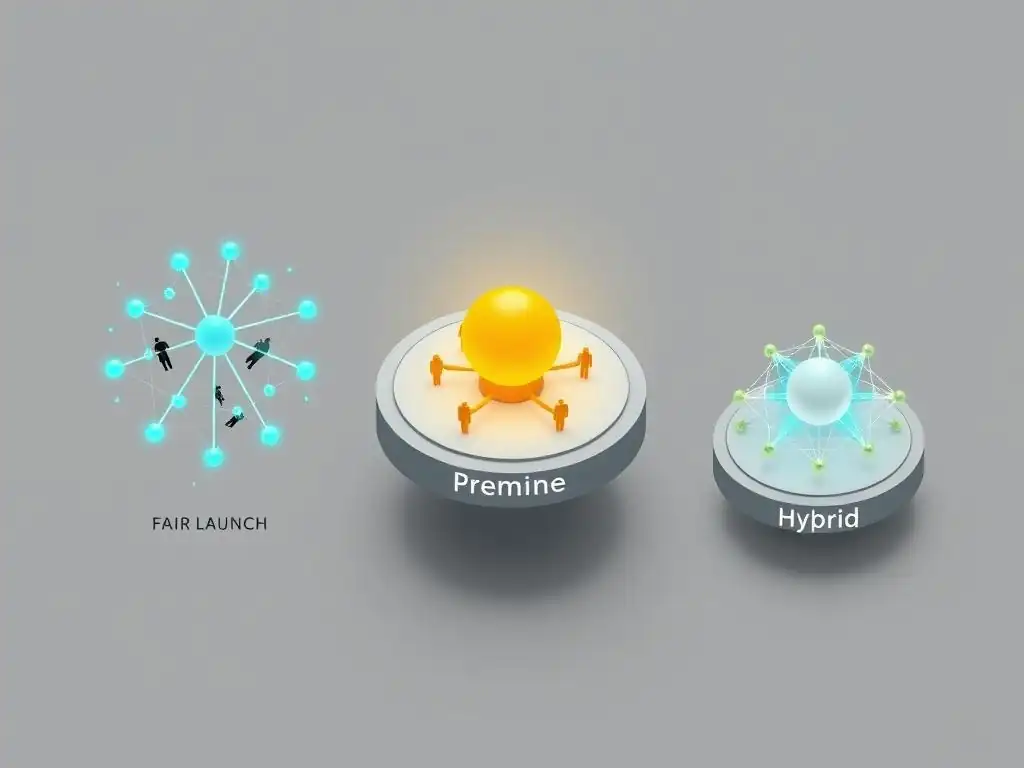
Blockchain Token Distribution Models Impact: The Long-Term Effects
Impact on Token Price and Market Capitalization
The chosen token distribution model has a lasting impact on a project's token price and market capitalization. Fair launches, while potentially volatile initially, can foster organic demand driven by community participation and utility, leading to sustainable price growth if the project delivers value. The lack of large insider holdings available for immediate sale can reduce constant downward pressure, allowing price to reflect genuine adoption and network activity over time. The initial low or zero market cap can grow purely based on market buying.
Premine projects, conversely, often start with a significant implied market cap based on the valuation of private sales. While initial funding is secured, the overhang of insider tokens subject to vesting can create persistent selling pressure as tokens unlock. The market price must absorb these distributions. The long-term price trajectory is heavily influenced by how strategically these pre-allocated tokens are managed and released, and whether the project's growth outpaces the potential selling pressure. This demonstrates a clear Blockchain token distribution models impact on long-term market performance.
Influence on Community Growth and Project Adoption
The distribution model significantly influences community growth and project adoption. Fair launches often cultivate highly engaged communities from the start, composed of users and contributors who feel a sense of ownership. This organic community support can drive adoption, marketing (through word-of-mouth), and development contributions, leading to a virtuous cycle of growth. Projects like Uniswap benefited immensely from this community-first approach.
Premine projects face the challenge of building trust and engagement in a community that might initially be skeptical of insider control. Adoption often relies more heavily on the team's ability to execute on their roadmap, secure partnerships, and conduct professional marketing campaigns using their funding. While successful premine projects like Ethereum have built massive communities, it required overcoming the initial perception challenges associated with the premine. The Blockchain token distribution models impact on community formation and adoption pathways is therefore substantial.
Effects on Decentralization and Governance
Ultimately, the distribution model has profound effects on the project's ability to achieve and maintain decentralization and implement effective governance. Fair launches are inherently more decentralized from inception, distributing governance power more widely among community participants who acquired tokens through organic means. This makes the network more resistant to capture or control by a single entity or small group.
Premine projects must actively work towards decentralization after the initial centralized distribution. This involves gradually releasing control, encouraging broader token ownership over time, and implementing robust decentralized governance mechanisms where the weight of insider votes doesn't overpower the community. The initial concentration of power in a premine makes achieving true decentralized governance a longer and potentially more challenging process. This highlights the critical Blockchain token distribution models impact on the fundamental decentralized nature and governance structure of the project.
Case Studies: Analyzing Real-World Examples
Fair Launch Success Stories: Uniswap and PancakeSwap
Uniswap (UNI) is often cited as a prominent example of a successful "pseudo-fair launch." While not a pure fair launch from day zero (it had a small team allocation), its primary distribution event was a retroactive airdrop of 400 UNI tokens to every address that had ever used the protocol before a specific date (over 250,000 addresses) and significant liquidity mining programs.
This massive, broad distribution rewarded early users and liquidity providers, fostering immense goodwill and community engagement. The UNI token quickly became one of the largest decentralized exchange tokens by market cap, demonstrating the power of rewarding early community members.
PancakeSwap (CAKE), a popular DEX on the Binance Smart Chain (now BNB Chain), followed a similar model focused on yield farming. The majority of CAKE tokens were distributed to users who provided liquidity to various trading pairs on the platform. There was no traditional pre-sale or ICO, and team/insider allocations were relatively small compared to the total supply and subject to vesting.
This yield farming model attracted a massive user base seeking high returns, rapidly bootstrapping liquidity and making PancakeSwap a dominant force in the BSC ecosystem. These cases illustrate how focusing on community participation can drive significant Blockchain token distribution models impact on growth and market position.
Premine Success Stories: Ripple (XRP) and Ethereum
Ripple (XRP) is a prime example of a heavily pre-mined cryptocurrency. Out of a total supply of 100 billion XRP, 80 billion were created and held by Ripple Labs, the company behind the network, with the remaining 20 billion allocated to the founders. Ripple Labs continues to hold a significant portion of the supply (managed via escrow) and releases it strategically.
This model allowed Ripple Labs to fund its operations, develop partnerships with financial institutions, and promote the adoption of the XRP Ledger. While successful in building a network focused on enterprise payments, this structure has led to ongoing debates about XRP's decentralization and classification due to Ripple Labs' significant control over the supply.
Ethereum (ETH), while having a public Initial Coin Offering (ICO), also involved a significant premine component. Before the public sale, approximately 72 million ETH were pre-mined. ~60 million ETH were sold during the ICO, while ~12 million ETH were allocated to the Ethereum Foundation and early contributors/developers.
This premine provided the necessary funding for the extensive development required to launch and maintain the Ethereum network, which has become the backbone of decentralized finance (DeFi) and NFTs. While the premine existed, Ethereum's subsequent growth, broad developer community, and transition to Proof-of-Stake (PoS) have led many to consider it sufficiently decentralized over time, despite the initial concentration. These examples show that premines can facilitate funding and development but come with centralization trade-offs, impacting the long-term perception and reality of decentralization – a key aspect of Blockchain token distribution models impact.
Lessons Learned from Token Distribution Strategies
Analyzing these case studies reveals several key lessons regarding Blockchain token distribution models impact. Firstly, the initial distribution method profoundly shapes community perception and trust; fair launches tend to build stronger community bonds early on. Secondly, securing adequate funding is critical for project success, which premines facilitate more directly, though at the cost of initial decentralization. Thirdly, the long-term impact on decentralization is not solely determined by the initial distribution but also by subsequent efforts to distribute tokens more widely and implement decentralized governance.
Furthermore, successful projects, regardless of their initial model, demonstrate a commitment to transparency (even if delayed for premines) and delivering real utility. The choice between fair launch and premine involves a trade-off between immediate decentralization/community goodwill and upfront funding/control. Projects must weigh these factors based on their specific goals, technology, and target audience to determine the distribution strategy that best aligns with their long-term vision and navigates the complex Blockchain token distribution models impact on their ecosystem.
Choosing the Right Token Distribution Model for Your Blockchain Project
Factors to Consider When Selecting a Model
Project Goals and Objectives
The fundamental goals of the blockchain project are paramount in selecting a token distribution model. Is the primary objective to build a highly decentralized, community-governed protocol from day one? A fair launch might be more suitable. Is the goal to develop complex enterprise-grade technology requiring significant upfront capital and professional teams? A premine with private funding might be necessary. Projects focused on niche communities or specific use cases might tailor distribution to incentivize participation within that group.
Consider the project's mission, its target market, and its long-term vision for decentralization and governance. A model that aligns with these core objectives will have a more positive Blockchain token distribution models impact on the project's ability to achieve its mission and resonate with its intended audience.
Target Audience and Community
Who is the intended user base or community for the project? If the project aims to empower individual users and foster a grassroots movement, a fair launch model that emphasizes equal access and rewards participation might be more effective in building a loyal and engaged community. If the project targets institutions, businesses, or requires integration with existing financial systems, a premine model with strategic allocations to partners and investors might be more appropriate for securing necessary resources and buy-in.
Understanding the motivations and expectations of the target audience is crucial. A distribution model that alienates or disadvantages the intended community will struggle to gain traction, regardless of the underlying technology. The Blockchain token distribution models impact on community reception and engagement is a critical factor in long-term success.
Regulatory Considerations and Legal Compliance
The regulatory landscape surrounding token distribution is complex and varies significantly across jurisdictions. Public sales (like ICOs, sometimes resembling aspects of premine) can face intense scrutiny and may be classified as securities offerings, triggering stringent legal requirements. Mechanisms like mining or distribution through utility (e.g., paying transaction fees in native token) might be viewed differently.
Projects must carefully consider the legal implications of different distribution models and ensure compliance with applicable laws regarding securities, money transmission, and consumer protection. Seeking legal counsel is essential. The need to navigate regulatory hurdles can significantly influence the feasibility and structure of a chosen distribution model, adding a layer of complexity to the Blockchain token distribution models impact analysis.
Balancing Decentralization and Funding Needs
Ultimately, choosing between fair launch and premine often comes down to balancing the desire for immediate decentralization with the practical need for funding to develop and sustain the project. A pure fair launch maximizes initial decentralization but can make it challenging to secure significant upfront capital for extensive development or professional teams. It relies heavily on organic community support and potentially grants or foundations established separately.
A premine provides a clear path to securing funding through private sales and allocating resources strategically but introduces initial centralization risks. Projects must decide how much initial control they are willing to accept in exchange for guaranteed funding and the ability to execute a professional development plan. Hybrid models, incorporating elements of both, or phased approaches where decentralization increases over time, are also possible solutions to navigate this trade-off and optimize the Blockchain token distribution models impact across both funding and decentralization goals.
The Future of Blockchain Token Distribution: Trends and Innovations
Exploring New Token Distribution Mechanisms
The blockchain space is constantly evolving, and so are the methods for distributing tokens. Beyond traditional mining, ICOs, and simple airdrops, new mechanisms are emerging. Examples include Lockdrop (locking existing tokens to receive new ones), Liquidity Bootstrapping Pools (LBPs) which use a Dutch auction-like model to facilitate price discovery and distribution, and various forms of Proof-of-Contribution that reward specific valuable actions on the network.
These innovations seek to address the shortcomings of older models, aiming for fairer distribution, better price discovery, and more effective community building. As the industry matures, we can expect to see more sophisticated and purpose-built distribution strategies tailored to specific project needs and regulatory environments, further refining the Blockchain token distribution models impact on ecosystem health.
Addressing Challenges and Improving Fairness
Future trends in token distribution will likely focus on mitigating the challenges seen in early models. For fair launches, this means developing more robust mechanisms to prevent bot activity and Sybil attacks, as well as innovative ways to bootstrap initial liquidity effectively. For premine models, the focus will be on increasing transparency around allocations, implementing stronger vesting schedules, and clearly outlining paths towards greater decentralization and community governance over time.
Efforts to improve fairness and transparency are crucial for building trust and ensuring the long-term health of blockchain ecosystems. As the market matures, participants are becoming more discerning, favoring projects with distribution models that align with decentralized principles and offer equitable opportunities. This pressure from the community is driving innovation aimed at improving the overall Blockchain token distribution models impact on equity and trust.
The Evolution of Tokenomics and Distribution Strategies
Token distribution is intrinsically linked to tokenomics – the overall design of a token's economic model, including its utility, supply, inflation/deflation, and governance. Future token distribution strategies will be more deeply integrated into comprehensive tokenomic designs, ensuring that the initial distribution aligns with the token's long-term utility and incentive structures.
We may see more dynamic distribution models that adjust based on network activity, participation levels, or specific milestones. The goal is to create sustainable economic models where the distribution mechanism actively contributes to the network's value creation and aligns the interests of all stakeholders over the long term. The ongoing evolution of tokenomics will continue to shape and refine the potential Blockchain token distribution models impact on the sustainability and success of blockchain projects.
Frequently Asked Questions
What are the primary differences between a fair launch and a premine token distribution model?
A fair launch aims for equitable access, distributing tokens to the public without any prior allocation to founders or investors. Conversely, a premine involves creating a significant portion of tokens before public launch, often reserved for the team.
How does the choice of token distribution model ( fair launch or premine) impact the perceived fairness of a blockchain project?
Fair launches are generally viewed as more equitable, reducing concerns about insider advantage and potential manipulation. Premine models, however, can raise questions about centralization and wealth distribution.
What are the potential advantages and disadvantages of using a fair launch token distribution model?
Advantages include increased community participation and a more decentralized token ownership structure. Disadvantages might involve slower initial development due to limited upfront funding and potential vulnerability to bot attacks.
Advantages include secured initial funding for development and incentivizing early team members. Disadvantages can involve concerns about centralization of power and potentially lower community trust in the long run.
How do blockchain token distribution models impact the long-term success and sustainability of a decentralized project?
The chosen model significantly influences community trust, network security, and the overall perception of decentralization. A fair and transparent distribution fosters greater participation and a more robust ecosystem.
The exploration of fair launch and premine token distribution models reveals more than just contrasting approaches; it highlights the fundamental tension between accessibility and control within the blockchain space. Today, as decentralized finance (DeFi) continues to mature, the choice of token distribution model profoundly impacts a project's long-term success, community engagement, and overall credibility. Understanding these nuances is crucial for both developers and investors navigating the increasingly complex world of crypto.
The impact of these models extends far beyond initial token allocation. The chosen distribution method shapes the very ethos of a project, influencing its governance, community participation, and ultimately, its ability to achieve its stated goals. It's a constant reminder that technology alone isn't enough; ethical considerations and equitable distribution are paramount. The power of the blockchain lies not just in its technology, but in its potential to create fairer and more transparent systems for all.
This quote underscores the responsibility that comes with building decentralized applications.
As you consider the future of blockchain and your own role within it, remember that the choice of token distribution is a statement. It's a reflection of your values and your vision for a decentralized future. Ask yourself: What kind of ecosystem do you want to build? By thoughtfully evaluating the impact of different token distribution models, you can contribute to a more equitable and sustainable blockchain landscape, one where innovation and inclusivity go hand in hand.
Unlock Your Crypto Journey: Choose Your Path!
Thank you for exploring the differences between fair launches and premines with us. We hope this article clarified these important token distribution models and helped you make more informed decisions in the blockchain space. Now, it's time to put that knowledge into action!
Here are a few ways you can get involved today:
- Learn More: Analyze recent cryptocurrency projects to understand their token distribution strategies and evaluate their potential based on what you've learned.
- Join the Conversation: Share this article with a friend or colleague interested in blockchain trends and discuss your perspectives.
- Take Initiative: Think about proposing a new token distribution model that combines the most advantageous features of fair launches and premines.
Which token distribution approach do you believe provides the most sustainable and fair foundation for a blockchain project? Share your thoughts in the comments below!
Leave a Reply