
Unlocking Creator Potential: Exploring the NFTPowered Creator Economy

Welcome to Blockchain Trends, your compass in the rapidly evolving world of decentralized technologies! Beyond the hype of cryptocurrencies, we delve into the real-world applications of blockchain, from DeFi to enterprise solutions. Ever wondered how blockchain is revolutionizing industries beyond finance?
This article explores just that, focusing on how NFTs are empowering the creator economy. Discover how these unique digital assets are giving artists and creators unprecedented control over their work and revenue streams. Intrigued? Read on to unlock the potential of tokenization and the future of decentralized systems!
Unlocking Creator Potential: Exploring the NFT-Powered Creator Economy
- Introduction: The Rise of NFTs and the Creator Economy
- Defining the NFT-Powered Creator Economy
- Benefits of NFTs for Creators: Reclaiming Control and Revenue
- Challenges and Obstacles in the NFT Creator Economy
- Use Cases: Creators Thriving with NFTs
-
The Future of the NFT-Powered Creator Economy
- Predictions for the Growth and Evolution of NFT Marketplaces
- The Role of DAOs (Decentralized Autonomous Organizations) in Creator Governance
- Integration of NFTs with Metaverse Experiences
- Exploring New Applications of NFTs Beyond Art and Collectibles
- The Impact of NFTs on Traditional Creative Industries
- Overcoming Barriers to Entry for Creators
- Conclusion: NFTs - A Catalyst for Creator Empowerment
-
Frequently Asked Questions
- How are NFTs democratizing access for creators in the creator economy?
- What role do NFTs play in establishing verifiable ownership of digital content?
- Beyond digital art, what other creative industries are benefiting from NFTs?
- How can NFTs help creators build stronger communities around their work?
- What are some of the regulatory challenges surrounding NFTs in the creator economy?
- Final Reflection: Embracing the Decentralized Future
- Ignite Your Creator Journey with NFTs!
Introduction: The Rise of NFTs and the Creator Economy
Understanding the Convergence of NFTs and Creator Empowerment
The digital landscape has fostered a dynamic "creator economy," a burgeoning ecosystem where individuals leverage their skills and platforms to build audiences and generate income. This economy, encompassing everyone from independent artists and musicians to writers and video producers, is estimated to be worth over $100 billion globally. Simultaneously, Non-Fungible Tokens (NFTs) have emerged as a transformative technology, providing a framework for verifiable ownership of unique digital assets on a blockchain. The convergence of these two forces is fundamentally reshaping how creators can monetize their work and connect with their audience, offering a pathway towards greater independence.
At its core, this convergence is about shifting power from centralized platforms back to the individual creator. Traditionally, creators relied heavily on intermediaries – social media platforms, streaming services, galleries, or publishers – which often took significant cuts of revenue (sometimes as high as 30-50% or more) and controlled distribution and audience access.
NFTs offer a direct pipeline, allowing creators to sell unique digital goods, experiences, or access directly to their fans, effectively eliminating or significantly reducing the need for traditional gatekeepers and unlocking new avenues for revenue. This direct connection is a key aspect of NFTs empowering creator economy participants.
The Promise of Decentralized Monetization for Creators
The decentralized nature of blockchain technology, which underpins NFTs, promises a new era of monetization for creators. Unlike centralized platforms where rules can change arbitrarily and algorithms dictate reach, the terms of an NFT sale – including the creator's cut of the initial sale and any future royalties – are embedded in a transparent smart contract on a public ledger. This offers creators unprecedented control and transparency over their digital assets and revenue streams.
This decentralized approach not only ensures that creators receive a larger share of the initial sale value compared to many traditional models but also introduces the revolutionary concept of programmable royalties. A creator can set a percentage (commonly 5-10%) that they receive every time their NFT is resold on a secondary market. This stands in stark contrast to the traditional art or music markets where creators rarely benefit from subsequent resales of their work, highlighting the significant financial advantage NFTs offer in empowering creator economy growth.
Defining the NFT-Powered Creator Economy
What is the Creator Economy? A Modern Renaissance
The creator economy represents a significant shift in how value is created and exchanged in the digital age. It's characterized by individuals building personal brands and audiences around their unique talents and content, monetizing directly through various channels like subscriptions, merchandise, sponsorships, and increasingly, digital goods. This isn't just about large influencers; it includes millions of smaller creators building niche communities around specific interests, skills, or forms of artistic expression.
This modern renaissance of independent creation has been fueled by accessible digital tools and platforms, allowing anyone to publish, broadcast, or share their work globally. However, reliance on these platforms often comes with strings attached, including strict content guidelines, algorithmic volatility impacting reach, and the aforementioned high revenue shares taken by the platforms themselves. The desire for greater control, ownership, and a fairer distribution of value has been a driving force behind creators exploring alternative models, paving the way for the adoption of technologies like NFTs.
How NFTs are Reshaping Digital Ownership and Value
Before NFTs, digital files were easily copied, making scarcity and verifiable ownership difficult in the digital realm. An MP3 file or a digital image could be duplicated infinitely with no distinction between the original and the copy. NFTs change this by providing a unique, non-interchangeable digital token recorded on a blockchain, representing ownership of a specific digital asset (or sometimes, access or rights related to a physical asset).
This verifiable digital ownership creates scarcity and authenticity, which in turn can ascribe significant value to digital creations. For the first time, collecting a digital artwork, a virtual item in a game, or a unique piece of digital content becomes akin to collecting a physical item, with a clear record of provenance and ownership history. This fundamental shift in how digital assets are perceived and valued is central to NFTs empowering creator economy participants by turning their digital work into ownable, tradeable assets.
Key Characteristics of an NFT-Based Creator Ecosystem
An ecosystem built around NFTs empowering creator economy participants exhibits several distinct characteristics. Firstly, it is inherently decentralized, leveraging blockchain technology for transparency and security, reducing reliance on single points of failure or control. Ownership and provenance are verifiable on the public ledger, allowing collectors to confirm the authenticity and history of an NFT.
Secondly, programmable royalties are a standard feature, automatically distributing a percentage of secondary sales back to the original creator via smart contracts. Direct creator-fan connections are fostered through unique NFT drops and associated utilities (like access or experiences), bypassing traditional intermediaries. Finally, the ecosystem encourages liquidity, as NFTs can be freely traded on various secondary marketplaces, potentially offering creators and collectors ongoing financial opportunities.
Benefits of NFTs for Creators: Reclaiming Control and Revenue
Direct Fan Engagement and Community Building Through NFTs
NFTs offer creators powerful new tools for directly engaging with their most dedicated fans and building vibrant communities. Beyond simply selling digital art or music, NFTs can function as unique access passes, membership tokens, or collectibles that provide exclusive benefits. For example, musician 3LAU sold NFTs linked to his album "Ultraviolet," offering buyers access to unreleased music, special experiences, and even the ability to redeem physical vinyl.
This direct interaction bypasses traditional fan clubs or platform-specific features, allowing creators to cultivate a community around shared ownership of their digital assets. Fans who hold specific NFTs might gain entry to private Discord servers, Q&A sessions, early access to future drops, or voting rights on creative decisions. This deepens the connection between creator and fan, fostering loyalty and creating a sense of belonging, which is a crucial element of NFTs empowering creator economy growth.
Eliminating Intermediaries: Increased Revenue Streams for Creators
One of the most compelling benefits of NFTs for creators is the potential to significantly increase their revenue streams by cutting out intermediaries. Traditional platforms, agents, and distributors often take substantial percentages of a creator's earnings. For instance, music streaming services pay fractions of a cent per stream, and digital art marketplaces might take a 20-30% cut of sales.
With NFTs, creators can sell directly to their audience on marketplaces that often charge much lower fees. While marketplace fees vary, a common model is a small percentage (e.g., 2.5-5%) on the primary sale, plus network transaction fees (gas), which can fluctuate. This means a creator selling a piece for $1,000 might keep $950 or more (before gas), compared to potentially $700 or less on a traditional platform, demonstrating a clear financial advantage in NFTs empowering creator economy participants.
Owning Your Content: The Power of NFT-Based Copyright
While owning an NFT typically means owning a token linked to a digital asset, not necessarily the underlying copyright or intellectual property (IP), NFTs provide a mechanism for creators to define and potentially transfer specific rights. Creators can use smart contracts to specify the terms of sale, including whether the buyer receives personal use rights, commercial rights, or even a fractional share of the IP.
Some platforms and projects are exploring how NFTs can be tied more directly to IP management and licensing. By embedding licensing terms or usage rights within the metadata or smart contract of an NFT, creators can potentially create a transparent and automated system for managing how their work is used, licensed, and monetized in the future. This level of control over how their digital creations circulate is a powerful aspect of NFTs empowering creator economy participants.
Exploring New Revenue Models: Royalties and Secondary Sales on NFTs
The ability to earn passive income through secondary sales is a game-changer for creators. When an NFT is resold on a compatible marketplace, the smart contract can automatically send a predetermined percentage of that sale price back to the original creator's wallet. This royalty rate is typically set between 5% and 10%.
This contrasts sharply with traditional markets where creators rarely see any income from resales of their work. For example, an artist whose painting resells at auction for millions typically receives nothing from that secondary transaction. In the NFT space, a successful collection that generates significant trading volume can provide creators with a continuous stream of revenue long after the initial drop, providing a sustainable model for NFTs empowering creator economy growth. CryptoPunks, for instance, generated millions in royalties for their creators from secondary market activity.
Enhanced Brand Building and Creator Independence
NFTs allow creators to build a unique brand identity centered around exclusive, authentic digital assets and experiences. Selling NFTs is not just a transaction; it's an opportunity to share their story, process, and vision in a new format. This helps creators differentiate themselves in a crowded digital space.
By establishing direct relationships with collectors and leveraging the unique features of NFTs, creators can build a loyal fanbase that is invested in their success. This reduces reliance on traditional gatekeepers like galleries, record labels, or publishers, granting creators greater artistic and financial independence. They have the freedom to create what they want, set their own prices, and distribute their work directly to their audience, a true testament to NFTs empowering creator economy participants.
Challenges and Obstacles in the NFT Creator Economy
Overcoming the Technical Barriers to NFT Creation and Management
Despite the promise, entering the NFT space can be technically challenging for many creators. Understanding blockchain wallets, navigating different networks (like Ethereum, Polygon, Solana, Tezos), and managing fluctuating transaction fees (gas costs, particularly on Ethereum before its merge to Proof-of-Stake) can be daunting. The process of minting an NFT, listing it for sale, and managing potential sales can require a steep learning curve.
While platforms are working to simplify the process with more user-friendly interfaces and options like "lazy minting" (minting an NFT only when it's purchased to defer gas costs), the underlying technology still presents a barrier for those without technical expertise. Creators need to understand the implications of choosing a specific blockchain, the associated costs, and how to secure their digital assets, which remains a significant hurdle in making NFTs empowering creator economy participation truly accessible.
A major criticism leveled against NFTs, particularly in their early days, concerned their environmental impact, primarily due to the energy consumption of Proof-of-Work (PoW) blockchains like the original Ethereum network. Minting and transacting NFTs on these chains consumed significant amounts of energy, drawing criticism from environmental advocates.
However, the landscape is rapidly evolving. Ethereum successfully transitioned to Proof-of-Stake (PoS) in September 2022, reducing its energy consumption by approximately 99.95%. Many popular NFT platforms and creators are also utilizing or migrating to more energy-efficient blockchains like Polygon (a Layer 2 scaling solution for Ethereum), Solana, Tezos, or Flow, which inherently use less energy than PoW. While concerns persist regarding the overall energy footprint of the blockchain ecosystem, the specific energy cost of minting an NFT on many modern platforms is now dramatically lower than it was previously.
The rapid emergence of NFTs has outpaced the development of clear legal and regulatory frameworks in most jurisdictions. It remains unclear in many places how NFTs should be classified – as digital collectibles, assets, securities, or something else entirely. This ambiguity creates uncertainty regarding taxation, ownership rights, intellectual property enforcement, and consumer protection.
Creators and platforms must navigate this evolving landscape, which varies significantly from country to country. Regulatory bodies in the US, Europe, and elsewhere are actively examining NFTs, and future regulations could impact how NFTs are created, sold, and traded. This legal uncertainty presents risks for both creators and collectors and is a significant challenge in fully realizing the potential of NFTs empowering creator economy participants globally.
Combating Copyright Infringement and Counterfeit NFTs
Despite the promise of authenticity through blockchain, copyright infringement and the creation of counterfeit NFTs are significant problems. Anyone can technically mint an NFT that references or displays content they do not own or have the rights to. Marketplaces struggle to police this effectively, often relying on reactive takedown notices.
This means creators can find their work tokenized and sold as NFTs by others without their permission. Conversely, collectors risk purchasing counterfeit NFTs that do not represent authentic work from the purported creator. While marketplaces employ verification processes and reporting mechanisms, the decentralized nature of blockchain makes it challenging to prevent infringement entirely, requiring ongoing efforts to protect creators' intellectual property within the NFT space.
Ensuring Accessibility and Inclusivity in the NFT Space
Access to the NFT space requires a certain level of technical literacy, internet access, and often, financial resources for initial investment and transaction fees. This can create barriers to entry for creators and collectors from certain backgrounds or regions, potentially limiting the inclusivity of the NFT-powered creator economy.
While gas fees have become less volatile on PoS chains, they can still be a barrier, especially for creators in regions with lower average incomes. Furthermore, understanding how to set up wallets, manage private keys, and navigate marketplaces requires digital fluency that is not universal. Efforts are being made to simplify user interfaces and explore alternative models, but ensuring that the NFT space is truly accessible and inclusive for creators worldwide remains a key challenge.
Use Cases: Creators Thriving with NFTs
Digital Art and Collectibles
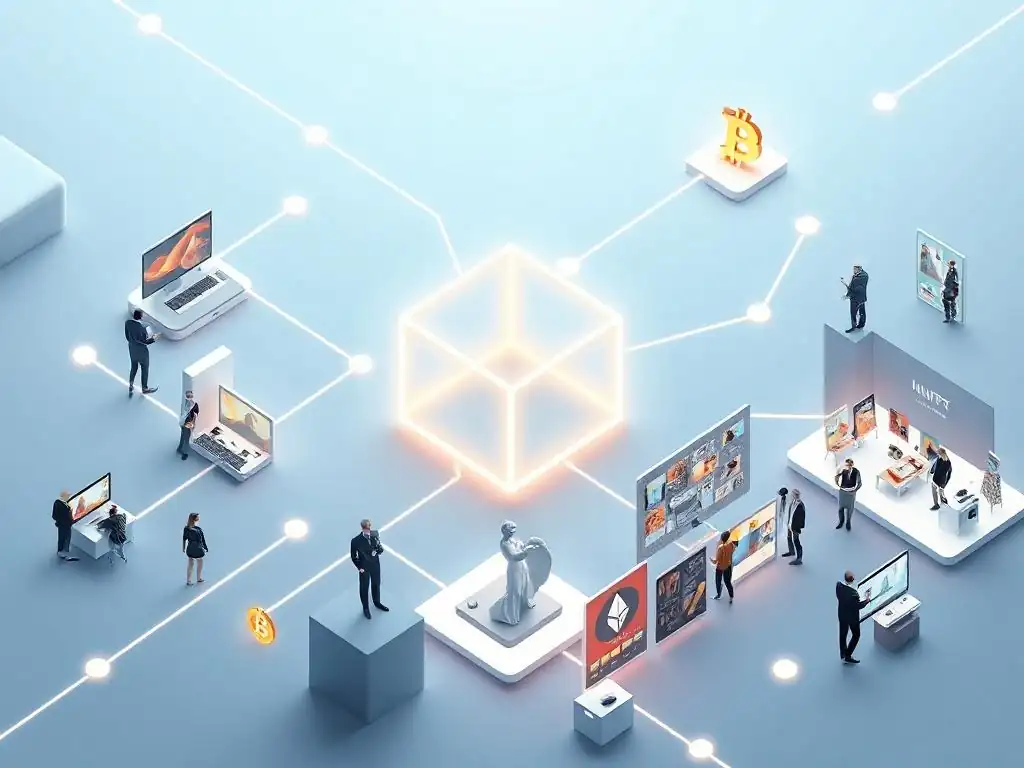
The digital art and collectibles space was the initial boom area for NFTs empowering creator economy participants. Artists found a new way to sell unique digital pieces, animations, and generative art directly to collectors. Platforms like SuperRare, Foundation, and Nifty Gateway became popular venues for showcasing and selling 1/1 (one-of-one) or limited-edition digital artworks.
Notable examples include Beeple, whose "Everydays: The First 5000 Days" collage sold for a staggering $69 million at Christie's auction, and Pak, whose dynamic and often interactive works have garnered significant attention and sales, including 'Merge' which grossed $91.8 million from nearly 30,000 collectors. These high-profile sales demonstrated the immense value that could be attributed to verifiable digital ownership, inspiring countless other digital artists to explore the medium.
Music Industry Disruption
Musicians are leveraging NFTs to release music, albums, merchandise bundles, and unique fan experiences, creating new revenue streams and direct connections. Instead of relying solely on streaming royalties (which are notoriously low, often fractions of a cent per stream), artists can sell limited-edition tracks or albums as NFTs, offering collectors ownership and often exclusive perks.
Examples include Kings of Leon releasing their album "When You See Yourself" as an NFT, offering different tiers with varying benefits, and electronic artist 3LAU selling his album "Ultraviolet" collection for $11.7 million, including redeemable physical vinyl and unique experiences. Platforms like Sound.xyz and Royal.io are specifically built to help musicians tokenize their work, allowing fans to own fractions of songs or albums and potentially earn royalties alongside the artist, showcasing NFTs empowering creator economy growth in music.
Gaming and Virtual Worlds
NFTs are transforming the gaming industry by enabling true ownership of in-game assets. Players can own characters, virtual land, weapons, skins, and other items as NFTs, which can be bought, sold, or traded outside the game world. This creates player-owned economies and enables "play-to-earn" models.
Popular examples include Axie Infinity, a game where players breed, battle, and trade NFT creatures (Axies), generating a multi-million dollar economy with millions of active players. Virtual worlds like The Sandbox and Decentraland allow users to purchase virtual land parcels as NFTs, which can then be developed and monetized. Some prime virtual land parcels have sold for hundreds of thousands of dollars, illustrating the value of NFT ownership in digital environments and how NFTs empowering creator economy participants extends to virtual goods.
Content Creation and Journalism
Writers, journalists, and publishers are exploring NFTs as a way to monetize unique articles, essays, newsletters, or even entire publications. Tokenizing content can provide collectors with verifiable ownership of a specific piece of digital writing, potentially including special access or community participation.
Platforms like Mirror.xyz allow writers to publish content as NFTs, enabling crowdfunding for projects or direct sales of articles. A notable early example saw a New York Times column by Kevin Roose about NFTs sold as an NFT itself for over $500,000, with proceeds going to charity. While still an emerging area, NFTs offer content creators a potential path to bypass traditional publishing models and build direct support from their readership, demonstrating NFTs empowering creator economy participants in literary fields.
Fashion and Luxury Goods
The fashion and luxury industries are using NFTs for digital collectibles, virtual wearables for avatars in metaverses, and even as digital certificates of authenticity for physical goods. Brands can create limited-edition digital fashion pieces that can be worn in virtual worlds or sold as standalone collectibles.
High-profile examples include Nike's acquisition of RTFKT, a company specializing in virtual sneakers and collectibles, and luxury brands like Gucci and Dolce & Gabbana releasing their own NFT collections, often fetching millions of dollars. These NFTs range from digital-only garments to tokens linked to physical items, providing verifiable ownership and provenance. This integration shows how NFTs empowering creator economy innovation extends beyond traditional digital art into new realms like digital fashion and luxury.
The Future of the NFT-Powered Creator Economy
Predictions for the Growth and Evolution of NFT Marketplaces
The NFT marketplace landscape is expected to continue growing and evolving rapidly. While general marketplaces like OpenSea currently dominate, there is a clear trend towards specialization. We will likely see more niche marketplaces focused on specific asset types (e.g., music, gaming assets, photography) or specific blockchains, offering tailored features and communities.
Predictions suggest the overall NFT market could reach hundreds of billions in value in the coming years, driven by broader adoption and new use cases. Marketplaces will likely become more user-friendly, incorporating easier fiat on-ramps (allowing purchases with traditional currency), improved mobile experiences, and enhanced tools for creators to manage their drops and engage with collectors. The competition among platforms will push innovation, further solidifying the infrastructure for NFTs empowering creator economy growth.
The Role of DAOs (Decentralized Autonomous Organizations) in Creator Governance
Decentralized Autonomous Organizations (DAOs) are blockchain-based organizations governed by code and typically controlled by token holders. In the context of the creator economy, DAOs can play a significant role in empowering communities and creators through collective ownership and decision-making.
NFT holders within a specific project could form a DAO to govern the future direction of the project, manage a community treasury funded by royalties, or curate future content. For example, Nouns DAO uses revenue from its daily NFT auctions to fund proposals voted on by Nouns NFT holders, supporting various community initiatives. This model allows for a more democratic and community-driven approach to supporting and developing creative projects, showcasing another dimension of NFTs empowering creator economy participants through shared governance.
Integration of NFTs with Metaverse Experiences
The concept of the metaverse – persistent, interconnected virtual worlds – is inextricably linked with NFTs. NFTs will be the fundamental building blocks for ownership within these digital realms. Avatars, virtual clothing, land, buildings, vehicles, and in-game items will all likely exist as NFTs, allowing users to truly own their digital identity and assets across different virtual environments.
This integration will create massive new opportunities for creators to design, build, and sell digital goods and experiences specifically for the metaverse. Architects can design virtual buildings, fashion designers can create digital clothing lines, and artists can create immersive installations. The potential for interoperability – using an NFT asset in multiple metaverses – is a key promise that will further fuel this integration, making NFTs empowering creator economy participants in virtual spaces.
Exploring New Applications of NFTs Beyond Art and Collectibles
While art and collectibles currently dominate the market, the potential applications of NFTs extend far beyond. We are already seeing exploration into using NFTs for ticketing (providing verifiable ownership of event tickets, potentially with royalty streams for organizers on resales), certifications (academic degrees, professional licenses), digital identity components, and even tokenizing real-world assets like real estate or luxury goods.
As the technology matures and regulatory clarity improves, NFTs could become a standard tool for proving ownership or access to a wide range of digital and physical items. Imagine using an NFT as your concert ticket that also unlocks exclusive content from the artist, or an NFT representing ownership of a fractional share of a property. These burgeoning use cases highlight the vast potential of NFTs empowering creator economy participants in novel ways.
The Impact of NFTs on Traditional Creative Industries
NFTs have the potential to significantly disrupt or integrate with traditional creative industries like galleries, record labels, publishers, and stock photo agencies. These established players are already exploring how to adapt to the rise of decentralized creation and ownership.
Some traditional institutions are entering the NFT space themselves, auctioning digital art (like Sotheby's and Christie's), launching NFT music labels (like Universal Music Group), or creating digital collectibles based on their existing IP. While NFTs offer creators a path to bypass these intermediaries, it's also likely that traditional players will find ways to integrate NFTs into their existing models, potentially offering hybrid solutions or leveraging their marketing and distribution power in the digital asset space.
Overcoming Barriers to Entry for Creators
User-Friendly NFT Minting Platforms and Tools
To truly onboard the next wave of creators into the NFT ecosystem, user-friendly tools are paramount. Platforms are continuously working to simplify the minting process, offering intuitive interfaces, clear explanations of costs, and options for different types of drops (e.g., 1/1 editions, limited series, open editions).
Many platforms now offer "gasless" or "lazy" minting options, where the creator doesn't pay the blockchain transaction fee until the item is sold, significantly lowering the upfront cost barrier. Tools for managing metadata, adding unlockable content, and setting royalty percentages are also becoming more streamlined. Continued development in this area is crucial for making NFTs empowering creator economy participants who lack technical expertise.
Educational Resources for Creators on NFTs and Blockchain
A significant barrier for creators is simply understanding the underlying technology and best practices. Comprehensive and accessible educational resources are vital. This includes tutorials on setting up a digital wallet, understanding different blockchains and their associated costs, explaining the concept of gas fees, and demystizing smart contracts and royalties.
Many platforms, communities, and independent educators are stepping up to provide these resources through blog posts, videos, webinars, and online courses. Empowering creators with knowledge about the technology empowers them to make informed decisions about how to leverage NFTs for their specific goals and build sustainable creative careers.
Community Support and Collaboration Opportunities
The NFT space thrives on community. Engaging with existing NFT communities on platforms like Discord and Twitter is invaluable for creators. These communities offer peer support, opportunities to learn from others' experiences, and potential connections with collectors and collaborators.
Collaboration is also a powerful way for creators to enter the space and expand their reach. Artists can collaborate on joint NFT drops, musicians can work with visual artists to create unique album art NFTs, or writers can collaborate on tokenized publications. These collaborations pool resources, cross-promote work, and build a stronger collective presence, highlighting the collaborative spirit often found in the NFT-powered creator economy.
Strategies for Promoting and Marketing NFT Creations
Creating a great NFT is only the first step; effective promotion and marketing are essential for success. Creators need to develop strategies to reach potential collectors and build anticipation for their drops. This often involves leveraging social media, particularly Twitter, to showcase their work, share their creative process, and engage directly with their audience.
Building a strong personal brand and telling the story behind the art or project is crucial. Strategies include hosting Twitter Spaces, doing live streams, creating engaging visual content about the NFTs, and collaborating with influencers or curators in the space. Successful creators often build a dedicated community around their work before launching an NFT drop, ensuring a receptive audience ready to collect their creations.
Conclusion: NFTs - A Catalyst for Creator Empowerment
The Long-Term Potential of NFTs in Transforming the Creator Landscape
The emergence of NFTs represents a significant inflection point in the evolution of the creator economy. By enabling verifiable digital ownership, programmable royalties, and direct creator-fan connections, NFTs offer a powerful alternative to traditional, often extractive, creative industry models. The long-term potential lies in fundamentally transforming the landscape, shifting power dynamics and creating new economic opportunities for artists, musicians, writers, gamers, and all types of digital creators.
As the technology matures, infrastructure improves, and user interfaces become more intuitive, NFTs are poised to become an increasingly mainstream tool for creators. The ability to tokenize a wide range of digital assets and experiences means that virtually any creator can find a way to leverage NFTs to connect with their audience and monetize their work in novel ways. This transformative potential underscores the impact of NFTs empowering creator economy participants on a global scale.
Empowering Creators to Build Sustainable and Independent Careers
Ultimately, NFTs are a catalyst for empowering creators to build more sustainable and independent careers. The ability to capture a larger share of initial sales revenue, earn passive income from secondary market activity, and build direct relationships with a loyal fanbase provides creators with unprecedented financial control and stability.
This independence allows creators to focus on their craft, experiment with new forms of expression, and build a business directly centered around their creative output, rather than being dictated by the requirements or limitations of third-party platforms. By providing tools for direct monetization and community building, NFTs are helping creators turn their passion into a viable and fulfilling profession.
The Importance of Responsible and Ethical NFT Practices
As the NFT space continues to grow, it is crucial for creators and the ecosystem as a whole to prioritize responsible and ethical practices. This includes being mindful of the environmental impact (by choosing energy-efficient chains), ensuring transparency about the rights associated with an NFT, actively combating copyright infringement, and working towards greater accessibility and inclusivity.
Building a sustainable and trustworthy NFT-powered creator economy requires a commitment from all participants to uphold ethical standards, respect intellectual property, and contribute positively to the community. By doing so, the potential of NFTs empowering creator economy participants can be fully realized, fostering a future where creators have greater control, earn fair compensation, and build thriving, independent careers in the digital age.
Frequently Asked Questions
How are NFTs democratizing access for creators in the creator economy?
NFTs offer creators a way to directly monetize their work and connect with their audience without relying on traditional intermediaries. This disintermediation allows for greater control and a larger share of revenue.
What role do NFTs play in establishing verifiable ownership of digital content?
NFTs provide a unique and immutable digital certificate of ownership for digital assets. This ensures authenticity and scarcity, which is crucial for valuing and trading digital creations.
Beyond digital art, what other creative industries are benefiting from NFTs?
NFTs are expanding beyond art to include music, video, gaming, and even writing. They offer new ways to fund projects, reward fans, and create unique experiences.
How can NFTs help creators build stronger communities around their work?
NFTs can act as membership tokens, granting access to exclusive content, events, and communities. This fosters a deeper connection between creators and their fans, leading to greater loyalty and support.
What are some of the regulatory challenges surrounding NFTs in the creator economy?
The evolving legal landscape around NFTs presents challenges related to intellectual property, securities laws, and taxation. Clarity in these areas is crucial for the sustainable growth of the NFT-powered creator economy.
Final Reflection: Embracing the Decentralized Future
The journey through the NFT-powered creator economy reveals a profound shift in power dynamics, and its current relevance is undeniable. The democratization of creation and ownership is no longer a futuristic fantasy, but a tangible reality shaping the landscape of art, music, and beyond. This revolution, fueled by NFTs, is empowering creators to connect directly with their audience, bypassing traditional gatekeepers and fostering genuine community.
This paradigm shift has not only influenced the financial landscape for creators but also deeply impacted the cultural narrative surrounding art and ownership. Witnessing artists finally gain control over their creations and reap the rewards of their labor is deeply inspiring, and highlights the importance of fostering a more equitable and sustainable creative ecosystem. The future of art is not in galleries or museums, but in the hands of the people who create it.
This quote encapsulates the essence of the NFT revolution, emphasizing the power shift from institutions to individuals.
As we stand at the cusp of this decentralized future, let us reflect on the potential of NFTs to unlock even greater creative potential. Consider how you can support creators directly, explore new forms of digital ownership, and contribute to a more equitable and vibrant creative economy. The power to shape this future lies within each of us. Embrace the possibilities, and let us collectively build a world where creativity thrives and creators are truly empowered.
Here's a CTA for the end of a web article titled "Unlocking Creator Potential: Exploring the NFTPowered Creator Economy" on Blockchain Trends (blockchaintrends.org):
Ignite Your Creator Journey with NFTs!
Thank you for diving into the exciting world of NFT-powered creativity! You've now gained valuable insights into how NFTs are reshaping the landscape for artists and creators. Ready to take the next step and unleash your own potential?
Here's how you can get started:
- Mint your first NFT artwork! Don't wait – experiment and learn by doing. Explore platforms like OpenSea or Rarible to begin.
- Explore different NFT communities, such as those focused on digital art or music, to discover the opportunities and trends within these communities.
- Share this article with a fellow creator friend who might benefit from learning about NFTs and the creator economy.
What unique creative project will you bring to life using the power of NFTs? Share your ideas in the comments below!
Leave a Reply