
Green Blockchain for Waste Management: Optimizing Recycling and Reducing Landfill Waste

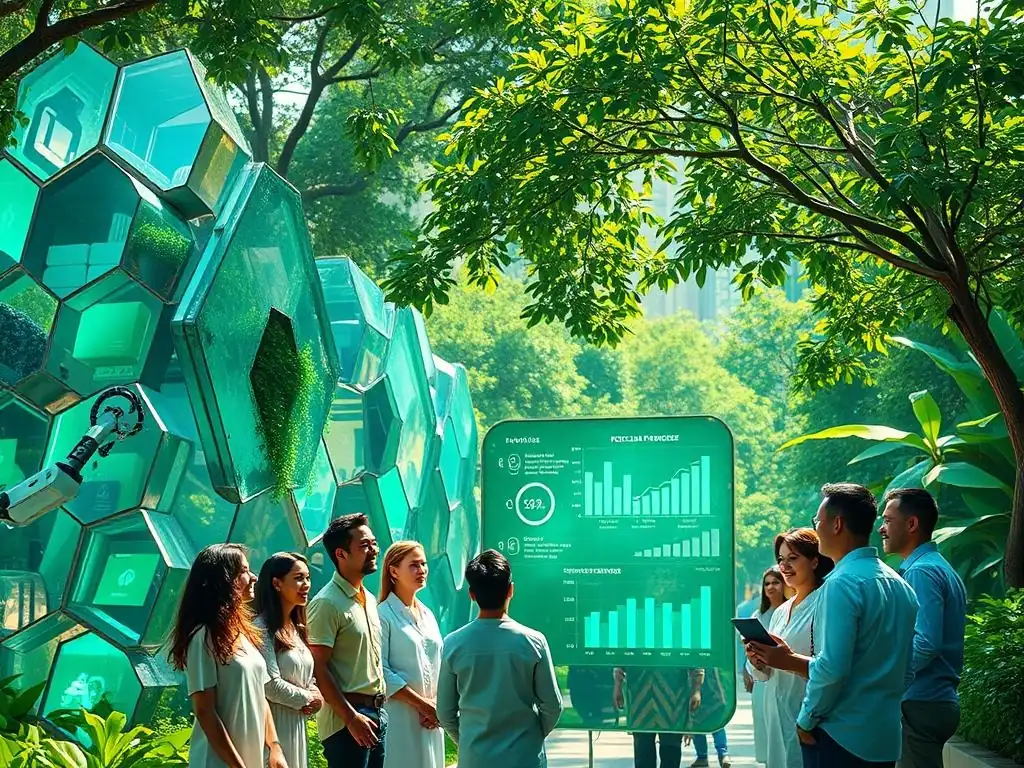
Welcome to Blockchain Trends, your go-to source for understanding the revolutionary impact of blockchain technology beyond the hype. Are you ready to discover how this powerful technology is being used to solve real-world problems?
In this article, we delve into an innovative application: sustainable blockchain waste management solutions. Could blockchain hold the key to a greener future by optimizing recycling processes and drastically reducing landfill waste? Read on to explore the potential of decentralized solutions in creating a more sustainable world.
Green Blockchain for Waste Management: Optimizing Recycling and Reducing Landfill Waste
- Introduction: The Urgent Need for Sustainable Waste Management
- Understanding the Potential of Blockchain in Waste Management
- How Blockchain Can Revolutionize Waste Management Practices
- Key Benefits of Sustainable Blockchain Waste Management Solutions
- Real-World Applications of Green Blockchain in Waste Management
- Overcoming Challenges and Barriers to Adoption
- The Future of Green Blockchain Tech in Waste Reduction
- Conclusion: Towards a Sustainable Future with Blockchain Waste Management
-
Frequently Asked Questions
- How can blockchain technology contribute to sustainable waste management?
- What are Green Blockchain solutions and how do they relate to waste management?
- What role does DeFi (Decentralized Finance) play in promoting sustainable waste management practices?
- What are some enterprise applications of blockchain technology in the waste management industry?
- How can blockchain technology aid in reducing landfill waste?
- Final Reflection: Embracing Sustainable Blockchain Waste Management
- Unleash Your Inner Eco-Innovator: Transform Waste into Opportunity!
Introduction: The Urgent Need for Sustainable Waste Management
The Growing Global Waste Crisis and its Environmental Impact
The world is facing an unprecedented waste crisis. As populations grow and consumption increases, the volume of solid waste generated globally continues to surge. Estimates suggest that the world produces over 2 billion tonnes of municipal solid waste annually, a figure projected to rise significantly in the coming decades. A large portion of this waste ends up in landfills, contributing to soil and water pollution, emitting harmful greenhouse gases like methane, and occupying valuable land. Improper waste management practices also lead to plastic pollution in oceans and damage ecosystems, posing a severe threat to biodiversity and human health.
This escalating crisis highlights the critical need for more effective and sustainable waste management strategies. Traditional systems often lack transparency, efficiency, and the necessary incentives to promote recycling and reduce landfill dependence. The linear "take-make-dispose" economy is proving unsustainable, necessitating a shift towards circular models that prioritize waste reduction, reuse, and recycling. Addressing this challenge requires innovative solutions that can track materials, ensure accountability, and create economic value from waste streams.
Blockchain Technology: A Novel Approach to Environmental Challenges
Blockchain technology, initially known for its role in cryptocurrencies, offers unique properties that make it a compelling tool for tackling various environmental issues. Its decentralized, immutable ledger provides a secure and transparent way to record transactions and track assets. This inherent transparency can be leveraged to monitor environmental compliance, manage supply chains sustainably, and even facilitate carbon credit trading. Unlike traditional databases, the distributed nature of blockchain makes it resistant to tampering, ensuring data integrity.
The potential applications of blockchain extend far beyond finance. Its ability to create trust and enable peer-to-peer interactions without intermediaries is particularly relevant for complex systems like waste management, where multiple stakeholders are involved. By providing a single, verifiable source of truth, blockchain can streamline processes, reduce administrative overhead, and build confidence among participants in the waste value chain, from waste generators to recyclers and manufacturers.
Introducing Sustainable Blockchain Waste Management Solutions
Leveraging the core principles of blockchain – transparency, immutability, and decentralization – leads to the concept of sustainable blockchain waste management solutions. These solutions aim to fundamentally transform how waste is collected, sorted, recycled, and ultimately diverted from landfills. By applying blockchain technology, it becomes possible to create systems that accurately track waste materials throughout their lifecycle, incentivize environmentally responsible behavior, and foster a more circular economy.
Sustainable blockchain waste management solutions are designed to address key pain points in existing systems, such as lack of data visibility, difficulty in verifying recycled content, and insufficient incentives for public participation in recycling programs. Implementing these solutions involves integrating blockchain with other technologies like IoT sensors for tracking and smart contracts for automating processes. The goal is to build robust, efficient, and transparent systems that not only manage waste more effectively but also contribute significantly to environmental protection and resource conservation.
Understanding the Potential of Blockchain in Waste Management
Transparency and Traceability in the Waste Supply Chain
One of the most significant challenges in waste management is the lack of transparency and traceability within the complex supply chain. Once waste leaves its source, it can pass through multiple hands – collectors, sorting facilities, processors, and end-users – making it difficult to verify its origin, composition, and final destination. This opacity can lead to inefficiencies, illegal dumping, and the misrepresentation of recycling rates or recycled content in products.
Blockchain provides a solution by creating an immutable, shared ledger that records every transaction or movement of waste materials. Each step in the waste journey, from initial collection to sorting, processing, and final disposal or recycling, can be logged on the blockchain. This creates a transparent and verifiable audit trail accessible to authorized participants.
For example, a batch of plastic waste collected from a specific area can be assigned a unique digital identity on the blockchain, and its progress through sorting, washing, shredding, and incorporation into a new product can be tracked, providing end-to-end traceability. This level of visibility is crucial for building trust and ensuring that waste is handled responsibly.
Enhancing Accountability and Reducing Fraud in Recycling Processes
Fraud and lack of accountability are persistent issues in the recycling industry. This can range from falsifying recycling volumes to claiming materials were recycled when they were actually landfilled or improperly disposed of. The lack of a reliable, shared system for verifying recycling activities makes it challenging to hold parties accountable and erodes public trust in recycling initiatives.
By using blockchain, each actor in the waste management chain can be held accountable for their specific actions. When waste is transferred from a collector to a sorting facility, the transaction is recorded on the blockchain, verified by participants, and becomes a permanent part of the ledger. Smart contracts can enforce agreements and trigger payments or other actions only upon verified completion of a task, such as delivering a specific quantity of sorted plastic.
This digital trail makes it significantly harder to misreport data or engage in fraudulent activities, as every step is transparent and verifiable. This enhanced accountability is a cornerstone of effective sustainable blockchain waste management solutions.
Decentralized Waste Management Systems: A New Paradigm
Traditional waste management systems are often centralized, relying on municipal authorities or large private companies to manage collection, sorting, and disposal. This can lead to inefficiencies, monopolies, and a lack of flexibility. A decentralized approach, enabled by blockchain, offers a new paradigm where multiple stakeholders can interact directly and collaboratively without a single point of control or failure.
In a decentralized system, waste generators, collectors, recyclers, processors, and even consumers can interact on a blockchain-based platform. This could involve peer-to-peer transactions for waste materials, community-driven collection initiatives, or decentralized marketplaces for recycled goods. Decentralization can empower local communities and small businesses to participate more actively in waste management, fostering innovation and tailored solutions. It also distributes data and control, making the system more resilient and less susceptible to corruption or inefficiency inherent in centralized models. This shift towards decentralized control is a key characteristic of many sustainable blockchain waste management solutions being developed today.
How Blockchain Can Revolutionize Waste Management Practices
Tracking Waste from Source to Disposal with Blockchain
Implementing blockchain allows for granular tracking of waste materials from the moment they are generated to their final destination. This process typically involves assigning a unique identifier, perhaps a QR code or RFID tag, to specific batches or types of waste at the source (e.g., a household, business, or collection point). This identifier is then linked to a record on the blockchain.
As the waste moves through the system – from collection truck to sorting facility, then to a processing plant for recycling or disposal – each transfer and transformation is recorded on the blockchain ledger. Data such as weight, type of material, time, date, and the parties involved are logged. This creates a comprehensive, immutable history for each batch of waste.
For instance, a municipality could track if sorted recyclables collected from a specific neighborhood actually made it to a licensed recycling plant and were processed, rather than being diverted to a landfill. This level of transparency provides unprecedented insight into the waste flow, enabling optimization and verification.
Smart Contracts for Automated Waste Management Agreements
Smart contracts are self-executing contracts with the terms of the agreement directly written into code. They reside on the blockchain and automatically execute when predefined conditions are met. In waste management, smart contracts can automate various processes and enforce agreements between different parties involved in sustainable blockchain waste management solutions.
Consider a system where a recycling facility pays collectors based on the verified weight of specific materials delivered. A smart contract can be set up to automatically release payment from a digital wallet to the collector's wallet once an oracle (an external data source, perhaps linked to a calibrated scale at the facility) confirms the delivery and weight recorded on the blockchain.
This eliminates the need for manual invoicing and payment processing, reduces potential disputes, and ensures timely compensation based on verifiable data. Smart contracts can also automate compliance checks, trigger penalties for non-compliance (like improper sorting or disposal), or manage incentive programs for citizens who achieve high recycling rates.
Tokenization and Incentivizing Recycling Behavior
Tokenization involves creating digital tokens on a blockchain that represent an asset or utility. In the context of waste management, tokens can be used to incentivize desired behaviors, particularly recycling. This forms the basis of many sustainable blockchain waste management solutions focused on public participation.
For example, individuals or businesses could receive digital tokens (often called "recycling tokens" or similar) for properly sorting and depositing recyclable materials at designated points. The amount of tokens received could be proportional to the weight or type of material recycled. These tokens could then be exchanged for goods or services, converted to fiat currency, or used to pay municipal fees, creating a tangible economic incentive for recycling.
Projects like Plastic Bank have successfully implemented tokenization to reward collectors for gathering ocean-bound plastic. This token-based system not only encourages participation but also provides a transparent record of collected materials and allows for tracking the impact of the incentive program, directly linking individual action to collective environmental benefit.
Key Benefits of Sustainable Blockchain Waste Management Solutions
Increased Recycling Rates and Reduced Landfill Waste
One of the primary goals of implementing sustainable blockchain waste management solutions is to boost recycling rates and consequently reduce the volume of waste sent to landfills. By increasing transparency, improving traceability, and introducing effective incentives, these systems make recycling more appealing and rewarding for individuals and businesses.
When people are confident that their sorted waste is actually being recycled, thanks to blockchain's verifiable tracking, they are more likely to participate consistently. Furthermore, tokenization programs provide direct economic benefits for recycling efforts. This combination of trust and incentive encourages higher participation, leading to a greater quantity of materials being diverted from traditional disposal methods like landfilling or incineration. For instance, pilot programs using blockchain incentives have reported significant increases in specific material collection rates in participating communities.
Improved Data Accuracy and Real-Time Monitoring
Accurate data is essential for effective waste management planning, resource allocation, and policy making. Traditional data collection methods often rely on manual reporting, which can be prone to errors, delays, and manipulation. Blockchain offers a solution by providing a secure, immutable, and near real-time platform for recording waste data.
Every transaction, from a waste bin being emptied to a batch of plastic being processed, is recorded on the blockchain, creating a reliable dataset. This allows municipalities and waste management companies to have access to accurate, up-to-the-minute information on waste volumes, types, collection routes, and processing status. This improved data accuracy enables better forecasting, optimized logistics, and more informed decision-making. Real-time monitoring capabilities allow stakeholders to identify bottlenecks, track performance metrics, and verify compliance instantly, leading to more efficient operations.
Enhanced Collaboration Among Stakeholders in the Waste Industry
The waste management ecosystem involves a diverse range of stakeholders: households, businesses, waste collectors, sorting facilities, processing plants, manufacturers who use recycled materials, and regulatory bodies. Effective collaboration among these parties is crucial for a functioning circular economy, but it can be challenging due to fragmented systems and lack of shared information.
Sustainable blockchain waste management solutions provide a common, trusted platform where all stakeholders can share and access relevant, verified data. This shared ledger fosters collaboration by providing transparency on material flows, processing status, and compliance. For example, a manufacturer needing recycled plastic can use the blockchain to verify the source and quality of materials from a processing plant, building trust and facilitating direct business relationships. Regulatory bodies can easily monitor compliance across the entire chain. This enhanced collaboration streamlines operations, reduces transaction costs, and accelerates the transition towards a more integrated and circular waste management system.
Reducing Carbon Footprint through Optimized Waste Logistics
Inefficient waste collection routes and logistics contribute significantly to the carbon footprint of waste management. Suboptimal routing leads to unnecessary fuel consumption and emissions from collection vehicles. Lack of real-time data on bin levels or collection needs exacerbates this issue.
By providing accurate, real-time data on waste volumes and collection status via the blockchain, sustainable blockchain waste management solutions enable the optimization of collection routes. IoT sensors in bins can report fill levels to the blockchain, allowing collection schedules and routes to be dynamically adjusted based on actual need rather than fixed schedules.
This reduces the number of trips required, minimizes mileage, and consequently lowers fuel consumption and greenhouse gas emissions. Furthermore, improved traceability of materials can facilitate local processing and recycling, reducing the need for long-distance transportation of waste or recycled materials, further contributing to a reduced carbon footprint for the overall waste management process.
Real-World Applications of Green Blockchain in Waste Management

Case Study 1: Plastic Bank and their Blockchain-Based Recycling Program
Plastic Bank is a notable example of a sustainable blockchain waste management solution in action, specifically targeting ocean-bound plastic. Operating in several countries, including the Philippines, Indonesia, and Haiti, Plastic Bank establishes collection centers where individuals can deposit plastic waste. Instead of cash, collectors receive digital tokens on a blockchain-based platform called the "Alchemy™ platform."
These tokens can be exchanged for necessities like groceries, cooking fuel, or school tuition. This creates a tangible incentive for collecting plastic waste that would otherwise end up in the ocean. The collected plastic is then processed and sold as "Social Plastic®" to global companies for use in new products. The blockchain tracks the collected plastic from the moment it's deposited, providing transparency and ensuring collectors are fairly compensated. Plastic Bank reports collecting millions of kilograms of plastic annually, demonstrating the practical impact of using blockchain and tokenization to incentivize recycling and combat plastic pollution.
Case Study 2: Circularise and their Material Tracking System
Circularise is another innovative company utilizing blockchain technology to enhance transparency and traceability within material supply chains, which is highly relevant for sustainable blockchain waste management solutions. While not solely focused on post-consumer waste collection like Plastic Bank, Circularise's platform enables manufacturers and brands to track the origin and journey of materials, including recycled content.
Their "Digital Thread" technology uses blockchain to create a digital twin of physical materials, allowing companies to prove the circularity, sustainability, and ethical sourcing of their products. For example, a company using recycled plastic in its packaging can use Circularise's platform to provide verifiable proof of the recycled content's source and processing history.
This helps combat greenwashing and builds trust with consumers and regulators. By providing this level of transparency on recycled materials, Circularise's solution supports the demand side of the recycling equation, making it easier for manufacturers to incorporate post-consumer waste into their production processes and contributing to a more circular economy.
Emerging Projects and Initiatives in the Green Blockchain Space
Beyond these established examples, numerous emerging projects are exploring the use of green blockchain technology for waste management and broader environmental sustainability. Some initiatives focus on creating decentralized marketplaces for waste materials, connecting waste generators directly with potential buyers of recyclables. Others are developing blockchain-based platforms for certifying recycled content or verifying sustainable disposal practices.
- Projects exploring token rewards for sorting organic waste.
- Platforms using smart contracts to manage waste collection contracts based on verified performance.
- Initiatives creating digital passports for products to track their lifecycle and end-of-life options.
- Decentralized autonomous organizations (DAOs) focused on funding and managing community-led waste cleanup and recycling efforts using blockchain governance.
These diverse initiatives highlight the growing recognition of blockchain's potential to drive innovation and efficiency in the waste sector, paving the way for more comprehensive sustainable blockchain waste management solutions globally.
Overcoming Challenges and Barriers to Adoption
Scalability Issues and Technological Limitations
While blockchain technology offers significant advantages, current implementations can face scalability challenges. Public blockchains, while highly decentralized, can have limitations in processing high volumes of transactions quickly and cost-effectively, which is necessary for tracking millions of individual waste items or collection events daily. This can lead to slow transaction speeds and high fees, potentially hindering widespread adoption for granular tracking.
Furthermore, integrating blockchain with physical world processes requires reliable hardware like IoT sensors and tracking devices. Ensuring the accuracy and security of data input from these devices onto the blockchain (the "oracle problem") is a technical hurdle. Developing robust, energy-efficient blockchain networks suitable for environmental applications, often referred to as "green" or "eco-friendly" blockchains, is an ongoing area of research and development to address these limitations and make sustainable blockchain waste management solutions technically viable at scale.
Regulatory Hurdles and Data Privacy Concerns
The regulatory landscape surrounding blockchain technology is still evolving in many jurisdictions. Applying blockchain to waste management systems involves navigating existing environmental regulations, waste disposal laws, and data protection policies (like GDPR in Europe). Clarifying legal frameworks for smart contracts, tokenized incentives, and the ownership/accessibility of data recorded on the blockchain is necessary for widespread implementation.
Data privacy is another significant concern. While blockchain is often touted for transparency, waste data can sometimes contain sensitive information about individuals or businesses (e.g., consumption patterns, location data). Designing systems that balance transparency with privacy requirements, perhaps using privacy-preserving techniques like zero-knowledge proofs or permissioned blockchains, is crucial. Ensuring compliance with data protection laws while maintaining the integrity and utility of the blockchain ledger is a key challenge for sustainable blockchain waste management solutions.
Education and Awareness: Promoting Blockchain Adoption in the Waste Sector
A significant barrier to adopting sustainable blockchain waste management solutions is the lack of awareness and understanding of blockchain technology among key stakeholders in the waste sector. Many municipal authorities, waste management companies, and even consumers may not be familiar with how blockchain works or its potential benefits beyond cryptocurrencies.
Educating policymakers, industry professionals, and the public about the advantages of blockchain for transparency, efficiency, and sustainability in waste management is essential. This involves demonstrating successful pilot projects, highlighting the return on investment, and providing training on using blockchain-based platforms. Building trust in the technology and showcasing its practical applications in improving recycling rates and reducing environmental impact is crucial for overcoming skepticism and driving broader adoption of these innovative solutions.
The Future of Green Blockchain Tech in Waste Reduction
Integrating IoT and AI with Blockchain for Smart Waste Management
The future of sustainable blockchain waste management solutions lies in the synergistic integration of blockchain with other cutting-edge technologies, particularly the Internet of Things (IoT) and Artificial Intelligence (AI). IoT devices, such as sensors in waste bins, sorting machines, and collection vehicles, can generate vast amounts of real-time data on waste types, volumes, and locations.
This data can be securely recorded onto a blockchain ledger, providing an immutable and transparent record of waste flows. AI algorithms can then analyze this blockchain-verified data to optimize collection routes dynamically, predict waste generation patterns, automate sorting processes, and identify opportunities for resource recovery.
For instance, AI could analyze sensor data from bins recorded on the blockchain to determine the most efficient collection schedule for a neighborhood, while the blockchain ensures the data's integrity and provides a basis for smart contracts with collection services. This integration creates truly "smart" waste management systems that are highly efficient, data-driven, and transparent.
Exploring New Applications for Decentralized Waste Solutions
As blockchain technology matures, its application in waste management is expected to expand into new and innovative areas. Beyond tracking and incentivizing, decentralized waste solutions powered by blockchain could facilitate community-owned recycling infrastructure, enable peer-to-peer trading of sorted materials, or support decentralized autonomous organizations (DAOs) focused on specific waste streams like electronic waste or textiles.
New models could emerge where citizens are not just recyclers but active participants in a decentralized waste ecosystem, perhaps even earning passive income from the materials they contribute. Blockchain could also underpin global initiatives for tracking hazardous waste or verifying the destruction of pollutants. The potential for decentralized governance models could empower local communities to manage their waste resources more effectively and sustainably, bypassing traditional bureaucratic hurdles and fostering greater local ownership and responsibility.
The Potential for a Circular Economy Powered by Blockchain
Ultimately, the broader vision for sustainable blockchain waste management solutions is to act as a foundational technology for building a truly circular economy. A circular economy aims to keep resources in use for as long as possible, extracting maximum value from them whilst in use, then recovering and regenerating products and materials at the end of each service life.
Blockchain's ability to provide end-to-end traceability of materials, verify recycled content, incentivize resource recovery, and facilitate transparent transactions between different actors (from producers to consumers to recyclers) makes it an ideal enabler of circularity. By creating a trusted and transparent digital layer for material flows, blockchain can help close the loop, making it easier for manufacturers to source recycled materials, for consumers to verify product sustainability, and for waste to be seen as a valuable resource rather than a problem to be disposed of.
The widespread adoption of sustainable blockchain waste management solutions is a critical step towards realizing this vision of a global circular economy.
Conclusion: Towards a Sustainable Future with Blockchain Waste Management
The Transformative Power of Blockchain for Environmental Sustainability
The escalating global waste crisis demands urgent and innovative solutions. Traditional waste management systems, often characterized by opacity, inefficiency, and insufficient incentives, are struggling to cope with the ever-increasing volume of waste. Blockchain technology, with its inherent properties of transparency, immutability, and decentralization, offers a powerful new approach to address these challenges. By enabling verifiable tracking, enhancing accountability, automating processes through smart contracts, and incentivizing participation via tokenization, blockchain can fundamentally transform how we manage waste.
Sustainable blockchain waste management solutions are not merely incremental improvements; they represent a paradigm shift towards more efficient, transparent, and equitable systems. From reducing fraud in recycling to optimizing collection logistics and fostering greater collaboration among stakeholders, blockchain technology provides the necessary infrastructure to build trust and efficiency in the complex waste value chain. The real-world examples like Plastic Bank and Circularise demonstrate that these concepts are already moving from theory to practice, delivering tangible environmental and social benefits.
Embracing Innovation for a Greener and Cleaner Planet
Embracing technological innovation, particularly sustainable blockchain waste management solutions, is crucial for transitioning towards a greener and cleaner planet. While challenges related to scalability, regulation, and awareness exist, ongoing advancements in blockchain technology and increasing understanding of its applications beyond finance are steadily paving the way for wider adoption.
The integration of blockchain with IoT and AI promises even more sophisticated and effective smart waste management systems in the future. These integrated solutions will enable unprecedented levels of data accuracy, operational efficiency, and environmental impact monitoring. By fostering a more circular economy powered by transparent and verifiable material flows, blockchain technology can help minimize waste, conserve valuable resources, and reduce the environmental footprint associated with traditional waste disposal methods. Investing in and developing these green blockchain initiatives is an investment in a sustainable future.
Call to Action: Promoting the Adoption of Sustainable Blockchain Waste Management Solutions
To accelerate the positive impact of blockchain on waste management, concerted efforts are needed from all sectors. Policymakers should work towards creating clear regulatory frameworks that support the deployment of sustainable blockchain waste management solutions while addressing data privacy concerns. Waste management companies and municipalities are encouraged to explore pilot projects and integrate blockchain technology into their operations to improve efficiency and transparency.
Technology developers should continue to focus on building scalable, energy-efficient "green" blockchains and user-friendly platforms tailored for waste management applications. Businesses that use recycled materials can leverage blockchain to verify the authenticity and sustainability of their supply chains. Finally, individuals can support initiatives that use blockchain for recycling incentives and advocate for their implementation in local communities. By working together and promoting the adoption of sustainable blockchain waste management solutions, we can move closer to a world where waste is effectively managed, resources are conserved, and our planet is healthier for future generations.
Frequently Asked Questions
How can blockchain technology contribute to sustainable waste management?
Blockchain can enhance transparency and traceability in waste streams, enabling better monitoring and accountability. This helps optimize recycling processes and reduces illegal dumping contributing to a more circular economy. It also allows for tracking material flows from origin to disposal.
What are Green Blockchain solutions and how do they relate to waste management?
Green Blockchain refers to blockchain implementations that minimize energy consumption compared to traditional blockchains. In waste management, this means using eco-friendly blockchains to power tracking systems and incentivize responsible behavior without a high carbon footprint.
What role does DeFi (Decentralized Finance) play in promoting sustainable waste management practices?
DeFi can be used to incentivize recycling by creating tokenized rewards for consumers who participate in recycling programs. These tokens can then be used for discounts or other benefits, creating a financial incentive for responsible waste disposal.
What are some enterprise applications of blockchain technology in the waste management industry?
Enterprises can use blockchain to track and verify the origin and composition of materials, ensuring compliance with environmental regulations. This allows for improved supply chain management and the ability to accurately report recycling rates and waste reduction efforts.
How can blockchain technology aid in reducing landfill waste?
By improving waste traceability and incentivizing recycling, blockchain helps divert waste from landfills. The increased data transparency allows for better optimization of recycling processes and reduces the amount of waste that ends up in landfills.
Final Reflection: Embracing Sustainable Blockchain Waste Management
The journey towards a greener future demands innovative solutions, and the convergence of blockchain technology with waste management offers a powerful pathway. The potential of sustainable blockchain waste management solutions to revolutionize recycling and minimize landfill waste is not just a theoretical concept; it's a tangible opportunity to reshape our relationship with the environment. By fostering transparency, accountability, and efficiency, these solutions can empower communities and incentivize responsible waste disposal practices on a global scale.
This exploration into green blockchain for waste management highlights the profound impact technology can have on our planet. Witnessing the potential for decentralized, transparent systems to transform something as fundamental as waste disposal is truly inspiring. It underscores the importance of embracing innovation and challenging conventional approaches to environmental challenges. We do not inherit the earth from our ancestors; we borrow it from our children.
This Native American proverb serves as a constant reminder of our responsibility to safeguard the planet for future generations, and sustainable blockchain waste management offers a concrete step in that direction.
As we conclude this exploration, I invite you to consider your own role in fostering a more sustainable future. How can you leverage the principles of transparency, accountability, and innovation in your own community to promote responsible waste management practices? Let us all strive to be active participants in the transition towards a circular economy, embracing the power of sustainable blockchain waste management solutions to create a cleaner, healthier planet for ourselves and for generations to come.
Unleash Your Inner Eco-Innovator: Transform Waste into Opportunity!
Thank you for exploring how blockchain technology can revolutionize waste management! Now that you've learned about the potential for optimizing recycling and reducing landfill waste, it's time to put that knowledge into action and become a champion for a greener future.
Here are a few ways you can contribute to this exciting movement:
- Take the first step towards sustainable living by researching local blockchain-based recycling initiatives in your community. See if you can participate or even contribute to their development! This is your primary action for maximum impact.
- Dive deeper into the world of green blockchain by exploring related projects on platforms like GitHub. Understanding open-source contributions can empower you to innovate further.
- Share this article with your network! Help spread awareness about the potential of blockchain for environmental sustainability and spark conversations that drive change.
What's one small, impactful change you can make this week to reduce waste and contribute to a more sustainable future? Share your ideas in the comments below!
Leave a Reply